
This lesson guides you through the essential legal steps and documentation required to obtain your Category AM licence for mopeds and light quadricycles. Understanding these administrative obligations is the first step toward your full licence and ensures you remain compliant on Great Britain's roads. We will cover everything from the provisional application process to your responsibilities as a new rider.
Lesson content overview
Embarking on the journey to obtain a Great Britain Category AM licence involves more than just learning to ride; it requires a deep understanding of the legal framework that governs every aspect of being a moped or light quadricycle rider. This lesson provides a comprehensive guide to these essential legal obligations and outlines the precise steps involved in the licensing process. By mastering this information, you will ensure you can ride legally, avoid penalties, and contribute to road safety for yourself and others.
The Category AM licence permits you to ride two-wheeled or three-wheeled mopeds with an engine size no more than 50 cc and a maximum design speed of 45 km/h. It also covers light quadricycles, which are four-wheeled vehicles with an unladen mass no more than 425 kg and a maximum engine power of 4 kW. Understanding these vehicle classifications is the first step towards comprehending your legal obligations. This foundational knowledge ensures you are applying for the correct licence category and preparing to ride the appropriate type of vehicle.
A licence category in Great Britain that permits the rider to operate mopeds (up to 50 cc, maximum 4 kW power, max design speed 45 km/h) and light quadricycles (maximum unladen mass 425 kg, maximum 4 kW power).
Before you can even begin the process of learning to ride, you must meet specific statutory criteria set by the Driver and Vehicle Licensing Agency (DVLA). These eligibility requirements are in place to protect both you as a rider and other road users by ensuring that individuals are of a suitable age, medically fit, and legally qualified to hold a licence.
The minimum age to apply for a provisional Category AM licence for a moped is 16 years old. However, for light quadricycles, the minimum age requirement increases to 17 years old. This distinction acknowledges the differing characteristics and potential power output of these vehicle types, with a slightly higher age for quadricycles reflecting their potentially greater mass and complexity. It's a common misunderstanding that any UK resident over 16 can ride any AM category vehicle; remember the age difference for quadricycles.
To hold any driving licence in Great Britain, including a provisional AM licence, you must be medically fit to drive. This means you must not have any medical conditions that could impair your ability to ride safely. Such conditions might include severe visual impairment, certain types of epilepsy, or other chronic conditions that could lead to sudden incapacitation. When you apply for your provisional licence, you will make a medical declaration, and the DVLA may require further medical evidence or an assessment if you declare certain conditions. For example, a 16-year-old with corrected vision meeting the minimum standard can apply, but one with uncontrolled diabetes might need to submit a medical report.
Applicants for a Great Britain driving licence must be a resident of Great Britain and possess a valid address for DVLA correspondence. Furthermore, you must not be currently disqualified from holding a driving licence. Disqualification from driving, even for other vehicle categories, extends to all licence categories until the disqualification period has ended. These requirements ensure that only individuals with a stable legal standing in the country and no current driving prohibitions are granted a licence.
Once you meet the eligibility criteria, the next step is to apply for a provisional driving licence. This temporary licence allows you to practice riding a moped or light quadricycle on public roads, but under strict conditions designed to ensure safety during your learning phase.
Applying for your provisional licence is typically done online through the official government website (DVLA). You will need proof of identity, such as a valid UK passport, and details of your residency. The application process includes making a declaration about your medical fitness. Once your application is approved, the DVLA will issue your provisional driving licence, which you must carry with you whenever you are riding.
Check Eligibility: Ensure you meet the minimum age, medical, and residency requirements.
Gather Documents: Prepare proof of identity (e.g., passport) and address.
Apply Online: Complete the application form on the official DVLA website.
Medical Declaration: Accurately declare any medical conditions that may affect your riding ability.
Receive Licence: Await the arrival of your provisional driving licence from the DVLA.
A crucial obligation for any learner rider holding a provisional licence is the mandatory display of 'L-plates' (or 'D-plates' in Wales) on your vehicle. These are red square plates with a prominent white letter 'L' (or 'D') and must be clearly displayed on both the front and rear of the moped or light quadricycle. Their purpose is to visually identify you as a learner to other road users, prompting them to exercise additional caution and understanding. Failure to display L-plates while riding is a legal offence and can result in fines and penalty points. For example, a learner riding a moped at dusk must ensure their L-plates are illuminated if the vehicle's lights are on.
While holding a provisional Category AM licence, you are subject to several important restrictions designed to limit risk for inexperienced riders. Notably, you are not permitted to carry a passenger on your moped or light quadricycle. This rule reduces the workload and responsibility for a learner, allowing them to focus entirely on developing their riding skills safely.
Furthermore, provisional AM riders are prohibited from riding on motorways. Motorways are high-speed, high-traffic environments that are unsuitable for riders with limited experience. You must also avoid dual carriageways where the speed limit exceeds 30 km/h, unless specifically signposted to allow mopeds. Riding on a motorway or carrying a passenger as a provisional licence holder constitutes a serious offence, risking penalties and potentially the revocation of your provisional licence.
Under the Road Traffic Act 1988, it is mandatory for all motorcyclists, including moped and light quadricycle riders, to wear an approved safety helmet while riding on public roads. The helmet must be securely fastened and meet current safety standards, typically identified by an ECE (Economic Commission for Europe) approval mark. This requirement is non-negotiable and plays a critical role in reducing the risk and severity of head injuries in the event of an accident. Choosing an ECE-approved full-face or open-face helmet is correct behaviour; riding without one, or with an unapproved helmet, is illegal and carries severe penalties.
Passing the theory test is a compulsory hurdle before you can book your practical riding test. It ensures that all prospective riders possess a fundamental understanding of the Highway Code, traffic laws, and specific rules applicable to mopeds and light quadricycles, alongside the ability to identify and react to potential road hazards.
The Great Britain AM theory test is a computer-based assessment divided into two distinct parts:
Both parts of the theory test must be passed simultaneously. If you pass one part but fail the other, you will need to retake the entire theory test.
Familiarise yourself with the scoring system for the hazard perception test. Clicking too early or too late can result in fewer points. The optimal time to click is when the hazard is just beginning to develop.
You can book your theory test online via the official DVSA website. It's advisable to book well in advance, especially during peak times. Once you pass your theory test, the pass certificate is valid for two years. This means you must pass your practical riding test within two years of passing your theory test. If you do not, your theory test pass will expire, and you will need to retake and pass it again before you can book your practical test. This two-year validity period ensures that your knowledge of road rules remains current and up-to-date.
The practical riding test is the final assessment before you can obtain your full Category AM licence. It is an on-road examination designed to evaluate your practical riding skills, vehicle control, road positioning, and your ability to observe and react to hazards safely under real traffic conditions.
During the practical test, a DVSA examiner will assess your ability to ride safely in various scenarios. Key areas of assessment include:
On the day of your practical test, you must bring a moped or light quadricycle that meets specific legal and safety requirements. The vehicle must be:
If your vehicle does not meet these requirements, the examiner will cancel your test, and you will lose your test fee. It is your responsibility to ensure the vehicle is legally compliant.
Beyond the licensing process for the rider, the vehicle itself must also adhere to several crucial legal requirements. These obligations ensure that all vehicles on Great Britain's roads are traceable, properly covered for potential damages, and contribute to road maintenance funding.
Every moped or light quadricycle used on public roads in Great Britain must be formally registered with the DVLA. Upon registration, the vehicle is assigned a unique registration number (number plate), and a V5C logbook (Vehicle Registration Certificate) is issued. This document serves as proof of registration and identifies the registered keeper, not necessarily the owner. It contains vital information about the vehicle, such as its make, model, engine size, and colour. You must have a V5C in the name of the registered keeper before you can legally ride the vehicle. If you buy a second-hand moped, ensure the ownership is correctly transferred to your name (or the designated registered keeper) via the V5C.
The Road Traffic Act 1988 mandates that all motor vehicles used on public roads must have valid third-party motor insurance as a minimum. This insurance covers your liability for injury to other people or damage to their property in the event of an accident. Without valid insurance, it is illegal to ride your moped or light quadricycle on any public road. Riding an uninsured vehicle can lead to severe penalties, including unlimited fines, vehicle seizure, and endorsement on your driving licence. While third-party only (TPO) is the legal minimum, you can also opt for more comprehensive policies that cover damage to your own vehicle.
Vehicle Excise Duty (VED), commonly known as road tax, is an annual tax payable to HMRC for any motor vehicle used on public roads, including mopeds and light quadricycles. The payment of road tax is now primarily handled electronically, meaning there's no physical tax disc to display. However, it is a legal requirement, and the DVLA maintains a digital record. You must ensure your vehicle's road tax is paid and confirmed before you use it on public roads. Riding an untaxed vehicle can lead to significant fines and penalties, as the system provides funding for road maintenance and ensures overall vehicle compliance. Mopeds are not exempt from this tax.
Beyond the initial licensing and vehicle compliance, there are ongoing obligations that provisional AM riders must adhere to every time they take to the road. These rules are integral to maintaining safety and ensuring a smooth learning experience.
Mopeds, by their design, have specific speed limitations. Legally, the maximum speed for mopeds is 50 km/h (approximately 30 mph) on roads where the general speed limit is 50 km/h or higher. However, on roads with a lower speed limit, such as 30 km/h in residential areas, you must adhere to that specific limit. You must never exceed the posted speed limit, even if your moped is capable of doing so. Exceeding these limits can lead to fixed penalty notices, points on your provisional licence, and potentially invalidate your insurance. For instance, a learner on a moped on a B-road signposted at 60 km/h must still respect the moped's 50 km/h limit.
Remember that the 50 km/h maximum speed for mopeds applies even on roads with higher posted speed limits. Always ride within the legal maximum for your vehicle type and the posted road limit, whichever is lower.
As previously mentioned, provisional AM riders are strictly prohibited from riding on motorways. These high-speed roads are too dangerous for inexperienced riders. Additionally, provisional riders must not use dual carriageways where the speed limit exceeds 30 km/h, unless specific signage explicitly permits mopeds. It is crucial to plan your routes to avoid these restricted areas. Navigating these roads illegally carries penalties and significantly increases your risk of an accident due to high-speed traffic and complex junctions.
Understanding the sequential steps from obtaining your provisional licence to securing your full Category AM entitlement is critical for a smooth and successful licensing journey. Each step builds upon the previous one, ensuring you are adequately prepared and legally compliant at every stage.
Provisional Licence Application: Apply for your provisional licence (form D1) from the DVLA, ensuring you meet age, medical, and residency criteria.
Theory Test Booking and Passing: Book and pass the Category AM theory test, comprising 50 multiple-choice questions (pass mark 43/50) and a hazard perception test (pass mark 44/75).
Practical Test Booking: Once you've passed the theory test (and it's still valid, within two years), you can book your practical riding test.
Prepare for Test Day: Ensure you have your provisional licence, proof of identity, and a road-worthy moped or light quadricycle that is taxed, insured, and displays L-plates.
Practical Test Completion: Attend and successfully pass the practical riding test, demonstrating your vehicle control, road positioning, and hazard awareness.
Full Licence Issuance: Upon passing, the examiner will issue a certificate of competency. Your full Category AM licence will then be sent to you by the DVLA, usually automatically.
The theory test pass certificate is valid for two years. If you don't pass your practical test within this timeframe, you'll need to retake and pass the theory test again.
Understanding potential violations and their consequences is crucial for any rider. Being aware of these common missteps can help you avoid penalties and ensure a safe, legal riding experience.
Safe riding isn't just about following rules; it's also about adapting your behaviour to varying conditions. Provisional AM riders, with their developing experience, must be particularly mindful of how external factors influence their legal obligations and safe practice.
Obtaining a Great Britain Category AM licence is a structured process demanding adherence to numerous legal obligations. Your journey begins with meeting strict eligibility criteria concerning age, medical fitness, and residency. Once you hold a provisional licence, you must diligently display L-plates, wear an approved helmet, and respect crucial learner restrictions such as no passengers and no motorways.
The theory test is your knowledge gateway, testing your understanding of road rules and your hazard perception. Following this, the practical test assesses your riding competence in real-world conditions on a road-worthy, taxed, and insured vehicle. Throughout your riding life, maintaining vehicle compliance—including DVLA registration, valid insurance, and paid road tax—is non-negotiable.
Understanding and internalising these legal obligations is not merely about passing tests; it is about developing a responsible and safe approach to riding that will protect you and others on Great Britain's roads. By consistently adhering to these rules and adapting your behaviour to varying conditions, you will successfully navigate the licensing process and become a qualified, confident AM rider.
Explore all units and lessons included in this driving theory course.
Lesson content overview
Explore all units and lessons included in this driving theory course.
Explore search topics learners often look for when studying Legal Obligations and Licensing Process. These topics reflect common questions about road rules, driving situations, safety guidance, and lesson level theory preparation for learners in Great Britain.
Browse additional driving theory lessons that cover connected traffic rules, road signs, and common driving situations related to this topic. Improve your understanding of how different rules interact across everyday traffic scenarios.
Understand the full journey for your Category AM licence in Great Britain. This lesson covers eligibility, provisional application, DVSA theory and practical test stages, and all legal requirements for learner moped riders.
This lesson provides a detailed definition of Category AM, specifying the types of vehicles it covers, including mopeds and light quadricycles. It clarifies the legal technical specifications, such as maximum engine size and speed caps, that define these vehicles in Great Britain. You will learn about the key differences between two- and three-wheeled options and understand how these classifications are crucial for legal compliance, road safety, and passing the theory test.
This lesson details all the necessary documentation required at each stage of the AM licensing process, from applying for a provisional licence to attending your theory and practical tests. You will learn about the required forms of identification, proof of insurance, and vehicle registration documents. The lesson also provides a clear overview of the DVSA test procedures, explaining the format of the multiple-choice theory test, the hazard perception section, and the criteria for the practical assessment.
This lesson guides you through the compulsory insurance and tax obligations for Category AM vehicles in Great Britain. It differentiates between third-party and comprehensive insurance policies and explains the legal necessity of each. Furthermore, it details the process for vehicle tax and registration, highlighting the severe consequences of non-compliance, which can include fines, penalty points, and even vehicle seizure, ensuring you understand how to keep your vehicle road-legal.
This lesson details the legal requirements and best practices for using lights and reflectors on your moped or light quadricycle. It covers the correct operation of headlamps, daytime running lights, brake lights, and indicators to communicate your intentions clearly to other road users. You will also learn how to enhance your visibility further with strategically placed reflectors and reflective tape, ensuring you remain conspicuous in low-light conditions and compliant with British lighting regulations.
This lesson clarifies the specific speed limits that apply to Category AM vehicles on various British roads, from 30 mph zones in built-up areas to national speed limits on single and dual carriageways. It emphasizes that the posted limit is a maximum, not a target, and teaches you how to choose an appropriate speed based on factors like weather, traffic, and road layout. Understanding these rules is vital for both legal compliance and personal safety.
This lesson explains the different motorcycle licence categories in Great Britain, including A1, A2, and the unrestricted Category A. It details the specific age requirements, power and engine size restrictions, and the mandatory training progression set by the DVSA. Learners will understand the entitlements and limitations of each licence, ensuring they follow the correct legal path to becoming a qualified rider.

This lesson outlines the fundamental responsibilities of an AM driver on British roads, focusing on adherence to the Highway Code and cultivating a safety-first mindset. You will learn the principles of defensive riding, the importance of being visible to others, and the need to protect vulnerable road users like pedestrians and cyclists. The content also covers legal duties such as vehicle maintenance and conducting risk assessments before every journey to promote responsible road behaviour.
This lesson explains the range of protective clothing recommended for AM riders to minimize injury in the event of a fall. It covers the benefits of abrasion-resistant materials, armour inserts for jackets, and the importance of sturdy gloves and boots. You will learn how to select gear that offers a balance of protection, comfort, and weather resistance, as well as best practices for maintaining your equipment to ensure its long-term effectiveness and adherence to safety standards.
This lesson provides essential techniques for safe riding during nighttime and in poor visibility conditions like dawn or dusk. It covers the correct use of your headlamp's main and dipped beams, strategies for reducing glare from oncoming traffic, and the critical role of reflective clothing. You will also learn how to identify common nighttime hazards and manage fatigue, ensuring you can navigate British roads safely after dark while complying with all relevant road rules.
This lesson explains the legal consequences of committing traffic offences in Great Britain. It details the penalty points system, explaining how points are issued for various offences like speeding or using a mobile phone, and the thresholds that can lead to a driving ban. Understanding these penalties, fines, and potential licence revocation reinforces the importance of consistent, lawful riding and helps you appreciate the value of a clean driving record.
Learn about your essential legal duties as a Category AM rider in Great Britain. This includes understanding L-plate display, helmet requirements, vehicle registration, insurance, road tax, and critical speed and road restrictions.
This lesson guides you through the compulsory insurance and tax obligations for Category AM vehicles in Great Britain. It differentiates between third-party and comprehensive insurance policies and explains the legal necessity of each. Furthermore, it details the process for vehicle tax and registration, highlighting the severe consequences of non-compliance, which can include fines, penalty points, and even vehicle seizure, ensuring you understand how to keep your vehicle road-legal.
This lesson provides a detailed definition of Category AM, specifying the types of vehicles it covers, including mopeds and light quadricycles. It clarifies the legal technical specifications, such as maximum engine size and speed caps, that define these vehicles in Great Britain. You will learn about the key differences between two- and three-wheeled options and understand how these classifications are crucial for legal compliance, road safety, and passing the theory test.
This lesson clarifies the specific speed limits that apply to Category AM vehicles on various British roads, from 30 mph zones in built-up areas to national speed limits on single and dual carriageways. It emphasizes that the posted limit is a maximum, not a target, and teaches you how to choose an appropriate speed based on factors like weather, traffic, and road layout. Understanding these rules is vital for both legal compliance and personal safety.
This lesson outlines the fundamental responsibilities of an AM driver on British roads, focusing on adherence to the Highway Code and cultivating a safety-first mindset. You will learn the principles of defensive riding, the importance of being visible to others, and the need to protect vulnerable road users like pedestrians and cyclists. The content also covers legal duties such as vehicle maintenance and conducting risk assessments before every journey to promote responsible road behaviour.
This lesson explains the legal consequences of committing traffic offences in Great Britain. It details the penalty points system, explaining how points are issued for various offences like speeding or using a mobile phone, and the thresholds that can lead to a driving ban. Understanding these penalties, fines, and potential licence revocation reinforces the importance of consistent, lawful riding and helps you appreciate the value of a clean driving record.
This lesson explains the different motorcycle licence categories in Great Britain, including A1, A2, and the unrestricted Category A. It details the specific age requirements, power and engine size restrictions, and the mandatory training progression set by the DVSA. Learners will understand the entitlements and limitations of each licence, ensuring they follow the correct legal path to becoming a qualified rider.

This lesson details the mandatory helmet safety standards in Great Britain, focusing on ECE certification marks and the functional differences between full-face and open-face designs. It provides practical guidance on how to select the correct size and achieve a proper fit, ensuring the chin strap and internal padding provide optimal protection. You will also learn about crucial maintenance, including regular inspection and knowing when to replace your helmet to ensure continued safety and legal compliance.
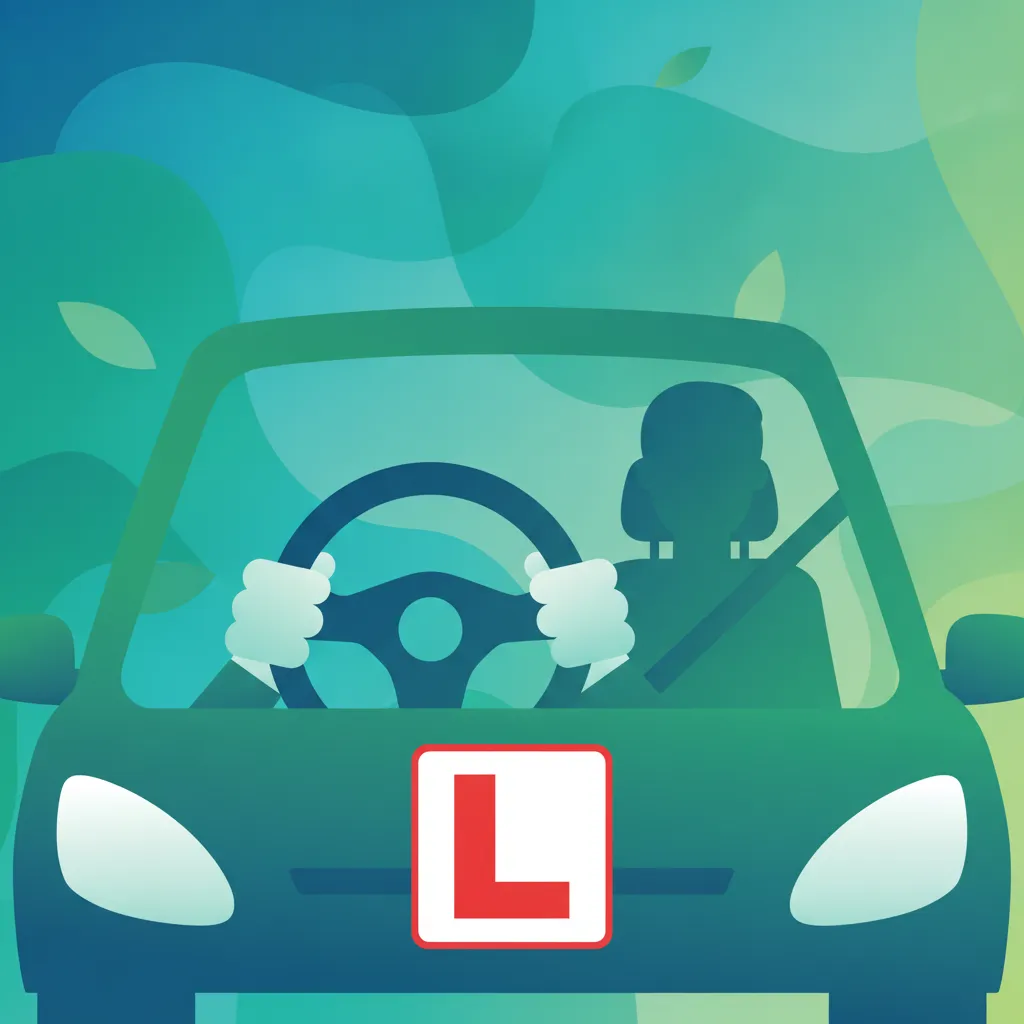
This lesson provides a clear guide to the legal restrictions placed on drivers with a provisional licence. It covers the mandatory display of L-plates and the specific criteria for a supervising driver, including age and experience. Furthermore, it explains the prohibition on driving on motorways and other rules designed to ensure safety during the learning process.
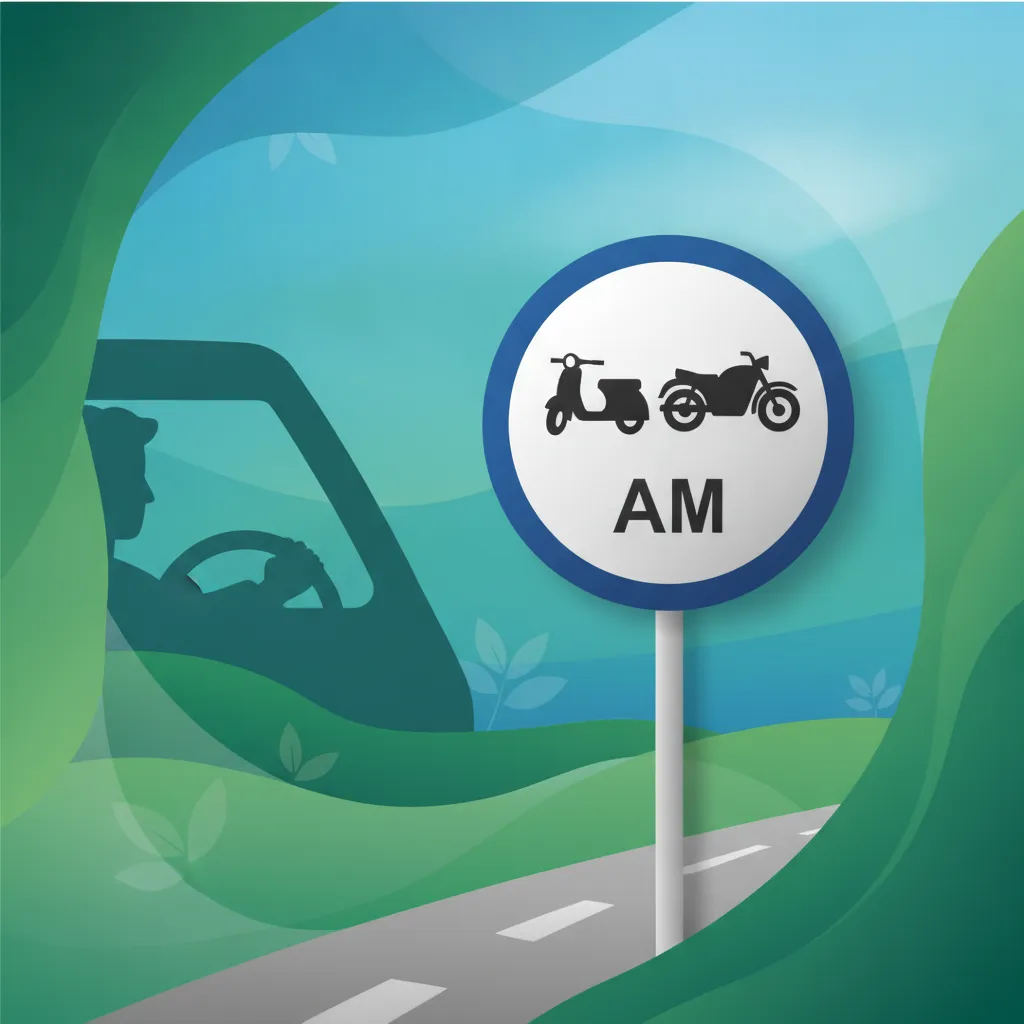
This lesson focuses on regulatory road signs, which convey legally enforceable instructions that all road users must follow. You will learn to identify and understand signs dictating speed limits, prohibited actions like 'no entry' or 'no overtaking', and mandatory directions at junctions. The content explains the distinct shapes and colours used for these signs, ensuring you can comply with their instructions correctly and avoid penalties while riding your AM vehicle.
This lesson details the legal requirements and best practices for using lights and reflectors on your moped or light quadricycle. It covers the correct operation of headlamps, daytime running lights, brake lights, and indicators to communicate your intentions clearly to other road users. You will also learn how to enhance your visibility further with strategically placed reflectors and reflective tape, ensuring you remain conspicuous in low-light conditions and compliant with British lighting regulations.
Find clear answers to common questions learners have about Legal Obligations and Licensing Process. Learn how the lesson is structured, which driving theory objectives it supports, and how it fits into the overall learning path of units and curriculum progression in Great Britain. These explanations help you understand key concepts, lesson flow, and exam focused study goals.
Yes, if you are riding with a provisional licence, you must display large L-plates clearly at the front and rear of your moped or light quadricycle at all times until you pass your full test.
You can apply for your provisional moped licence once you are 15 years and 9 months old, although you cannot start riding on the road until you are 16.
Yes, it is a legal requirement in Great Britain to have valid insurance, road tax, and a valid MOT (if your vehicle is over three years old) before you can legally ride on public roads.
An AM licence is a specific category that covers mopeds and light quadricycles. You receive your full Category AM entitlement only after passing both the DVSA theory test and the two-part practical test.
Dive into our comprehensive question bank to find exactly what you need for your Great Britain theory test. Use our advanced filters to pinpoint specific subjects or test your knowledge on challenging areas, ensuring you're fully prepared for success.