
This lesson details the legal ramifications of traffic offences for moped and light quadricycle riders in Great Britain. Understanding these consequences is vital for maintaining a clean driving record and passing your DVSA theory test.
Lesson content overview
Understanding the legal consequences of traffic offences is fundamental for all road users, especially for those holding a Great Britain Category AM licence for mopeds and light quadricycles. This lesson provides a comprehensive overview of the penalty points system, associated fines, driving disqualification (bans), and licence revocation in Great Britain. By knowing these potential penalties, you can fully appreciate the importance of safe, lawful riding and the value of maintaining a clean driving record.
The legal framework is designed to deter unsafe behaviour, ensure compliance with road traffic laws, and protect all road users. Ignoring these rules can lead to severe repercussions, affecting not only your ability to ride but also your financial well-being and future opportunities.
Traffic offences in Great Britain range from minor infractions to serious criminal acts. The legal system employs a structured approach to penalise these behaviours, with consequences tailored to the severity and impact of each offence. For Great Britain Category AM licence holders, this means adhering to all relevant sections of the Highway Code and the Road Traffic Act 1988, among other regulations.
These offences can include anything from exceeding the speed limit to riding under the influence of alcohol or drugs, or using a mobile phone while riding. Each offence carries specific penalties, which can combine monetary fines with penalty points endorsed on your driving record, or even lead to disqualification from riding. Knowing the different types of offences and their associated penalties is the first step towards responsible riding.
The penalty points system is a cornerstone of traffic law in Great Britain, designed to track and penalise unsafe riding behaviour progressively. When you commit a traffic offence, a specific number of penalty points are endorsed on your driving record. These points serve as a measurable indicator of your driving risk, with accumulation leading to increasingly severe sanctions.
Points typically remain on your driving record for four years from the date of the offence or conviction, although their influence on disqualification only considers points accumulated within a three-year period. Different offences carry varying numbers of points, reflecting their potential danger to road safety.
The number of penalty points assigned depends directly on the seriousness of the offence. Minor infractions might result in fewer points, while serious breaches of traffic law will incur a significantly higher number. Understanding these allocations is crucial for all Great Britain AM licence holders.
For instance, offences like minor speeding might attract three points, while more severe speeding offences or serious breaches such as dangerous riding could result in six or more points. Certain very serious offences, such as causing death by dangerous driving, carry the highest number of points, often leading to immediate disqualification.
Numerically assigned marks added to a driving licence after a traffic offence; they typically remain on the record for four years from the date of conviction.
Common point allocations include:
It's a common misunderstanding that points are "removed" or "discounted" before the full four-year period. While they cease to be relevant for disqualification purposes after three years, they remain on your record for insurance purposes for four years.
For certain minor traffic offences, police officers in Great Britain have the authority to issue a Fixed Penalty Notice (FPN). An FPN is a quick way to deal with less serious offences without the need for a court appearance, offering a streamlined process for both the enforcement authorities and the offender.
An off-the-court notice issued by the police for minor traffic offences, specifying a fixed monetary fine and, if applicable, penalty points.
When issued an FPN, you typically have two main options:
Many common offences committed by Great Britain Category AM licence holders can result in an FPN. These include:
Paying an FPN means you accept the penalty and any points. You cannot contest it after payment. If you wish to challenge the notice, you must do so before paying.
While Fixed Penalty Notices handle minor offences, more serious traffic violations or contested FPNs are resolved through the court system. For Great Britain Category AM licence holders, this typically means appearing before a magistrates' court, although very serious indictable offences might eventually go to a Crown Court.
When a case goes to court, a judge or magistrates will hear the evidence and decide the outcome. If convicted, the penalties can be significantly more severe than an FPN. These can include higher fines, more penalty points, longer driving disqualifications, or even imprisonment in extreme cases.
Traffic offences heard in court are generally categorised into:
If convicted in court, the penalties imposed can be substantial:
If you receive a summons to appear in court, it is highly advisable to seek legal advice. A solicitor can help you understand the charges, prepare your defence, and represent you in court, potentially leading to a more favourable outcome.
One of the most significant legal consequences for traffic offences is driving disqualification, commonly known as a driving ban. This is a statutory order that legally prohibits an individual from operating any motor vehicle for a specified period. For Great Britain Category AM licence holders, this means you cannot ride your moped or light quadricycle, nor can you drive a car or any other vehicle for which you might hold a licence.
Disqualification is imposed for various reasons, reflecting the seriousness of the driving offences committed. It aims to protect the public from high-risk drivers by temporarily removing their privilege to be on the road.
A legal prohibition from driving any motor vehicle for a set period, triggered either by accumulating 12 or more penalty points within three years or by specific serious offences.
There are two primary ways a driving disqualification can be imposed:
Disqualification by Accumulation of Points (Totting Up): If you accumulate 12 or more penalty points on your driving record within any three-year period, you will face an automatic driving disqualification. This is often referred to as "totting up." The minimum period for such a ban is typically six months for a first disqualification, 12 months for a second, and two years for a third within a certain timeframe.
A rider commits several offences, accumulating penalty points over time.
If 12 or more points are accumulated within a rolling three-year period, the DVLA will usually send a warning letter or the police will prosecute.
A court hearing is mandatory, even if you admit the offences. The court will impose the disqualification.
You must surrender your driving licence to the court or DVLA for the duration of the ban.
You are legally prohibited from riding or driving any motor vehicle until the ban expires and your licence is returned.
Disqualification by Specific Offence: Certain serious traffic offences carry a mandatory driving disqualification, regardless of the number of penalty points you have accumulated. These include:
For new drivers, including those with a Great Britain Category AM licence, a special rule applies during the first two years after passing your driving test. If you accumulate 6 or more penalty points within this two-year probationary period, your licence will be automatically revoked.
This means you will lose your licence and must re-apply for a provisional licence, retake both your theory and practical driving tests (for the vehicle category you wish to regain), and effectively start your driving journey from scratch. This rule underscores the importance of maintaining an absolutely clean record during your initial years as a rider.
A driving ban applies to all vehicle categories you are licensed for. If you are banned, you cannot ride your moped or drive a car, even if the offence was committed in a different vehicle type.
Licence revocation is the most severe consequence for traffic offences, representing the complete cancellation of your driving entitlement. Unlike a temporary disqualification, revocation means your licence is entirely withdrawn, and you must re-apply to the DVLA (Driver and Vehicle Licensing Agency) to regain your riding privileges.
The complete cancellation of an individual's driving entitlement, requiring a full re-application process (including retaking tests) to regain a driving licence.
While disqualification is temporary, revocation implies a more fundamental issue with a rider's ability or willingness to comply with the law. Common scenarios leading to licence revocation include:
If your Great Britain Category AM licence is revoked, the process to regain your entitlement is extensive:
This process is costly and time-consuming, highlighting the critical importance of avoiding licence revocation at all costs.
As a Great Britain AM licence holder, you have legal obligations to inform the Driver and Vehicle Licensing Agency (DVLA) of certain changes to your circumstances, particularly those affecting your licence status. Failing to comply with these mandatory reporting requirements can lead to additional penalties, fines, and even extended disqualifications.
While the police and courts often notify the DVLA of convictions and disqualifications, drivers also have a duty to self-report certain information:
Ignoring your obligation to notify the DVLA of a relevant medical condition could lead to a fine of up to £1,000 and, if you're involved in an accident, prosecution.
Failure to fulfil your mandatory reporting duties can result in serious repercussions:
Maintaining an accurate and up-to-date record with the DVLA is a simple but crucial aspect of legal compliance for all drivers in Great Britain.
Beyond the immediate legal penalties, accumulating penalty points, receiving convictions, or facing a driving ban has a direct and often significant financial impact on your motor insurance premiums. Insurers use your driving record as a primary factor in assessing your risk profile, which directly influences the cost of your policy.
Maintaining a clean driving record is not just about staying within the law; it's also about managing your financial costs associated with riding. Avoiding penalties directly translates into lower insurance premiums and greater access to a wider range of insurance products.
The best way for Great Britain Category AM licence holders to avoid penalties, points, and legal consequences is to consistently practice safe, defensive, and lawful riding. This involves a commitment to understanding and adhering to the Highway Code and all road traffic legislation.
Here are key strategies to maintain a clean driving record:
Consider taking advanced rider training. While not mandatory, such courses can enhance your skills, improve your hazard perception, and reinforce safe riding habits, reducing your risk of committing offences.
The system of penalties, points, and legal consequences in Great Britain is designed to be comprehensive and proportional, ensuring accountability for all road users, including Great Britain Category AM licence holders. A clear understanding of this system is not just about avoiding punishment but about fostering a culture of responsible and safe riding.
By internalising these principles, Great Britain AM licence holders can protect their licence, financial well-being, and most importantly, contribute to safer roads for everyone.
The GB penalty points system is a progressive enforcement mechanism for AM licence holders that assigns points for traffic offences, with minor offences typically earning 1-3 points, serious offences 4-6 points, and very serious offences potentially 6-11 points or immediate disqualification. Points remain on your record for four years, but accumulating 12 points within a rolling three-year period triggers automatic totting-up disqualification, while new drivers face immediate licence revocation at just 6 points within their first two-year probationary period. Beyond fixed penalties, courts can impose substantially higher fines, longer bans, and even imprisonment for serious offences, and all convictions must be disclosed to insurers or risk policy invalidation. The most effective strategy for maintaining your licence is consistent adherence to the Highway Code and road traffic law, particularly regarding speed limits, mobile phone use, and alcohol consumption.
A short set of high-value points that capture the most important learning from this lesson.
Penalty points remain on your driving record for 4 years from the date of conviction, but only the 3-year period counts towards disqualification thresholds
Accumulating 12 or more penalty points within any 3-year period triggers automatic disqualification through the totting-up system
New drivers face immediate licence revocation at just 6 penalty points within the first 2 years after passing their test
Fixed Penalty Notices offer an out-of-court resolution for minor offences, but paying accepts guilt and any associated points
Driving disqualification applies to ALL vehicle categories you hold, not just the one you were riding at the time of the offence
Explore all units and lessons included in this driving theory course.
Mobile phone use while riding attracts 6 penalty points and a £200 fine
Drink-driving carries a minimum 12-month mandatory ban regardless of points accumulated
You must notify the DVLA of any medical condition that could affect your driving ability
Points for totting up are counted within a rolling 3-year period, not calendar years
After revocation, you must reapply for a provisional licence and retake both theory and practical tests
Believing points are removed after 3 years when they actually stay on your record for 4 years and affect insurance during that time
Assuming a Fixed Penalty Notice cannot be contested after payment, when the mistake is not paying in the first place
Thinking the New Driver Rule only applies to the vehicle category you were riding, when it affects all entitlements
Overlooking that court penalties can exceed FPN amounts significantly, including higher fines and more points
Forgetting that mandatory DVLA reporting includes change of address, which can result in fines if not updated
Lesson content overview
A short set of high-value points that capture the most important learning from this lesson.
Penalty points remain on your driving record for 4 years from the date of conviction, but only the 3-year period counts towards disqualification thresholds
Accumulating 12 or more penalty points within any 3-year period triggers automatic disqualification through the totting-up system
New drivers face immediate licence revocation at just 6 penalty points within the first 2 years after passing their test
Fixed Penalty Notices offer an out-of-court resolution for minor offences, but paying accepts guilt and any associated points
Driving disqualification applies to ALL vehicle categories you hold, not just the one you were riding at the time of the offence
Explore all units and lessons included in this driving theory course.
Mobile phone use while riding attracts 6 penalty points and a £200 fine
Drink-driving carries a minimum 12-month mandatory ban regardless of points accumulated
You must notify the DVLA of any medical condition that could affect your driving ability
Points for totting up are counted within a rolling 3-year period, not calendar years
After revocation, you must reapply for a provisional licence and retake both theory and practical tests
Believing points are removed after 3 years when they actually stay on your record for 4 years and affect insurance during that time
Assuming a Fixed Penalty Notice cannot be contested after payment, when the mistake is not paying in the first place
Thinking the New Driver Rule only applies to the vehicle category you were riding, when it affects all entitlements
Overlooking that court penalties can exceed FPN amounts significantly, including higher fines and more points
Forgetting that mandatory DVLA reporting includes change of address, which can result in fines if not updated
Explore search topics learners often look for when studying Penalties, Points, and Legal Consequences. These topics reflect common questions about road rules, driving situations, safety guidance, and lesson level theory preparation for learners in Great Britain.
Browse additional driving theory lessons that cover connected traffic rules, road signs, and common driving situations related to this topic. Improve your understanding of how different rules interact across everyday traffic scenarios.
Explore detailed explanations of licence revocation, long-term driving bans, and mandatory reporting to the DVLA. Understand the prolonged impact of serious traffic offences on your ability to ride a moped in Great Britain.
This lesson explains the legal consequences of committing traffic offences. It covers how the penalty points system works, the number of points for common offences like speeding, and how accumulating 12 points can lead to disqualification under the 'totting-up' procedure. You will also learn about the specific rules for new riders, who can have their licence revoked with just 6 points.
This lesson details the consequences of committing traffic offences. It explains how penalty points are added to your licence for infractions like speeding or using a mobile phone. You will learn about the threshold for disqualification (totting-up) and the specific, stricter rules that apply to new drivers within the first two years of passing their test.
This lesson outlines the serious legal and professional consequences of committing traffic offences. It covers common issues such as speeding, using a mobile phone, and the strict limits on alcohol, explaining the system of fixed penalty notices and penalty points. The content makes clear how accumulating points can lead to fines, licence suspension or revocation, and the loss of a professional driving career. The importance of understanding and following company policy on incident reporting is also stressed.
Gain a comprehensive understanding of the legal repercussions for violating goods vehicle regulations, which can range from civil penalties to criminal prosecution. This lesson details the fines, penalty points, and potential vehicle seizure enforced by authorities like the DVSA and the police. It clarifies how serious offences are handled in court and how repeated infractions can lead to escalating sanctions, impacting both your licence and professional career.
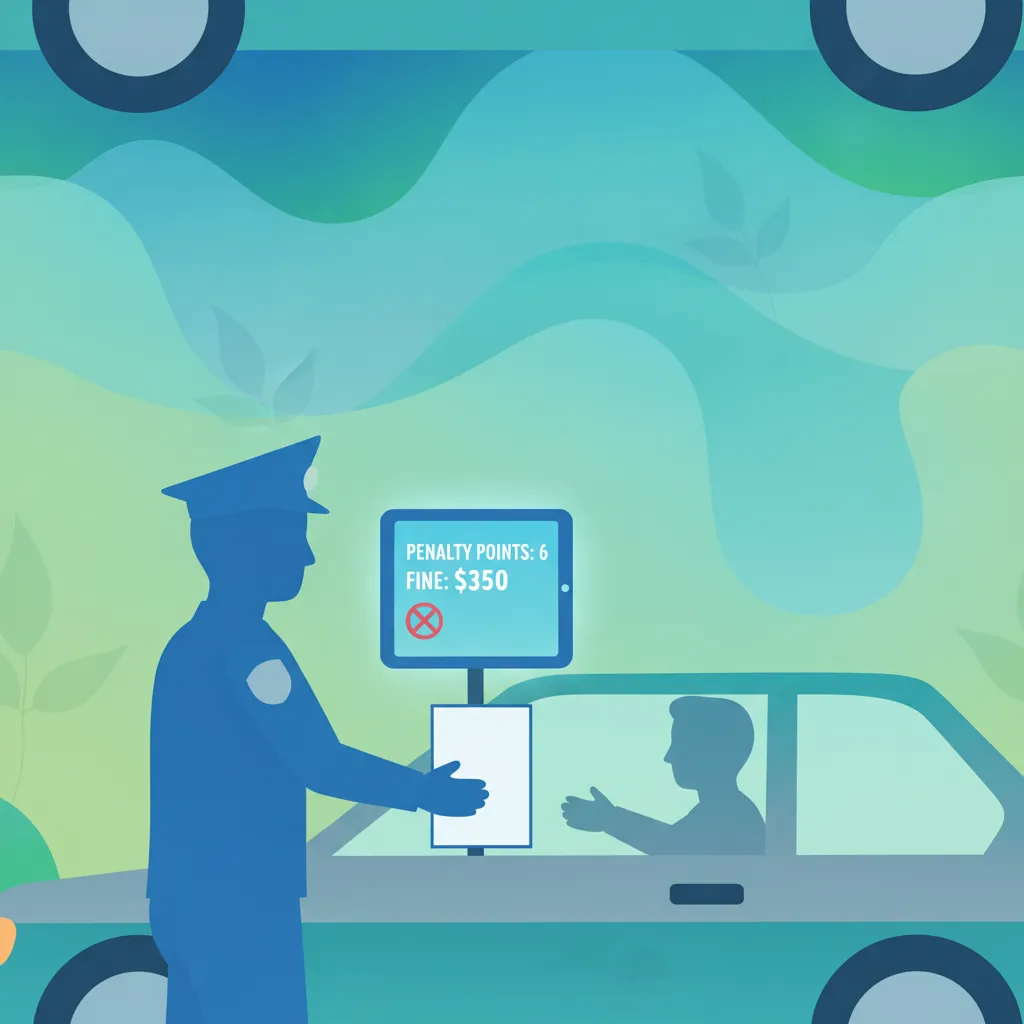
This lesson outlines the serious consequences of failing to comply with road transport law. It details the graduated system of fines and penalties that can be issued by the DVSA and police for offences ranging from drivers' hours violations to vehicle defects. The lesson also explains more severe sanctions, such as vehicle prohibition, licence suspension, and referral to the Traffic Commissioner, which can impact both the driver and their employer.

This lesson covers the strict laws and significant safety risks associated with drink and drug riding. It explains the legal blood alcohol limits in Great Britain, the procedures for roadside testing, and the severe penalties for infringement, including fines, disqualification, and imprisonment. You will also learn how various substances, including some prescription medications, can dangerously impair your riding ability.
This lesson details the sequential process for acquiring a Category AM licence, starting with the provisional application and moving through the mandatory theory and practical tests. It covers essential criteria like age limits, medical fitness, and the specific rules that apply to learner riders, such as displaying L-plates. You will also learn about the legal duties concerning vehicle registration, insurance, and road tax compliance, which are vital throughout your journey to becoming a qualified rider.
This lesson details all the necessary documentation required at each stage of the AM licensing process, from applying for a provisional licence to attending your theory and practical tests. You will learn about the required forms of identification, proof of insurance, and vehicle registration documents. The lesson also provides a clear overview of the DVSA test procedures, explaining the format of the multiple-choice theory test, the hazard perception section, and the criteria for the practical assessment.

This lesson identifies behaviours that significantly increase a rider's risk of being involved in a collision. It explains the dangers of excessive speed, following too closely, and aggressive riding. You will learn how a rider's attitude and choices directly contribute to their safety and the legal penalties associated with these offences.
This lesson provides a clear guide to the legal restrictions placed on drivers with a provisional licence. It covers the mandatory display of L-plates and the specific criteria for a supervising driver, including age and experience. Furthermore, it explains the prohibition on driving on motorways and other rules designed to ensure safety during the learning process.
Understand how traffic offences, penalty points, and driving convictions directly influence the cost and availability of moped insurance in Great Britain. Learn about insurer risk assessment and disclosure requirements.
This lesson explains the legal consequences of committing traffic offences. It covers how the penalty points system works, the number of points for common offences like speeding, and how accumulating 12 points can lead to disqualification under the 'totting-up' procedure. You will also learn about the specific rules for new riders, who can have their licence revoked with just 6 points.
This lesson guides you through the compulsory insurance and tax obligations for Category AM vehicles in Great Britain. It differentiates between third-party and comprehensive insurance policies and explains the legal necessity of each. Furthermore, it details the process for vehicle tax and registration, highlighting the severe consequences of non-compliance, which can include fines, penalty points, and even vehicle seizure, ensuring you understand how to keep your vehicle road-legal.
This lesson details the consequences of committing traffic offences. It explains how penalty points are added to your licence for infractions like speeding or using a mobile phone. You will learn about the threshold for disqualification (totting-up) and the specific, stricter rules that apply to new drivers within the first two years of passing their test.
Explore the critical topics of driver liability, insurance, and legal penalties in Great Britain. This lesson distinguishes between civil and criminal liability in the context of road incidents. It details the compulsory third-party insurance every driver must have and explains the penalty points system for traffic offences, including fines and potential disqualification.

This lesson addresses the critical safety topics of impairment, distraction, and social pressures. It explains how alcohol and drugs severely affect judgment, coordination, and reaction time, outlining the strict legal limits and harsh penalties in Great Britain. The content also covers modern distractions like mobile phones and the importance of resisting negative peer pressure to maintain focus and make responsible decisions as a rider.
This lesson outlines the serious legal and professional consequences of committing traffic offences. It covers common issues such as speeding, using a mobile phone, and the strict limits on alcohol, explaining the system of fixed penalty notices and penalty points. The content makes clear how accumulating points can lead to fines, licence suspension or revocation, and the loss of a professional driving career. The importance of understanding and following company policy on incident reporting is also stressed.
This lesson teaches strategic road positioning techniques to maximize your visibility and safety in traffic. You will learn how to choose the correct lane position to avoid the blind spots of larger vehicles and how to communicate your intentions through predictable riding. Key skills covered include effective use of shoulder checks, making eye contact with drivers, and maintaining a safe following distance, all of which are crucial for defensive riding on British roads.
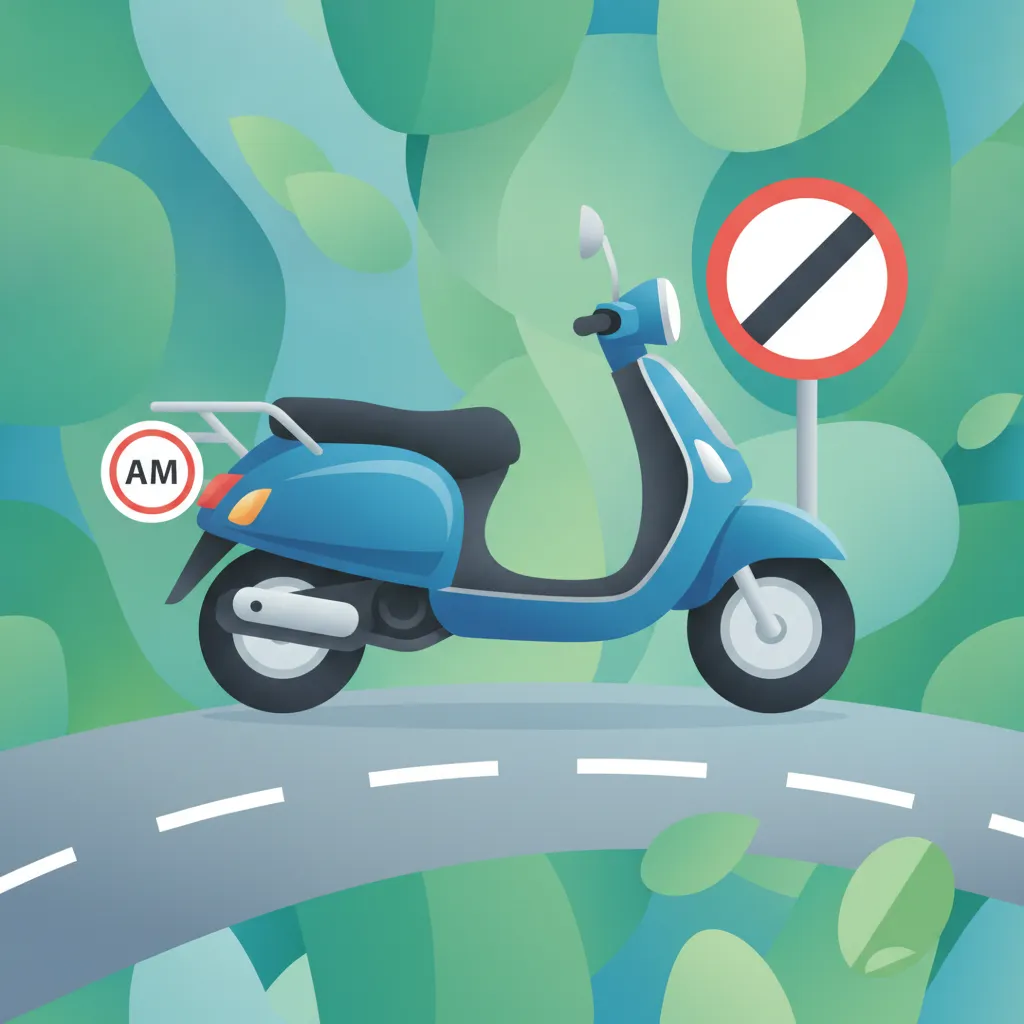
This lesson clarifies the specific speed limits that apply to Category AM vehicles on various British roads, from 30 mph zones in built-up areas to national speed limits on single and dual carriageways. It emphasizes that the posted limit is a maximum, not a target, and teaches you how to choose an appropriate speed based on factors like weather, traffic, and road layout. Understanding these rules is vital for both legal compliance and personal safety.
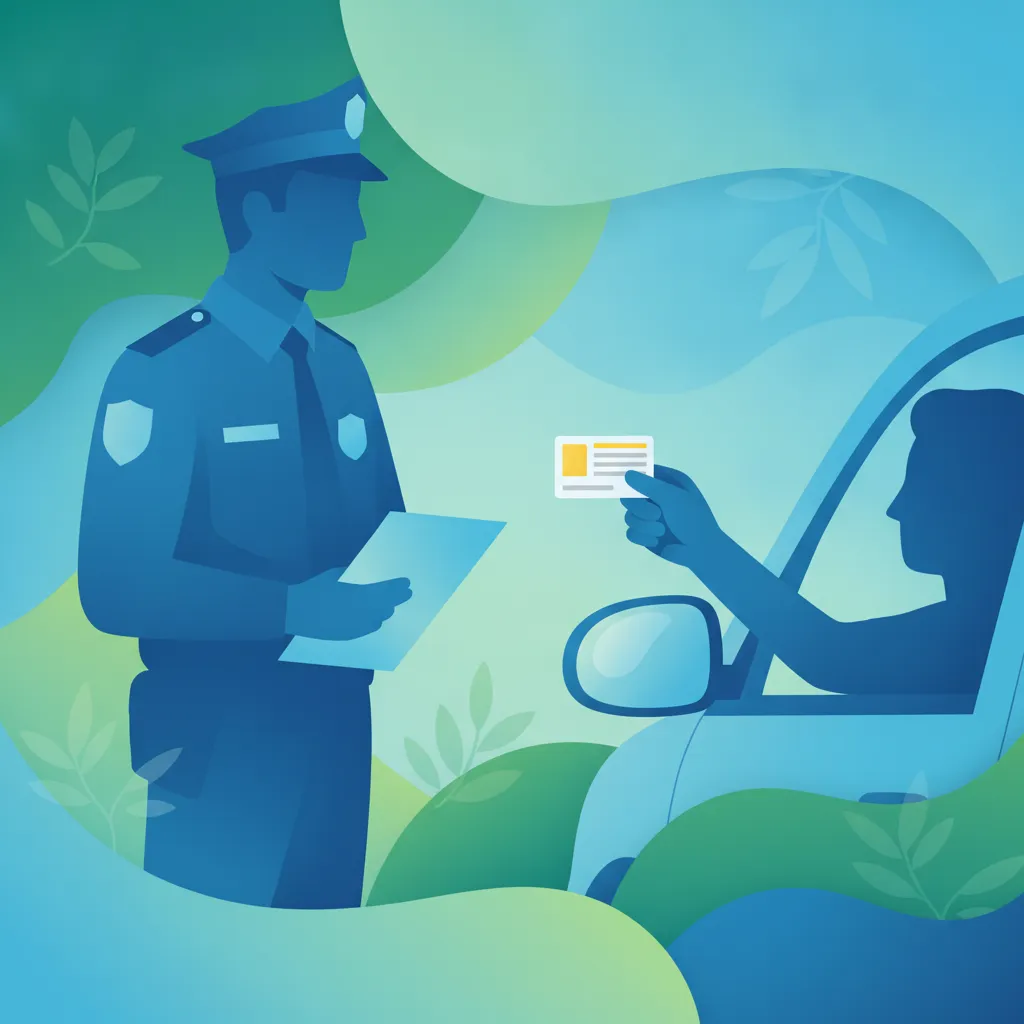
This lesson details the documentation a motorcyclist is legally required to produce when stopped by the police or a DVSA officer. It covers the driving licence, valid certificate of insurance, current MOT certificate, and the vehicle registration document (V5C). You will also learn about the legal consequences of failing to provide these documents, such as fines and penalty points.
This lesson details the sequential process for acquiring a Category AM licence, starting with the provisional application and moving through the mandatory theory and practical tests. It covers essential criteria like age limits, medical fitness, and the specific rules that apply to learner riders, such as displaying L-plates. You will also learn about the legal duties concerning vehicle registration, insurance, and road tax compliance, which are vital throughout your journey to becoming a qualified rider.
Find clear answers to common questions learners have about Penalties, Points, and Legal Consequences. Learn how the lesson is structured, which driving theory objectives it supports, and how it fits into the overall learning path of units and curriculum progression in Great Britain. These explanations help you understand key concepts, lesson flow, and exam focused study goals.
Under the Road Traffic (New Drivers) Act, if you accrue 6 or more penalty points within two years of passing your first test, your licence will be revoked. This includes any points received while holding a provisional licence.
Yes, any penalty points you receive while riding on a provisional licence will be carried over to your full licence once you pass your test and will count towards the 6-point limit under the New Drivers Act.
A fixed penalty notice is a conditional offer to pay a fine and accept points to avoid a court appearance for minor offences. A court summons is issued for more serious offences where a magistrate must decide the penalty, which could include larger fines or a driving ban.
Yes, using a hand-held mobile phone while riding is a serious offence that carries heavy fines and penalty points. It is a common topic in the theory test and demonstrates why road safety laws are strictly enforced.
Dive into our comprehensive question bank to find exactly what you need for your Great Britain theory test. Use our advanced filters to pinpoint specific subjects or test your knowledge on challenging areas, ensuring you're fully prepared for success.