
This lesson outlines the essential responsibilities you hold as an AM licence rider on Great Britain's roads. By mastering these principles, you will build a safety-first mindset that is crucial for both passing your theory test and protecting yourself and other road users.

Lesson content overview
Operating a moped or light quadricycle on Great Britain's roads comes with a unique set of responsibilities. As a Category AM driver, your actions profoundly impact not only your own safety but also the safety of every other road user. This lesson will outline the fundamental duties, legal obligations, and safety-first mindset required to ride safely and confidently. We will explore principles like defensive riding, ensuring your visibility, and actively protecting vulnerable road users, all while adhering to the Highway Code and maintaining your vehicle.
Mastery of these responsibilities is not just about passing your theory test; it's about cultivating a deep understanding of road safety that will serve you throughout your riding career. It forms the bedrock for advanced riding skills, hazard perception, and responsible decision-making on the road.
Responsible riding hinges on a safety-first mindset, adherence to legal obligations, and proactive risk management. Category AM drivers must consistently act as responsible road users, ensuring their own visibility, protecting others, maintaining their vehicle, and making informed, defensive decisions. Given the relatively smaller size and lesser protection offered by mopeds and light quadricycles compared to larger vehicles, these principles are paramount for reducing accident risk.
Here are the core principles that define the role and responsibilities of an AM driver:
Defensive Riding: Always anticipate potential hazards and take pre-emptive actions to avoid them. This compensates for the reduced mass and protection of your vehicle, significantly lowering collision risk.
Visibility: Ensure you can always be seen by other road users and have a clear view of the road ahead. Your small vehicle size means you must actively work to make yourself noticeable.
Vulnerable Road User Protection: Recognise your specific duty to safeguard pedestrians, cyclists, and other vulnerable users who are at a higher risk of serious injury in a collision.
Vehicle Maintenance Responsibility: Keep your moped or light quadricycle in a roadworthy condition at all times to prevent mechanical failures. Regular checks are crucial.
Pre-Journey Risk Assessment: Systematically evaluate potential hazards before every journey, considering factors like weather, road conditions, and your personal fitness to ride.
Legal Compliance: Obey all applicable Highway Code rules, traffic signs, and licensing conditions to ensure consistent and predictable behaviour on the road.
Road Tax & Insurance: Maintain up-to-date road tax and appropriate insurance coverage, which are legal necessities and demonstrate financial responsibility.
These principles are interconnected. For example, a thorough pre-journey risk assessment might lead you to adopt more defensive riding techniques due to adverse weather, which in turn reinforces your commitment to protecting vulnerable road users.
A proactive approach to riding that anticipates potential hazards and takes pre-emptive actions to avoid them, focusing on safety and risk reduction.
Defensive riding is arguably the most critical skill for any Category AM driver. It means riding with the assumption that other road users might make mistakes or behave unpredictably. This approach significantly reduces your collision risk by compensating for the reduced vehicle mass and limited protection of your moped or light quadricycle.
Practically, defensive riding involves several key behaviours:
Consider the 'What If?' scenario constantly. What if that car pulls out? What if that pedestrian steps into the road? Preparing for these possibilities helps you react calmly and effectively.
The ability of a rider and their vehicle to be easily seen by other road users, and the rider's ability to clearly see the road and surroundings.
Mopeds and light quadricycles are smaller than cars and lorries, making them inherently less visible. It is your crucial responsibility to counteract this by making yourself as conspicuous as possible. This involves both external visibility (how others see you) and internal visibility (your ability to see).
Never assume other drivers have seen you, even if you are wearing high-visibility gear and using your lights. Always ride as if you are invisible until you have confirmation they have acknowledged your presence.
Any road user who is not in a vehicle with a protective shell, such as pedestrians, cyclists, motorcyclists, and horse riders, and is therefore at greater risk of severe injury in a collision.
As an AM driver, you have a heightened duty to protect vulnerable road users (VRUs) – primarily pedestrians and cyclists. They are less protected than you are on your moped or light quadricycle, and therefore face a significantly increased risk of serious injury or fatality in a collision. Highway Code Rule 153 states that road users must be aware of vulnerable road users.
Key responsibilities include:
It is your legal and moral obligation to ensure your moped or light quadricycle is always in a roadworthy condition. Neglecting maintenance can lead to mechanical failures, which are a direct cause of accidents. The Road Traffic Act 1988 (Section on Roadworthiness) and the Road Vehicles (Construction and Use) Regulations 1986 mandate that all motor vehicles meet essential safety standards. Highway Code Rule 176 states that you must not ride a vehicle that is unsafe.
You should perform quick checks before every journey and more thorough checks periodically:
Tyres: Check pressure and condition.
Brakes: Test front and rear for effectiveness.
Lights: Verify all lights are working.
Steering: Check for smooth movement and no excessive play.
Fluids: Check essential fluid levels.
Horn: Ensure it works.
An annual test required for most vehicles over a certain age in the UK to ensure they meet minimum road safety and environmental standards.
Many Category AM vehicles, especially lighter ones, may be exempt from the MOT test.
However, even if your vehicle is exempt, you are still legally responsible for its roadworthiness at all times. Regular checks and prompt repairs are essential regardless of MOT requirements.
A pre-journey risk assessment is a systematic evaluation of potential hazards before you even start your engine. This allows you to proactively mitigate risk factors and make informed decisions about your journey. Ignoring this step can expose you to unnecessary dangers.
Your assessment should cover:
A good pre-journey risk assessment isn't a one-off task. Conditions can change rapidly. Continuously assess risks throughout your journey and adjust your riding accordingly.
Legal compliance is non-negotiable for Category AM drivers. It ensures consistent behaviour across all road users and provides a framework for accountability. Failure to comply can lead to significant penalties, including fines, points on your licence, vehicle seizure, or even imprisonment.
An annual tax payable for the usage of a vehicle on public roads, registered electronically in the UK (formerly displayed as a disc).
Motor insurance that covers damages or injuries you cause to other people or their property, but does not cover damage to your own vehicle. This is the minimum legal requirement in the UK.
Always carry proof of your insurance and registration (or have access to it electronically) when riding. Enforcement officers can request to see these documents.
The Highway Code provides essential rules and guidance for all road users in Great Britain. Many rules are legally enforceable and neglecting them can lead to prosecution. Here are some key rules particularly relevant to AM drivers:
Understanding common violations helps you to actively avoid them. Many mistakes stem from a lack of awareness or neglecting the core principles discussed.
Safe riding is dynamic. Your approach must constantly adapt to changing conditions and specific scenarios.
Think of your riding style as a flexible system, not a rigid set of rules. Your core principles remain, but their application varies with context.
Every action or inaction on the road has a potential effect. Understanding these cause-and-effect relationships reinforces the importance of responsible behaviour.
| Cause (Action/Condition) | Effect (Outcome) | Reasoning |
|---|---|---|
| Proper pre-journey risk assessment | Reduced accident probability | Anticipates hazards (e.g., bad weather), enabling proactive mitigation (e.g., slower speed, choosing not to ride). |
| Failure to maintain vehicle (e.g., worn brakes) | Increased stopping distance, possible crash | Mechanical degradation directly impairs vehicle dynamics and safety features. |
| Wearing high-visibility clothing and using lights | Higher visibility to other drivers | Increases contrast against the background and reflects light, making the rider detectable earlier and from a greater distance. |
| Ignoring vulnerable road users (e.g., not yielding) | Increased collisions with pedestrians/cyclists | Breaches legal duty to protect those with less protection; leads to severe injury for VRUs. |
| Riding after lawfully required road tax expiry | Penalty notice/fine; possible impoundment | Enforces financial contribution to road infrastructure and ensures vehicles are legally registered. |
| Using correct speed for conditions | Adequate reaction time, manageable braking | Lower speeds provide more time to react and significantly reduce the distance needed to stop safely. |
| Riding without an ECE-approved helmet | Higher head injury severity in a crash | Helmets are designed to absorb and dissipate impact energy, reducing the force transmitted to the skull and brain. |
| Failure to display L-plates as a learner | Fine, points on licence, legal enforcement | Prevents other road users from identifying you as a learner, who may require more space or time to react. |
| Riding without valid insurance | Legal penalties, vehicle seizure, financial burden | Contravenes legal requirements; leaves you personally liable for damages in an accident, potentially bankrupting you. |
By thoroughly understanding and consistently applying these roles and responsibilities, you will be well-equipped to navigate Great Britain's roads safely, responsibly, and legally as a Category AM driver. This comprehensive approach ensures not only your protection but also the safety of everyone sharing the road.
This lesson covers the fundamental responsibilities of Category AM drivers (mopeds and light quadricycles) on Great Britain's roads, emphasising defensive riding techniques that anticipate hazards and compensate for the smaller size of these vehicles. Key areas include visibility requirements through proper lighting and high-visibility clothing, heightened duty of care toward vulnerable road users such as pedestrians and cyclists, mandatory vehicle maintenance checks before every journey, and pre-journey risk assessments considering weather and road conditions. Legal obligations cover licensing with L-plates, valid road tax, appropriate motor insurance, and adherence to specific Highway Code rules including those on blind spots, zebra crossings, and speed adjustment. Understanding and consistently applying these responsibilities ensures both theory test readiness and safe, legal riding throughout your driving career.
A short set of high-value points that capture the most important learning from this lesson.
Defensive riding assumes other road users may act unpredictably, compensating for your vehicle's reduced mass and limited protection
You must be visible to others and maintain a clear view of your surroundings using lights, high-visibility clothing, and correct road positioning
Protecting vulnerable road users (pedestrians, cyclists) is a heightened duty due to their increased risk of serious injury
Vehicle roadworthiness is your legal responsibility at all times, regardless of MOT exemption status
Pre-journey risk assessments must evaluate weather, road conditions, traffic density, and personal fitness before every ride
Explore all units and lessons included in this driving theory course.
Use dipped headlights whenever visibility is reduced, including dusk and dawn (Highway Code Rule 173)
Maintain at least 1.5 metres clearance when overtaking cyclists and never ride in larger vehicles' blind spots (Rule 154)
Give way to pedestrians already on zebra crossings and reduce speed near pedestrian areas (Rule 170)
Always perform daily pre-ride checks: tyres, brakes, lights, steering, fluids, and horn before setting off
Your moped or light quadricycle must have valid road tax, insurance, and registration with the DVLA
Forgetting to switch on dipped beams at dusk or in poor visibility, which significantly reduces your visibility to other road users
Overtaking cyclists too closely without allowing the required 1.5-metre clearance, endangering cyclists and violating Rules 153-154
Riding with worn tyres below the legal tread limit, causing poor grip especially in wet conditions and potential brake failure
Skipping the pre-journey brake test, which can result in reduced stopping ability or complete brake failure during riding
Assuming vehicle insurance covers your moped without verifying the policy specifically includes Category AM vehicles
Lesson content overview
A short set of high-value points that capture the most important learning from this lesson.
Defensive riding assumes other road users may act unpredictably, compensating for your vehicle's reduced mass and limited protection
You must be visible to others and maintain a clear view of your surroundings using lights, high-visibility clothing, and correct road positioning
Protecting vulnerable road users (pedestrians, cyclists) is a heightened duty due to their increased risk of serious injury
Vehicle roadworthiness is your legal responsibility at all times, regardless of MOT exemption status
Pre-journey risk assessments must evaluate weather, road conditions, traffic density, and personal fitness before every ride
Explore all units and lessons included in this driving theory course.
Use dipped headlights whenever visibility is reduced, including dusk and dawn (Highway Code Rule 173)
Maintain at least 1.5 metres clearance when overtaking cyclists and never ride in larger vehicles' blind spots (Rule 154)
Give way to pedestrians already on zebra crossings and reduce speed near pedestrian areas (Rule 170)
Always perform daily pre-ride checks: tyres, brakes, lights, steering, fluids, and horn before setting off
Your moped or light quadricycle must have valid road tax, insurance, and registration with the DVLA
Forgetting to switch on dipped beams at dusk or in poor visibility, which significantly reduces your visibility to other road users
Overtaking cyclists too closely without allowing the required 1.5-metre clearance, endangering cyclists and violating Rules 153-154
Riding with worn tyres below the legal tread limit, causing poor grip especially in wet conditions and potential brake failure
Skipping the pre-journey brake test, which can result in reduced stopping ability or complete brake failure during riding
Assuming vehicle insurance covers your moped without verifying the policy specifically includes Category AM vehicles
Explore search topics learners often look for when studying Roles and Responsibilities of AM Drivers. These topics reflect common questions about road rules, driving situations, safety guidance, and lesson level theory preparation for learners in Great Britain.
Browse additional driving theory lessons that cover connected traffic rules, road signs, and common driving situations related to this topic. Improve your understanding of how different rules interact across everyday traffic scenarios.
Understand the fundamental legal duties of AM drivers in the UK, including licensing, road tax, and insurance requirements. Learn what is expected of you by law to ride responsibly and avoid penalties.
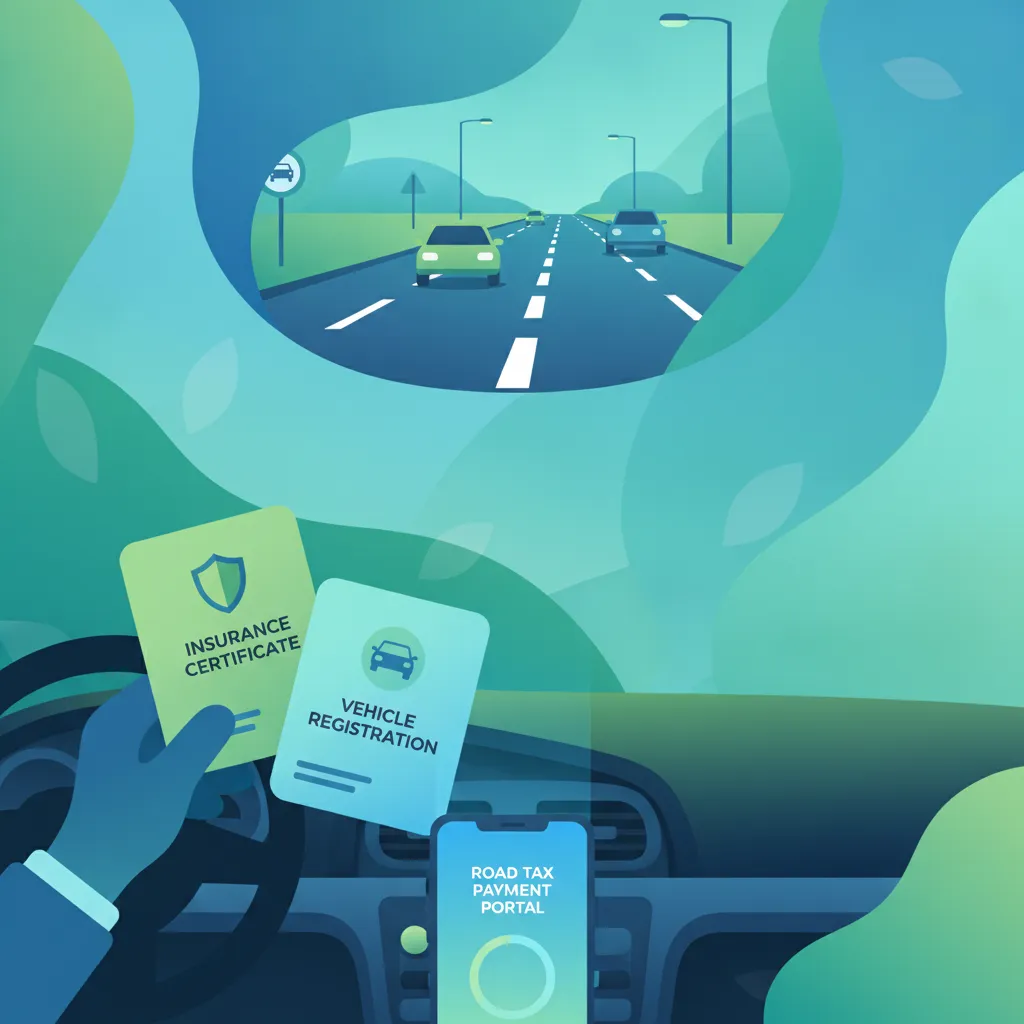
This lesson guides you through the compulsory insurance and tax obligations for Category AM vehicles in Great Britain. It differentiates between third-party and comprehensive insurance policies and explains the legal necessity of each. Furthermore, it details the process for vehicle tax and registration, highlighting the severe consequences of non-compliance, which can include fines, penalty points, and even vehicle seizure, ensuring you understand how to keep your vehicle road-legal.
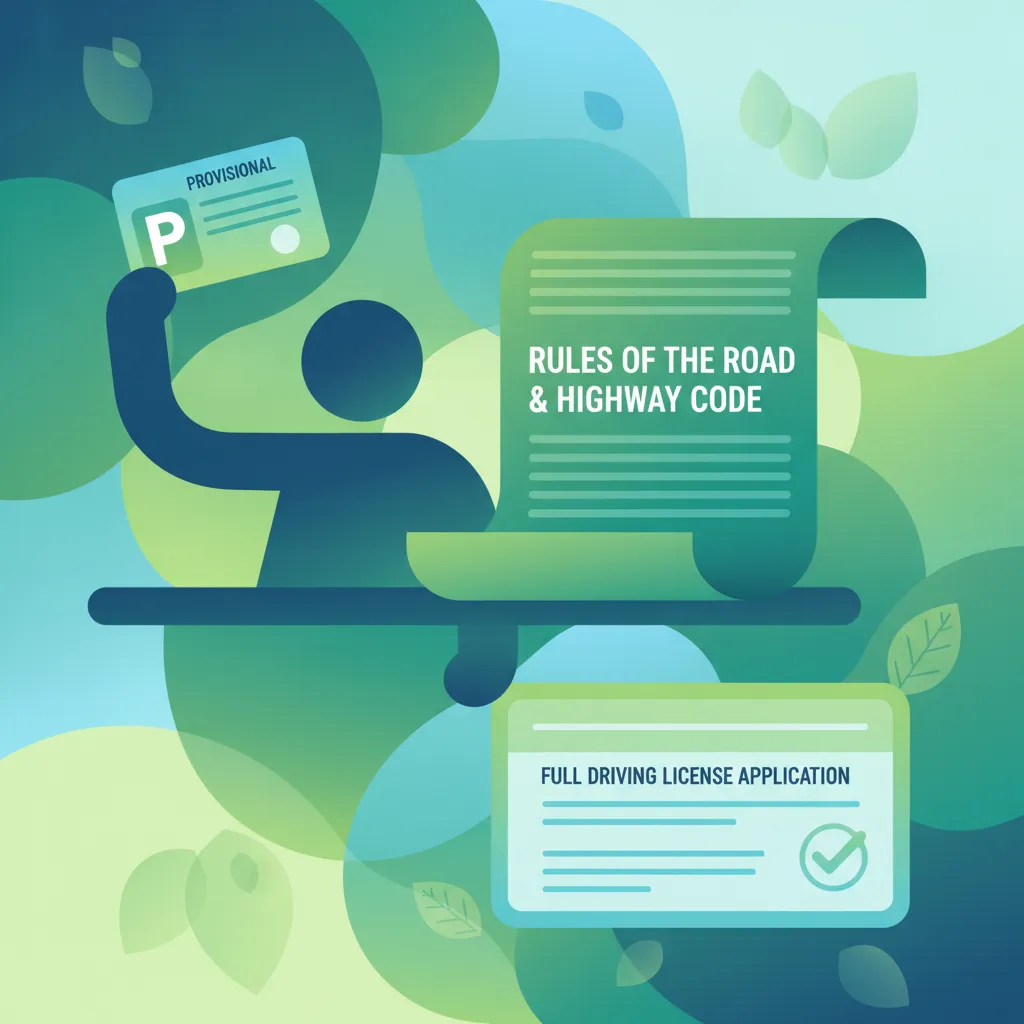
This lesson details the sequential process for acquiring a Category AM licence, starting with the provisional application and moving through the mandatory theory and practical tests. It covers essential criteria like age limits, medical fitness, and the specific rules that apply to learner riders, such as displaying L-plates. You will also learn about the legal duties concerning vehicle registration, insurance, and road tax compliance, which are vital throughout your journey to becoming a qualified rider.
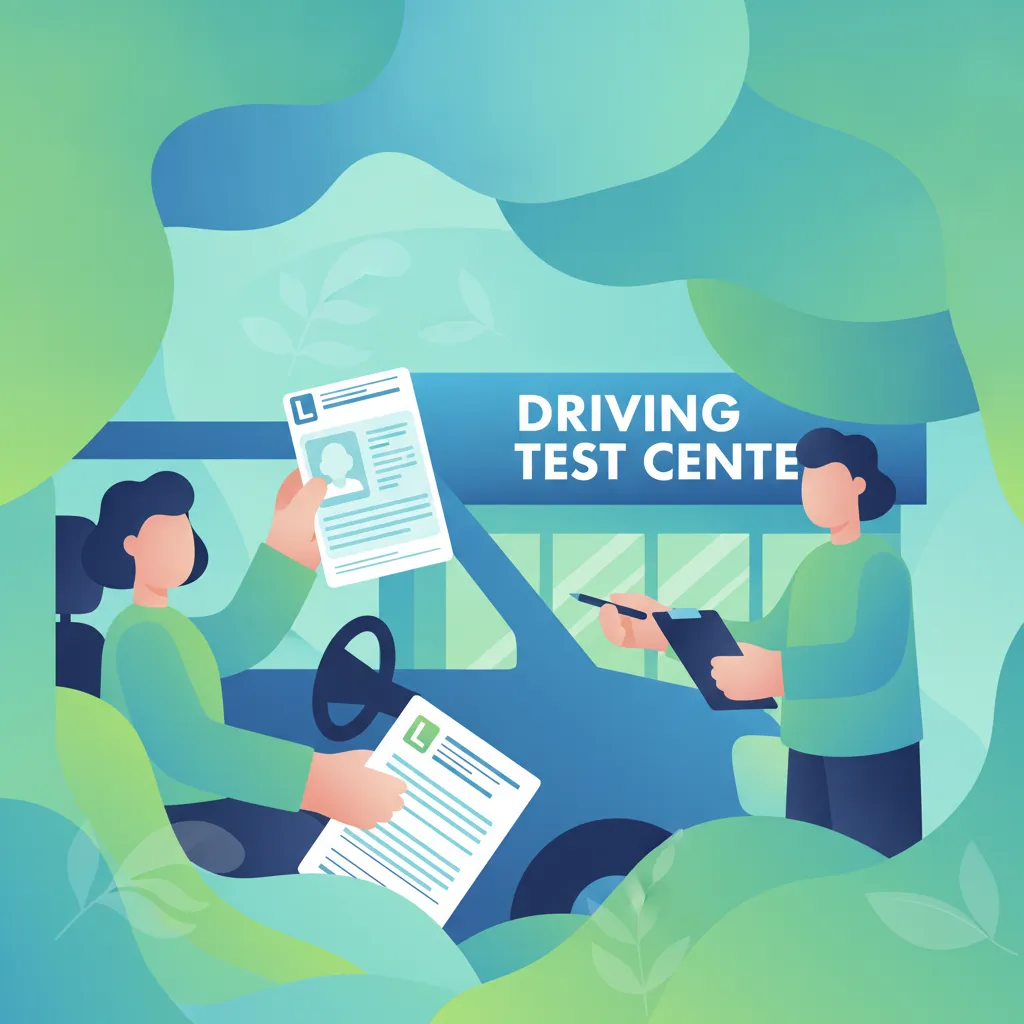
This lesson details all the necessary documentation required at each stage of the AM licensing process, from applying for a provisional licence to attending your theory and practical tests. You will learn about the required forms of identification, proof of insurance, and vehicle registration documents. The lesson also provides a clear overview of the DVSA test procedures, explaining the format of the multiple-choice theory test, the hazard perception section, and the criteria for the practical assessment.
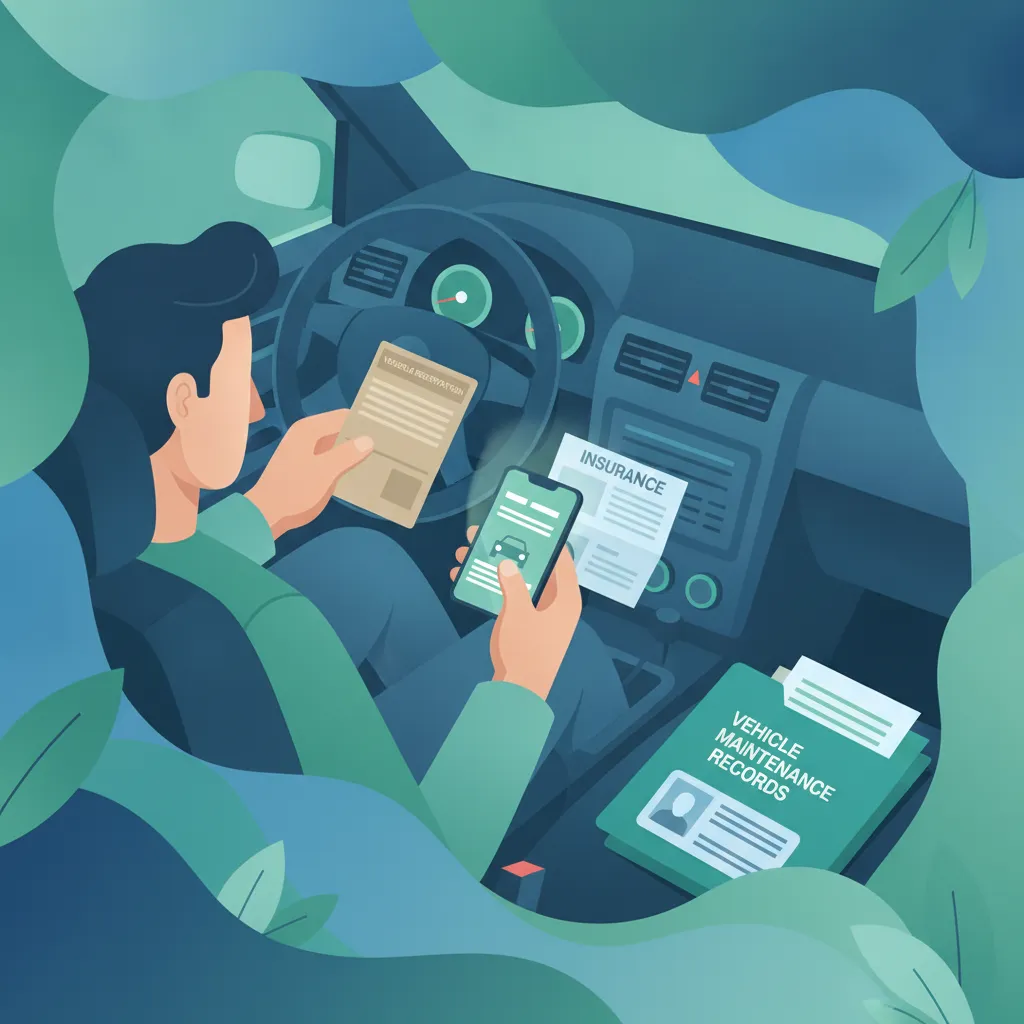
This lesson details the crucial documentation required for legal driving in the UK. It explains the purpose of the V5C registration document, the MOT test certificate, and proof of insurance and road tax (Vehicle Excise Duty). You will learn where to keep these documents and when you might be required to present them to authorities.
Explore the critical topics of driver liability, insurance, and legal penalties in Great Britain. This lesson distinguishes between civil and criminal liability in the context of road incidents. It details the compulsory third-party insurance every driver must have and explains the penalty points system for traffic offences, including fines and potential disqualification.
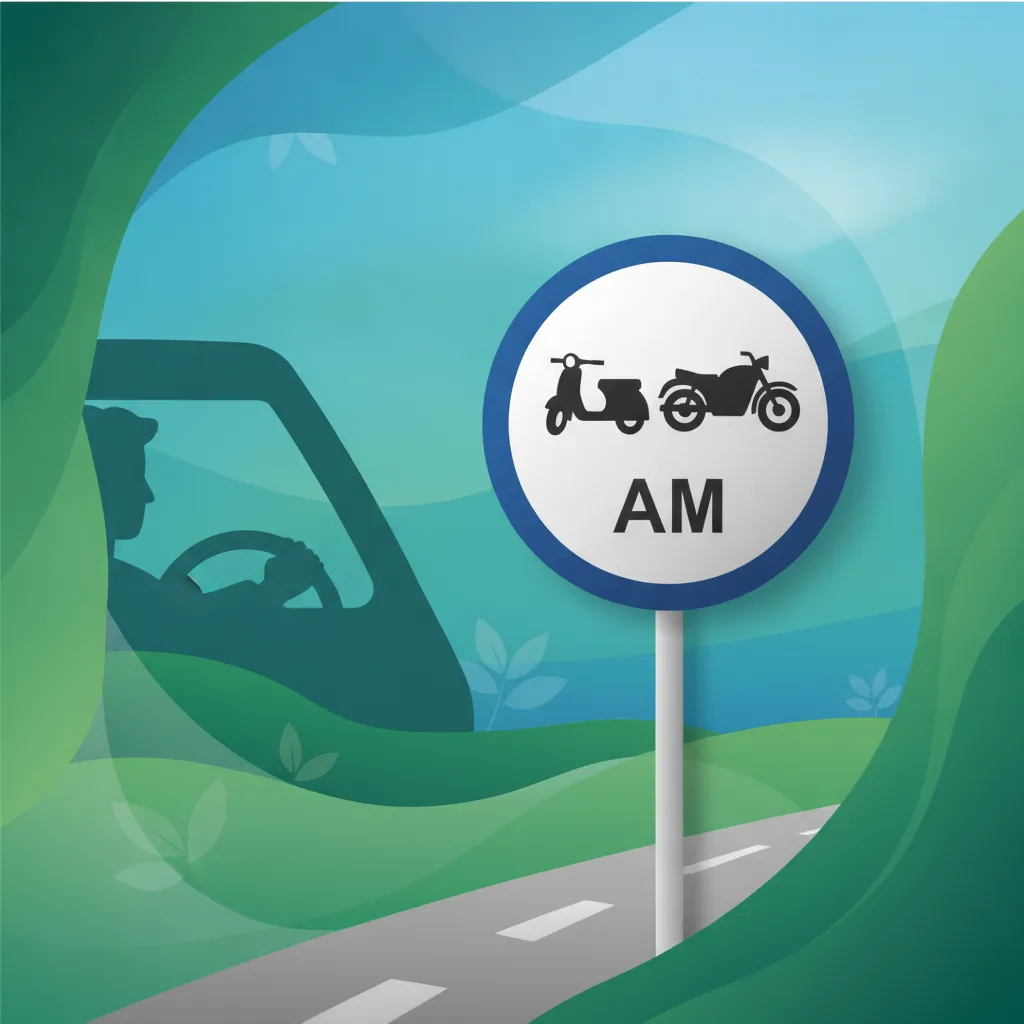
This lesson focuses on regulatory road signs, which convey legally enforceable instructions that all road users must follow. You will learn to identify and understand signs dictating speed limits, prohibited actions like 'no entry' or 'no overtaking', and mandatory directions at junctions. The content explains the distinct shapes and colours used for these signs, ensuring you can comply with their instructions correctly and avoid penalties while riding your AM vehicle.
This lesson explains the legal consequences of committing traffic offences in Great Britain. It details the penalty points system, explaining how points are issued for various offences like speeding or using a mobile phone, and the thresholds that can lead to a driving ban. Understanding these penalties, fines, and potential licence revocation reinforces the importance of consistent, lawful riding and helps you appreciate the value of a clean driving record.
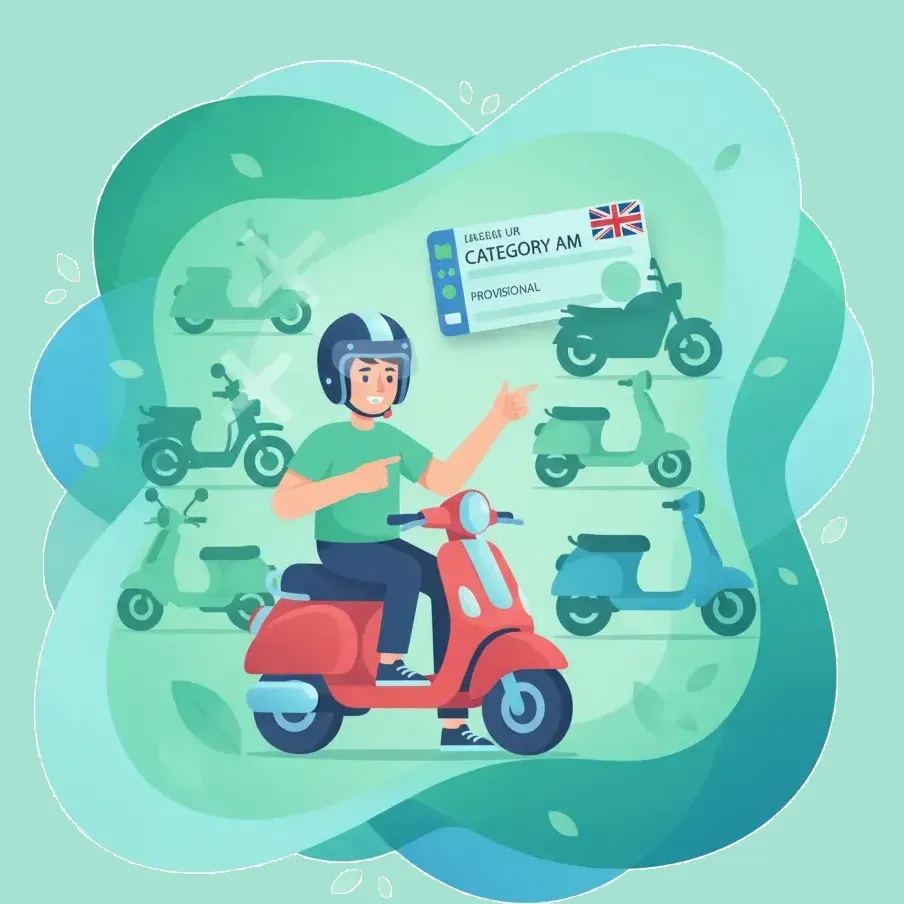
This lesson provides a detailed definition of Category AM, specifying the types of vehicles it covers, including mopeds and light quadricycles. It clarifies the legal technical specifications, such as maximum engine size and speed caps, that define these vehicles in Great Britain. You will learn about the key differences between two- and three-wheeled options and understand how these classifications are crucial for legal compliance, road safety, and passing the theory test.
This lesson outlines the statutory framework governing UK driving licences, focusing on Category B. It details the functions of the Driver and Vehicle Licensing Agency (DVLA) and the Driver and Vehicle Standards Agency (DVSA). Key topics include the various licence categories, age and medical fitness requirements, and the legal standing of the Highway Code.
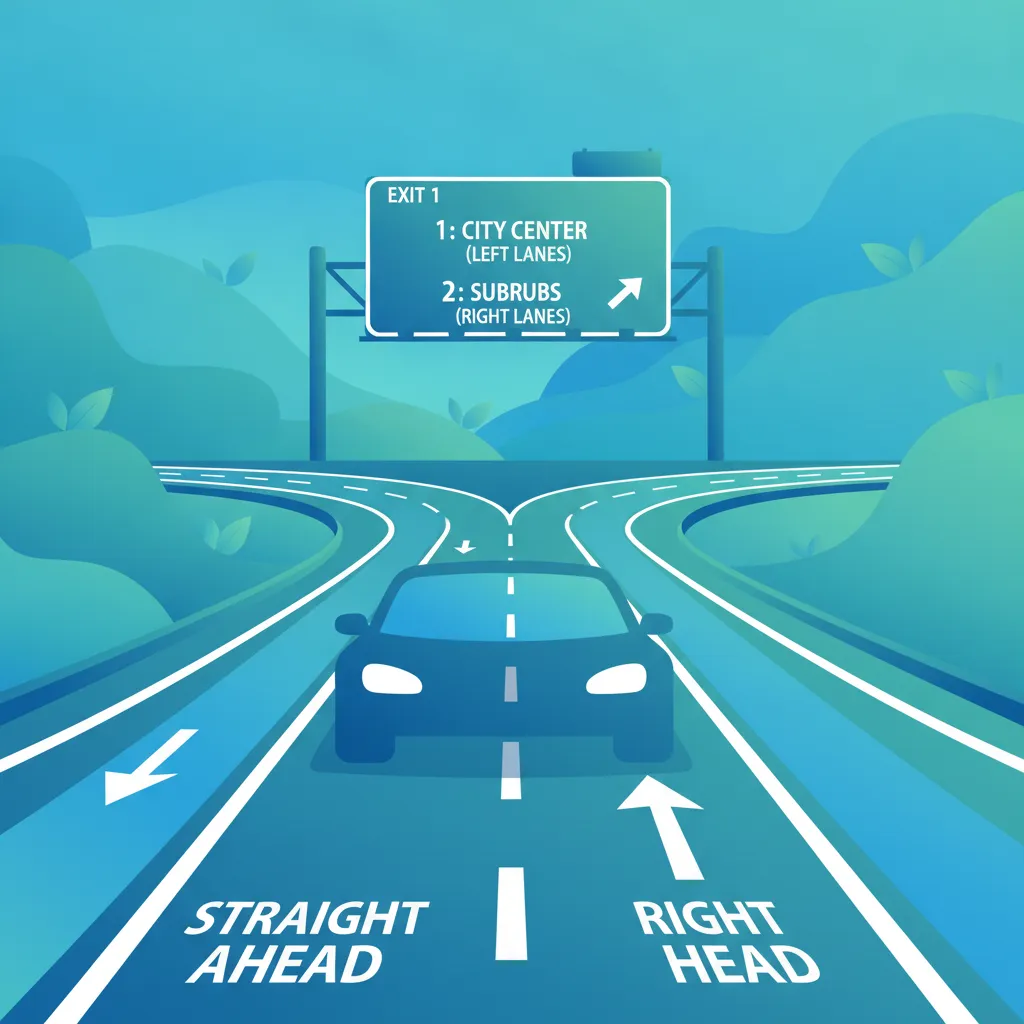
This lesson focuses on the rules conveyed by road markings, such as solid and broken white lines that dictate overtaking rules and lane boundaries. You will learn to interpret waiting and stopping restrictions indicated by yellow and red lines, and understand markings for specific road users like bus and cycle lanes. Maintaining correct lane discipline based on these markings is a fundamental skill for safe navigation and compliance with the Highway Code.
Master defensive riding techniques to anticipate hazards and enhance your visibility as an AM driver. Learn how to actively protect vulnerable road users such as pedestrians and cyclists on UK roads.

A key aspect of motorcycle safety is being seen by others. This lesson teaches techniques to increase your conspicuity on the road. Topics include the strategic use of high-visibility and reflective clothing, correct use of headlights and daytime running lights, and adopting lane positions that place you in the direct line of sight of other drivers.
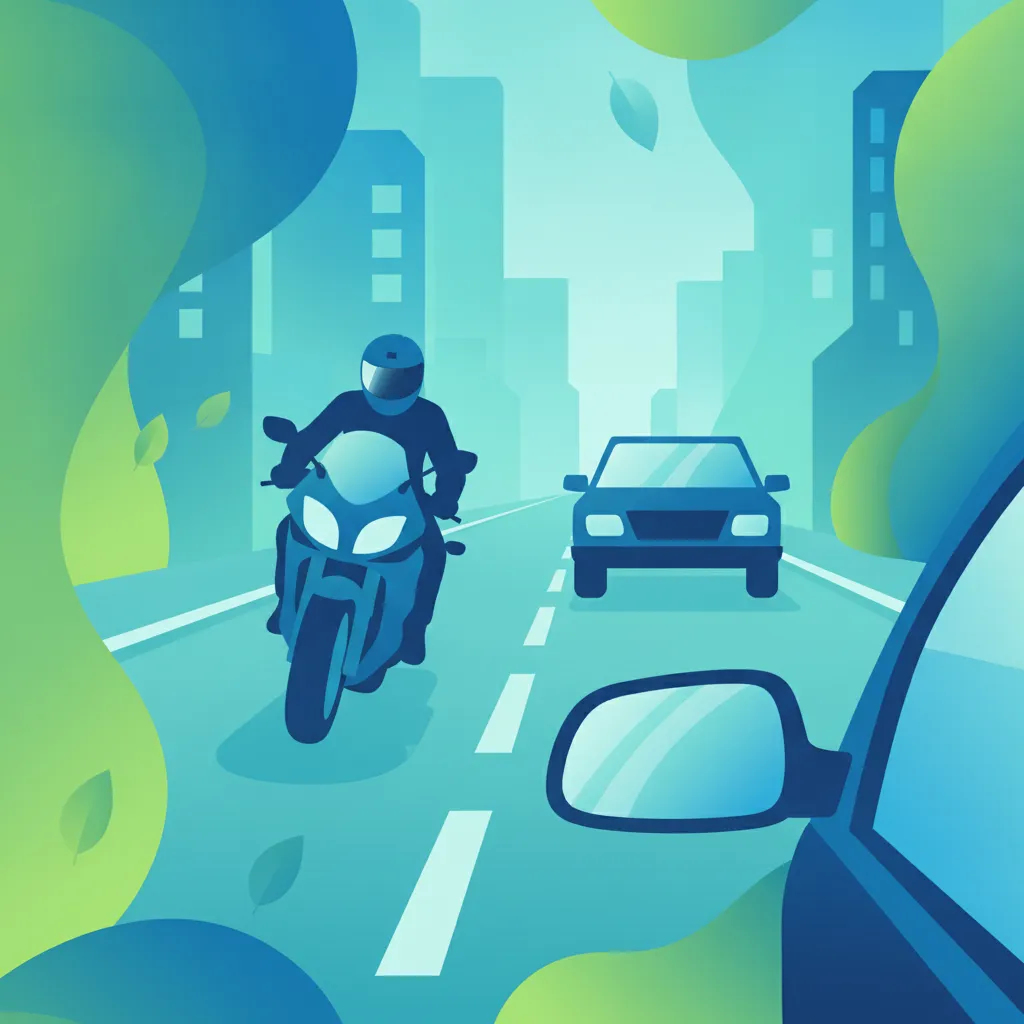
This lesson teaches strategic road positioning techniques to maximize your visibility and safety in traffic. You will learn how to choose the correct lane position to avoid the blind spots of larger vehicles and how to communicate your intentions through predictable riding. Key skills covered include effective use of shoulder checks, making eye contact with drivers, and maintaining a safe following distance, all of which are crucial for defensive riding on British roads.
This lesson focuses on the critical skill of positioning your AM vehicle safely in relation to larger vehicles and roadside hazards like parked cars. You will learn to identify and stay out of the extensive blind spots of lorries and buses, especially at junctions. The content also provides strategies for maintaining a safe 'space cushion' around your vehicle and navigating narrow gaps or filtering in traffic without compromising your safety.

This lesson focuses on the challenges of riding when you can't see or be seen clearly. It covers the correct use of lights in fog, rain, and at night to maximize both your vision and your visibility to others. You will learn why reducing speed is critical, how to use reflective clothing effectively, and strategies for dealing with the glare from other vehicles' headlights to ensure you can navigate safely in all lighting conditions.

Defensive riding is the practice of actively anticipating potential hazards rather than just reacting to them. This lesson teaches you how to scan for clues, predict the actions of other road users, and position yourself to avoid trouble. By developing strong anticipation skills, you can significantly reduce your risk of being taken by surprise on the road.
This lesson highlights why motorcyclists are considered vulnerable road users. It covers the increased risk of serious injury in a collision due to lack of physical protection compared to car occupants. You will learn about common visibility challenges and how to adopt proactive, defensive strategies to mitigate risks and anticipate potential hazards on the road.
This lesson teaches riders how to be constantly aware of blind spots to prevent collisions. You will learn the importance of the 'lifesaver' shoulder check before changing position, turning, or moving off. The content emphasizes active visual scanning of the road ahead and around you, along with developing the judgment needed to accurately assess traffic speed and create safe gaps for maneuvering in various traffic situations.
This lesson focuses on developing advanced hazard perception skills and using them to manage your speed proactively. You will learn to constantly scan the road for potential dangers, anticipate the actions of other road users, and adjust your speed to give yourself more time to react. This defensive approach to speed management is fundamental to staying safe and avoiding emergency situations while riding in complex traffic environments.
This lesson teaches drivers how to identify various types of vulnerable road users and anticipate their potential actions to prevent conflicts. It covers the specific risks associated with pedestrians, cyclists, motorcyclists, children, and elderly or disabled individuals. Emphasis is placed on heightened awareness and defensive driving techniques required to share the road safely. Understanding their perspectives and typical behaviours is key to protecting them and maintaining safety for everyone.
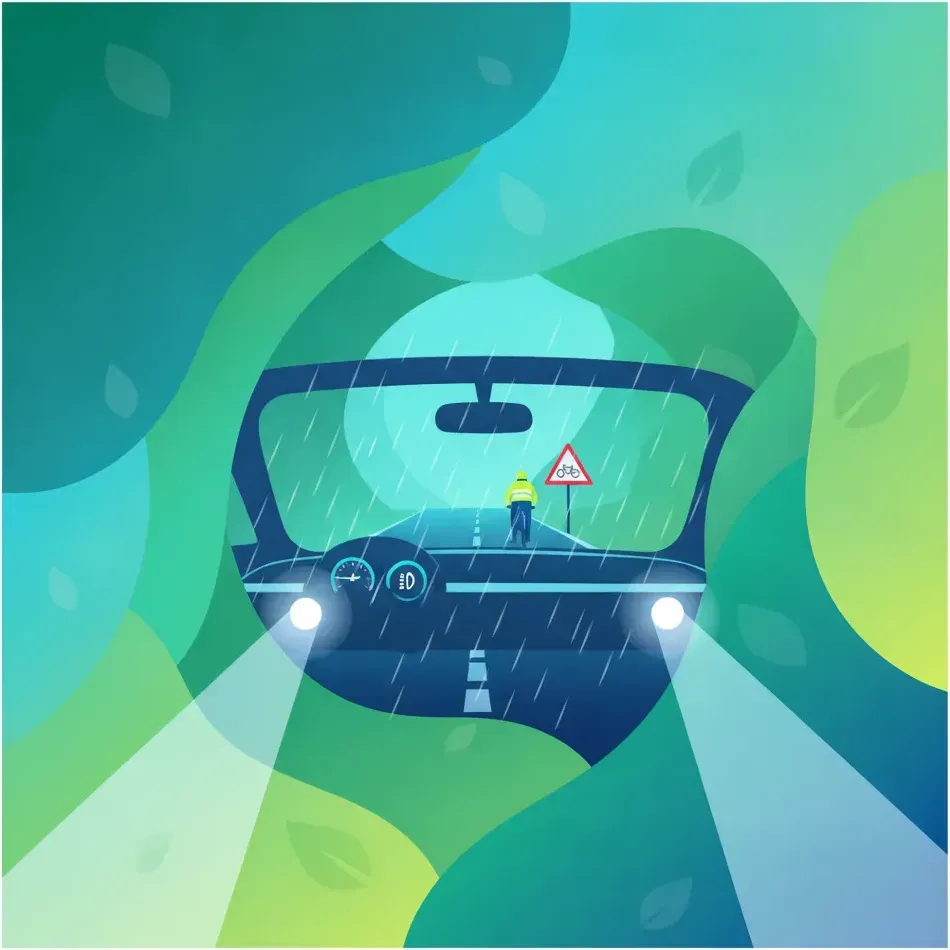
This lesson details the legal requirements and best practices for using lights and reflectors on your moped or light quadricycle. It covers the correct operation of headlamps, daytime running lights, brake lights, and indicators to communicate your intentions clearly to other road users. You will also learn how to enhance your visibility further with strategically placed reflectors and reflective tape, ensuring you remain conspicuous in low-light conditions and compliant with British lighting regulations.
Find clear answers to common questions learners have about Roles and Responsibilities of AM Drivers. Learn how the lesson is structured, which driving theory objectives it supports, and how it fits into the overall learning path of units and curriculum progression in Great Britain. These explanations help you understand key concepts, lesson flow, and exam focused study goals.
Your primary responsibility is to ride in accordance with the Highway Code, ensuring your vehicle is roadworthy and that you are always aware of your surroundings to protect yourself and others.
A pre-journey check helps you identify potential issues with your vehicle and plan for environmental factors like weather or heavy traffic, reducing the risk of a breakdown or accident.
Yes, all road users, including moped and light quadricycle riders, are expected to follow the Highway Code, obey all traffic signs, and demonstrate courtesy toward other road users.
The theory test often includes situational questions where you must choose the safest action based on your responsibilities as a driver. This lesson provides the framework for those decisions.
Dive into our comprehensive question bank to find exactly what you need for your Great Britain theory test. Use our advanced filters to pinpoint specific subjects or test your knowledge on challenging areas, ensuring you're fully prepared for success.