
This lesson guides you through the administrative requirements and examination structure for your Category AM licence. By understanding the necessary paperwork and the mechanics of the DVSA theory test, you will be fully prepared to move through the licensing process without unnecessary delays.
Lesson content overview
Obtaining your Category AM licence in Great Britain involves a structured process, from applying for your initial provisional licence to successfully passing both your theory and practical tests. Each stage of this journey has specific documentation requirements and adheres to detailed test procedures set out by the Driver and Vehicle Standards Agency (DVSA) and the Driver and Vehicle Licensing Agency (DVLA). Understanding these prerequisites is crucial for a smooth and successful path to riding mopeds and light quadricycles legally and safely on UK roads.
This lesson will guide you through all necessary documentation, explain the format and criteria for the DVSA theory test, and detail what to expect during your practical riding assessment. By familiarising yourself with these procedures, you can ensure legal compliance, reduce pre-test anxiety, and build confidence in your preparation.
The licensing process for a Category AM entitlement begins with proving your identity and eligibility to hold a provisional licence. This foundational step ensures that you meet the legal requirements to start learning and ultimately take your riding tests. Proper documentation is a legal assurance, verifying your identity, residency, and medical fitness.
Before you can even consider booking your theory test, you must first apply for and receive a provisional driving licence. This licence permits you to ride a moped or light quadricycle under specific conditions, typically involving the display of 'L' plates and, in some cases, supervision. The application process involves submitting several key documents and a medical fitness declaration.
To apply for a provisional licence, you'll need to provide evidence of your identity and your residency in Great Britain. This is fundamental to prevent fraud and ensure that you are legally eligible to hold a UK driving licence.
You must provide original documents, not photocopies, to the DVLA. Acceptable forms of primary identification include a current, valid UK passport or a full, valid UK driving licence (if applying for an upgrade to AM). If you don't have these, you might use a birth certificate alongside another form of photographic identification. It's vital that any photographic ID is current and unexpired.
For proof of residency, the DVLA typically requires documents dated within the last three months. This confirms your address within Great Britain, aligning your licensing jurisdiction with your current residence. Examples of acceptable proof include recent utility bills (gas, electricity, water), council tax bills, or bank statements. Letters from friends or outdated bills are generally not accepted.
Always double-check the expiry dates of your identity documents before submitting your application. An expired passport or driving licence will lead to delays.
Alongside your identity and residency documents, you will need to complete a D1 application form, which includes a medical fitness declaration. This self-assessment questionnaire asks about any health conditions that could potentially affect your ability to ride a moped safely. It covers aspects such as vision, hearing, neurological conditions, cardiovascular health, and any medications you are taking.
The purpose of the D1 form is to ensure that you are physically and mentally fit enough to operate a motor vehicle on public roads. If you declare certain medical conditions, the DVLA may require further medical evidence from your doctor or arrange an independent medical examination. It is a legal requirement to complete this form accurately and honestly. Incomplete forms or omissions can lead to significant delays in your application and potentially more serious consequences if a condition later comes to light after you've started riding.
Once your application is approved and processed, the DVLA will issue your provisional licence. This document legally grants you the right to learn to ride a Category AM vehicle on public roads, but it comes with important restrictions. You must always display 'L' plates (or 'D' plates in Wales) prominently on both the front and rear of your vehicle.
Furthermore, a provisional licence holder for a moped cannot carry a passenger until they have passed their practical test and obtained a full licence for that category. While learning to ride a Category AM moped or light quadricycle, you are not generally required to be supervised by another rider, provided you are at least 16 years old and have completed compulsory basic training (CBT). However, other licence categories, such as a provisional car licence, do require supervision. It's crucial to understand the specific rules for your provisional AM licence to avoid legal penalties.
Passing the theory test is a mandatory step before you can book your practical riding test. It assesses your knowledge of the Highway Code, road signs, and your ability to spot developing hazards. Proper preparation and having the correct documentation on test day are vital.
Theory tests for all vehicle categories, including Category AM, are administered by the DVSA. You can book your theory test online via the official government website. It is advisable to book well in advance, especially during peak times, to secure your preferred test date and location. Remember, you must hold a valid provisional licence before you can book your theory test. Attempting to book without one will lead to your booking being rejected.
On the day of your theory test, strict identification procedures are in place to ensure that the correct candidate is taking the test. You must bring your provisional driving licence (the plastic photocard and paper counterpart, if applicable) with you. If you have an old-style paper provisional licence, you'll also need to bring a valid passport.
Failure to present the correct and original identification documents will result in you being refused entry to the test. You will also lose your test fee and have to re-book. Photocopies are never accepted.
The DVSA testing centre staff will verify your identity before allowing you into the test room. This measure is critical for preventing fraud and ensuring the integrity of the licensing process.
The DVSA theory test for mopeds and light quadricycles is a computer-based assessment divided into two main parts: a multiple-choice questions (MCQ) section and a hazard perception (HP) section. You must pass both parts at the same sitting to pass the overall theory test.
The multiple-choice section consists of 50 questions, each with several possible answers, from which you must select the correct one. You are given 57 minutes to complete this section. The questions cover a wide range of topics from the Highway Code, including:
To pass the multiple-choice section, you must correctly answer at least 43 out of 50 questions (a pass mark of 86%). Careful reading of each question and all answer options is essential, as some questions may have multiple plausible-sounding answers but only one truly correct option.
After completing the multiple-choice section, there is a short break before you begin the hazard perception test. This part of the test assesses your ability to identify developing hazards on the road. You will watch 14 video clips, each lasting about one minute, featuring everyday road scenes. In 13 of these clips, there will be one developing hazard, while one clip will feature two developing hazards.
A developing hazard is something that might require you to take action, such as changing speed or direction, or stopping. For example, a car emerging from a side road, a pedestrian stepping into the road, or a cyclist swerving. You score points by clicking the mouse as soon as you see a developing hazard. The earlier you spot the hazard and click, the higher your score, up to a maximum of five points per hazard. Clicking too early (before the hazard starts to develop) or clicking in a continuous pattern will result in a zero score for that clip.
For the hazard perception test, there is a total possible score of 75 points (sum of maximum points from all hazards). To pass, you need to score at least 44 out of 75.
Practise the hazard perception test thoroughly. Timing is key; click when the hazard first becomes obvious, not before it has started to develop. Early clicks are considered false alarms and score zero.
Successfully passing both the multiple-choice and hazard perception parts of the theory test will make you eligible to book your practical riding test. A theory test pass certificate is valid for two years. If you do not pass your practical test within this period, you will need to retake and pass the theory test again.
The practical test is the final stage in obtaining your full Category AM licence. It is an on-road assessment designed to evaluate your ability to safely operate a moped or light quadricycle in various traffic conditions. Before you even start the engine, several key requirements must be met to ensure eligibility and roadworthiness.
To take your practical test, you must have successfully passed your theory test and hold a valid theory test pass certificate. You will also need to bring several essential documents to the test centre on the day. These include your provisional driving licence (photocard and paper counterpart), your theory test pass certificate, and proof of your vehicle's insurance and tax.
The vehicle you use for your practical test must be roadworthy, legally taxed, and properly insured.
When attending your practical test on a moped or light quadricycle under your provisional licence, you must continue to display official 'L' plates (or 'D' plates in Wales) on both the front and rear of your vehicle. These plates alert other road users that you are a learner rider.
For Category AM practical tests, you can ride to the test centre independently if you have completed your Compulsory Basic Training (CBT) and are at least 16 years old. You do not require a supervisor on another vehicle. However, ensure that your vehicle's engine size and maximum speed comply with AM category rules.
The practical test for the AM category is designed to assess your ability to ride safely and competently in various real-world traffic situations. The examiner will be looking for evidence that you can handle your vehicle safely, apply the Highway Code, and demonstrate a responsible attitude towards other road users.
The test will typically begin with an eyesight check, where you will be asked to read a number plate from a specified distance. Following this, the examiner will ask you some basic "show me, tell me" questions about routine maintenance and safety checks on your moped. For example, they might ask you to show how you would check the brake fluid levels or tell them how you would check the tyre pressure.
You will then proceed to a designated area, often within the test centre grounds, to demonstrate your ability to perform specific manoeuvres. These usually include:
These manoeuvres are designed to ensure you have fundamental control over your moped or light quadricycle before heading onto public roads.
The main part of the practical test takes place on public roads and typically lasts around 30-40 minutes. The examiner will follow you on a moped or in a car, giving you directions using a radio link. During this section, you will be assessed on:
Throughout the test, the examiner will record any faults you make. These are categorised into minor, serious, or dangerous faults.
To pass your practical test, you must not commit any serious or dangerous faults and accumulate no more than 15 minor faults.
If you pass, the examiner will issue you with a pass certificate. You can then apply to the DVLA to exchange your provisional licence for a full Category AM licence. If you fail, the examiner will explain why, and you will receive a report detailing your faults, which can help you prepare for a re-test.
Obtaining your full Category AM licence is not the end of your documentation responsibilities. To remain a legal and safe rider, you must continuously ensure that your licence, vehicle, and insurance documents are current and compliant. Document retention and updates are an ongoing responsibility to prevent legal penalties and maintain your eligibility to ride.
Your driving licence itself has an expiry date, both for the photocard and the entitlement categories. You must renew your photocard every 10 years. Failure to do so means your licence is not valid, and you could face fines. If you move house, you are legally required to inform the DVLA of your new address within three months. This ensures your licence details are always accurate and that you receive any important correspondence.
Similarly, all vehicle documentation must be kept up to date. The vehicle's registration document (V5C) should always reflect the current keeper and address. If you sell your moped, you must notify the DVLA.
Valid motor insurance and current vehicle tax are legal necessities for using any vehicle on public roads in Great Britain.
Always verify the latest tax exemption thresholds and renewal procedures with the official DVLA guidelines. Regulations can change.
As mentioned, mopeds under 50cc are exempt from the annual MOT test. However, this exemption does not mean they are exempt from being roadworthy. As the keeper, you are legally responsible for ensuring your moped is always in a safe condition to be used on public roads. This includes regular checks of tyres, brakes, lights, steering, and general mechanical soundness. A vehicle deemed unsafe by the police or DVSA, even if MOT-exempt, can lead to fines, penalty points, or even the vehicle being taken off the road.
Understanding the common mistakes made by learners can help you avoid them and improve your chances of a successful outcome in your AM licence journey.
The journey to obtaining your Great Britain Category AM licence is underpinned by a clear set of documentation requirements and test procedures.
Obtaining your Category AM licence requires a structured approach: first applying for a provisional licence with identity, residency, and medical fitness documentation (D1 form); then passing the DVSA theory test comprising 50 multiple-choice questions and 14 hazard perception clips; and finally completing an on-road practical assessment with a roadworthy, taxed, and insured vehicle. The theory test pass marks are 43/50 for multiple-choice and 44/75 for hazard perception, while the practical test permits a maximum of 15 minor faults with zero serious or dangerous faults. After passing, you must maintain current licence details, insurance, and vehicle tax to remain legally compliant on Great Britain roads.
A short set of high-value points that capture the most important learning from this lesson.
You must hold a valid provisional licence before booking either your theory or practical test.
The DVSA theory test requires passing both the 50-question multiple-choice section (43/50 to pass) and the hazard perception section (44/75 to pass) in the same sitting.
Your theory test pass certificate remains valid for two years; you must pass your practical test within this period or retake the theory test.
For the practical test, your moped must be roadworthy, taxed, and insured with valid documentation, regardless of MOT exemption.
You can ride a Category AM moped unsupervised to the test centre after completing CBT at age 16, but must still display 'L' plates.
Explore all units and lessons included in this driving theory course.
Pass mark for multiple-choice: 43 out of 50 questions.
Pass mark for hazard perception: 44 out of 75 points from 14 video clips.
Maximum 15 minor faults allowed on the practical test; even one serious or dangerous fault means failure.
Proof of residency must be dated within the last three months when applying for your provisional licence.
Mopeds under 50cc are exempt from MOT but must still be maintained in a roadworthy condition and legally taxed and insured.
Presenting photocopies, expired documents, or incorrect ID at the test centre, resulting in refusal and loss of fees.
Clicking too early or in a continuous pattern during hazard perception, resulting in zero scores for those clips.
Arriving with a vehicle that has expired insurance or road tax, which causes immediate test cancellation.
Exceeding 15 minor faults or committing a serious fault during the practical test by taking insufficient observations or using incorrect speed at junctions.
Forgetting to display 'L' plates (or 'D' plates in Wales) when riding under a provisional licence on public roads.
Lesson content overview
A short set of high-value points that capture the most important learning from this lesson.
You must hold a valid provisional licence before booking either your theory or practical test.
The DVSA theory test requires passing both the 50-question multiple-choice section (43/50 to pass) and the hazard perception section (44/75 to pass) in the same sitting.
Your theory test pass certificate remains valid for two years; you must pass your practical test within this period or retake the theory test.
For the practical test, your moped must be roadworthy, taxed, and insured with valid documentation, regardless of MOT exemption.
You can ride a Category AM moped unsupervised to the test centre after completing CBT at age 16, but must still display 'L' plates.
Explore all units and lessons included in this driving theory course.
Pass mark for multiple-choice: 43 out of 50 questions.
Pass mark for hazard perception: 44 out of 75 points from 14 video clips.
Maximum 15 minor faults allowed on the practical test; even one serious or dangerous fault means failure.
Proof of residency must be dated within the last three months when applying for your provisional licence.
Mopeds under 50cc are exempt from MOT but must still be maintained in a roadworthy condition and legally taxed and insured.
Presenting photocopies, expired documents, or incorrect ID at the test centre, resulting in refusal and loss of fees.
Clicking too early or in a continuous pattern during hazard perception, resulting in zero scores for those clips.
Arriving with a vehicle that has expired insurance or road tax, which causes immediate test cancellation.
Exceeding 15 minor faults or committing a serious fault during the practical test by taking insufficient observations or using incorrect speed at junctions.
Forgetting to display 'L' plates (or 'D' plates in Wales) when riding under a provisional licence on public roads.
Explore search topics learners often look for when studying Required Documentation and Test Procedures. These topics reflect common questions about road rules, driving situations, safety guidance, and lesson level theory preparation for learners in Great Britain.
Browse additional driving theory lessons that cover connected traffic rules, road signs, and common driving situations related to this topic. Improve your understanding of how different rules interact across everyday traffic scenarios.
Understand the essential documentation for your AM licence application and what to expect during DVSA theory and practical test procedures in Great Britain. Prepare for your exams with confidence.
This lesson details the crucial documentation required for legal driving in the UK. It explains the purpose of the V5C registration document, the MOT test certificate, and proof of insurance and road tax (Vehicle Excise Duty). You will learn where to keep these documents and when you might be required to present them to authorities.
This lesson provides a clear guide to the legal restrictions placed on drivers with a provisional licence. It covers the mandatory display of L-plates and the specific criteria for a supervising driver, including age and experience. Furthermore, it explains the prohibition on driving on motorways and other rules designed to ensure safety during the learning process.
This lesson details the documentation a motorcyclist is legally required to produce when stopped by the police or a DVSA officer. It covers the driving licence, valid certificate of insurance, current MOT certificate, and the vehicle registration document (V5C). You will also learn about the legal consequences of failing to provide these documents, such as fines and penalty points.
This lesson outlines the statutory framework governing UK driving licences, focusing on Category B. It details the functions of the Driver and Vehicle Licensing Agency (DVLA) and the Driver and Vehicle Standards Agency (DVSA). Key topics include the various licence categories, age and medical fitness requirements, and the legal standing of the Highway Code.
This lesson provides essential guidance for handling on-road emergencies. It outlines the steps to take if your vehicle breaks down, including making yourself visible and getting to a place of safety. You will also learn the basics of what to do at an accident scene, including assessing the situation, calling for help, and providing simple first aid until professional assistance arrives.
This lesson provides a comprehensive overview of the four passenger vehicle licence categories: D1, D, D1E, and DE. It details the specific legal criteria, vehicle types, and eligibility requirements for each. Learners will understand how DVSA theory test mandates intersect with DVLA licensing procedures, clarifying the privileges and limitations of each category. The content also explains the key statutory provisions from the Highway Code that govern passenger vehicle operation in Great Britain.

This lesson covers the critical legal requirement for accurate record-keeping in the transport industry. It provides detailed instruction on the correct use of both analogue and digital tachographs to record driving time, breaks, and other work. You will also learn about other essential documents that must be carried, such as load manifests and delivery notes, and the importance of keeping these records accurate and available for inspection by enforcement authorities.
Learn how to prepare for your DVSA theory and practical tests for the AM licence in Great Britain, including crucial ongoing compliance with vehicle, insurance, and licence document requirements.
This lesson guides you through the compulsory insurance and tax obligations for Category AM vehicles in Great Britain. It differentiates between third-party and comprehensive insurance policies and explains the legal necessity of each. Furthermore, it details the process for vehicle tax and registration, highlighting the severe consequences of non-compliance, which can include fines, penalty points, and even vehicle seizure, ensuring you understand how to keep your vehicle road-legal.
This lesson details the sequential process for acquiring a Category AM licence, starting with the provisional application and moving through the mandatory theory and practical tests. It covers essential criteria like age limits, medical fitness, and the specific rules that apply to learner riders, such as displaying L-plates. You will also learn about the legal duties concerning vehicle registration, insurance, and road tax compliance, which are vital throughout your journey to becoming a qualified rider.
This lesson explains the different motorcycle licence categories in Great Britain, including A1, A2, and the unrestricted Category A. It details the specific age requirements, power and engine size restrictions, and the mandatory training progression set by the DVSA. Learners will understand the entitlements and limitations of each licence, ensuring they follow the correct legal path to becoming a qualified rider.
This lesson details the documentation a motorcyclist is legally required to produce when stopped by the police or a DVSA officer. It covers the driving licence, valid certificate of insurance, current MOT certificate, and the vehicle registration document (V5C). You will also learn about the legal consequences of failing to provide these documents, such as fines and penalty points.
This lesson explains the legal consequences of committing traffic offences in Great Britain. It details the penalty points system, explaining how points are issued for various offences like speeding or using a mobile phone, and the thresholds that can lead to a driving ban. Understanding these penalties, fines, and potential licence revocation reinforces the importance of consistent, lawful riding and helps you appreciate the value of a clean driving record.
This lesson details the legal requirements and best practices for using lights and reflectors on your moped or light quadricycle. It covers the correct operation of headlamps, daytime running lights, brake lights, and indicators to communicate your intentions clearly to other road users. You will also learn how to enhance your visibility further with strategically placed reflectors and reflective tape, ensuring you remain conspicuous in low-light conditions and compliant with British lighting regulations.
This lesson details the crucial documentation required for legal driving in the UK. It explains the purpose of the V5C registration document, the MOT test certificate, and proof of insurance and road tax (Vehicle Excise Duty). You will learn where to keep these documents and when you might be required to present them to authorities.
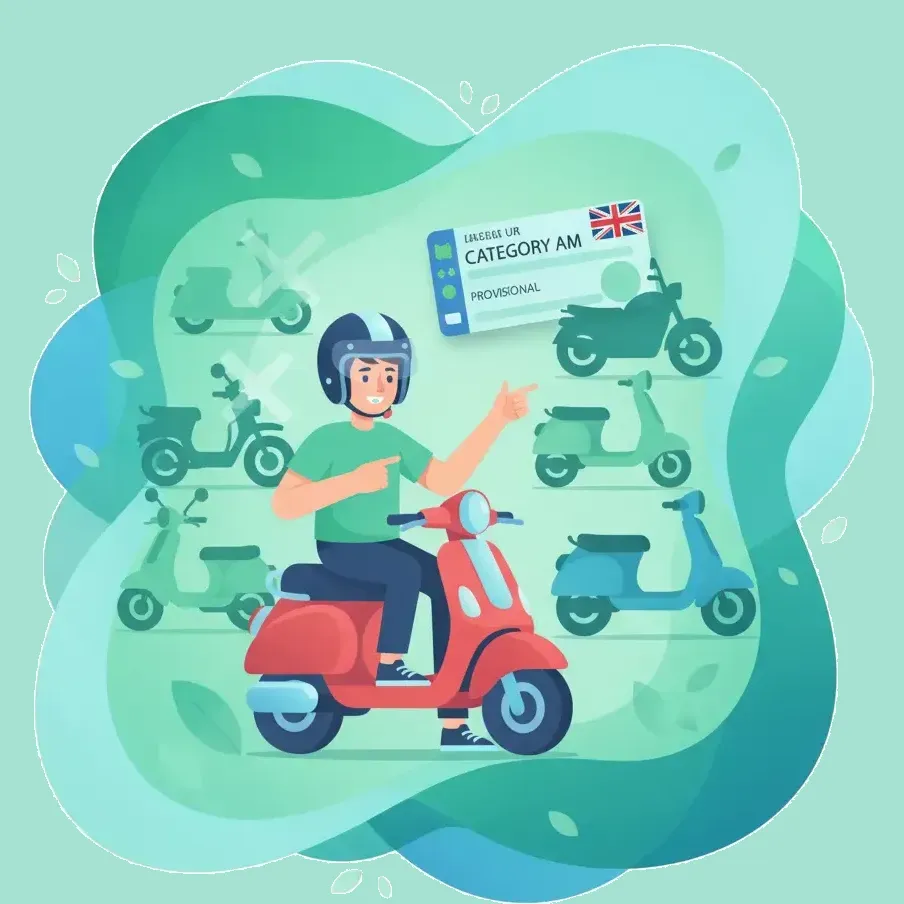
This lesson provides a detailed definition of Category AM, specifying the types of vehicles it covers, including mopeds and light quadricycles. It clarifies the legal technical specifications, such as maximum engine size and speed caps, that define these vehicles in Great Britain. You will learn about the key differences between two- and three-wheeled options and understand how these classifications are crucial for legal compliance, road safety, and passing the theory test.
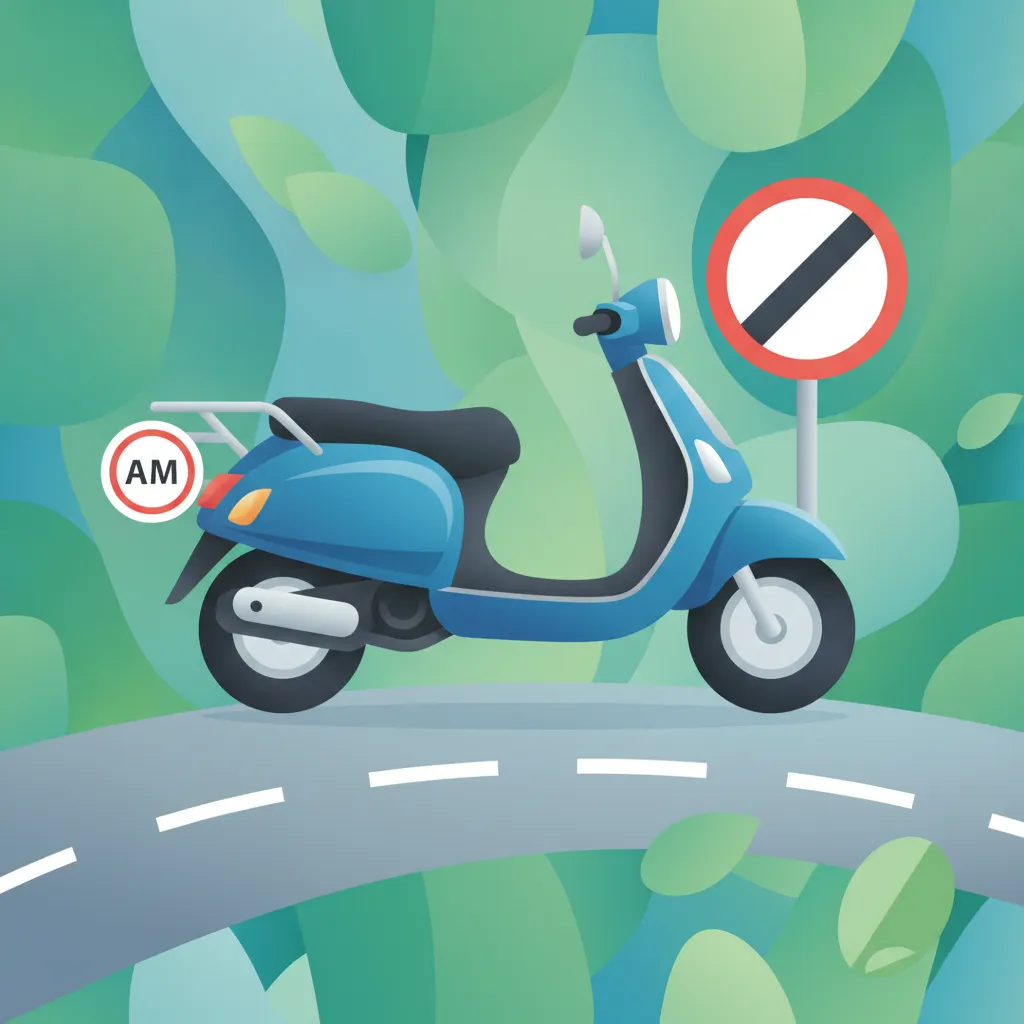
This lesson clarifies the specific speed limits that apply to Category AM vehicles on various British roads, from 30 mph zones in built-up areas to national speed limits on single and dual carriageways. It emphasizes that the posted limit is a maximum, not a target, and teaches you how to choose an appropriate speed based on factors like weather, traffic, and road layout. Understanding these rules is vital for both legal compliance and personal safety.
This lesson provides a comprehensive overview of the four passenger vehicle licence categories: D1, D, D1E, and DE. It details the specific legal criteria, vehicle types, and eligibility requirements for each. Learners will understand how DVSA theory test mandates intersect with DVLA licensing procedures, clarifying the privileges and limitations of each category. The content also explains the key statutory provisions from the Highway Code that govern passenger vehicle operation in Great Britain.
Find clear answers to common questions learners have about Required Documentation and Test Procedures. Learn how the lesson is structured, which driving theory objectives it supports, and how it fits into the overall learning path of units and curriculum progression in Great Britain. These explanations help you understand key concepts, lesson flow, and exam focused study goals.
You must bring your valid Great Britain provisional driving licence. Without this specific form of photo ID, you will not be permitted to take your test and will lose your booking fee.
The AM theory test shares the same two-part structure as the car theory test, consisting of a multiple-choice section and a hazard perception test. However, the question bank is specifically tailored to mopeds and light quadricycles.
If you do not have the required documents, you will be turned away from the test centre. It is essential to double-check your appointment confirmation email and have your provisional licence ready the night before.
Yes, if you are providing your own moped for the practical test, it must be taxed, have a valid MOT if applicable, and be covered by insurance that specifically includes cover for riding during a practical driving test.
Dive into our comprehensive question bank to find exactly what you need for your Great Britain theory test. Use our advanced filters to pinpoint specific subjects or test your knowledge on challenging areas, ensuring you're fully prepared for success.