This lesson guides you through the crucial rules of priority for moped and light quadricycle riders in Great Britain. You will learn to interpret road signs and markings at junctions and roundabouts to navigate intersections safely. Building on your knowledge of road signs, this lesson ensures you can make quick, legal decisions to pass your theory test and ride with confidence.
Lesson content overview
Understanding and correctly applying priority rules is fundamental to safe driving and riding on Great Britain's roads. For AM licence holders, mastering these rules is not just about passing your theory test; it's about confidently and safely navigating junctions, roundabouts, and crossings, which are often accident hotspots. This lesson will comprehensively explain who has the right-of-way in various scenarios, ensuring you can make quick and correct decisions to prevent collisions and maintain smooth traffic flow.
The concept of priority, often referred to as right-of-way, dictates which road user has legal precedence to proceed at a given point in time. At intersections, where paths converge, clear rules are essential to prevent conflict and reduce the risk of accidents. For those operating mopeds and light quadricycles, understanding these rules is particularly vital due to your increased vulnerability compared to larger vehicles. Incorrect priority decisions are a leading cause of collisions at junctions, highlighting the importance of thorough knowledge and vigilance.
These rules are enshrined in the Highway Code and the Road Traffic Act 1996, making compliance a legal obligation. By adhering to them, you contribute to a safer road environment for everyone and avoid potential legal penalties, including fines and penalty points on your licence. This lesson will build upon your existing knowledge of basic road signs, markings, and traffic light signals, providing a comprehensive framework for applying these principles in dynamic Great British road conditions.
The Highway Code establishes a clear Hierarchy of Road Users to protect the most vulnerable. This hierarchy dictates that those who can cause the greatest harm bear the greatest responsibility to reduce the danger or threat they pose to others. As an AM licence holder, you are positioned within this hierarchy and must understand its implications for your interactions with other road users.
The established order of priority among different road users, where those who can cause the most harm have the greatest responsibility to reduce danger to others.
The hierarchy places pedestrians at the top, followed by cyclists, horse riders, and then motorcyclists (including mopeds and light quadricycles). Cars and larger vehicles are at the bottom, meaning they have the greatest responsibility to protect those above them. This does not automatically give vulnerable users the right-of-way in every situation, but it places a higher duty of care on drivers of larger, heavier vehicles. You must always anticipate and give way according to this hierarchy, especially at crossings and junctions.
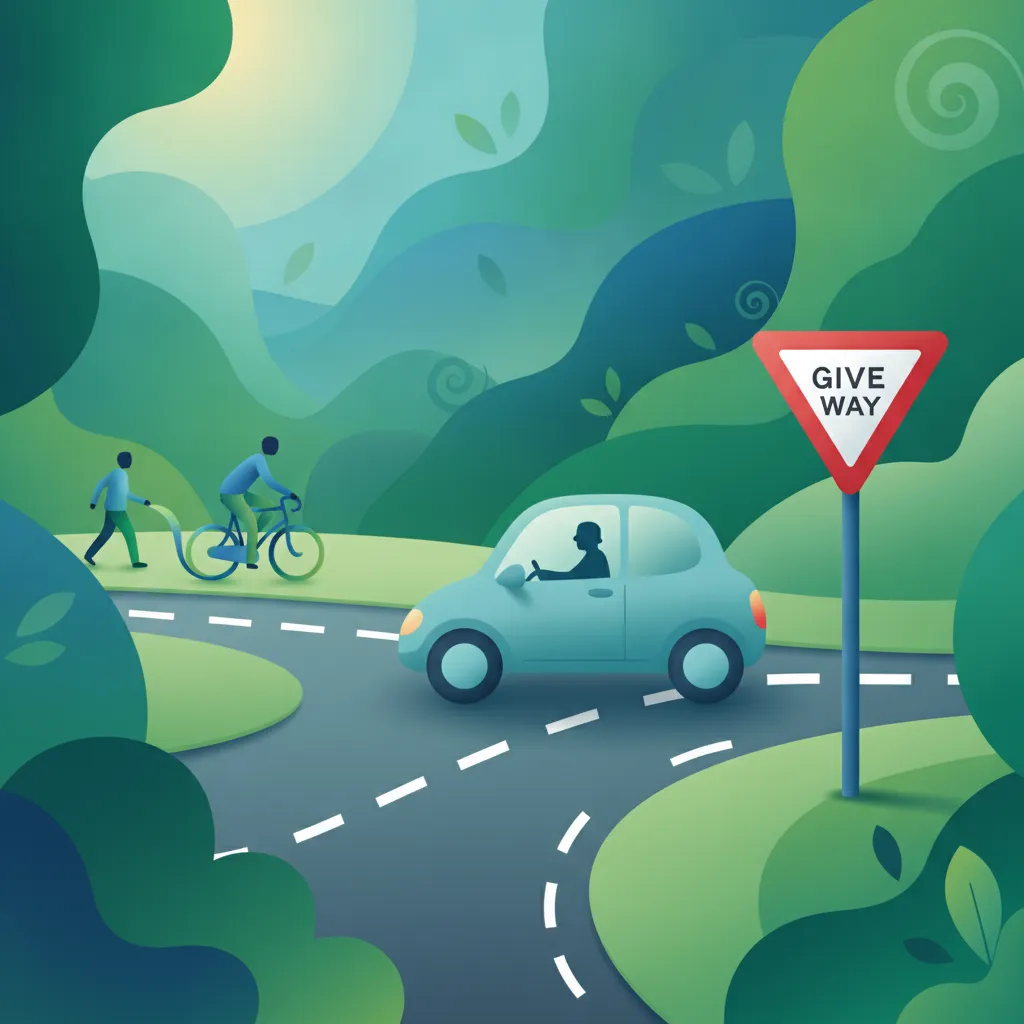
The Highway Code specifically instructs drivers, including AM licence holders, to give way to pedestrians who are crossing or waiting to cross a road that a driver is turning into. This rule applies even if there is no specific crossing marked. Similarly, you must give way to cyclists and horse riders when they are crossing your path, particularly at junctions or where they are proceeding straight ahead and you are turning. Your smaller size and greater agility as an AM vehicle do not exempt you from this responsibility; instead, they require you to be even more observant and cautious to protect even more vulnerable road users.
Always assume the greatest responsibility. Even if you believe you have priority, consider whether giving way would prevent an accident or protect a more vulnerable road user. Defensive riding is key.
Not all junctions in Great Britain are clearly marked with signs or road markings. These unmarked intersections require drivers to apply a fundamental priority rule to determine who proceeds first. This often applies to crossroads and T-junctions in residential areas or rural settings where traffic volumes are lower.
At an unmarked intersection, the rule is to give way to traffic approaching from the right. This simple, universal principle helps to manage traffic flow and reduce conflict points where no specific signage or markings exist. This rule is particularly crucial at standard crossroads and T-junctions without give-way lines.
The rule stipulating that at unmarked intersections, drivers must yield to any vehicle approaching from their right.
When you approach an unmarked junction, you must scan thoroughly to your right for any approaching vehicles. If a vehicle is coming from your right, you must stop or slow down significantly to allow them to proceed before you enter the junction. Only when the path is clear can you safely proceed. Confusion often arises because some perceive "right-hand traffic" as always having priority, but this rule specifically applies to unmarked intersections.
Main roads are often designated as priority roads to maintain the flow of traffic. Drivers on these roads generally have priority over traffic joining from side roads. Understanding how to identify a priority road and when you must give way is crucial.
A main road will typically be indicated by a Priority Road sign, which is a white diamond with a black border. When you see this sign, it signifies that traffic on this road has priority over traffic from any side road until another sign (such as a "Give Way" or "Stop" sign) indicates otherwise.
Conversely, if you are joining a main road from a side road, you will almost always encounter a Give Way sign or a Stop sign. These signs are accompanied by distinct road markings. A "Give Way" sign is an inverted red triangle with a white border.
The associated road marking for a "Give Way" sign is a thick broken white line across the width of the road you are on. For a "Stop" sign, the marking is a solid white line. In both cases, you must stop or slow down and yield to traffic on the main road before proceeding.
A thick broken white line painted across a road at a junction, indicating where drivers must stop to yield to traffic on the intersecting road.
It is a common misunderstanding to assume priority based on perceived speed or traffic volume rather than relying on the official signage and road markings. Always look for the signs and lines to confirm who has priority. Side road drivers must stop or slow down before the give-way line and assess the traffic on the main road, proceeding only when it is safe and clear to do so without causing other vehicles to change speed or direction.
Roundabouts are designed to improve traffic flow and reduce congestion at multi-junction intersections. They operate on specific priority rules that are critical for safe navigation. Unlike unmarked intersections, the "give way to the right" rule does not apply universally at roundabouts.
The golden rule for roundabouts in Great Britain is: all entering traffic must give way to traffic already on the roundabout. This rule ensures continuous flow for vehicles already circulating and prevents traffic from locking up. When approaching a roundabout, you will see a "Give Way" sign and a broken white give-way line at the entry point. You must stop or slow down at this line and look to your right (the traffic already on the roundabout) before proceeding.
A common mistake is giving way to traffic on your right when entering a roundabout. Always give way to traffic approaching from your immediate left that is already on the roundabout, unless signs or signals indicate otherwise.
Once you are on the roundabout, you have priority over any traffic attempting to enter from subsequent junctions. This changes only if traffic lights are present, as they would then override the standard roundabout priority rules.
Mini-roundabouts operate on the same principle: give way to traffic from your immediate right that is already on the roundabout. However, their small size means you might need to give way to traffic from any direction if it is already established on the roundabout or arriving at the same time. Treat the painted circle as a physical island.
Signalised roundabouts are larger roundabouts controlled by traffic lights. In these cases, you must obey the traffic light signals first and foremost. The lights will dictate when you can enter the roundabout and when circulating traffic must stop. Even on signalised roundabouts, however, you must remain aware of the underlying priority rule: if the lights are off or flashing amber, you should revert to giving way to traffic already on the roundabout.
Protecting vulnerable road users, especially pedestrians and cyclists, is paramount. Great Britain has several types of marked crossings, each with specific rules that you, as an AM licence holder, must strictly adhere to.
Zebra crossings are easily identifiable by their black and white stripes on the road and flashing amber "Belisha beacons" on either side. At a zebra crossing, pedestrians always have priority once they have stepped onto the crossing.
A pedestrian crossing marked with alternating black and white stripes on the road surface and flashing amber lights (Belisha beacons) on poles.
As an AM licence holder, you must be prepared to stop well in advance if you see pedestrians waiting to cross or already on the crossing. Do not wave pedestrians across, as this can be dangerous if another driver does not see them or interpret your signal. Wait until they have fully cleared the crossing before proceeding.
These crossings are controlled by traffic lights, usually activated by pedestrians or cyclists pressing a button.
Even where there are no specific road markings for a crossing, if pedestrians are waiting to cross a road that you are turning into, or if they are already crossing, you must give way to them. This is part of your responsibility within the hierarchy of road users and aligns with the general principle of protecting vulnerable road users. Always be vigilant for pedestrians, especially in urban areas and near shops or schools.
Traffic light signals are the highest authority for priority at an intersection. When traffic lights are in operation, their instructions supersede all other give-way signs, road markings, and general priority rules.
Signals using coloured lights (red, amber, green) to control traffic flow and assign priority at junctions.
A flashing amber signal (often seen at Pelican crossings or sometimes on junctions when traffic lights are malfunctioning or operating at night) means proceed with caution. You may pass the signal only if the crossing or junction is clear, but you must be prepared to stop immediately if necessary. Incorrectly treating a flashing amber as a full stop or ignoring it entirely can lead to accidents. Some signalised junctions may also have green arrow signals allowing specific turning movements even when the main light is red for other directions; always obey these arrows precisely.
Priority rules are absolute, but their application requires judgment, especially when external conditions reduce visibility or affect stopping distances. As an AM licence holder, your vehicle's characteristics and your own vulnerability demand extra caution.
Vulnerable road users like pedestrians, cyclists, and horse riders are even harder to see in adverse weather or poor light. They may also be more preoccupied with navigating difficult conditions themselves. This reinforces the Hierarchy of Road Users principle: you must exercise even greater care and be prepared to yield, knowing that they might not see you or be able to react as quickly. For horse riders, remember their slower acceleration and larger turning radius when assessing priority.
Mistakes in applying priority rules are a leading cause of collisions. Being aware of common pitfalls can help you avoid them.
All priority rules discussed are mandatory under the Highway Code and, in many cases, legally enforceable under the Road Traffic Act 1996. Failure to observe these rules is considered negligence and can lead to significant consequences, including:
Beyond the legal aspect, the primary implication is safety. Correctly applying priority rules reduces conflict points, minimises sudden braking or swerving, and fosters predictable behaviour among road users. This predictability is crucial for safe traffic flow and significantly reduces the risk and severity of accidents. Your reaction time and your moped's stopping capabilities are key physical considerations; early observation and yielding provide a larger safety margin.
To solidify your understanding, let's explore how these rules apply in various common Great British road scenarios.
Setting: You are riding your moped on a narrow, two-lane country road with clear daylight and dry conditions. You approach a side road that joins the main road from your left, without any signs or markings. Another moped is approaching from the side road. Relevant Rule: Give Way at Unmarked Intersections (Rule 1, Highway Code Rule 176). Correct Behavior: As the driver on the main road, you generally have priority, but the side road driver must give way to traffic on the main road. However, if you were on the side road approaching the main road, you would need to stop, look right, then left, and proceed only when clear. If the junction was a crossroads and a vehicle was approaching from your right, you would need to yield to them. Explanation: In Great Britain, the "Rule of the Road" means you give way to traffic on the road you are turning onto, unless signs say otherwise. At an unmarked T-junction where you are on the main road, you would have priority. If you were on the minor road, you would have to yield. If it were an unmarked crossroads, the "give way to traffic from the right" rule would apply to you and all other vehicles.
Setting: You are approaching a small roundabout in a residential area. There is a marked zebra crossing just before the roundabout entry. You see pedestrians waiting to cross. Relevant Rules: Roundabout Priority (Rule 3, Highway Code Rule 187) and Pedestrian Priority at Crossings (Rule 4, Highway Code Rule 193). Correct Behavior: You must first stop at the zebra crossing to allow the pedestrians to cross safely. Once the pedestrians have cleared the crossing, you then approach the roundabout give-way line, look to your right for circulating traffic, and enter the roundabout only when there is a safe gap. Explanation: Pedestrian priority at a zebra crossing takes precedence over your desire to enter the roundabout. You must ensure pedestrian safety before applying roundabout entry rules.
Setting: You are riding on a main road designated by a "Priority Road" sign. A side road merges onto your path from the left, and drivers on the side road face a "Give Way" sign and a thick broken white give-way line. Relevant Rule: Priority for Main Roads (Rule 2, Highway Code Rules 174–175). Correct Behavior: You continue on the main road without needing to slow down or stop, as you have priority. Drivers on the side road are obligated to stop at their give-way line and wait for a safe opportunity to join the main road. Explanation: The "Priority Road" sign and the give-way markings clearly assign priority to traffic on the main road, ensuring smooth flow.
Setting: You are riding down a busy city street with parked cars. There is no marked zebra or signalised crossing, but a group of pedestrians is waiting to cross where you intend to turn left into a side street. Relevant Rule: Pedestrian Priority at Crossings (Rule 4, Highway Code Rule 170) and Hierarchy of Road Users (Rule 5). Correct Behavior: You should slow down, signal your turn, and be prepared to stop to allow the pedestrians to cross safely before you complete your turn. Explanation: Even without specific markings, the Highway Code requires you to give way to pedestrians who are crossing or waiting to cross a road you are turning into. This reinforces the higher priority given to pedestrians.
Setting: You are approaching a quiet suburban junction without any signs or road markings. A cyclist is approaching the same junction from your right. Relevant Rule: Give Way at Unmarked Intersections (Rule 1, Highway Code Rule 176) and Hierarchy of Road Users (Rule 5). Correct Behavior: You must stop or slow down and give way to the cyclist approaching from your right, as per the unmarked intersection rule. The cyclist, being higher in the hierarchy than a moped in such a situation, further reinforces the need to yield. Explanation: The "give way to traffic from the right" rule applies here. Coupled with the hierarchy, you have a clear obligation to yield to the cyclist to ensure their safety.
Explore all units and lessons included in this driving theory course.
Lesson content overview
Explore all units and lessons included in this driving theory course.
Explore search topics learners often look for when studying Priority Rules at Intersections and Crossings. These topics reflect common questions about road rules, driving situations, safety guidance, and lesson level theory preparation for learners in Great Britain.
Browse additional driving theory lessons that cover connected traffic rules, road signs, and common driving situations related to this topic. Improve your understanding of how different rules interact across everyday traffic scenarios.
Go beyond basic priority rules. Explore complex scenarios at multi-lane junctions, differing roundabout types, and tricky intersections. Understand how to navigate challenging priority situations safely and confidently on Great Britain's roads, building on fundamental theory.
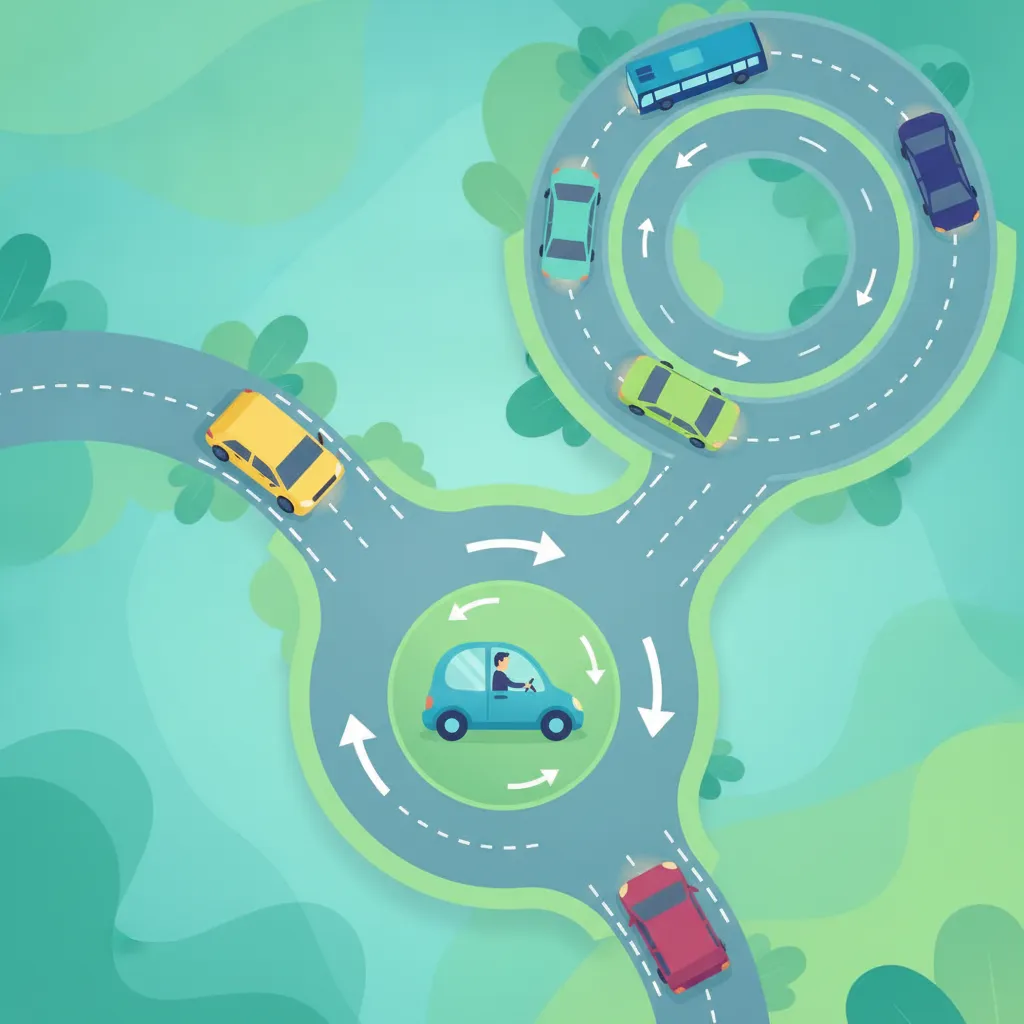
This lesson provides specific techniques for safely navigating the two main types of roundabouts in Great Britain. For multi-lane roundabouts, it covers how to choose the correct lane on approach, maintain your lane while circulating, and signal your exit correctly. It also explains the unique rules for mini-roundabouts, emphasizing the importance of giving way to traffic from the right and navigating them with caution due to their small size.
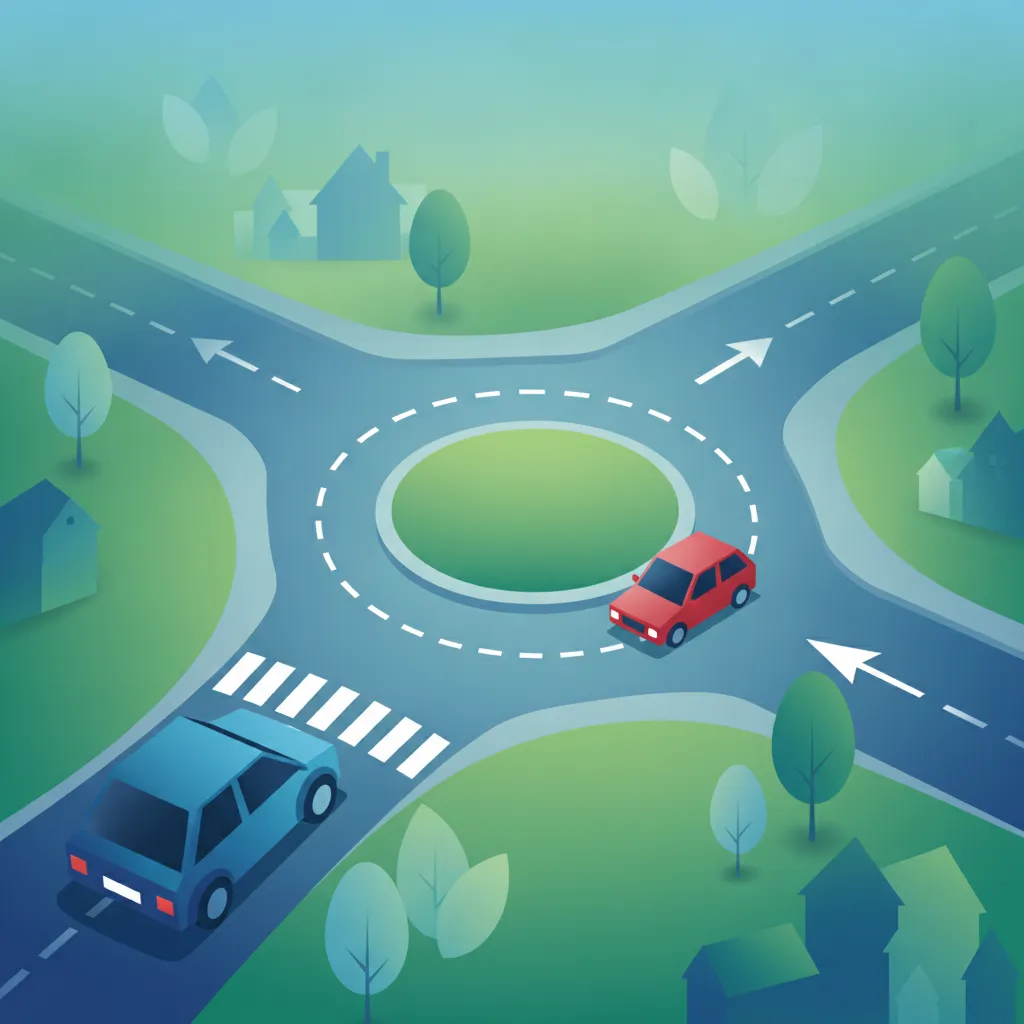
This lesson explains how to handle mini-roundabouts, which are common in urban and residential areas. The primary rule is to approach with caution and give priority to any traffic approaching from your right. You will also learn about correct signalling and the importance of being aware of cyclists and motorcyclists who may be harder to see.
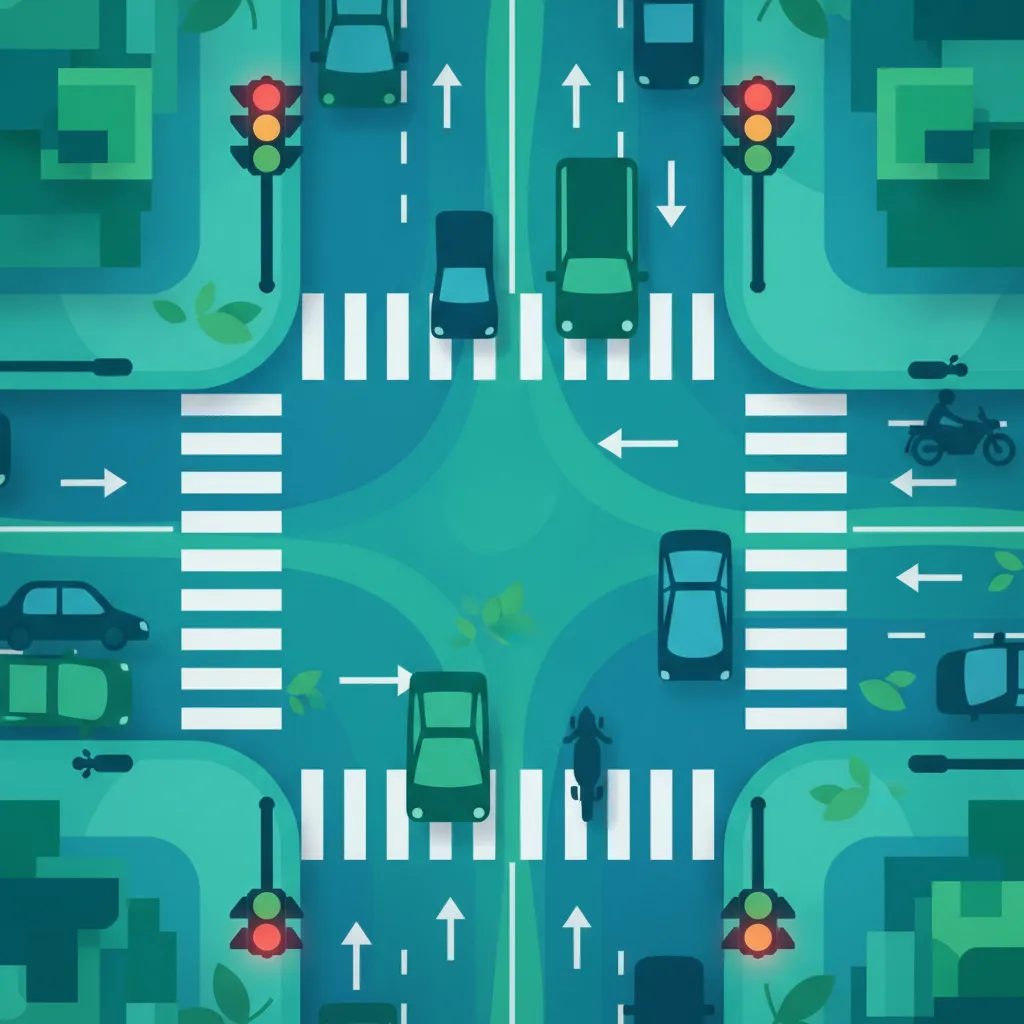
This lesson details how to safely navigate junctions controlled by traffic signals. It explains the meaning of filter arrows, which allow you to proceed in a specific direction even if the main light is red. You will also learn about respecting advanced stop lines for cyclists and how to approach a junction when the traffic lights are not working.
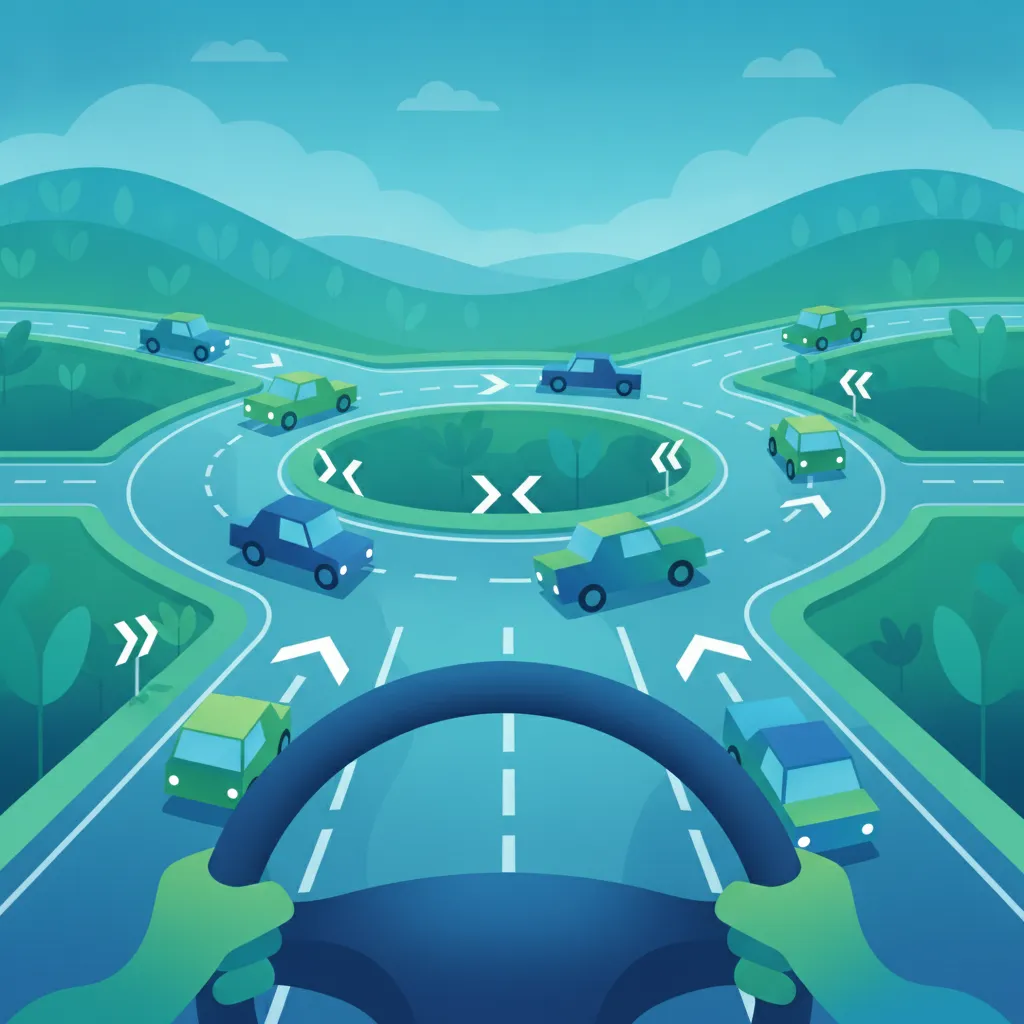
This lesson tackles the complexities of large roundabouts, which often have multiple lanes and exits. It stresses the importance of reading signs on the approach to select the correct lane for your destination. You will learn about maintaining lane discipline while on the roundabout and signalling correctly as you pass exits and prepare to leave.
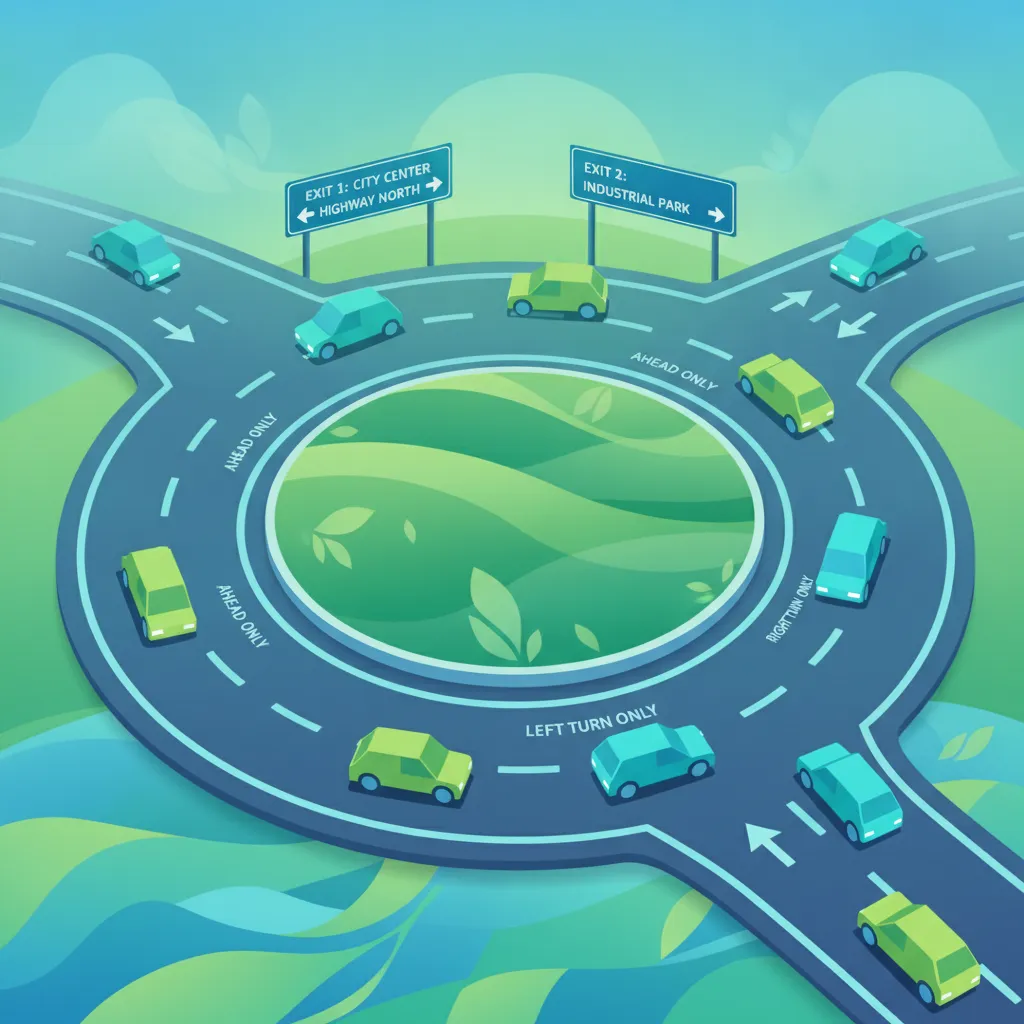
This lesson addresses the unique challenges of mini-roundabouts and large, multi-lane or spiral roundabouts. You will learn the subtle differences in rules and approach for mini-roundabouts and the importance of strict lane discipline on larger ones. The lesson stresses the need for advanced planning and awareness when navigating these complex junctions.
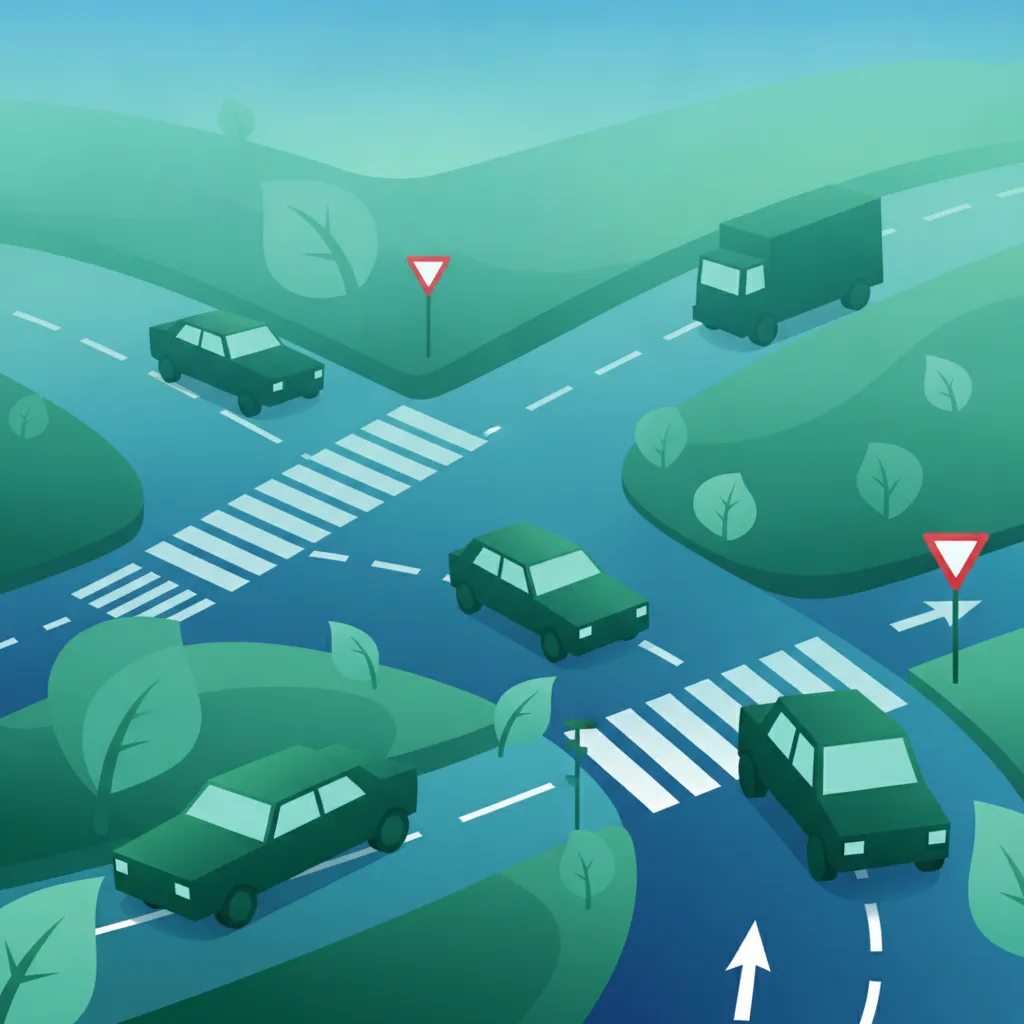
This lesson teaches the systematic approach to safely navigating junctions, emphasizing the importance of adjusting your speed and position well in advance. You will learn the 'Mirror-Signal-Manoeuvre' routine, how to perform effective all-round observation checks, and when to give way to other traffic. The content focuses on making safe judgments about gaps in traffic, a crucial skill for vulnerable AM riders when turning or emerging from a junction.
This lesson clarifies who has priority at junctions, whether they are marked with signs and lines or are unmarked. It covers the fundamental rule for roundabouts in the UK: give priority to traffic approaching from your right. You will learn the correct procedures for approaching, signalling, and choosing the appropriate lane on roundabouts and at other junctions.

This lesson addresses the unique challenges of driving a large vehicle on rural roads. It provides techniques for positioning the vehicle through sharp bends and on narrow lanes, and for safely navigating unmarked or uncontrolled junctions. Learners will be taught to anticipate hidden hazards common in the countryside, such as slow-moving farm vehicles, animals on the road, and concealed entrances. The correct use of passing places and strategies for meeting oncoming traffic are also covered.
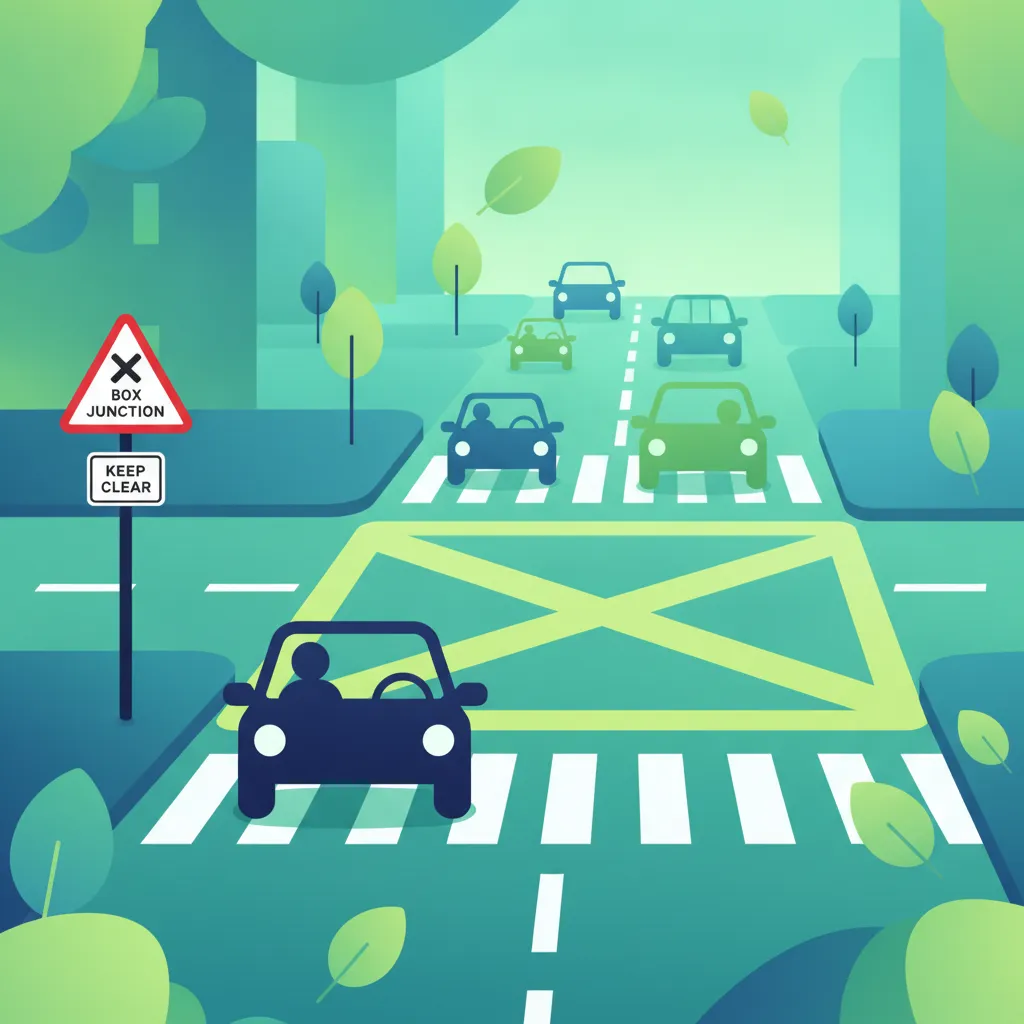
This lesson focuses on the markings that control traffic at intersections. It explains the primary rule of a yellow box junction: do not enter unless your exit is clear. You will also learn the difference between the solid white 'Stop' line and the broken 'Give Way' line, which dictate your priority over other traffic.
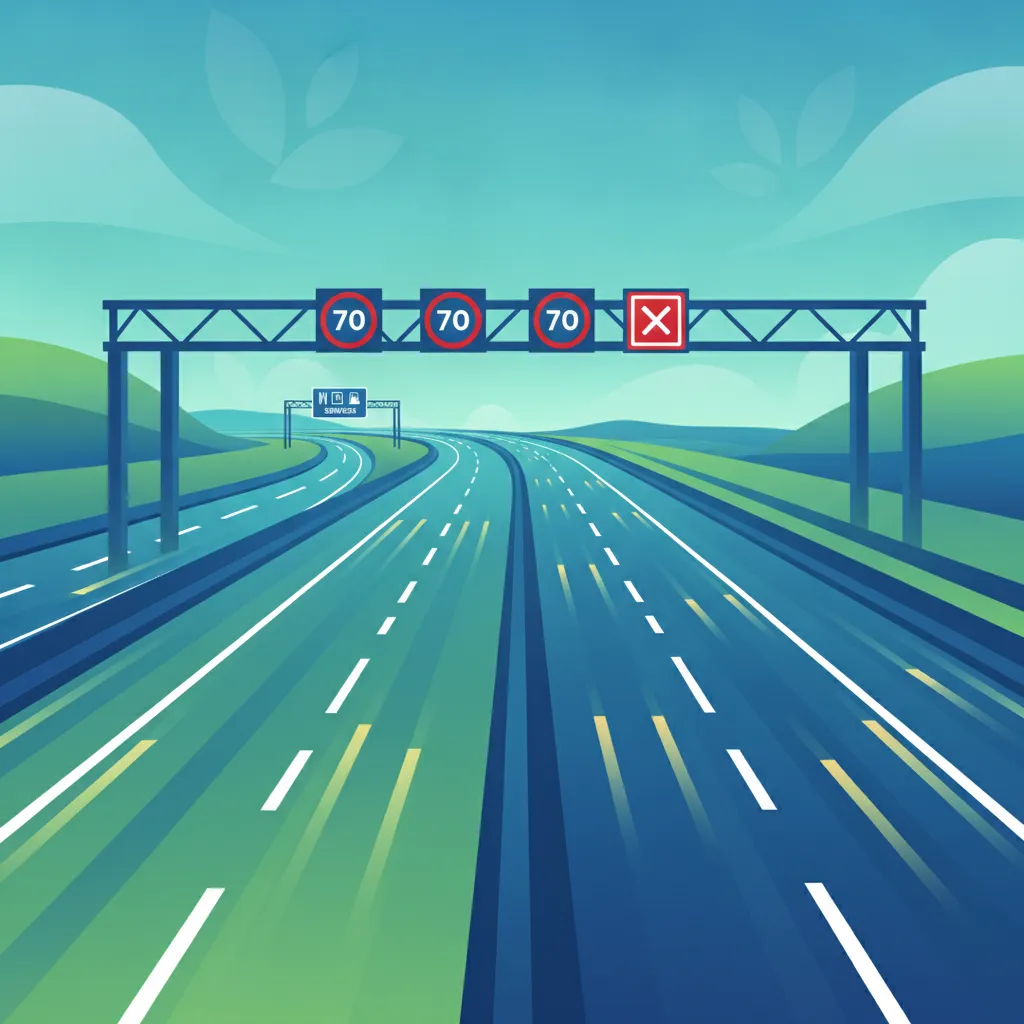
This lesson covers the unique aspects of motorway driving, from joining and leaving the carriageway to the strict lane discipline of keeping to the left unless overtaking. It explains the features of smart motorways, such as variable speed limits and the meaning of a Red X symbol above a lane. The safe procedure for handling a breakdown is also a key topic.
Learn about the most frequent errors learners make when applying priority rules at junctions and roundabouts. Understand how to identify and avoid these pitfalls to improve your road safety and theory knowledge in Great Britain.
This lesson clarifies who has priority at junctions, whether they are marked with signs and lines or are unmarked. It covers the fundamental rule for roundabouts in the UK: give priority to traffic approaching from your right. You will learn the correct procedures for approaching, signalling, and choosing the appropriate lane on roundabouts and at other junctions.
This lesson explains how to handle mini-roundabouts, which are common in urban and residential areas. The primary rule is to approach with caution and give priority to any traffic approaching from your right. You will also learn about correct signalling and the importance of being aware of cyclists and motorcyclists who may be harder to see.
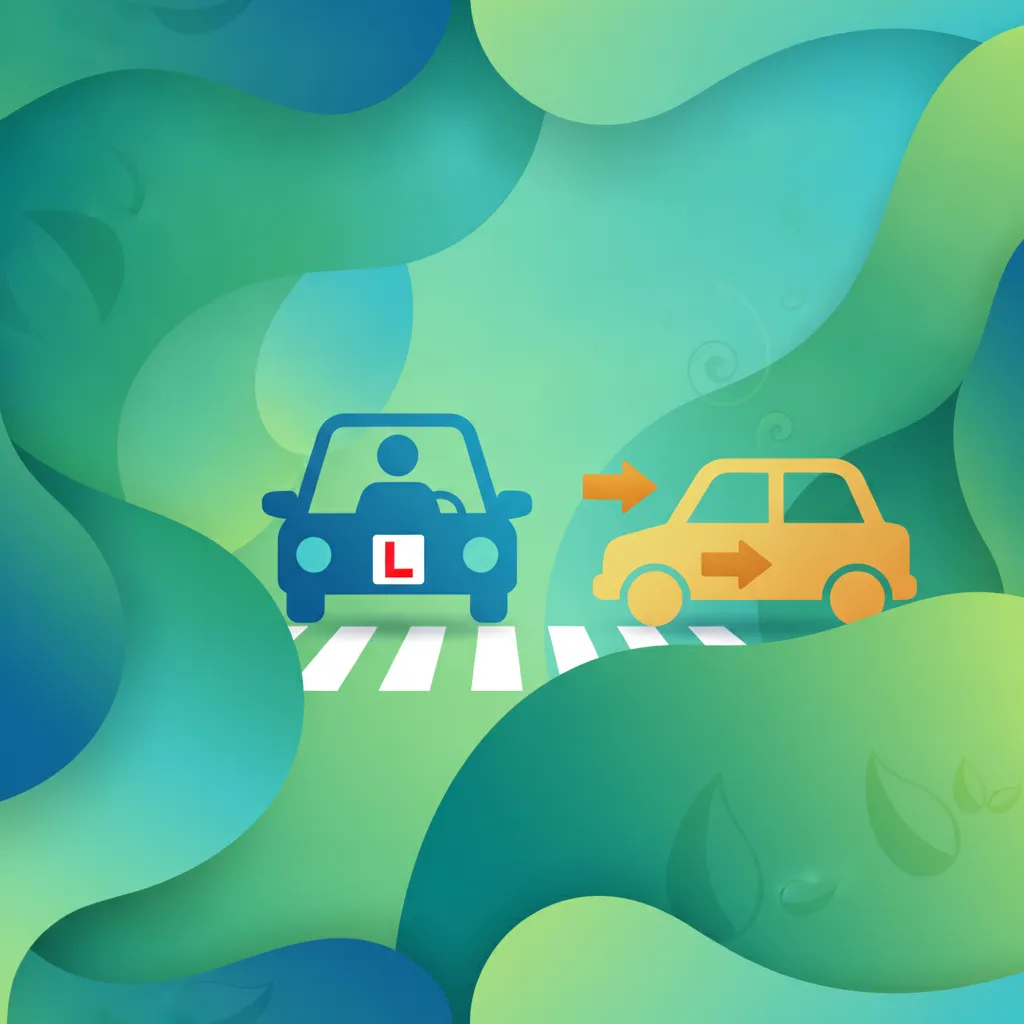
This lesson details the priority rules for turning manoeuvres. When turning left, you generally have priority over traffic waiting to emerge from the side road. However, when turning right, you must give way to all oncoming traffic, positioning your vehicle safely in the centre of the road while you wait for a safe gap.
This lesson covers the explicit priority instructions given by signs and markings at junctions. It explains that at a 'Give Way' line, you must yield to traffic on the major road but can proceed if it is safe. At a 'Stop' sign, you must come to a complete halt before the line, assess the traffic, and only proceed when safe.
This lesson provides specific techniques for safely navigating the two main types of roundabouts in Great Britain. For multi-lane roundabouts, it covers how to choose the correct lane on approach, maintain your lane while circulating, and signal your exit correctly. It also explains the unique rules for mini-roundabouts, emphasizing the importance of giving way to traffic from the right and navigating them with caution due to their small size.
This lesson teaches the systematic approach to safely navigating junctions, emphasizing the importance of adjusting your speed and position well in advance. You will learn the 'Mirror-Signal-Manoeuvre' routine, how to perform effective all-round observation checks, and when to give way to other traffic. The content focuses on making safe judgments about gaps in traffic, a crucial skill for vulnerable AM riders when turning or emerging from a junction.
This lesson details how to safely navigate junctions controlled by traffic signals. It explains the meaning of filter arrows, which allow you to proceed in a specific direction even if the main light is red. You will also learn about respecting advanced stop lines for cyclists and how to approach a junction when the traffic lights are not working.
This lesson focuses on the markings that control traffic at intersections. It explains the primary rule of a yellow box junction: do not enter unless your exit is clear. You will also learn the difference between the solid white 'Stop' line and the broken 'Give Way' line, which dictate your priority over other traffic.
This lesson breaks down the process of navigating basic junctions. It emphasizes the importance of the Mirror-Signal-Manoeuvre (MSM) and Position-Speed-Look (PSL) routines. You will learn how to position your motorcycle correctly for turning, perform effective observation checks for traffic, and judge safe gaps before emerging.
This lesson addresses the unique challenges of mini-roundabouts and large, multi-lane or spiral roundabouts. You will learn the subtle differences in rules and approach for mini-roundabouts and the importance of strict lane discipline on larger ones. The lesson stresses the need for advanced planning and awareness when navigating these complex junctions.
Find clear answers to common questions learners have about Priority Rules at Intersections and Crossings. Learn how the lesson is structured, which driving theory objectives it supports, and how it fits into the overall learning path of units and curriculum progression in Great Britain. These explanations help you understand key concepts, lesson flow, and exam focused study goals.
You must give way to traffic approaching from your immediate right. Always treat a mini-roundabout the same way as a normal-sized one, even if it is just a painted circle on the road surface.
Not necessarily. A 'Give Way' sign means you must be prepared to stop and let other traffic pass if they are close enough to cause a danger. A 'Stop' sign, however, requires you to come to a complete halt regardless of traffic.
There is no single rule of priority at unmarked junctions in the UK. You must treat them with extreme caution, slowing down to assess the situation and communicating your intentions clearly to other road users.
The Highway Code places pedestrians at the top of the hierarchy. You must always give way to pedestrians who are crossing or waiting to cross a road you are turning into.
Dive into our comprehensive question bank to find exactly what you need for your Great Britain theory test. Use our advanced filters to pinpoint specific subjects or test your knowledge on challenging areas, ensuring you're fully prepared for success.