
This final unit of your AM Licence Theory Course focuses on critical real-world riding scenarios. You'll learn how to navigate challenging weather conditions, respond effectively in emergencies, and understand the legal consequences of traffic law violations in Great Britain. Mastering these topics is crucial for both passing your theory test and ensuring your safety on the road.
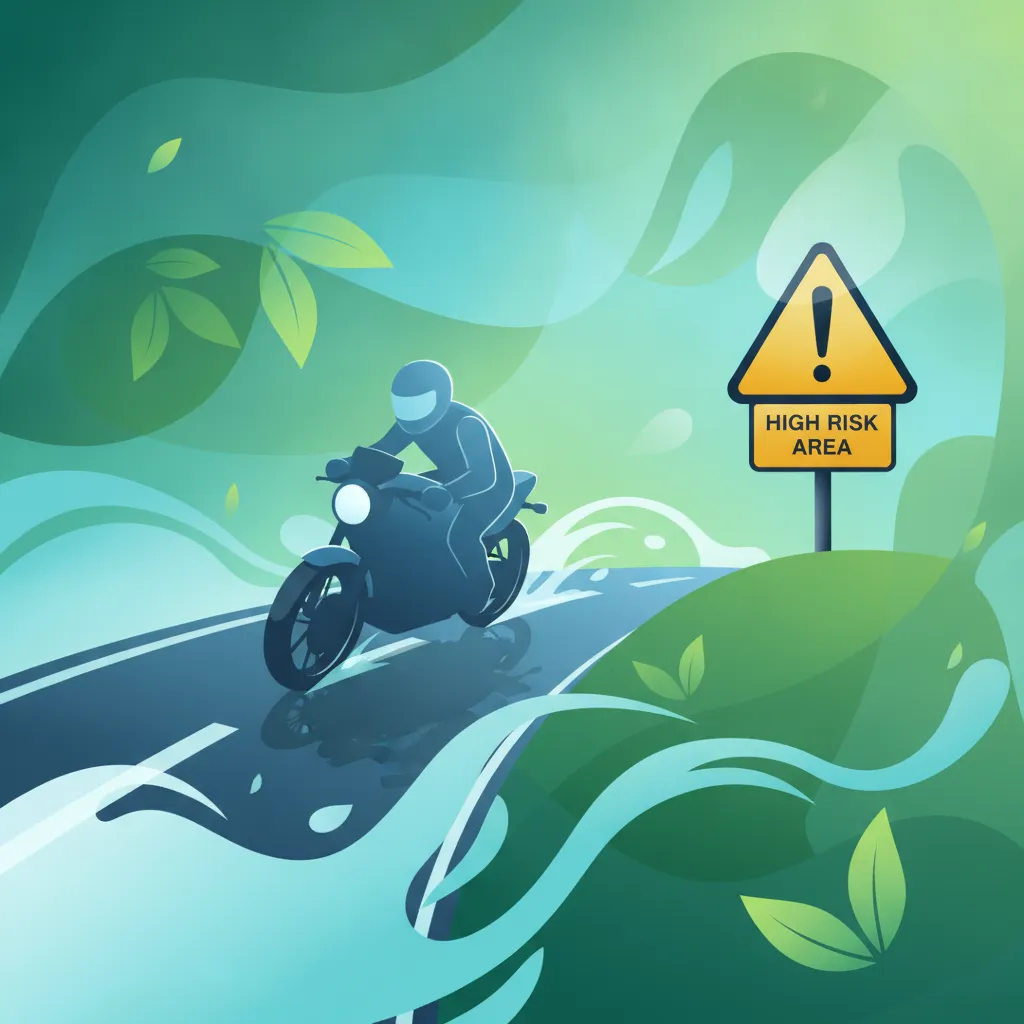
Browse all lessons that make up Weather, Risk Behaviour, Emergencies and Penalties. Each lesson focuses on specific topics, learning objectives, and core concepts, helping you build essential knowledge and follow a clear, structured progression toward your study goals in Great Britain.
This lesson provides essential advice for riding safely in adverse weather conditions that reduce tyre grip. You will learn how rain, ice, and wet leaves dramatically increase braking distances and affect handling. Key strategies covered include reducing speed, increasing following distances, making smooth control inputs, and anticipating slippery areas to maintain control and avoid skidding on compromised road surfaces.
This lesson focuses on the challenges of riding when you can't see or be seen clearly. It covers the correct use of lights in fog, rain, and at night to maximize both your vision and your visibility to others. You will learn why reducing speed is critical, how to use reflective clothing effectively, and strategies for dealing with the glare from other vehicles' headlights to ensure you can navigate safely in all lighting conditions.
This lesson addresses the critical safety topics of impairment, distraction, and social pressures. It explains how alcohol and drugs severely affect judgment, coordination, and reaction time, outlining the strict legal limits and harsh penalties in Great Britain. The content also covers modern distractions like mobile phones and the importance of resisting negative peer pressure to maintain focus and make responsible decisions as a rider.
This lesson provides a clear, step-by-step guide for managing an emergency situation like a breakdown or a road traffic collision. You will learn the correct procedures for making the scene safe, when and how to contact the emergency services (999 or 112), and what information to provide. It also covers your legal obligations regarding reporting accidents and exchanging details, ensuring you are prepared to act correctly and calmly under pressure.
This lesson explains the legal consequences of committing traffic offences in Great Britain. It details the penalty points system, explaining how points are issued for various offences like speeding or using a mobile phone, and the thresholds that can lead to a driving ban. Understanding these penalties, fines, and potential licence revocation reinforces the importance of consistent, lawful riding and helps you appreciate the value of a clean driving record.
Explore high-intent keywords and long-tail search topics learners use when researching Weather, Risk Behaviour, Emergencies and Penalties. These terms reflect how people search for reliable study materials, structured explanations, and unit-level theory preparation support in Great Britain.
Find clear answers to the most common questions learners ask about Weather, Risk Behaviour, Emergencies and Penalties. Understand how the unit is organized, what learning goals it supports, and how it contributes to your study progression with structured explanations and practical guidance tailored for learners in Great Britain.
Riding a moped in wet weather significantly reduces tyre grip, increasing the risk of skidding, especially during braking or cornering. Visibility is also reduced for both the rider and other road users. It's crucial to reduce your speed, increase your following distance, and brake earlier and more gently to maintain control and avoid potential accidents.
If your moped breaks down, prioritise your safety. If possible, move the vehicle to a safe position away from moving traffic, like the side of the road or a lay-by. Switch on your hazard warning lights. If you can't move the vehicle and are in a dangerous position, stay with your vehicle if it's safe to do so, or get yourself to a safe place away from traffic and call for assistance. Never attempt repairs in a live traffic lane.
Alcohol and drugs severely impair reaction times, decision-making, coordination, and perception, all of which are critical for safe riding. Even small amounts can have a significant effect. Riding under the influence of alcohol or drugs is illegal and carries severe penalties, including large fines, licence disqualification, and potential imprisonment, in addition to posing a serious risk to yourself and others.
Licence points are endorsements added to your driving record for specific traffic offences. Accumulating too many points within a set period can lead to licence suspension or revocation. For new riders, especially those on an AM licence, the threshold for penalty points might be lower, meaning even minor offences could put your licence at risk.
Hazard perception is vital in all conditions, but especially in adverse weather. During the theory test, you'll be assessed on your ability to spot developing hazards. In rain, fog, or ice, hazards appear more quickly and are harder to spot, so demonstrating you can anticipate these challenges is key to passing the perception part of the test.
While the types of offences are similar (e.g., speeding, drink-driving, using a phone), the penalties, including fines and licence points, are applied based on the offence itself. However, as an AM licence holder, you may be more vulnerable to licence suspension due to the nature of newly acquired licences. Always check the specific penalties applicable to the offence committed.
All included lessons
Lessons in Weather, Risk Behaviour, Emergencies and Penalties
See who benefits most from studying Weather, Risk Behaviour, Emergencies and Penalties. This overview explains how the unit supports different learning needs, what level of knowledge is helpful before starting, and how it fits into the overall study path in Great Britain.
This unit is essential for all prospective Category AM licence holders in Great Britain preparing for their theory test. It's particularly important for riders who may be new to riding in challenging weather or who need a thorough understanding of emergency procedures and legal consequences to ensure they meet DVSA standards and ride safely.

Ready to prepare effectively for your DVSA driving theory test? Explore our structured courses and guided study paths. They cover every topic of the Great Britain Highway Code and official exam requirements, ensuring systematic learning and success.
Explore Driving Theory CoursesExplore all units and lessons included in this driving theory course.
Ready to prepare effectively for your DVSA driving theory test? Explore our structured courses and guided study paths. They cover every topic of the Great Britain Highway Code and official exam requirements, ensuring systematic learning and success.
Explore Driving Theory Courses