
This lesson explores the essential rules for parking and stopping your vehicle safely and legally in Great Britain. Building on your knowledge of road markings and traffic signs, you will learn how to identify restricted areas, park on inclines, and avoid common test-day pitfalls. Understanding these regulations is vital for both your practical safety and achieving a passing grade on your Category B theory exam.
Lesson content overview
Proper parking and stopping are fundamental skills for all drivers in Great Britain, ensuring not only your own safety but also the safety of other road users and the efficient flow of traffic. As a Category B learner driver, mastering these regulations is crucial for passing your theory test and for safe driving practices throughout your driving career. This lesson will guide you through the intricacies of where and how you can legally and safely stop or park your vehicle across various road environments, from busy motorways to quiet residential streets.
Ignoring parking and stopping rules can lead to serious consequences, including collisions, traffic congestion, reduced visibility for vulnerable road users, and significant legal penalties. Understanding the underlying reasons behind these rules—which often revolve around safety, traffic efficiency, and orderly road use—will help you make informed decisions in real-world driving situations. This knowledge builds upon your understanding of road markings, traffic signs, and priority rules, connecting various aspects of the Great Britain Category B driving theory curriculum.
While often used interchangeably in everyday conversation, the terms "parking" and "stopping" have distinct legal meanings in driving regulations. Understanding this difference is key to complying with road rules and avoiding penalties.
Leaving a vehicle stationary for an extended period, often with the driver leaving the vehicle unattended, in a location where the law expressly permits it. Parking spaces are designed for fixed, long-term vehicle storage without obstructing traffic.
Briefly halting a vehicle, typically for a temporary purpose such as allowing passengers to get in or out, loading or unloading goods, or obeying a traffic signal. The driver usually remains in or very near the vehicle, ready to move it promptly. Stopping may be permitted where parking is prohibited, but a "No Stopping" restriction prohibits both.
In practical terms, if you intend to leave your vehicle unattended for more than a brief moment, you are parking. If you are merely pausing for a short duration while remaining ready to move, you are stopping. Road signs and markings, such as "No Parking" (a blue circle with a red diagonal line) and "No Stopping" (a blue circle with a red cross), clearly differentiate between these actions, dictating where each is allowed or prohibited.
Correct parking and stopping practices are not just about avoiding fines; they are critical for road safety and maintaining efficient traffic flow. A poorly parked or stopped vehicle can create a significant hazard, leading to a chain of dangerous events. For instance, a vehicle parked too close to a junction can block sightlines, preventing drivers from seeing oncoming traffic or pedestrians, thus increasing the risk of a collision.
Similarly, stopping unexpectedly or illegally in a busy lane can cause other drivers to brake sharply, potentially leading to rear-end collisions. Vulnerable road users, such as pedestrians, cyclists, and motorcyclists, are particularly at risk when vehicles obstruct their pathways or visibility at crossings and junctions. By adhering to parking and stopping rules, you contribute to a safer, more predictable, and less congested road environment for everyone.
Certain areas are designated as "no-go" zones for parking and stopping due to inherent safety risks or the need to maintain continuous traffic flow. These prohibitions are clearly indicated by specific road signs and markings, which all Great Britain Category B learner drivers must learn to identify and obey.
A clearway is a stretch of road where stopping or parking is prohibited at all times, along the main carriageway. These zones are typically found on busy main roads, dual carriageways, and motorways, where maintaining uninterrupted traffic flow is paramount. The prohibition applies even if you are just stopping briefly to pick up or drop off a passenger.
On a clearway, you must not stop for any reason other than a genuine emergency, such as a vehicle breakdown or a medical emergency. Even in an emergency, you should endeavour to pull over into a designated lay-by or hard shoulder if safe to do so.
Clearways are identified by a blue circular sign with a red cross diagonally through it. They are vital for preventing congestion, especially during peak periods, and for ensuring that emergency services can travel without obstruction. Stopping in a clearway without a valid emergency reason is a serious offence and carries penalties.
Zig-zag lines are distinctive road markings found on the approach to and exit from pedestrian crossings, such as zebra crossings and pelican crossings. These yellow or white lines extend a specified distance before and after the crossing, indicating a zone where stopping and parking are absolutely forbidden.
The purpose of zig-zag lines is to keep the area around the crossing clear of stationary vehicles, ensuring that pedestrians are clearly visible to approaching drivers and that drivers have an unobstructed view of the crossing itself. Stopping on these lines, even momentarily to drop someone off, significantly compromises pedestrian safety by obscuring sightlines and creating potential hazards. No matter how short the stop, it is always illegal to stop or park on zig-zag lines.
Bus lanes are dedicated lanes reserved for buses, and sometimes other authorised vehicles like taxis or cyclists, to improve the efficiency and reliability of public transport. These lanes are typically marked by a continuous white line and the word "BUS LANE" painted on the road, often with specific operating hours.
Private vehicles are generally prohibited from driving, stopping, or parking in bus lanes during their operational hours.
Within or alongside bus lanes, you may find bus stop bays. These are specific areas where buses stop to pick up and drop off passengers. For private vehicles, stopping in a bus stop bay is usually forbidden unless a specific sign explicitly permits it for certain purposes (e.g., dropping off or picking up passengers for a very limited time, or for specific types of vehicles like minibuses with special permits). Always check the signage carefully, as stopping in a bus lane or bus stop bay illegally can lead to fines and obstruct public transport.
A footway, commonly known as a pavement, is the part of the road intended solely for pedestrians. Parking or stopping on a footway is generally prohibited across Great Britain, with specific rules varying slightly between different areas. In London, for example, footway parking is illegal unless signs explicitly permit it.
The primary reason for this rule is to ensure that pavements remain clear and safe for pedestrians, especially those with pushchairs, wheelchairs, or visual impairments. Parking on a footway can force pedestrians to walk into the road, putting them at risk from moving traffic. It can also damage the pavement surface and underground services. Always seek a designated parking spot on the road or in an off-street car park, unless a sign specifically indicates that footway parking is allowed.
To prevent obstructions and ensure clear sightlines for all road users, specific "safety buffer zones" exist around certain road features where parking and stopping are prohibited. These zones are crucial for preventing accidents by giving drivers sufficient time to react to hazards and clearly see what is ahead.
These distances are enforced rigorously, often through road markings (like single or double yellow lines) and specific signage. Even a brief pause within these buffer zones can create a hazard and is considered a violation.
Beyond general prohibitions, there are specific techniques and requirements for parking in particular situations or conditions, designed to enhance safety and prevent incidents.
Parking on an incline, whether uphill or downhill, requires a specific technique to prevent your vehicle from rolling away unintentionally. This is a critical safety measure, especially if your handbrake were to fail.
When parking uphill with a curb: Turn your front wheels away from the curb (towards the road). If your vehicle rolls backward, the wheels will hit the curb and stop it.
When parking downhill with a curb: Turn your front wheels towards the curb. If your vehicle rolls forward, the wheels will hit the curb.
When parking on a slope without a curb (uphill or downhill): Turn your front wheels towards the side of the road.
Always engage the handbrake firmly.
For manual vehicles, leave the car in first gear (uphill) or reverse gear (downhill) to provide additional resistance.
For automatic vehicles, select 'P' (Park).
This technique ensures that if your primary braking system (handbrake) fails, the vehicle will be stopped by the curb or roll harmlessly into the side of the road, rather than freely rolling into traffic or down the hill.
When parking at night or in conditions of poor visibility, it is essential to make your vehicle visible to other road users to prevent collisions. The specific lighting requirements depend on where and how you are parked.
If you are parked on a road where the speed limit is over 30 mph, or on a dual carriageway or motorway (even on the hard shoulder or in a lay-by), you must use your parking lamps (also known as sidelights or side lamps). These low-intensity lights illuminate the front and rear of your stationary vehicle, making it visible to approaching traffic.
Parking lamps should be used in conjunction with hazard warning lights if your vehicle is stopped in a dangerous position or during an emergency stop, to provide a more prominent warning.
On residential streets with a speed limit of 30 mph or less, if there are no specific restrictions and you are parked close to the kerb, you generally do not need to use parking lights, provided the street lighting is good and the vehicle is visible. However, in poorly lit areas or if parked even slightly away from the kerb, using parking lamps is a sensible precaution.
Loading bays are specific areas designated for the loading and unloading of goods. They are indicated by a sign often showing a white box with black arrows and may include specific time limitations (e.g., "Loading Bay – 08:00-18:00").
You may stop in a loading bay only while actively engaged in loading or unloading goods. This means that once the goods have been transferred, you must move your vehicle from the bay. Lingering or using a loading bay for general waiting or passenger drop-off (unless specifically indicated on the sign) is prohibited. These bays are essential for commercial vehicles to conduct their business without disrupting main traffic flow, and misuse can lead to fines and congestion.
Many urban areas and high streets have time-restricted parking zones to manage the demand for limited on-street spaces and ensure a fair turnover of vehicles. These zones are clearly indicated by signs and often by road markings (e.g., a blue line indicating a parking bay).
Examples of time-restricted parking include:
It is your responsibility to check and comply with all displayed signs and markings. Exceeding the permitted time limit, failing to display a valid ticket or permit, or misusing a designated bay can result in a penalty charge notice (fine) and, in some cases, your vehicle being towed away.
While parking and stopping rules often prohibit stopping in certain areas, there are unavoidable situations that necessitate an emergency stop. Knowing how to react safely in such circumstances is paramount for your safety and the safety of others.
On motorways and dual carriageways, the hard shoulder is strictly for use in emergencies only. This includes situations like a vehicle breakdown, a medical emergency, or if you are directed to stop by the police or traffic officers. It is not for casual stopping, making phone calls, checking maps, or taking a rest.
If you must stop on the hard shoulder:
Never attempt to carry out repairs on the hard shoulder. Contact your breakdown service or the motorway operator for assistance.
Hazard warning lights are amber flashing lights that activate all your indicators simultaneously. They are used to warn other road users that your vehicle is temporarily stationary and may be causing an obstruction or hazard. You should use them immediately if your vehicle breaks down, if you are stopped in a dangerous position, or if you are slowing down quickly on a high-speed road due to an obstruction ahead.
A warning triangle is a reflective, collapsible triangle that you can place on the road to give advanced warning to other drivers of a broken-down or stationary vehicle. As mentioned for motorways, it should be placed at least 45 metres behind your vehicle. On other roads, the distance should be sufficient to give other drivers time to react, usually around 30 to 45 metres. Always consider your personal safety when placing a warning triangle, especially on busy or fast roads.
The rules for parking and stopping can vary significantly depending on the type of road you are on. It's essential to adapt your behaviour to the specific environment.
As high-speed roads, motorways and dual carriageways have very strict rules regarding stopping and parking:
In both cases, if you must stop due to an emergency, activate your hazard warning lights and, if safe, move well off the carriageway onto the hard shoulder or into a lay-by. At night or in poor visibility, ensure your parking lights are also on.
Residential streets often present more flexible, but equally important, parking and stopping rules:
Lay-bys are marked areas adjacent to the main carriageway, typically found on A-roads, dual carriageways, and some single carriageways. They are provided for drivers to stop safely without obstructing through traffic.
You can stop in a lay-by for various reasons, such as taking a break, checking a map, or making a phone call, provided you do so safely and don't cause an obstruction. If stopping at night or in poor visibility, ensure your parking lights are on. Always check for any specific signs or restrictions within the lay-by itself, as some may have time limits or be designated for specific types of vehicles.
Many drivers, particularly new ones, can inadvertently commit parking and stopping violations. Being aware of these common mistakes will help you avoid penalties and contribute to road safety.
By paying close attention to road signs, markings, and understanding the rationale behind the rules, you can significantly reduce the likelihood of committing these common violations. Always prioritise safety and consider the impact your stationary vehicle might have on other road users.
Mastering the rules of parking and stopping is fundamental for every Great Britain Category B learner driver. These regulations are designed to enhance road safety, maintain efficient traffic flow, and protect all road users, especially vulnerable ones.
Remember these core principles:
By consistently applying these rules and techniques, you will develop the responsible habits necessary to drive safely and confidently on all road types in Great Britain.
Explore all units and lessons included in this driving theory course.
Lesson content overview
Explore all units and lessons included in this driving theory course.
Explore search topics learners often look for when studying Parking and Stopping at Different Road Types. These topics reflect common questions about road rules, driving situations, safety guidance, and lesson level theory preparation for learners in Great Britain.
Browse additional driving theory lessons that cover connected traffic rules, road signs, and common driving situations related to this topic. Improve your understanding of how different rules interact across everyday traffic scenarios.
Learn how the position of your vehicle affects visibility for other road users at junctions, crossings, and school zones. This overview explains the importance of safety buffer zones and provides insights into how illegal parking creates hazards for pedestrians, cyclists, and oncoming traffic in urban and rural environments.
This lesson teaches the systematic approach to safely navigating junctions, emphasizing the importance of adjusting your speed and position well in advance. You will learn the 'Mirror-Signal-Manoeuvre' routine, how to perform effective all-round observation checks, and when to give way to other traffic. The content focuses on making safe judgments about gaps in traffic, a crucial skill for vulnerable AM riders when turning or emerging from a junction.
This lesson details how to safely navigate junctions controlled by traffic signals. It explains the meaning of filter arrows, which allow you to proceed in a specific direction even if the main light is red. You will also learn about respecting advanced stop lines for cyclists and how to approach a junction when the traffic lights are not working.
This lesson explains how to handle mini-roundabouts, which are common in urban and residential areas. The primary rule is to approach with caution and give priority to any traffic approaching from your right. You will also learn about correct signalling and the importance of being aware of cyclists and motorcyclists who may be harder to see.
This lesson breaks down the process of navigating basic junctions. It emphasizes the importance of the Mirror-Signal-Manoeuvre (MSM) and Position-Speed-Look (PSL) routines. You will learn how to position your motorcycle correctly for turning, perform effective observation checks for traffic, and judge safe gaps before emerging.
This lesson is dedicated to the safe interaction between large vehicles and the most vulnerable road users: pedestrians and cyclists. It highlights high-risk scenarios, such as left turns at junctions, where cyclists can be hidden in nearside blind spots. The content stresses the importance of anticipation, using signals clearly, and providing generous space at crossings, in cycle lanes, and within pedestrianized zones to prevent tragic accidents.
This lesson provides detailed guidance on protecting pedestrians in high-risk areas like bus stops and formal crossings. It covers the specific rules and driver obligations at zebra, pelican, toucan, and puffin crossings, as well as when approaching a school crossing patrol. The content emphasizes the importance of vigilance, anticipating pedestrian movements, especially those who may be distracted or emerge from behind the bus, and always being prepared to stop to prevent accidents.
This lesson covers the explicit priority instructions given by signs and markings at junctions. It explains that at a 'Give Way' line, you must yield to traffic on the major road but can proceed if it is safe. At a 'Stop' sign, you must come to a complete halt before the line, assess the traffic, and only proceed when safe.
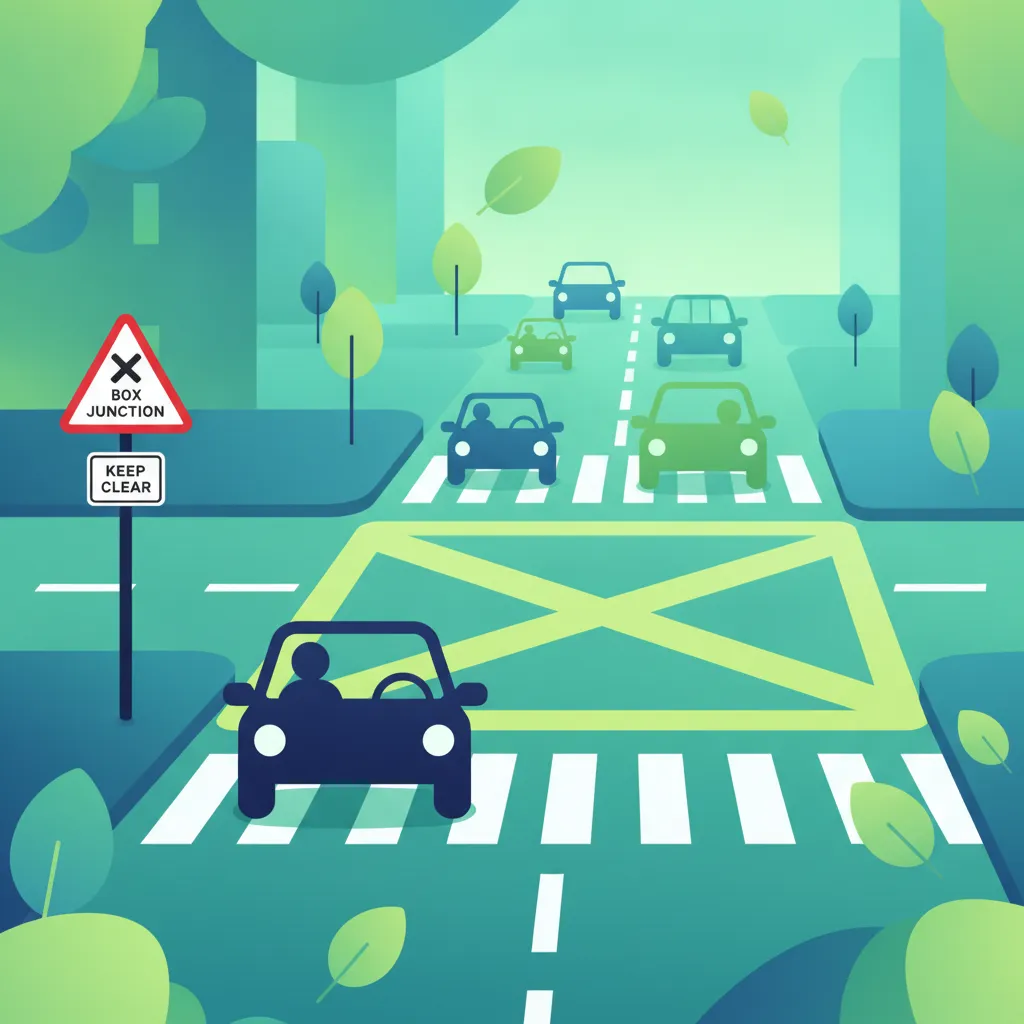
This lesson focuses on the markings that control traffic at intersections. It explains the primary rule of a yellow box junction: do not enter unless your exit is clear. You will also learn the difference between the solid white 'Stop' line and the broken 'Give Way' line, which dictate your priority over other traffic.

This lesson focuses on the markings and rules at designated pedestrian crossing points. It details the legal requirement to give way to pedestrians on a zebra crossing and explains the light sequences at signal-controlled crossings. You will also learn the meaning of the white zig-zag lines on the approach to all crossings.
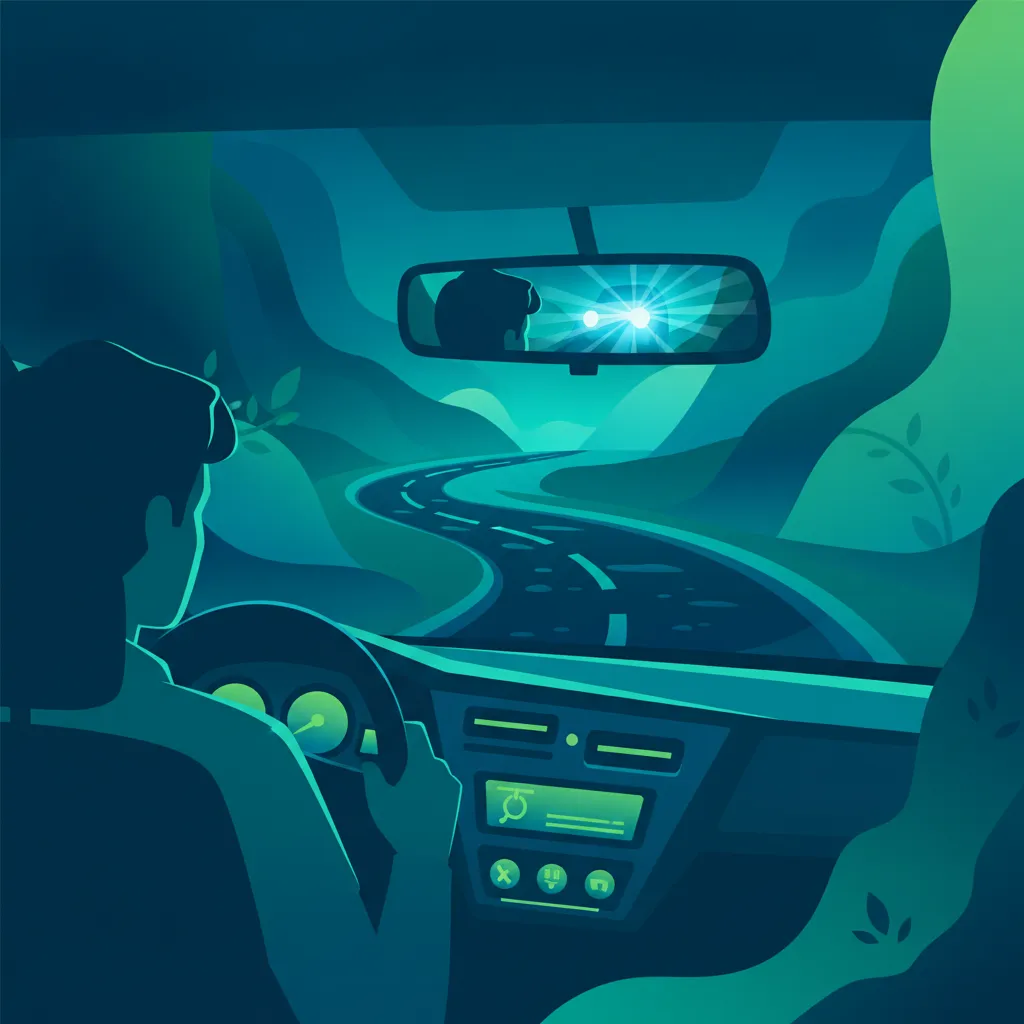
This lesson addresses the increased risks associated with driving after dark. It explains when to switch between dipped and main beam headlights to maximise your own vision without dazzling other drivers. Techniques for reducing glare and spotting hazards like cyclists or pedestrians with poor visibility are also covered.
Find clear answers to common questions learners have about Parking and Stopping at Different Road Types. Learn how the lesson is structured, which driving theory objectives it supports, and how it fits into the overall learning path of units and curriculum progression in Great Britain. These explanations help you understand key concepts, lesson flow, and exam focused study goals.
No, you must never stop or park on a clearway during the times shown on the signs. Clearways are designed to ensure the flow of traffic, and stopping even briefly is prohibited to prevent congestion and hazards.
Yes. If the speed limit on the road is over 30 mph, you must leave your parking lights on at night. You should also park in the direction of the traffic flow, unless in a designated parking bay.
Zig-zag lines near pedestrian crossings indicate that you must not park or overtake. These areas are kept clear to ensure pedestrians have an unobstructed view of the road and drivers have a clear view of the crossing.
In many areas, especially in London, parking on the pavement is prohibited unless signs explicitly state otherwise. It is best practice to avoid it everywhere, as it causes obstructions for pedestrians, particularly those with visual impairments or mobility aids.
Dive into our comprehensive question bank to find exactly what you need for your Great Britain theory test. Use our advanced filters to pinpoint specific subjects or test your knowledge on challenging areas, ensuring you're fully prepared for success.