
This lesson explores your critical responsibility as a professional driver to protect vulnerable road users near bus stops and pedestrian crossings. It covers the specific rules for navigating around crossings and managing pedestrian safety, forming a core part of your Category D and D1 training. By mastering these safety protocols, you ensure both compliance with the Highway Code and the safety of your passengers and pedestrians.
Lesson content overview
Operating a passenger vehicle in Great Britain – whether a bus, coach, or minibus – requires exceptional vigilance, particularly in areas where pedestrians are most likely to interact with traffic. This lesson, part of your Great Britain Passenger Vehicle Theory course, provides detailed guidance on protecting pedestrians in high-risk zones, including various types of crossings and bus stops. Understanding and correctly applying the rules and safety principles discussed here is paramount for preventing collisions and ensuring the safety of all road users.
Pedestrians are among the most vulnerable road users. They lack the protective shell of a vehicle and are often less visible, especially to drivers of larger passenger vehicles with inherent blind spots and greater stopping distances. Recognising this vulnerability, road design and traffic laws in the UK establish a systematic safety framework that places significant responsibility on drivers to anticipate and protect pedestrians.
Pedestrian protection is a systematic safety framework that integrates legal duties, perceptual vigilance, and vehicle handling to minimise conflict at points where pedestrians are likely to enter or cross the carriageway.
Several core principles underpin safe driving practices around pedestrians, particularly near stops and crossings:
These principles directly address the physics and human factors involved in driving large vehicles: greater stopping distances due to vehicle mass, longer reaction times, and impaired visual perception of pedestrians, especially those emerging from behind buses or in low-visibility conditions.
The UK Highway Code specifies various types of pedestrian crossings, each with unique rules that passenger vehicle drivers must understand and obey. These crossings are designated points where pedestrians are legally entitled to cross the carriageway, marked by painted lines and/or traffic signals.
Zebra crossings are iconic, uncontrolled pedestrian crossings marked by alternating black and white stripes on the road surface, accompanied by distinctive flashing amber Belisha beacons at either side.
An uncontrolled pedestrian crossing marked by black and white stripes on the road and flanked by flashing amber Belisha beacons. Pedestrians have priority once they step onto the crossing.
Practical Meaning for Drivers: At a zebra crossing, drivers must give way to any pedestrian who has stepped onto the crossing. This priority is absolute. You are expected to be vigilant, reduce your speed when approaching, and be prepared to stop. It is a common misunderstanding that pedestrians waiting at a zebra crossing must wait for a signal; they have the right of way as soon as they step onto the stripes. You must not overtake another vehicle that has stopped at a zebra crossing, as it indicates they are giving way to pedestrians you cannot see.
Highway Code Rule 176 states: "You MUST give way when a pedestrian has moved onto a zebra crossing."
Pelican crossings are signalised pedestrian crossings, meaning their use is controlled by traffic lights for both vehicles and pedestrians. The name "PELICAN" stands for PEdestrian LIght Controlled ANd.
A signalised pedestrian crossing controlled by traffic lights for vehicles and 'red man/green man' signals for pedestrians. Drivers must obey the traffic lights, stopping at red and exercising caution during the amber flashing phase.
Components and Operation: These crossings feature standard red, amber, and green traffic lights for vehicles, a pedestrian push-button, and separate 'red man' (don't cross) and 'green man' (cross) signals for pedestrians.
Practical Meaning for Drivers: Your primary obligation is to obey the traffic light signals.
Many drivers mistakenly believe that an amber flashing light at a pelican crossing grants them immediate right of way. This is incorrect. The amber flashing phase requires you to give way to any pedestrian still on the crossing.
Highway Code Rule 174 and Rule 177 outline these requirements. Failing to stop for pedestrians during the amber flashing phase is a common violation with serious consequences.
Toucan and Puffin crossings are signalised crossings similar to Pelican crossings, but with specific design elements to accommodate a wider range of road users.
Toucan crossings are designed for both pedestrians and cyclists, allowing both user groups to cross simultaneously. The name "Toucan" is a play on "two can cross."
A signalised crossing designed for both pedestrians and cyclists, allowing both user types to cross together. Cyclists may ride across, obeying the same traffic signals as pedestrians (red man/green man).
Practical Meaning for Drivers: Drivers treat Toucan crossings similarly to Pelican crossings, obeying the vehicular traffic signals. However, you must be extra vigilant for cyclists who may be using the crossing. They will also obey the pedestrian signals (which show a green cycle symbol alongside the green man).
Puffin crossings are also signalised pedestrian crossings that incorporate advanced technology to improve safety. Puffin stands for Pedestrian User-Friendly Intelligent.
A signalised pedestrian crossing that uses sensors to detect pedestrians, adjusting the signal timing to allow sufficient time for them to cross. They often lack the flashing amber phase seen at Pelican crossings.
Operational Differences: Puffin crossings use sensors to detect when pedestrians are waiting to cross and when they have cleared the crossing. This means the green man signal will only show for as long as needed, potentially reducing waiting times for traffic once pedestrians have finished crossing. Unlike Pelican crossings, Puffin crossings generally do not have a flashing amber phase for vehicles; they typically switch directly from red to green after the pedestrian crossing phase.
Practical Meaning for Drivers: As with other signalised crossings, you must obey the traffic lights. The absence of the flashing amber phase means that once the light turns green, you can proceed if the crossing is clear, knowing that any pedestrians on the crossing would have been detected and given sufficient time to clear. Nevertheless, always exercise caution and scan the crossing area before moving off.
School Crossing Patrols (SCP), commonly known as "lollipop men" or "lollipop ladies," provide a vital service, assisting children in crossing the road safely, especially near schools. Their presence creates a temporary, controlled crossing point.
A trained individual who assists children crossing the road, using a distinctive stop sign (often referred to as a "lollipop"). Drivers are legally required to stop when the SCP displays the sign.
Operational Requirements for Drivers: When an SCP steps into the road and displays their distinctive "STOP" sign (a circular sign on a pole, resembling a lollipop), you MUST stop your vehicle. This legal obligation applies regardless of whether children are immediately visible or not.
Highway Code Rule 188 explicitly states: "You MUST stop when a school crossing patrol displays a ‘STOP’ sign. You MUST remain stationary until all pedestrians have crossed and the patrol has withdrawn the sign."
Common Misunderstanding: A common mistake is assuming you only need to stop if children are present and crossing. The law requires you to stop as soon as the patrol sign is displayed. Ignoring an SCP sign is a serious moving traffic offence and puts children at extreme risk.
Bus stops are inherently high-risk areas for pedestrians, especially in urban environments. Passenger vehicles like buses, coaches, and minibuses frequently stop to board and alight passengers, and these locations often coincide with or are close to pedestrian crossings.
The risk created by a stationary bus obscuring a driver's view of pedestrians, particularly those alighting or moving around the bus, who may then step into the carriageway or onto a crossing.
Practical Meaning for Drivers: When a bus is stopped at a bus stop, especially near a crossing, it creates significant sightline challenges.
Highway Code Rule 169 advises: "Keep a safe distance behind a stopped vehicle, especially a bus, so you can see road and traffic conditions ahead." Highway Code Rule 170 reinforces this: "Stop behind a bus if you cannot see the road ahead."
Correct Behaviour Example: You are approaching a bus that is stopped just before a zebra crossing, loading passengers. Instead of tailgating the bus, you should stop approximately 2-3 metres behind it. This distance allows you to see if any pedestrians are stepping off the bus and immediately onto the crossing, giving you vital reaction time to stop.
Beyond the obvious risks at designated crossings and bus stops, drivers must remain alert to "hidden pedestrian hazards" – situations where pedestrians are obscured from view. These hazards significantly increase the risk of collision, particularly for drivers of large passenger vehicles due to their larger blind spots.
A pedestrian concealed from a driver's view by stationary objects such as parked vehicles (especially large ones like buses), street furniture, or other infrastructure.
Common Scenarios for Hidden Pedestrians:
Practical Implications for Drivers:
Adherence to the Highway Code is not just good practice; it is a legal requirement for drivers of Category D, D1, D1E, and DE vehicles. Here are the most critical rules related to pedestrian protection near stops and crossings:
Driving a large passenger vehicle demands constant adaptation to changing environmental and operational conditions, especially when pedestrian safety is concerned.
Ignoring or misinterpreting the rules concerning pedestrian protection can lead to severe consequences, ranging from fines and penalty points to serious collisions, injuries, or fatalities.
| Violation | Why Wrong | Correct Behaviour | Consequence |
|---|---|---|---|
| Proceeding on amber flashing at a pelican crossing while pedestrians still crossing. | Pedestrians have right-of-way until they have cleared the crossing, even during the amber flashing phase. This phase does not grant vehicles priority over pedestrians still on the crossing. | Stop and allow pedestrians to clear the entire crossing area before moving. | Fine, penalty points, increased collision risk, potential for serious injury or fatality to pedestrians. |
| Failing to stop at a zebra crossing because a bus is still loading passengers. | Pedestrian right-of-way at a zebra crossing is absolute. Any bus activity (loading/unloading) does not override this. | Stop completely at the give-way line; wait for any pedestrians to clear the crossing. | Fine, penalty points, potential legal liability for a collision, serious danger to pedestrians, especially those exiting the bus. |
| Overtaking a stopped bus at a stop without checking for hidden pedestrians. | A large bus creates significant blind spots. Pedestrians, particularly children, may emerge from in front of or behind the bus directly into your path without looking. | Ensure a clear line of sight to the road ahead before considering overtaking; maintain a safe following distance (Rule 169, 170). | High risk of near-miss or actual collision with an alighting pedestrian, potentially causing severe injury or fatality. |
| Ignoring a School Crossing Patrol sign. | The SCP sign legally obliges you to stop immediately. Failure to do so endangers children and undermines the authority of the patrol. | Stop fully when the SCP displays the 'STOP' sign, and remain stopped until the sign is withdrawn. | Heavy penalties, potential criminal charge if a child is harmed, disqualification from driving. |
| Not reducing speed sufficiently when approaching any crossing or bus stop. | Driving too fast reduces your reaction time and increases your braking distance, making it impossible to stop safely if a pedestrian appears unexpectedly. The mass of a passenger vehicle exacerbates this. | Decelerate early and smoothly, allowing ample time to stop safely if required. Approach all pedestrian activity with caution. | Loss of control, increased stopping distance, potential collision with pedestrians or other vehicles, abrupt braking causing discomfort/danger to passengers. |
| Assuming pedestrians will wait for traffic at a toucan or puffin crossing. | At signalised crossings, pedestrians and cyclists have priority during their green phase. While vehicular signals (amber flashing on pelican, or direct red-to-green on puffin/toucan) guide traffic, pedestrians and cyclists must still be given priority if they are on the crossing. | Stop when the red light shows; only proceed when the green light is displayed and the crossing is clear. Always check for clearing pedestrians/cyclists. | Danger to vulnerable road users; legal penalties, including fines, points, and potential disqualification for serious incidents. |
| Failing to give way to a pedestrian who has just left a bus shelter near a crossing. | Pedestrians may step directly from a bus shelter onto a nearby crossing. They may be focused on reaching their destination rather than checking for traffic. | Treat the pedestrian as if they are at the crossing, stopping if they are moving onto the carriageway, especially at an uncontrolled (zebra) crossing. | Collision or near-miss, particularly if the pedestrian's view of your vehicle was obscured by the shelter or other street furniture. |
Effective pedestrian protection for drivers of large passenger vehicles hinges on a comprehensive understanding of legal obligations, proactive safety measures, and adapting to dynamic road conditions.
This lesson forms a crucial foundation for safe and responsible passenger vehicle operation in Great Britain, linking closely with knowledge of bus stop operations, identification of vulnerable road users, and awareness of blind spots and school zone regulations.
This lesson covers the critical responsibility of Category D drivers in Great Britain to protect pedestrians near bus stops and crossings. It details four distinct crossing types—zebra, pelican, toucan, and puffin—each with specific rules for drivers regarding traffic signals, pedestrian priority, and the amber flashing phase. The content emphasises that pedestrians have absolute right-of-way at designated crossings and that School Crossing Patrol signs legally obligate drivers to stop immediately. A key focus is the hazard created by large vehicles obscuring sightlines, requiring drivers to maintain adequate following distances and continuously scan for hidden pedestrians who may emerge from behind buses, parked vehicles, or street furniture.
A short set of high-value points that capture the most important learning from this lesson.
Pedestrian priority at designated crossings is absolute and non-negotiable for drivers of large passenger vehicles
Different crossing types have distinct operational rules: zebra crossings grant priority immediately upon stepping onto stripes, while signalised crossings follow traffic light sequences
School Crossing Patrol signs create a legal obligation to stop regardless of whether children are visible
Large passenger vehicles create significant blind spots, making it critical to maintain safe following distances behind buses to preserve sightlines
Advance warning through early speed reduction and continuous scanning is fundamental to preventing pedestrian collisions
Explore all units and lessons included in this driving theory course.
At zebra crossings, you MUST give way when a pedestrian has moved onto the crossing, not when they are waiting at the kerb
At pelican crossings, the amber flashing phase does NOT grant right of way; you MUST give way to any pedestrians still on the crossing
Toucan and puffin crossings typically have no flashing amber phase and switch directly from red to green after pedestrians clear
Highway Code Rule 188 requires you to stop whenever an SCP displays their 'STOP' sign and remain stationary until they withdraw it
Highway Code Rules 169 and 170 require maintaining a safe distance behind stopped vehicles, especially buses, to see road and traffic conditions ahead
Proceeding on amber flashing at a pelican crossing while pedestrians are still clearing the crossing area
Assuming you only need to stop at a zebra crossing if pedestrians are actively crossing, rather than when they step onto the stripes
Overtaking a stationary bus without checking for pedestrians emerging from behind it
Believing you do not need to stop for a School Crossing Patrol if children are not currently visible crossing
Not reducing speed sufficiently when approaching crossings, especially in adverse weather or light conditions that increase braking distances
Lesson content overview
A short set of high-value points that capture the most important learning from this lesson.
Pedestrian priority at designated crossings is absolute and non-negotiable for drivers of large passenger vehicles
Different crossing types have distinct operational rules: zebra crossings grant priority immediately upon stepping onto stripes, while signalised crossings follow traffic light sequences
School Crossing Patrol signs create a legal obligation to stop regardless of whether children are visible
Large passenger vehicles create significant blind spots, making it critical to maintain safe following distances behind buses to preserve sightlines
Advance warning through early speed reduction and continuous scanning is fundamental to preventing pedestrian collisions
Explore all units and lessons included in this driving theory course.
At zebra crossings, you MUST give way when a pedestrian has moved onto the crossing, not when they are waiting at the kerb
At pelican crossings, the amber flashing phase does NOT grant right of way; you MUST give way to any pedestrians still on the crossing
Toucan and puffin crossings typically have no flashing amber phase and switch directly from red to green after pedestrians clear
Highway Code Rule 188 requires you to stop whenever an SCP displays their 'STOP' sign and remain stationary until they withdraw it
Highway Code Rules 169 and 170 require maintaining a safe distance behind stopped vehicles, especially buses, to see road and traffic conditions ahead
Proceeding on amber flashing at a pelican crossing while pedestrians are still clearing the crossing area
Assuming you only need to stop at a zebra crossing if pedestrians are actively crossing, rather than when they step onto the stripes
Overtaking a stationary bus without checking for pedestrians emerging from behind it
Believing you do not need to stop for a School Crossing Patrol if children are not currently visible crossing
Not reducing speed sufficiently when approaching crossings, especially in adverse weather or light conditions that increase braking distances
Explore search topics learners often look for when studying Pedestrian Protection Near Stops and Crossings. These topics reflect common questions about road rules, driving situations, safety guidance, and lesson level theory preparation for learners in Great Britain.
Browse additional driving theory lessons that cover connected traffic rules, road signs, and common driving situations related to this topic. Improve your understanding of how different rules interact across everyday traffic scenarios.
Understand the specific rules and driver obligations for all major UK pedestrian crossings: zebra, pelican, toucan, and puffin. Essential theory for safe urban driving and passing your Category D test.
This lesson provides a detailed guide to the various types of pedestrian crossings found on British roads. You will learn the specific rules for each, including the absolute priority of pedestrians at zebra crossings and how to respond to the light signals at pelican, puffin, and toucan crossings. Understanding these rules is essential for protecting vulnerable road users and ensuring you are compliant with the Highway Code.
This lesson provides a detailed guide to various pedestrian crossings and their specific rules. You will learn to identify each type by its markings and signals, from the black and white stripes of a zebra crossing to the sensor-controlled lights of a puffin crossing. The focus is on knowing when and how to stop to ensure pedestrian safety.

This lesson focuses on the markings and rules at designated pedestrian crossing points. It details the legal requirement to give way to pedestrians on a zebra crossing and explains the light sequences at signal-controlled crossings. You will also learn the meaning of the white zig-zag lines on the approach to all crossings.
This lesson covers the operation of traffic light signals and the rules for approaching them safely. It also provides a detailed explanation of different pedestrian crossings, such as zebra, pelican, and toucan crossings, clarifying the specific rules and priority for each. You will learn to anticipate the actions of pedestrians and other vulnerable road users at these locations.
This lesson details how to safely navigate junctions controlled by traffic signals. It explains the meaning of filter arrows, which allow you to proceed in a specific direction even if the main light is red. You will also learn about respecting advanced stop lines for cyclists and how to approach a junction when the traffic lights are not working.
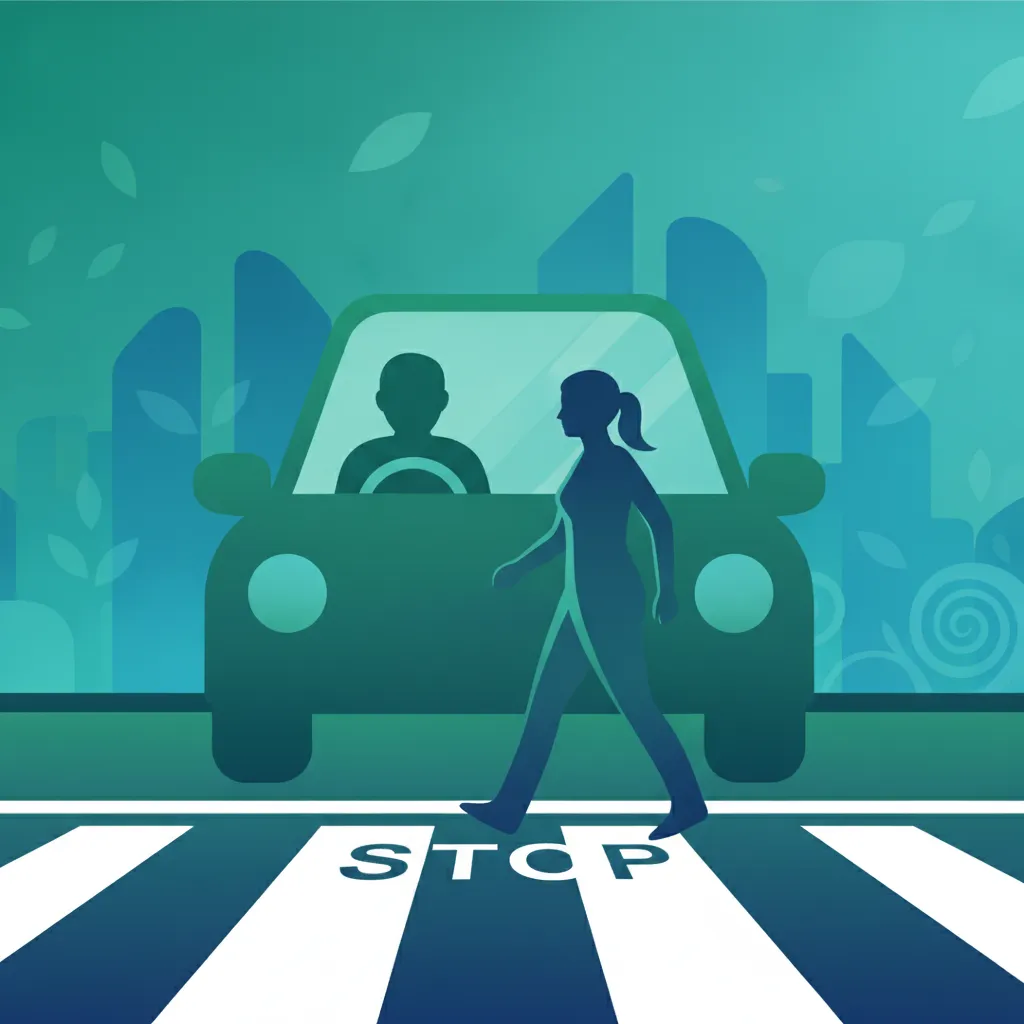
This lesson discusses the crucial interaction between passenger vehicles and pedestrians at and around bus stops. Learners will explore pedestrian right-of-way, especially at crosswalks, and positioning strategies to maintain a safe distance from people waiting or crossing. The lesson also covers pedestrian alertness measures and conflict avoidance techniques to protect vulnerable road users. This knowledge is essential for preventing accidents and maintaining a safe environment around the vehicle during stops.
This lesson examines the unique rules and restrictions governing buses and coaches, focusing on bus lane priority, time-based restrictions, and loading zone limitations. Learners will explore the criteria for using bus-only routes and understand the legal consequences of non-compliance. The content also reviews signage indicating bus gate operation and areas where passenger vehicles are prohibited from stopping or loading outside of designated zones, ensuring lawful and efficient urban navigation.
This lesson details the operation of traffic lights in Great Britain, including the red-and-amber phase before green. It clarifies the rules for proceeding at a green light, stopping for red, and preparing to stop for a steady amber light. You will also learn about green filter arrows and the flashing amber lights used at certain pedestrian crossings.
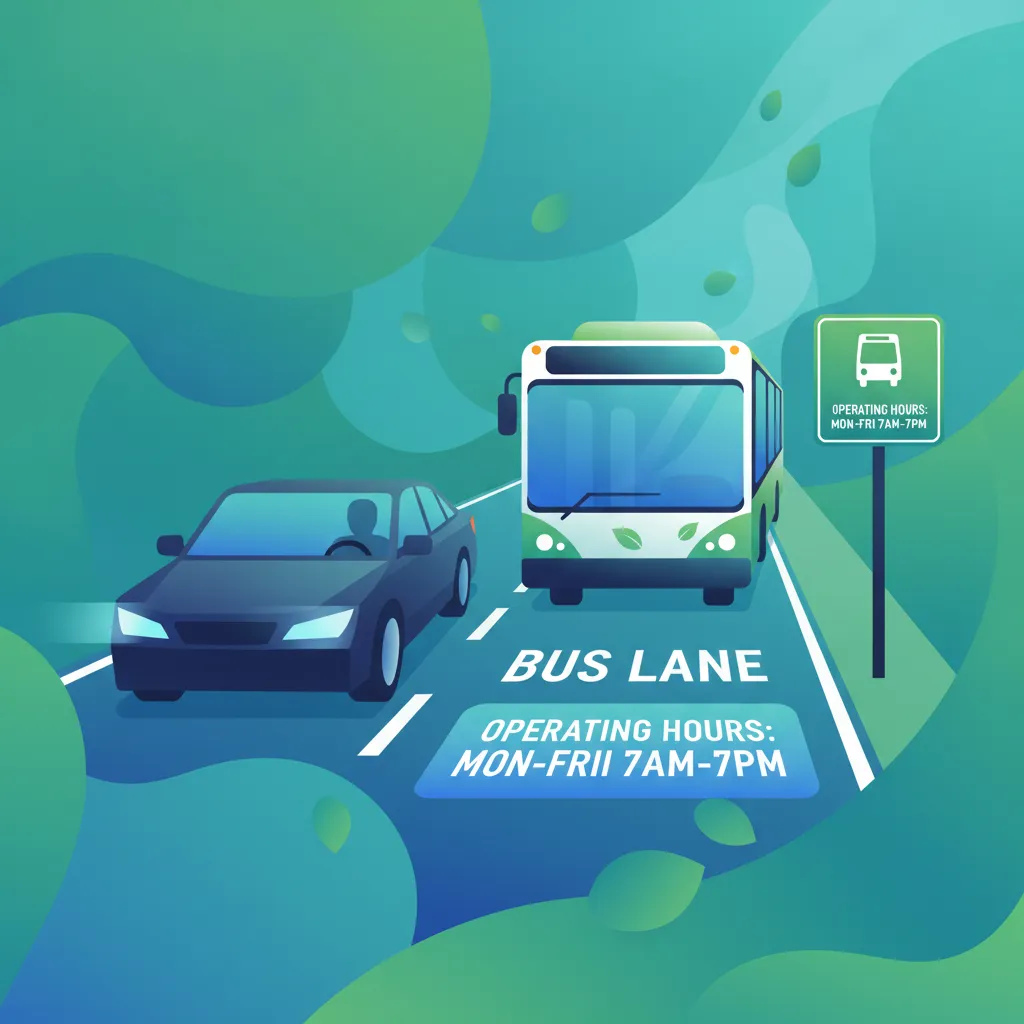
This lesson explores the specifics of bus lane markings, operating times, and priority situations where buses have precedence over other traffic. It emphasizes correct lane discipline, lawful entry and merging practices, and the exemptions granted to designated passenger vehicles. Learners will also understand how bus lane enforcement works and what penalties may be incurred for non-compliance, ensuring safe and efficient movement through urban traffic systems.
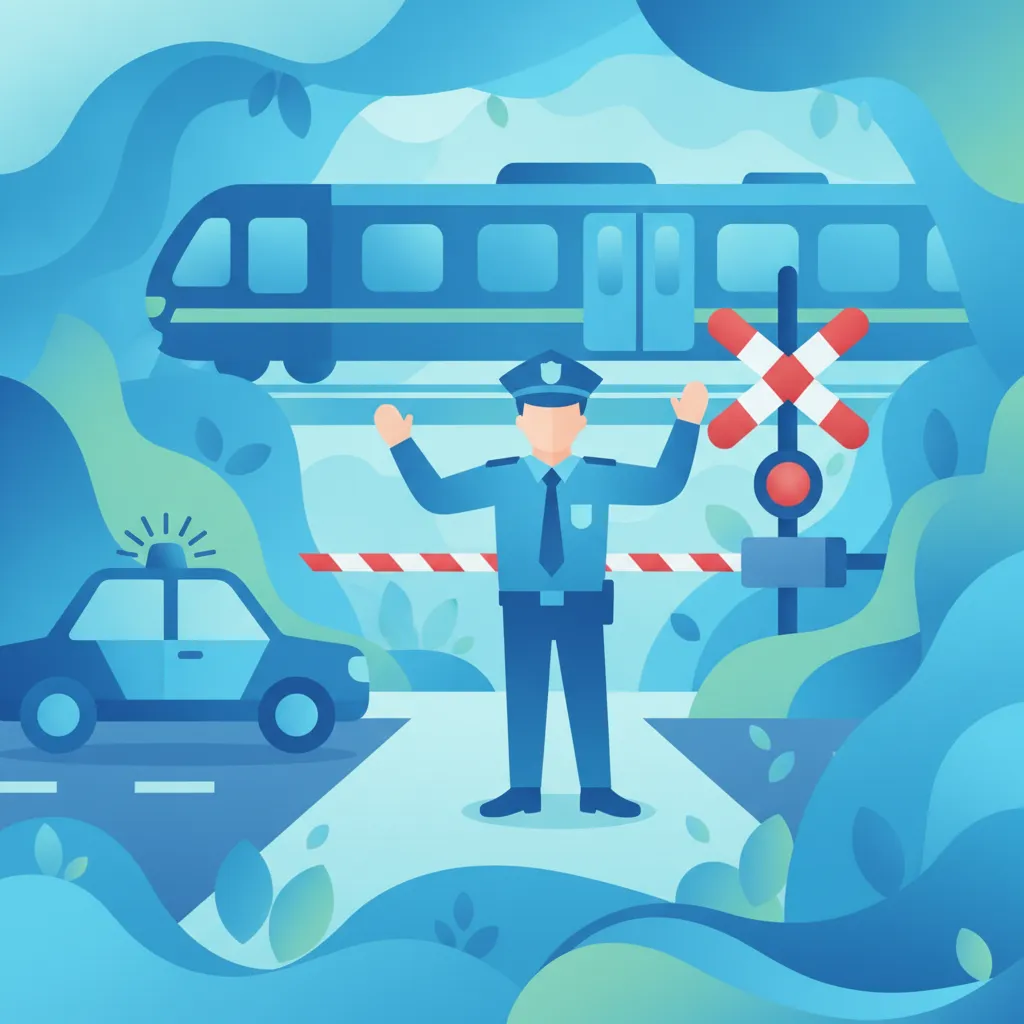
This lesson covers signals that require an immediate and specific response from drivers. You will learn the meaning of hand signals given by police officers and how to give way safely to emergency vehicles with flashing lights or sirens. It also explains the warning light system at railway level crossings, where you must stop when signalled to do so.
Learn to identify and mitigate risks from pedestrians hidden behind buses or other obstructions. Essential guidance for passenger vehicle drivers on urban bus stop safety and anticipation.
This lesson discusses the crucial interaction between passenger vehicles and pedestrians at and around bus stops. Learners will explore pedestrian right-of-way, especially at crosswalks, and positioning strategies to maintain a safe distance from people waiting or crossing. The lesson also covers pedestrian alertness measures and conflict avoidance techniques to protect vulnerable road users. This knowledge is essential for preventing accidents and maintaining a safe environment around the vehicle during stops.
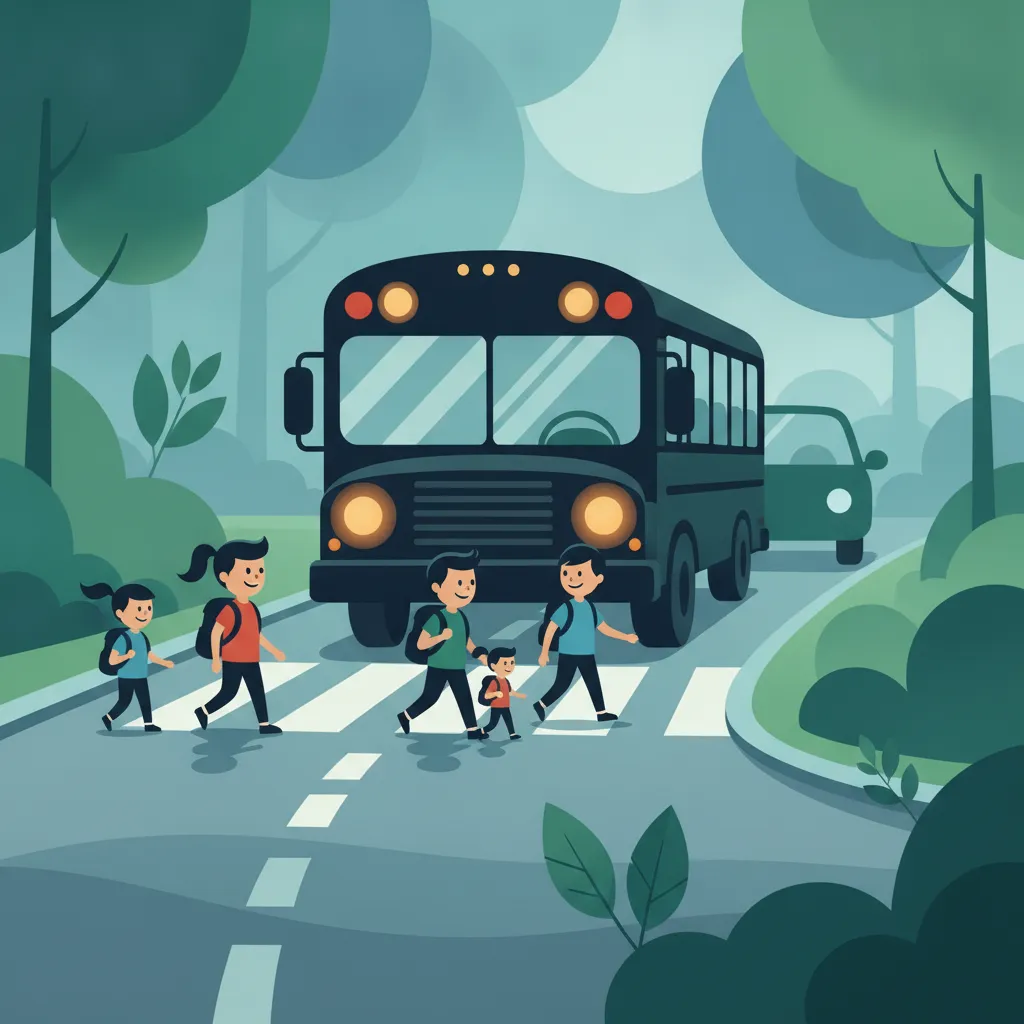
This lesson addresses the critical importance of child safety in school transport zones and around school buses. It covers the specific regulations, such as 20 mph speed limits and stopping restrictions indicated by zigzag lines. Learners will focus on the unpredictable nature of children and the need for heightened vigilance and readiness to stop unexpectedly. The content also includes procedures for the safe transport of pupils, ensuring their security both inside and outside the vehicle.
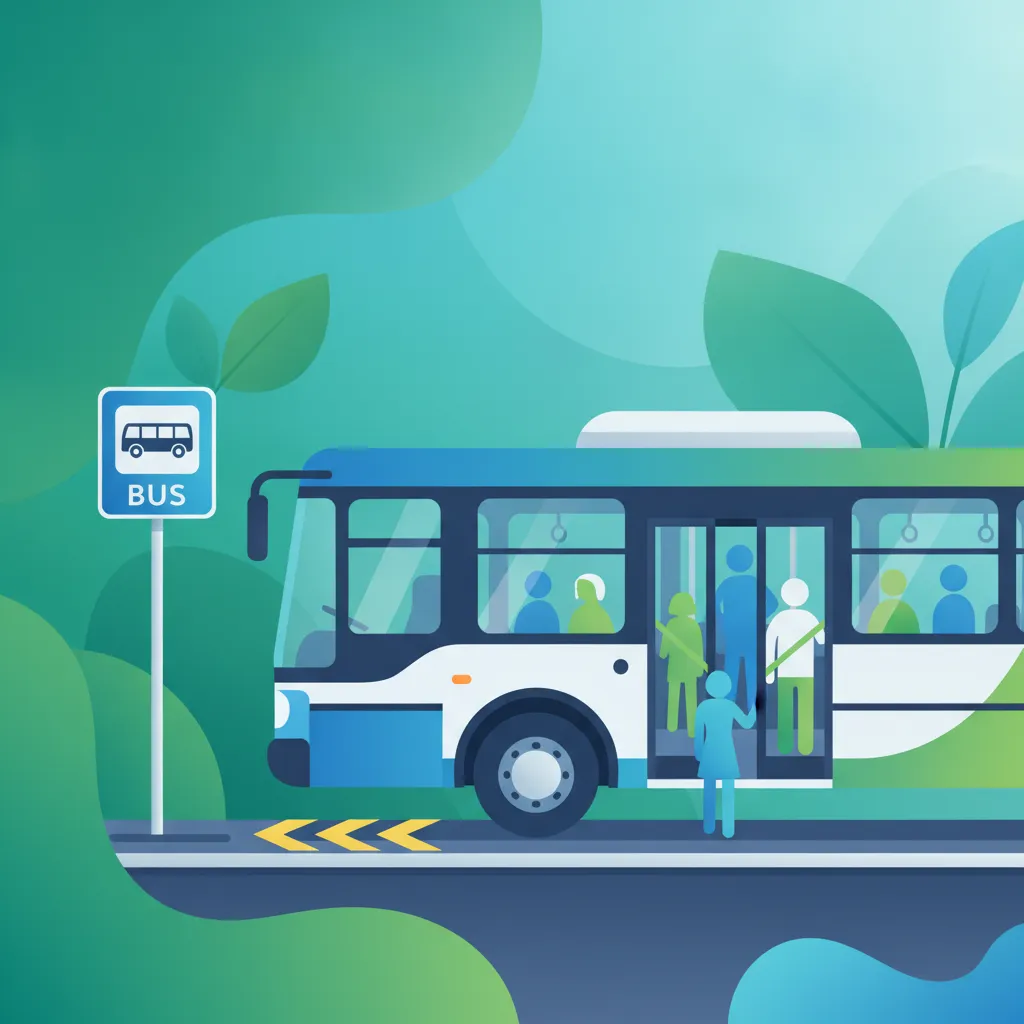
In this lesson, learners will study the specific signage and markings related to bus stops and designated passenger loading zones. Topics include correct stop approach, positioning the bus for safe boarding and alighting, and the proper use of these areas. Learners will also examine the legal expectations for passenger loading zones, including restrictions on stopping outside these zones and best practices for managing passenger flow safely and efficiently during busy periods.
This lesson focuses on alighting strategies and correct bus stop positioning to ensure passengers can exit the vehicle safely. Learners will investigate precise kerb alignment, the use of alighting alarms, and procedures for safe passenger disembarkation. Additionally, it covers the critical need for traffic awareness during alighting, such as monitoring mirrors and surrounding traffic, using stop signs, and prioritising the safety of vulnerable road users who may be near the bus.
This lesson teaches drivers how to identify various types of vulnerable road users and anticipate their potential actions to prevent conflicts. It covers the specific risks associated with pedestrians, cyclists, motorcyclists, children, and elderly or disabled individuals. Emphasis is placed on heightened awareness and defensive driving techniques required to share the road safely. Understanding their perspectives and typical behaviours is key to protecting them and maintaining safety for everyone.
This lesson examines the design and operation of urban bus stops and how passenger flow can be managed efficiently. It covers strategies for crowd control, dwell time minimization, effective queuing systems, and proper loading zone utilization. It also explores how bus stop signage and clear passenger information can aid in smooth boarding and alighting. Mastering these skills enhances overall safety, improves service quality, and maintains schedule reliability in challenging urban environments.
This lesson provides a detailed guide to various pedestrian crossings and their specific rules. You will learn to identify each type by its markings and signals, from the black and white stripes of a zebra crossing to the sensor-controlled lights of a puffin crossing. The focus is on knowing when and how to stop to ensure pedestrian safety.
This lesson focuses on the markings and rules at designated pedestrian crossing points. It details the legal requirement to give way to pedestrians on a zebra crossing and explains the light sequences at signal-controlled crossings. You will also learn the meaning of the white zig-zag lines on the approach to all crossings.

This lesson focuses on the legal and practical requirements for providing accessible transport for passengers with reduced mobility. It covers wheelchair access, ramp usage, and securement devices, as well as procedures for safely assisting passengers with mobility aids. The discussion highlights relevant disability legislation and the importance of proper loading and unloading protocols to protect both passengers and the driver from injury, ensuring compliance with accessibility standards in Great Britain.
This lesson covers the specific procedures for operating within busy bus terminals and service areas. It details the protocols for approaching and parking in allocated bays, managing the safe flow of passengers, and communicating with station staff. The content emphasizes the need for extreme caution and low-speed manoeuvring due to high pedestrian traffic. It also reviews pre-departure checks and communication protocols necessary for efficient and safe terminal operations.
Find clear answers to common questions learners have about Pedestrian Protection Near Stops and Crossings. Learn how the lesson is structured, which driving theory objectives it supports, and how it fits into the overall learning path of units and curriculum progression in Great Britain. These explanations help you understand key concepts, lesson flow, and exam focused study goals.
Yes, you must stop and give way to pedestrians who are on or waiting to cross a zebra crossing. As a professional PCV driver, your vehicle size can obstruct the view of other drivers, so being extra cautious and signaling your intentions early is vital.
Pelican crossings have a flashing amber phase, meaning you must give way to pedestrians already on the crossing but can proceed if it is clear. Puffin crossings use sensors and red-amber-green lights similar to standard traffic signals; you must wait for the green signal before proceeding.
When you see a school crossing patrol officer displaying a stop sign, you must stop and wait until the sign is withdrawn. These officers have the legal authority to stop traffic, and you must remain stationary until it is safe to proceed and the road is clear.
Pedestrians often cross the road immediately in front of or behind a large bus. If you pull away without checking your surroundings, you risk hitting someone who is obscured by your vehicle's size. Always perform a thorough blind-spot check before moving off.
Dive into our comprehensive question bank to find exactly what you need for your Great Britain theory test. Use our advanced filters to pinpoint specific subjects or test your knowledge on challenging areas, ensuring you're fully prepared for success.