
This lesson is essential for mastering the physical handling of large passenger vehicles, focusing on techniques that prioritize passenger comfort and safety. You will learn how to apply smooth control principles in various driving environments, preparing you for both the DVSA theory test and the practical realities of bus and coach operation.

Lesson content overview
Driving a bus, coach, or minibus demands a high level of skill and precision, particularly when it comes to controlling the vehicle's speed. Mastering smooth acceleration and deceleration techniques is not just about driving proficiency; it is fundamental to passenger comfort, safety, vehicle longevity, and fuel efficiency. This comprehensive guide, part of your Great Britain Passenger Vehicle Theory – Bus, Coach and Minibus Drivers course, will delve into the essential principles and practical applications of these techniques.
The way a passenger vehicle accelerates and decelerates directly impacts the experience of everyone on board. Abrupt changes in speed can cause passengers to lose their balance, fall, or experience motion sickness, leading to discomfort or even injury. For professional drivers, maintaining a smooth ride is a key aspect of their duty of care.
Beyond passenger well-being, smooth vehicle control offers significant operational benefits. It reduces mechanical stress and wear on critical vehicle components such such as the engine, transmission, and brakes, extending their lifespan and reducing maintenance costs. Furthermore, a consistent and controlled driving style is inherently more fuel-efficient, contributing to lower operating costs and reduced environmental impact. In large vehicles, sudden movements can also compromise stability, increasing the risk of loss of control, especially under adverse conditions.
This lesson builds upon foundational knowledge from earlier modules, including basic vehicle dynamics, the function of gearboxes, engine braking principles, and retarder systems. It is also closely linked with lessons on vehicle size and weight, speed management, braking strategies, and safe following distances, providing a holistic approach to proficient passenger vehicle operation.
Achieving smooth acceleration and deceleration relies on understanding and applying several core principles. These principles enable drivers to manage the vehicle's kinetic energy and momentum effectively, ensuring a controlled and comfortable journey.
| Principle | Definition | Purpose / Rationale |
|---|---|---|
| Progressive Throttle Application | Incrementally increasing throttle input rather than abrupt full depression. | Minimizes wheel slip, reduces stress on the drivetrain, and significantly improves passenger comfort. |
| Appropriate Gear Selection | Choosing a gear that matches road gradient, speed, load, and desired acceleration/deceleration. | Ensures the engine operates within its optimal power band, enhancing control and fuel efficiency. |
| Engine Braking (Passive Deceleration) | Using engine resistance (via gear downshift or compression release) to reduce speed without applying service brakes. | Reduces brake wear, provides a smoother slowdown, and helps maintain vehicle stability, especially on declines. |
| Retarder Use (Auxiliary Deceleration) | Engaging built-in hydraulic, electric, or electromagnetic retarders to supplement braking. | Enhances deceleration control, reduces brake temperature, and preserves the functionality of the primary service brakes. |
| Momentum Management | Adjusting speed in anticipation of gradients, traffic, and stopping points to avoid abrupt changes. | Leads to a smoother ride, better fuel consumption, and prevents over-reliance on service brakes. |
| Smooth Deceleration Rate | Targeting a deceleration gradient generally not exceeding 3 km/h per second (or ≈0.8 m/s²) for passenger comfort. | Aligns with passenger comfort standards and reduces kinetic energy conversion stresses on the vehicle and passengers. |
Progressive throttle application involves gradually increasing the depth of the accelerator pedal to deliver the required engine torque without sudden spikes in vehicle speed. Instead of "flooring" the accelerator, a driver eases onto the pedal, steadily building power. This technique is crucial when moving from a stop, particularly with a loaded passenger vehicle, or when accelerating out of a bend.
There are different ways to apply this: a linear progression involves a steady, uniform pedal movement, while a staggered progression might involve incremental pedal increments with brief pauses. The practical outcome is the same: preventing a sudden "lurch" that can jolt passengers. The Highway Code, specifically Rule 143, advises against abrupt vehicle movements, reinforcing the importance of this technique. A common mistake is applying full throttle too early, which not only causes discomfort but can also lead to wheel slip, especially on wet or low-traction surfaces.
Selecting the correct gear is paramount for smooth vehicle control, fuel efficiency, and engine health. Appropriate gear selection means matching the gear to the vehicle's speed, the current load, the road gradient, and the desired acceleration or deceleration. For most diesel passenger vehicles, the optimal engine RPM (revolutions per minute) range is typically between 1200–2500 RPM, allowing the engine to operate efficiently without strain.
When starting from a stop, using the first gear provides maximum torque for initial movement. Shifting up should generally occur when the engine reaches around 2500–3000 RPM to prevent the engine from "lugging" (operating at too low an RPM, causing strain). Conversely, when slowing down or descending a hill, downshifting helps to increase engine braking torque. Rule 145 of the Highway Code emphasizes the use of correct gears to maintain vehicle stability and control. Incorrect gear selection can lead to jerky motion, loss of control, or excessive fuel consumption.
Engine braking is a passive deceleration technique that uses the engine's natural resistance to slow the vehicle. Instead of relying solely on the service brakes, a driver can lift off the accelerator and select a lower gear. This causes the engine's compression resistance to slow the vehicle down. In diesel vehicles, compression release braking is a common form of engine braking.
Engine braking is highly effective for reducing speed gradually, particularly when descending long hills or approaching junctions. It significantly reduces wear on the primary service brakes and helps maintain vehicle stability. This technique requires anticipation of speed reductions; drivers must downshift early enough to allow the engine to assist in slowing the vehicle without over-revving. Rule 146 of the Highway Code encourages drivers to anticipate speed changes and use engine braking where appropriate.
On a long descent, anticipate the gradient and downshift early. This allows the engine to assist in speed control, reducing the need for continuous service brake application and preventing brake fade.
Many heavy passenger vehicles, such as coaches and some larger buses, are fitted with auxiliary deceleration systems known as retarders. These mechanical or electronic devices provide additional resistance to slow the vehicle, converting kinetic energy into heat (hydraulic retarders), or electrical energy (electromagnetic retarders).
Retarders are invaluable for sustained downhill runs, helping drivers maintain a controlled speed while preserving the service brakes for emergency situations or full stops. They enhance deceleration control and prevent brake overheating, thereby prolonging brake life and maintaining ABS functionality. Drivers must be thoroughly familiar with their vehicle's specific retarder characteristics and engage them appropriately. While there's no explicit Highway Code rule specifically for retarders, their use aligns with the broader requirement for safe and controlled speed management (Rule 146). Over-reliance on retarders for emergency stops, however, is a common misunderstanding; they are supplemental to, not a replacement for, service brakes.
Momentum management is about thinking ahead and adjusting the vehicle's speed proactively to compensate for upcoming road features, traffic flow, and potential stopping points. This means anticipating inclines, declines, turns, and junctions well in advance, rather than reacting abruptly.
For example, a driver might slightly reduce speed before a significant uphill gradient to avoid needing heavy throttle input later, or allow the vehicle to gradually slow down before an approaching bus stop instead of braking sharply at the last moment. This proactive approach ensures a smoother ride for passengers, improves fuel consumption, and reduces the need for sudden, forceful braking or acceleration. Rule 145 of the Highway Code encourages anticipating road conditions, which is central to effective momentum management.
Passenger comfort is directly linked to the rate at which a vehicle decelerates. For passenger vehicles, a smooth deceleration rate generally targets not exceeding 0.8 metres per second squared (m/s²), which is approximately 3 kilometres per hour per second (km/h/s). Exceeding this rate frequently can cause passengers to jolt forward, lose balance, or feel uncomfortable.
Achieving this smooth rate requires early and progressive deceleration. Instead of waiting until the last moment to brake hard, a driver should begin slowing down well in advance of a stop or a required speed reduction. This allows for gentle, sustained brake pressure (or the use of engine braking/retarders) to bring the vehicle to a halt or reduce speed comfortably. This principle is complementary to Rule 143 of the Highway Code, which advises against abrupt vehicle movements.
The rate of change of acceleration. In driving, sudden changes in acceleration (positive or negative) result in a 'jerk' that passengers feel as a sudden jolt. Smooth driving aims to minimise jerk.
Several key rules within The Highway Code and other regulations directly or indirectly mandate the practice of smooth acceleration and deceleration for drivers of passenger vehicles. Adhering to these rules is crucial for legal compliance, passenger safety, and operational efficiency.
Rule 143 states that "You MUST NOT use your vehicle in a way which would cause danger or discomfort to others. You should be considerate to other road users, and try to drive in a way that would not inconvenience them, especially vulnerable road users."
Rule 144 advises that "You should not use your vehicle’s service brakes unnecessarily to maintain vehicle speed."
Rule 145 instructs drivers to "Choose suitable gears to keep the engine in the correct revolutions per minute (RPM) range."
Rule 146 states that "Drivers must anticipate changes in road gradient, traffic flow, and other factors, using engine braking where appropriate."
While not a direct Highway Code rule, Regulation 44 of the Passenger Service Vehicles (Conditions of Fitness) Regulations 1982 (UK) sets out specific requirements regarding the installation, maintenance, and operation of retarders on buses, coaches, and minibuses above specified weight limits. This ensures that retarder systems are functional and contribute to vehicle safety. Additionally, Regulation 5 of the EU Directive 2004/90/EC on type approval for heavy vehicles indirectly promotes smooth driving techniques by setting benchmarks for emission and fuel efficiency, as smooth driving leads to optimal consumption.
Professional drivers must be aware of common pitfalls that can undermine smooth acceleration and deceleration, leading to safety risks, passenger discomfort, and increased operational costs.
Smooth driving techniques must be adapted to external factors and vehicle conditions to maintain safety and comfort.
The principles of physics underpin the need for smooth vehicle control. Limiting "jerk" – the rate of change of acceleration – directly reduces the inertial forces felt by passengers. Humans are highly sensitive to sudden changes in motion, which can cause startle reactions, increase the risk of panic, or lead to a loss of balance, particularly for standing passengers or those with limited mobility. By anticipating speed changes, drivers gain more time to apply appropriate, gentle control inputs, reducing reliance on instinctive, harsher braking.
From an engineering perspective, smooth control also lessens the mechanical shock and stress on the vehicle's drivetrain, suspension, and braking system. This translates into less wear and tear, fewer breakdowns, and reduced maintenance costs over the vehicle's operational life. Furthermore, studies consistently show that smooth throttle application and appropriate gear usage can improve specific fuel consumption by up to 5% or more in heavy vehicles, contributing significantly to environmental and economic sustainability.
Passenger comfort standards are often tied to maximum deceleration rates. Research indicates that deceleration rates consistently above 0.8 m/s² cause discomfort for a majority of passengers. Professional drivers aim to stay below this threshold during routine operations, reserving higher deceleration rates for emergency situations only.
Understanding the theory is one thing; applying it effectively in real-world scenarios is another. Here are practical examples demonstrating correct and incorrect behaviors.
Setting: A city centre bus stop on a level road, dry weather, bus fully loaded with 30 passengers ready to depart. Relevant Rules: Progressive throttle (Highway Code Rule 143), appropriate gear selection (Highway Code Rule 145).
Setting: A dual carriageway with a 12% gradient descent lasting 2 kilometres, moderate traffic, and a lightly loaded bus. Relevant Rules: Engine braking and retarder use (Highway Code Rule 146), avoid brake overuse (Highway Code Rule 144).
Setting: A rural road with a 6% uphill gradient, a bus carrying 60 passengers, and moderate traffic. Relevant Principles: Momentum management, appropriate gear selection.
Setting: A wet, icy suburban road with low visibility, a bus traveling at 30 km/h, and a sudden need to reduce speed due to an unexpected pedestrian crossing. Relevant Principles: Gentle deceleration, anti-skid techniques (implied safety), engine braking.
Setting: A mountainous route with a 10% decline over 5 kilometres. The retarder warning indicator illuminates, signifying a malfunction. Relevant Rules: Service brake usage (Highway Code Rule 144), safe speed control.
Mastering smooth acceleration and deceleration techniques is a hallmark of a professional passenger vehicle driver. It is a skill that harmonises vehicle dynamics with passenger needs, adhering to legal obligations while promoting operational efficiency and safety. By consistently applying progressive throttle, appropriate gear selection, engine braking, retarder use, and momentum management, drivers ensure a comfortable, safe, and economical journey for all. This diligent approach not only prevents incidents and reduces wear but also significantly enhances the reputation and trust placed in professional passenger transport services.
This lesson teaches Category D drivers essential techniques for smooth acceleration and deceleration in buses, coaches, and minibuses. Key methods include progressive throttle application, selecting appropriate gears to keep the engine in its optimal RPM range (1200–2500), using engine braking and retarders to preserve service brakes on descents, and managing momentum through anticipation. Passenger comfort depends on maintaining a deceleration rate not exceeding 0.8 m/s². Several Highway Code rules (143–146) reinforce these requirements, emphasizing that drivers must avoid movements causing discomfort, use correct gears, anticipate road conditions, and avoid unnecessary service brake use. These techniques reduce mechanical wear, improve fuel efficiency, and—most importantly—ensure passenger safety and comfort.
A short set of high-value points that capture the most important learning from this lesson.
Progressive throttle application—gradually increasing accelerator input—prevents wheel slip and eliminates passenger jolts
Target a deceleration rate of 0.8 m/s² (≈3 km/h per second) or less to maintain passenger comfort standards
Engine braking and retarders preserve service brake function on long descents, preventing dangerous brake fade
Anticipate upcoming gradients, junctions, and traffic flow to adjust speed proactively rather than reacting abruptly
Appropriate gear selection must account for vehicle speed, load, road gradient, and the desired acceleration or deceleration outcome
Explore all units and lessons included in this driving theory course.
Rule 143 of the Highway Code prohibits any vehicle movement that would cause danger or discomfort to passengers or other road users
Continuous service brake use on descents can cause overheating and brake fade, creating serious safety risks (Rule 144)
Diesel passenger vehicles operate most efficiently within an RPM range of 1200–2500; shift up around 2500–3000 RPM to avoid engine lugging
Retarders supplement but never replace service brakes—they are for sustained deceleration, not emergency stops
A fully loaded vehicle has significantly greater momentum and requires lower gears and longer stopping distances than an empty vehicle
Flooring the accelerator from a standstill causes an abrupt lurch that can throw passengers off balance or cause wheel spin on wet surfaces
Downshifting too late on descents forces service brakes to handle excessive speed control, leading to overheating and fade
Relying solely on service brakes for speed control on long downhill sections instead of using engine braking or retarders
Over-revving during downshifts by engaging a lower gear at too high a speed can cause severe engine damage
Aggressive engine braking on low-traction surfaces can cause driving wheels to lock and result in skidding
Lesson content overview
A short set of high-value points that capture the most important learning from this lesson.
Progressive throttle application—gradually increasing accelerator input—prevents wheel slip and eliminates passenger jolts
Target a deceleration rate of 0.8 m/s² (≈3 km/h per second) or less to maintain passenger comfort standards
Engine braking and retarders preserve service brake function on long descents, preventing dangerous brake fade
Anticipate upcoming gradients, junctions, and traffic flow to adjust speed proactively rather than reacting abruptly
Appropriate gear selection must account for vehicle speed, load, road gradient, and the desired acceleration or deceleration outcome
Explore all units and lessons included in this driving theory course.
Rule 143 of the Highway Code prohibits any vehicle movement that would cause danger or discomfort to passengers or other road users
Continuous service brake use on descents can cause overheating and brake fade, creating serious safety risks (Rule 144)
Diesel passenger vehicles operate most efficiently within an RPM range of 1200–2500; shift up around 2500–3000 RPM to avoid engine lugging
Retarders supplement but never replace service brakes—they are for sustained deceleration, not emergency stops
A fully loaded vehicle has significantly greater momentum and requires lower gears and longer stopping distances than an empty vehicle
Flooring the accelerator from a standstill causes an abrupt lurch that can throw passengers off balance or cause wheel spin on wet surfaces
Downshifting too late on descents forces service brakes to handle excessive speed control, leading to overheating and fade
Relying solely on service brakes for speed control on long downhill sections instead of using engine braking or retarders
Over-revving during downshifts by engaging a lower gear at too high a speed can cause severe engine damage
Aggressive engine braking on low-traction surfaces can cause driving wheels to lock and result in skidding
Explore search topics learners often look for when studying Smooth Acceleration and Deceleration Techniques. These topics reflect common questions about road rules, driving situations, safety guidance, and lesson level theory preparation for learners in Great Britain.
Browse additional driving theory lessons that cover connected traffic rules, road signs, and common driving situations related to this topic. Improve your understanding of how different rules interact across everyday traffic scenarios.
Explore the physics behind smooth acceleration and deceleration in passenger vehicles. Understand how controlling jerk and deceleration rates ensures passenger comfort and safety, and reduces vehicle wear. Essential theory for professional drivers.

This lesson highlights the importance of passenger comfort and the impact of vehicle dynamics on the cabin environment. Learners will study how suspension, seat design, and noise insulation contribute to a smooth ride and reduce vibration. The content also discusses climate control, lighting, and air quality as key components of a comfortable journey. Understanding these factors allows drivers to make operational decisions that enhance the overall passenger experience and maintain a stable environment.

This lesson explores how a passenger vehicle’s physical dimensions and weight influence its dynamic stability, handling, and manoeuvring capabilities. It covers the impact of length, width, wheelbase, and turning radius on cornering and route choice. The content also examines centre of gravity, load distribution, and the effects of inertia that influence braking and acceleration, which are essential concepts for safe operation in confined urban environments and at tight junctions.

This lesson details speed management techniques applicable to urban, rural, and motorway environments, focusing on compliance with legal speed limits and developing appropriate speed perception. It covers strategies for monitoring speed and adjusting for road conditions, traffic density, and overall passenger safety. The lesson also reviews enforcement mechanisms and emphasizes the importance of speed compliance for accident avoidance and regulatory adherence, a critical skill for all professional drivers.

This lesson explores how to maintain safe following distances specific to large passenger vehicles, accounting for their higher inertia and longer braking distances. It covers time-gap calculations, such as the four-second rule, and dynamic following distance adjustments based on speed and road conditions. Emphasis is placed on avoiding tailgating, ensuring a sufficient safety buffer is always present, and developing an awareness of convoy driving scenarios where multiple large vehicles are present.

This lesson explores the role of driver communication and public interaction in providing a high level of service. Learners will discuss effective communication techniques, handling customer inquiries, and managing potential conflicts. The lesson emphasizes the impact of a professional demeanor, clear safety messaging, and high hospitality standards on passenger perception and overall service quality. Mastering these interpersonal skills enhances trust and ensures a smoother operation on and off the road.

This lesson focuses on the regulations and best practices for driving a bus or coach on motorways. It details the specific speed limits applicable to PCVs and reinforces strict lane discipline. The content covers the correct procedures for safely joining from a slip road, overtaking other vehicles, and exiting the motorway. It also explains the features of smart motorways and the correct safety procedures to follow in the event of a breakdown, including the use of the hard shoulder.
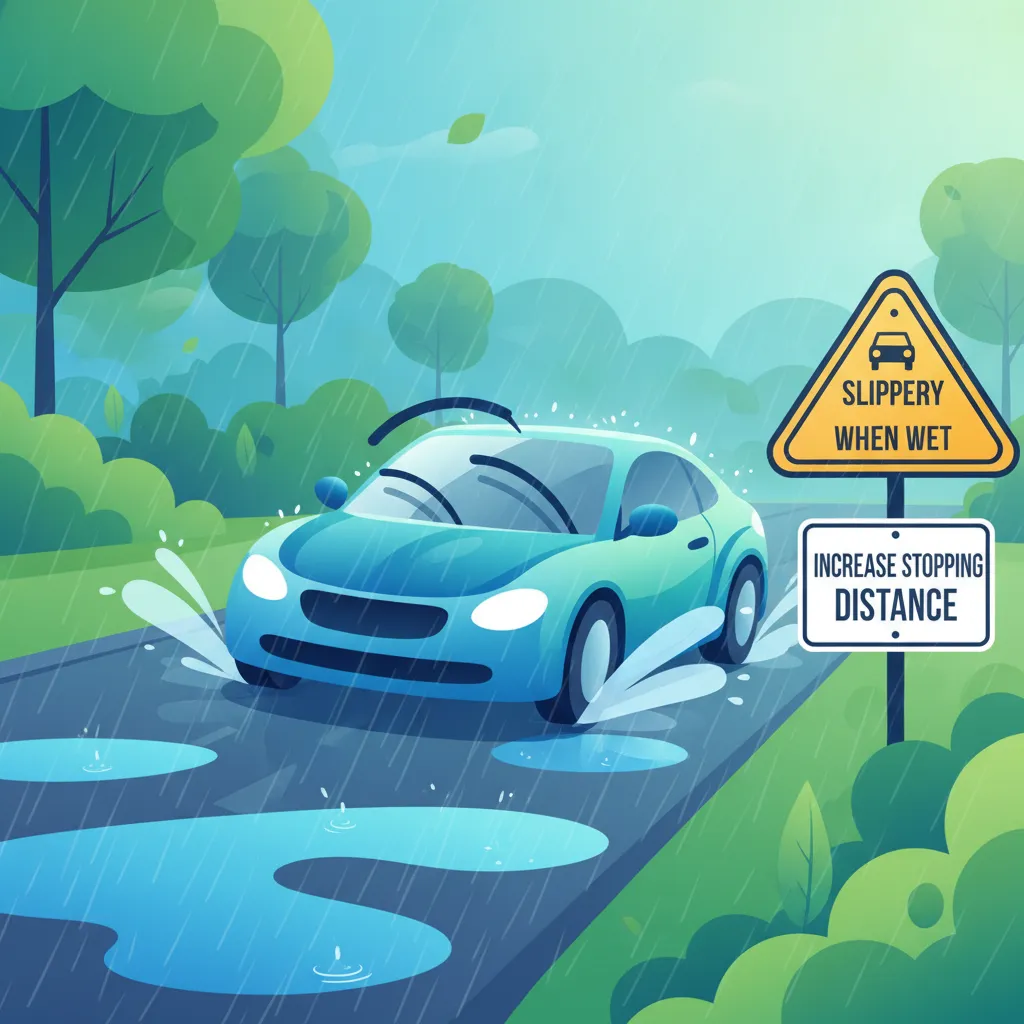
This lesson explains how different weather conditions impact the handling and stability of a large passenger vehicle. It covers the risks of aquaplaning in heavy rain, the effect of high winds on vehicle stability, and the severe reduction in visibility caused by fog. Learners will understand how ice and snow dramatically increase stopping distances and require extremely gentle control inputs to prevent skidding. Strategies for adapting speed and increasing following distances are emphasized.
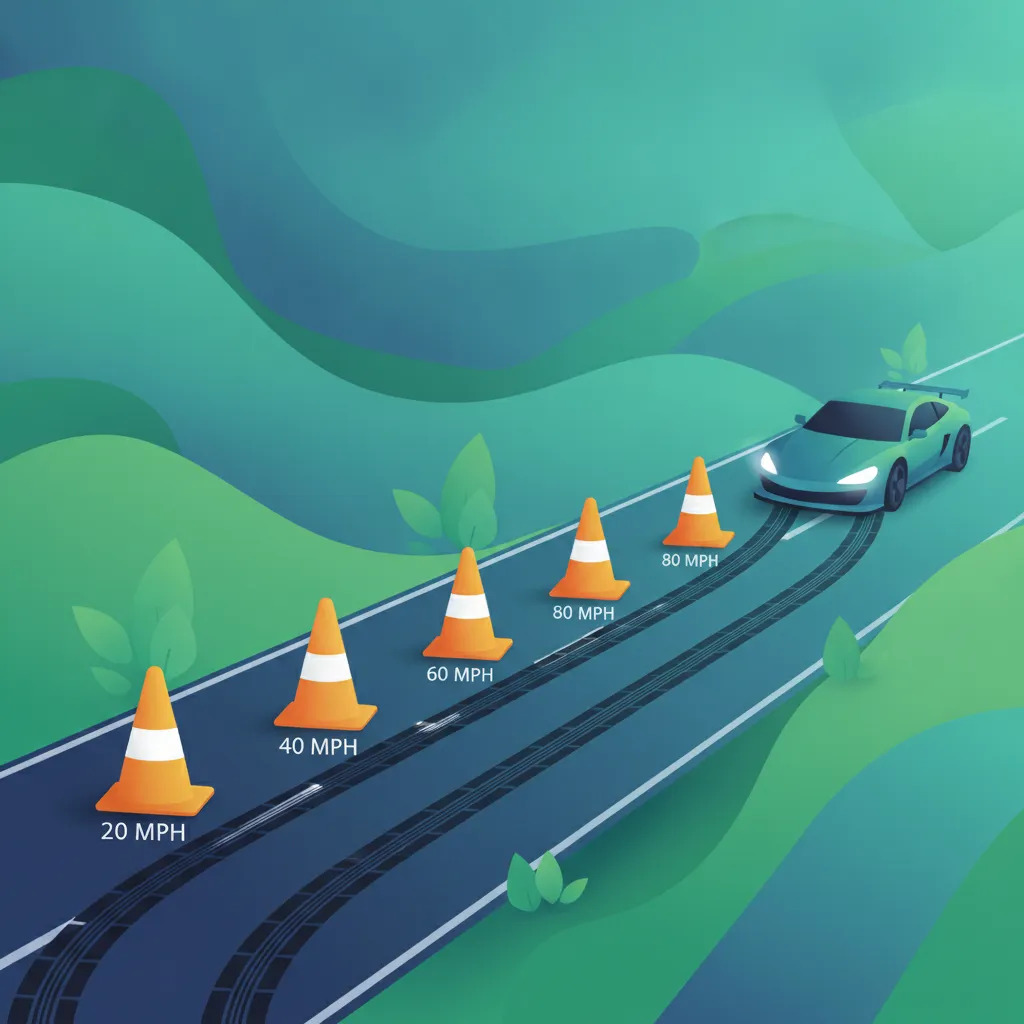
This lesson focuses on effective braking strategies, including brake modulation, ABS usage, and emergency braking procedures for large vehicles. Learners will understand how to calculate total stopping distances, taking into account perception-reaction time, vehicle mass, speed, and road conditions. The discussion also reviews brake wear, proper maintenance, and the effect of passenger load on braking performance. Mastering these concepts is crucial for reducing stopping distances and increasing safety margins.
Identify common errors in acceleration and deceleration for passenger vehicles and learn how to adapt techniques for varied conditions. Understand how load, weather, and road surfaces affect smooth driving. Key insights for DVSA exam preparation.
This lesson explains how different weather conditions impact the handling and stability of a large passenger vehicle. It covers the risks of aquaplaning in heavy rain, the effect of high winds on vehicle stability, and the severe reduction in visibility caused by fog. Learners will understand how ice and snow dramatically increase stopping distances and require extremely gentle control inputs to prevent skidding. Strategies for adapting speed and increasing following distances are emphasized.

This lesson provides essential advice for driving when weather conditions are poor. It explains how rain can cause aquaplaning and why you must double your following distance. You will also learn techniques for driving in icy conditions, including gentle use of controls to avoid skidding, and the correct use of lights in fog.
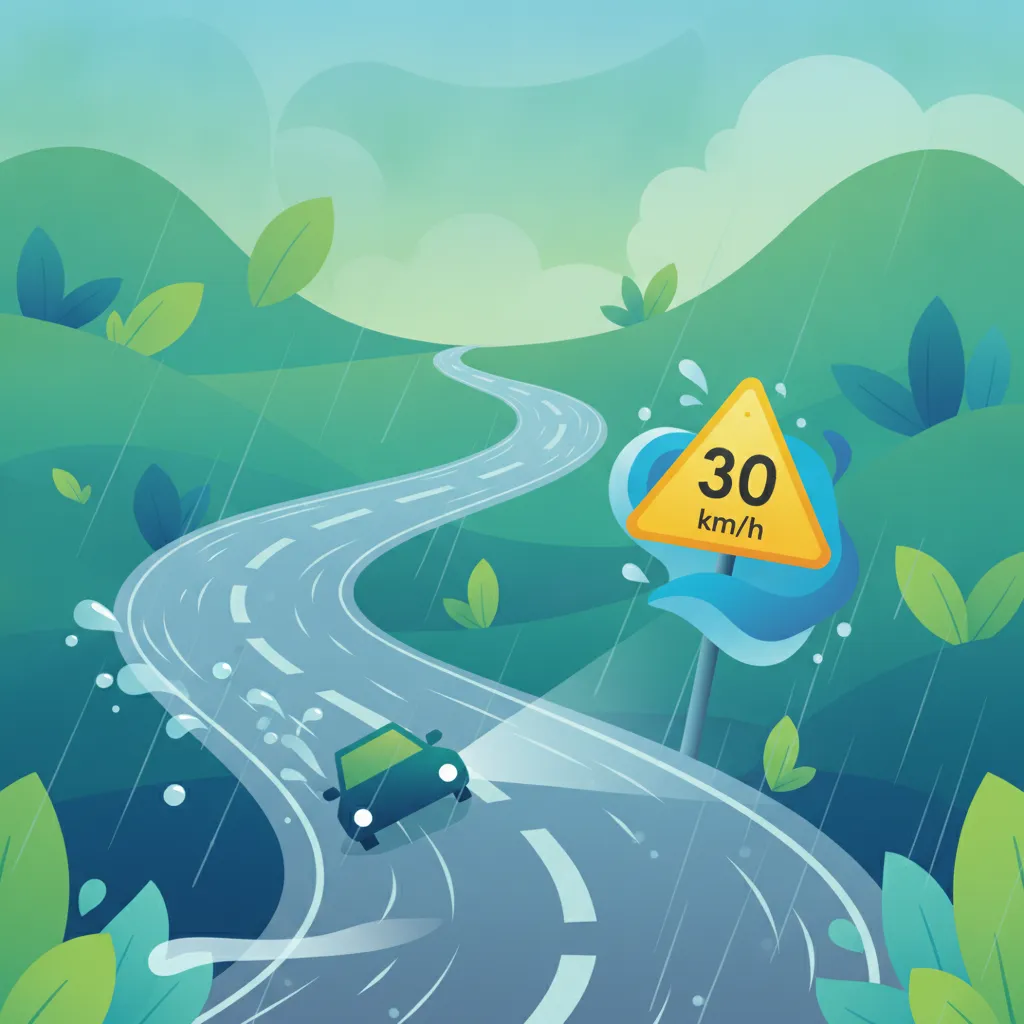
This lesson explains that safe driving often requires travelling at a speed lower than the legal limit. It covers how to adjust your speed for adverse conditions such as rain, which can double your stopping distance, or fog, which severely reduces visibility. The goal is to always be able to stop safely in the distance you can see to be clear.

This lesson equips drivers with strategies for maintaining control of a heavy vehicle during adverse weather conditions like heavy rain, ice, snow, and strong crosswinds. It covers the physics of traction loss, aquaplaning, and skidding, and explains how to use smooth inputs for steering, acceleration, and braking. The function of electronic stability control systems and other driver aids is also discussed as part of a proactive approach to safety in challenging environments.
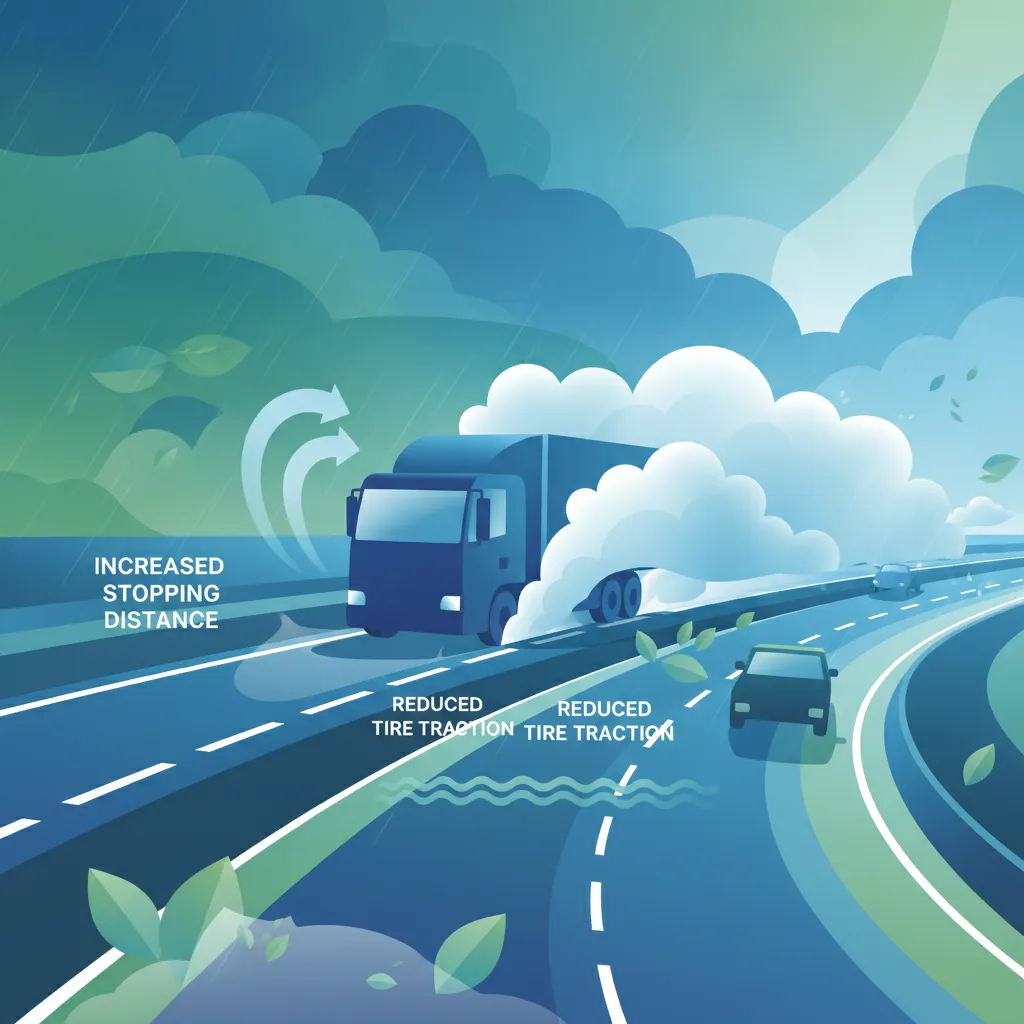
This lesson details how different adverse weather conditions uniquely affect the handling and stability of a heavy goods vehicle. It covers the increased stopping distances in rain, reduced visibility in fog, severe traction loss on ice, and the dangerous effect of strong crosswinds on high-sided vehicles. You will learn specific techniques for adjusting speed, increasing following distances, and using vehicle controls smoothly to maintain safety in challenging weather.

This lesson explores safe boarding protocols, focusing on correct door operation, managing internal passenger movement, and providing assistance for passengers with reduced mobility. It emphasizes the importance of establishing safety zones near doorways, managing standing passengers during boarding, and using audible alarms. The lesson also covers the proper sequence for wheelchair boarding and the use of loading bays to ensure smooth passenger flow and minimize risks during the boarding process.
This lesson explores how a passenger vehicle’s physical dimensions and weight influence its dynamic stability, handling, and manoeuvring capabilities. It covers the impact of length, width, wheelbase, and turning radius on cornering and route choice. The content also examines centre of gravity, load distribution, and the effects of inertia that influence braking and acceleration, which are essential concepts for safe operation in confined urban environments and at tight junctions.

This lesson teaches drivers how to identify various types of vulnerable road users and anticipate their potential actions to prevent conflicts. It covers the specific risks associated with pedestrians, cyclists, motorcyclists, children, and elderly or disabled individuals. Emphasis is placed on heightened awareness and defensive driving techniques required to share the road safely. Understanding their perspectives and typical behaviours is key to protecting them and maintaining safety for everyone.

This lesson discusses the crucial interaction between passenger vehicles and pedestrians at and around bus stops. Learners will explore pedestrian right-of-way, especially at crosswalks, and positioning strategies to maintain a safe distance from people waiting or crossing. The lesson also covers pedestrian alertness measures and conflict avoidance techniques to protect vulnerable road users. This knowledge is essential for preventing accidents and maintaining a safe environment around the vehicle during stops.

This lesson provides a thorough understanding of the core safety principles required to protect passengers. It covers secure seating, safe standing zones, and the proper handling of passenger luggage to prevent hazards. Learners will also identify the location and use of emergency equipment, understand seatbelt compliance, and learn how to conduct on-board safety briefings. The focus is on risk assessment and hazard identification to maintain a secure environment for all passengers.
Find clear answers to common questions learners have about Smooth Acceleration and Deceleration Techniques. Learn how the lesson is structured, which driving theory objectives it supports, and how it fits into the overall learning path of units and curriculum progression in Great Britain. These explanations help you understand key concepts, lesson flow, and exam focused study goals.
Smooth acceleration is vital for passenger comfort and prevents the risk of falls or jolts, especially for standing passengers. It also helps in maintaining vehicle stability and reducing overall fuel consumption.
A retarder is an auxiliary braking system that helps slow the vehicle down without using the primary service brakes. It is crucial for controlling speed on long descents and reducing wear on the main brake system.
In the theory test, you must understand that as weight increases, kinetic energy increases, requiring significantly longer stopping distances. Smooth deceleration helps you prepare for these distances well in advance.
Progressive throttle application involves gently and gradually increasing power to the engine to build speed smoothly, avoiding sudden surges that could discomfort passengers.
Dive into our comprehensive question bank to find exactly what you need for your Great Britain theory test. Use our advanced filters to pinpoint specific subjects or test your knowledge on challenging areas, ensuring you're fully prepared for success.