
This lesson explores the essential relationship between speed, road conditions, and safety for Great Britain Category B drivers. You will learn why legal speed limits are maximums, not targets, and how to adjust your driving to ensure you can always stop within the distance you can see to be clear.
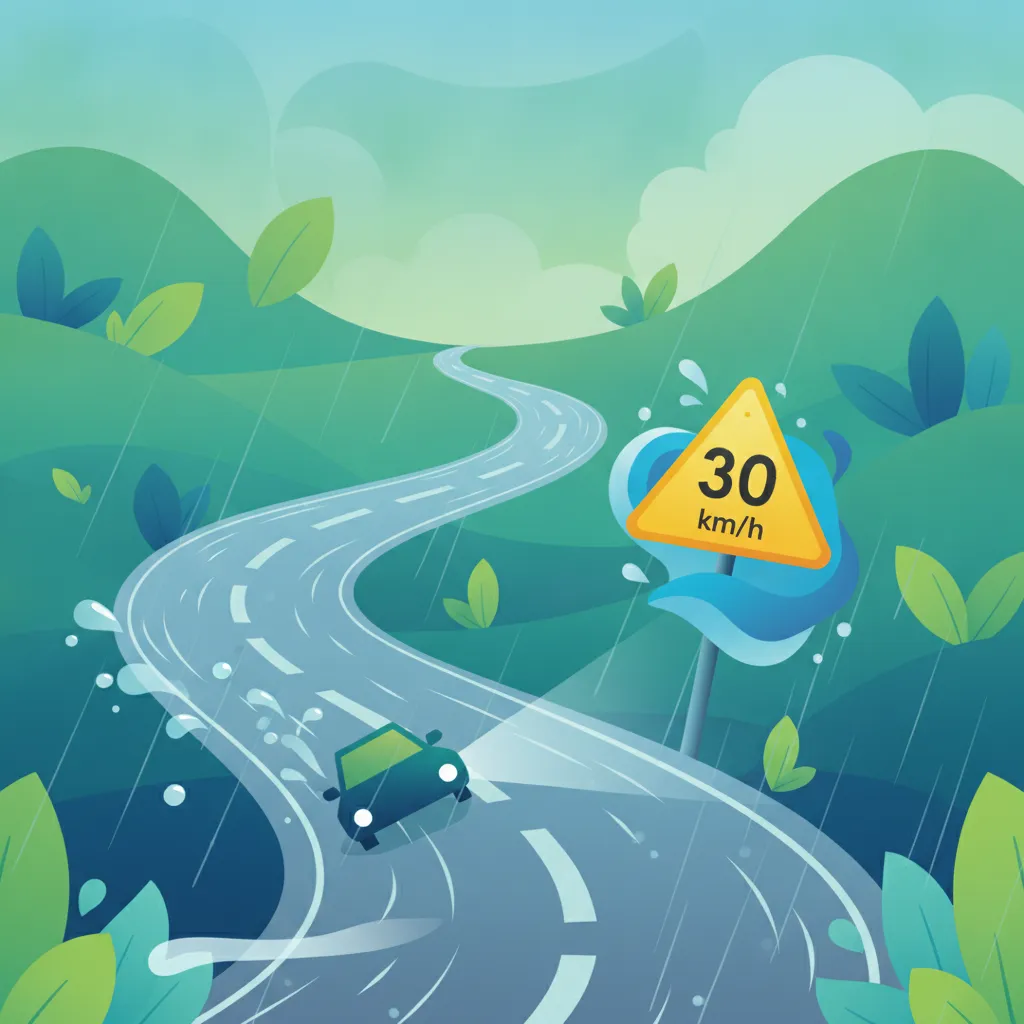
Lesson content overview
Driving safely requires more than simply obeying the posted speed limits. It demands a constant assessment of conditions and a willingness to adjust your speed to ensure you can stop safely within the distance you can see to be clear. This comprehensive lesson for Great Britain Category B learner drivers will delve into the critical factors that influence safe driving speed and explain how to make the necessary adjustments to protect yourself, your passengers, and other road users.
The concept of "safe speed" is central to responsible driving. It refers to the maximum speed at which a driver can maintain full control of their vehicle, anticipate and react to hazards, and bring the vehicle to a complete stop safely, under any given set of circumstances. This dynamic speed is rarely fixed and often needs to be significantly lower than the legal speed limit.
At its core, safe speed management revolves around one key principle: you must always be able to stop your vehicle safely within the distance you can see to be clear and free of hazards. This means that if your vision ahead is restricted, your speed must be reduced accordingly. The physics of motion dictate that the higher your speed, the longer it takes to stop, making this principle even more crucial.
In Great Britain, drivers have a clear legal duty of care. The Road Traffic Act 1988, Section 78, explicitly states that a driver must not drive at a speed that is unsafe for the conditions. This means that even if you are driving below the posted speed limit, you could still be breaking the law if your speed is deemed unsafe for the prevailing road, weather, or traffic circumstances. Failing to adjust your speed appropriately can lead to fines, penalty points, or even prosecution in the event of an accident.
Several interconnected factors play a crucial role in determining what constitutes a safe speed at any given moment. A responsible driver continuously evaluates these elements and adjusts their speed accordingly.
Total stopping distance is the entire distance your vehicle travels from the moment a hazard is perceived until it comes to a complete halt. It comprises three distinct components, all of which are directly influenced by your speed:
Higher speeds dramatically increase all three components, especially braking distance. For example, at 70 mph, the total stopping distance is approximately 96 metres (318 feet). If road conditions worsen, this distance can easily double. Understanding these components highlights why speed adjustment is non-negotiable for safety.
Your Visible Clear Distance (VCD) is the maximum distance ahead of your vehicle that you can clearly see to be free of hazards, obstructions, or potential dangers. This includes other vehicles, pedestrians, cyclists, roadworks, or anything that might require you to slow down or stop. Your VCD is a dynamic value that changes constantly with environmental conditions, road layout, and light levels.
The fundamental rule is: your speed must always be low enough that your total stopping distance is less than or equal to your VCD. If you cannot see far enough ahead to stop safely, you are driving too fast.
Adverse weather significantly reduces tyre grip, extends stopping distances, and often limits visibility. Each condition demands careful speed reduction.
Rain is one of the most common causes of reduced grip. Water on the road surface acts as a lubricant, reducing friction between tyres and the road. This can dramatically increase braking distances; for instance, heavy rain can double your braking distance compared to dry conditions. At higher speeds, there's also a risk of hydroplaning (or aquaplaning), where your tyres lose contact with the road surface and skim across a layer of water, leading to a complete loss of steering and braking control.
Fog severely limits your VCD, sometimes reducing it to just a few metres. In dense fog, your speed must be drastically reduced to ensure you can stop within the extremely short visible clear distance. For example, if visibility is only 10 metres, you might need to drive as slowly as 5–10 mph to stop safely.
Driving on snow or ice poses the greatest challenge to tyre grip. Braking distances can increase by up to ten times (though typically four times) compared to dry conditions. Even minor steering or braking inputs can lead to skidding and loss of control. In these conditions, speed must be reduced dramatically, and all controls (acceleration, braking, steering) should be applied very gently and smoothly.
Strong crosswinds can push your vehicle, especially taller vehicles like vans or cars with roof racks, affecting stability and steering control. Reduce your speed to maintain better control. Large puddles or standing water can also lead to hydroplaning, so reduce speed before driving through them and hold the steering wheel firmly.
The amount and quality of light significantly impact your VCD and ability to perceive hazards.
While usually offering good visibility, daytime driving can present challenges. Bright sunlight can cause glare, especially when low in the sky, making it difficult to see oncoming vehicles, road signs, or hazards. Dust, heavy spray from other vehicles, or even a dirty windscreen can also reduce your effective VCD.
At night, your VCD is primarily limited by the reach of your headlights. Even with full beam headlights, your effective VCD is considerably shorter than in daylight. This means your speed must be lower to allow for a safe stop within the illuminated area. When meeting oncoming vehicles or following another vehicle, you must switch to dipped headlights to avoid dazzling other drivers, which further reduces your VCD.
On unlit rural roads, where the posted limit might be 60 mph, it's often impossible to stop safely from that speed using only your dipped headlights. You must reduce your speed significantly, sometimes by 15-20 mph or more, to match the reduced visibility.
The physical design of the road itself can limit your VCD and influence safe speed.
The presence and behaviour of other road users play a vital role in determining a safe speed.
Your vehicle's characteristics also impact safe speed.
Finally, your own physical and mental condition as a driver directly influences your ability to drive safely and select an appropriate speed.
Adjusting your speed effectively is a continuous process of observation, anticipation, and decision-making.
Observe Constantly: Scan the road ahead, to the sides, and behind you. Pay attention to weather changes, road surface conditions, traffic flow, and potential hazards.
Anticipate Hazards: Look far ahead to spot potential dangers early (e.g., brake lights in the distance, a change in road surface, approaching a bend). Anticipation allows you to reduce speed smoothly and in good time.
Match Speed to Visibility: Your speed should never exceed the distance you can see clearly ahead. If visibility is poor due to fog, heavy rain, or darkness, slow down significantly.
Increase Following Distance: In adverse conditions, the standard two-second rule should be extended to at least four seconds, or even more on icy roads. This gives you more time to react and brake.
Use Lower Gears: On steep downhill gradients or in slippery conditions, selecting a lower gear can help control your speed without over-relying on the brakes, preventing overheating or skidding.
Be Smooth with Controls: Gentle acceleration, braking, and steering are crucial in conditions where grip is reduced. Harsh inputs can lead to skidding.
Check Your Vehicle: Ensure your tyres are correctly inflated and have adequate tread, your lights are clean and working, and your brakes are effective. A well-maintained vehicle is safer at any speed.
Many drivers make assumptions about speed that can lead to dangerous situations and legal repercussions.
Failure to drive at a speed appropriate to the conditions can lead to serious consequences. In addition to potential collisions and injuries, drivers can face legal penalties under various sections of the Road Traffic Act 1988 and the Highway Code. Driving without due care and attention or dangerous driving charges can stem from inappropriate speed, leading to hefty fines, penalty points on your licence, or even driving disqualification. Insurers may also refuse to pay out for damages if it's found that your speed was unsafe for the conditions.
Effective speed management is a cornerstone of safe driving. It requires a proactive mindset, constant vigilance, and a deep understanding of how various factors interact to influence your vehicle's performance and your ability to control it. For Category B learner drivers in Great Britain, mastering speed adjustment is not just about passing a test; it's about developing the critical judgment skills that will keep you safe on the roads for life.
Always remember that your primary responsibility as a driver is to ensure the safety of yourself and others. By diligently applying the principles of safe speed selection, you contribute significantly to reducing road risk and promoting a safer driving environment for everyone.
This lesson teaches that safe driving requires continuous speed adjustment based on road, weather, and traffic conditions rather than simply following posted limits. The core principle is that you must always be able to stop within your visible clear distance, with total stopping distance comprising perception, reaction, and braking components. Weather conditions like rain, fog, snow, and ice significantly increase stopping distances, with ice potentially extending braking distance tenfold. The lesson also covers how road geometry, vehicle condition, load, and driver state all influence safe speed selection, reinforcing that legal responsibility exists under the Road Traffic Act 1988 to drive at a speed appropriate for conditions.
A short set of high-value points that capture the most important learning from this lesson.
The posted speed limit is a legal maximum, not a target speed - always drive at a speed appropriate for prevailing conditions
Total stopping distance equals perception distance + reaction distance + braking distance, and all three increase dramatically with speed
Your Visible Clear Distance (VCD) determines your safe maximum speed - if you cannot see far enough ahead to stop, you are travelling too fast
Adverse weather conditions significantly extend stopping distances: rain can double braking distance, while ice and snow can increase it up to ten times
Drivers have a legal duty under Road Traffic Act 1988 s78 to adjust speed appropriately regardless of posted limits
Explore all units and lessons included in this driving theory course.
In heavy rain on motorways, reduce speed by at least 10-20 mph and extend following distance to at least four seconds using the two-second rule
When visibility falls below 100 metres in fog, dipped headlights and fog lights are mandatory - switch them off once conditions improve
Approaching blind bends and hill crests requires speed reduction before the hazard, not when you see the obstacle
Vehicle load increases braking distance because greater mass means greater kinetic energy requiring more distance to dissipate
Fatigue, distraction, and impairment all lengthen perception and reaction times, demanding lower speeds to maintain safety margins
Assuming that driving within the speed limit means driving safely - conditions can make even a legal speed dangerous
Believing that ABS and ESP systems reduce stopping distances - these aids help with control but cannot overcome the laws of physics
Taking familiar bends at the posted limit regardless of visibility or weather - road conditions can change and hazards can appear unexpectedly
Failing to reduce speed before entering adverse conditions, rather than reacting after grip is already compromised
Not accounting for longer stopping distances when driving heavier vehicles or those towing trailers
Lesson content overview
A short set of high-value points that capture the most important learning from this lesson.
The posted speed limit is a legal maximum, not a target speed - always drive at a speed appropriate for prevailing conditions
Total stopping distance equals perception distance + reaction distance + braking distance, and all three increase dramatically with speed
Your Visible Clear Distance (VCD) determines your safe maximum speed - if you cannot see far enough ahead to stop, you are travelling too fast
Adverse weather conditions significantly extend stopping distances: rain can double braking distance, while ice and snow can increase it up to ten times
Drivers have a legal duty under Road Traffic Act 1988 s78 to adjust speed appropriately regardless of posted limits
Explore all units and lessons included in this driving theory course.
In heavy rain on motorways, reduce speed by at least 10-20 mph and extend following distance to at least four seconds using the two-second rule
When visibility falls below 100 metres in fog, dipped headlights and fog lights are mandatory - switch them off once conditions improve
Approaching blind bends and hill crests requires speed reduction before the hazard, not when you see the obstacle
Vehicle load increases braking distance because greater mass means greater kinetic energy requiring more distance to dissipate
Fatigue, distraction, and impairment all lengthen perception and reaction times, demanding lower speeds to maintain safety margins
Assuming that driving within the speed limit means driving safely - conditions can make even a legal speed dangerous
Believing that ABS and ESP systems reduce stopping distances - these aids help with control but cannot overcome the laws of physics
Taking familiar bends at the posted limit regardless of visibility or weather - road conditions can change and hazards can appear unexpectedly
Failing to reduce speed before entering adverse conditions, rather than reacting after grip is already compromised
Not accounting for longer stopping distances when driving heavier vehicles or those towing trailers
Explore search topics learners often look for when studying Factors Influencing Safe Speed and Adjustments. These topics reflect common questions about road rules, driving situations, safety guidance, and lesson level theory preparation for learners in Great Britain.
Browse additional driving theory lessons that cover connected traffic rules, road signs, and common driving situations related to this topic. Improve your understanding of how different rules interact across everyday traffic scenarios.
Learn how rain, fog, snow, and ice drastically affect tyre grip and stopping distances. This lesson explains essential speed adjustments and techniques for maintaining control in poor weather, vital for your GB driving theory.

This lesson provides essential advice for driving when weather conditions are poor. It explains how rain can cause aquaplaning and why you must double your following distance. You will also learn techniques for driving in icy conditions, including gentle use of controls to avoid skidding, and the correct use of lights in fog.
This lesson provides essential advice for riding safely in adverse weather conditions that reduce tyre grip. You will learn how rain, ice, and wet leaves dramatically increase braking distances and affect handling. Key strategies covered include reducing speed, increasing following distances, making smooth control inputs, and anticipating slippery areas to maintain control and avoid skidding on compromised road surfaces.
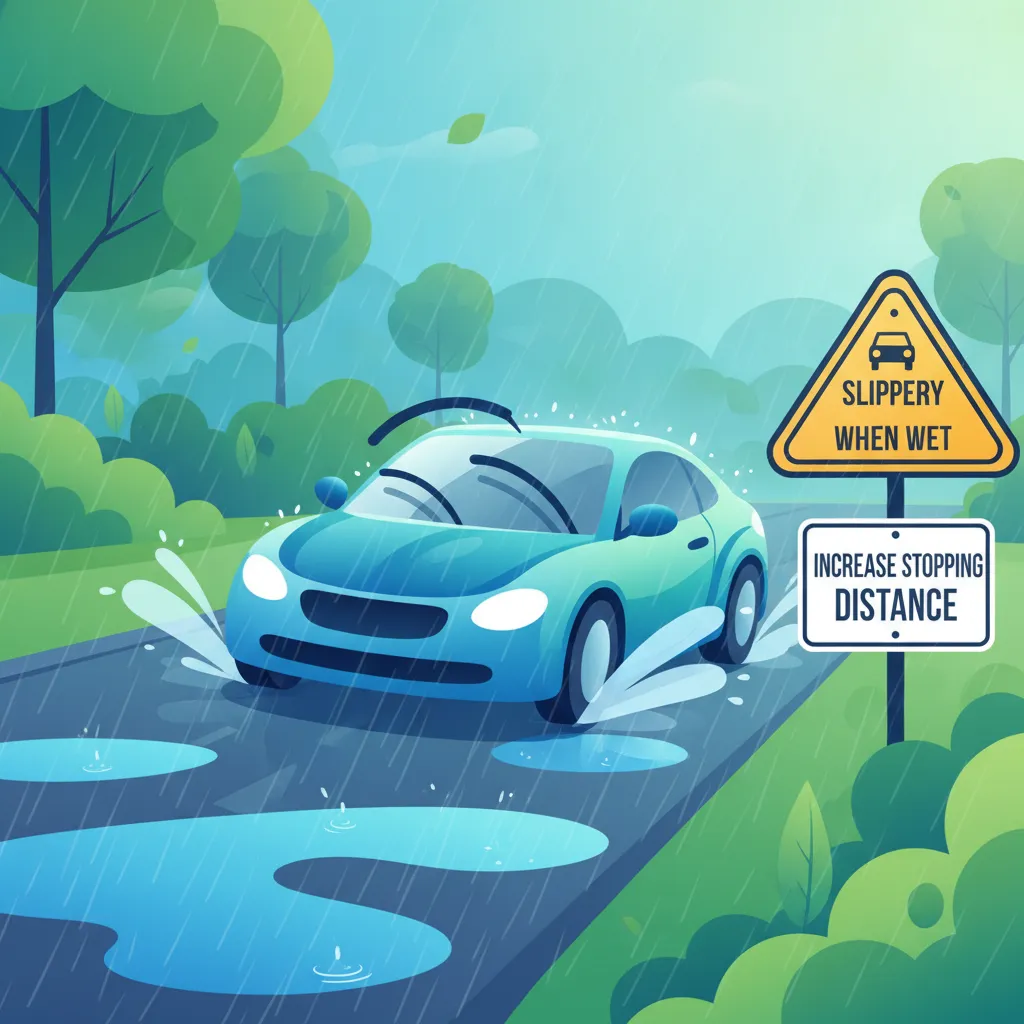
This lesson explains how different weather conditions impact the handling and stability of a large passenger vehicle. It covers the risks of aquaplaning in heavy rain, the effect of high winds on vehicle stability, and the severe reduction in visibility caused by fog. Learners will understand how ice and snow dramatically increase stopping distances and require extremely gentle control inputs to prevent skidding. Strategies for adapting speed and increasing following distances are emphasized.
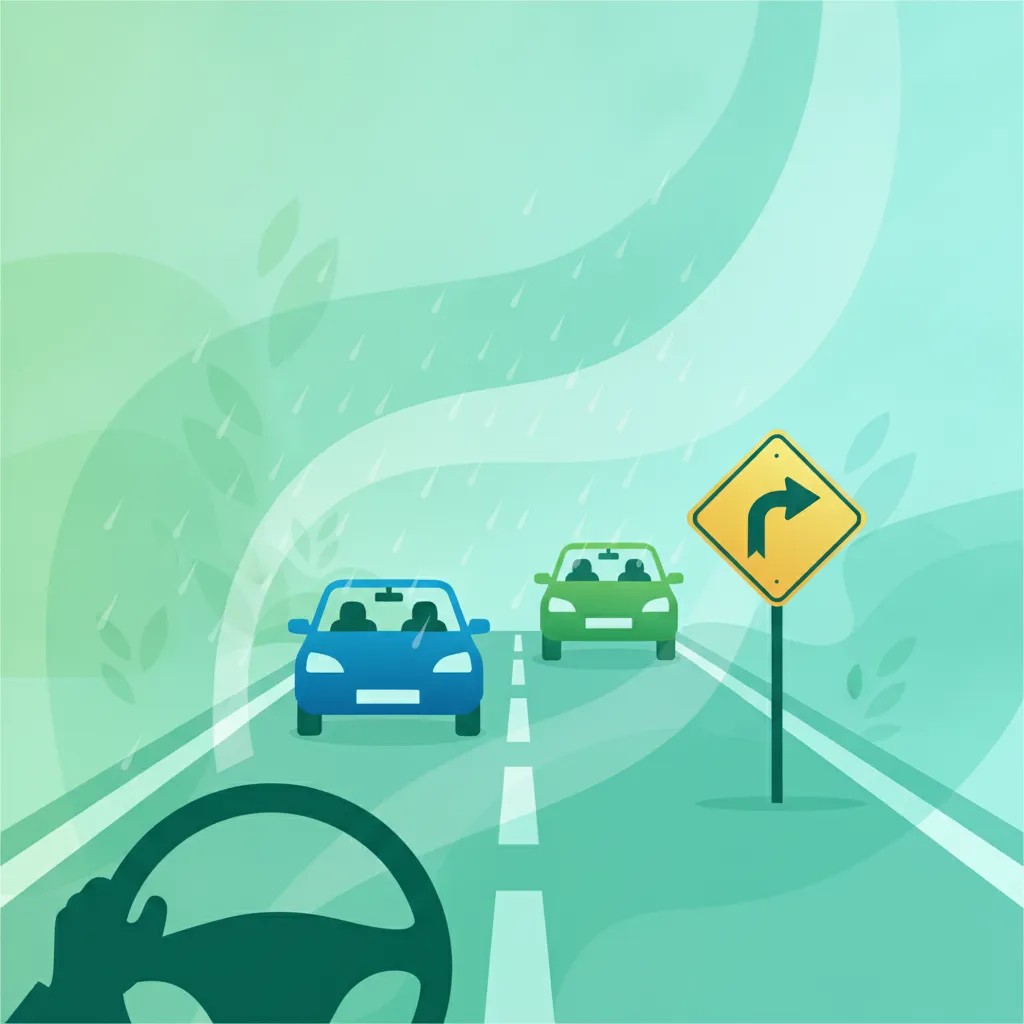
This lesson teaches a practical method for maintaining a safe distance from the vehicle in front. The 'two-second rule' provides a minimum time gap in dry conditions, which should be doubled to four seconds in the wet. Adhering to this rule gives you sufficient time to react and brake safely if the vehicle ahead stops suddenly.
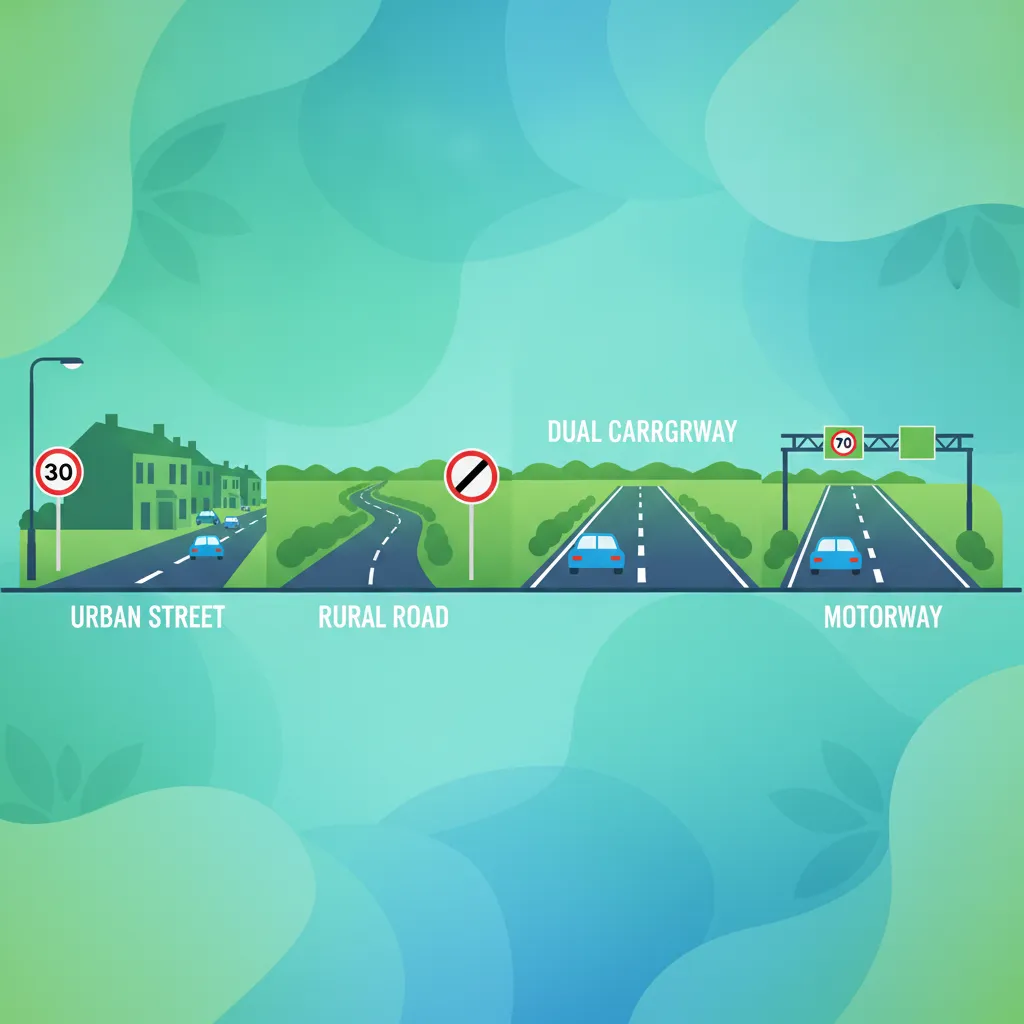
This lesson details the default speed limits for cars in Great Britain. You will learn the 30 mph limit for built-up areas, 60 mph on single carriageways, and 70 mph on dual carriageways and motorways. It also covers how to identify these roads and the importance of looking for signs indicating a different limit is in force.
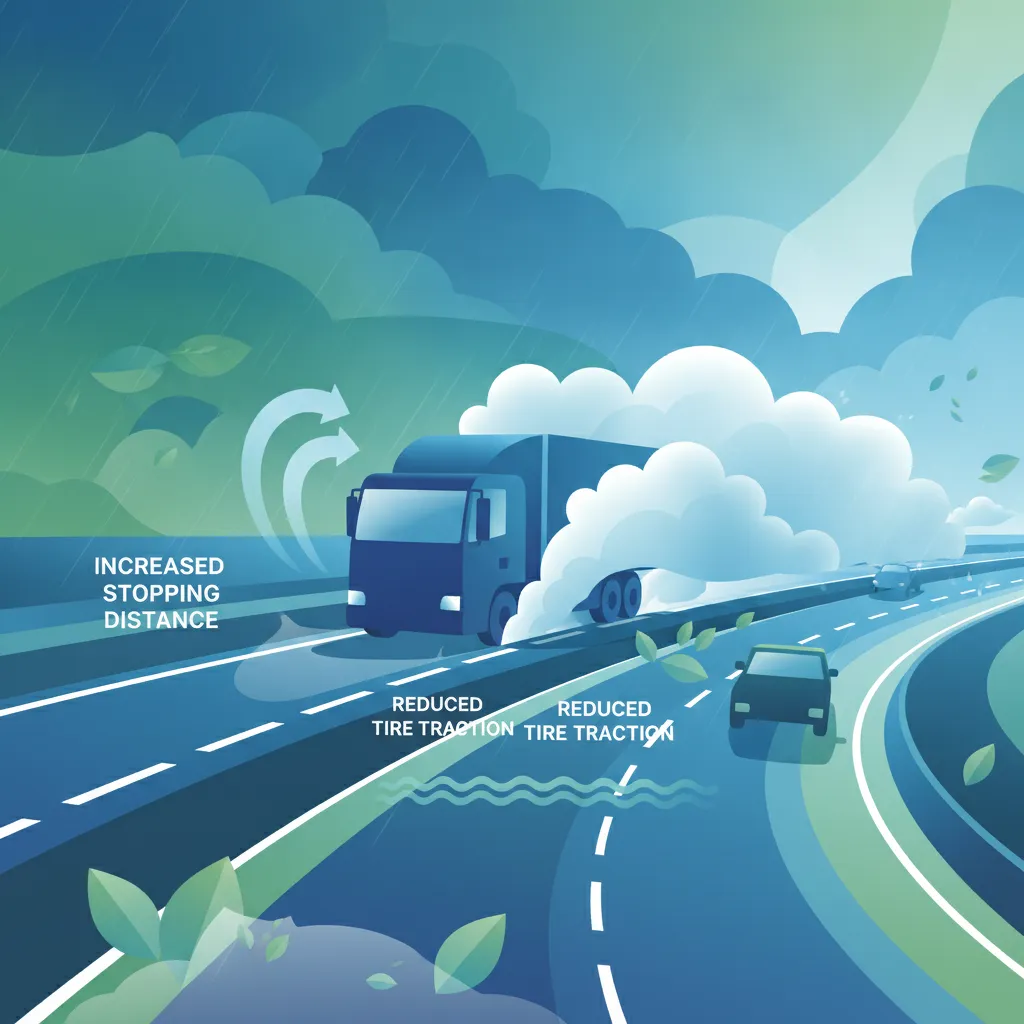
This lesson details how different adverse weather conditions uniquely affect the handling and stability of a heavy goods vehicle. It covers the increased stopping distances in rain, reduced visibility in fog, severe traction loss on ice, and the dangerous effect of strong crosswinds on high-sided vehicles. You will learn specific techniques for adjusting speed, increasing following distances, and using vehicle controls smoothly to maintain safety in challenging weather.

Fog dramatically reduces how far you can see and be seen. This lesson explains why you must reduce your speed and increase your following distance in foggy conditions. It also covers the legal requirements and best practices for using your headlights and fog lights to maximize your visibility to others without dazzling them.
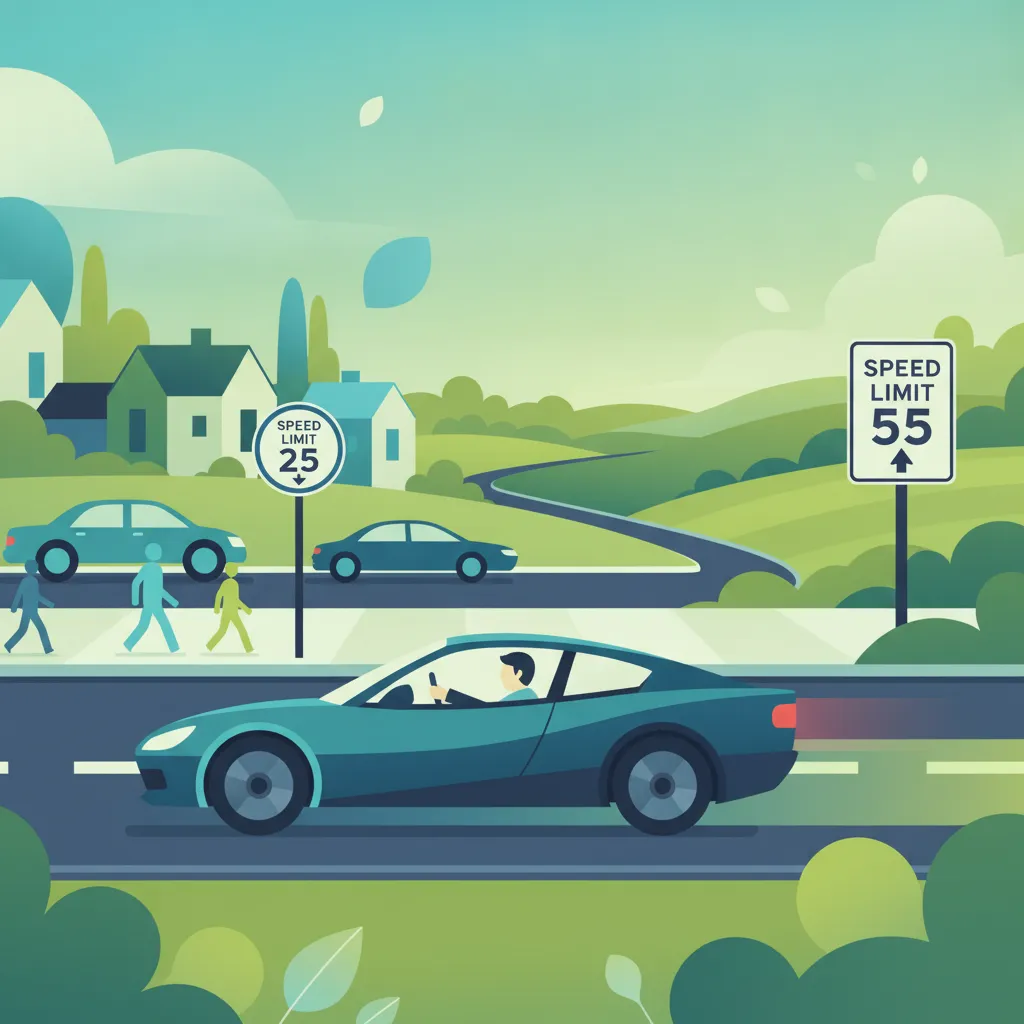
This lesson details speed management techniques applicable to urban, rural, and motorway environments, focusing on compliance with legal speed limits and developing appropriate speed perception. It covers strategies for monitoring speed and adjusting for road conditions, traffic density, and overall passenger safety. The lesson also reviews enforcement mechanisms and emphasizes the importance of speed compliance for accident avoidance and regulatory adherence, a critical skill for all professional drivers.

This lesson explains the functions and legal requirements for all exterior vehicle lights. You will learn when it is appropriate to use dipped and main beam headlights, the specific conditions for using fog lights, and the correct application of hazard warning lights. Proper use of lighting is vital for seeing and being seen by other road users.

Riding in the rain requires significant adjustments to your technique. This lesson covers how to ride smoothly to maintain traction, the importance of increasing your following distance, and how to deal with reduced visibility from spray and fogged visors. You will also learn what aquaplaning is and how to avoid or manage it.
Discover why the speed limit is not a target and explore critical factors like visibility, road geometry, traffic, and vehicle load that dictate safe driving speeds. Essential knowledge for Category B learners.
This lesson details speed management techniques applicable to urban, rural, and motorway environments, focusing on compliance with legal speed limits and developing appropriate speed perception. It covers strategies for monitoring speed and adjusting for road conditions, traffic density, and overall passenger safety. The lesson also reviews enforcement mechanisms and emphasizes the importance of speed compliance for accident avoidance and regulatory adherence, a critical skill for all professional drivers.
This lesson details the default speed limits for cars in Great Britain. You will learn the 30 mph limit for built-up areas, 60 mph on single carriageways, and 70 mph on dual carriageways and motorways. It also covers how to identify these roads and the importance of looking for signs indicating a different limit is in force.
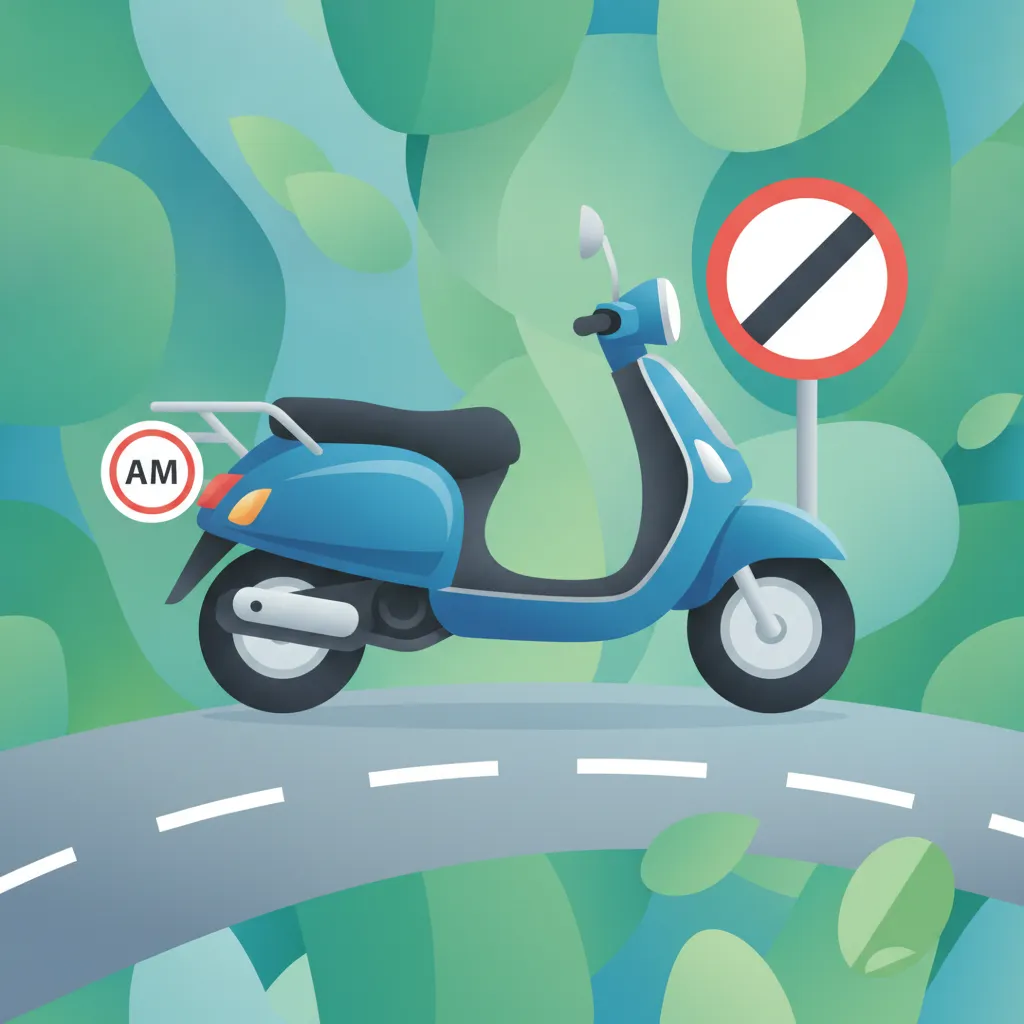
This lesson clarifies the specific speed limits that apply to Category AM vehicles on various British roads, from 30 mph zones in built-up areas to national speed limits on single and dual carriageways. It emphasizes that the posted limit is a maximum, not a target, and teaches you how to choose an appropriate speed based on factors like weather, traffic, and road layout. Understanding these rules is vital for both legal compliance and personal safety.
This lesson teaches a practical method for maintaining a safe distance from the vehicle in front. The 'two-second rule' provides a minimum time gap in dry conditions, which should be doubled to four seconds in the wet. Adhering to this rule gives you sufficient time to react and brake safely if the vehicle ahead stops suddenly.

This lesson addresses the critical importance of child safety in school transport zones and around school buses. It covers the specific regulations, such as 20 mph speed limits and stopping restrictions indicated by zigzag lines. Learners will focus on the unpredictable nature of children and the need for heightened vigilance and readiness to stop unexpectedly. The content also includes procedures for the safe transport of pupils, ensuring their security both inside and outside the vehicle.
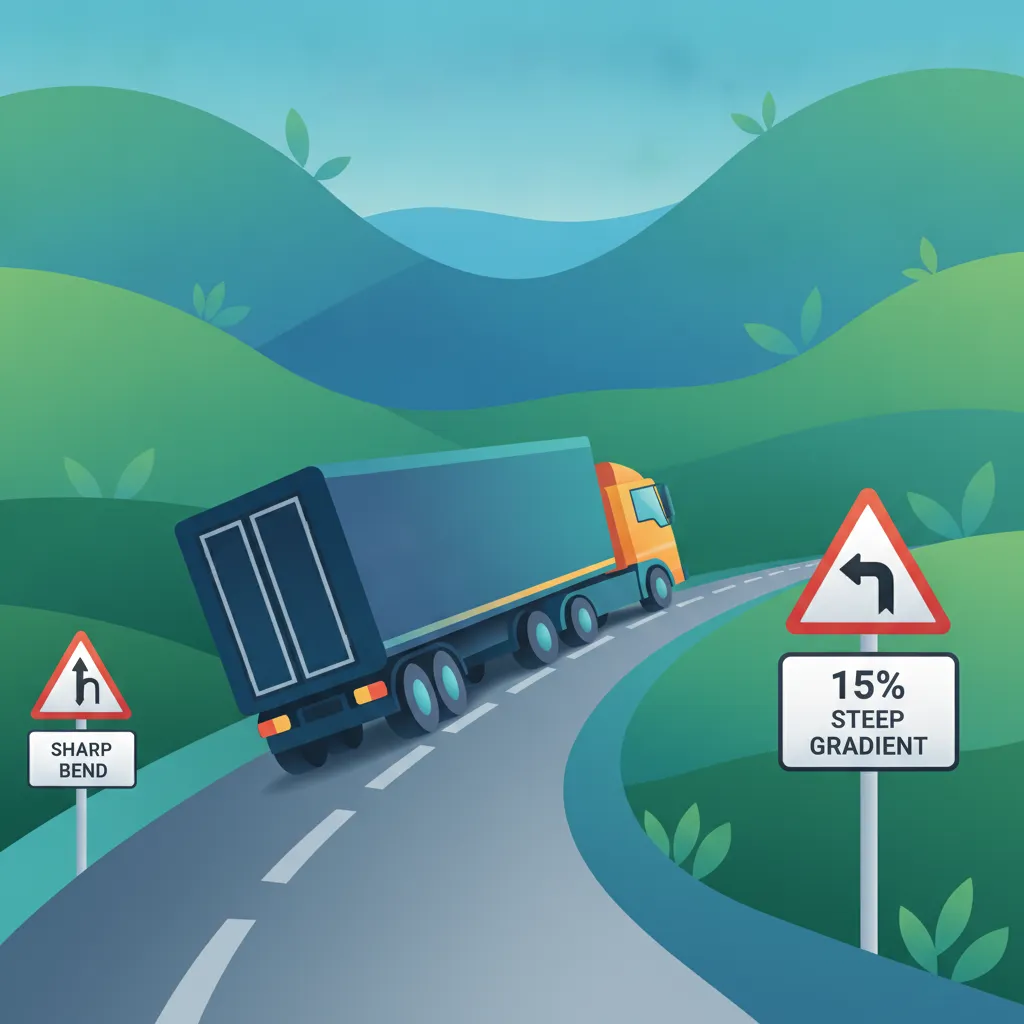
This lesson focuses on the principles of effective speed management for heavy goods vehicles, which extends beyond simply obeying the statutory speed limits. It covers how to adapt speed based on vehicle weight, load stability, road gradients, and prevailing traffic and weather conditions. You will also learn about the function of mandatory speed limiters and how intelligent use of speed and cruise control can significantly improve fuel efficiency and safety.
This lesson focuses on the regulations and best practices for driving a bus or coach on motorways. It details the specific speed limits applicable to PCVs and reinforces strict lane discipline. The content covers the correct procedures for safely joining from a slip road, overtaking other vehicles, and exiting the motorway. It also explains the features of smart motorways and the correct safety procedures to follow in the event of a breakdown, including the use of the hard shoulder.

This lesson identifies behaviours that significantly increase a rider's risk of being involved in a collision. It explains the dangers of excessive speed, following too closely, and aggressive riding. You will learn how a rider's attitude and choices directly contribute to their safety and the legal penalties associated with these offences.
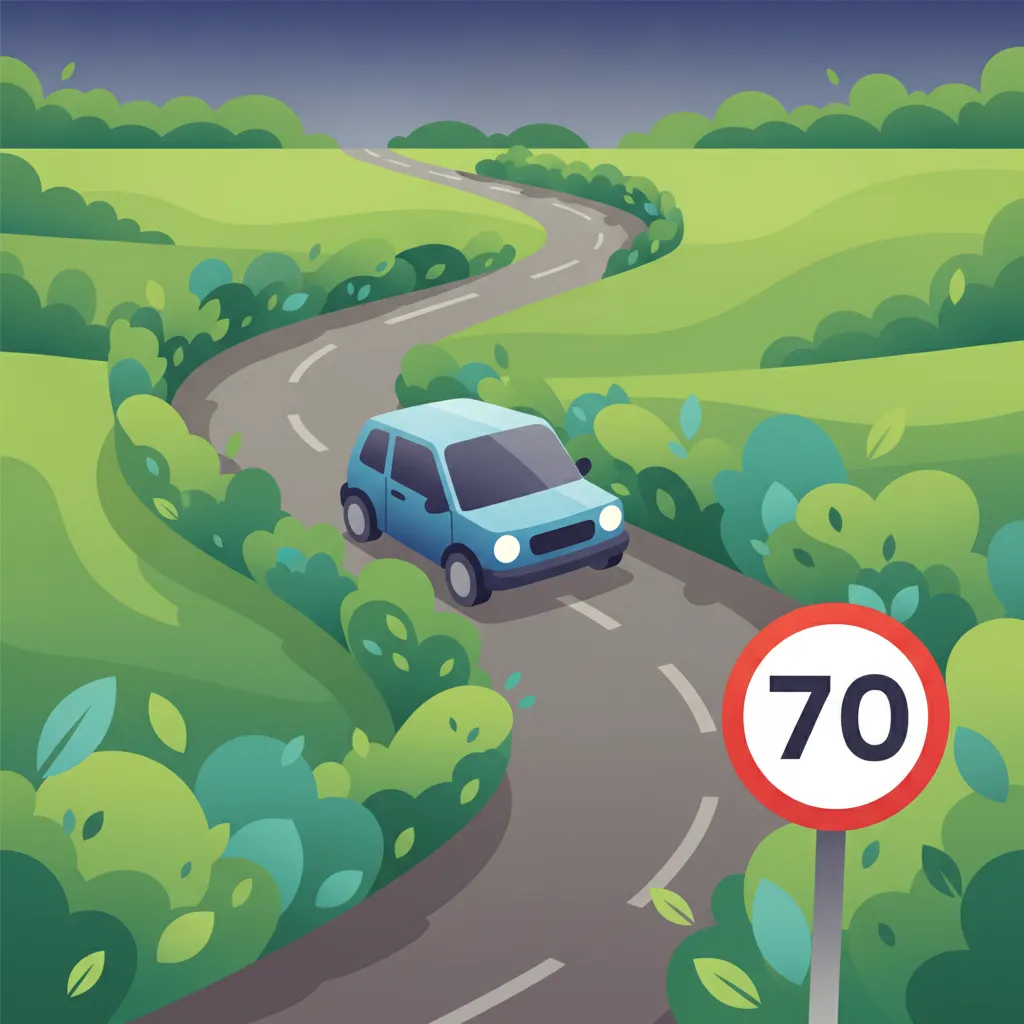
This lesson addresses the unique set of challenges that rural roads present to HGV drivers. It covers how to safely navigate narrow and winding lanes, the importance of anticipating hazards like slow-moving agricultural machinery, mud on the road, and wildlife. You will learn how the national speed limit applies to your vehicle on these roads and why it is often necessary to travel at a much lower speed to ensure safety.

This lesson prepares you for the challenges of countryside driving. It emphasizes that the national speed limit on these roads is often too fast for the conditions. You will learn how to approach sharp bends, use passing places on single-track roads, and anticipate hazards like slow-moving tractors, horse riders, or mud on the road surface.
Find clear answers to common questions learners have about Factors Influencing Safe Speed and Adjustments. Learn how the lesson is structured, which driving theory objectives it supports, and how it fits into the overall learning path of units and curriculum progression in Great Britain. These explanations help you understand key concepts, lesson flow, and exam focused study goals.
The speed limit is the absolute maximum for ideal conditions. In heavy rain, fog, ice, or busy traffic, you must reduce your speed significantly to ensure you can stop safely within the distance you can see to be clear.
In wet conditions, your braking distance can double compared to dry roads. You must increase your following distance to at least four seconds to allow for the reduced grip and increased stopping requirement.
You must reduce your speed and increase the distance between you and the vehicle in front. Ensure your headlights are on, and use fog lights only when visibility drops below 100 metres, turning them off immediately when visibility improves.
The two-second rule is the minimum safe following distance in good, dry conditions. In wet weather, you should increase this to at least four seconds, and in icy or snowy conditions, you may need a gap of up to twenty seconds.
Dive into our comprehensive question bank to find exactly what you need for your Great Britain theory test. Use our advanced filters to pinpoint specific subjects or test your knowledge on challenging areas, ensuring you're fully prepared for success.