
This lesson focuses on the critical interactions between large passenger vehicles and pedestrians at bus stops. You will learn the correct positioning techniques and safety protocols necessary to protect vulnerable road users and minimize risks during boarding and alighting.
Lesson content overview
Operating a bus, coach, or minibus requires acute awareness of all road users, especially vulnerable pedestrians. Interactions at and around bus stops are particularly critical due to the frequent stopping, passenger movements, and often busy urban environments. This lesson provides essential knowledge and strategies for Category D passenger vehicle drivers to ensure the safety of pedestrians, comply with the Highway Code, and prevent accidents during stops.
The principles covered here are fundamental to professional driving, linking directly to your responsibilities for passenger safety, vehicle positioning, and overall road user protection. Mastering these interactions is not only about legal compliance but also about fostering a safe and reliable public transport environment.
Pedestrians are among the most vulnerable road users, and their safety is paramount. When driving passenger vehicles such as buses, coaches, or minibuses, understanding and respecting pedestrian right-of-way, particularly at bus stops and crossings, is a crucial aspect of professional conduct. Drivers must always be prepared to yield to pedestrians in specific situations as outlined by the Highway Code and statutory regulations.
The legal priority given to pedestrians at designated crossings and when vehicles are stopped at bus stops, requiring drivers to yield and allow safe passage.
Zebra crossings are clearly identifiable by white longitudinal stripes on the road and flashing yellow beacons. At these crossings, pedestrians have absolute precedence once any part of their body steps onto the crossing. As a passenger vehicle driver, you must stop and wait patiently until the pedestrian has completely cleared the crossing before proceeding. Even if your bus stop is immediately after a zebra crossing, you must ensure the crossing is entirely clear before approaching or moving off.
Highway Code Rule 170 explicitly states this mandatory requirement. Failure to comply not only risks severe legal penalties but, more importantly, can result in serious injury or fatality for the pedestrian. Always approach zebra crossings with caution, reducing speed and being ready to stop.
School crossings often have a specific type of zebra crossing or a signal-controlled crossing, but they are most notably distinguished by the presence of a School Crossing Patrol (SCP), commonly known as a lollipop person. When an SCP steps into the road and displays their stop sign, you must bring your vehicle to a complete halt, regardless of the traffic flow or whether you are at a bus stop.
You must remain stationary until the SCP has returned to the pavement and has indicated that it is safe for you to proceed. This legal obligation, reinforced by Highway Code Rule 170, provides enhanced protection for children and is critical for safety in school zones. Ignoring an SCP's signal is a serious offence.
The precise positioning of your passenger vehicle at a bus stop is essential for the safety of both boarding/alighting passengers and nearby pedestrians. Proper stopping ensures that adequate space is maintained, conflicts are minimised, and the vehicle does not create an unnecessary obstruction. This involves considering both the longitudinal stopping distance and lateral clearance.
Most bus stops have designated stopping lines or areas marked on the road. It is mandatory for passenger vehicle drivers to stop within these designated areas. Stopping beyond the marked line, especially if it encroaches upon a pedestrian crossing, is a violation of traffic rules and creates an immediate hazard. Always aim to position your vehicle parallel to the kerb, allowing passengers to board and alight safely while maintaining clear access for pedestrians on the pavement.
One of the most critical aspects of safe stopping is maintaining adequate lateral clearance from pedestrians. This refers to the side-to-side distance between your vehicle and any waiting or crossing pedestrians. A minimum lateral clearance of 1.5 metres is generally recommended. This distance accounts for the swing of vehicle doors, potential pedestrian movement, and the sheer size of a bus, coach, or minibus.
On narrow roads or in congested areas where maintaining this distance is challenging, you may need to adjust your stopping position slightly. Sometimes, this might mean stopping just before the designated line if doing so provides a safer clearance from a crowded pavement. Prioritise pedestrian safety over precise adherence to a stop line if it compromises clearance.
While 'stopping distance' often refers to braking when moving, it also applies to the space needed when departing from a stop. Passenger vehicles have considerable mass, which affects their acceleration and braking characteristics. When you stop, ensure you have assessed the road ahead for any potential hazards or pedestrians who might step into your path. This forward planning contributes to overall safety, allowing for gradual acceleration and controlled movement when it's time to pull away.
Effective communication and heightened alertness are vital for safely managing interactions with pedestrians around bus stops. Given the size of passenger vehicles and the potential for blind spots, drivers must actively engage in measures to make their intentions clear and to remain fully aware of their surroundings.
When your passenger vehicle is stationary at a bus stop on the carriageway, and especially if it could cause an obstruction to other road users, it is mandatory to activate your hazard warning lights. This is clearly stipulated in Highway Code Rule 165. Hazard lights significantly improve the visibility of your stopped vehicle, warning other drivers and alerting pedestrians to its presence and stationary status.
The amber flashing lights activated to indicate that a vehicle is stationary and may be an obstruction or hazard to other road users.
Failing to use hazard lights can lead to confusion for following traffic, potentially resulting in rear-end collisions, and reduces overall safety for pedestrians near the vehicle. Always ensure they are switched on promptly upon stopping and switched off only as you prepare to move away.
Before opening doors or moving off from a bus stop, a thorough visual sweep is indispensable. This means not only checking all mirrors (side and interior) but also performing direct head checks to cover blind spots. Always try to make eye contact with pedestrians who are waiting to cross or near your vehicle. Eye contact is a powerful, non-verbal form of communication that confirms mutual awareness, helping to predict and understand pedestrian intentions.
Over-reliance on mirrors alone is a common mistake; direct observation of the environment around your vehicle is critical to detect pedestrians who might be in blind spots or about to move unexpectedly.
While the horn should be used sparingly and only to warn other road users of your presence or danger (Highway Code Rule 112), a brief, moderate flash of your headlights (where permitted and appropriate) can be a useful signal to pedestrians or other drivers of your intention to move. This is particularly helpful at night or in low visibility conditions. These signals should be gentle and clear, avoiding any aggressive or startling actions.
Preventing potential collisions with pedestrians is a continuous process that extends beyond merely stopping and starting. It requires anticipating pedestrian behaviour, maintaining extra safety margins, and executing manoeuvres with caution, especially when re-joining traffic.
Pedestrians, particularly children or those distracted, can behave unpredictably. They may suddenly step into the road, change direction, or misjudge the speed of a departing vehicle. As a passenger vehicle driver, you must cultivate a proactive mindset, always assuming the possibility of unexpected movement. This means scanning ahead and around your vehicle, identifying potential "escape routes" or safe stopping points, and being ready to react instantly.
When passengers have just alighted, give them an extra second or two to clear the vehicle's immediate vicinity before beginning to move. This small delay significantly reduces the risk of them stepping back into your path.
Abrupt acceleration from a bus stop can startle nearby pedestrians, potentially causing them to step into the vehicle's path or lose balance. Always ensure a gentle and gradual acceleration when pulling away. This provides pedestrians with more time to react to your vehicle's movement and clearly communicates your intentions. Smooth departures also enhance passenger comfort and safety.
Passenger vehicles have significant blind spots, particularly along the sides and rear. Before pulling away from any stop, it is mandatory to perform comprehensive blind spot checks. Highway Code Rule 180 states that a driver shall not move off until they have checked that it is safe to do so. This includes:
Check all mirrors (interior and exterior) thoroughly.
Perform a direct head check over your shoulder in the direction you intend to move.
Be especially vigilant for cyclists, motorcyclists, and pedestrians who may have approached your vehicle during the stop.
In certain situations, especially on narrow roads, it might be safer to adjust your vehicle's position slightly before pulling away. This could involve easing the vehicle slightly further from the kerb (if safe to do so and not obstructing other traffic) to create more space for a turning manoeuvre or to give extra clearance to a pedestrian who is still very close to the vehicle's path.
As a professional driver of a passenger vehicle in Great Britain, you are bound by strict legal obligations designed to protect all road users, especially pedestrians. Adhering to these rules is not merely a suggestion; it is a mandatory requirement with significant legal consequences for non-compliance.
A primary responsibility at bus stops is the safe operation of vehicle doors. You must ensure that no pedestrians, cyclists, or other road users are in the immediate path of an opening door. This means always checking your mirrors and direct blind spots before activating the door mechanisms. "Dooring" accidents, where a door opens into the path of a passing cyclist or pedestrian, can lead to serious injuries and substantial legal penalties for the driver and operator.
Generally, doors should open onto the kerb side unless specific bus lane designs or marked areas permit otherwise. Opening doors into a live traffic lane, without specific justification and extreme caution, is highly dangerous and usually prohibited.
Several Highway Code rules specifically govern your interactions with pedestrians at stops:
Breaching these regulations can lead to fines, penalty points, licence endorsement, and even criminal prosecution in severe cases, in addition to civil liability for any injuries caused.
Safe interaction with pedestrians requires drivers to adapt their strategies to various environmental conditions and specific road situations. A static set of rules is not always sufficient; contextual awareness is key to preventing accidents.
Adverse weather significantly impacts visibility and vehicle handling, increasing the risk to pedestrians.
At night, pedestrians are much less visible, especially those wearing dark clothing. Even in urban areas with streetlights, shadows can obscure individuals.
The type of road influences safe stopping and interaction strategies:
Cyclists and scooter riders often use the space immediately adjacent to the kerb or pavement. Before opening doors or pulling away, always perform additional checks for these vulnerable road users who might be approaching from behind or beside your vehicle. "Dooring" a cyclist can lead to severe injuries and legal consequences.
Understanding common errors is as important as knowing the correct procedures. By being aware of these pitfalls, passenger vehicle drivers can proactively avoid hazardous situations and uphold high safety standards.
Moving Before a Pedestrian Clears a Crossing:
Stopping Too Close to Waiting Pedestrians:
Failure to Use Hazard Lights When Obstructing:
Neglecting Comprehensive Visual Sweeps:
Opening Doors Without Checking for Cyclists/Pedestrians:
Overshooting Designated Stop Lines:
Abrupt Acceleration After Alighting:
Ignoring School Crossing Patrol Signals:
This comprehensive understanding of pedestrian interactions at bus stops is vital for all passenger vehicle drivers. By consistently applying these principles, adhering to legal obligations, and maintaining a high level of vigilance, you contribute significantly to road safety and the protection of vulnerable road users.
Explore all units and lessons included in this driving theory course.
Lesson content overview
Explore all units and lessons included in this driving theory course.
Explore search topics learners often look for when studying Interactions with Pedestrians at Stops. These topics reflect common questions about road rules, driving situations, safety guidance, and lesson level theory preparation for learners in Great Britain.
Browse additional driving theory lessons that cover connected traffic rules, road signs, and common driving situations related to this topic. Improve your understanding of how different rules interact across everyday traffic scenarios.
Learn essential strategies for ensuring the safety of pedestrians, cyclists, and other vulnerable road users when stopping or departing from bus stops. Covers UK driving theory for Category D licence holders.
This lesson teaches drivers how to identify various types of vulnerable road users and anticipate their potential actions to prevent conflicts. It covers the specific risks associated with pedestrians, cyclists, motorcyclists, children, and elderly or disabled individuals. Emphasis is placed on heightened awareness and defensive driving techniques required to share the road safely. Understanding their perspectives and typical behaviours is key to protecting them and maintaining safety for everyone.
This lesson provides detailed guidance on protecting pedestrians in high-risk areas like bus stops and formal crossings. It covers the specific rules and driver obligations at zebra, pelican, toucan, and puffin crossings, as well as when approaching a school crossing patrol. The content emphasizes the importance of vigilance, anticipating pedestrian movements, especially those who may be distracted or emerge from behind the bus, and always being prepared to stop to prevent accidents.
This lesson focuses on developing a proactive and patient approach towards elderly and disabled road users. It explains how to recognize and provide additional time and space for individuals with slower movement, mobility scooters, or sensory impairments. The content emphasizes the importance of driver attitude, patience at crossings, and anticipating the needs of these vulnerable individuals. Understanding these factors is crucial for preventing accidents and demonstrating a high level of professional care and responsibility.

This lesson addresses the critical importance of child safety in school transport zones and around school buses. It covers the specific regulations, such as 20 mph speed limits and stopping restrictions indicated by zigzag lines. Learners will focus on the unpredictable nature of children and the need for heightened vigilance and readiness to stop unexpectedly. The content also includes procedures for the safe transport of pupils, ensuring their security both inside and outside the vehicle.
In this lesson, learners will study the specific signage and markings related to bus stops and designated passenger loading zones. Topics include correct stop approach, positioning the bus for safe boarding and alighting, and the proper use of these areas. Learners will also examine the legal expectations for passenger loading zones, including restrictions on stopping outside these zones and best practices for managing passenger flow safely and efficiently during busy periods.
This lesson examines the unique rules and restrictions governing buses and coaches, focusing on bus lane priority, time-based restrictions, and loading zone limitations. Learners will explore the criteria for using bus-only routes and understand the legal consequences of non-compliance. The content also reviews signage indicating bus gate operation and areas where passenger vehicles are prohibited from stopping or loading outside of designated zones, ensuring lawful and efficient urban navigation.
This lesson is dedicated to the safe interaction between large vehicles and the most vulnerable road users: pedestrians and cyclists. It highlights high-risk scenarios, such as left turns at junctions, where cyclists can be hidden in nearside blind spots. The content stresses the importance of anticipation, using signals clearly, and providing generous space at crossings, in cycle lanes, and within pedestrianized zones to prevent tragic accidents.
This lesson focuses on safe interaction with cyclists, a key aspect of urban driving for PCV operators. It details the rules for cycle lanes and advanced stop lines, and the correct procedure for overtaking cyclists, emphasizing the need to provide ample space. The content stresses the importance of frequent mirror checks to manage blind spots where cyclists can be hidden, especially when turning at junctions, to ensure their safety and comply with the Highway Code's road user hierarchy.
This lesson focuses on alighting strategies and correct bus stop positioning to ensure passengers can exit the vehicle safely. Learners will investigate precise kerb alignment, the use of alighting alarms, and procedures for safe passenger disembarkation. Additionally, it covers the critical need for traffic awareness during alighting, such as monitoring mirrors and surrounding traffic, using stop signs, and prioritising the safety of vulnerable road users who may be near the bus.
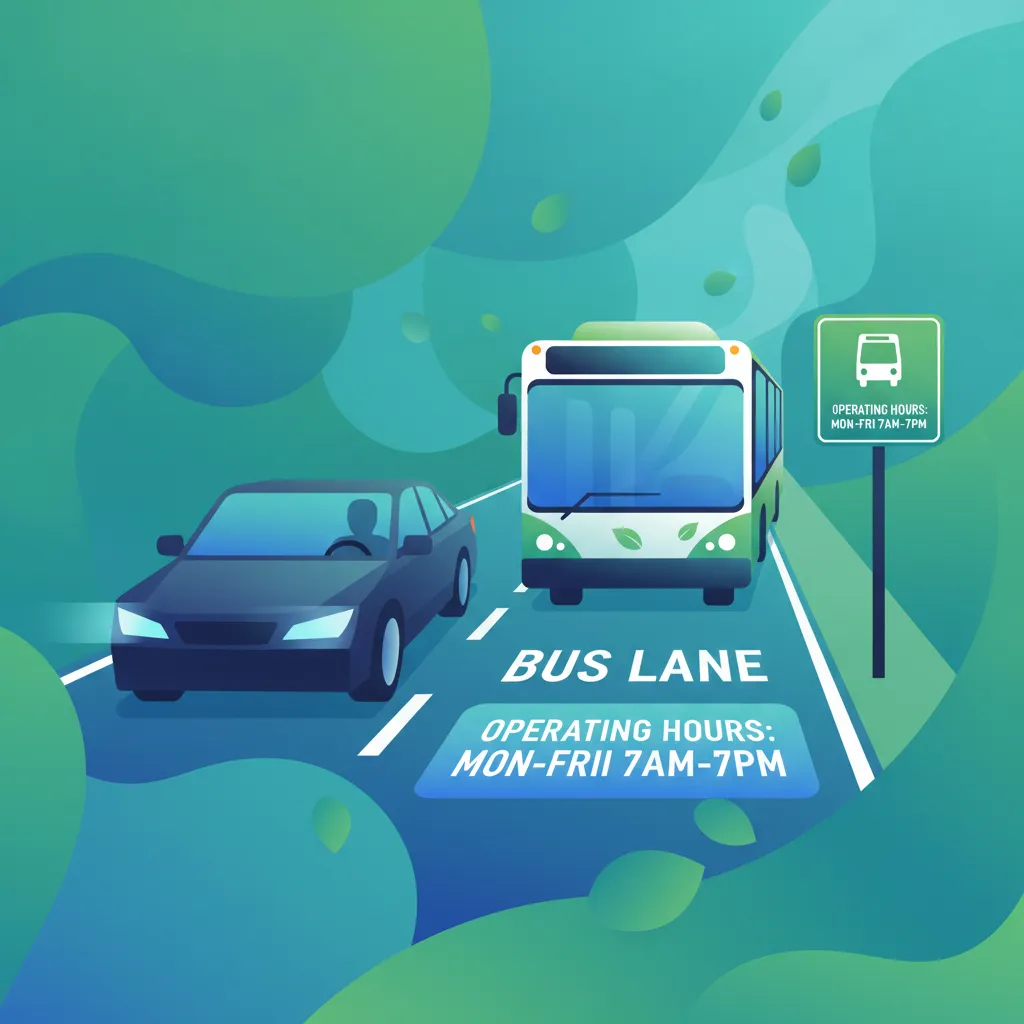
This lesson explores the specifics of bus lane markings, operating times, and priority situations where buses have precedence over other traffic. It emphasizes correct lane discipline, lawful entry and merging practices, and the exemptions granted to designated passenger vehicles. Learners will also understand how bus lane enforcement works and what penalties may be incurred for non-compliance, ensuring safe and efficient movement through urban traffic systems.
Identify and understand typical errors made by passenger vehicle drivers when interacting with pedestrians at bus stops. Focuses on avoiding hazardous situations and ensuring compliance with UK Highway Code rules.
This lesson provides detailed guidance on protecting pedestrians in high-risk areas like bus stops and formal crossings. It covers the specific rules and driver obligations at zebra, pelican, toucan, and puffin crossings, as well as when approaching a school crossing patrol. The content emphasizes the importance of vigilance, anticipating pedestrian movements, especially those who may be distracted or emerge from behind the bus, and always being prepared to stop to prevent accidents.
This lesson focuses on alighting strategies and correct bus stop positioning to ensure passengers can exit the vehicle safely. Learners will investigate precise kerb alignment, the use of alighting alarms, and procedures for safe passenger disembarkation. Additionally, it covers the critical need for traffic awareness during alighting, such as monitoring mirrors and surrounding traffic, using stop signs, and prioritising the safety of vulnerable road users who may be near the bus.
In this lesson, learners will study the specific signage and markings related to bus stops and designated passenger loading zones. Topics include correct stop approach, positioning the bus for safe boarding and alighting, and the proper use of these areas. Learners will also examine the legal expectations for passenger loading zones, including restrictions on stopping outside these zones and best practices for managing passenger flow safely and efficiently during busy periods.
This lesson teaches drivers how to identify various types of vulnerable road users and anticipate their potential actions to prevent conflicts. It covers the specific risks associated with pedestrians, cyclists, motorcyclists, children, and elderly or disabled individuals. Emphasis is placed on heightened awareness and defensive driving techniques required to share the road safely. Understanding their perspectives and typical behaviours is key to protecting them and maintaining safety for everyone.
This lesson examines the design and operation of urban bus stops and how passenger flow can be managed efficiently. It covers strategies for crowd control, dwell time minimization, effective queuing systems, and proper loading zone utilization. It also explores how bus stop signage and clear passenger information can aid in smooth boarding and alighting. Mastering these skills enhances overall safety, improves service quality, and maintains schedule reliability in challenging urban environments.
This lesson addresses the critical importance of child safety in school transport zones and around school buses. It covers the specific regulations, such as 20 mph speed limits and stopping restrictions indicated by zigzag lines. Learners will focus on the unpredictable nature of children and the need for heightened vigilance and readiness to stop unexpectedly. The content also includes procedures for the safe transport of pupils, ensuring their security both inside and outside the vehicle.
This lesson examines the unique rules and restrictions governing buses and coaches, focusing on bus lane priority, time-based restrictions, and loading zone limitations. Learners will explore the criteria for using bus-only routes and understand the legal consequences of non-compliance. The content also reviews signage indicating bus gate operation and areas where passenger vehicles are prohibited from stopping or loading outside of designated zones, ensuring lawful and efficient urban navigation.

This lesson focuses on the markings and rules at designated pedestrian crossing points. It details the legal requirement to give way to pedestrians on a zebra crossing and explains the light sequences at signal-controlled crossings. You will also learn the meaning of the white zig-zag lines on the approach to all crossings.
This lesson is dedicated to the safe interaction between large vehicles and the most vulnerable road users: pedestrians and cyclists. It highlights high-risk scenarios, such as left turns at junctions, where cyclists can be hidden in nearside blind spots. The content stresses the importance of anticipation, using signals clearly, and providing generous space at crossings, in cycle lanes, and within pedestrianized zones to prevent tragic accidents.
This lesson covers the specific procedures for operating within busy bus terminals and service areas. It details the protocols for approaching and parking in allocated bays, managing the safe flow of passengers, and communicating with station staff. The content emphasizes the need for extreme caution and low-speed manoeuvring due to high pedestrian traffic. It also reviews pre-departure checks and communication protocols necessary for efficient and safe terminal operations.
Find clear answers to common questions learners have about Interactions with Pedestrians at Stops. Learn how the lesson is structured, which driving theory objectives it supports, and how it fits into the overall learning path of units and curriculum progression in Great Britain. These explanations help you understand key concepts, lesson flow, and exam focused study goals.
The most common mistake is failing to anticipate pedestrian movement from behind the vehicle. Always ensure you have a clear view and check all mirrors before moving away from a stop.
Pedestrians waiting at a designated stop are not automatically entitled to right-of-way on the carriageway, but you must exercise extreme caution and demonstrate defensive driving, especially near school zones.
In the theory exam, look for 'developing hazards' such as a pedestrian stepping into the road from a bus stop. Recognizing these early is essential for high marks.
Yes. You must always signal your intention to pull away and perform a comprehensive check of your mirrors and blind spots to ensure no pedestrians are in or moving toward your path.
Dive into our comprehensive question bank to find exactly what you need for your Great Britain theory test. Use our advanced filters to pinpoint specific subjects or test your knowledge on challenging areas, ensuring you're fully prepared for success.