
This lesson explores the essential procedures for operating large passenger vehicles within busy bus terminals and service areas. You will learn how to approach and park in allocated bays, manage pedestrian safety in high-traffic zones, and follow professional communication protocols to ensure smooth, safe operations.
Lesson content overview
Operating a passenger vehicle within bus terminals and service areas demands a heightened level of skill, vigilance, and adherence to specific protocols. These environments are distinct from open roads, characterised by high pedestrian traffic, confined spaces, and the critical need for precise timing and communication. This lesson provides a comprehensive framework for Great Britain Passenger Vehicle Theory drivers, covering the essential procedures to ensure safety, efficiency, and compliance with regulations.
Bus terminals and service areas are hubs of activity, serving as crucial points for passenger exchange, vehicle layovers, and schedule adherence. For Category D, D1, D1E, or DE licence holders, mastering operations within these zones is not merely about parking; it’s about orchestrating a safe, smooth, and predictable experience for hundreds of passengers daily. The inherent challenges include navigating around numerous pedestrians, coordinating with station staff, and managing tight schedules—all while operating a large vehicle.
The potential for collisions, passenger injury, and operational delays is significantly elevated in these high-density pedestrian environments. Therefore, a thorough understanding of terminal procedures is essential for meeting the requirements of the Highway Code and DVSA regulations, upholding public safety standards, and ensuring the reliability of passenger transport services.
Effective terminal operations are built upon several fundamental principles that prioritise safety, efficiency, and clear communication. Adhering to these core tenets is paramount for all professional passenger vehicle drivers.
Always use the specific bay assigned by terminal staff, electronic signage, or painted markings. This practice prevents obstruction of traffic flow, clearly delineates safe pedestrian zones, and ensures the systematic use of valuable terminal space. Drivers must verify their bay allocation before approaching the area, as failure to comply can lead to fines or significant delays.
Operating your vehicle at speeds that allow for immediate stopping within your visual range is critical in terminals, typically 5 km/h or less. This dramatically reduces kinetic energy, giving you more time to react to unexpected pedestrian movements or changes in the environment. Precision in gear selection, throttle control, and brake application is essential, with engine braking often preferred for smoother deceleration.
Managing the boarding and alighting process in a sequenced, predictable manner is vital. This often involves using visual cues, audible announcements, door opening/closing orders, and staff direction. A controlled flow minimises crowding, prevents passenger injuries, and expedites dwell time, contributing to overall schedule adherence. Drivers must coordinate with staff, make clear announcements, and closely monitor door operations.
Before any movement, a structured series of inspections must be completed. This includes verifying that all doors are securely closed and locked, mirrors are correctly adjusted for optimal visibility, and all passenger safety devices (e.g., seat belts, emergency exits, fire extinguishers) are functional. These checks ensure vehicle readiness, passenger safety, and compliance with mandatory regulations, and must be integrated into the allocated dwell time without being rushed.
Standardised methods for exchanging information with terminal staff are crucial for synchronised actions and reducing misunderstandings. This may involve dedicated radio channels, specific hand signals, or clear visual cues. Drivers must be proficient in the communication procedures for each terminal they operate in, responding promptly and accurately to instructions.
This refers to the immediate area surrounding your vehicle, both when stationary and when moving, within which drivers must assume and anticipate a heightened level of pedestrian presence. This zone acts as a critical safety buffer, demanding continuous monitoring and readiness to stop instantly, especially during critical manoeuvres in high-traffic areas.
A deeper understanding of each core principle, along with its practical implications, is essential for safe and efficient terminal management.
Definition: Allocated bay compliance refers to the commitment to stop, park, or board/alight passengers only in the space specifically designated for your service by official signage, electronic displays, or direct instruction from terminal staff. This is fundamental to maintaining order and safety in busy passenger hubs.
Terminals typically feature permanent bays, which are fixed, numbered spaces for regular services, clearly marked with painted lines and signage. In contrast, temporary or emergency bays may be assigned for unscheduled stops, such as in cases of vehicle breakdown or unexpected service changes. Drivers must be adaptable and always confirm their current bay assignment.
Upon entering a terminal precinct, drivers must actively look for bay numbers or listen for staff instructions. It is critical not to overrun bay boundaries when positioning the vehicle for loading or unloading. This directly relates to Highway Code Rule 242, which states you must not stop closer than 10 metres to a bus stop unless intending to board or alight passengers, and is often supplemented by local terminal orders regarding specific bay usage. Misunderstanding signage or assuming any available space can be used are common errors. For instance, a coach correctly pulls into Bay 7 as indicated on the electronic board, whereas a minibus stopping in a staff-only loading zone would face penalties.
Definition: Low-speed manoeuvring involves operating the vehicle at speeds low enough to maintain complete control, enable a rapid stop, and allow thorough observation of any pedestrian movement in the driver's line of sight.
This typically means speeds equal to or less than 5 km/h within terminal precincts. Within this, creeping (≤2 km/h) is used for precise alignment with a bay or when opening doors. A slow march (2-5 km/h) is appropriate when moving slowly away from a bay with passengers alighting. Maintaining such low speeds requires using the first gear or an electric drive mode, with gentle and precise brake application to control momentum.
While no specific speed limit may be universally posted for all terminals, operators are mandated not to exceed a speed that endangers pedestrians. A common misunderstanding is assuming normal road speed limits apply within terminal areas. For example, a driver maintaining 4 km/h while stopping at Bay 12 allows ample time for passengers to board safely, whereas exceeding 10 km/h could easily result in a near-miss with a pedestrian.
When manoeuvring at low speeds, focus on smooth, progressive movements. Avoid abrupt braking or acceleration, which can unsettle passengers and increase the risk of skidding, especially in adverse weather.
Definition: Controlled passenger flow refers to the systematic management of passengers boarding or alighting the vehicle, using visual, auditory, or staff-directed cues to organise their movement.
Strategies include sequential boarding, where passengers board in an organised order, often by door side (front, middle, rear), and staggered alighting, where alighting passengers are released and clear the area before boarding begins. This reduces congestion and enhances safety.
Drivers must use clear signals, extend stop-arms (where fitted), make announcements, and follow staff direction to communicate when it is safe to move. It is a strict rule that the vehicle must not begin moving while passengers are still boarding or alighting, and doors must be kept open for a minimum required time (often 10-15 seconds) to ensure all passengers are safely clear. Starting to drive away while a passenger is still stepping onto the curb is a serious violation. A driver correctly uses a stop-arm to signal passengers to alight, waiting until the last passenger is safely on the curb before closing the door and moving.
Definition: Pre-departure checks are a structured series of inspections conducted after passengers have boarded and before the vehicle leaves its allocated terminal bay.
Key checks include a door closure check to verify all doors are securely locked and indicated as such in the cabin. Mirror adjustment ensures side and rear-view mirrors provide clear and unobstructed visibility. Additionally, safety devices like seat belts, emergency exits, and fire extinguishers must be confirmed as functional. These checks are typically performed while the vehicle is stationary within the bay and should not be rushed, usually taking no more than 30 seconds for standard operations. The Highway Code mandates that all doors be closed before moving, and DVSA inspection standards require functional safety devices. Neglecting these checks due to time pressure or assuming automatic locking can lead to accidents or penalties.
Confirm all passengers have boarded and are seated or holding on.
Verify all passenger doors are fully closed and securely locked via cabin indicators.
Check and adjust all mirrors (side and interior) to ensure clear visibility around the vehicle.
Confirm no obstructions or pedestrians are in the immediate vicinity, especially in the Pedestrian Awareness Zone.
Receive or confirm a clear "Signal to Depart" from terminal staff, if applicable.
Release brakes and move off gently at creep speed.
Definition: Staff communication protocols are the standardised methods for exchanging operational information between the vehicle driver and terminal staff, including radio, hand signals, and visual cues.
Drivers must switch on their radio and maintain listening on the designated frequency when entering terminal precincts to receive instructions such as "Proceed to Bay 4." Terminal staff may use recognised hand signals (e.g., a raised hand to hold the vehicle) or visual signs to direct drivers. It is crucial not to drive away until a clear "Signal to Depart" is given by staff. A common misunderstanding is assuming non-verbal acknowledgement is sufficient or ignoring radio calls, which can lead to unsafe manoeuvres.
Definition: The pedestrian awareness zone is the immediate perimeter around a stationary or moving passenger vehicle within a terminal, where drivers must constantly anticipate pedestrian presence and movement.
This zone exists as a static zone (typically extending at least 2 metres from all doors) while the vehicle is parked, and a dynamic zone while the vehicle is moving, extending within the driver’s line of sight plus an appropriate safety margin based on speed. Drivers must continuously monitor this zone using mirrors and direct observation, ready to stop instantly. Any movement that endangers pedestrians within this zone is strictly prohibited. A frequent error is believing pedestrians will always wait for vehicles to move; drivers must assume the opposite and be prepared for sudden movements, such as a child running towards a closing door.
Operating passenger vehicles in UK terminals is governed by a combination of national and local regulations designed to ensure safety and efficiency.
The Highway Code Rule 242 is critical, prohibiting drivers from stopping closer than 10 metres to a bus stop unless for boarding or alighting passengers. While primarily for roadside stops, this principle extends to terminal precincts, ensuring clear access and preventing obstruction.
The Driver and Vehicle Standards Agency (DVSA) enforces comprehensive Pre-Departure Checklist requirements, mandating that drivers ensure all doors are secured, mirrors correctly adjusted, and safety devices operational before any movement from a terminal bay. This is a mandatory safety check. Furthermore, the Road Vehicles (Construction and Use) Regulations 1986 – Regulation 143 states that a vehicle must not be driven unless it is safe to do so, including ensuring the driver is able to control the vehicle at all speeds, particularly during low-speed terminal manoeuvres.
Many terminals operate under Bus Service Area (BSA) Orders issued by local authorities. These orders often dictate that vehicles must stop only at bays indicated by painted lines, electronic displays, or staff direction. These are mandatory and ensure systematic space usage and safe pedestrian flow.
Local regulations also commonly cover Radio Communication Regulations (e.g., BS 6092 standards) requiring drivers to maintain listening on designated frequencies within terminal precincts to prevent missed instructions. Additionally, the Health and Safety at Work etc. Act 1974 (Section 3) imposes duties on terminal operators to provide a safe working environment, which obliges drivers to follow all safe practices, including adherence to staff instructions.
Understanding common pitfalls and how to avoid them is crucial for maintaining safety and operational integrity.
| Violation | Why it’s Wrong | Correct Behaviour | Potential Consequence |
|---|---|---|---|
| Pulling into a non-designated bay | Obstructs traffic, endangers pedestrians, disrupts terminal flow. | Wait for staff direction or adhere strictly to electronic displays and markings. | Fixed-penalty fine, service disruption, possible collision. |
| Exceeding low-speed limit (e.g., >5 km/h in a London terminal) | Significantly reduces reaction time, increasing collision risk with pedestrians or other vehicles. | Maintain a speed of ≤5 km/h (or less in adverse conditions); use creep speed for precise alignment. | Fine, possible driver disqualification, increased dwell time, risk of injury. |
| Departing before doors are fully closed/locked | Risks intercepting ongoing passenger movement or allowing items to fall from the vehicle. | Verify the door lock indicator and listen for a staff "All clear" signal before moving. | Passenger injury, legal liability, vehicle damage. |
| Ignoring staff hand signal to hold the vehicle | May result in moving into a busy pedestrian flow or conflicting with other terminal operations. | Remain stationary until a clear "Proceed" signal is explicitly given. | Near-miss incident or collision, disciplinary action. |
| Not conducting pre-departure safety checks | Increases the risk of accidents due to faulty doors, misadjusted mirrors, or non-functional safety devices. | Systematically perform all checklist items before initiating vehicle movement. | Accident caused by equipment failure, legal action, service delays. |
| Failing to monitor the pedestrian awareness zone while reversing | Risks hitting a child, luggage, or other low-lying objects that may enter the vehicle's path. | Use mirrors, rear-view cameras (if fitted), and give audible warnings; consider using a spotter if available. | Collision, injury, damage to property. |
| Unnecessary idling while waiting for a bay | Increases emissions, contributes to local air pollution, and may violate environmental regulations. | Turn off the engine if waiting time exceeds 30 seconds (subject to local terminal rules). | Environmental penalties, fuel waste, poor public perception. |
| Over-reliance on automatic parking aids without manual check | Automated systems may have blind spots or fail to detect all low-lying pedestrians or objects. | Always confirm with visual observation; be prepared to use manual controls if needed. | Accident due to sensor blind spot or system malfunction. |
| Boarding passengers while vehicle is still moving | Compromises passenger stability and safety, increasing the risk of falls. | The vehicle must be fully stationary before doors are opened for boarding or alighting. | Passenger injury, violation of Regulation 143, legal repercussions. |
Terminal operations are rarely static; external factors can significantly impact driving conditions and safety requirements.
Rain or Snow: These conditions drastically reduce tyre friction, extending stopping distances even at low speeds. Drivers must use extremely gentle braking to prevent wheel lock-up and increase vigilance for pedestrians who may be rushing, carrying umbrellas, or slipping on wet surfaces.
Fog/Haze: Reduced visibility necessitates a further reduction in speed, potentially to ≤3 km/h. Drivers must rely more heavily on mirrors, vehicle lighting (dipped beams), and clear staff signals. Sound becomes a more important sense; listen for footsteps or voices.
At night, use dipped beams only to avoid causing glare for pedestrians and other drivers. While terminal lighting often supplements natural light, drivers must still watch for shadows that can obscure pedestrians or obstacles. Ensure cabin lights are not overly bright to avoid hindering external visibility.
Urban Intersections within a Terminal: Some terminals integrate small intersections or junctions. Here, additional right-of-way rules may apply, and drivers must yield to cross-traffic if bays intersect with other routes.
Isolated Service Areas: Motorway rest stops or other isolated service areas may feature larger bays and slightly higher allowable speeds (e.g., up to 10 km/h) due to lower pedestrian density, but vigilance remains paramount. Always confirm local speed signage.
Full Load: A fully loaded passenger vehicle will have a longer braking distance and a higher centre of gravity. This requires even smoother throttle application, more careful braking, and a reduced tendency for sudden movements.
Trailer Coupled: When operating with a coupled trailer, drivers must account for significantly extended blind spots, particularly when reversing. Using spotters, if available and trained, becomes even more critical. Increased length and articulation demand wider turning circles and more cautious manoeuvring.
Wheelchair Users: Drivers must pause longer to allow sufficient time for safe boarding and alighting. Ensure access ramps are fully deployed, secured, and retracted before any vehicle movement. Staff assistance is often required and welcomed.
Children: Children can be unpredictable and may move quickly and without warning. When children are present, particularly if unescorted, drivers must keep doors open longer until the child is safely on the curb or clear of the vehicle. Always assume children might suddenly appear in the pedestrian awareness zone.
Understanding the cause-and-effect relationships in terminal operations underpins all safety protocols and best practices.
Correct Allocation & Low-Speed Manoeuvre → Safe Passenger Flow: Parking in the correct bay and moving slowly prevents obstructions, gives pedestrians time to react, and minimises incidents, ultimately leading to efficient dwell times.
Failure to Perform Pre-Departure Checks → Mechanical/Operational Failure: Neglecting to check door locks could result in doors opening mid-movement, risking passenger ejection or falling objects, with severe injury and legal consequences.
Ignoring Staff Communication → Conflict with Terminal Operations: Moving without a "Proceed" signal can lead to collisions with other vehicles, interference with loading/unloading operations, causing significant delays and penalties.
Excessive Speed in Wet Conditions → Loss of Control: Even at seemingly low speeds, reduced grip can cause wheel lock-up or skidding, potentially trapping pedestrians between the vehicle and the bay curb during a sudden stop.
Effective Controlled Passenger Flow → Efficient Schedule Adherence: Coordinated boarding and alighting procedures shorten stop durations, which directly helps in maintaining timetable integrity and preventing cascading delays throughout the route.
Human Factors: Pedestrian behaviour is inherently unpredictable. Drivers must adopt a defensive mindset, always assuming pedestrians might step into the vehicle’s path unexpectedly.
Reaction Time: The average driver reaction time is about 1.5 seconds. At 5 km/h, this translates to a stopping distance of approximately 2 metres. This highlights why low-speed operation is critically important; even slight increases in speed dramatically increase stopping distances and reduce reaction windows.
Kinetic Energy: The kinetic energy of a moving vehicle is proportional to the square of its speed. Reducing speed from 10 km/h to 5 km/h cuts kinetic energy by 75%, vastly reducing the severity of any potential impact.
These scenarios illustrate the application of terminal operation principles in real-world situations.
Correct Behaviour: The driver approaches the terminal entrance slowly, scanning the electronic display board for their service number and assigned bay (e.g., "Service X, Bay 5"). They then proceed cautiously towards Bay 5, observing all painted lane markings and staff signals, and stop precisely within the bay lines.
Incorrect Behaviour: The driver, seeing Bay 5 occupied, spots an empty Bay 6 and proceeds directly into it without confirming, assuming it's available. This may block another scheduled service, causing congestion and confusion, leading to a fine for improper bay usage.
Correct Behaviour: The driver engages first gear or reverse, maintaining a creep speed (≤2 km/h). They apply gentle, consistent pressure to the brake pedal and use mirrors and possibly a rear-view camera to monitor the pedestrian awareness zone. They factor in the reduced grip of the wet surface, allowing extra stopping distance.
Incorrect Behaviour: The driver attempts to reverse at a slightly higher speed (e.g., 5-7 km/h) to save time. When braking to align the vehicle, the wheels lock due to the wet surface, causing a slight skid and a sudden jolt forward, nearly hitting a pedestrian or curb.
Correct Behaviour: The driver ensures the vehicle is fully stationary and securely braked. They open the correct door, allow terminal staff to deploy and secure the wheelchair ramp, and patiently wait until the wheelchair user has safely boarded and is in a secured position within the vehicle. Only then, after staff confirmation and performing pre-departure checks, do they close the doors and prepare to move.
Incorrect Behaviour: The driver, feeling rushed, closes the door and begins to move while the ramp is still deployed or the wheelchair user is not fully secured, causing the wheelchair to shift dangerously or the ramp to be damaged.
Correct Behaviour: The driver immediately sees the staff member's hand signal, understands it means "Hold Position," and keeps the vehicle stationary with the brakes applied. They then look for the reason for the hold and wait for a clear "Proceed" signal (e.g., a thumbs-up or radio confirmation) from staff before attempting to move.
Incorrect Behaviour: The driver, focused on the immediate departure, either misses the hand signal or dismisses it as a casual gesture. They begin to pull away, forcing a pedestrian who had just stepped into the vehicle's path to jump back, creating a dangerous near-miss situation.
This lesson covers essential procedures for operating passenger vehicles safely within bus terminals and service areas in Great Britain. Key protocols include adhering to allocated bays as directed by staff or signage, maintaining very low speeds (5 km/h or less, with creep speed for precise alignment), and ensuring all doors are fully closed before receiving a staff Signal to Depart. Pre-departure checks must verify door security, mirror adjustment, and functional safety devices before movement. Drivers must continuously monitor the Pedestrian Awareness Zone around their vehicle, communicate via radio or hand signals with terminal staff, and manage passenger flow through sequenced boarding and staggered alighting. Weather conditions and vehicle load require additional adjustments to braking and speed to maintain safety.
A short set of high-value points that capture the most important learning from this lesson.
Always approach and park only in the bay specifically assigned by staff, electronic signage, or painted markings to prevent obstruction and pedestrian hazards.
Maintain speeds of 5 km/h or less within terminal precincts, using creep speed (≤2 km/h) for precise alignment and door operations.
Never move the vehicle until all doors are fully closed and locked, and you have received an explicit Signal to Depart from terminal staff.
Continuously monitor the Pedestrian Awareness Zone around your vehicle, assuming pedestrians may move unexpectedly at any time.
Complete all pre-departure checks systematically, including door closure, mirror adjustment, and safety device verification, before leaving the bay.
Explore all units and lessons included in this driving theory course.
Bay compliance is mandatory under local Bus Service Area Orders; non-designated bays can only be used when specifically directed by staff or electronic displays.
At 5 km/h, reaction time of 1.5 seconds results in approximately 2 metres stopping distance; reducing speed from 10 km/h to 5 km/h cuts kinetic energy by 75%.
Passengers must not board or alight while the vehicle is in motion; doors must remain open for a minimum of 10–15 seconds to ensure safety.
During adverse weather, reduce speed further and use gentle braking to prevent wheel lock-up on wet or slippery surfaces.
Drivers must maintain radio listening on designated frequencies when in terminal precincts to receive bay assignments and operational instructions.
Entering an unassigned bay because it appears empty, which disrupts terminal flow and may block another scheduled service.
Moving away before receiving a clear Signal to Depart from staff, potentially causing a near-miss with pedestrians still in the vehicle's path.
Failing to perform door closure checks before departure, risking doors opening mid-movement and endangering passengers.
Assuming pedestrians will always wait for the vehicle to move; drivers must anticipate unexpected pedestrian movement, especially from children.
Not adjusting driving for vehicle load or weather conditions, resulting in longer braking distances or loss of control at low speeds.
Lesson content overview
A short set of high-value points that capture the most important learning from this lesson.
Always approach and park only in the bay specifically assigned by staff, electronic signage, or painted markings to prevent obstruction and pedestrian hazards.
Maintain speeds of 5 km/h or less within terminal precincts, using creep speed (≤2 km/h) for precise alignment and door operations.
Never move the vehicle until all doors are fully closed and locked, and you have received an explicit Signal to Depart from terminal staff.
Continuously monitor the Pedestrian Awareness Zone around your vehicle, assuming pedestrians may move unexpectedly at any time.
Complete all pre-departure checks systematically, including door closure, mirror adjustment, and safety device verification, before leaving the bay.
Explore all units and lessons included in this driving theory course.
Bay compliance is mandatory under local Bus Service Area Orders; non-designated bays can only be used when specifically directed by staff or electronic displays.
At 5 km/h, reaction time of 1.5 seconds results in approximately 2 metres stopping distance; reducing speed from 10 km/h to 5 km/h cuts kinetic energy by 75%.
Passengers must not board or alight while the vehicle is in motion; doors must remain open for a minimum of 10–15 seconds to ensure safety.
During adverse weather, reduce speed further and use gentle braking to prevent wheel lock-up on wet or slippery surfaces.
Drivers must maintain radio listening on designated frequencies when in terminal precincts to receive bay assignments and operational instructions.
Entering an unassigned bay because it appears empty, which disrupts terminal flow and may block another scheduled service.
Moving away before receiving a clear Signal to Depart from staff, potentially causing a near-miss with pedestrians still in the vehicle's path.
Failing to perform door closure checks before departure, risking doors opening mid-movement and endangering passengers.
Assuming pedestrians will always wait for the vehicle to move; drivers must anticipate unexpected pedestrian movement, especially from children.
Not adjusting driving for vehicle load or weather conditions, resulting in longer braking distances or loss of control at low speeds.
Explore search topics learners often look for when studying Terminal Operations and Service Area Management. These topics reflect common questions about road rules, driving situations, safety guidance, and lesson level theory preparation for learners in Great Britain.
Browse additional driving theory lessons that cover connected traffic rules, road signs, and common driving situations related to this topic. Improve your understanding of how different rules interact across everyday traffic scenarios.
Explore advanced techniques for precise low-speed manoeuvring within busy bus terminals and service areas. Learn strategies for navigating confined spaces, complex bay alignments, and adverse conditions according to Great Britain driving theory.

This lesson builds on basic skills to address complex manoeuvres in challenging, confined environments such as bus stations, depots, and service areas. It covers techniques for positioning the vehicle for bay parking and navigating tight, complex routes. Key focus areas include developing precise spatial awareness, using reference points, maintaining extremely slow and controlled movements, and performing continuous observation to navigate safely without causing damage or injury.

This lesson focuses on techniques for achieving smooth acceleration and deceleration, which is essential for passenger comfort and safety. Learners will study progressive throttle application, appropriate gear selection, and the use of engine braking and retarders to minimize harsh braking. The discussion includes managing momentum on inclines and declines while balancing fuel efficiency with passenger ride quality. Mastering these skills reduces passenger jolts and maintains vehicle stability.

This lesson provides detailed instruction on turning techniques tailored for long vehicles. It explains the concepts of off-tracking (where rear wheels follow a tighter path than front wheels) and rear swing, and how to compensate for them. Learners will understand how to position the vehicle correctly when approaching and navigating left and right turns at junctions, roundabouts, and tight corners, using mirrors and signals effectively to ensure clearance and safety.

This lesson examines the design and operation of urban bus stops and how passenger flow can be managed efficiently. It covers strategies for crowd control, dwell time minimization, effective queuing systems, and proper loading zone utilization. It also explores how bus stop signage and clear passenger information can aid in smooth boarding and alighting. Mastering these skills enhances overall safety, improves service quality, and maintains schedule reliability in challenging urban environments.

This lesson focuses on alighting strategies and correct bus stop positioning to ensure passengers can exit the vehicle safely. Learners will investigate precise kerb alignment, the use of alighting alarms, and procedures for safe passenger disembarkation. Additionally, it covers the critical need for traffic awareness during alighting, such as monitoring mirrors and surrounding traffic, using stop signs, and prioritising the safety of vulnerable road users who may be near the bus.
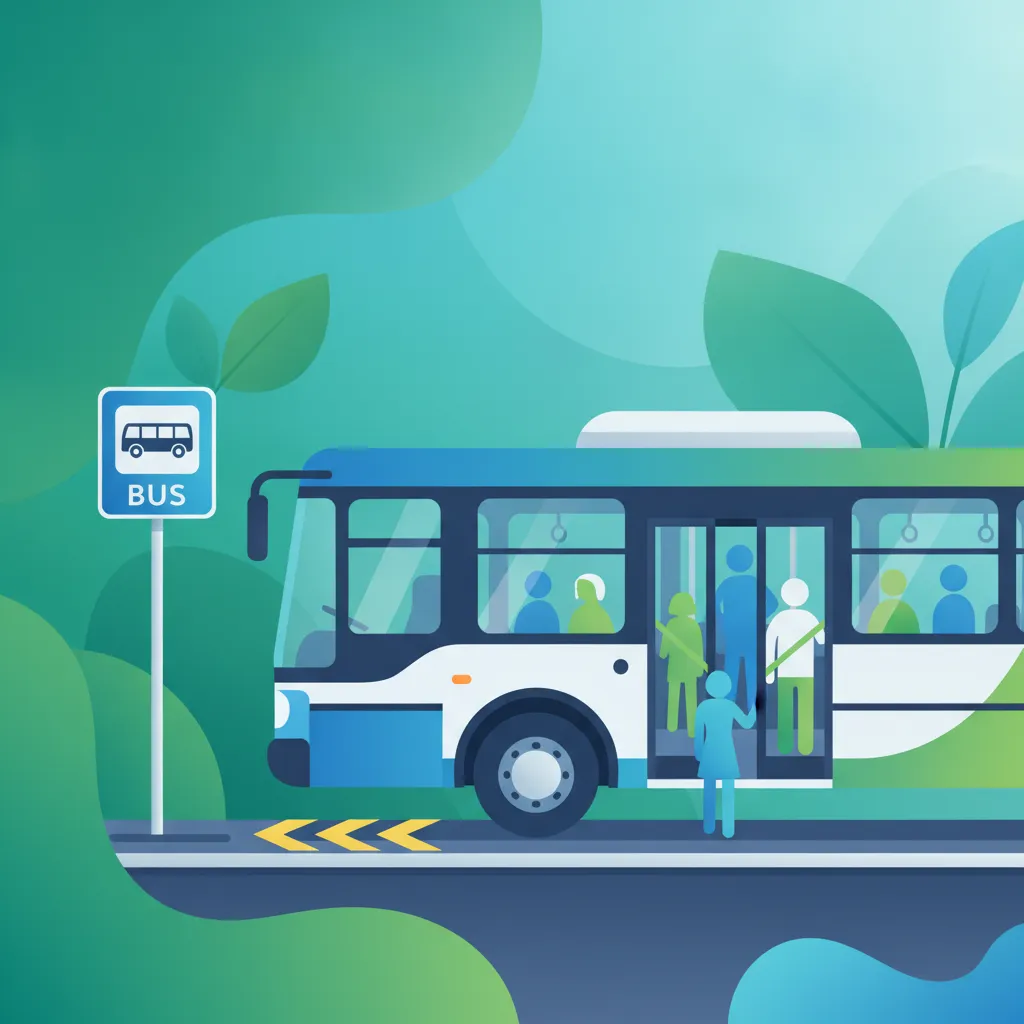
In this lesson, learners will study the specific signage and markings related to bus stops and designated passenger loading zones. Topics include correct stop approach, positioning the bus for safe boarding and alighting, and the proper use of these areas. Learners will also examine the legal expectations for passenger loading zones, including restrictions on stopping outside these zones and best practices for managing passenger flow safely and efficiently during busy periods.

This lesson explores safe boarding protocols, focusing on correct door operation, managing internal passenger movement, and providing assistance for passengers with reduced mobility. It emphasizes the importance of establishing safety zones near doorways, managing standing passengers during boarding, and using audible alarms. The lesson also covers the proper sequence for wheelchair boarding and the use of loading bays to ensure smooth passenger flow and minimize risks during the boarding process.
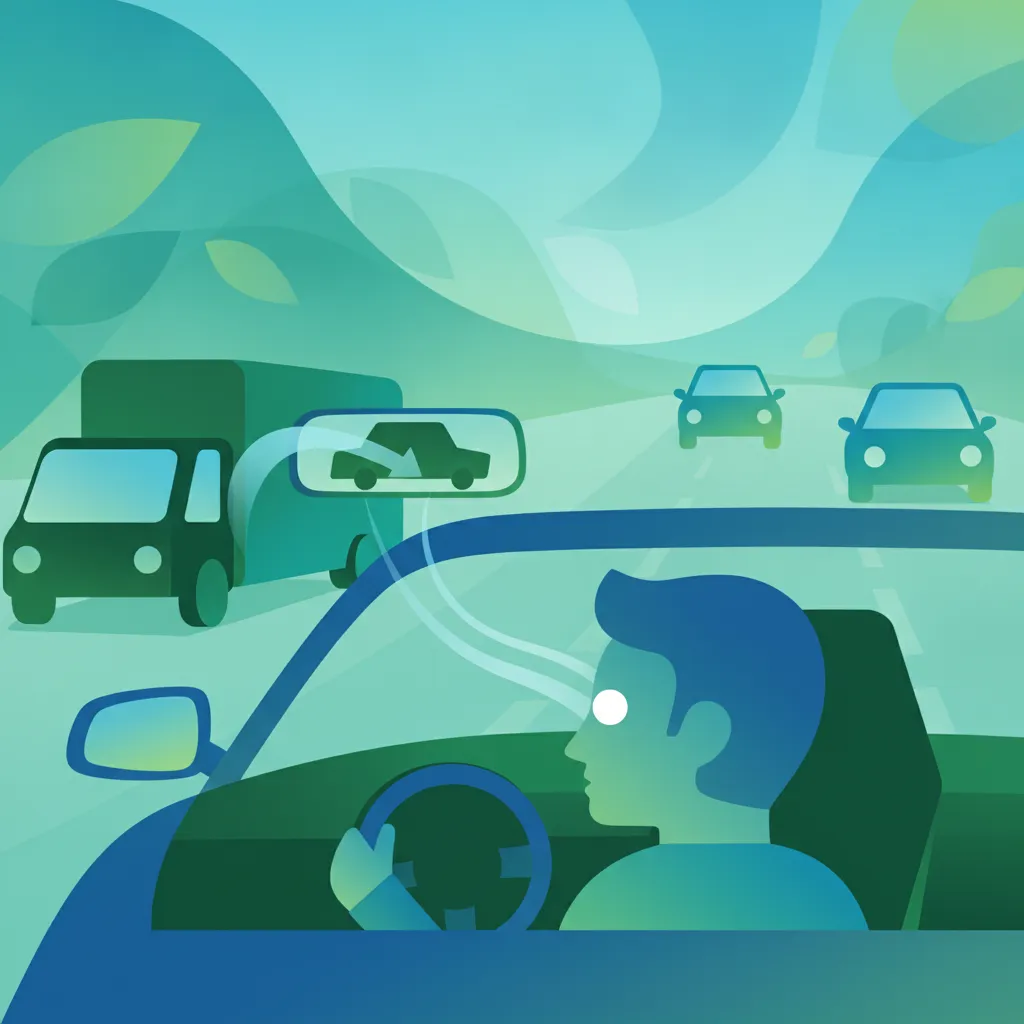
This lesson focuses on the critical skill of managing the large blind spots inherent to buses and coaches. It details the purpose of different mirror classes (e.g., wide-angle and kerb-view) and how to use them effectively. Learners will develop a systematic scanning and mirror-checking routine to maintain constant awareness of their surroundings, particularly looking for cyclists and pedestrians who may be hidden from direct view, thereby minimizing the risk of a collision.

This lesson explores how a passenger vehicle’s physical dimensions and weight influence its dynamic stability, handling, and manoeuvring capabilities. It covers the impact of length, width, wheelbase, and turning radius on cornering and route choice. The content also examines centre of gravity, load distribution, and the effects of inertia that influence braking and acceleration, which are essential concepts for safe operation in confined urban environments and at tight junctions.

This lesson examines strategies for managing congestion in city centres, focusing on effective bus lane usage, understanding priority signalling, and route optimisation. It covers best practices for avoiding traffic jams while maintaining passenger loading efficiency and service reliability. Additionally, the lesson discusses how bus stop timing and adherence to specific urban traffic regulations directly affect overall congestion and passenger flow, helping drivers make informed decisions in dense traffic.
Understand critical safety protocols for bus terminals and service areas, including managing passenger flow, effective staff communication, and maintaining awareness of the pedestrian zone. Essential theory for safe operation in Great Britain.

This lesson provides detailed guidance on protecting pedestrians in high-risk areas like bus stops and formal crossings. It covers the specific rules and driver obligations at zebra, pelican, toucan, and puffin crossings, as well as when approaching a school crossing patrol. The content emphasizes the importance of vigilance, anticipating pedestrian movements, especially those who may be distracted or emerge from behind the bus, and always being prepared to stop to prevent accidents.
In this lesson, learners will study the specific signage and markings related to bus stops and designated passenger loading zones. Topics include correct stop approach, positioning the bus for safe boarding and alighting, and the proper use of these areas. Learners will also examine the legal expectations for passenger loading zones, including restrictions on stopping outside these zones and best practices for managing passenger flow safely and efficiently during busy periods.
This lesson examines the design and operation of urban bus stops and how passenger flow can be managed efficiently. It covers strategies for crowd control, dwell time minimization, effective queuing systems, and proper loading zone utilization. It also explores how bus stop signage and clear passenger information can aid in smooth boarding and alighting. Mastering these skills enhances overall safety, improves service quality, and maintains schedule reliability in challenging urban environments.
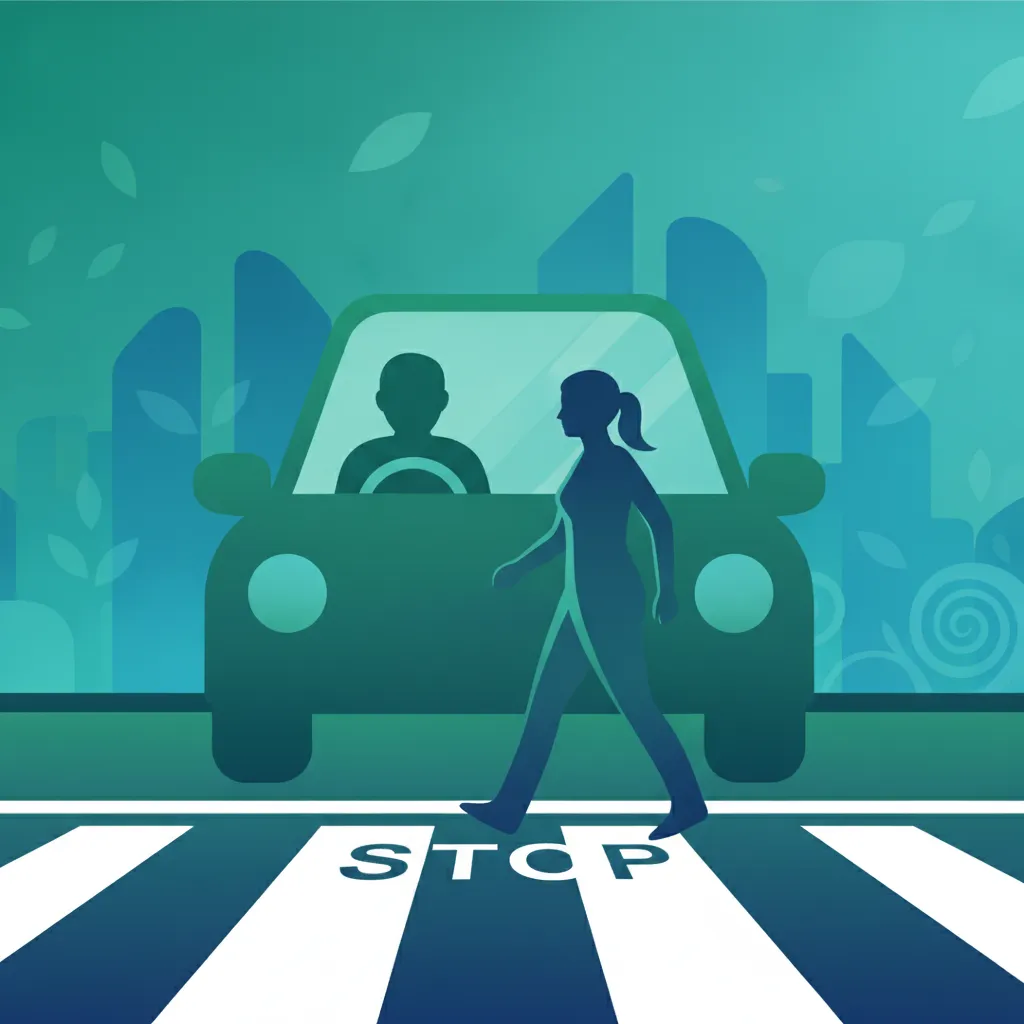
This lesson discusses the crucial interaction between passenger vehicles and pedestrians at and around bus stops. Learners will explore pedestrian right-of-way, especially at crosswalks, and positioning strategies to maintain a safe distance from people waiting or crossing. The lesson also covers pedestrian alertness measures and conflict avoidance techniques to protect vulnerable road users. This knowledge is essential for preventing accidents and maintaining a safe environment around the vehicle during stops.

This lesson addresses the critical importance of child safety in school transport zones and around school buses. It covers the specific regulations, such as 20 mph speed limits and stopping restrictions indicated by zigzag lines. Learners will focus on the unpredictable nature of children and the need for heightened vigilance and readiness to stop unexpectedly. The content also includes procedures for the safe transport of pupils, ensuring their security both inside and outside the vehicle.
This lesson focuses on alighting strategies and correct bus stop positioning to ensure passengers can exit the vehicle safely. Learners will investigate precise kerb alignment, the use of alighting alarms, and procedures for safe passenger disembarkation. Additionally, it covers the critical need for traffic awareness during alighting, such as monitoring mirrors and surrounding traffic, using stop signs, and prioritising the safety of vulnerable road users who may be near the bus.
This lesson explores safe boarding protocols, focusing on correct door operation, managing internal passenger movement, and providing assistance for passengers with reduced mobility. It emphasizes the importance of establishing safety zones near doorways, managing standing passengers during boarding, and using audible alarms. The lesson also covers the proper sequence for wheelchair boarding and the use of loading bays to ensure smooth passenger flow and minimize risks during the boarding process.
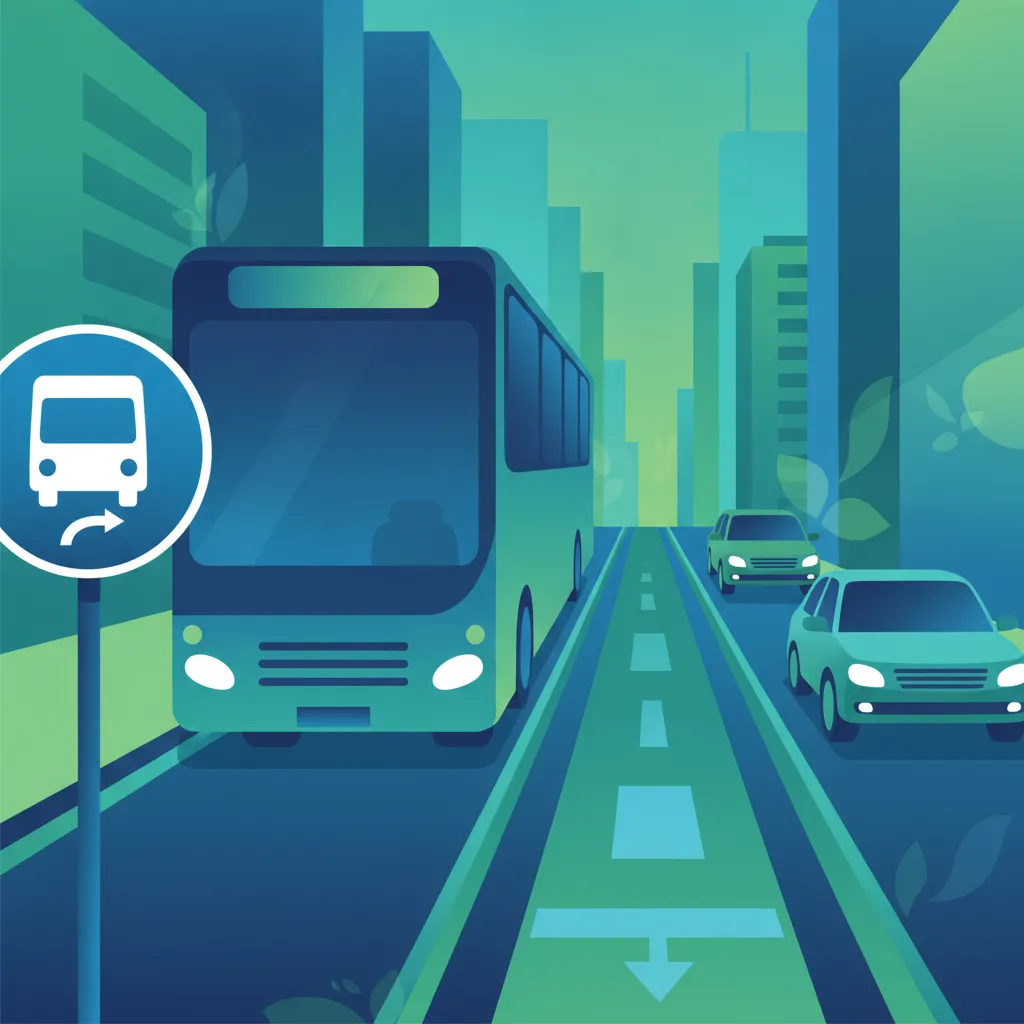
This lesson examines the unique rules and restrictions governing buses and coaches, focusing on bus lane priority, time-based restrictions, and loading zone limitations. Learners will explore the criteria for using bus-only routes and understand the legal consequences of non-compliance. The content also reviews signage indicating bus gate operation and areas where passenger vehicles are prohibited from stopping or loading outside of designated zones, ensuring lawful and efficient urban navigation.

This lesson focuses on the markings and rules at designated pedestrian crossing points. It details the legal requirement to give way to pedestrians on a zebra crossing and explains the light sequences at signal-controlled crossings. You will also learn the meaning of the white zig-zag lines on the approach to all crossings.

This lesson provides a detailed guide to various pedestrian crossings and their specific rules. You will learn to identify each type by its markings and signals, from the black and white stripes of a zebra crossing to the sensor-controlled lights of a puffin crossing. The focus is on knowing when and how to stop to ensure pedestrian safety.
Find clear answers to common questions learners have about Terminal Operations and Service Area Management. Learn how the lesson is structured, which driving theory objectives it supports, and how it fits into the overall learning path of units and curriculum progression in Great Britain. These explanations help you understand key concepts, lesson flow, and exam focused study goals.
Terminals are high-risk areas for pedestrians who may be distracted or unaware of the vehicle's blind spots. Maintaining a very low speed allows you more time to react to unexpected movements and reduces the force of any potential impact.
Always follow the specific site's reporting protocol. Ensure you have confirmed all passengers are seated and the boarding area is clear of staff or obstacles before engaging your indicators and signalling your intent to pull away.
Many learners fail to perform thorough 360-degree mirror checks before moving off from a bay. Never assume the path behind or beside your vehicle is clear; always check your mirrors and blind spots systematically.
Dive into our comprehensive question bank to find exactly what you need for your Great Britain theory test. Use our advanced filters to pinpoint specific subjects or test your knowledge on challenging areas, ensuring you're fully prepared for success.