
The 'National speed limits' sign is crucial for understanding the default speed restrictions on UK roads. While these signs set the maximum legal speeds, it's vital to remember that you must always drive at a speed that is safe for the current conditions, which may be lower than the posted limit. These signs are part of a comprehensive system of traffic signs designed to ensure road safety and legal compliance across Great Britain.
Mastering national speed limits is crucial for safe driving and passing your theory test. This section provides essential sign interpretation to help you understand speed regulations across Great Britain and apply them correctly on the road.
Speed signs shape both legal compliance and safe driving technique. The number or symbol on the sign must be understood before the vehicle reaches the point where the rule begins, and the driver still has to adapt to weather, traffic, visibility, road surface, and stopping distance. A strong theory response is to slow progressively, keep good spacing, and avoid treating the posted value as a target. It is listed in the catalogue as code national-speed-limits.
"National speed limits" controls or explains a speed requirement. It tells the driver when a speed limit, speed zone, minimum speed, reminder, or enforcement-related condition applies.
Get clear, practical answers to the most common questions about the national-speed-limits - National speed limits road sign. Learn how the sign works, what rules it represents, and how it affects real driving situations. This FAQ strengthens your understanding and supports accurate decision making for the British driving theory exam in Great Britain.
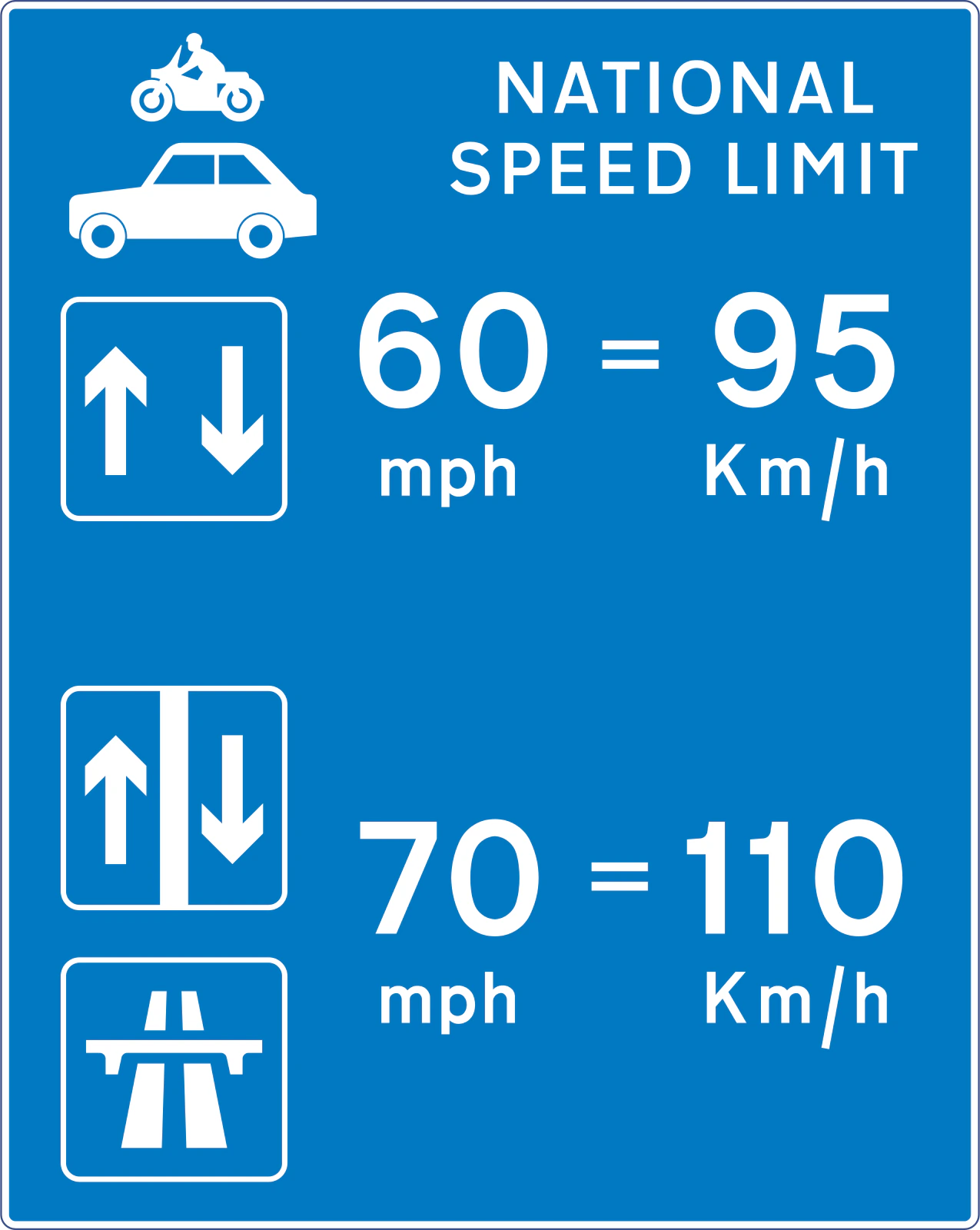
The 'National speed limits' sign indicates the default speed limit for a particular type of road in Great Britain. For example, a single carriageway road without specific signage has a national speed limit of 60 mph for cars, while a dual carriageway has a national limit of 70 mph. It's essential to know these default limits as they apply when no other specific speed limit is displayed.
No, the national speed limit is the maximum you can legally travel under ideal conditions. You must always adjust your speed to match the prevailing conditions, such as poor weather, heavy traffic, limited visibility, or a poor road surface. Your speed should be safe and allow you to stop well within the distance you can see to be clear.
A common trap is assuming the national speed limit is always a safe speed. In reality, you must drive below it if conditions demand. Another trap is not knowing the specific national speed limits for different road types (e.g., single vs. dual carriageway, built-up areas) which are important for theory test questions. Always consider the vehicle class too, as limits can differ.
Repeater signs are used to remind drivers of the speed limit, especially if there has been a break in a speed zone or a change in the limit. If you see a repeater sign for national speed limits, it reinforces the default maximum speed for that road type. You must still adhere to the principle of driving at a safe speed for the conditions, which might be lower than the posted limit.
Yes, the national speed limit for a built-up area in Great Britain is 30 mph for cars. This is a significant distinction from the national speed limits on non-built-up single and dual carriageways. Always be aware of whether you are in a built-up area, often indicated by street lighting and a sequence of houses, even if the 30 mph sign isn't explicitly displayed.
A clear reference image of the national-speed-limits - National speed limits road sign used in Great Britain.
The national-speed-limits - National speed limits road sign may also be known by these alternative names or terms.
The national-speed-limits - National speed limits road sign is part of the Great Britain Speed Limit Signs category, which groups together signs with similar rules and functions.
Understanding national speed limits involves more than just memorising numbers; comparing similar traffic signs helps cement recognition and reduces errors during your theory test revision. Master sign recognition and traffic sign comparison for confident driving.

Understand the 20 mph Maximum Speed Limit Road Sign

Obey the Maximum Speed 30 mph Traffic Sign

Maximum Speed 40 mph Means Exactly That – Don't Exceed It!

Maximum Speed 50 mph (80 km/h) Traffic Sign Explained

Maximum Speed 60 MPH (97 km/h) Road Sign Explained

The National Speed Limit Applies Sign (671) Explained

Understand the 30 mph Minimum Speed Limit Sign (Code 672)

You've reached the end of the 30 mph minimum speed limit.
After reviewing the full list of road signs, challenge yourself with practice questions focused specifically on sign recognition. Reinforce your learning and ensure you're fully prepared to identify and understand all traffic signs on the DVSA theory test.
Browse All GB Road Signs List