
The 'Traffic queues likely ahead' sign (code 584) is a crucial warning sign in Great Britain. It alerts you to potential traffic congestion further down the road, prompting you to manage your speed early, increase your observations, and prepare for a change in traffic flow. Heeding this sign helps you avoid sudden braking and ensures a smoother, safer journey.
This warning sign gives advance notice of potential traffic congestion, prompting early speed reduction and increased observation. Mastering its meaning is crucial for safe driving and passing your theory test, providing vital insight for traffic sign explanation and interpretation.
This warning sign is used before a hazard or road feature that may require an earlier response than the driver would otherwise make. Its purpose is to give enough time to reduce speed smoothly, increase observation, and avoid sudden braking or steering. The correct practical response depends on the exact location, traffic level, visibility, road surface, and whether pedestrians, cyclists, animals, or crossing traffic may be present. It is listed in the catalogue as code 584.
"Traffic queues likely ahead" gives advance warning of traffic queues likely. It tells the driver to look further ahead, manage speed early, and prepare for a possible change in priority, road position, visibility, or stopping distance.
Get clear, practical answers to the most common questions about the 584 - Traffic queues likely ahead road sign. Learn how the sign works, what rules it represents, and how it affects real driving situations. This FAQ strengthens your understanding and supports accurate decision making for the British driving theory exam in Great Britain.
This sign is an advance warning that you are likely to encounter traffic queues ahead. It's not a direct instruction to stop, but a cue to prepare for slower traffic or a standstill. You should look further ahead, ease off the accelerator, and adjust your speed smoothly.
The correct action is to anticipate congestion. This means reducing your speed gradually, increasing your distance from the vehicle in front, and scanning the road ahead and your mirrors for changing conditions. Avoid overtaking or accelerating hard, and be ready to brake if necessary.
Yes, this sign is especially important when visibility is poor (e.g., fog, heavy rain, or at night), or when approaching blind bends, crests of hills, or complex junctions. These conditions reduce your ability to see queues early, making the advance warning from sign 584 even more critical.
Generally, no. The sign advises you to anticipate queues, which means you should be slowing down and increasing your following distance, not preparing to overtake. Overtaking in such a situation would be unsafe and goes against the intention of the warning sign.
A common mistake is to treat this sign as an immediate hazard that requires braking right away. Learners sometimes forget to look further ahead or fail to anticipate the build-up of queues. Another trap is assuming you can still overtake if there isn't a queue visible at that exact moment.
No, this sign does not mean you must stop immediately. It's an advisory warning to prepare for potential stopping or slow-moving traffic. The actual need to stop depends on the situation ahead, which you should be observing and reacting to.
A clear reference image of the 584 - Traffic queues likely ahead road sign used in Great Britain.
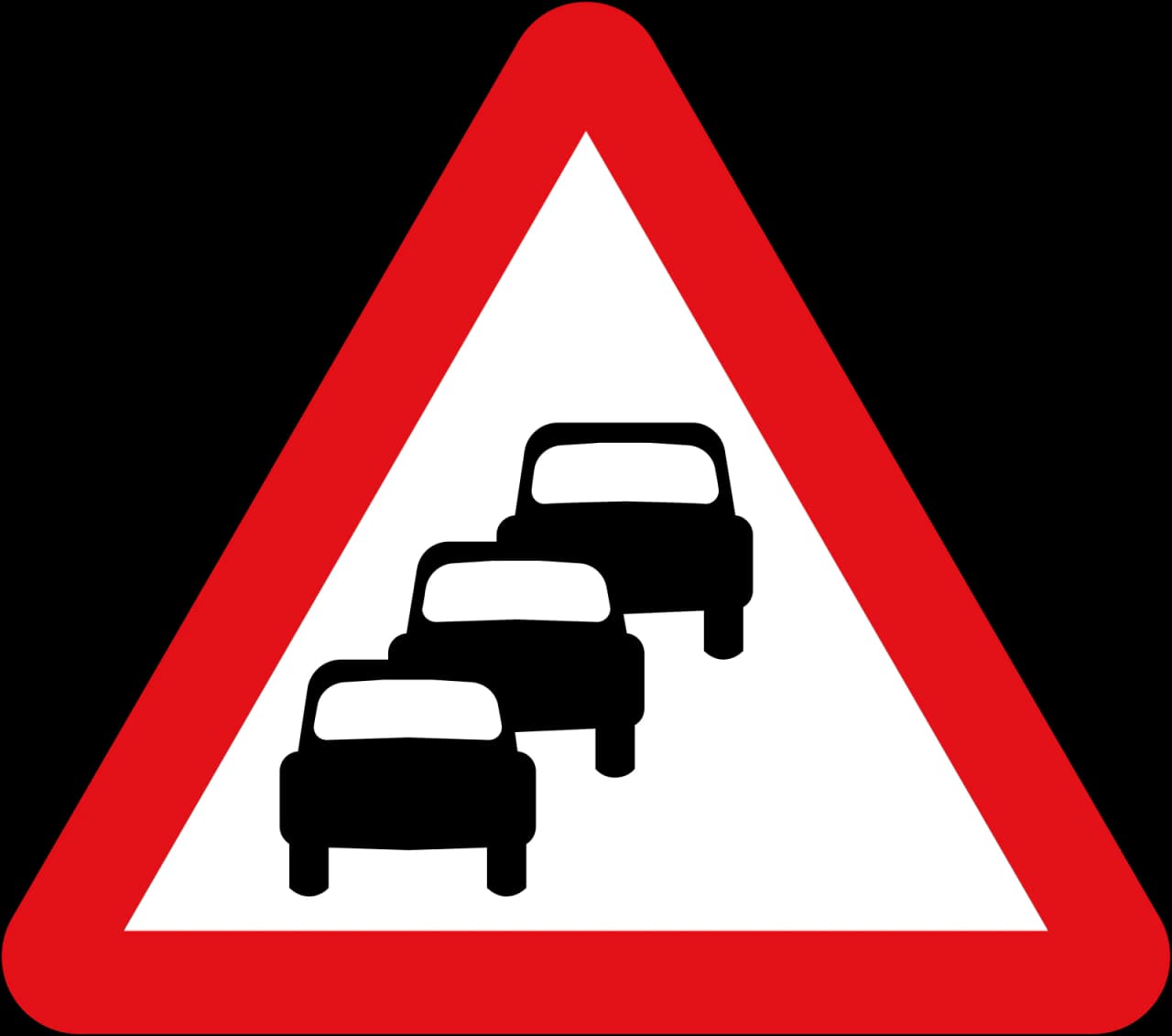
The 584 - Traffic queues likely ahead road sign may also be known by these alternative names or terms.
The 584 - Traffic queues likely ahead road sign is part of the Great Britain Warning Signs category, which groups together signs with similar rules and functions.
Strengthen your understanding of traffic signs by reviewing similar examples; comparing these visual cues aids in better sign recognition and reduces errors during your theory test revision. This focused approach to traffic sign comparison ensures you are fully prepared for the exam.

Prepare for a STOP or GIVE WAY sign ahead with this crucial advance warning.

The 502 'Distance to STOP line' plate adds vital information to warning signs.

What does the 'Distance to GIVE WAY Line' warning plate mean?
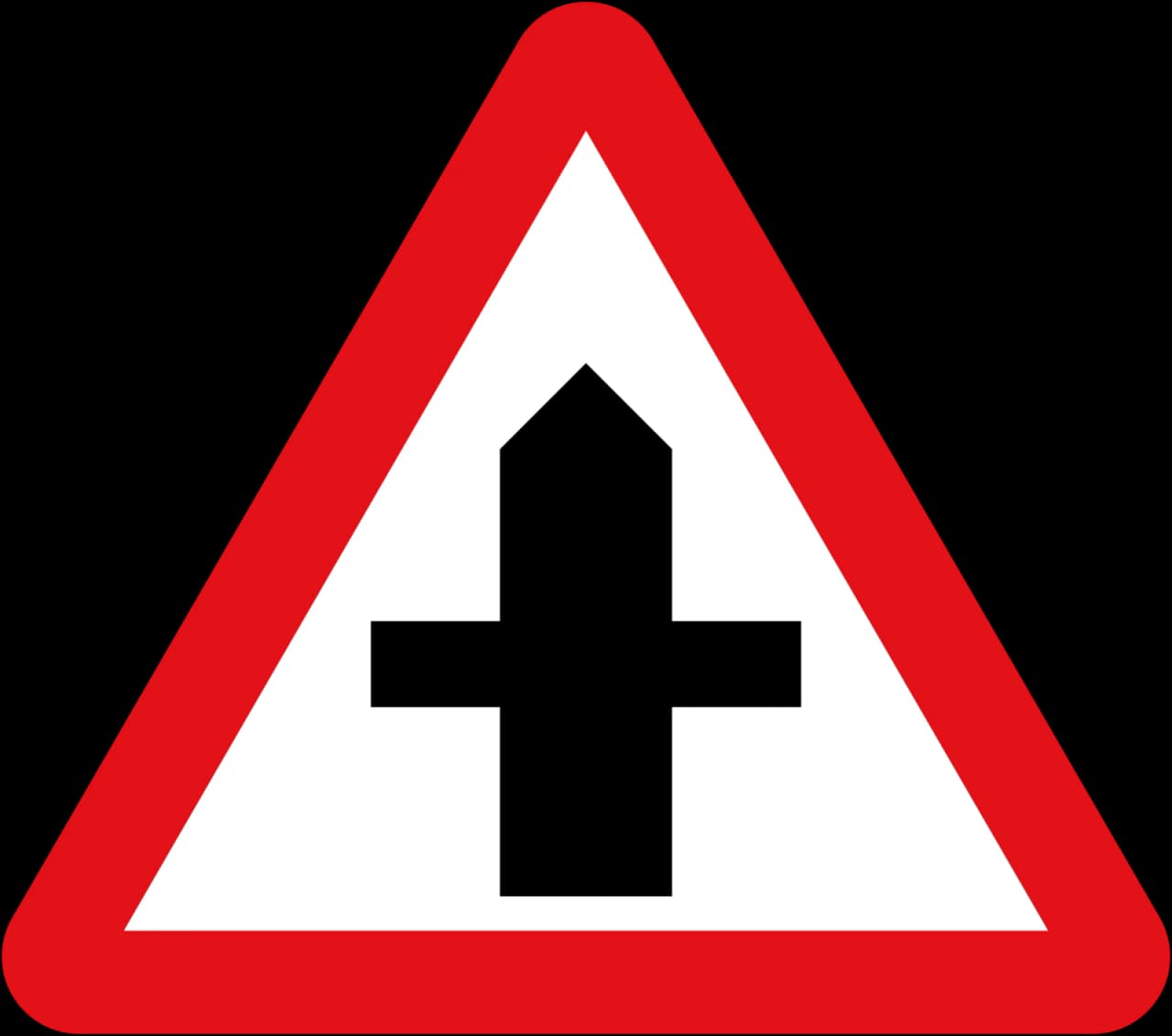
Prepare for Crossroads with the 504.1 Advance Warning Sign
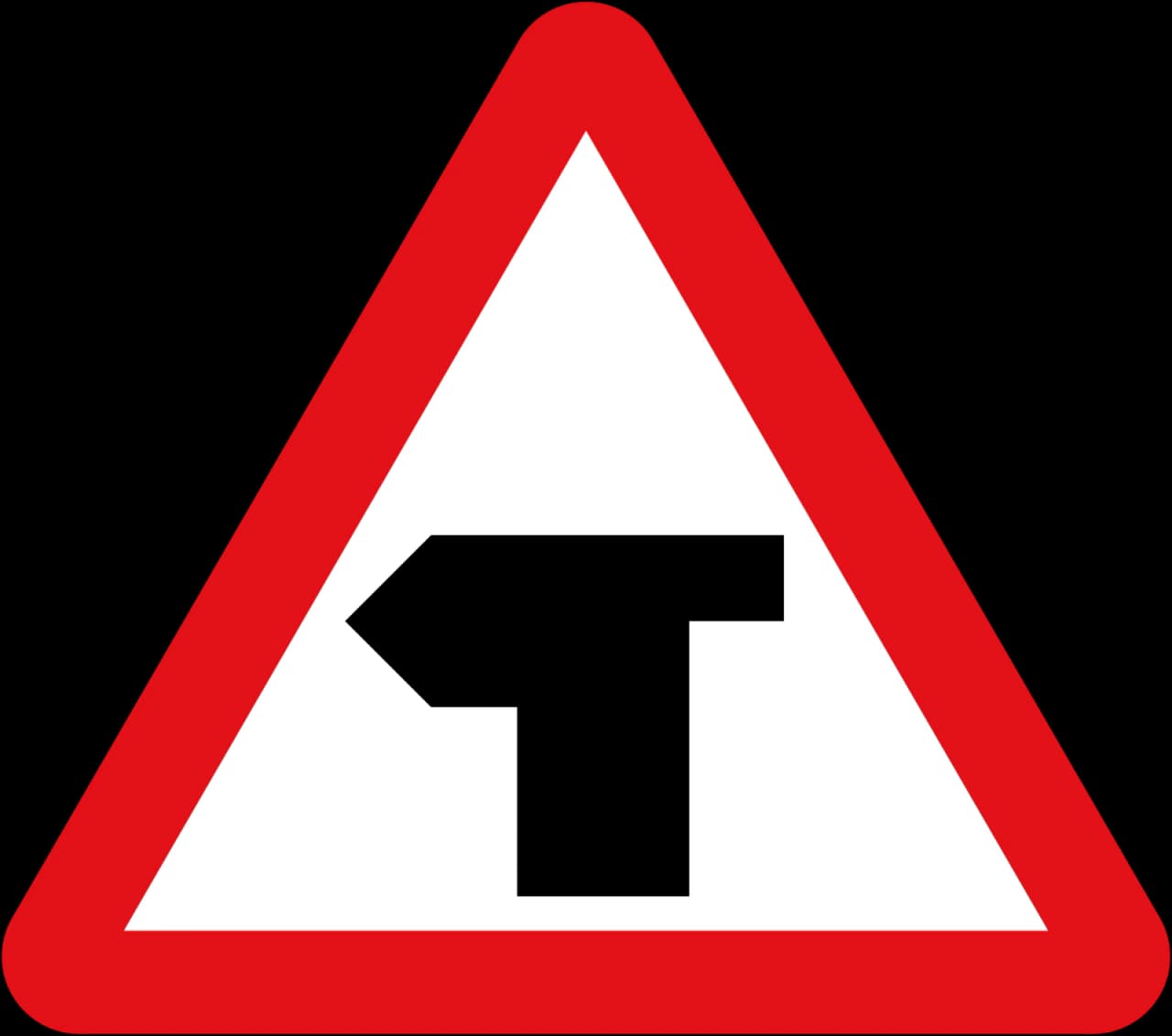
Prepare for a T-junction ahead with this advance warning road sign.
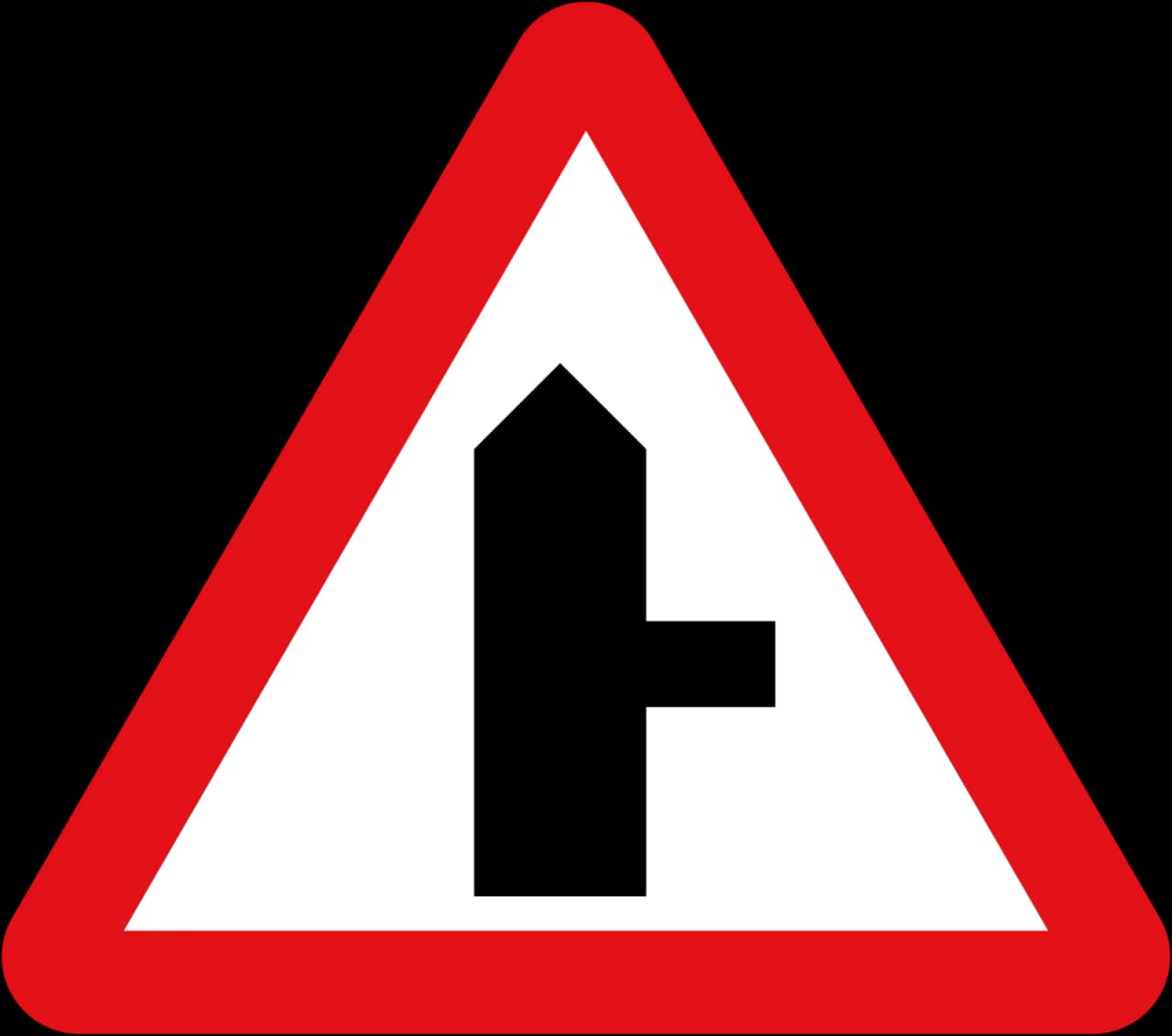
Prepare for a side road joining from the right with this advance warning sign.

Prepare for a staggered junction ahead with this advance warning sign.
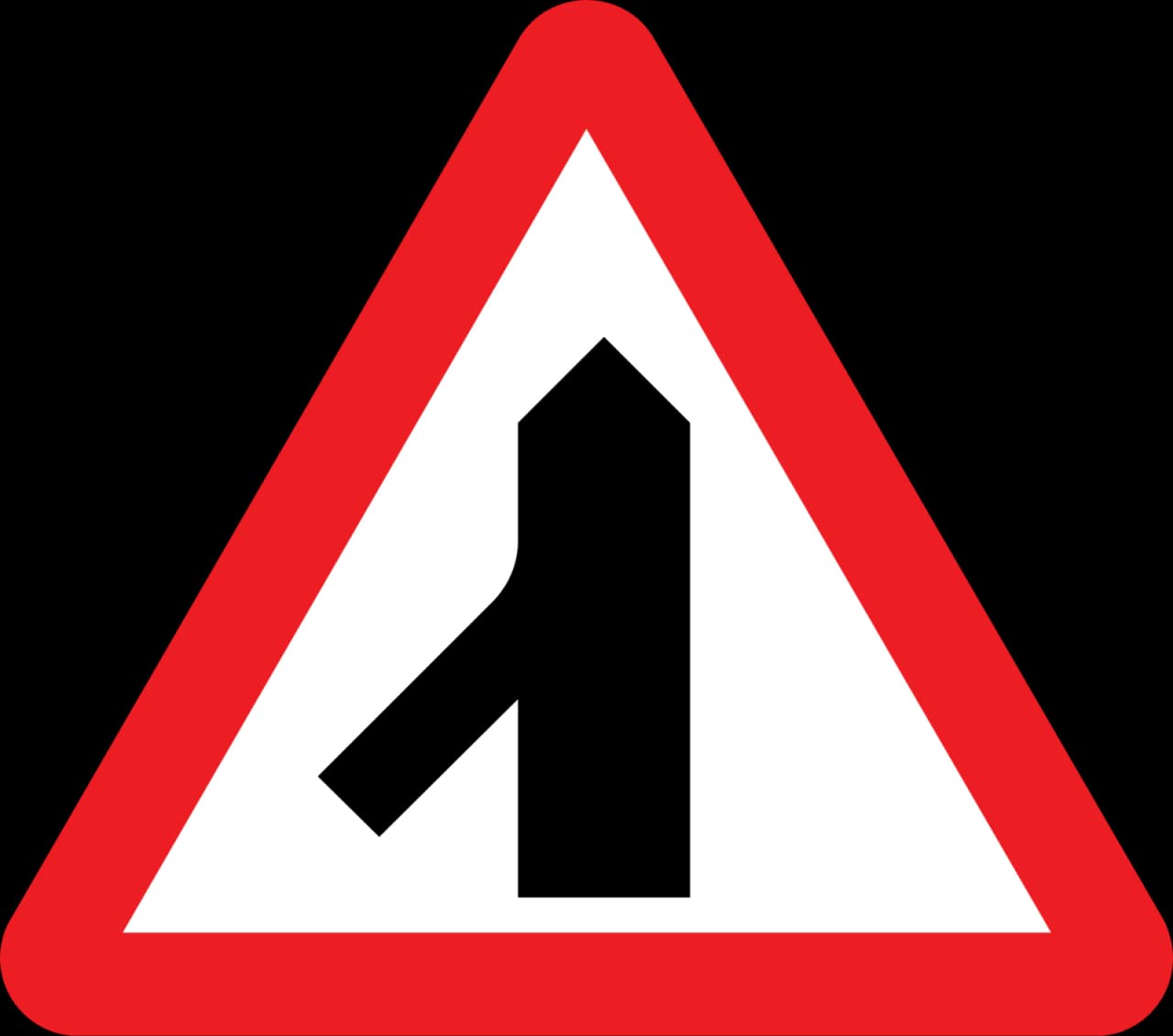
Prepare for traffic merging from the left with this advanced warning sign.
After reviewing the full list of road signs, challenge yourself with practice questions focused specifically on sign recognition. Reinforce your learning and ensure you're fully prepared to identify and understand all traffic signs on the DVSA theory test.
Browse All GB Road Signs List