
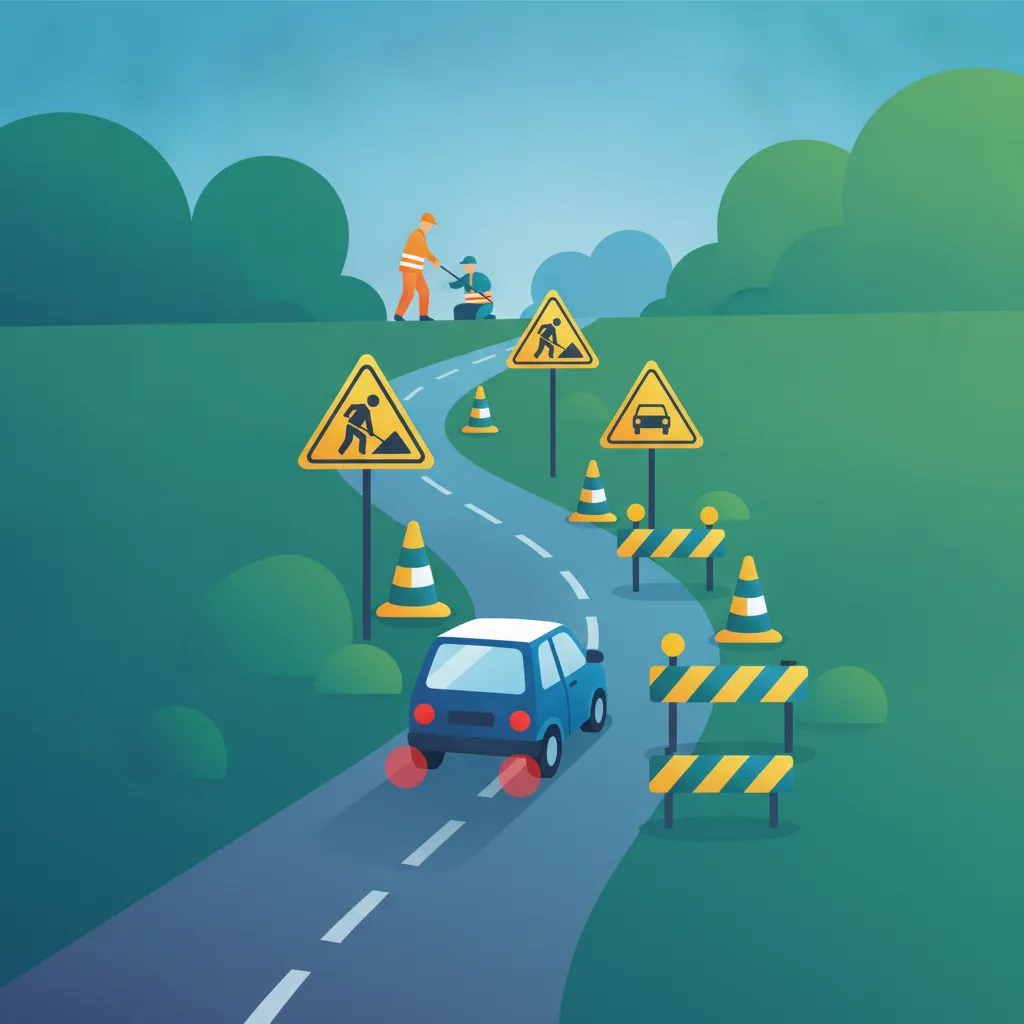
Road work zones, often called "Baustellen" in Austria, are temporary sections of road where construction, maintenance, or repair activities take place. These areas introduce unique hazards and demand drivers to modify their behavior, pay extra attention to temporary signs, and anticipate sudden changes in road conditions or traffic flow to ensure safety for everyone.
Theory topic content overview
Read the full theory topic guide for Road Work Zones (Baustelle) with structured, easy-to-scan content built for learners in Austria. This detailed section explains the exact rule, meaning, traffic context, comparison points, and exam logic behind this Austrian driving theory topic so you can study faster, understand the concept more clearly, and avoid common interpretation mistakes on the theory test.
Road work zones, commonly known as "Baustellen" in Austria, are temporary sections of road where construction, maintenance, or repair activities are taking place. These dynamic environments introduce unique challenges and hazards that demand heightened attention and specific driving adjustments from all road users. For your safety, the safety of workers, and to pass the Austrian driving theory test, a thorough understanding of Baustellen rules is essential.
A Baustelle is more than just a section with cones; it's a legally defined area where the usual traffic rules and road layout are temporarily altered. These zones are characterized by:
The primary goal in any Baustelle is to manage traffic flow safely while allowing work to proceed, minimizing risks to both drivers and those working on the road.
Navigating Baustellen safely is crucial for several reasons relevant to Austrian driving:
Gelber Grund PrincipleA key distinguishing feature of Baustellen in Austria, as outlined in the StVO, is the use of yellow-ground signs (Zeichen mit gelbem Grund). These temporary signs always override permanent road signs and markings.
50 km/h), prohibitions (e.g., Überholverbot - no overtaking), or mandatory directions.Fahrstreifenverlauf - lane configuration), diversions (Umleitung), or temporary directions.The Gelber Grund is your immediate signal that you are entering or within an area with special, temporary rules. Always prioritize these yellow signs over any standard white or blue signs.
When approaching and driving through an Austrian Baustelle, drivers must make specific adjustments:
Reduce Your Speed Significantly:
StVO emphasis on adapting speed to visibility and road conditions.Maintain Safe Distances (Sicherheitsabstand):
Autobahn where reaction times are critical.Anticipate and Observe:
Execute Lane Changes Carefully:
Fahrstreifenverminderung).Reißverschlusssystem) where vehicles alternate smoothly, if indicated by signs or if traffic is slow and congested. Do not force your way in.Avoid Distractions:
Autobahnen. This reduces your margin for error and requires precise steering, particularly for wider vehicles.Autobahn Baustelle: You see a series of yellow signs, first warning of "Baustelle" ahead with a reduced speed limit, followed by signs indicating Fahrstreifenverminderung (lane reduction). You must gradually reduce speed, activate your turn signal early if a lane merge is coming, and smoothly integrate into the remaining lane, ensuring sufficient distance to the vehicle in front and scanning for workers near the barriers.Learners and even experienced drivers often make these mistakes:
Vorsichtig und VorausschauendIn summary, when you encounter a Baustelle in Austria, adopt a mindset of vorsichtig und vorausschauend (cautious and anticipatory) driving. Prioritize safety above all else. Recognize the Gelber Grund as your primary visual cue for altered rules. Slow down, maintain distance, observe diligently, and always respect the temporary nature and inherent risks of road work zones. Your responsible driving protects not only yourself but also the dedicated road workers ensuring the quality of Austria's infrastructure.
Austrian road work zones (Baustellen) are legally defined temporary areas where standard traffic rules and road layouts are altered, marked by distinctive yellow-ground signs that always override permanent signs. Drivers must significantly reduce speed below posted limits, increase following distances, scan far ahead for signs and workers, and use the zipper principle when lanes merge. The Gelber Grund principle is the critical visual cue indicating altered rules, and worker safety must be every driver's primary concern when navigating these dynamic environments.
A short set of high-value points that capture the most important ideas from this theory explanation.
Temporary yellow-ground signs (Gelber Grund) always override permanent road signs and markings in Austrian work zones.
Reduced speed limits in Baustellen are maximums, not targets—adapt your speed further for actual conditions such as rain, darkness, or heavy traffic.
Maintain significantly increased following distances; the two-second rule is an absolute minimum in work zones, especially on high-speed roads.
Use the zipper principle (Reißverschlusssystem) when lanes merge, alternating smoothly with other vehicles rather than forcing your way in.
Worker safety is paramount—drive as if a worker could step into your path at any moment and always assume they may not see you.
Yellow-ground signs (Zeichen mit gelbem Grund) always take priority over permanent signs, markings, and signals in any Baustelle.
Baustelle speed limits are legally enforceable maximums—reduce further when workers are near the roadway or visibility is reduced.
The two-second rule is the minimum following distance; increase it significantly in work zones to allow for sudden braking and unexpected events.
When lanes merge, follow the zipper principle (Reißverschlusssystem) if traffic is congested and signs indicate merging.
Workers are focused on their tasks; it is always your sole responsibility to see them, anticipate their movements, and ensure their safety.
Ignoring or undervaluing yellow signs, treating them as suggestions rather than legally binding temporary regulations.
Driving at the posted limit without adjusting for wet roads, uneven surfaces, narrow lanes, or the presence of workers nearby.
Merging too late or too aggressively when lane reductions occur, cutting off other drivers or creating dangerous confrontations.
Misjudging the reduced lane width in Baustellen, especially on Autobahnen, and risking contact with barriers or adjacent vehicles.
Assuming construction workers can see approaching traffic; workers prioritize their tasks and cannot monitor every vehicle.
Start with a short, direct summary of Road Work Zones (Baustelle) before reading the full explanation below.
When approaching or driving through a road work zone (Baustelle) in Austria, drivers must exercise extreme caution. This involves significantly reducing speed, strictly following temporary yellow-ground signs and road markings, and being alert for workers, equipment, and unexpected changes in lane configuration or road surface. The primary goal is to maintain safety and prevent accidents in these dynamic environments.
Review the most important terms, rule signals, and traffic concepts linked to Road Work Zones (Baustelle).
Explore related theory topic pages connected to Road Work Zones (Baustelle) and continue with the next useful rule explanation.
See the common search queries learners use when trying to understand Road Work Zones (Baustelle) in Austria.

Ready to delve deeper into specific theory topics? Continue exploring detailed explanations of Austrian road signs, traffic rules, and critical driving situations. Solidify your knowledge, clarify any doubts, and ensure you're fully prepared for every aspect of your official driving licence theory exam.
Austrian Driving Theory TopicsTheory topic content overview
A short set of high-value points that capture the most important ideas from this theory explanation.
Temporary yellow-ground signs (Gelber Grund) always override permanent road signs and markings in Austrian work zones.
Reduced speed limits in Baustellen are maximums, not targets—adapt your speed further for actual conditions such as rain, darkness, or heavy traffic.
Maintain significantly increased following distances; the two-second rule is an absolute minimum in work zones, especially on high-speed roads.
Use the zipper principle (Reißverschlusssystem) when lanes merge, alternating smoothly with other vehicles rather than forcing your way in.
Worker safety is paramount—drive as if a worker could step into your path at any moment and always assume they may not see you.
Yellow-ground signs (Zeichen mit gelbem Grund) always take priority over permanent signs, markings, and signals in any Baustelle.
Baustelle speed limits are legally enforceable maximums—reduce further when workers are near the roadway or visibility is reduced.
The two-second rule is the minimum following distance; increase it significantly in work zones to allow for sudden braking and unexpected events.
When lanes merge, follow the zipper principle (Reißverschlusssystem) if traffic is congested and signs indicate merging.
Workers are focused on their tasks; it is always your sole responsibility to see them, anticipate their movements, and ensure their safety.
Ignoring or undervaluing yellow signs, treating them as suggestions rather than legally binding temporary regulations.
Driving at the posted limit without adjusting for wet roads, uneven surfaces, narrow lanes, or the presence of workers nearby.
Merging too late or too aggressively when lane reductions occur, cutting off other drivers or creating dangerous confrontations.
Misjudging the reduced lane width in Baustellen, especially on Autobahnen, and risking contact with barriers or adjacent vehicles.
Assuming construction workers can see approaching traffic; workers prioritize their tasks and cannot monitor every vehicle.
Start with a short, direct summary of Road Work Zones (Baustelle) before reading the full explanation below.
When approaching or driving through a road work zone (Baustelle) in Austria, drivers must exercise extreme caution. This involves significantly reducing speed, strictly following temporary yellow-ground signs and road markings, and being alert for workers, equipment, and unexpected changes in lane configuration or road surface. The primary goal is to maintain safety and prevent accidents in these dynamic environments.
Review the most important terms, rule signals, and traffic concepts linked to Road Work Zones (Baustelle).
Explore related theory topic pages connected to Road Work Zones (Baustelle) and continue with the next useful rule explanation.
See the common search queries learners use when trying to understand Road Work Zones (Baustelle) in Austria.
Ready to delve deeper into specific theory topics? Continue exploring detailed explanations of Austrian road signs, traffic rules, and critical driving situations. Solidify your knowledge, clarify any doubts, and ensure you're fully prepared for every aspect of your official driving licence theory exam.
Austrian Driving Theory TopicsUse this exam-focused revision tip to understand how Road Work Zones (Baustelle) is likely to appear in theory questions for learners in Austria. This section helps you identify the most testable part of the rule, avoid common traps, and remember the concept more effectively during Austrian driving theory exam preparation.
In the Austrian theory test, questions about road work zones often focus on identifying temporary yellow signs, understanding reduced speed limits, and knowing how to react to altered lane layouts. Remember that worker safety is paramount, and strict adherence to temporary regulations is always expected.
Read direct answers to the most common learner questions about Road Work Zones (Baustelle) in Austria. This FAQ focuses on rule confusion, practical meaning, comparison with similar concepts, and the exact uncertainties that appear most often in Austrian driving theory revision and exam preparation.
'Baustellen' refers to road work zones or construction sites on Austrian roads where maintenance, repair, or new construction is underway, often requiring temporary changes to traffic rules and road layout.
Road work zones are primarily indicated by temporary traffic signs with a yellow background and black symbols or text. These signs override any permanent white-background signs or markings.
Speed limits are reduced in road work zones to enhance safety for workers, allow drivers more time to react to hazards, and compensate for potentially uneven road surfaces or narrowed lanes. Ignoring these limits significantly increases accident risk.
Always follow the temporary yellow lane guidance signs and markings carefully. Be prepared for sudden lane shifts or merges, reduce your speed, and merge smoothly and early where instructed.
Key hazards include workers and equipment near active traffic, uneven road surfaces, loose gravel, narrow lanes, sudden lane changes, and reduced visibility due to dust or temporary barriers. Drivers must remain highly vigilant.
Yes, temporary yellow road markings in a road work zone always override any permanent white road markings. Drivers must follow the yellow markings.
Refine your study plan by searching for specific Austrian driving theory practice sets. Pinpoint questions related to particular road rules, signs, or challenge levels, and begin practicing immediately to reinforce your knowledge and excel in your official exam with confidence. Get started with focused revision today.