
Warning signs, known as Gefahrenzeichen in Austria, are fundamental elements of road safety, designed to prepare drivers for upcoming hazards or changes in road conditions. Unlike regulatory signs, their primary purpose is to inform and advise, giving you time to react appropriately. This page clarifies their function, common types, and the essential driving adjustments required by Austrian traffic law.
Theory topic content overview
Read the full theory topic guide for Understanding Warning Signs with structured, easy-to-scan content built for learners in Austria. This detailed section explains the exact rule, meaning, traffic context, comparison points, and exam logic behind this Austrian driving theory topic so you can study faster, understand the concept more clearly, and avoid common interpretation mistakes on the theory test.
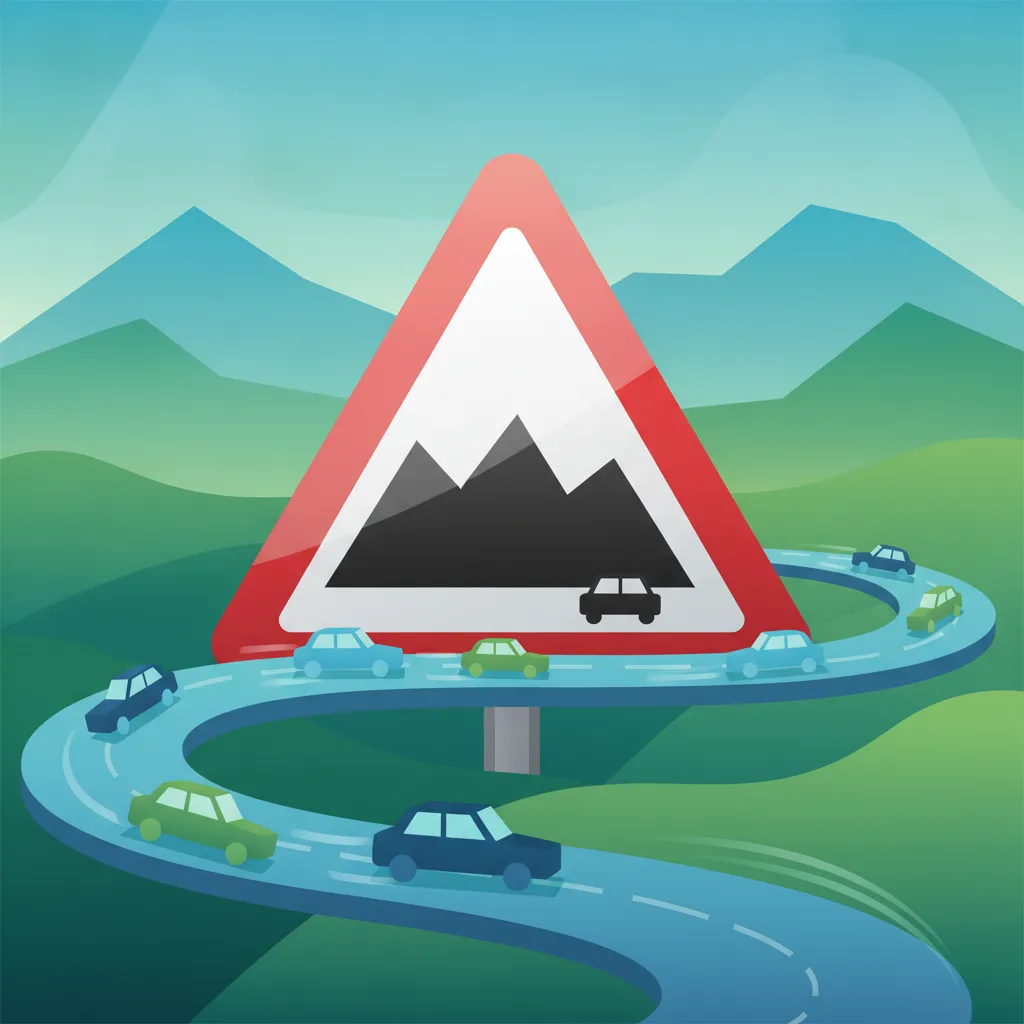
Warning signs, officially known as Gefahrenzeichen in Austria, are a critical component of road safety. These distinctive triangular signs, featuring a red border and a black symbol on a white background, serve a singular, vital purpose: to alert drivers to potential dangers or unusual conditions on the road ahead, providing enough time to react safely.
Unlike regulatory signs (Vorschriftszeichen) which issue commands, Gefahrenzeichen advise and inform, demanding that drivers proactively adjust their speed and driving behavior to the anticipated hazard. This proactive approach is fundamental to safe driving in Austria and is heavily emphasized in the Austrian driving theory exam.
The core function of Gefahrenzeichen is to enhance hazard perception and promote adaptive driving. They act as early warnings, allowing drivers to transition from a normal driving state to one of heightened caution, before the hazard itself becomes immediately apparent.
In Austria, understanding and correctly interpreting these warning signs is essential because:
StVO), specifically § 49 Absatz 1, states that drivers must "behave appropriately" and, if necessary, "reduce speed" according to the announced danger. Failing to do so can have legal consequences.Gefahrenzeichen ensure drivers are prepared for anything from tight bends and steep gradients to sudden wildlife crossings.Gefahrenzeichen, their meaning, and the required driver response. Proper identification and understanding are crucial for passing.Gefahrenzeichen are strategically placed before the actual danger point to give drivers sufficient time to process the information and take appropriate action. According to StVO § 49 Absatz 2:
These distances account for varying speeds and reaction times, ensuring that even at higher speeds, drivers have a chance to safely adjust. The presence of a warning sign demands a mental shift:
Austrian Gefahrenzeichen cover a broad spectrum of hazards. Here are some examples, highlighting how they guide driver behavior:
Road Geometry & Condition Warnings:
Gefahrenzeichen Nr. 17 in StVO § 50) warns of potential debris on the road or falling rocks from slopes, urging extra vigilance.Road User & Traffic Interaction Warnings:
Gefahrenzeichen Nr. 13b in StVO § 50) Particularly relevant in Austria's rural and forested areas, this sign warns of deer, wild boar, or other animals potentially crossing the road. Drivers should reduce speed, especially at dawn and dusk, and be prepared to brake.Special and Less Common Hazards (as per StVO § 50):
Gefahrenzeichen Nr. 14) Important on roads that may transition from one-way to two-way, or after a long one-way section, signifying the return of traffic from the opposite direction.Gefahrenzeichen Nr. 14a) A critical warning, often displayed on variable message signs, indicating a vehicle is driving against the intended flow of traffic, especially on motorways. This demands immediate extreme caution, reduced speed, and vigilance.Gefahrenzeichen Nr. 15) Used when traffic lights are unexpected or poorly visible, allowing drivers to prepare for changes in traffic flow.Gefahrenzeichen Nr. 16) This generic warning sign is always accompanied by a Zusatztafel (supplementary plate) that specifies the exact nature of the unique hazard (e.g., "Heavy Wind," "Accident Risk," "Construction Zone Ahead").For the Austrian driving theory test and safe driving, it's vital to differentiate Gefahrenzeichen from other sign categories:
Gefahrenzeichen) vs. Regulatory Signs (Vorschriftszeichen):
Gefahrenzeichen (triangular, red border) inform and advise about upcoming hazards, requiring drivers to adapt.Vorschriftszeichen (round, red border for prohibitions, blue for mandates) command specific actions or prohibitions (e.g., "No Entry," "Maximum Speed," "Give Way"). Ignoring these is a direct violation of traffic law.Hinweiszeichen):
Hinweiszeichen (typically rectangular, blue or white) provide general information (e.g., directions, parking areas, tourist attractions). They do not imply a hazard or require a change in driving behavior related to danger.Gefahrenzeichen for Gefährliches Gefälle (Steep Downhill Slope) followed by a Zusatztafel indicating 12% for 3 km. You should immediately reduce speed, shift to a lower gear, and prepare to use engine braking, reserving your foot brake for more significant speed reductions to prevent overheating.Learners and even experienced drivers often make these errors related to Gefahrenzeichen:
Wildwechsel) are temporary or more prevalent at certain times.Gefahrenzeichen symbols, leading to an incorrect understanding of the danger.Zusatztafeln: Failing to read the supplementary plates that often provide crucial details about the warning sign, like distance or duration of the hazard.Gefahrenzeichen demand a concrete change in driving style.In Austria, where road conditions can change rapidly due to mountainous terrain, varied weather, and intricate urban layouts, Gefahrenzeichen are paramount for road safety. The StVO's emphasis on appropriate reaction underscores that simply seeing a sign is not enough; a driver must act on the information.
Remember the specific distances for sign placement on Autobahnen versus other roads, as these are frequently tested. Pay particular attention to Gefahrenzeichen that might be less common elsewhere, such as those related to alpine dangers or specific Austrian traffic flow patterns. The ability to anticipate hazards and adapt your driving behavior is the true measure of a safe and competent driver in Austria.
Gefahrenzeichen are your allies in safe driving. They give you the precious gift of time – time to slow down, time to assess, and time to adjust. Adopt a mindset of proactive anticipation. When you see a triangular warning sign in Austria, immediately ask yourself: "What danger is ahead, and how must I change my driving right now to navigate it safely?" This simple mental framework will help you confidently handle any hazard the Austrian roads present, ensuring safety for yourself and others.
Austrian Gefahrenzeichen (warning signs) are triangular signs with a red border and black symbol on white background that serve to alert drivers to upcoming hazards, enabling proactive rather than reactive driving. They are legally distinct from regulatory signs because they advise and inform rather than command, yet StVO § 49 still imposes an obligation on drivers to appropriately adjust their speed and behavior. Placement distances vary by road type—250–400 meters on motorways and 150–250 meters on other roads—giving drivers time to anticipate hazards ranging from sharp curves and steep gradients to wildlife crossings and wrong-way drivers. Understanding these signs and their associated Zusatztafeln, remembering specific StVO references, and applying the correct response before reaching each hazard are essential for both safe driving in Austria and passing the theory exam.
A short set of high-value points that capture the most important ideas from this theory explanation.
Gefahrenzeichen are triangular warning signs with a red border, black symbol, and white background that advise rather than command drivers to adapt their behavior
Austrian law (StVO § 49 Absatz 1) requires drivers to behave appropriately and reduce speed according to the announced danger
Warning signs on Autobahnen are placed 250–400 meters before hazards, while on other roads they are typically 150–250 meters ahead
These signs cover diverse hazards including road geometry, slippery conditions, wildlife, pedestrians, cyclists, and special dangers like wrong-way drivers
The signs demand proactive anticipation—drivers must mentally shift to heightened caution and act before reaching the hazard
Gefahrenzeichen require adaptation; unlike Vorschriftszeichen which issue commands, they advise and inform about upcoming hazards
StVO § 50 specifies numbered Gefahrenzeichen such as Nr. 13b (Wildwechsel), Nr. 14 (Gegenverkehr), Nr. 14a (Falschfahrer), and Nr. 17 (Steinschlag)
Always check Zusatztafeln (supplementary plates) attached to warning signs for specific details like distance, duration, or nature of the hazard
Wildlife crossing signs require extra caution at dawn and dusk, and drivers should be prepared to brake or swerve
Steep downhill signs demand selecting a lower gear for engine braking to prevent brake overheating
Recognizing a warning sign but failing to actively adjust speed or driving behavior accordingly
Reacting too late by braking or steering only after entering the hazard zone instead of preparing beforehand
Overlooking Zusatztafeln that provide crucial supplementary information about the specific danger ahead
Confusing Gefahrenzeichen symbols, such as misinterpreting what a particular warning represents
Treating warning signs as mere suggestions rather than as instructions requiring immediate driving adaptation
Start with a short, direct summary of Understanding Warning Signs before reading the full explanation below.
Warning signs in Austria are triangular road signs with a red border and black symbol on a white background. They serve to alert drivers to potential dangers or unusual conditions on the road ahead, such as sharp curves, pedestrian crossings, or wild animals. Upon seeing a warning sign, drivers must adapt their speed and behavior to safely navigate the approaching hazard, as prescribed by the Austrian Road Traffic Act (StVO).
Review the most important terms, rule signals, and traffic concepts linked to Understanding Warning Signs.
Explore related theory topic pages connected to Understanding Warning Signs and continue with the next useful rule explanation.
See the common search queries learners use when trying to understand Understanding Warning Signs in Austria.

Ready to delve deeper into specific theory topics? Continue exploring detailed explanations of Austrian road signs, traffic rules, and critical driving situations. Solidify your knowledge, clarify any doubts, and ensure you're fully prepared for every aspect of your official driving licence theory exam.
Austrian Driving Theory TopicsTheory topic content overview
A short set of high-value points that capture the most important ideas from this theory explanation.
Gefahrenzeichen are triangular warning signs with a red border, black symbol, and white background that advise rather than command drivers to adapt their behavior
Austrian law (StVO § 49 Absatz 1) requires drivers to behave appropriately and reduce speed according to the announced danger
Warning signs on Autobahnen are placed 250–400 meters before hazards, while on other roads they are typically 150–250 meters ahead
These signs cover diverse hazards including road geometry, slippery conditions, wildlife, pedestrians, cyclists, and special dangers like wrong-way drivers
The signs demand proactive anticipation—drivers must mentally shift to heightened caution and act before reaching the hazard
Gefahrenzeichen require adaptation; unlike Vorschriftszeichen which issue commands, they advise and inform about upcoming hazards
StVO § 50 specifies numbered Gefahrenzeichen such as Nr. 13b (Wildwechsel), Nr. 14 (Gegenverkehr), Nr. 14a (Falschfahrer), and Nr. 17 (Steinschlag)
Always check Zusatztafeln (supplementary plates) attached to warning signs for specific details like distance, duration, or nature of the hazard
Wildlife crossing signs require extra caution at dawn and dusk, and drivers should be prepared to brake or swerve
Steep downhill signs demand selecting a lower gear for engine braking to prevent brake overheating
Recognizing a warning sign but failing to actively adjust speed or driving behavior accordingly
Reacting too late by braking or steering only after entering the hazard zone instead of preparing beforehand
Overlooking Zusatztafeln that provide crucial supplementary information about the specific danger ahead
Confusing Gefahrenzeichen symbols, such as misinterpreting what a particular warning represents
Treating warning signs as mere suggestions rather than as instructions requiring immediate driving adaptation
Start with a short, direct summary of Understanding Warning Signs before reading the full explanation below.
Warning signs in Austria are triangular road signs with a red border and black symbol on a white background. They serve to alert drivers to potential dangers or unusual conditions on the road ahead, such as sharp curves, pedestrian crossings, or wild animals. Upon seeing a warning sign, drivers must adapt their speed and behavior to safely navigate the approaching hazard, as prescribed by the Austrian Road Traffic Act (StVO).
Review the most important terms, rule signals, and traffic concepts linked to Understanding Warning Signs.
Explore related theory topic pages connected to Understanding Warning Signs and continue with the next useful rule explanation.
See the common search queries learners use when trying to understand Understanding Warning Signs in Austria.
Ready to delve deeper into specific theory topics? Continue exploring detailed explanations of Austrian road signs, traffic rules, and critical driving situations. Solidify your knowledge, clarify any doubts, and ensure you're fully prepared for every aspect of your official driving licence theory exam.
Austrian Driving Theory TopicsUse this exam-focused revision tip to understand how Understanding Warning Signs is likely to appear in theory questions for learners in Austria. This section helps you identify the most testable part of the rule, avoid common traps, and remember the concept more effectively during Austrian driving theory exam preparation.
The Austrian theory exam often tests your ability to identify warning signs and understand the specific actions required for the indicated hazard. Pay close attention to the symbols, especially for less common hazards like 'Achtung Falschfahrer' (wrong-way driver) or 'Achtung Wildwechsel' (wildlife crossing), and remember the typical distances they are placed before the danger.
Read direct answers to the most common learner questions about Understanding Warning Signs in Austria. This FAQ focuses on rule confusion, practical meaning, comparison with similar concepts, and the exact uncertainties that appear most often in Austrian driving theory revision and exam preparation.
The main purpose of a warning sign is to alert drivers to a potential danger or change in road conditions ahead, giving them enough time to react and adjust their driving safely.
In Austria, most warning signs (Gefahrenzeichen) are triangular with a red border, a white background, and a black symbol depicting the specific hazard.
According to the Austrian StVO, warning signs are generally placed 250m to 400m before the hazard on Autobahnen, and 150m to 250m on other roads, unless specific circumstances dictate otherwise (StVO § 49, Abs. 2).
A driver must reduce speed if necessary and adapt their driving behavior appropriately to the anticipated hazard, such as preparing to brake, steer, or be extra vigilant.
No, a warning sign itself does not impose a speed limit. It indicates a hazard that *might* require you to reduce your speed, but it's not a direct regulatory command. You are, however, legally obliged to react to the indicated danger.
"Gefahrenzeichen" is the German term for warning signs in Austrian traffic law, specifically referring to signs that indicate potential dangers on the road as defined in StVO § 49.
The "Andere Gefahren" sign warns of dangers for which there is no specific dedicated warning sign. It often comes with a supplementary panel (Zusatztafel) that specifies the exact nature of the danger.
The "Achtung Wildwechsel" sign (Warning: Wildlife Crossing) indicates an area where animals may cross the road. You must be extra vigilant, reduce speed, and be prepared to brake or react to animals suddenly appearing on the road.
Refine your study plan by searching for specific Austrian driving theory practice sets. Pinpoint questions related to particular road rules, signs, or challenge levels, and begin practicing immediately to reinforce your knowledge and excel in your official exam with confidence. Get started with focused revision today.