
Learners often struggle with complex parking restrictions that can lead to test failures or unexpected penalties. This article breaks down the Highway Code rules regarding pavement access, restricted zones, and road markings, ensuring you are prepared for both exam questions and practical driving scenarios. You will gain a clear understanding of the legal requirements for stopping and waiting in Great Britain to keep your driving record clean.
Article content overview
Navigating the rules of stopping, waiting, and parking is a fundamental skill for every new driver in Great Britain. Whether you are preparing for your DVSA theory test or looking to avoid a costly Penalty Charge Notice (PCN), understanding where you can legally stop your vehicle is essential. Misinterpreting these regulations is a frequent cause of test failures and can lead to dangerous situations for pedestrians and other road users.
One of the most common pitfalls for learners involves parking on the pavement. In many areas of Great Britain, pavement parking is discouraged because it obstructs those with visual impairments, wheelchair users, and parents with prams. It is important to note that you must not park partially or wholly on the pavement in London or Scotland, unless specific signs indicate otherwise. In other parts of the country, you should avoid pavement parking to prevent causing an obstruction, as you could be held liable for causing a hazard or blocking access for vulnerable road users.
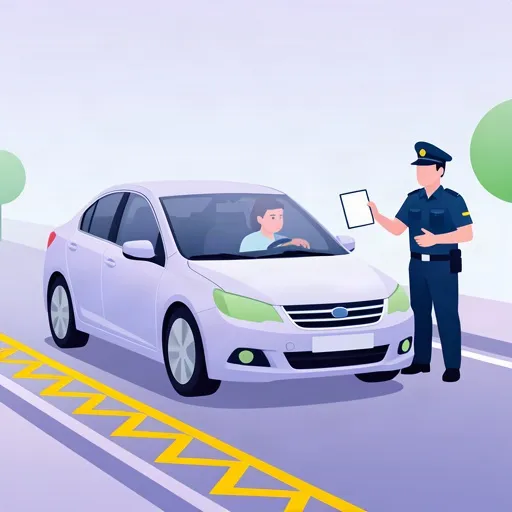
The theory test frequently examines your knowledge of specific road markings that prohibit parking. Zigzag lines, for instance, are critical to understand; they are typically found near pedestrian crossings, schools, or hospitals. You must never park on these lines or overtake the leading vehicle when approaching the crossing. Parking here blocks the view for pedestrians and approaching traffic, creating a severe safety risk that will almost certainly lead to a serious or dangerous fault in a practical driving test.
A Controlled Parking Zone (CPZ) is an area where parking is strictly regulated during specific hours. When you enter such a zone, you will see entry signs detailing the operational times. Within these zones, you may only park in designated, marked bays. If you park outside of these bays or during restricted times, you are likely to incur a penalty. Always look for the entry signs as you cross the boundary into a new area, as these signs override the general road markings you might be used to seeing.
When you are practicing with a supervisor, it is common to feel overwhelmed by the density of parking signs in town centres. As a learner, you need to look and think further ahead than you might normally. By scanning the environment for signs early, you give yourself the time to find a legal and safe place to stop. If you ever feel unsure about a parking restriction, the safest course of action is to find a designated parking area or a side street with no restrictions, rather than risking a fine by guessing.
| Sign / Marking | Meaning for Drivers |
|---|---|
| Single Yellow Line | Waiting restricted during specific times shown on plates. |
| Double Yellow Lines | No waiting at any time (some local variations apply). |
| Zigzag Lines | No stopping or parking at any time; protects pedestrians. |
| Clearway | No stopping at any time, usually on main roads. |
The DVSA theory test will challenge your ability to identify road signs and understand the implications of different parking markings. Be prepared for scenario-based questions that ask how you would react to specific road signs in a city environment. Remember that the rules in Great Britain are uniform, but local authorities may have specific variations within their jurisdiction, particularly regarding enforcement.
This article covers essential parking regulations for learner drivers in Great Britain, explaining the critical differences between pavement parking rules in London and Scotland versus other areas, the strict no-stopping requirement on zigzag lines near pedestrian crossings and schools, and how Controlled Parking Zones operate with time-specific restrictions shown on entry signs. The content clarifies the distinction between single and double yellow lines, defines key terms like PCN, CPZ, and waiting, and emphasizes that local authority signage takes precedence over standard road markings. For theory test preparation, learners should focus on scenario-based questions involving urban parking situations and the specific meanings of road markings in different contexts.
A short set of high-value points that capture the most important ideas from this article.
Pavement parking rules vary by location in Great Britain; it is prohibited in London and Scotland unless signs indicate otherwise
Zigzag lines mean absolute no stopping at any time, protecting pedestrians near crossings, schools, and hospitals
Controlled Parking Zones restrict parking to designated bays during specific operational times shown on entry signs
Yellow line restrictions vary: single yellow lines restrict waiting during stated times, while double yellow lines mean no waiting at any time
Local authority signage in CPZs overrides general road markings when you cross into a new zone
In London and Scotland, parking on the pavement is illegal unless specific signs permit it
Zigzag lines: never stop, park, or overtake on these lines
Double yellow lines mean no waiting at any time; single yellow lines only restrict during the times shown on nearby plates
Always look for CPZ entry signs when entering a new area as they specify operational times
When uncertain about parking legality, choose a designated bay or unrestricted side street rather than guessing
Assuming all yellow line restrictions are the same without checking the adjacent time plates
Thinking zigzag lines only apply during certain hours when they are in effect at all times
Relying only on general Highway Code rules without checking for local authority signage variations
Failing to check CPZ signs upon entry, assuming restrictions only apply during daytime hours
Believing pavement parking is universally tolerated outside London and Scotland when it can still constitute obstruction
Article content overview
A short set of high-value points that capture the most important ideas from this article.
Pavement parking rules vary by location in Great Britain; it is prohibited in London and Scotland unless signs indicate otherwise
Zigzag lines mean absolute no stopping at any time, protecting pedestrians near crossings, schools, and hospitals
Controlled Parking Zones restrict parking to designated bays during specific operational times shown on entry signs
Yellow line restrictions vary: single yellow lines restrict waiting during stated times, while double yellow lines mean no waiting at any time
Local authority signage in CPZs overrides general road markings when you cross into a new zone
In London and Scotland, parking on the pavement is illegal unless specific signs permit it
Zigzag lines: never stop, park, or overtake on these lines
Double yellow lines mean no waiting at any time; single yellow lines only restrict during the times shown on nearby plates
Always look for CPZ entry signs when entering a new area as they specify operational times
When uncertain about parking legality, choose a designated bay or unrestricted side street rather than guessing
Assuming all yellow line restrictions are the same without checking the adjacent time plates
Thinking zigzag lines only apply during certain hours when they are in effect at all times
Relying only on general Highway Code rules without checking for local authority signage variations
Failing to check CPZ signs upon entry, assuming restrictions only apply during daytime hours
Believing pavement parking is universally tolerated outside London and Scotland when it can still constitute obstruction
Explore related topics, search based questions, and concepts that learners often look up when studying Essential UK Parking Rules. These themes reflect real search intent and help you understand how this topic connects to wider driving theory knowledge in Great Britain.
Find clear and practical answers to common questions learners often have about Essential UK Parking Rules. This section helps explain difficult points, remove confusion, and reinforce the key driving theory concepts that matter for learners in Great Britain.
No. You must not park partially or wholly on the pavement in London or Scotland, and you should avoid doing so elsewhere unless specific signs permit it, as it obstructs pedestrians and wheelchair users.
Zigzag lines indicate a strictly controlled area where you must not park or overtake the leading vehicle, as doing so blocks the view for pedestrians and other road users.
Controlled Parking Zones are identified by entry signs that specify the times when waiting restrictions are in force. Outside of those times, parking may be permitted in signed bays.
Many areas now use Decriminalised Parking Enforcement (DPE), where the local traffic authority assumes responsibility for enforcing parking rules instead of the police.
Explore our extensive library of Great Britain driving theory articles to clarify any topic, review specific road rules, or gain deeper insights into vehicle safety and the Highway Code. Use the search to find exactly what you need for comprehensive DVSA theory test preparation.