
This lesson guides you through the crucial safety techniques for positioning your moped or light quadricycle near larger vehicles and parked cars. You will learn to recognize the dangers of blind spots and develop strategies to maintain a protective space cushion while riding on British roads. Understanding these principles is vital for both your practical safety and for answering complex hazard perception questions on your AM theory test.

Lesson content overview
Navigating the roads on a moped or light quadricycle requires a keen awareness of your surroundings, especially when sharing the road with larger vehicles like lorries, buses, and vans, or encountering static hazards such as parked cars. This lesson provides crucial insights and strategies for positioning your Great Britain AM Licence vehicle safely in diverse traffic situations. Mastering these techniques is fundamental to minimizing risks associated with limited visibility, extensive blind spots, and the "danger zone" created by larger vehicles, particularly at junctions, roundabouts, and during filtering.
Effective positioning is not just about avoiding immediate collisions; it's about anticipating potential hazards and creating a protective space around your vehicle. Given the comparatively smaller size and lighter mass of AM vehicles, misjudgments in positioning can lead to severe consequences. This guide will equip you with the knowledge to maintain a safe 'space cushion', navigate narrow gaps confidently, and understand how to remain visible to other road users at all times.
One of the most critical aspects of safe positioning for AM riders is understanding and actively avoiding the extensive blind spots of larger vehicles. A blind spot is an area around a vehicle that the driver cannot see directly or through their mirrors. For lorries, buses, and large vans, these blind spots are significantly larger and more numerous than those of a standard car, making it easy for a moped or light quadricycle to become completely invisible to the driver.
There are several types of blind spots to be aware of:
Riding within these zones makes you invisible, drastically increasing the risk of a collision. Drivers of larger vehicles rely heavily on their side mirrors, but these cannot cover every angle. It is your responsibility as an AM rider to assume you are invisible if you are in one of these zones and to adjust your position accordingly. The Highway Code, specifically Rule 246, stresses the importance of positioning your vehicle to give the driver of a large vehicle maximum visibility, particularly when approaching or crossing a junction. Rule 243 further warns against travelling directly behind a larger vehicle when it is moving slowly or stopping.
Beyond blind spots, a specific danger zone exists directly behind larger vehicles. This area is characterised by significant aerodynamic turbulence and the poorest driver visibility. It typically extends for 1 to 2 seconds of travel distance behind the vehicle.
For example, riding just 1 metre behind a 12-tonne lorry approaching a stop line means you will have almost no time to react if it brakes sharply. The Highway Code Rule 243 explicitly states: "Do not travel directly behind a vehicle that is larger than a car when it is moving slowly or stopping." This rule is mandatory and designed to prevent collisions resulting from blind spots and reduced reaction time.
A space cushion is an additional safety margin you maintain around your vehicle, extending beyond any compulsory legal gaps. This vital buffer provides crucial reaction time and accounts for sudden movements or changes in traffic conditions by other vehicles, especially larger ones.
This concept can be broken down into two main categories:
Maintaining an adequate space cushion is particularly important behind large vehicles because:
The Highway Code Rule 259 advises keeping a safe distance behind larger vehicles, stating "at least two seconds plus an additional second for each additional metre of vehicle length." This rule applies on all roads and is mandatory. For instance, if you are behind a 12-metre lorry, you should aim for a gap of at least 3 seconds (2 seconds + 1 second for the extra length).
Parked cars and other roadside obstacles (like bins, bollards, or construction barriers) present unique hazards for AM riders. Positioning near parked cars involves maintaining adequate lateral distance to avoid sudden hazards and ensure you remain visible to other road users.
The Highway Code Rule 261 states: "Do not ride closer than 0.5 metres to a parked vehicle on the kerb side, unless the lane is too narrow." This mandatory rule is crucial for maintaining visibility and reducing the risk of collision with opening doors. Even if the lane is narrow, you should still attempt to keep as much space as possible.
When riding on urban streets with parked vehicles, it is safer to ride slightly further out from the kerb, giving you a greater lateral clearance from the parked vehicles. This also allows you to see and be seen more effectively. For example, riding 0.7 metres from a parked car's rear wheel gives you a buffer against a suddenly opened door.
Filtering through traffic is a common manoeuvre for AM riders, involving safely navigating between moving vehicles or between moving and parked vehicles, usually at low speeds in congested conditions. While it can save time, it demands exceptional caution, precise control, and careful gap assessment.
Filtering can be categorised:
Before attempting to filter, you must perform a thorough gap assessment. This means evaluating whether the available space between larger vehicles (or a large vehicle and a static hazard) is genuinely sufficient for your AM vehicle to pass safely. Key parameters to consider include:
The Highway Code Rule 247 states: "Do not overtake unless there is sufficient space for both you and the other vehicle to occupy the lane safely." This is mandatory and directly applies to filtering. Overestimating the speed of passing vehicles or underestimating the required gap can lead to devastating consequences. A 1.2-metre gap between a bus and a parked car might seem generous, but for a moped of 0.85 metres width, this leaves only 0.175 metres clearance on each side, which is very tight and dangerous, especially in wet conditions or if either vehicle moves slightly.
The Highway Code provides specific rules that underpin safe positioning around larger vehicles and parked cars for AM licence holders in Great Britain. Adhering to these mandatory rules is crucial for your safety and for passing your theory test.
| Regulation | Rule Statement | Applicability | Legal Status | Rationale | Correct Example | Incorrect Example |
|---|---|---|---|---|---|---|
| Rule 243 | Do not travel directly behind a vehicle that is larger than a car when it is moving slowly or stopping. | When a larger vehicle (bus, lorry, van) is moving slowly or preparing to stop. | Mandatory | Prevents collisions from blind spots and reduced reaction time. | Rider stays 1.5 metres behind a slow-moving bus at a stop line. | Rider rides directly behind the bus within 1 metre. |
| Rule 246 | Position your vehicle to give the driver of a large vehicle the maximum visibility when approaching/crossing a junction. | At all junctions where larger vehicles are present. | Mandatory | Ensures drivers can see the rider and anticipate movements. | Rider approaches junction slightly to the left of a lorry, staying within the sightline of the driver’s mirrors. | Rider rides directly behind a lorry and is not visible until too late. |
| Rule 259 | Keep a safe distance behind larger vehicles, at least two seconds plus an additional second for each additional metre of vehicle length. | On all roads when following a larger vehicle. | Mandatory | Gives extra reaction time due to larger braking distances. | Rider leaves a 3-second gap behind a 12-metre lorry. | Rider follows within a 1-second gap. |
| Rule 261 | Do not ride closer than 0.5 metres to a parked vehicle on the kerb side, unless the lane is too narrow. | Urban streets with parked vehicles. | Mandatory | Maintains visibility, reduces risk of opening doors hitting the rider. | Rider rides 0.7 metres from a parked car’s rear wheel. | Rider rides within 0.2 metres, risking collision with opening doors. |
| Rule 247 | Do not overtake unless there is sufficient space for both you and the other vehicle to occupy the lane safely. | Overtaking larger vehicles on any road. | Mandatory | Prevents squeezing into unsafe spaces. | Rider overtakes a bus where there is a 1.5 metres lateral clearance. | Rider squeezes into a 0.4 metres gap between a bus and a roadside column. |
| Rule 250 | Keep to the left of large vehicles when overtaking on dual carriageways unless road markings indicate otherwise. | Dual carriageways, overtaking larger vehicles. | Mandatory | Aligns with traffic flow and visibility. | Rider overtakes a lorry on the left side, staying clear of its side mirrors. | Rider overtakes on the right side of a lorry, reducing visibility. |
| Rule 239 | Ensure you have a clear view of the road ahead, with at least 150 metres of road visible when traveling at 30 mph (approximately 48 km/h). | All speeds, especially when on or near larger vehicles. | Mandatory | Gives adequate reaction time to respond to hazards obscured by large vehicles. | Rider maintains a view beyond the front of a parked bus by positioning themselves slightly to the side. | Rider’s view is completely blocked by a long parked truck, forcing them to rely on the truck's brake lights. |
Even experienced riders can sometimes make errors in judgment when it comes to positioning around larger vehicles. Being aware of these common mistakes is the first step to avoiding them.
Safe positioning is not a static concept; it must be dynamically adjusted based on prevailing conditions.
The principles of safe positioning are rooted in fundamental safety reasoning and backed by accident data.
Here are some real-world scenarios demonstrating correct and incorrect positioning for AM riders.
Safe positioning around larger vehicles and parked cars is essential for AM licence riders due to the extensive blind spots of lorries and buses. Key mandatory Highway Code rules (243, 246, 247, 250, 259, 261) govern safe distances, including maintaining at least 2 seconds gap behind large vehicles plus 1 second per additional metre of vehicle length, and keeping 0.5m minimum from parked cars. Riders must stay visible within mirror sightlines, avoid the danger zone directly behind large vehicles, and adjust their positioning based on weather, lighting, and road conditions. Filtering requires careful gap assessment providing at least 0.75m total lateral clearance, and articulated lorries require extra space due to their unique turning characteristics.
A short set of high-value points that capture the most important learning from this lesson.
Always position yourself within a large vehicle's mirror line rather than riding in their blind spots, especially at junctions
Maintain at least a 2-second gap behind larger vehicles, adding 1 second per extra metre of vehicle length
Keep a minimum 0.5m lateral clearance from parked vehicles on the kerb side, or more when possible
Before filtering, assess whether the gap provides at least 0.75m total lateral clearance including your body width
Overtake large vehicles on the left side on dual carriageways to stay within the driver's expected sightline
Explore all units and lessons included in this driving theory course.
Rule 243: Never travel directly behind a vehicle larger than a car when it is moving slowly or stopping
Rule 246: Position your vehicle to give large vehicle drivers maximum visibility when approaching or crossing junctions
The danger zone behind large vehicles extends 1-2 seconds of travel distance due to aerodynamic turbulence and poor rear visibility
Articulated lorries have unique turning characteristics—the trailer can cut corners sharply at junctions and roundabouts
Adverse weather requires increasing your space cushion by at least one additional second for reaction time
Riding directly behind a lorry at a junction, placing yourself squarely in the driver's blind spot
Filtering through gaps smaller than 0.75m total lateral clearance without accounting for your own body width
Following too closely behind large vehicles in wet, foggy, or icy conditions where stopping distances are dramatically increased
Overtaking buses on the right-hand side of dual carriageways when Rule 250 requires left-side overtaking
Assuming articulated lorry drivers can see you around the articulation point without checking the joint position first
Lesson content overview
A short set of high-value points that capture the most important learning from this lesson.
Always position yourself within a large vehicle's mirror line rather than riding in their blind spots, especially at junctions
Maintain at least a 2-second gap behind larger vehicles, adding 1 second per extra metre of vehicle length
Keep a minimum 0.5m lateral clearance from parked vehicles on the kerb side, or more when possible
Before filtering, assess whether the gap provides at least 0.75m total lateral clearance including your body width
Overtake large vehicles on the left side on dual carriageways to stay within the driver's expected sightline
Explore all units and lessons included in this driving theory course.
Rule 243: Never travel directly behind a vehicle larger than a car when it is moving slowly or stopping
Rule 246: Position your vehicle to give large vehicle drivers maximum visibility when approaching or crossing junctions
The danger zone behind large vehicles extends 1-2 seconds of travel distance due to aerodynamic turbulence and poor rear visibility
Articulated lorries have unique turning characteristics—the trailer can cut corners sharply at junctions and roundabouts
Adverse weather requires increasing your space cushion by at least one additional second for reaction time
Riding directly behind a lorry at a junction, placing yourself squarely in the driver's blind spot
Filtering through gaps smaller than 0.75m total lateral clearance without accounting for your own body width
Following too closely behind large vehicles in wet, foggy, or icy conditions where stopping distances are dramatically increased
Overtaking buses on the right-hand side of dual carriageways when Rule 250 requires left-side overtaking
Assuming articulated lorry drivers can see you around the articulation point without checking the joint position first
Explore search topics learners often look for when studying Positioning Around Larger Vehicles and Parked Cars. These topics reflect common questions about road rules, driving situations, safety guidance, and lesson level theory preparation for learners in Great Britain.
Browse additional driving theory lessons that cover connected traffic rules, road signs, and common driving situations related to this topic. Improve your understanding of how different rules interact across everyday traffic scenarios.
Understand critical positioning techniques for AM licence holders in Great Britain. Learn how to manage blind spots of lorries and buses, navigate safely around parked cars, and maintain visibility on UK roads. Essential theory for hazard perception.
This lesson explains how to adapt your driving around different vehicles. You will learn to look out for motorcyclists, who are often hard to see, especially at junctions. It also covers the challenges of sharing the road with large vehicles, such as their extended blind spots, wider turning circles, and the wind turbulence they can create.

This lesson explores how to maintain safe following distances specific to large passenger vehicles, accounting for their higher inertia and longer braking distances. It covers time-gap calculations, such as the four-second rule, and dynamic following distance adjustments based on speed and road conditions. Emphasis is placed on avoiding tailgating, ensuring a sufficient safety buffer is always present, and developing an awareness of convoy driving scenarios where multiple large vehicles are present.
This lesson focuses on alighting strategies and correct bus stop positioning to ensure passengers can exit the vehicle safely. Learners will investigate precise kerb alignment, the use of alighting alarms, and procedures for safe passenger disembarkation. Additionally, it covers the critical need for traffic awareness during alighting, such as monitoring mirrors and surrounding traffic, using stop signs, and prioritising the safety of vulnerable road users who may be near the bus.
This lesson discusses the crucial interaction between passenger vehicles and pedestrians at and around bus stops. Learners will explore pedestrian right-of-way, especially at crosswalks, and positioning strategies to maintain a safe distance from people waiting or crossing. The lesson also covers pedestrian alertness measures and conflict avoidance techniques to protect vulnerable road users. This knowledge is essential for preventing accidents and maintaining a safe environment around the vehicle during stops.
This lesson addresses the critical importance of child safety in school transport zones and around school buses. It covers the specific regulations, such as 20 mph speed limits and stopping restrictions indicated by zigzag lines. Learners will focus on the unpredictable nature of children and the need for heightened vigilance and readiness to stop unexpectedly. The content also includes procedures for the safe transport of pupils, ensuring their security both inside and outside the vehicle.
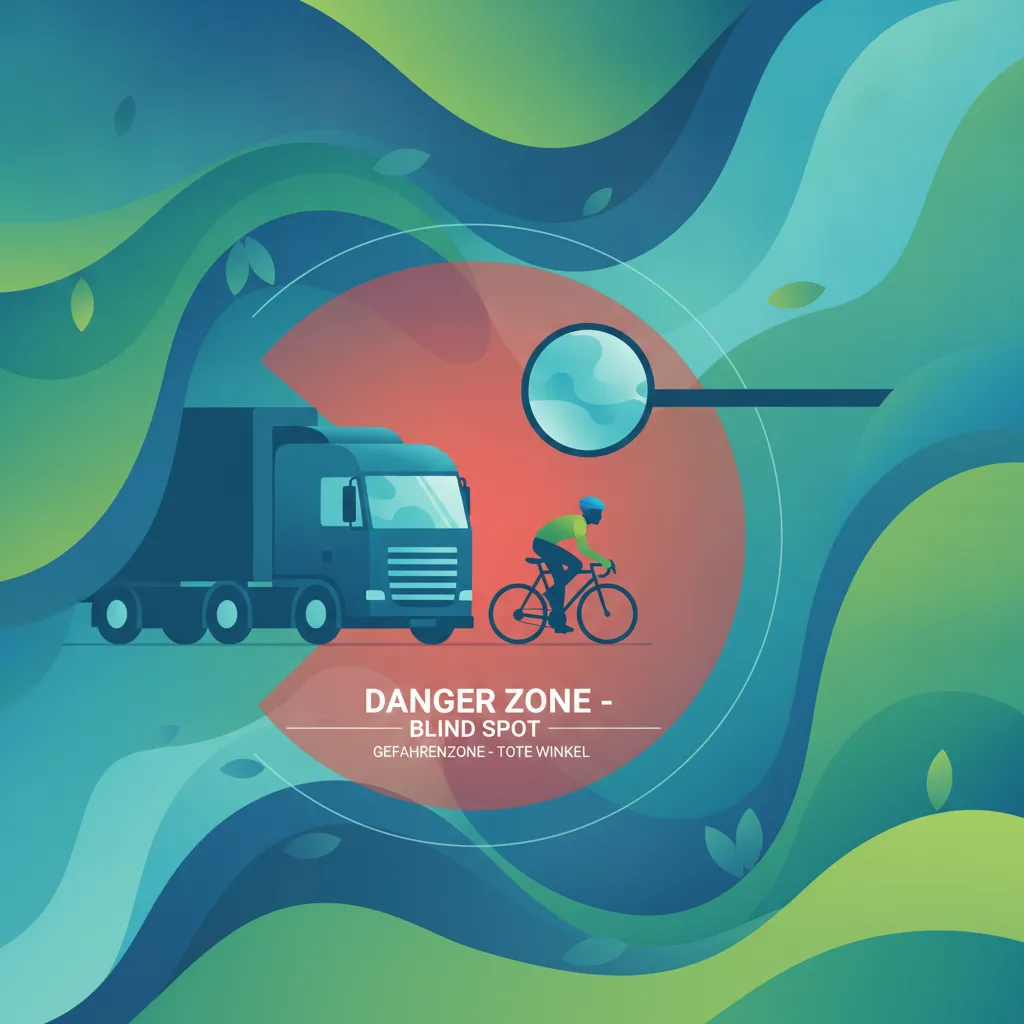
This lesson highlights the significant danger posed by the large blind spots of HGVs and buses. You will learn to identify these hazardous areas around a vehicle where the driver cannot see you. The lesson provides practical strategies for staying out of these zones, especially at junctions and when overtaking, to prevent serious accidents.
This lesson addresses the unique challenges of operating a large goods vehicle in congested urban and city environments. It focuses on techniques for navigating narrow streets, making tight turns, and safely accessing delivery points while being highly aware of vulnerable road users like pedestrians and cyclists. The importance of exceptional observation, low-speed control, and clear communication with other road users is heavily emphasized to minimize risk in these complex settings.
This lesson teaches drivers how to identify various types of vulnerable road users and anticipate their potential actions to prevent conflicts. It covers the specific risks associated with pedestrians, cyclists, motorcyclists, children, and elderly or disabled individuals. Emphasis is placed on heightened awareness and defensive driving techniques required to share the road safely. Understanding their perspectives and typical behaviours is key to protecting them and maintaining safety for everyone.

This lesson provides detailed instruction on turning techniques tailored for long vehicles. It explains the concepts of off-tracking (where rear wheels follow a tighter path than front wheels) and rear swing, and how to compensate for them. Learners will understand how to position the vehicle correctly when approaching and navigating left and right turns at junctions, roundabouts, and tight corners, using mirrors and signals effectively to ensure clearance and safety.
This lesson covers the principles of safe loading to prevent items from shifting or falling and causing a hazard. It explains that any load must be securely fastened and must not obstruct your view. You will also learn how overloading or distributing weight incorrectly can dangerously affect the vehicle's steering, braking, and overall stability.
Explore typical errors made when positioning AM vehicles near lorries, buses, and parked cars. This lesson covers practical scenarios and Highway Code rules to help you avoid dangerous situations and improve your hazard awareness.
This lesson addresses the unique challenges of operating a large goods vehicle in congested urban and city environments. It focuses on techniques for navigating narrow streets, making tight turns, and safely accessing delivery points while being highly aware of vulnerable road users like pedestrians and cyclists. The importance of exceptional observation, low-speed control, and clear communication with other road users is heavily emphasized to minimize risk in these complex settings.
This lesson builds on basic skills to address complex manoeuvres in challenging, confined environments such as bus stations, depots, and service areas. It covers techniques for positioning the vehicle for bay parking and navigating tight, complex routes. Key focus areas include developing precise spatial awareness, using reference points, maintaining extremely slow and controlled movements, and performing continuous observation to navigate safely without causing damage or injury.
This lesson provides detailed instruction on turning techniques tailored for long vehicles. It explains the concepts of off-tracking (where rear wheels follow a tighter path than front wheels) and rear swing, and how to compensate for them. Learners will understand how to position the vehicle correctly when approaching and navigating left and right turns at junctions, roundabouts, and tight corners, using mirrors and signals effectively to ensure clearance and safety.

This lesson focuses on the importance of excellent lane discipline for drivers of large vehicles. It details the rules and best practices for lane selection on motorways and dual carriageways, emphasizing the need to stay in the appropriate lane and signal intentions early. Correct positioning within a lane to maximize safety margins and visibility, especially around vulnerable road users, is a key focus for maintaining professional driving standards.
This lesson explores how to maintain safe following distances specific to large passenger vehicles, accounting for their higher inertia and longer braking distances. It covers time-gap calculations, such as the four-second rule, and dynamic following distance adjustments based on speed and road conditions. Emphasis is placed on avoiding tailgating, ensuring a sufficient safety buffer is always present, and developing an awareness of convoy driving scenarios where multiple large vehicles are present.

This lesson provides a detailed map of the significant blind spots located to the front, sides, and rear of a typical heavy goods vehicle. It explains the purpose of the different classes of mirrors and how to adjust them correctly for maximum visibility. Learners will be taught effective scanning techniques—'mirror-signal-manoeuvre'—to actively check these zones before changing position, ensuring they are aware of any hidden hazards or other road users.
This lesson highlights the significant danger posed by the large blind spots of HGVs and buses. You will learn to identify these hazardous areas around a vehicle where the driver cannot see you. The lesson provides practical strategies for staying out of these zones, especially at junctions and when overtaking, to prevent serious accidents.
This lesson provides guidance on where and how to park your vehicle legally and safely. It covers common manoeuvres like parallel parking and reversing into a bay, as well as specific rules for parking on a hill or at night. You will also learn to recognise locations where stopping is prohibited, such as on zig-zag lines or in clearways.
This lesson discusses the crucial interaction between passenger vehicles and pedestrians at and around bus stops. Learners will explore pedestrian right-of-way, especially at crosswalks, and positioning strategies to maintain a safe distance from people waiting or crossing. The lesson also covers pedestrian alertness measures and conflict avoidance techniques to protect vulnerable road users. This knowledge is essential for preventing accidents and maintaining a safe environment around the vehicle during stops.
This lesson examines the physical space a goods vehicle occupies on the road and its impact on maneuvering at junctions, roundabouts, and in tight spaces. Learners will understand the concepts of tail swing and off-tracking, and how to calculate the necessary clearance for safe turns. The content emphasizes maintaining safe distances from other road users and infrastructure, which is a key component of professional spatial awareness and accident prevention.
Find clear answers to common questions learners have about Positioning Around Larger Vehicles and Parked Cars. Learn how the lesson is structured, which driving theory objectives it supports, and how it fits into the overall learning path of units and curriculum progression in Great Britain. These explanations help you understand key concepts, lesson flow, and exam focused study goals.
Lorries have large blind spots alongside their cab and trailer where the driver cannot see you. If you are in this area, the driver may turn into your path without realizing you are there, which is a frequent cause of accidents involving small vehicles.
You should aim for a door-width of space whenever possible. This gives you time to react if a driver or passenger suddenly opens a car door, which is a common hazard that can lead to collisions.
While filtering is a common practice, it is extremely dangerous to do so near large vehicles at junctions. You should avoid filtering near an HGV if it is indicating to turn, as it will need all the available road space to complete the maneuver.
The test often uses situational images or hazard perception clips showing large vehicles at junctions. You will be tested on your ability to recognize that you should stay behind the vehicle rather than attempting to pass on the inside where you are invisible.
Dive into our comprehensive question bank to find exactly what you need for your Great Britain theory test. Use our advanced filters to pinpoint specific subjects or test your knowledge on challenging areas, ensuring you're fully prepared for success.