
Navigating busy city streets with a large goods vehicle requires precision and advanced spatial awareness. This lesson provides the critical techniques needed to manage tight turns, narrow lanes, and complex urban junctions while maintaining safety for yourself and other road users.

Lesson content overview
Operating a large goods vehicle (LGV) within bustling urban environments presents a unique set of challenges that demand exceptional skill, heightened awareness, and strict adherence to regulations. This lesson, part of your Professional Goods Vehicle Theory for Great Britain - Category C Licence, provides an extensive framework for safely navigating the complexities of city streets, ensuring the protection of vulnerable road users, and efficiently completing delivery tasks. Mastery of these techniques is crucial for preventing collisions, minimising property damage, and maintaining professional standards.
The congested nature of urban settings, combined with a high density of pedestrians, cyclists, and other vehicles, requires a comprehensive approach. You will integrate advanced vehicle handling skills with a thorough understanding of legal obligations and a constantly elevated situational awareness to negotiate narrow streets, execute tight turns, access delivery points, and interact safely with all road users. Understanding the physics of your vehicle's turning radius and load stability, alongside the legislative intent of the Highway Code and DVSA regulations, will underpin your safe practice.
This lesson builds upon foundational knowledge from earlier units, including understanding vehicle dimensions, weight, and road space (Unit 2), cargo security and stability (Unit 3), core heavy-vehicle control concepts like speed and braking (Unit 5), and general lane use, turning, and reversing techniques (Unit 6.1, 6.2, 6.3).
Urban areas are characterised by limited space, frequent stop-and-go traffic, complex junctions, and a high concentration of vulnerable road users (VRUs). For heavy goods vehicles (HGVs), these factors amplify risks due to their large mass, extended stopping distances, and significant blind spots. Successfully navigating these environments requires precision, patience, and proactive risk assessment.
The underlying logic for the strategies discussed centres on safety. The sheer size and weight of a Category C vehicle mean that even low-speed collisions can have severe consequences. Physics dictates that a vehicle's turning radius, centre of gravity, and dynamic forces influence its ability to negotiate tight corners, especially when fully loaded. Furthermore, strict regulations are in place to protect VRUs and ensure that HGVs do not unduly impede traffic flow or create hazardous obstructions.
To operate safely and efficiently in urban environments, professional Category C drivers must embody several core principles. These are not merely suggestions but fundamental tenets that guide every manoeuvre and decision on congested city streets.
Continuous, systematic scanning for hazards, pedestrians, cyclists, and other road users is paramount. This proactive approach mitigates the inherent risks of large vehicle blind spots and the unpredictable movements of VRUs. It demands frequent head-turns, diligent mirror checks, and effective use of any fitted interior or exterior cameras to gather comprehensive information about your surroundings.
Precise modulation of vehicle speed, often below 5 km/h (approximately 3 mph), is essential for manoeuvring in confined spaces. This meticulous control allows ample reaction time and significantly reduces kinetic energy, thereby lowering the severity of any potential collision. It requires fine coordination between the clutch, accelerator, and brake, a skill particularly critical when performing manoeuvres on inclines or uneven surfaces.
Clear and early communication of your intentions to other road users is vital for predictability in high-density environments. This includes the appropriate use of indicators, the horn, headlights, and even hand gestures. Initiating signals early, maintaining them as appropriate, and complementing them with correct vehicle positioning helps other road users anticipate your actions and react safely.
Accurately assessing and managing the road space required by your vehicle (its width, length, and turning radius) is a constant task. Effective space management prevents obstruction of traffic and inadvertent encroachment into pedestrian zones or adjacent lanes. This requires thorough route planning before departure and continuous real-time adjustments based on actual road conditions and the presence of other road users.
A constant and acute awareness of the presence, capabilities, and right-of-way of non-motorised road users – pedestrians, cyclists, and motorcyclists – is non-negotiable. This principle directly influences your speed choice, stopping points, and the timing of turning manoeuvres, all aimed at reducing injury risk and ensuring full legal compliance. Remember that VRUs can be less visible and may behave unpredictably.
Ensuring the vehicle's centre of gravity remains within safe limits, particularly during low-speed manoeuvres, is critical. An unstable load can shift, causing a sudden change in the vehicle’s balance and potentially leading to a loss of control. This requires proper load securing and an awareness of how dynamic weight shifts can occur when braking, accelerating, or turning.
Strict adherence to specific provisions of the Highway Code and DVSA regulations applicable to urban HGV operation is not just about avoiding penalties; it's fundamental to road safety culture. These regulations govern everything from the use of horns and lighting to stopping points, urban speed limits, and designated loading/unloading areas, all designed to ensure the safe integration of HGVs into the urban fabric.
Successfully operating a Category C vehicle in an urban environment demands specific techniques tailored to the unique challenges of city driving. These concepts expand on the core principles, providing practical methods for various situations.
Systematic visual gathering of information is a continuous process covering all relevant angles. This includes front observation, extensive mirror checks, and direct scanning of side and rear blind spots. Making eye contact with pedestrians and cyclists whenever possible is also crucial to confirm they have seen you. Before entering a narrow street or initiating a turn, the driver must thoroughly scan both sides for cyclists, pedestrians, and parked vehicles.
A common misunderstanding is believing that mirrors alone suffice. While mirrors are vital, they do not replace the need for frequent head-turns and direct observation, especially for blind spots located to the side and immediately behind the vehicle. Neglecting these areas, particularly when reversing, significantly heightens collision risk.
Always make a final check over your shoulder before turning, even if you’ve checked your mirrors. This 'lifesaver' glance can reveal a cyclist or pedestrian who has moved into a blind spot.
The turning radius refers to the minimum curvature a vehicle can negotiate, typically measured by the path of the outermost or innermost wheel. For HGVs, the "swept path" is a critical consideration. This is the total area covered by the vehicle and its load during a turn, which will be wider than the path of the wheels alone. When a Category C vehicle turns, its rear wheels follow a significantly tighter path than its front wheels, a phenomenon known as 'off-tracking'.
The area on the road surface covered by the projection of the outer and inner parts of a vehicle and its load during a turning manoeuvre. Understanding the swept path is crucial for planning turns, especially in tight urban spaces.
This off-tracking means that you may need to position your vehicle further out before initiating a turn to prevent the rear of the vehicle from clipping curbs, street furniture, or parked vehicles. Assuming an unloaded turning radius applies when the vehicle is fully loaded is a common and dangerous misunderstanding, as a heavy load can alter the vehicle's handling and effective turning characteristics.
Controlled vehicle movements at speeds typically below 5 km/h are indispensable for parking, accessing delivery bays, and navigating extremely tight spaces. These techniques, sometimes referred to as "creeping," involve careful clutch, brake, and accelerator control to maintain smooth, steady progress. For example, when approaching a delivery bay, using a controlled "creep" forward while aligning the trailer to a loading dock ensures precision and stability.
Over-reliance on engine braking or neglecting potential wheel slip on wet surfaces are common errors. In low-speed manoeuvres, especially on inclines, maintaining fine control through the foot controls and even using the handbrake for stability (e.g., a controlled handbrake release to hold position) is vital.
Space management involves the continuous process of evaluating and ensuring sufficient lateral (side-to-side) and longitudinal (front-to-back) space for any manoeuvre. Lateral clearance refers to the necessary road width versus your vehicle's width, plus a safety buffer. Longitudinal clearance includes stopping distance and maintaining a 'cushion space' around your vehicle.
The minimum horizontal space required between the widest point of the vehicle (including mirrors or load) and any obstacle, such as curbs, parked vehicles, or street furniture, to allow safe passage.
A critical error is assuming the width of a parked lane equates to usable space for an HGV or ignoring the "overhang" of parts like side mirrors or trailer coupling arms. Before attempting to pull into a loading zone, you must determine if your vehicle can do so without obstructing a parallel cycle lane or infringing on pedestrian zones. This often requires prior measurement or a cautious approach to assess the available space.
When operating near vulnerable road users, drivers must adopt specific behaviours and precautions. This includes yielding at zebra crossings, providing ample safe overtaking distance for cyclists (a minimum of 1.5 metres), and anticipating pedestrians' right-of-way, particularly near bus stops or school zones. Slowing down to a crawl (e.g., 5 km/h) when a cyclist is positioned alongside your vehicle, especially when you are waiting to cross or turn, demonstrates due care.
A dangerous misconception is assuming pedestrians will always stop for a large vehicle, or using the horn excessively in crowded settings, which can startle and confuse. Always act defensively, presuming VRUs may not have seen you.
The controlled use of your vehicle's horn and other auditory warnings is a crucial safety tool, especially in low-visibility or congested scenarios. A short, "quick tap" of the horn is appropriate for alerting pedestrians or cyclists to your presence or intent, particularly before moving from a stationary position in a busy area. For instance, a brief honk before slowly moving out of a delivery bay can alert nearby foot traffic.
Highway Code Rule 237 states that the horn may only be used to warn of danger. It should not be used as a habit, or excessively, as this can cause confusion, annoyance, or even panic, violating legal guidelines.
Specific headlight, beacon, and auxiliary lighting usage rules apply to HGVs in congested city environments. At night, or when visibility is poor, you must switch to dipped beams when approaching or driving in built-up areas to avoid dazzling pedestrians and other road users. Side marker lights are crucial for making the full length of your vehicle visible. Hazard warning lights must be activated when your vehicle is stationary and obstructing traffic, or at risk of being hit, such as during loading/unloading operations.
Techniques for safely stopping a large vehicle at a delivery point involve minimising obstruction and ensuring safe re-entry into traffic. This might include a "staggered stop" (allowing smaller vehicles to see around you) or parallel positioning to a loading dock. When aligning with a loading point, you must leave sufficient space for other traffic to pass safely, such as a 1-metre cushion to a cycle lane.
Parking directly in a cycle lane or stopping so far back that you impede traffic flow unnecessarily are common errors. Proper planning, guided by road markings and local restrictions, is essential to avoid fines and maintain safety.
Controlled backing manoeuvres are among the most hazardous for HGVs, as rear visibility is often severely restricted. You must ensure constant awareness of your surroundings, maintain vehicle stability, and avoid collisions with other road users or obstacles. Engaging a spotter (a passenger or dedicated person on the ground) to guide you is critical, especially when backing out of a loading bay onto a narrow city street.
A person positioned outside the vehicle, typically at the rear or side, who guides the driver during reversing or complex low-speed manoeuvres, especially when visibility is limited. Communication is often via hand signals or a radio.
Assuming that rear-view mirrors or even a reverse camera provide full coverage is a dangerous misunderstanding; they are aids, not replacements for comprehensive observation and, ideally, a spotter. Always use hazard lights when reversing to alert other road users.
Operating an HGV in congested traffic demands constant application of hazard perception, thorough risk assessment, and strategic planning. This includes "gap analysis" to determine safe entry into traffic flows, appropriate "queue positioning" at junctions, and prioritisation of safe routes. Choosing to wait at a red light rather than attempting to force a turn when another vehicle obstructs your path, even if it causes a slight delay, is an example of prioritising safety over speed.
Aggressive actions driven by the desire to "keep schedules" are a common cause of incidents and must be avoided. Always allow sufficient time and space, observing cyclists hugging the curb and waiting for a safe overtaking gap rather than forcing a pass.
Professional Category C drivers must be intimately familiar with specific Highway Code rules and DVSA regulations that govern urban HGV operations in Great Britain. Adhering to these is not optional; it is a legal and ethical requirement for safe professional conduct.
Highway Code Rule 111: Use of Dipped Beams When approaching or driving in built-up areas at night, you must use dipped beams. This is mandatory to prevent dazzling pedestrians, oncoming drivers, and other road users. A driver switching to dipped beam 20 metres before entering a residential street is a correct application, whereas remaining on high beam when entering a city centre road is an incorrect and dangerous practice.
Highway Code Rule 237: Use of Horn The horn may only be used to warn other road users of your presence or of danger. It should never be used to express frustration or annoyance. This rule is particularly relevant in congested streets and when commencing movement from a stationary position where visibility might be limited. A driver giving a short tap before moving out of a loading bay where pedestrians are present is correct. Continuously honking while waiting at a red light is a violation.
Highway Code Rule 170: Pedestrians at Zebra Crossings Drivers must always give way to pedestrians who are on or are waiting to cross at designated zebra crossings. HGVs must stop completely before the crossing line. This mandatory rule protects vulnerable road users and ensures their legal right-of-way. An HGV stopping 1 metre behind a zebra crossing to allow pedestrians to cross is correct. Proceeding forward while pedestrians are crossing, especially with a large vehicle that blocks their view, is illegal and highly dangerous.
Highway Code Rule 177: Overtaking Cyclists Cyclists must be given sufficient space when overtaking them, whether on or near cycle lanes. This mandatory rule helps prevent side-swipe collisions or injuries from doors opening. An HGV overtaking a cyclist with a minimum of 1.5 metres clearance, staying within its lane, is correct. Overtaking a cyclist within 0.5 metres, or by straddling a cycle lane, is dangerous and a potential violation.
Highway Code Rule 158: Road Markings All road markings must be obeyed, particularly solid lines, kerb markings, and restricted zones. This is mandatory in urban streets with marked contra-flow lanes, pedestrian zones, and loading bays, as it clarifies permissible vehicle movements. An HGV staying within a solid white line marking a loading bay perimeter is correct. Crossing a solid yellow line to enter a loading bay illegally is incorrect.
Highway Code Rule 259: Loading and Unloading Safely Loading and unloading operations must be performed safely, without obstructing traffic, and with hazard warning lights activated. This mandatory rule applies at designated delivery points on public roads, preventing obstruction and warning other road users. An HGV setting hazard lights when stationary at a loading bay is correct. Parking at a loading bay without hazard lights, causing a traffic bottleneck, is incorrect.
DVSA Specific Regulation – CDM (Section 19): Vehicle Dimensions and Route Limits Vehicle dimensions and turning circle must not exceed the road type limits for the intended route. This mandatory regulation ensures the vehicle can physically negotiate intended streets and is critical for route planning for HGVs in urban centres. A driver confirming that their vehicle's turning circle meets the 12-metre minimum requirement for a city centre narrow street before departure is correct. Proceeding without confirming this, causing the vehicle to block the road at a tight corner, is a serious error.
Highway Code Rule 121: Hazard Warning Lights Hazard warning lights must be used when the vehicle is stationary, obstructing traffic, or at risk of being hit. This includes loading/unloading, breakdowns, or when stopped on a road within the traffic flow. This increases vehicle visibility and warns other users. An HGV activating hazard lights while waiting for loading at a curbside location is correct. Remaining dark while stopped on a narrow lane, leading to a collision, is incorrect.
Highway Code Rule 128: Urban Speed Limits Speed limits in built-up areas must not exceed 30 mph. For HGVs, specific zones may impose lower limits, sometimes 20 mph. These limits are mandatory (subject to local signage) and reduce kinetic energy and stopping distances in dense traffic. An HGV driving at 20 mph in a designated 20 mph zone in a city centre is correct. Exceeding 20 mph in such a signed zone is a violation.
Operating in urban environments comes with inherent risks. Understanding common violations and edge cases allows professional drivers to proactively mitigate these dangers and maintain safety.
Urban environments are dynamic, with conditions constantly changing. A professional HGV driver must adapt their techniques based on real-time factors like weather, lighting, load status, and pedestrian density.
To solidify understanding, consider these practical scenarios and the correct professional response for a Category C driver.
Setting: A 30-metre long, 4.5-metre wide one-way street, wet due to rain, with pedestrians on the sidewalk. You need to turn left at a 90-degree corner to a side street. Correct Behaviour: The driver first consults their swept path diagram (if available or mentally calculates it), ensures ample width clearance (vehicle width plus a 0.3-metre safety buffer on each side), switches to dipped beams due to wet conditions, gives a brief horn tap to alert pedestrians, and then proceeds at a controlled speed of 5 km/h or less, yielding to any pedestrians who might be crossing. Reasoning: Proper planning respects the vehicle's turning radius, low-speed control minimises risk on wet surfaces, and pedestrian right-of-way is prioritised, all crucial for safety and legal compliance.
Setting: Delivering to a supermarket loading bay on a busy weekday, with roadworks narrowing the side lane and moderate traffic. Correct Behaviour: The driver activates hazard warning lights well in advance, positions the vehicle parallel to the curb, ensures a 1-metre cushion is left to the cycle lane, uses a spotter for final alignment with the loading bay, and then unloads while keeping the engine idle if appropriate, communicating with site staff via clear hand signals. Reasoning: Hazard lights increase visibility for other road users, maintaining clearance protects vulnerable cyclists, and using a spotter ensures precise, safe positioning in a congested area.
Setting: A shared pedestrian-cycle path runs alongside a narrow road. A cyclist is travelling at 15 km/h, and it's a low-light evening. You need to overtake the cyclist to proceed to a side road. Correct Behaviour: The driver reduces speed to 5 km/h, signals their intention well in advance, and then overtakes with a minimum of 1.5 metres clearance, giving a brief, gentle horn tap to alert the cyclist to their presence and intent. Reasoning: Providing adequate buffer space and a clear warning prevents startling the cyclist and reduces the risk of a collision, especially in low light.
Setting: A loading bay at the curb of a busy city street, heavy traffic, clear day, with the HGV fully loaded. Correct Behaviour: The driver engages a spotter, positioned safely to provide a clear view of blind spots, activates hazard lights, and reverses slowly while constantly checking mirrors and using the rear-view camera. Communication with the spotter is continuous and clear. Reasoning: A spotter is essential for overcoming blind spot limitations, hazard lights warn other road users of the manoeuvre, and a slow, controlled reverse, combined with all available visual aids, minimises risk.
Setting: A residential street where a pedestrian unexpectedly steps onto the road from behind a parked car directly in your path. Correct Behaviour: The driver applies gentle but firm braking to maintain control and load stability, immediately activates hazard lights, and uses the horn solely to warn the pedestrian of danger, allowing for safe clearance. Reasoning: Smooth braking prevents sudden cargo shift and loss of control, hazard lights warn following traffic, and controlled horn use alerts the pedestrian without causing panic, adhering to legal guidance.
Professional Category C driving in urban environments is a high-skill task demanding continuous vigilance and adherence to best practices. Success hinges on a robust understanding and application of several interconnected principles:
By diligently applying these principles and techniques, you will develop the proficiency required to operate a Category C goods vehicle safely and efficiently in any urban environment across Great Britain.
Operating a Category C vehicle in urban environments demands mastery of low-speed precision control, systematic 360-degree observation that combines mirrors with direct head-turns, and clear communication through signalling and hazard lights. Understanding swept path dynamics and off-tracking is essential for navigating tight corners without clipping curbs or obstacles. Drivers must prioritise vulnerable road users by giving way at zebra crossings and maintaining minimum 1.5-metre clearance when overtaking cyclists. Adherence to Highway Code rules, including correct horn use, dipped beam requirements at night, and proper use of hazard warning lights, ensures both legal compliance and safety when manoeuvring in congested city settings.
A short set of high-value points that capture the most important learning from this lesson.
Continuous 360-degree observation combining mirror checks with direct head-turns is essential for managing HGV blind spots in urban environments
Low-speed control (typically under 5 km/h) is critical for safe manoeuvring in confined spaces and reduces collision severity
The swept path of a turning HGV extends beyond the wheel tracks due to off-tracking, meaning the rear wheels follow a tighter line than the front
Vulnerable road users require specific precautions: cyclists need minimum 1.5-metre clearance when overtaking, pedestrians have priority at zebra crossings
Effective communication through early signalling, hazard lights, and controlled horn use (only to warn of danger) enhances predictability in high-density traffic
Explore all units and lessons included in this driving theory course.
Highway Code Rule 237 permits horn use only to warn of danger, not for frustration or habitual signalling
Hazard warning lights must be activated whenever your HGV is stationary and obstructing traffic or at risk of being struck
Loaded vehicles have increased turning radius and altered centre of gravity, affecting handling compared to unloaded conditions
A spotter is essential when reversing in restricted visibility, as mirrors and cameras do not provide full coverage
In 20 mph zones (common in urban built-up areas), HGVs must observe posted limits strictly as reduced speeds lower kinetic energy and stopping distances
Relying solely on mirrors and cameras for blind spot checks instead of performing physical head-turns before turning or reversing
Underestimating the swept path and failing to position the vehicle far enough out before initiating tight turns, causing rear clipping
Overtaking cyclists with less than the required 1.5-metre clearance, risking side-swipe collisions
Failing to activate hazard lights when stopped for loading or unloading, reducing visibility to other road users
Assuming pedestrians or cyclists have seen a large vehicle and will yield, rather than acting defensively as if unseen
Lesson content overview
A short set of high-value points that capture the most important learning from this lesson.
Continuous 360-degree observation combining mirror checks with direct head-turns is essential for managing HGV blind spots in urban environments
Low-speed control (typically under 5 km/h) is critical for safe manoeuvring in confined spaces and reduces collision severity
The swept path of a turning HGV extends beyond the wheel tracks due to off-tracking, meaning the rear wheels follow a tighter line than the front
Vulnerable road users require specific precautions: cyclists need minimum 1.5-metre clearance when overtaking, pedestrians have priority at zebra crossings
Effective communication through early signalling, hazard lights, and controlled horn use (only to warn of danger) enhances predictability in high-density traffic
Explore all units and lessons included in this driving theory course.
Highway Code Rule 237 permits horn use only to warn of danger, not for frustration or habitual signalling
Hazard warning lights must be activated whenever your HGV is stationary and obstructing traffic or at risk of being struck
Loaded vehicles have increased turning radius and altered centre of gravity, affecting handling compared to unloaded conditions
A spotter is essential when reversing in restricted visibility, as mirrors and cameras do not provide full coverage
In 20 mph zones (common in urban built-up areas), HGVs must observe posted limits strictly as reduced speeds lower kinetic energy and stopping distances
Relying solely on mirrors and cameras for blind spot checks instead of performing physical head-turns before turning or reversing
Underestimating the swept path and failing to position the vehicle far enough out before initiating tight turns, causing rear clipping
Overtaking cyclists with less than the required 1.5-metre clearance, risking side-swipe collisions
Failing to activate hazard lights when stopped for loading or unloading, reducing visibility to other road users
Assuming pedestrians or cyclists have seen a large vehicle and will yield, rather than acting defensively as if unseen
Explore search topics learners often look for when studying Manoeuvring in Urban Environments. These topics reflect common questions about road rules, driving situations, safety guidance, and lesson level theory preparation for learners in Great Britain.
Browse additional driving theory lessons that cover connected traffic rules, road signs, and common driving situations related to this topic. Improve your understanding of how different rules interact across everyday traffic scenarios.
Explore advanced techniques for controlling and manoeuvring large goods vehicles in complex city streets. This lesson covers precise low-speed control, managing swept paths, and effective communication for safe urban deliveries, aligning with Category C theory in Great Britain.

This lesson examines the physical space a goods vehicle occupies on the road and its impact on maneuvering at junctions, roundabouts, and in tight spaces. Learners will understand the concepts of tail swing and off-tracking, and how to calculate the necessary clearance for safe turns. The content emphasizes maintaining safe distances from other road users and infrastructure, which is a key component of professional spatial awareness and accident prevention.

This lesson builds on basic skills to address complex manoeuvres in challenging, confined environments such as bus stations, depots, and service areas. It covers techniques for positioning the vehicle for bay parking and navigating tight, complex routes. Key focus areas include developing precise spatial awareness, using reference points, maintaining extremely slow and controlled movements, and performing continuous observation to navigate safely without causing damage or injury.

This lesson addresses the unique challenges of driving a large vehicle on rural roads. It provides techniques for positioning the vehicle through sharp bends and on narrow lanes, and for safely navigating unmarked or uncontrolled junctions. Learners will be taught to anticipate hidden hazards common in the countryside, such as slow-moving farm vehicles, animals on the road, and concealed entrances. The correct use of passing places and strategies for meeting oncoming traffic are also covered.

This lesson provides a detailed map of the significant blind spots located to the front, sides, and rear of a typical heavy goods vehicle. It explains the purpose of the different classes of mirrors and how to adjust them correctly for maximum visibility. Learners will be taught effective scanning techniques—'mirror-signal-manoeuvre'—to actively check these zones before changing position, ensuring they are aware of any hidden hazards or other road users.

This lesson focuses on the specific rules and best practices for driving HGVs on motorways in Great Britain. It covers mandatory speed limits for goods vehicles, lane discipline including restrictions on using the outside lane, and procedures for safely joining and leaving the motorway. The lesson also includes up-to-date information on driving on smart motorways, including understanding the signs and using emergency refuge areas correctly.
This lesson addresses the established best practices for making deliveries in busy urban environments. It covers how to use designated loading bays safely, the protocols for kerbside deliveries, and the importance of adhering to local time restrictions. Managing the interaction with the public, using hazard warning lights correctly, and ensuring the safety of pedestrians and other road users during the delivery process are key components of professional conduct.
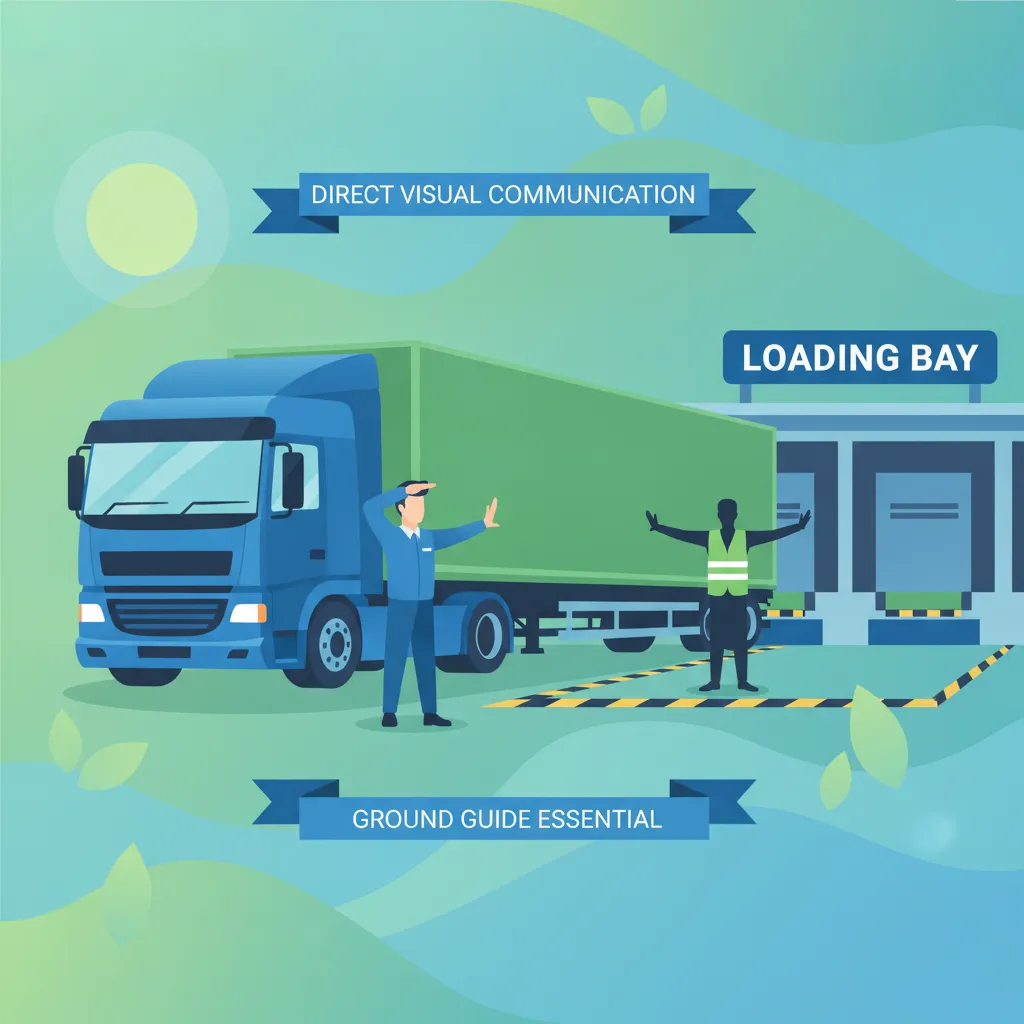
Reversing is one ofthe highest-risk maneuvers for an HGV driver. This lesson provides a structured guide to reversing safely, covering the 'get out and look' principle, effective use of all mirrors, and the use of reversing cameras and alarms. It stresses the importance of using a trained banksman (signaller) whenever possible, using agreed signals, and maintaining a slow, controlled speed throughout the maneuver to prevent accidents.
This lesson explores the effective use of modern digital navigation tools, including GPS systems and mobile apps tailored for HGVs. It explains how to leverage real-time traffic data, congestion alerts, and dynamic re-routing to adapt to changing road conditions. Importantly, it also emphasizes the need to use this technology safely, cross-referencing information with road signs and maintaining situational awareness to avoid distractions while driving.

This lesson explains the dynamics of turning a long vehicle, focusing on the concepts of off-tracking, where the rear wheels follow a tighter path than the front wheels, and tail swing. You will learn the correct road positioning on approach to junctions and roundabouts to safely clear obstacles and avoid mounting kerbs or striking street furniture. Managing speed and using mirrors effectively throughout the turn are emphasized as crucial safety techniques.
This lesson addresses the unique set of challenges that rural roads present to HGV drivers. It covers how to safely navigate narrow and winding lanes, the importance of anticipating hazards like slow-moving agricultural machinery, mud on the road, and wildlife. You will learn how the national speed limit applies to your vehicle on these roads and why it is often necessary to travel at a much lower speed to ensure safety.
Understand the critical importance of protecting pedestrians, cyclists, and motorcyclists when driving HGVs in urban areas. Learn essential strategies for enhanced observation, yielding, and communication to minimise collision risks in congested city environments for Category C drivers.

This lesson is dedicated to the safe interaction between large vehicles and the most vulnerable road users: pedestrians and cyclists. It highlights high-risk scenarios, such as left turns at junctions, where cyclists can be hidden in nearside blind spots. The content stresses the importance of anticipation, using signals clearly, and providing generous space at crossings, in cycle lanes, and within pedestrianized zones to prevent tragic accidents.
This lesson teaches drivers how to identify various types of vulnerable road users and anticipate their potential actions to prevent conflicts. It covers the specific risks associated with pedestrians, cyclists, motorcyclists, children, and elderly or disabled individuals. Emphasis is placed on heightened awareness and defensive driving techniques required to share the road safely. Understanding their perspectives and typical behaviours is key to protecting them and maintaining safety for everyone.

This lesson focuses on the unique risks faced by motorcyclists and scooter riders when sharing the road with HGVs. It explains how their small size and rapid acceleration can make them difficult to see, especially when they are filtering through traffic. Drivers will learn the importance of making extra mirror checks—'look twice'—before any maneuver and giving motorcyclists extra space, as they can be more affected by wind buffeting and road surface imperfections.

This lesson explains how to adapt your driving around different vehicles. You will learn to look out for motorcyclists, who are often hard to see, especially at junctions. It also covers the challenges of sharing the road with large vehicles, such as their extended blind spots, wider turning circles, and the wind turbulence they can create.

This lesson prepares you for the specific challenges of driving in the countryside. It explains the correct procedure for overtaking horse riders: slow down and pass wide, ensuring you do not spook the animal. You will also learn how to anticipate and safely manage encounters with slow-moving tractors and other farm machinery.

This lesson focuses on safe interaction with cyclists, a key aspect of urban driving for PCV operators. It details the rules for cycle lanes and advanced stop lines, and the correct procedure for overtaking cyclists, emphasizing the need to provide ample space. The content stresses the importance of frequent mirror checks to manage blind spots where cyclists can be hidden, especially when turning at junctions, to ensure their safety and comply with the Highway Code's road user hierarchy.
This lesson focuses on developing a proactive and patient approach towards elderly and disabled road users. It explains how to recognize and provide additional time and space for individuals with slower movement, mobility scooters, or sensory impairments. The content emphasizes the importance of driver attitude, patience at crossings, and anticipating the needs of these vulnerable individuals. Understanding these factors is crucial for preventing accidents and demonstrating a high level of professional care and responsibility.
This lesson addresses the unique set of challenges that rural roads present to HGV drivers. It covers how to safely navigate narrow and winding lanes, the importance of anticipating hazards like slow-moving agricultural machinery, mud on the road, and wildlife. You will learn how the national speed limit applies to your vehicle on these roads and why it is often necessary to travel at a much lower speed to ensure safety.
This lesson focuses on the dynamic and often unpredictable nature of urban traffic. It covers how to safely negotiate various pedestrian crossings, anticipate the movement of cyclists and pedestrians, and be aware of hazards like bus stops and car doors opening. You will also learn about the considerations for safe and legal filtering in slow-moving traffic.

This lesson highlights the significant danger posed by the large blind spots of HGVs and buses. You will learn to identify these hazardous areas around a vehicle where the driver cannot see you. The lesson provides practical strategies for staying out of these zones, especially at junctions and when overtaking, to prevent serious accidents.
Find clear answers to common questions learners have about Manoeuvring in Urban Environments. Learn how the lesson is structured, which driving theory objectives it supports, and how it fits into the overall learning path of units and curriculum progression in Great Britain. These explanations help you understand key concepts, lesson flow, and exam focused study goals.
Because large goods vehicles present unique risks in cities due to their size and blind spots. The DVSA tests your knowledge of how to position your vehicle safely to prevent accidents with pedestrians and cyclists.
Always monitor your 'offside' and 'nearside' blind spots constantly. Remember that your vehicle's rear wheels will take a tighter path than the front wheels, so you must carefully manage your road positioning.
Yes, you should avoid reversing whenever possible. If it is necessary, you should always use a banksman to guide you, ensure you check your surroundings continuously, and use all mirrors to maintain a full view of your path.
You must use the 'wide-entry' technique correctly, ensuring you keep the rear of your vehicle from cutting across the pavement or hitting street furniture while ensuring you do not leave too much space that a cyclist could enter.
Dive into our comprehensive question bank to find exactly what you need for your Great Britain theory test. Use our advanced filters to pinpoint specific subjects or test your knowledge on challenging areas, ensuring you're fully prepared for success.