
This lesson guides you through the system of directional and informative signs used across Great Britain. Building on your knowledge of regulatory and warning signs, you will learn how to interpret route colours and navigation aids to stay safe and well-informed on the road. Mastering these signs is essential for both your theory exam and navigating real-world journeys as a Category B driver.

Lesson content overview
Navigating the diverse road network of Great Britain requires a clear understanding of the various signs that guide and inform drivers. Directional and informative signs are crucial for planning your journey, making timely decisions, and safely reaching your destination. Unlike regulatory or warning signs, these signs primarily convey non-mandatory information, yet their correct interpretation is vital for efficient and safe travel.
This comprehensive lesson will cover the different categories of directional and informative signs, their distinctive colour coding, and how they provide critical details about road types, destinations, services, and upcoming road layouts. Mastering these signs will enhance your ability to anticipate changes, select appropriate lanes, and make informed choices throughout your Great Britain Category B driving journey.
The most distinguishing feature of directional and informative signs in the UK is their systematic colour coding. This system provides an immediate visual cue about the type of road you are on or approaching, helping you adjust your driving behaviour, speed, and expectations accordingly. Understanding these colour distinctions is fundamental to effective navigation.
Blue signs are exclusively used for motorways (M-roads) and their associated routes. These high-speed, limited-access roads are designed for long-distance travel, featuring controlled entry and exit points and prohibiting certain vehicle types like bicycles and pedestrians.
When you see a blue sign, you should anticipate higher average speeds, often three or more lanes in each direction, and clear, separated junctions. All signs displayed on a motorway carriageway must be blue to maintain consistency and prevent confusion regarding the road's classification. You might see specific junction numbers, upcoming destinations, and distances clearly marked on these signs.
Primary routes (A-roads) are indicated by green signs. These major roads connect cities and large towns, forming the backbone of the national road network. While not as restrictive as motorways, they are generally designed for faster travel than local roads and often have higher speed limits.
When driving on or towards a primary route sign, expect to encounter varying road conditions, from dual carriageways to single-lane roads. Green signs typically display destinations, route numbers, and distances, helping you confirm your direction on important arterial roads.
White signs, with black text, designate non-primary routes (B-roads and unclassified roads). These are generally local roads, connecting smaller towns, villages, and accessing specific areas. They typically have lower speed limits, more frequent junctions, and may include residential or rural sections.
When following white signs, be prepared for more varied road conditions, including narrower lanes, sharper bends, and increased interactions with pedestrians, cyclists, and parked vehicles. These signs are crucial for navigating local areas and reaching specific addresses or smaller settlements.
Brown signs are distinctively used for tourist attractions and scenic routes. These signs provide information about points of interest, heritage sites, national parks, and other places that might be of recreational value.
It is important to remember that brown signs indicate optional detours or points of interest and do not represent mandatory routes. While they can guide you to a desired attraction, they might lead you onto less direct or slower roads. Always consider your journey time and traffic conditions before following a brown sign, especially if you have a tight schedule.
Orange signs are used exclusively for temporary directional information. You will encounter these signs during roadworks, unexpected diversions, or temporary traffic management schemes. Their bright colour signals an immediate change to the normal road layout or route.
When an orange sign is present, it supersedes any permanent blue, green, or white signs for the duration of the temporary condition. It is mandatory to obey the instructions given on orange signs, as they are put in place to ensure safety and manage traffic flow during abnormal circumstances. Ignoring them can lead to being stuck in road closures or even legal penalties.
Beyond colour coding, directional signs use a variety of symbols, arrows, and diagrams to provide precise guidance, especially at complex junctions. Understanding these visual cues is critical for maintaining lane discipline and planning your manoeuvres well in advance.
Directional arrows are fundamental to understanding where a route leads.
At more complex intersections, signs will often feature box junction diagrams or detailed lane allocation diagrams. These visual aids show the specific lane requirements for different destinations, helping you position your vehicle correctly before entering the junction.
Failing to observe these diagrams can lead to last-minute lane changes, which are a major cause of collisions at busy junctions. Always look for these signs early to give yourself ample time to move into the correct lane safely.
Many informative signs provide crucial details about upcoming changes to the road layout, such as lane drops, merges, and splits:
Paying close attention to these signs allows you to execute necessary lane changes smoothly and safely, preventing sudden manoeuvres that could endanger yourself and other road users. Remember, drivers must always be in the correct lane for their intended route well before the junction or lane change point.
Many directional signs feature supplementary panels providing additional information. These can include:
These panels provide precise timing and contextual information, allowing you to plan your driving strategy more effectively, whether it's preparing for an exit or selecting the correct lane far in advance.
Beyond navigating routes, informative signs also alert you to available services and critical vehicle restrictions. These signs play a significant role in journey planning and safety.
White service provision signs, often featuring distinct icons, inform you about nearby facilities. These facilities can include:
These signs are purely informative, helping you plan stops for refuelling, rest, food, or in case of an emergency. However, their presence does not grant you the right to stop anywhere; you must always obey associated regulatory signs like "No Stopping" or "No Parking," especially on hard shoulders or prohibited areas.
Supplementary panels can also indicate physical restrictions on upcoming structures like bridges or tunnels. These are critical for drivers of larger vehicles, such as lorries, buses, or vehicles towing tall caravans. They typically show:
Ignoring these restriction signs can lead to severe consequences, including vehicle damage, structural damage to infrastructure, and legal penalties. Drivers are legally responsible for knowing their vehicle's dimensions and ensuring it complies with all posted restrictions.
While most directional and informative signs provide non-mandatory guidance, certain situations and specific types of signs carry legal obligations. Understanding this distinction is crucial for safe and lawful driving.
When a directional sign, particularly a lane diagram, indicates required lane usage (e.g., "Left lane for A-road," or an arrow indicating a compulsory turn), drivers must comply. Failure to occupy the correct lane before a junction, roundabout, or other complex intersection is a traffic offence and can lead to dangerous situations like sudden lane changes or collisions. The Highway Code explicitly details these requirements to ensure smooth and safe traffic flow.
On motorways, the colour coding rule is strictly enforced: all permanent directional signs on the main carriageway must be blue. The presence of green or white primary/non-primary route signs on a motorway's main carriageway is illegal and indicates a potential error in signage that should be reported. This consistency helps drivers maintain appropriate motorway speeds and expectations.
During roadworks or other temporary traffic management events, orange diversion signs are legally installed. These temporary signs supersede any permanent blue, green, or white signs for the duration of the diversion. Drivers are legally obliged to follow the instructions on temporary signs, as they guide traffic safely around closures or hazards. Disregarding them can lead to fines and encountering impassable routes.
As previously mentioned, service provision signs are purely informative. They tell you where facilities are, but they do not confer a right to stop anywhere other than designated parking bays or service areas. Stopping on a motorway hard shoulder, for instance, is prohibited unless in an emergency, regardless of a service sign being displayed nearby. Violating "No Stopping" or "No Parking" rules, even near a service area, can result in penalties.
Effective use of directional and informative signs is not just about knowing their meaning; it's about applying that knowledge strategically for safer driving.
One of the most significant benefits of understanding these signs is the ability to anticipate road changes and plan your manoeuvres in advance. Early observation of lane diagram signs, distance panels, and lane drop warnings allows you to select the correct lane, adjust your speed, and signal your intentions well before you need to act. This proactive approach reduces stress, minimizes the risk of sudden braking or swerving, and contributes to smoother traffic flow.
The standardised colour coding and symbolism of UK road signs are designed to reduce the cognitive load on drivers. By providing immediate visual cues about road types and information categories, drivers can process essential navigation data quickly, even under varying conditions, allowing more mental capacity to focus on hazard perception and vehicle control.
The visibility of road signs can be affected by weather and lighting conditions.
Lane information signs are particularly important for ensuring safe interactions with other road users, including vulnerable ones. Cyclists, for example, may have dedicated lanes indicated by signs and road markings. Drivers must respect these allocations and not encroach, ensuring safety for all. For larger vehicles, respecting height/weight/width restriction panels is vital to prevent accidents and protect infrastructure, which often affects all road users.
Understanding directional and informative signs is a cornerstone of safe and effective driving in Great Britain. This lesson has detailed the critical aspects:
By mastering these signs, you enhance your situational awareness, make informed decisions, and contribute to safer, smoother journeys for everyone on the road.
Explore all units and lessons included in this driving theory course.
Lesson content overview
Explore all units and lessons included in this driving theory course.
Explore search topics learners often look for when studying Directional and Informative Signs. These topics reflect common questions about road rules, driving situations, safety guidance, and lesson level theory preparation for learners in Great Britain.
Browse additional driving theory lessons that cover connected traffic rules, road signs, and common driving situations related to this topic. Improve your understanding of how different rules interact across everyday traffic scenarios.
Understand the crucial colour distinctions of UK directional signs. Learn how blue, green, and white signs guide you on motorways, primary routes, and local roads. Essential for safe navigation and theory test success in Great Britain.

This lesson teaches you to interpret warning signs, which are typically triangular with a red border. These signs are crucial for anticipating potential dangers, from changes in road layout to the presence of pedestrians or animals. By understanding these warnings, you can adjust your driving to safely navigate upcoming hazards.

This lesson explains markings found at the side of the road that regulate parking and stopping. You will learn the meaning of single and double yellow lines, and the stricter rules associated with red lines on 'Red Routes'. The lesson also covers markings for parking bays, loading zones, and hatched areas that are designed to separate traffic.
This lesson focuses on regulatory signs, which are legally enforceable and must be obeyed. It explains the difference between prohibitory signs, such as 'No Entry' or speed limits, and mandatory signs, like 'Turn Left'. Understanding the design and meaning of these signs is fundamental to safe and lawful driving in the UK.
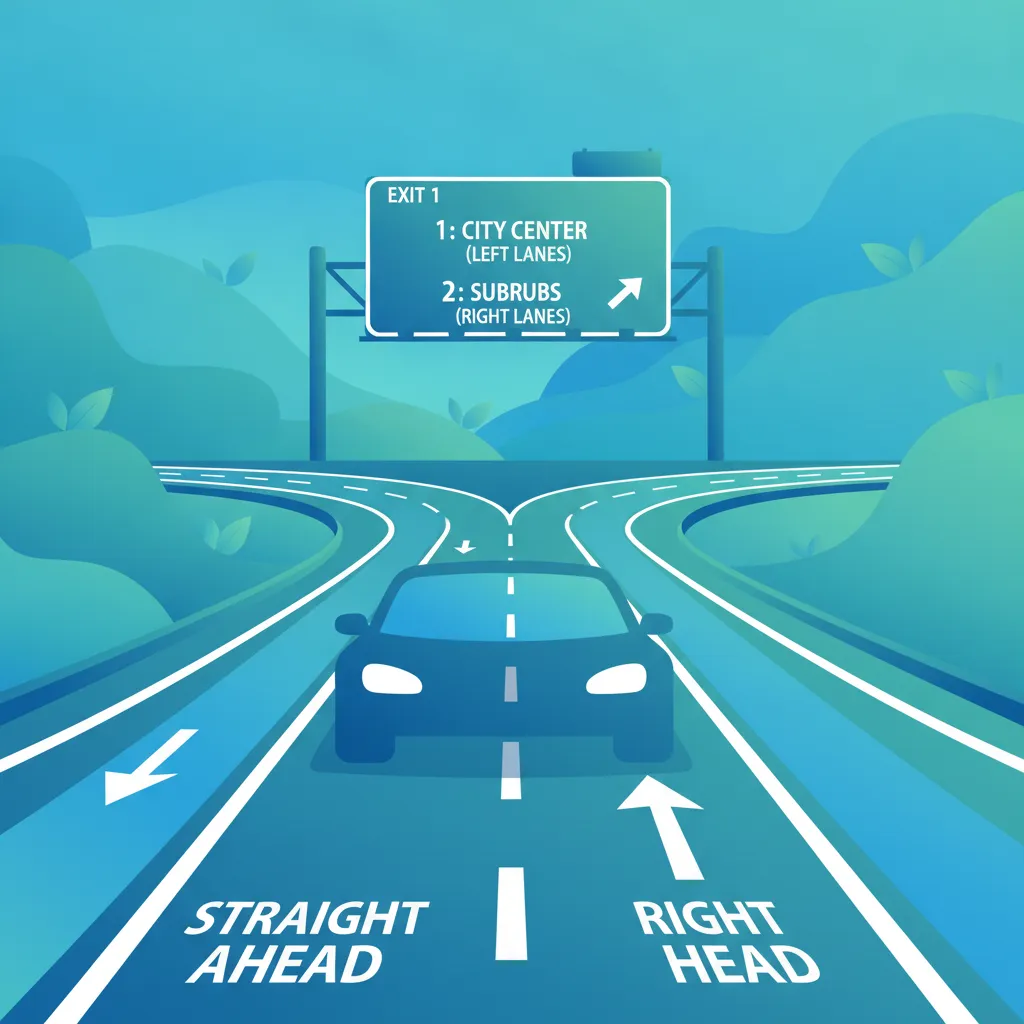
This lesson focuses on the rules conveyed by road markings, such as solid and broken white lines that dictate overtaking rules and lane boundaries. You will learn to interpret waiting and stopping restrictions indicated by yellow and red lines, and understand markings for specific road users like bus and cycle lanes. Maintaining correct lane discipline based on these markings is a fundamental skill for safe navigation and compliance with the Highway Code.
This lesson covers the full range of road signs encountered by passenger vehicle drivers, focusing on regulatory, warning, and informational signs. It explains the visual characteristics of sign shapes, colors, and symbols, particularly those associated with bus lane usage and priority rules. By mastering sign hierarchy and meaning, drivers can quickly interpret the sign's intent and adjust their driving behaviour accordingly, ensuring full compliance with the Highway Code and enhancing road safety.

This lesson explains how to drive safely through areas where roadworks are taking place. It stresses the importance of obeying all temporary signs, especially mandatory speed limits, which are in place for your safety and the safety of road workers. You will learn about navigating narrow lanes, contraflow systems, and how to follow official diversion signs.
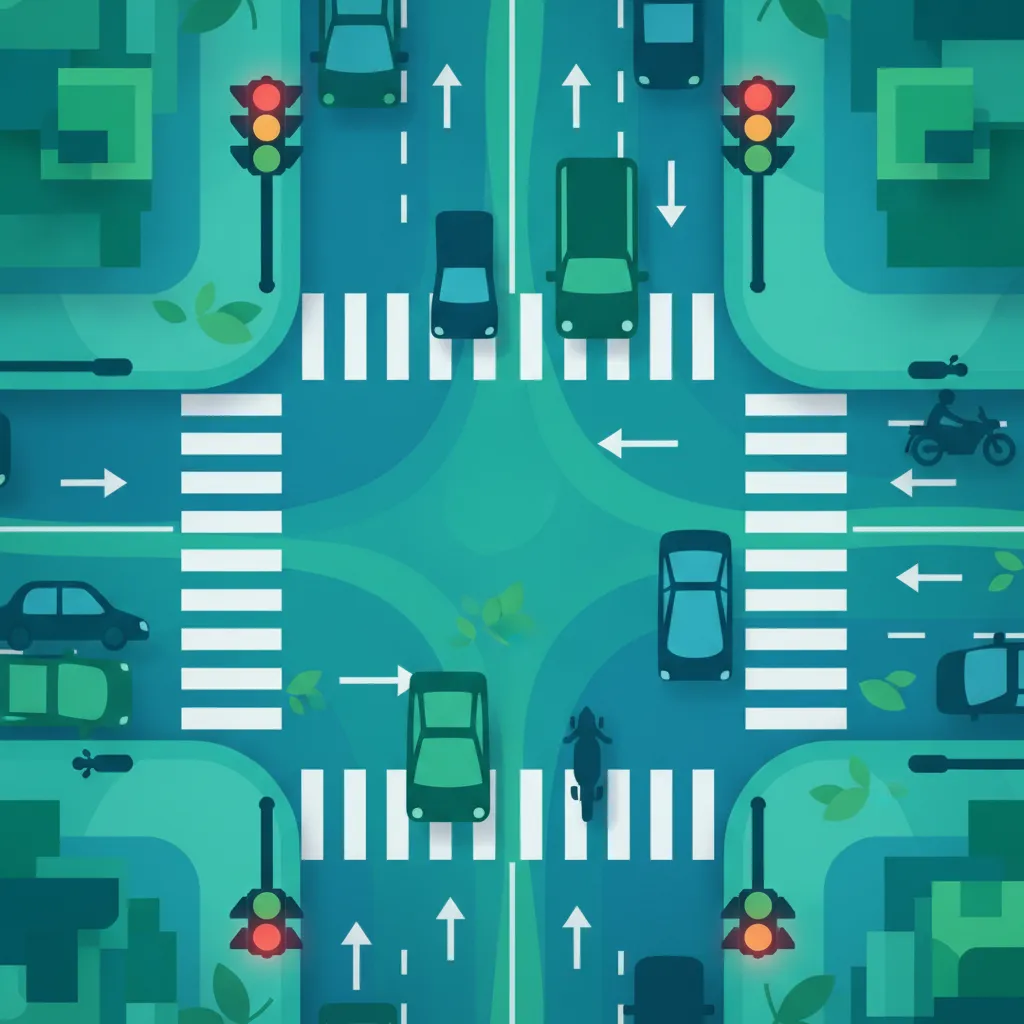
This lesson details how to safely navigate junctions controlled by traffic signals. It explains the meaning of filter arrows, which allow you to proceed in a specific direction even if the main light is red. You will also learn about respecting advanced stop lines for cyclists and how to approach a junction when the traffic lights are not working.
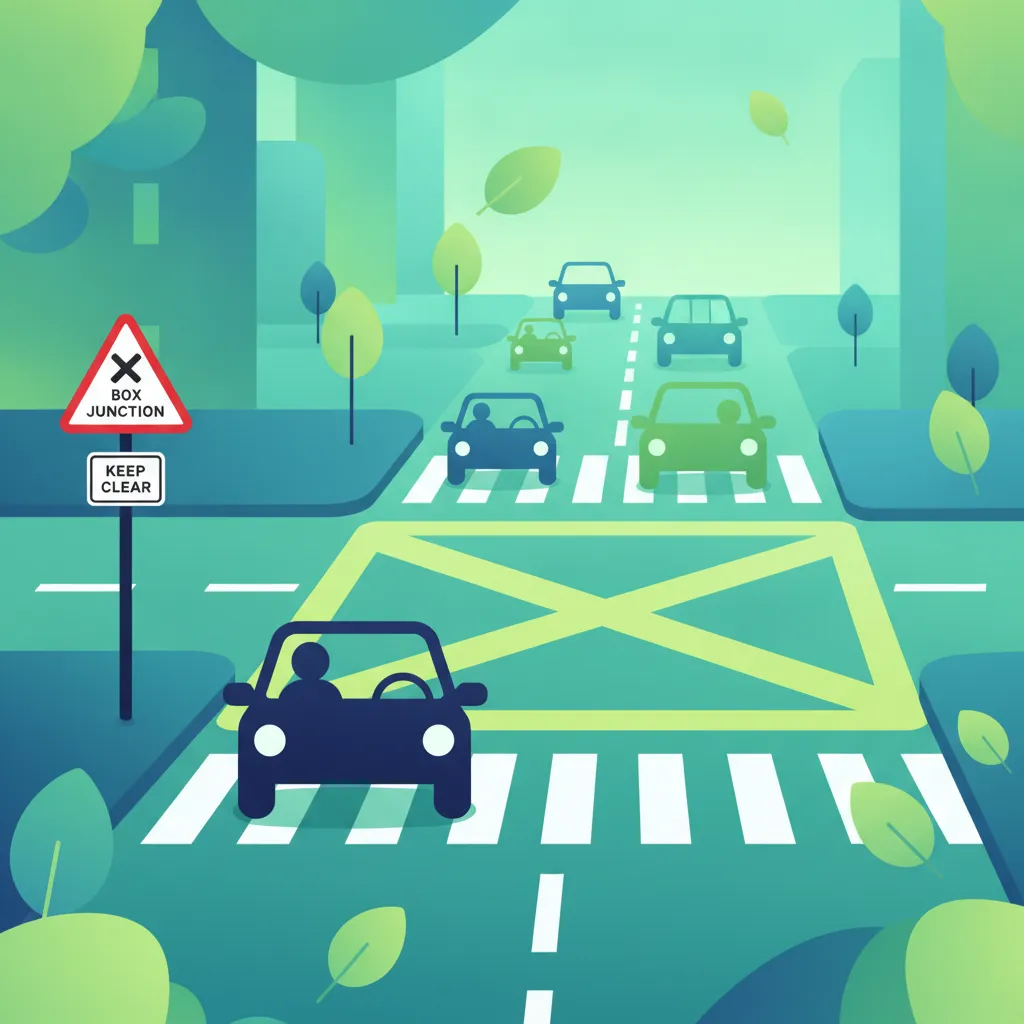
This lesson focuses on the markings that control traffic at intersections. It explains the primary rule of a yellow box junction: do not enter unless your exit is clear. You will also learn the difference between the solid white 'Stop' line and the broken 'Give Way' line, which dictate your priority over other traffic.

This lesson details the operation of traffic lights in Great Britain, including the red-and-amber phase before green. It clarifies the rules for proceeding at a green light, stopping for red, and preparing to stop for a steady amber light. You will also learn about green filter arrows and the flashing amber lights used at certain pedestrian crossings.

This lesson covers signals that require an immediate and specific response from drivers. You will learn the meaning of hand signals given by police officers and how to give way safely to emergency vehicles with flashing lights or sirens. It also explains the warning light system at railway level crossings, where you must stop when signalled to do so.
Master directional signs and lane diagrams for complex junctions in Great Britain. Learn how to interpret signs for lane changes, merges, and splits, ensuring safe navigation and compliance with Highway Code rules for your theory test.
This lesson details how to safely navigate junctions controlled by traffic signals. It explains the meaning of filter arrows, which allow you to proceed in a specific direction even if the main light is red. You will also learn about respecting advanced stop lines for cyclists and how to approach a junction when the traffic lights are not working.
This lesson focuses on the markings that control traffic at intersections. It explains the primary rule of a yellow box junction: do not enter unless your exit is clear. You will also learn the difference between the solid white 'Stop' line and the broken 'Give Way' line, which dictate your priority over other traffic.

This lesson tackles the complexities of large roundabouts, which often have multiple lanes and exits. It stresses the importance of reading signs on the approach to select the correct lane for your destination. You will learn about maintaining lane discipline while on the roundabout and signalling correctly as you pass exits and prepare to leave.

This lesson focuses on the correct procedure for moving from one lane to another. It highlights the critical safety steps of checking your interior and side mirrors, signalling in good time, and performing a final head check into your blind spot. This ensures the space you intend to move into is clear before you begin the manoeuvre.
This lesson teaches you to interpret warning signs, which are typically triangular with a red border. These signs are crucial for anticipating potential dangers, from changes in road layout to the presence of pedestrians or animals. By understanding these warnings, you can adjust your driving to safely navigate upcoming hazards.

This lesson covers the explicit priority instructions given by signs and markings at junctions. It explains that at a 'Give Way' line, you must yield to traffic on the major road but can proceed if it is safe. At a 'Stop' sign, you must come to a complete halt before the line, assess the traffic, and only proceed when safe.

This lesson explains how to handle mini-roundabouts, which are common in urban and residential areas. The primary rule is to approach with caution and give priority to any traffic approaching from your right. You will also learn about correct signalling and the importance of being aware of cyclists and motorcyclists who may be harder to see.

This lesson explains how lines running parallel to the kerb control traffic movement. You will learn that broken white lines divide lanes, while solid white lines generally prohibit crossing them. The specific rules for double white lines, including when you are permitted to cross, are also covered in detail to ensure safe overtaking.
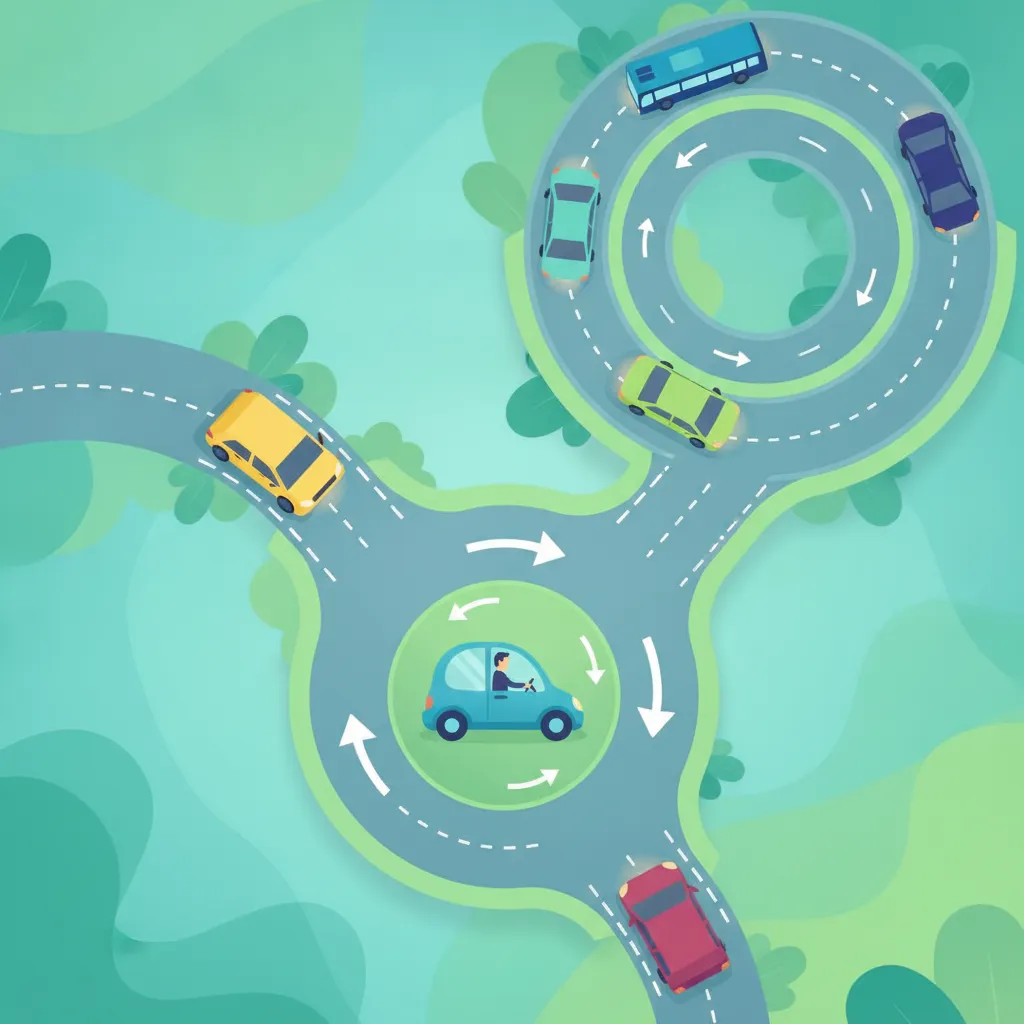
This lesson provides specific techniques for safely navigating the two main types of roundabouts in Great Britain. For multi-lane roundabouts, it covers how to choose the correct lane on approach, maintain your lane while circulating, and signal your exit correctly. It also explains the unique rules for mini-roundabouts, emphasizing the importance of giving way to traffic from the right and navigating them with caution due to their small size.
This lesson focuses on the rules conveyed by road markings, such as solid and broken white lines that dictate overtaking rules and lane boundaries. You will learn to interpret waiting and stopping restrictions indicated by yellow and red lines, and understand markings for specific road users like bus and cycle lanes. Maintaining correct lane discipline based on these markings is a fundamental skill for safe navigation and compliance with the Highway Code.
Find clear answers to common questions learners have about Directional and Informative Signs. Learn how the lesson is structured, which driving theory objectives it supports, and how it fits into the overall learning path of units and curriculum progression in Great Britain. These explanations help you understand key concepts, lesson flow, and exam focused study goals.
Blue signs indicate motorways, green signs indicate primary routes, and white signs indicate non-primary routes. Knowing this colour code helps you identify the status of the road you are travelling on quickly.
You do not need to memorise every specific symbol, but you must recognise that brown signs with white text are used for tourist and visitor attractions. Understanding these categories is key for theory test success.
Directional signs are placed in advance to give you time to adjust your lane position and speed. Failure to act on these signs early is a common cause of last-minute manoeuvring, which is dangerous in real driving.
Yes, motorway signs always use a blue background and follow specific strict rules regarding lane availability and exit information. Other primary and secondary roads follow different colour conventions as outlined in the Highway Code.
Dive into our comprehensive question bank to find exactly what you need for your Great Britain theory test. Use our advanced filters to pinpoint specific subjects or test your knowledge on challenging areas, ensuring you're fully prepared for success.