
This lesson provides a comprehensive guide to interpreting road signs specifically tailored for large passenger vehicles. You will learn to recognise critical regulatory and warning signs that influence your route, safety, and legal compliance on Great Britain roads. Mastering these symbols is a core requirement for your Category D, D1, D1E, or DE theory test.
Lesson content overview
Interpreting road signs accurately and promptly is a fundamental skill for all drivers, but it holds particular significance for those operating passenger vehicles in Great Britain. As a professional driver preparing for your Category D, D1, D1E, or DE licence, your ability to understand, react to, and comply with road signs directly impacts the safety of your passengers, the efficiency of your service, and your adherence to the Highway Code and DVSA regulations. This comprehensive guide will equip you with the knowledge to confidently interpret the full spectrum of road signs, focusing on the specific implications for passenger vehicles such as buses, coaches, and minibuses.
The process of understanding and reacting appropriately to the visual cues (shapes, colours, symbols, text) provided by road signs to ensure safe and legal driving behaviour.
For passenger vehicle drivers, road signs are not merely suggestions; they are explicit instructions that dictate safe and legal conduct. Given the larger size, increased weight, and longer stopping distances of these vehicles, quick and accurate sign interpretation is crucial for preventing incidents, managing passenger comfort, and maintaining schedules. Failing to comply can lead to serious consequences, including significant fines, penalty points, and potential licence endorsements, which could jeopardise your professional career. Beyond legal ramifications, misinterpreting signs can create dangerous situations for your passengers, other road users, and pedestrians, especially in busy urban environments or during complex manoeuvres.
This lesson forms a foundational component for other aspects of the Great Britain Passenger Vehicle Theory course, linking directly to modules on bus rules, restrictions, stops, route awareness, vehicle control, and passenger safety. A solid understanding of road signs is essential for safe lane usage, correct priority handling, and navigating bus-specific regulations efficiently.
The UK road sign system is meticulously designed to communicate vital information quickly and unambiguously. This standardised visual language relies on a combination of specific shapes, colours, and symbols, enabling drivers to assess a situation and respond appropriately, often in less than a second. This rapid recognition is especially critical for drivers of large passenger vehicles, where extended stopping distances necessitate early and accurate decision-making.
Road signs in Great Britain follow a consistent design logic, ensuring that their intent is clear even before a driver has time to read any text. This system is a cornerstone of road safety and traffic management, helping to maintain order and predictability across all road types.
The shape of a road sign is the first visual cue a driver processes, providing an immediate indication of its general category and importance.
Colour further refines the meaning of a sign, working in conjunction with its shape to convey a specific message.
Symbols within signs are internationally recognised visual shorthand, eliminating language barriers and allowing for rapid interpretation. For passenger vehicle drivers, specific symbols such as a bus schematic, a pedestrian icon, or a 'no entry' symbol are particularly relevant. These symbols, combined with the shape and colour, form a complete and instantly understandable message.
Understanding the different categories of signs and their inherent hierarchy is critical. When multiple signs are present, drivers must know which message takes precedence to avoid confusion and ensure legal compliance.
Regulatory signs enforce specific legal obligations for all road users, including passenger vehicles. Disobeying these signs constitutes a legal offence and can result in fines, penalty points, and increased risk. They are primarily covered under the Road Traffic Regulation Act 1984 and Highway Code Rule 152.
These circular signs, often with a blue background and white symbols, indicate actions that must be performed. Examples include 'Turn left ahead' or 'Keep left'. For passenger vehicles, this might involve mandatory turns for specific routes or lane discipline.
These signs are typically red-bordered circles, often with a diagonal red slash through a black symbol, indicating actions that are strictly forbidden.
For passenger vehicle drivers, specific prohibitory signs might restrict vehicle access based on size, weight, or type, such as 'No entry for buses' or 'No stopping for buses'. Non-compliance with these signs can result in significant penalties and disrupt traffic flow.
Speed limit signs are among the most critical regulatory signs. They are circular with a red border and indicate the maximum permissible speed in kilometres per hour. Drivers of passenger vehicles must always adhere to the posted speed limits. It's crucial to remember that the size and weight of a bus or coach mean it requires a longer distance to stop safely, making strict adherence to speed limits even more vital, especially in adverse conditions or urban areas.
Drivers must not exceed the posted speed limit. Speed limits are enforceable regardless of the road's default limit and apply to all vehicles unless otherwise stated. Non-compliance significantly increases accident risk.
Warning signs are triangular with a red border and a yellow or amber background. They alert drivers to potential dangers or changes in road conditions ahead, allowing time to react safely. While these signs are advisory rather than mandatory, ignoring them can lead to dangerous situations and even legal repercussions if an accident occurs due to negligence.
Warning signs cover a broad range of hazards, from road geometry to specific conditions:
Upon seeing a warning sign, passenger vehicle drivers should:
Informational signs provide details about services, routes, destinations, or general regulations without imposing a direct legal duty. They are usually rectangular or square and come in various colours, such as blue (for motorways and public transport information), green (for primary routes), or white (for local directions).
These signs are crucial for route planning and wayfinding. Green signs guide traffic on primary routes, blue signs on motorways, and white signs on non-primary or local roads. They help drivers navigate to their desired destinations and ensure passengers are transported efficiently.
Brown signs typically indicate tourist attractions, while blue signs might point towards public services like rest areas, hospitals, or parking facilities. For passenger vehicle drivers, these can be vital for planning comfort stops or emergencies.
When faced with multiple signs or conflicting information, understanding the hierarchy of road signs is paramount. The general order of precedence is:
Drivers must always follow the most restrictive sign. For example, a speed limit sign (regulatory) takes precedence over a warning sign about a sharp bend, though both must be considered.
At intersections, traffic light signals and 'Give Way' or 'Stop' signs dictate right-of-way and must be strictly obeyed. These signals and signs prevent collisions and ensure the smooth flow of traffic. Failing to give way when required is a common cause of accidents and a serious legal offence.
Passenger vehicle drivers must pay particular attention to signs that are specifically designed for buses, coaches, and minibuses. These signs often combine standard shapes and colours with a distinctive bus symbol, indicating regulations that acknowledge the unique operational environment of public transport.
Bus lanes are a critical component of public transport infrastructure, designed to give buses priority and improve journey times. They are typically marked with a solid blue background and a white bus symbol, sometimes accompanied by text like "BUS LANE."
Bus lanes are clearly indicated by signs at their start and at regular intervals. These signs specify when the bus lane is active. It's crucial for non-bus vehicles to recognise these signs and avoid entering the lane during restricted hours, while bus drivers must use them where designated to maintain efficient service.
Many bus lanes are time-restricted, meaning they are only operational during specific hours (e.g., peak commuting times on weekdays). This information is usually displayed on an accompanying supplementary plate below the main bus lane sign, indicating the days and times the restriction applies.
Always check the supplementary plate for bus lane operating hours. Outside these hours, the lane may be used by other traffic, but bus drivers must still be vigilant for potential hazards.
Bus stops are designated areas for passenger boarding and alighting. These areas are marked by specific signs and road markings to ensure safe and efficient operation.
Bus stops are usually indicated by a blue rectangular sign with a white bus stop symbol, often accompanied by a timetable or route information. These signs are primarily informational. However, the associated road markings, such as a solid yellow line with "BUS STOP" written on the road, may impose mandatory stopping or no-stopping rules for certain vehicles.
Within designated bus stops or bus bays, other vehicles are generally prohibited from stopping, waiting, or parking to avoid obstructing public transport services. Some bus stops have specific bays where buses must pull in fully off the main carriageway. Failure to use a designated bay when available can cause obstruction and legal penalties.
In certain situations, buses and minibuses may be granted priority. This is often indicated by specific signs or road markings. For example, at some junctions, signals might give buses a head start. It's essential for all drivers to understand and respect these priority rules to ensure smooth traffic flow and efficient public transport.
Effective road sign interpretation extends beyond simply recognising individual signs. It involves understanding how signs interact with each other, with road markings, and how their meaning can be influenced by contextual factors such as weather, lighting, and the specific vehicle being driven.
It is common to encounter two or more signs displayed together, often on the same post. This is known as stacked signage. Each sign in a stack must be read and obeyed independently. For example, a speed limit sign might be stacked above a 'no overtaking' sign. Both are regulatory and both must be obeyed. Misreading or ignoring one sign in a stack can lead to violations and dangerous situations.
Road signs and road markings often work in tandem to reinforce messages and provide clearer instructions. For instance, a 'no entry' sign may be accompanied by a solid white line across the road, physically prohibiting entry. Similarly, bus lanes are typically marked with a blue sign and clear white lines and text on the road surface. Drivers must consider both signs and markings to fully understand their obligations. Relying solely on one without checking the other can lead to misunderstandings and violations.
Always interpret road signs in conjunction with road markings. For example, a 'bus stop' sign is informational, but a solid yellow line with 'BUS STOP' on the road surface implies specific stopping restrictions for other vehicles.
Sign visibility can be severely affected by adverse weather conditions (heavy rain, fog, snow), poor lighting (night-time), or physical obstructions (overgrown foliage, parked vehicles). Passenger vehicle drivers must:
The unique characteristics of passenger vehicles—their size, weight, and increased braking distances—have a direct impact on how drivers must respond to road signs.
Temporary road signs, often used for roadworks, accidents, or special events, have immediate effect and can override permanent signage. These are typically yellow or orange with black text or symbols. Drivers must always prioritise temporary signs, as they indicate current and potentially rapidly changing conditions. Diversion signs will guide vehicles around obstructions, and following them carefully is essential to maintain route and avoid further congestion.
Misinterpreting or deliberately ignoring road signs is not only dangerous but also carries significant legal penalties. For professional passenger vehicle drivers, these violations can have serious implications for their licence and career.
Mastering road sign interpretation is a continuous process that underpins safe and efficient operation of passenger vehicles. By consistently applying the principles outlined in this lesson, you will significantly enhance your driving skills and contribute to road safety for everyone.
Rapid Recognition: Instantly identify a sign's category by its shape and colour before even reading its symbol or text.
Hierarchy Awareness: Always prioritise regulatory signs and traffic signals over warnings and informational signs.
Bus-Specific Focus: Pay close attention to signs featuring the bus symbol, understanding their unique implications for passenger vehicles, especially concerning bus lanes and stops.
Contextual Application: Interpret signs in the context of current conditions, including weather, visibility, road type, and the specific dynamics of your passenger vehicle.
Combined Interpretation: Always consider road signs in conjunction with road markings; they often work together to convey a complete message.
Compliance is Paramount: Understand that regulatory signs are legal directives, and non-compliance carries serious consequences for both safety and your professional licence.
This lesson teaches passenger vehicle drivers to interpret the full range of UK road signs by understanding the relationship between shapes (circular for regulations, triangular for warnings, rectangular for information) and colours (red for prohibition, blue for mandatory actions, yellow for warnings). The hierarchy of signs means regulatory signs and traffic signals always take precedence over warnings and information. Bus-specific signs featuring the bus symbol govern lane usage, stops, and priority rules that are essential for safe passenger vehicle operation. Drivers must combine sign interpretation with road markings and respond appropriately to each sign category, understanding that prohibitory and mandatory signs carry legal obligations with specific consequences for non-compliance.
A short set of high-value points that capture the most important learning from this lesson.
Road sign shape is the first visual cue: circular signs indicate mandatory or prohibitory instructions, triangular signs warn of hazards, and rectangular signs provide information.
Colour refines meaning alongside shape: red signals prohibition or mandatory restrictions, blue indicates mandatory actions or public transport information, and yellow/amber marks warning signs.
When multiple signs are present, always follow the most restrictive instruction; regulatory signs take legal precedence over warnings and informational signs.
Bus-specific signs with the bus symbol indicate lane restrictions, bus gates, or priority rules that apply specifically to passenger vehicles.
Effective sign interpretation requires considering both the sign itself and accompanying road markings, as they work together to convey the complete message.
Explore all units and lessons included in this driving theory course.
Circular signs = mandatory or prohibitory; Triangular signs = warnings; Rectangular signs = information.
Speed limits are regulatory signs that must be obeyed regardless of road type; buses require longer stopping distances.
Bus lanes often have time restrictions shown on supplementary plates; check operating hours before entry.
Traffic light signals and police instructions override all other road signs.
Temporary signs (yellow/orange) take immediate effect and override permanent signage.
Assuming bus lanes can be used outside posted hours without checking for other restrictions.
Ignoring supplementary plates that specify time restrictions, vehicle types, or days of operation.
Misidentifying triangular warning signs as prohibitory, leading to unnecessary stops or confusion.
Relying solely on road signs without observing corresponding road markings for complete information.
Failing to adjust speed or position early when seeing warning signs, due to the longer braking distances of large vehicles.
Lesson content overview
A short set of high-value points that capture the most important learning from this lesson.
Road sign shape is the first visual cue: circular signs indicate mandatory or prohibitory instructions, triangular signs warn of hazards, and rectangular signs provide information.
Colour refines meaning alongside shape: red signals prohibition or mandatory restrictions, blue indicates mandatory actions or public transport information, and yellow/amber marks warning signs.
When multiple signs are present, always follow the most restrictive instruction; regulatory signs take legal precedence over warnings and informational signs.
Bus-specific signs with the bus symbol indicate lane restrictions, bus gates, or priority rules that apply specifically to passenger vehicles.
Effective sign interpretation requires considering both the sign itself and accompanying road markings, as they work together to convey the complete message.
Explore all units and lessons included in this driving theory course.
Circular signs = mandatory or prohibitory; Triangular signs = warnings; Rectangular signs = information.
Speed limits are regulatory signs that must be obeyed regardless of road type; buses require longer stopping distances.
Bus lanes often have time restrictions shown on supplementary plates; check operating hours before entry.
Traffic light signals and police instructions override all other road signs.
Temporary signs (yellow/orange) take immediate effect and override permanent signage.
Assuming bus lanes can be used outside posted hours without checking for other restrictions.
Ignoring supplementary plates that specify time restrictions, vehicle types, or days of operation.
Misidentifying triangular warning signs as prohibitory, leading to unnecessary stops or confusion.
Relying solely on road signs without observing corresponding road markings for complete information.
Failing to adjust speed or position early when seeing warning signs, due to the longer braking distances of large vehicles.
Explore search topics learners often look for when studying Road Sign Interpretation for Passenger Vehicles. These topics reflect common questions about road rules, driving situations, safety guidance, and lesson level theory preparation for learners in Great Britain.
Browse additional driving theory lessons that cover connected traffic rules, road signs, and common driving situations related to this topic. Improve your understanding of how different rules interact across everyday traffic scenarios.
Understand the order of importance for road signs in Great Britain. Learn how traffic lights, regulatory signs, warning signs, and informational signs interact to dictate driver actions and ensure compliance with the Highway Code.
This lesson covers the signs that help you navigate your journey effectively. It explains how sign colours indicate the type of road—blue for motorways, green for primary routes, and white for non-primary routes. You will also learn to interpret signs for tourist attractions, services, and lane information at complex junctions.
This lesson focuses on regulatory signs, which are legally enforceable and must be obeyed. It explains the difference between prohibitory signs, such as 'No Entry' or speed limits, and mandatory signs, like 'Turn Left'. Understanding the design and meaning of these signs is fundamental to safe and lawful driving in the UK.
This lesson covers the explicit priority instructions given by signs and markings at junctions. It explains that at a 'Give Way' line, you must yield to traffic on the major road but can proceed if it is safe. At a 'Stop' sign, you must come to a complete halt before the line, assess the traffic, and only proceed when safe.

This lesson teaches you to interpret warning signs, which are typically triangular with a red border. These signs are crucial for anticipating potential dangers, from changes in road layout to the presence of pedestrians or animals. By understanding these warnings, you can adjust your driving to safely navigate upcoming hazards.
This lesson explains how to drive safely through areas where roadworks are taking place. It stresses the importance of obeying all temporary signs, especially mandatory speed limits, which are in place for your safety and the safety of road workers. You will learn about navigating narrow lanes, contraflow systems, and how to follow official diversion signs.
This lesson explains the critical rules of priority that govern traffic flow at junctions, roundabouts, and crossings throughout Great Britain. You will learn how to determine who has right-of-way at both marked and unmarked intersections, and the specific rules for giving way to traffic on roundabouts. The lesson also reinforces the hierarchy of road users from the Highway Code, ensuring you understand when to yield to pedestrians and other vulnerable users.
This lesson focuses on regulatory road signs, which convey legally enforceable instructions that all road users must follow. You will learn to identify and understand signs dictating speed limits, prohibited actions like 'no entry' or 'no overtaking', and mandatory directions at junctions. The content explains the distinct shapes and colours used for these signs, ensuring you can comply with their instructions correctly and avoid penalties while riding your AM vehicle.
This lesson focuses on the rules conveyed by road markings, such as solid and broken white lines that dictate overtaking rules and lane boundaries. You will learn to interpret waiting and stopping restrictions indicated by yellow and red lines, and understand markings for specific road users like bus and cycle lanes. Maintaining correct lane discipline based on these markings is a fundamental skill for safe navigation and compliance with the Highway Code.
This lesson covers signals that require an immediate and specific response from drivers. You will learn the meaning of hand signals given by police officers and how to give way safely to emergency vehicles with flashing lights or sirens. It also explains the warning light system at railway level crossings, where you must stop when signalled to do so.
This lesson details the operation of traffic lights in Great Britain, including the red-and-amber phase before green. It clarifies the rules for proceeding at a green light, stopping for red, and preparing to stop for a steady amber light. You will also learn about green filter arrows and the flashing amber lights used at certain pedestrian crossings.
Learn the specific meanings of bus lane signs, bus stop signage, and related restrictions for passenger vehicle drivers in the UK. Understand how to use designated bus areas and avoid common violations.
This lesson examines the unique rules and restrictions governing buses and coaches, focusing on bus lane priority, time-based restrictions, and loading zone limitations. Learners will explore the criteria for using bus-only routes and understand the legal consequences of non-compliance. The content also reviews signage indicating bus gate operation and areas where passenger vehicles are prohibited from stopping or loading outside of designated zones, ensuring lawful and efficient urban navigation.
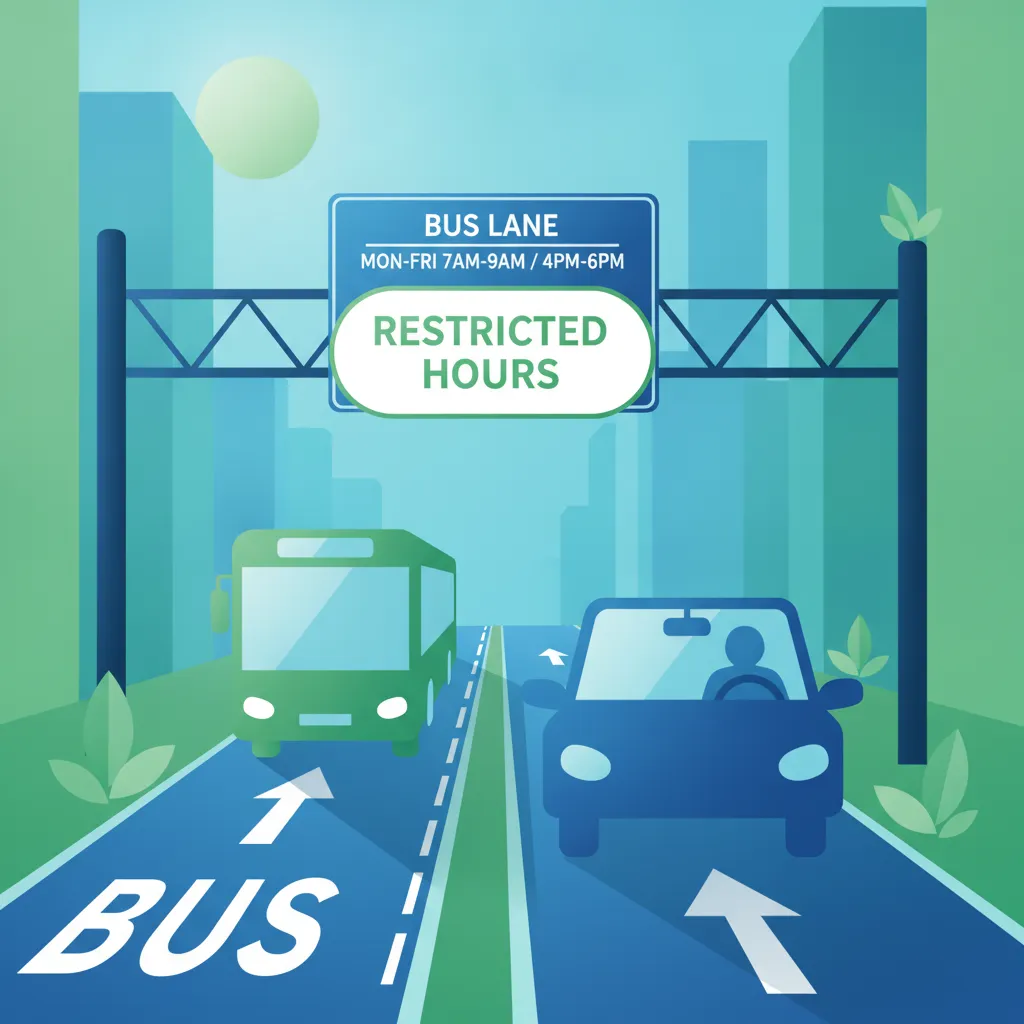
This lesson covers the importance of maintaining correct lane discipline when driving a large passenger vehicle. It details how to position your vehicle safely within a lane on various road types, including multi-lane carriageways and motorways. You will learn the specific rules governing bus lanes, including how to interpret markings, adhere to operating times, and understand the exemptions and penalties associated with their use to ensure legal and efficient driving.
In this lesson, learners will study the specific signage and markings related to bus stops and designated passenger loading zones. Topics include correct stop approach, positioning the bus for safe boarding and alighting, and the proper use of these areas. Learners will also examine the legal expectations for passenger loading zones, including restrictions on stopping outside these zones and best practices for managing passenger flow safely and efficiently during busy periods.
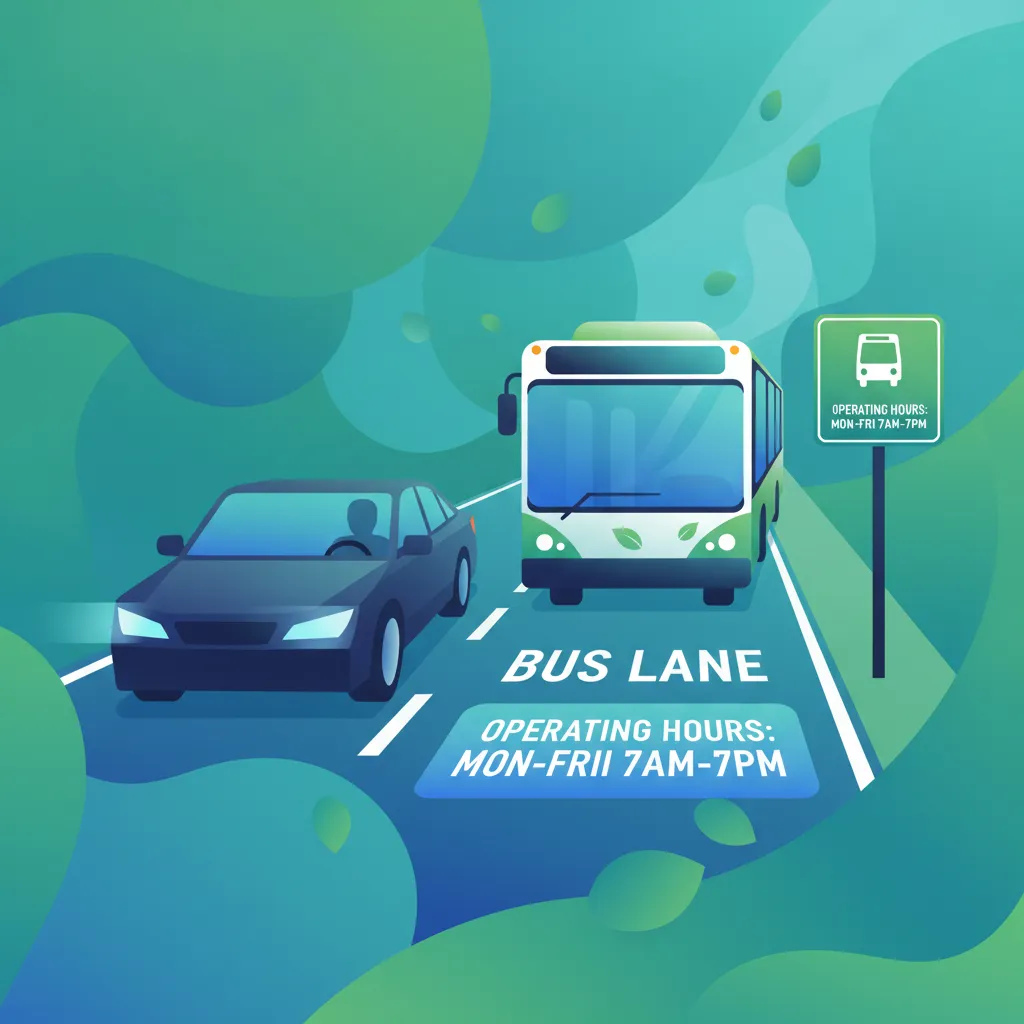
This lesson explores the specifics of bus lane markings, operating times, and priority situations where buses have precedence over other traffic. It emphasizes correct lane discipline, lawful entry and merging practices, and the exemptions granted to designated passenger vehicles. Learners will also understand how bus lane enforcement works and what penalties may be incurred for non-compliance, ensuring safe and efficient movement through urban traffic systems.
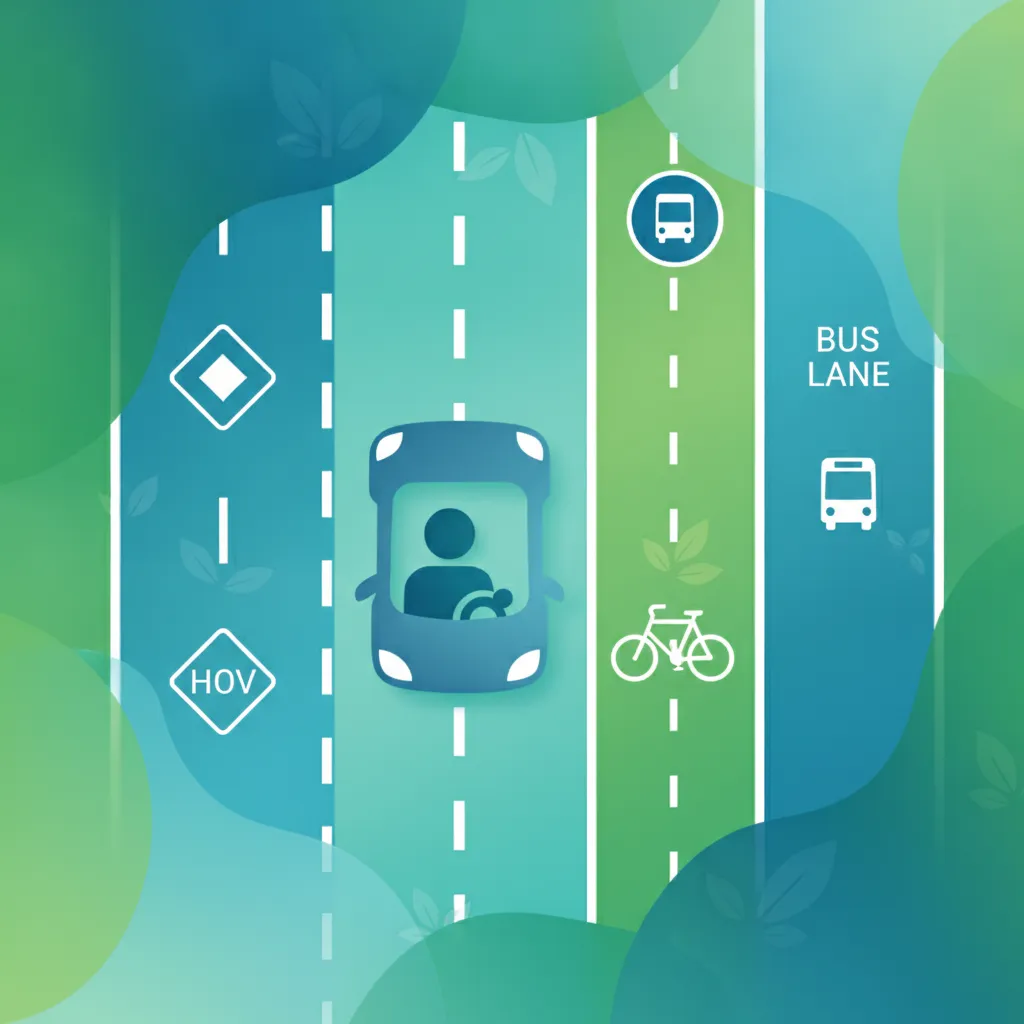
This lesson covers lanes designated for specific types of traffic to improve flow and safety. You will learn to identify mandatory and advisory cycle lanes, and understand the signs indicating the operational hours of bus lanes. The rules governing these lanes are critical for avoiding penalties and ensuring the safety of all road users.
This lesson focuses on the rules conveyed by road markings, such as solid and broken white lines that dictate overtaking rules and lane boundaries. You will learn to interpret waiting and stopping restrictions indicated by yellow and red lines, and understand markings for specific road users like bus and cycle lanes. Maintaining correct lane discipline based on these markings is a fundamental skill for safe navigation and compliance with the Highway Code.

This lesson addresses the critical importance of child safety in school transport zones and around school buses. It covers the specific regulations, such as 20 mph speed limits and stopping restrictions indicated by zigzag lines. Learners will focus on the unpredictable nature of children and the need for heightened vigilance and readiness to stop unexpectedly. The content also includes procedures for the safe transport of pupils, ensuring their security both inside and outside the vehicle.
This lesson focuses on the regulations and best practices for driving a bus or coach on motorways. It details the specific speed limits applicable to PCVs and reinforces strict lane discipline. The content covers the correct procedures for safely joining from a slip road, overtaking other vehicles, and exiting the motorway. It also explains the features of smart motorways and the correct safety procedures to follow in the event of a breakdown, including the use of the hard shoulder.

This lesson provides detailed guidance on protecting pedestrians in high-risk areas like bus stops and formal crossings. It covers the specific rules and driver obligations at zebra, pelican, toucan, and puffin crossings, as well as when approaching a school crossing patrol. The content emphasizes the importance of vigilance, anticipating pedestrian movements, especially those who may be distracted or emerge from behind the bus, and always being prepared to stop to prevent accidents.

This lesson examines the design and operation of urban bus stops and how passenger flow can be managed efficiently. It covers strategies for crowd control, dwell time minimization, effective queuing systems, and proper loading zone utilization. It also explores how bus stop signage and clear passenger information can aid in smooth boarding and alighting. Mastering these skills enhances overall safety, improves service quality, and maintains schedule reliability in challenging urban environments.
Find clear answers to common questions learners have about Road Sign Interpretation for Passenger Vehicles. Learn how the lesson is structured, which driving theory objectives it supports, and how it fits into the overall learning path of units and curriculum progression in Great Britain. These explanations help you understand key concepts, lesson flow, and exam focused study goals.
Certain signs include a bus symbol to indicate that specific rules, such as lane usage or access restrictions, apply exclusively or primarily to buses. Recognising these is crucial to avoid driving offences and ensure you follow your designated route.
Road signs are ranked, with regulatory signs (like stop or no entry) always taking precedence over informational signs. Understanding this hierarchy helps you identify which rules are mandatory versus advisory, which is a frequent topic in DVSA theory exam questions.
Yes, many road signs indicate weight, height, and width restrictions that are critical for large vehicles. Ignoring these signs can lead to bridge strikes or getting trapped in narrow streets, so learning to spot them early is essential for your professional driving career.
While the core Highway Code signs are universal, passenger vehicle drivers must pay extra attention to signs relating to dimensions, bus lanes, and specific stop markings. You are often subject to stricter lane discipline and route restrictions than a standard car driver.
Dive into our comprehensive question bank to find exactly what you need for your Great Britain theory test. Use our advanced filters to pinpoint specific subjects or test your knowledge on challenging areas, ensuring you're fully prepared for success.