
This lesson guides you through the essential rules for navigating traffic lights and pedestrian crossings safely on your motorcycle. You will learn how to identify crossing types and apply correct priority rules, which are critical for both your theory exam and real-world urban riding.
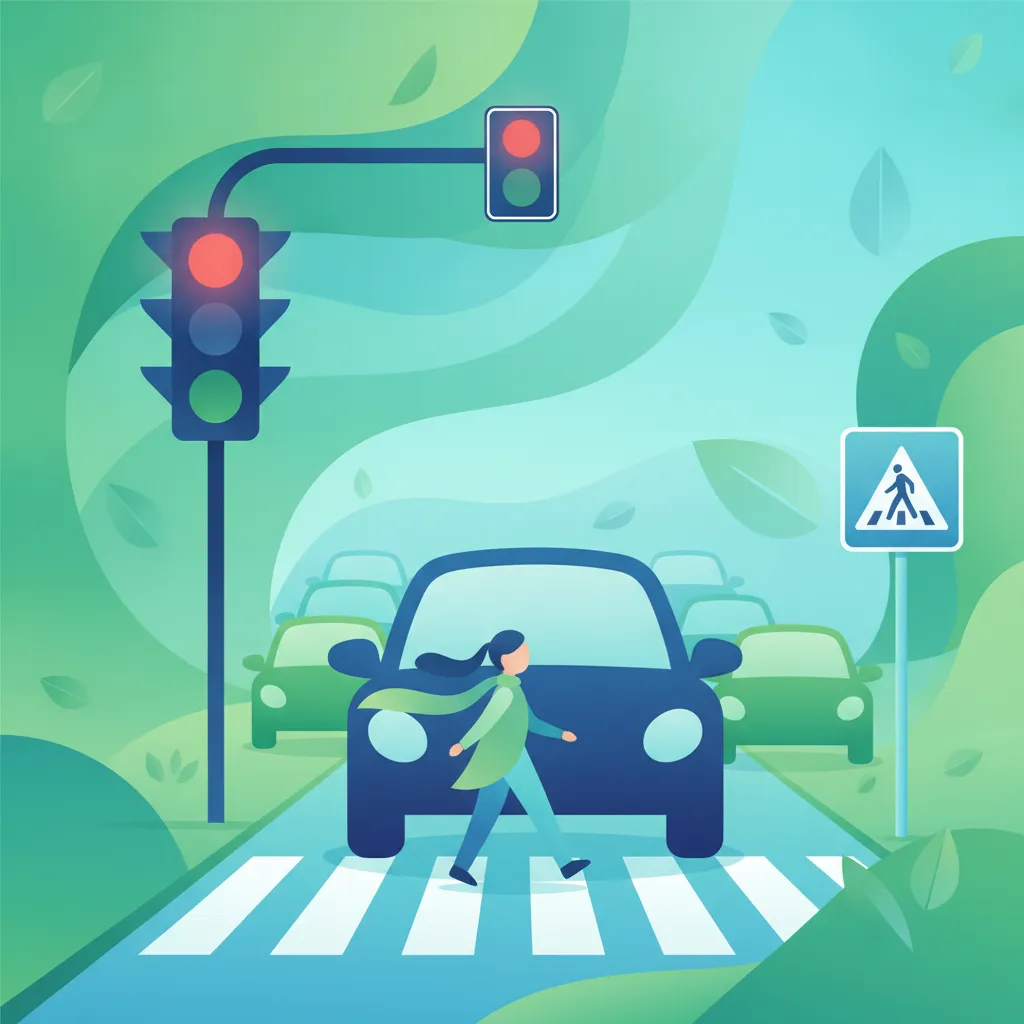
Lesson content overview
Safe and confident riding in Great Britain hinges on a comprehensive understanding of traffic control devices, particularly traffic lights and pedestrian crossings. This lesson, designed for the Great Britain Motorcycle Theory Course, delves into the intricate workings of these systems, clarifying the specific rules and priorities that motorcycle riders must observe. Correctly interpreting signals and anticipating the actions of other road users is not just about passing your theory test; it is fundamental to your safety and the safety of everyone on the road.
Traffic lights and pedestrian crossings serve to organise the flow of diverse road users—motorcyclists, other vehicles, cyclists, and pedestrians—minimising conflict and ensuring predictable movements. Their primary functions are to reduce the likelihood of collisions, provide legal clarity regarding right-of-way, and create a predictable environment where all road users can anticipate others' actions. Mastery of these concepts is essential for safe manoeuvring, avoiding accidents, and complying with DVSA legal requirements.
Traffic light signals are electrically powered visual indicators (red, amber, green) strategically placed at intersections and other key points to control the movement of vehicles and pedestrians. Each colour conveys a precise command, with specific timings designed to ensure safety and an orderly flow of traffic.
The most common traffic light system operates with three distinct phases: red, amber, and green. Understanding the exact meaning of each light, and the transitions between them, is crucial for motorcycle riders.
A red light universally commands all vehicles approaching the intersection or stop line to halt. You must stop before the white stop line on the road. It is illegal and extremely dangerous to cross a solid white line at a red light. You must remain stationary until a green light appears, even if the junction appears clear.
When both red and amber lights are displayed simultaneously, it indicates that the light is about to change to green. During this phase, you should prepare to move off, engaging your gear and checking your surroundings. However, you must not move forward until the green light appears on its own. Moving off early can lead to collisions, particularly with pedestrians or vehicles still clearing the junction.
A green light allows you to proceed, provided the road ahead is clear and it is safe to do so. While a green light grants you primary right-of-way in your direction, you must still remain vigilant. Always check for pedestrians who may still be crossing, especially if they started on a green walk signal that has since changed. Also, be prepared for other vehicles that may still be clearing the junction, or emergency vehicles approaching.
A steady amber light, appearing after a green light, indicates that the signal is about to turn red. You must stop behind the white stop line if you can do so safely. If you are already so close to the stop line that stopping abruptly would be dangerous, or if you are already in the junction, you should continue through carefully. This light phase is a crucial warning to prepare for stopping, not an invitation to speed up and try to beat the red light.
Treating a steady amber light as an opportunity to accelerate is highly dangerous and illegal. Always prepare to stop unless it is genuinely unsafe to do so.
Beyond the standard three-colour sequence, certain traffic lights incorporate additional signals or functions to manage complex traffic scenarios or specific user needs.
At some traffic lights, particularly at pedestrian crossings (like Pelican crossings), an amber light may flash. A flashing amber light means you must give way to any pedestrians who are already on the crossing. If the crossing is clear, you may proceed with caution. This phase usually occurs after a red light for vehicles and before a steady green, or it can follow a pedestrian green light.
Do not confuse a steady amber light with an amber flashing light. A steady amber means prepare to stop, while amber flashing means give way to pedestrians on the crossing if it is clear to proceed.
Metered lights are equipped with vehicle detectors that monitor traffic volume. They adjust the duration of green and red light phases automatically to optimise traffic flow and reduce congestion. As a rider, you may notice that waiting times can vary significantly depending on traffic levels. Always be prepared for signal changes that might not follow a fixed pattern.
Some junctions may feature an "advanced green" signal, where the green light appears for a particular lane or turning movement a few seconds before the main green light. This often allows certain traffic, such as buses or right-turning vehicles, to proceed ahead of others. Observe all signals carefully, especially any arrows or supplementary lights that indicate specific movements.
Pedestrian crossings are designated areas where pedestrians can cross the road, often with specific priority rules for vehicles. Various types of crossings exist, each with its own design, operation, and rules that motorcyclists must understand.
A pedestrian crossing marked with broad white stripes on the road, flanked by flashing amber Belisha beacons. Pedestrians have priority when they are on the crossing or waiting to step onto it.
Zebra crossings are identified by distinctive black and white stripes (like a zebra's coat) painted across the road, usually accompanied by flashing amber Belisha beacons on poles at either side. These crossings do not have traffic lights for vehicles or pedestrians.
At a zebra crossing, pedestrians have absolute priority once they are either on the crossing or clearly waiting to step onto it. As a motorcyclist, you must slow down and be prepared to stop to allow them to cross. If a pedestrian is waiting, you must stop behind the give way line and allow them to cross before proceeding. Even if no one is waiting, you should approach with caution and be prepared for pedestrians to appear suddenly.
A common mistake is treating a zebra crossing as a "give way" sign where you only stop if it's convenient. However, the rule is clear: give way to pedestrians on or about to step onto the crossing. If you approach a zebra crossing and cannot clearly see if pedestrians are waiting, reduce your speed significantly and be ready to stop immediately. Never wave a pedestrian across, as this can confuse other drivers. Ensure all traffic has stopped before a pedestrian crosses.
A pedestrian crossing controlled by traffic lights for both vehicles and pedestrians. Pedestrians activate the signals by pressing a button.
Pelican crossings feature traffic lights for both vehicles and pedestrians. Pedestrians activate the crossing by pressing a button, which initiates a signal sequence.
The vehicle lights operate like standard traffic lights (red, steady amber, green). The pedestrian signals typically show a steady red standing figure (do not cross) and a steady green walking figure (cross). After the steady green walking figure, a flashing green walking figure appears, indicating that pedestrians should finish crossing but new pedestrians should not start.
When the vehicle light turns amber flashing, it means you must give way to any pedestrians who are still on the crossing. If the crossing is clear, you may proceed. You should not begin crossing if the pedestrian signal is a flashing green walking figure, as this means the vehicle traffic light is about to turn green.
Approach the crossing, observing the vehicle traffic lights.
If the vehicle light is green, proceed if the crossing is clear.
If the vehicle light turns steady amber, prepare to stop.
If the vehicle light turns red, stop before the white line.
When the vehicle light is amber flashing, give way to pedestrians on the crossing. If clear, proceed cautiously.
Do not proceed if the pedestrian signal is a flashing green figure, as vehicle lights will soon turn green.
A pedestrian crossing similar to a Pelican crossing, but equipped with sensors that detect pedestrians on the crossing and automatically adjust the signal phases.
Puffin crossings are a more advanced type of signal-controlled pedestrian crossing. While they resemble Pelican crossings, Puffin crossings utilise sophisticated sensors (usually above the stop line) to detect pedestrians. These sensors monitor if pedestrians are waiting to cross and if they are still on the crossing.
The key advantage of Puffin crossings is their ability to dynamically adjust signal timings. This means if a pedestrian presses the button but then moves away, the lights won't change unnecessarily. Conversely, if pedestrians are still on the crossing, the vehicle light will remain red for longer until the crossing is clear. As a rider, you must obey the vehicle traffic lights, treating them like those at a Pelican crossing. However, be aware that pedestrian waiting times might be shorter, and the duration of the red light for vehicles may vary based on pedestrian movement.
A signal-controlled crossing designed for both pedestrians and cyclists to cross together, indicated by both a walking and a bicycle symbol on the pedestrian signal.
The name "Toucan" is a play on "two can cross," referring to pedestrians and cyclists sharing the crossing space. These crossings are wider than typical pedestrian crossings and feature specific signals that include both a walking figure and a bicycle symbol.
Motorcyclists are not permitted to use the cycling or pedestrian lanes of a Toucan crossing. You must treat a Toucan crossing from the perspective of a motor vehicle, obeying the vehicle traffic lights as you would at a Pelican or Puffin crossing. Only cyclists and pedestrians are authorised to use the dedicated crossing facility when their signal is green.
Given that cyclists will also be using this crossing, it's especially important for motorcyclists to be aware of the wider crossing area and to anticipate the movement of both pedestrians and cyclists. Exercise extra caution and ensure the entire crossing is clear before proceeding on a green vehicle light.
Newer crossing types are continuously being developed to enhance safety and efficiency. Examples include:
As new technologies are implemented, the fundamental principle remains: obey the signals, anticipate pedestrian actions, and be prepared to stop. Always observe any unique signage or road markings associated with these advanced crossings.
Priority, or right of way, is a fundamental concept in road safety, dictating which road user has the legal entitlement to proceed before others. Understanding these rules is vital to prevent collisions and ensure an orderly flow of traffic.
At any given moment, signals, markings, and general rules establish a clear hierarchy of priority. For instance, a green traffic light typically grants you priority to proceed, but this can be superseded by other factors such as emergency vehicles, or pedestrians who are already on a crossing.
As discussed, pedestrians have priority at zebra crossings. This means if a pedestrian is on the crossing or waiting to step onto it, you must stop and give way. You do not have priority over them in these circumstances.
At signalised crossings, priority is determined by the active signals.
Conflicting priority situations can arise when different road users believe they have the right of way. Traffic lights and distinct pedestrian signals are designed precisely to resolve these conflicts by assigning exclusive time slots for each user. For example, a red vehicle light explicitly gives priority to pedestrians with a green walk signal, preventing simultaneous entry into the conflict zone. In situations without clear signals, such as an uncontrolled junction (which is not the focus of this lesson but relevant to wider priority rules), the Highway Code provides default rules based on common sense and safety.
Violating priority rules, particularly at traffic lights or pedestrian crossings, carries significant legal consequences under the Road Traffic Act and Traffic Signs Regulations and General Directions (TSRGD).
These actions can result in penalty points on your licence, significant fines, and potential disqualification, not to mention the severe risk of causing injury or death.
Motorcyclists, being more vulnerable road users, must exercise heightened awareness and anticipation when approaching traffic lights and pedestrian crossings. Several factors influence safety in these environments.
The state of your motorcycle can affect your stopping capability.
Always account for these factors by adjusting your speed and planning your approach to signals and crossings well in advance.
Motorcyclists share the road with many vulnerable users, including pedestrians, cyclists, and horse riders. At crossings and junctions, pedestrians are particularly vulnerable.
In the rare event of a traffic light failure (e.g., all lights out or flashing amber in all directions), you must treat the junction as an uncontrolled intersection.
Effective hazard perception is key to safely navigating traffic lights and crossings.
Never filter (ride between lanes of stationary or slow-moving traffic) through an amber flashing or red+amber traffic light phase. This is extremely dangerous as vehicles may be preparing to move or pedestrians may be crossing.
This lesson covers the essential rules for navigating traffic lights and pedestrian crossings in Great Britain, which are critical for both theory test success and real-world motorcycle safety. Traffic light colours have precise meanings: red requires a complete stop, red and amber together prepare you to move, green permits cautious proceeding, and steady amber means prepare to stop unless unsafe to do so. The four main pedestrian crossing types each operate differently—zebra crossings give pedestrians absolute priority without signals, while pelican, puffin, and toucan crossings use traffic lights to assign priority time slots to vehicles and pedestrians. Understanding the differences between these crossings, knowing when pedestrians have priority, and maintaining heightened awareness as a vulnerable road user are fundamental to safe urban riding and passing the DVSA motorcycle theory test.
A short set of high-value points that capture the most important learning from this lesson.
Red and amber together means prepare to go, but you must not move until green appears alone
At zebra crossings, pedestrians have absolute priority once they are on or waiting to step onto the crossing
Steady amber means prepare to stop; only proceed if stopping would be dangerous
At Toucan crossings, motorcycles must obey vehicle traffic lights and cannot use the cyclist/pedestrian lanes
Priority at signalised crossings is determined entirely by the active vehicle traffic light phase
Explore all units and lessons included in this driving theory course.
Zebra = white stripes + Belisha beacons + pedestrian priority; Pelican = button-activated + flashing green pedestrian phase; Puffin = sensor-detects pedestrians; Toucan = pedestrians AND cyclists
Amber flashing at crossings means give way to pedestrians already on the crossing; steady amber means prepare to stop
Green light does not guarantee safe passage—always check for pedestrians still clearing the junction
Motorcyclists must treat all signalised crossings (Pelican, Puffin, Toucan) as vehicle-controlled junctions
If traffic lights fail completely, treat the junction as uncontrolled and give way to traffic from the right
Treating steady amber as a signal to accelerate through the junction before red appears
Confusing flashing amber (give way to pedestrians) with steady amber (prepare to stop)
Assuming green vehicle light means pedestrians have finished crossing—always verify the crossing is clear
Riding a motorcycle through a Toucan crossing using the pedestrian/cyclist lanes instead of treating it as a vehicle
Not covering brakes when approaching crossings, leading to delayed reaction times
Lesson content overview
A short set of high-value points that capture the most important learning from this lesson.
Red and amber together means prepare to go, but you must not move until green appears alone
At zebra crossings, pedestrians have absolute priority once they are on or waiting to step onto the crossing
Steady amber means prepare to stop; only proceed if stopping would be dangerous
At Toucan crossings, motorcycles must obey vehicle traffic lights and cannot use the cyclist/pedestrian lanes
Priority at signalised crossings is determined entirely by the active vehicle traffic light phase
Explore all units and lessons included in this driving theory course.
Zebra = white stripes + Belisha beacons + pedestrian priority; Pelican = button-activated + flashing green pedestrian phase; Puffin = sensor-detects pedestrians; Toucan = pedestrians AND cyclists
Amber flashing at crossings means give way to pedestrians already on the crossing; steady amber means prepare to stop
Green light does not guarantee safe passage—always check for pedestrians still clearing the junction
Motorcyclists must treat all signalised crossings (Pelican, Puffin, Toucan) as vehicle-controlled junctions
If traffic lights fail completely, treat the junction as uncontrolled and give way to traffic from the right
Treating steady amber as a signal to accelerate through the junction before red appears
Confusing flashing amber (give way to pedestrians) with steady amber (prepare to stop)
Assuming green vehicle light means pedestrians have finished crossing—always verify the crossing is clear
Riding a motorcycle through a Toucan crossing using the pedestrian/cyclist lanes instead of treating it as a vehicle
Not covering brakes when approaching crossings, leading to delayed reaction times
Explore search topics learners often look for when studying Traffic Lights, Pedestrian Crossings and Priority. These topics reflect common questions about road rules, driving situations, safety guidance, and lesson level theory preparation for learners in Great Britain.
Browse additional driving theory lessons that cover connected traffic rules, road signs, and common driving situations related to this topic. Improve your understanding of how different rules interact across everyday traffic scenarios.
Explore complex traffic light sequences and challenging pedestrian crossing situations. Understand advanced priority rules and how to navigate unpredictable urban traffic scenarios safely to enhance your motorcycle theory knowledge.
This lesson explains the critical rules of priority that govern traffic flow at junctions, roundabouts, and crossings throughout Great Britain. You will learn how to determine who has right-of-way at both marked and unmarked intersections, and the specific rules for giving way to traffic on roundabouts. The lesson also reinforces the hierarchy of road users from the Highway Code, ensuring you understand when to yield to pedestrians and other vulnerable users.
This lesson details how to safely navigate junctions controlled by traffic signals. It explains the meaning of filter arrows, which allow you to proceed in a specific direction even if the main light is red. You will also learn about respecting advanced stop lines for cyclists and how to approach a junction when the traffic lights are not working.

This lesson clarifies who has priority at junctions, whether they are marked with signs and lines or are unmarked. It covers the fundamental rule for roundabouts in the UK: give priority to traffic approaching from your right. You will learn the correct procedures for approaching, signalling, and choosing the appropriate lane on roundabouts and at other junctions.
This lesson focuses on the dynamic and often unpredictable nature of urban traffic. It covers how to safely negotiate various pedestrian crossings, anticipate the movement of cyclists and pedestrians, and be aware of hazards like bus stops and car doors opening. You will also learn about the considerations for safe and legal filtering in slow-moving traffic.
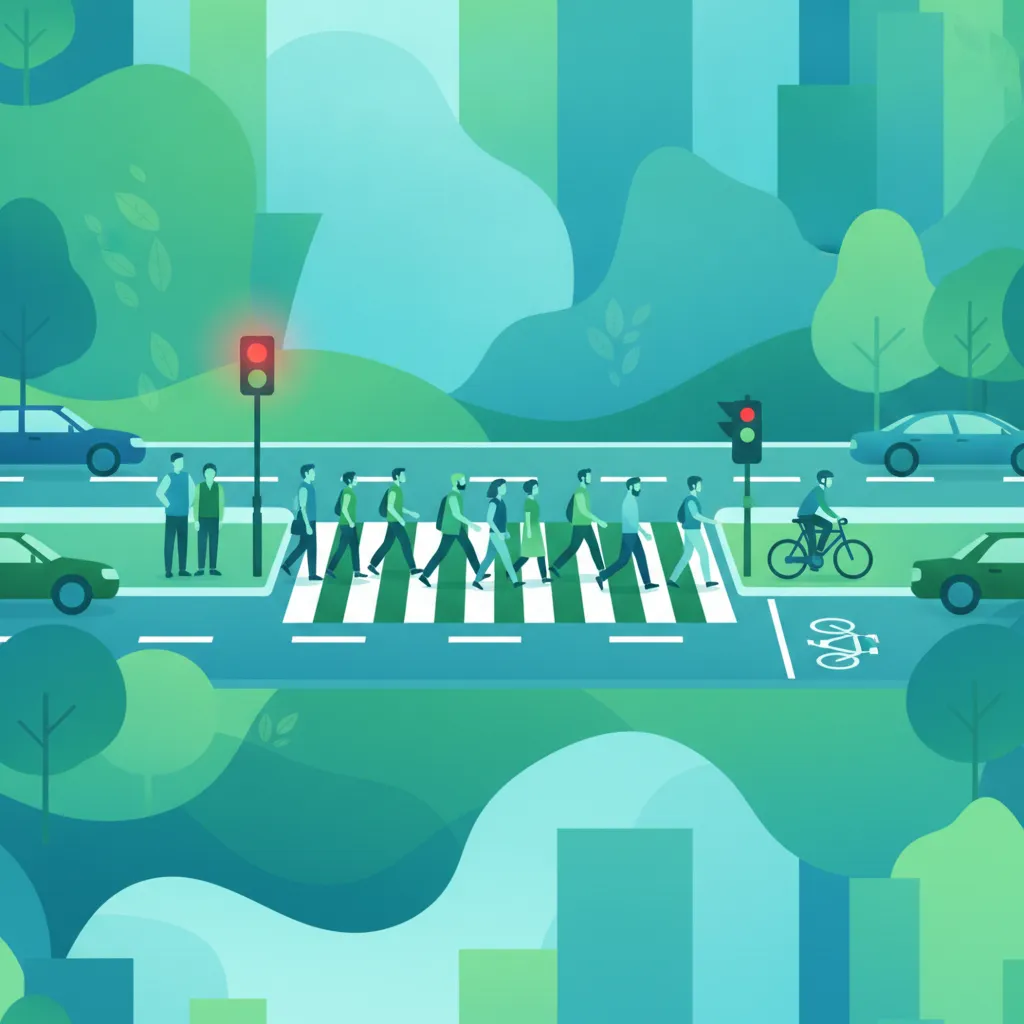
This lesson provides a detailed guide to the various types of pedestrian crossings found on British roads. You will learn the specific rules for each, including the absolute priority of pedestrians at zebra crossings and how to respond to the light signals at pelican, puffin, and toucan crossings. Understanding these rules is essential for protecting vulnerable road users and ensuring you are compliant with the Highway Code.
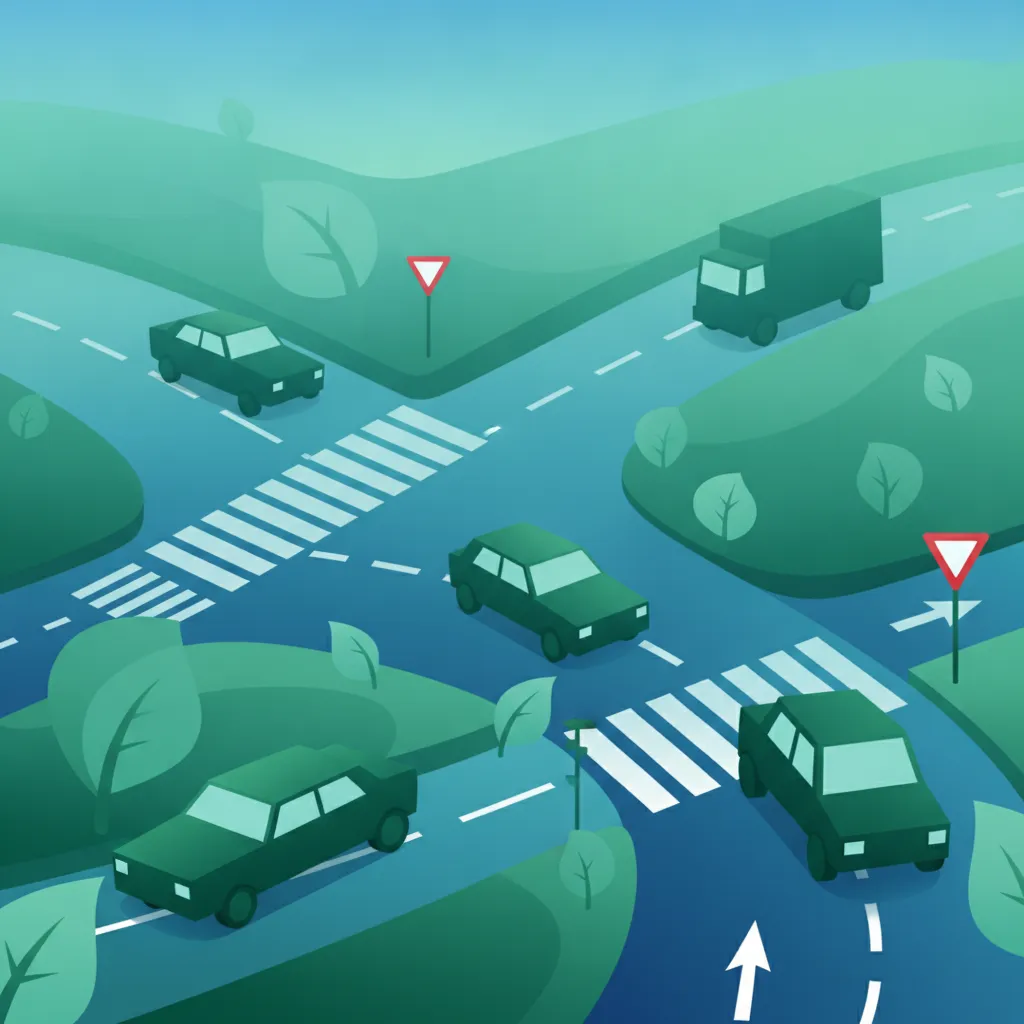
This lesson teaches the systematic approach to safely navigating junctions, emphasizing the importance of adjusting your speed and position well in advance. You will learn the 'Mirror-Signal-Manoeuvre' routine, how to perform effective all-round observation checks, and when to give way to other traffic. The content focuses on making safe judgments about gaps in traffic, a crucial skill for vulnerable AM riders when turning or emerging from a junction.
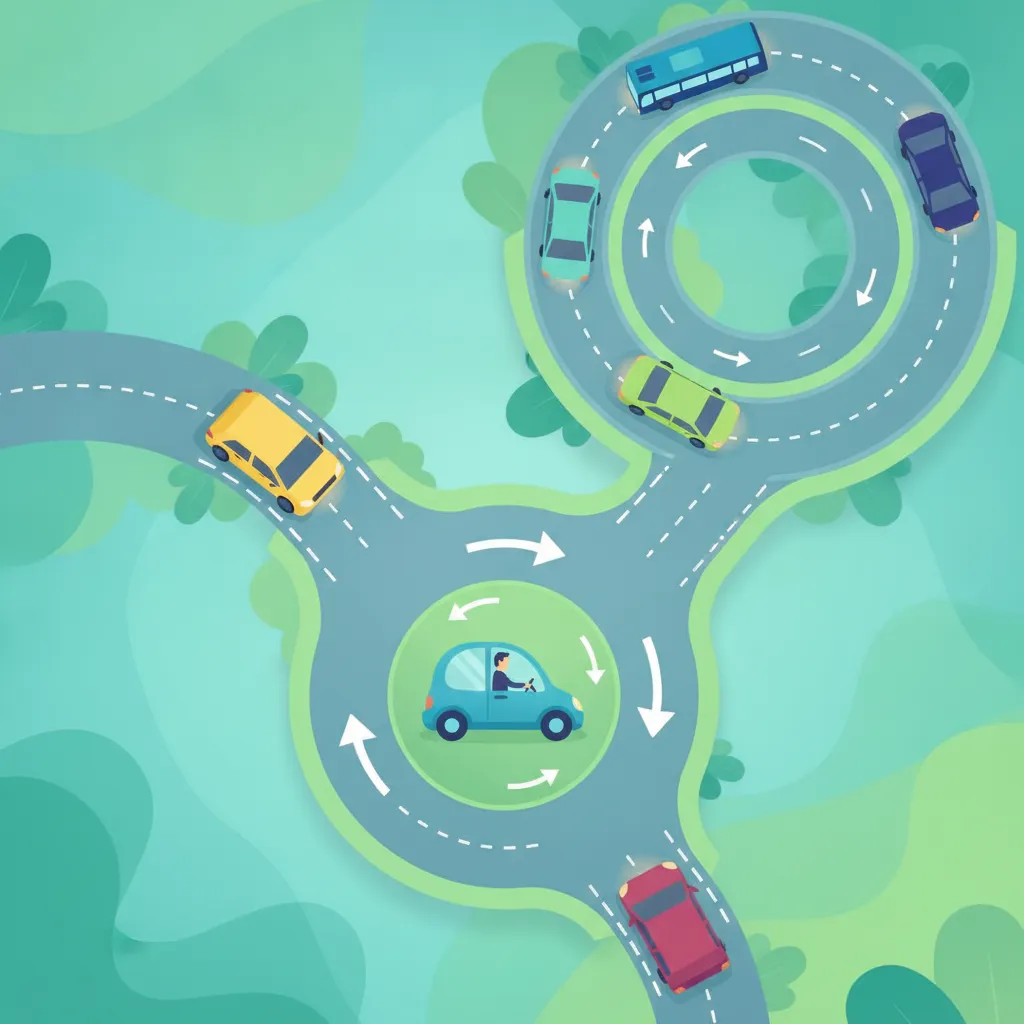
This lesson provides specific techniques for safely navigating the two main types of roundabouts in Great Britain. For multi-lane roundabouts, it covers how to choose the correct lane on approach, maintain your lane while circulating, and signal your exit correctly. It also explains the unique rules for mini-roundabouts, emphasizing the importance of giving way to traffic from the right and navigating them with caution due to their small size.

This lesson provides detailed guidance on protecting pedestrians in high-risk areas like bus stops and formal crossings. It covers the specific rules and driver obligations at zebra, pelican, toucan, and puffin crossings, as well as when approaching a school crossing patrol. The content emphasizes the importance of vigilance, anticipating pedestrian movements, especially those who may be distracted or emerge from behind the bus, and always being prepared to stop to prevent accidents.

This lesson provides a detailed guide to various pedestrian crossings and their specific rules. You will learn to identify each type by its markings and signals, from the black and white stripes of a zebra crossing to the sensor-controlled lights of a puffin crossing. The focus is on knowing when and how to stop to ensure pedestrian safety.
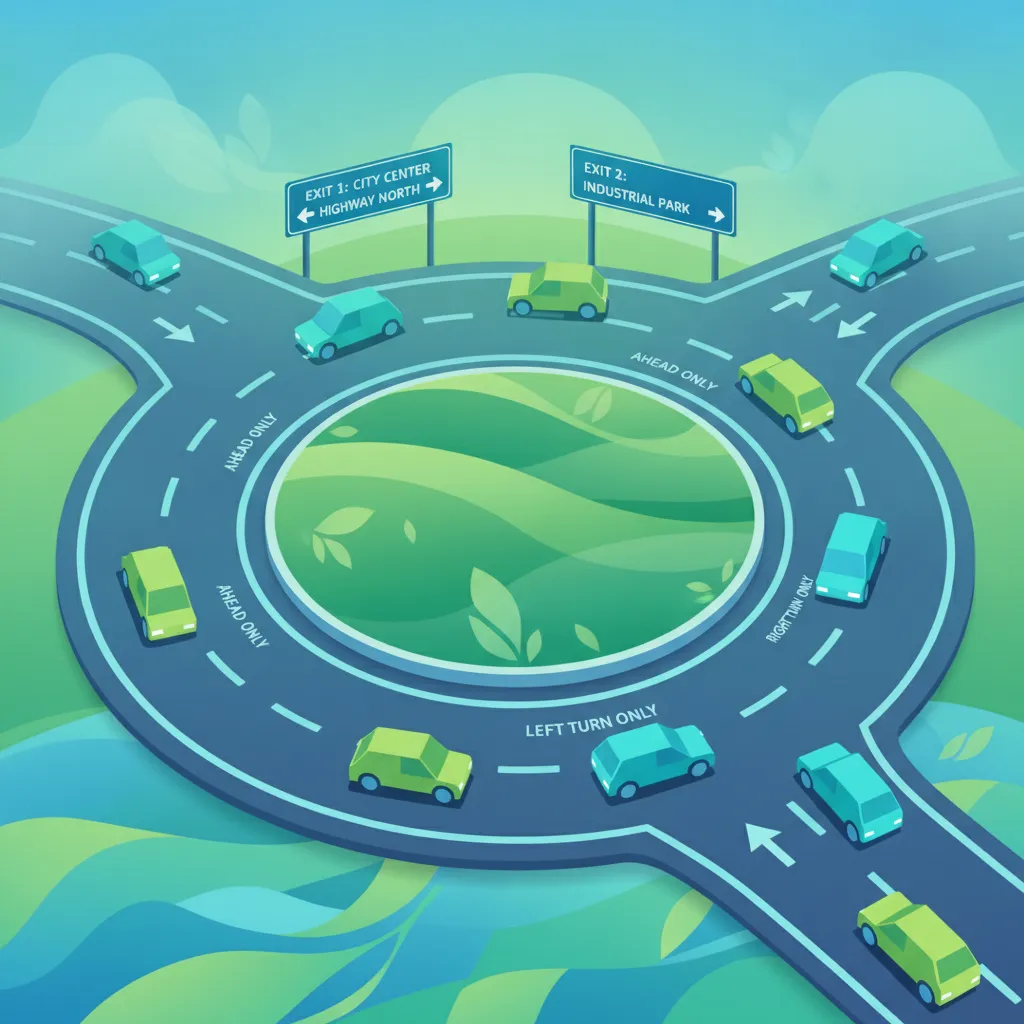
This lesson addresses the unique challenges of mini-roundabouts and large, multi-lane or spiral roundabouts. You will learn the subtle differences in rules and approach for mini-roundabouts and the importance of strict lane discipline on larger ones. The lesson stresses the need for advanced planning and awareness when navigating these complex junctions.
Learn the detailed differences and specific rules for all major pedestrian crossing types: zebra, pelican, puffin, and toucan. Understand your responsibilities and how to safely interact with these crossings as a motorcyclist in GB.
This lesson provides a detailed guide to the various types of pedestrian crossings found on British roads. You will learn the specific rules for each, including the absolute priority of pedestrians at zebra crossings and how to respond to the light signals at pelican, puffin, and toucan crossings. Understanding these rules is essential for protecting vulnerable road users and ensuring you are compliant with the Highway Code.
This lesson provides a detailed guide to various pedestrian crossings and their specific rules. You will learn to identify each type by its markings and signals, from the black and white stripes of a zebra crossing to the sensor-controlled lights of a puffin crossing. The focus is on knowing when and how to stop to ensure pedestrian safety.

This lesson focuses on the markings and rules at designated pedestrian crossing points. It details the legal requirement to give way to pedestrians on a zebra crossing and explains the light sequences at signal-controlled crossings. You will also learn the meaning of the white zig-zag lines on the approach to all crossings.
This lesson provides detailed guidance on protecting pedestrians in high-risk areas like bus stops and formal crossings. It covers the specific rules and driver obligations at zebra, pelican, toucan, and puffin crossings, as well as when approaching a school crossing patrol. The content emphasizes the importance of vigilance, anticipating pedestrian movements, especially those who may be distracted or emerge from behind the bus, and always being prepared to stop to prevent accidents.
This lesson focuses on the dynamic and often unpredictable nature of urban traffic. It covers how to safely negotiate various pedestrian crossings, anticipate the movement of cyclists and pedestrians, and be aware of hazards like bus stops and car doors opening. You will also learn about the considerations for safe and legal filtering in slow-moving traffic.
This lesson explains the critical rules of priority that govern traffic flow at junctions, roundabouts, and crossings throughout Great Britain. You will learn how to determine who has right-of-way at both marked and unmarked intersections, and the specific rules for giving way to traffic on roundabouts. The lesson also reinforces the hierarchy of road users from the Highway Code, ensuring you understand when to yield to pedestrians and other vulnerable users.
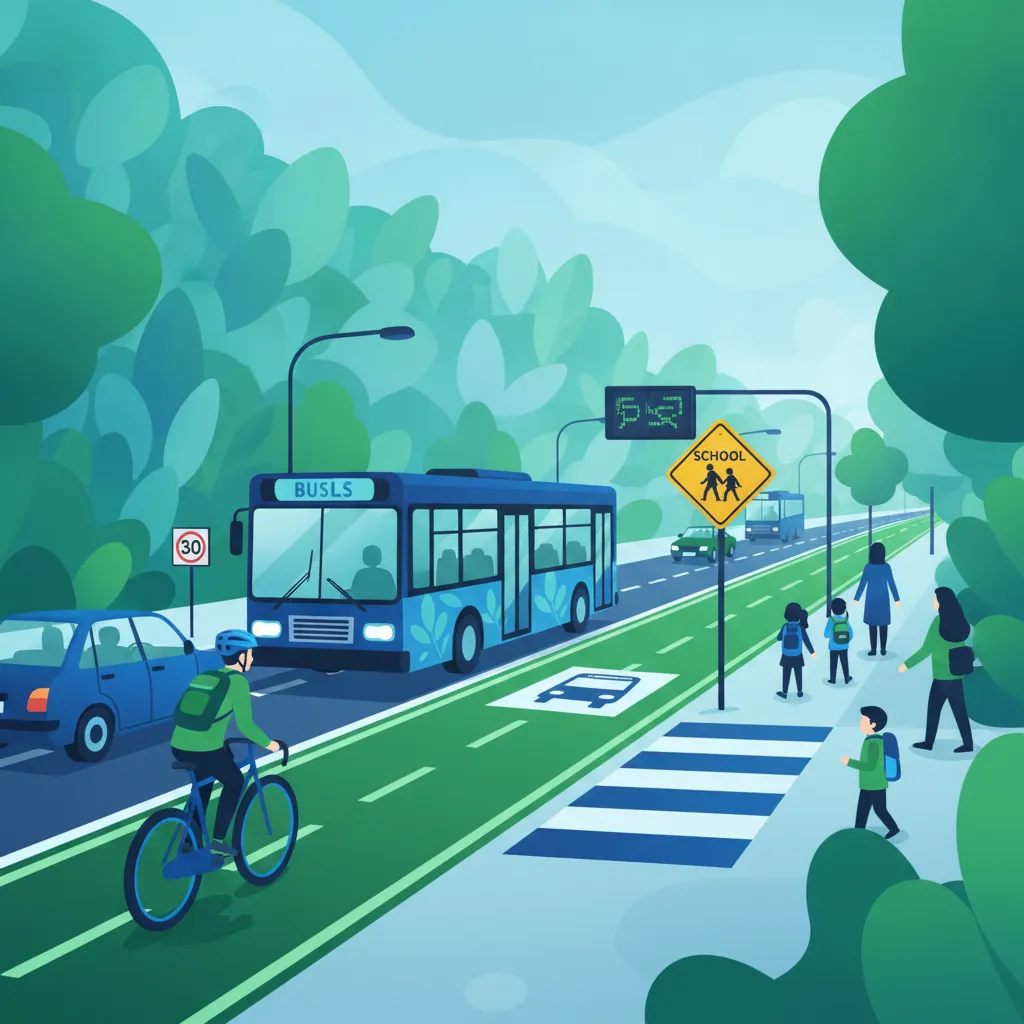
This lesson explains the regulations for special road zones common in urban areas. You will learn about speed restrictions near schools, how to read signs indicating if and when motorcycles can use bus lanes, and how to safely interact with cyclist infrastructure such as advanced stop lines. Compliance with these specific rules is crucial for legal and safe urban riding.
This lesson details how to safely navigate junctions controlled by traffic signals. It explains the meaning of filter arrows, which allow you to proceed in a specific direction even if the main light is red. You will also learn about respecting advanced stop lines for cyclists and how to approach a junction when the traffic lights are not working.
Find clear answers to common questions learners have about Traffic Lights, Pedestrian Crossings and Priority. Learn how the lesson is structured, which driving theory objectives it supports, and how it fits into the overall learning path of units and curriculum progression in Great Britain. These explanations help you understand key concepts, lesson flow, and exam focused study goals.
A Pelican crossing has a flashing amber light phase. A Puffin crossing uses sensors to detect pedestrians and has lights on the near side. A Toucan crossing allows cyclists and pedestrians to cross together, often signaled by green cycle and pedestrian lights.
Yes, you must stop and give way to pedestrians who are waiting at or have already stepped onto a Zebra crossing. Always approach with caution and be prepared to stop if someone is waiting to cross.
You should stop at the white line unless it is unsafe to do so, for example, if you are already so close that stopping would cause a collision. An amber light means stop, not speed up.
Traffic light signals always override standard priority signs and road markings. If the lights are out of order, treat the junction as an unmarked one and exercise extreme caution.
Dive into our comprehensive question bank to find exactly what you need for your Great Britain theory test. Use our advanced filters to pinpoint specific subjects or test your knowledge on challenging areas, ensuring you're fully prepared for success.