
This lesson focuses on the heightened duty of care required when driving near schools, parks, and residential areas where children may be present. You will learn how to identify school zone signs, interpret school crossing patrol signals, and adopt safe speeds to anticipate unpredictable pedestrian behaviour. This is a critical component of your Category B theory test preparation and real-world safety.
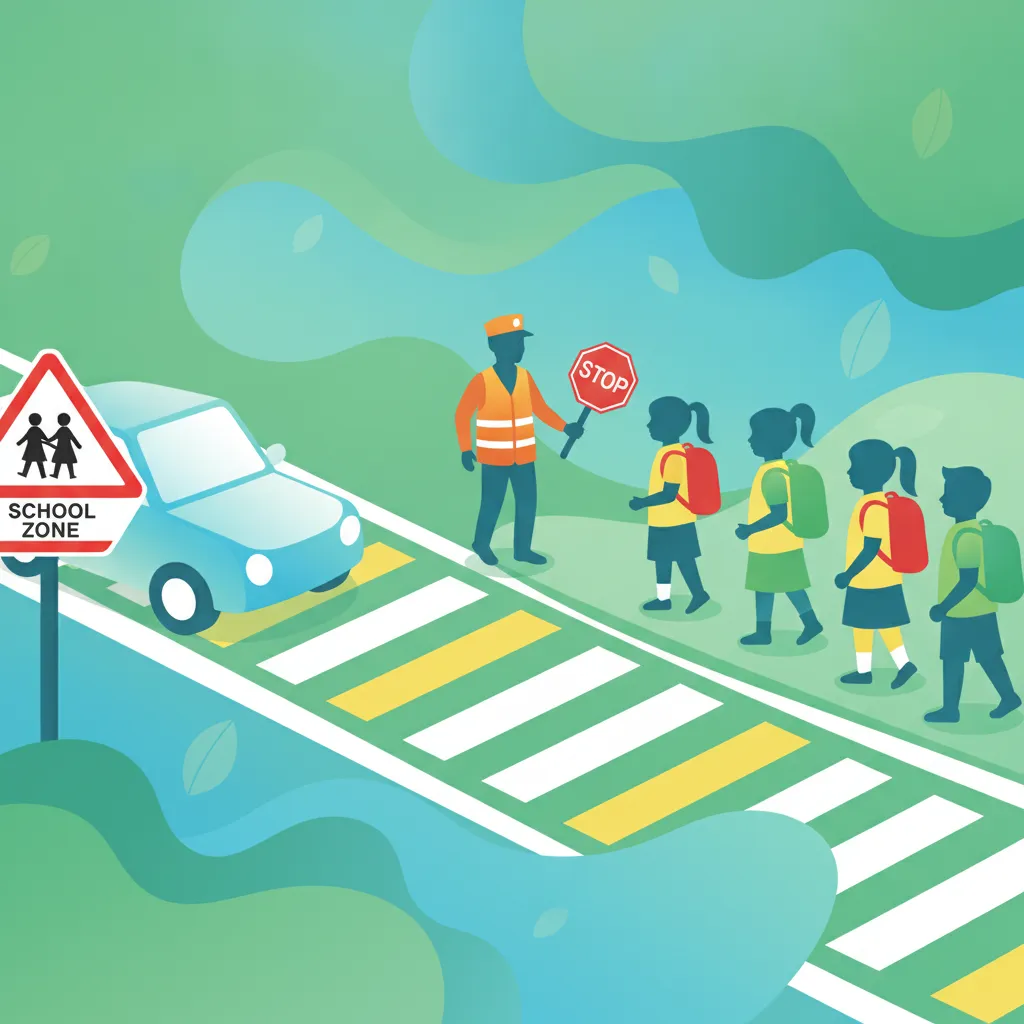
Lesson content overview
Driving safely means constantly adapting your behavior to the environment around you. Few environments demand as much heightened awareness and caution as those where children are present. This lesson for Great Britain Category B learner drivers focuses on the specific hazards associated with children, school zones, and play areas, outlining the legal requirements, practical considerations, and defensive driving techniques crucial for preventing collisions.
Children are among the most vulnerable road users. Their physical size makes them less visible to drivers, and their limited understanding of road safety, coupled with impulsive behavior, means they can act unpredictably. Drivers must always anticipate that a child might step into the road without warning. This module will equip you with the knowledge to navigate these sensitive areas safely, understand specific road signs, and fulfill your obligations, particularly concerning school crossing patrols.
Children possess a unique set of characteristics that make them particularly vulnerable in traffic environments. Unlike adults, they have a limited perception of speed and distance, often struggling to judge the speed of an approaching vehicle. Their peripheral vision is not fully developed, meaning they might not see a vehicle approaching from the side. Moreover, children are prone to impulsive behavior; they might chase a ball, run towards a friend, or dart across the road without checking for traffic, driven by play rather than road sense.
This inherent unpredictability means that drivers cannot rely on children behaving rationally or following conventional road safety rules. Instead, the responsibility falls squarely on the driver to anticipate potential hazards and adjust their driving accordingly. Reduced speed directly increases a driver's reaction time and significantly shortens stopping distances, which are critical factors in reducing the severity of a collision, or preventing it entirely, especially where children are involved.
School zones are specifically designated areas surrounding schools, nurseries, or other early years facilities. They are established with stricter rules to protect the high volume of children who travel to and from these locations. These zones require drivers to exercise enhanced vigilance and significantly reduce their speed.
You will typically identify a school zone by specific road signs and markings. The most common indicator is a rectangular sign featuring a silhouette of a child (or children) and a mandatory speed limit, usually 20 miles per hour (mph). This 20 mph limit is not merely advisory; it is a legally enforceable speed restriction.
The reduced speed limit often applies for the entire duration of the school zone, which begins at the first sign and extends until an "End" sign or a sign indicating a different speed limit. It is a common misconception that these speed limits only apply during school start and end times; unless specified otherwise by supplementary plates, the 20 mph limit is enforceable all day, every day. This continuous application accounts for after-school activities, weekend events, and other times children might be present.
Beyond standard school zones, some areas might have "School 'Stop'" signs, which further emphasize the presence of a school crossing patrol and the legal requirement to stop when signaled. Awareness of these signs is paramount for safe driving.
Road signs and markings are critical visual cues designed to alert drivers to the presence of a school zone or play area and to guide their behavior. These are part of a broader system to enhance safety where children are likely to be.
Standard triangular warning signs with a "Children" pictogram (two children walking) indicate a general hazard where children may be present, such as near a park or residential area, even if not a formal school zone.
In addition to vertical signs, specific road surface markings are often used to reinforce the message of a school zone. These can include:
These markings are not merely decorative; they carry legal significance when paired with signs and serve to visually prepare drivers for the need to reduce speed and be ready to stop. Drivers must pay close attention to all such cues, ensuring compliance with lane discipline and speed regulations.
One of the most crucial aspects of driving near schools involves school crossing patrols, often affectionately known as "Lollipop people" or "Lollipop men/women." These dedicated individuals play a vital role in ensuring children can cross busy roads safely.
A school crossing patrol is a trained person wearing high-visibility clothing and carrying a distinctive "Lollipop" stop sign. Their primary function is to supervise groups of children crossing the road near schools.
When a school crossing patrol steps into the road and displays their 'Lollipop' stop sign, you are legally required to stop your vehicle. This is mandatory, regardless of whether there are traffic lights, and applies even if you do not immediately see children. The patrol may be signalling for a group of children who are not yet visible to you. You must stop at a safe distance behind the stop line, or if there isn't one, at a point where you can clearly see the patrol and they can see you. You must remain stopped until the patrol has returned to the pavement, withdrawn their sign, or clearly signalled that it is safe for you to proceed.
Failure to stop for a school crossing patrol is a serious offence, carrying significant penalties, including fines and penalty points on your driving licence. More importantly, it puts children at extreme risk.
Beyond formal school zones, children are often found playing in residential streets, parks, and other public play areas adjacent to roads. While these areas may not always have the same formal signage as school zones, the principle of heightened vigilance remains paramount.
Some play areas might be specifically signposted with a "Play Area 20 mph" sign, indicating a mandatory reduced speed limit similar to school zones. These are often found in urban or suburban residential areas where children are expected to be playing outdoors.
Even if no specific "Play Area" or reduced speed limit sign is present, drivers should still exercise extreme caution in residential streets and areas near parks or playgrounds. Children may dart onto the road unexpectedly from driveways, between parked cars, or from gardens. You should anticipate that children may not use designated crossing points and maintain a speed that allows you to stop safely within the distance you can see to be clear, adjusting for any limited visibility.
Compliance with specific rules and regulations is not just about avoiding penalties; it's fundamentally about ensuring the safety of children. The Highway Code provides clear guidelines that drivers must follow.
As established, a 20 mph speed limit (or as posted on signage) is mandatory in designated school zones. This limit applies from the first sign indicating the zone until you pass a sign marking its end or a sign indicating a different speed limit.
This reduced speed is crucial because it significantly impacts the physics of a collision. Kinetic energy increases quadratically with speed, meaning that even a small reduction in speed can dramatically decrease the impact force in a collision. For example, hitting a child at 20 mph rather than 30 mph can make a critical difference to their chances of survival and the severity of their injuries. Furthermore, lower speeds provide drivers with more time to react to unexpected movements.
The legal requirement to stop for a school crossing patrol is one of the most critical rules in these environments. When a patrol displays their 'Lollipop' sign, you must stop completely.
Observe: Look out for school crossing patrols, especially near schools.
Prepare to Stop: Anticipate that a patrol might step into the road.
Stop Completely: When the 'Lollipop' sign is raised, come to a complete stop behind the stop line or at a safe distance.
Wait Patiently: Remain stopped until the patrol lowers their sign or clearly indicates it is safe to proceed. Do not move off even if you think all children have crossed, as there may be others unseen.
This rule applies to all vehicles on the road, regardless of the presence of other traffic controls. Failure to comply can result in fines and penalty points, and more importantly, it can lead to devastating consequences for children.
In school zones and play areas, maintaining an adequate stopping distance is more critical than ever. The total stopping distance comprises two main components: reaction distance (the distance your vehicle travels from the moment you perceive a hazard to the moment you apply the brakes) and braking distance (the distance your vehicle travels from when you apply the brakes until it comes to a complete stop).
At 20 mph, a vehicle travels approximately 6 metres (about two car lengths) during an average driver's reaction time of 1.5 seconds. When combined with braking distance, this can be substantial. In areas with children, you must be able to stop your vehicle within the distance you can see to be clear ahead. This means increasing your following distance from the vehicle in front and being prepared to react quickly.
Visibility is a two-way street: you need to see children, and children (and other road users) need to see your vehicle. Proper use of vehicle lights is essential, especially in school zones.
Using high beams in a school zone, especially at night, can temporarily blind or disorient children, making it harder for them to judge distances and speeds, potentially leading to dangerous situations.
Pedestrians, especially children, are granted priority at designated crossings, such as zebra and pelican crossings. In school zones, these crossings are vital safety features.
The presence of a school crossing patrol overrides any traffic light signals for children crossing the road. Always obey the patrol's signal over other traffic controls when they are present.
Even experienced drivers can make mistakes, but awareness of common pitfalls can help you avoid them in critical areas.
Driving conditions can significantly impact visibility and stopping distances. It's vital to adapt your driving in school zones and play areas to account for these variations.
At night, children are even harder to spot due to their smaller size and often darker clothing. The legal requirement to use appropriate vehicle lighting becomes even more critical.
The type of vehicle you are driving and any load it is carrying will affect its handling and stopping capabilities.
The rules and regulations surrounding school zones and play areas are built on fundamental principles of safety and physics.
By understanding these underlying reasons, you can appreciate that adherence to the rules is not merely about avoiding fines, but about actively safeguarding the most vulnerable members of our society.
To deepen your understanding and prepare for your Great Britain Category B driving theory test, explore related topics and practice scenarios.
This lesson covers the heightened duty of care required when driving near children, school zones, and play areas in Great Britain. It explains that children are unpredictable vulnerable road users due to their limited perception of speed and distance, requiring drivers to always expect the unexpected. The lesson details specific legal requirements including the mandatory 20 mph speed limit in school zones (enforceable all day unless indicated otherwise), the legal obligation to stop completely when a school crossing patrol raises their 'Lollipop' sign, and the significance of associated road signs and markings. Understanding the physics behind speed limits—that impact energy increases quadratically with velocity—helps learners appreciate why these rules exist. The content also covers weather adaptations, proper headlight use, and common mistakes to avoid when navigating these high-risk areas.
A short set of high-value points that capture the most important learning from this lesson.
Children are particularly vulnerable road users because they cannot accurately judge vehicle speed or distance and often act impulsively, so drivers must always anticipate unexpected road entry
School zone 20 mph speed limits are legally enforceable all day unless a supplementary plate specifies otherwise, not just during school hours
You must stop completely when a school crossing patrol raises their 'Lollipop' sign, regardless of traffic lights or whether you can see children
In addition to vertical signs, road markings including 'SCHOOL' text, diamond chevrons, and zig-zag lines indicate areas of increased hazard near schools
The kinetic energy of a vehicle increases with the square of its speed, making 20 mph dramatically safer than 30 mph for child pedestrians
Explore all units and lessons included in this driving theory course.
Rectangular sign with child silhouette + '20 mph' = mandatory school zone speed limit enforceable all day
When a school crossing patrol displays the 'Lollipop' sign, you MUST stop completely behind the stop line
Look for diamond-shaped chevrons and 'SCHOOL' road markings as visual cues that a school zone is approaching
Never overtake a stationary school bus loading or unloading children
At 20 mph, your vehicle travels approximately 6 metres during a 1.5-second reaction time, allowing crucial extra seconds to stop
Assuming the 20 mph limit only applies during school start and end times rather than all day
Slowing down for a school crossing patrol but not coming to a complete stop
Only watching for children at formally signed school zones and ignoring residential streets and parks
Following too closely behind a school bus or attempting to overtake it while children are boarding or alighting
Using high beam headlights near school zones at night, which can temporarily blind children and other pedestrians
Lesson content overview
A short set of high-value points that capture the most important learning from this lesson.
Children are particularly vulnerable road users because they cannot accurately judge vehicle speed or distance and often act impulsively, so drivers must always anticipate unexpected road entry
School zone 20 mph speed limits are legally enforceable all day unless a supplementary plate specifies otherwise, not just during school hours
You must stop completely when a school crossing patrol raises their 'Lollipop' sign, regardless of traffic lights or whether you can see children
In addition to vertical signs, road markings including 'SCHOOL' text, diamond chevrons, and zig-zag lines indicate areas of increased hazard near schools
The kinetic energy of a vehicle increases with the square of its speed, making 20 mph dramatically safer than 30 mph for child pedestrians
Explore all units and lessons included in this driving theory course.
Rectangular sign with child silhouette + '20 mph' = mandatory school zone speed limit enforceable all day
When a school crossing patrol displays the 'Lollipop' sign, you MUST stop completely behind the stop line
Look for diamond-shaped chevrons and 'SCHOOL' road markings as visual cues that a school zone is approaching
Never overtake a stationary school bus loading or unloading children
At 20 mph, your vehicle travels approximately 6 metres during a 1.5-second reaction time, allowing crucial extra seconds to stop
Assuming the 20 mph limit only applies during school start and end times rather than all day
Slowing down for a school crossing patrol but not coming to a complete stop
Only watching for children at formally signed school zones and ignoring residential streets and parks
Following too closely behind a school bus or attempting to overtake it while children are boarding or alighting
Using high beam headlights near school zones at night, which can temporarily blind children and other pedestrians
Explore search topics learners often look for when studying Children, School Zones, and Play Areas. These topics reflect common questions about road rules, driving situations, safety guidance, and lesson level theory preparation for learners in Great Britain.
Browse additional driving theory lessons that cover connected traffic rules, road signs, and common driving situations related to this topic. Improve your understanding of how different rules interact across everyday traffic scenarios.
Understand specific UK driving laws and best practices for navigating areas where children are present, including school zones, residential streets, and play areas. Learn to identify hazards and protect vulnerable road users effectively.
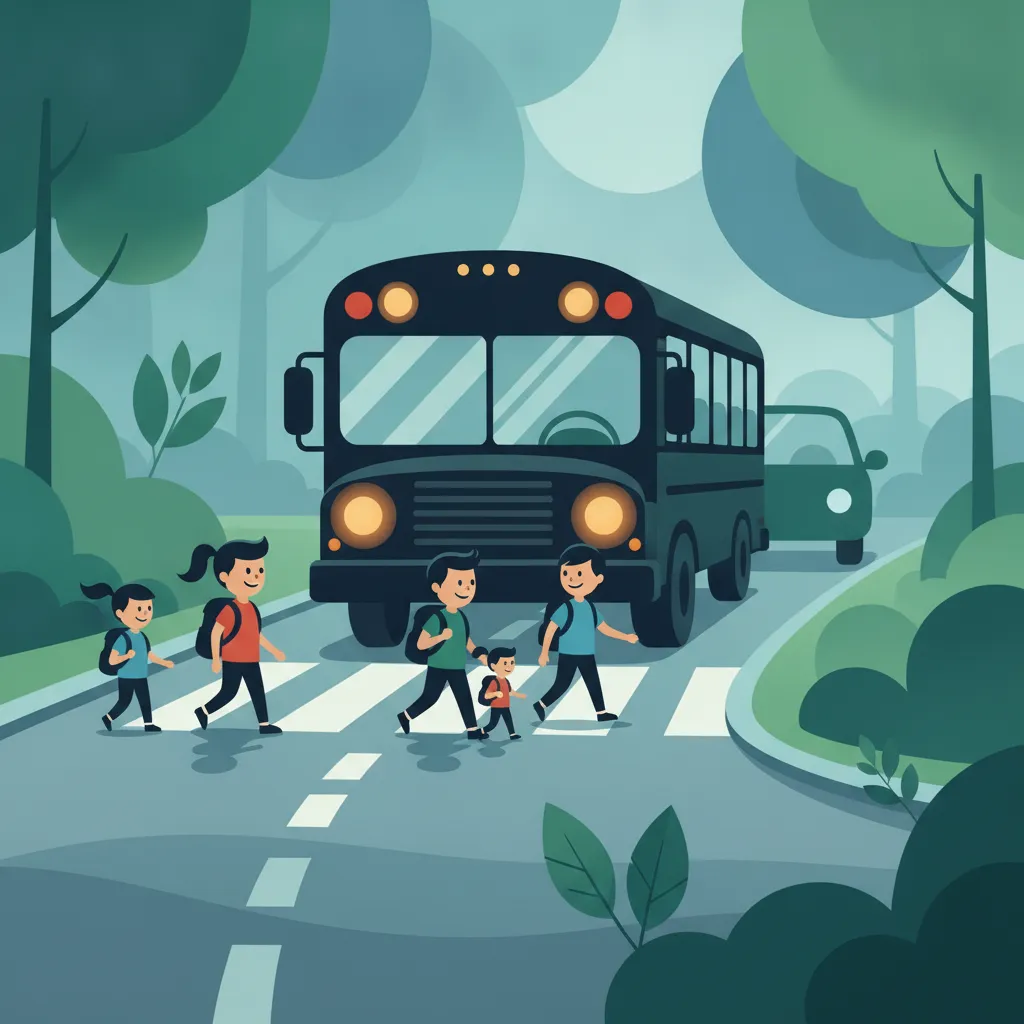
This lesson addresses the critical importance of child safety in school transport zones and around school buses. It covers the specific regulations, such as 20 mph speed limits and stopping restrictions indicated by zigzag lines. Learners will focus on the unpredictable nature of children and the need for heightened vigilance and readiness to stop unexpectedly. The content also includes procedures for the safe transport of pupils, ensuring their security both inside and outside the vehicle.
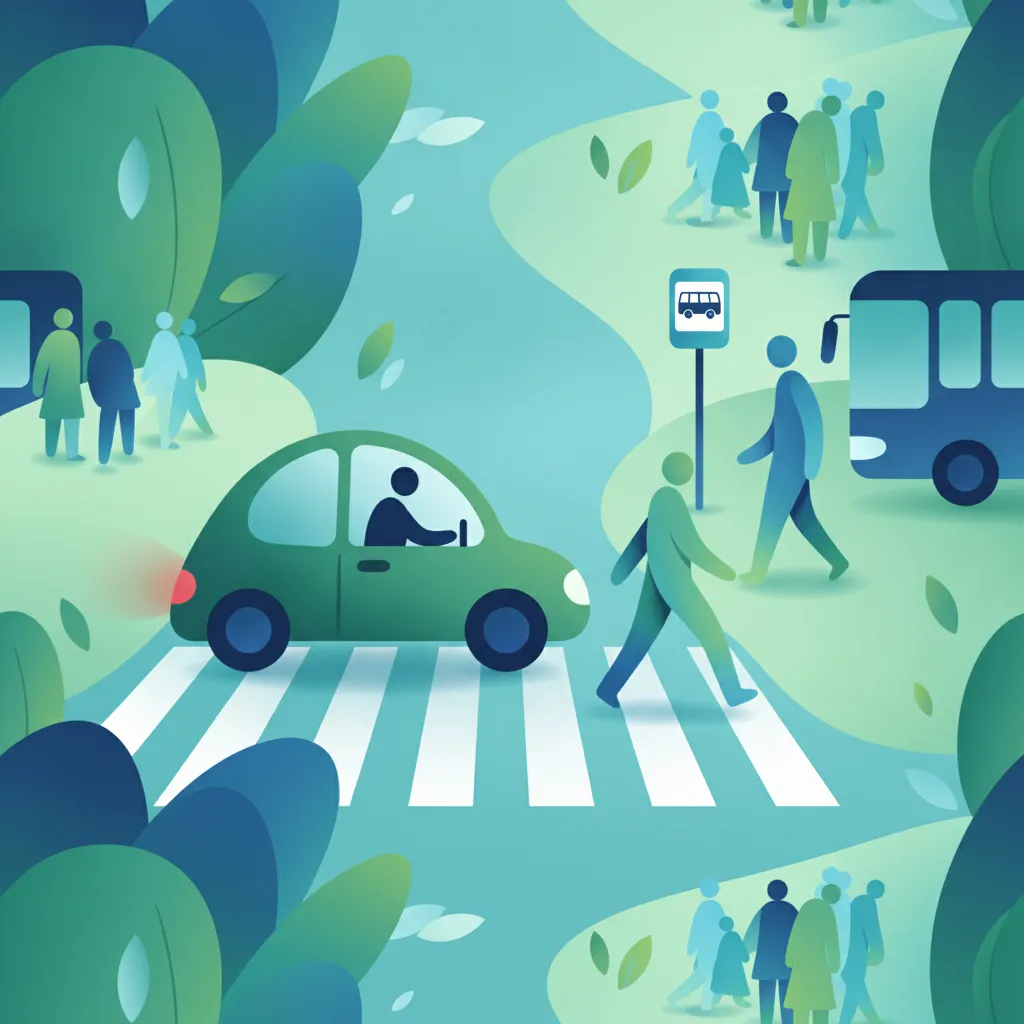
This lesson provides detailed guidance on protecting pedestrians in high-risk areas like bus stops and formal crossings. It covers the specific rules and driver obligations at zebra, pelican, toucan, and puffin crossings, as well as when approaching a school crossing patrol. The content emphasizes the importance of vigilance, anticipating pedestrian movements, especially those who may be distracted or emerge from behind the bus, and always being prepared to stop to prevent accidents.
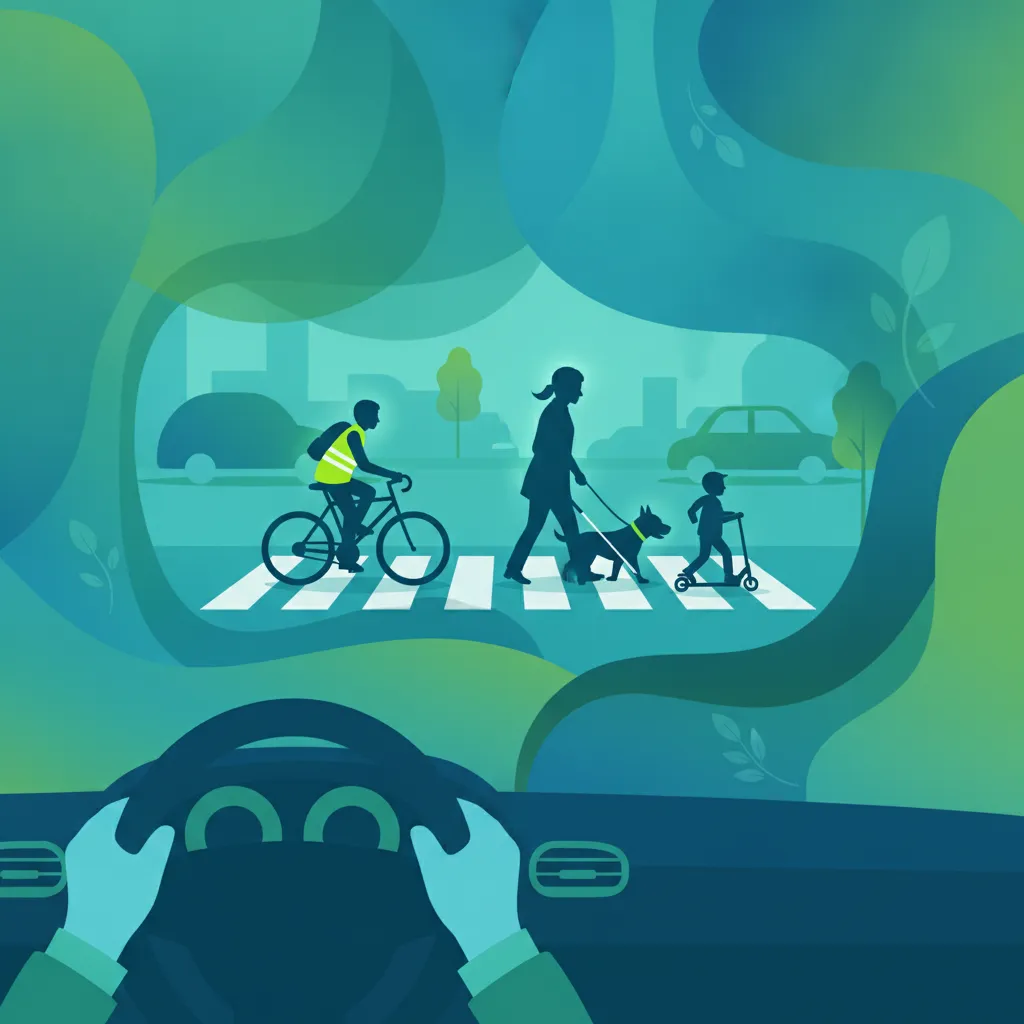
This lesson teaches drivers how to identify various types of vulnerable road users and anticipate their potential actions to prevent conflicts. It covers the specific risks associated with pedestrians, cyclists, motorcyclists, children, and elderly or disabled individuals. Emphasis is placed on heightened awareness and defensive driving techniques required to share the road safely. Understanding their perspectives and typical behaviours is key to protecting them and maintaining safety for everyone.
This lesson details your legal responsibility for passenger safety. It covers the mandatory use of seatbelts for all occupants and explains the specific laws regarding child car seats, which are based on a child's height or weight. Correctly fitted head restraints and understanding how airbags work are also key components of passenger protection.
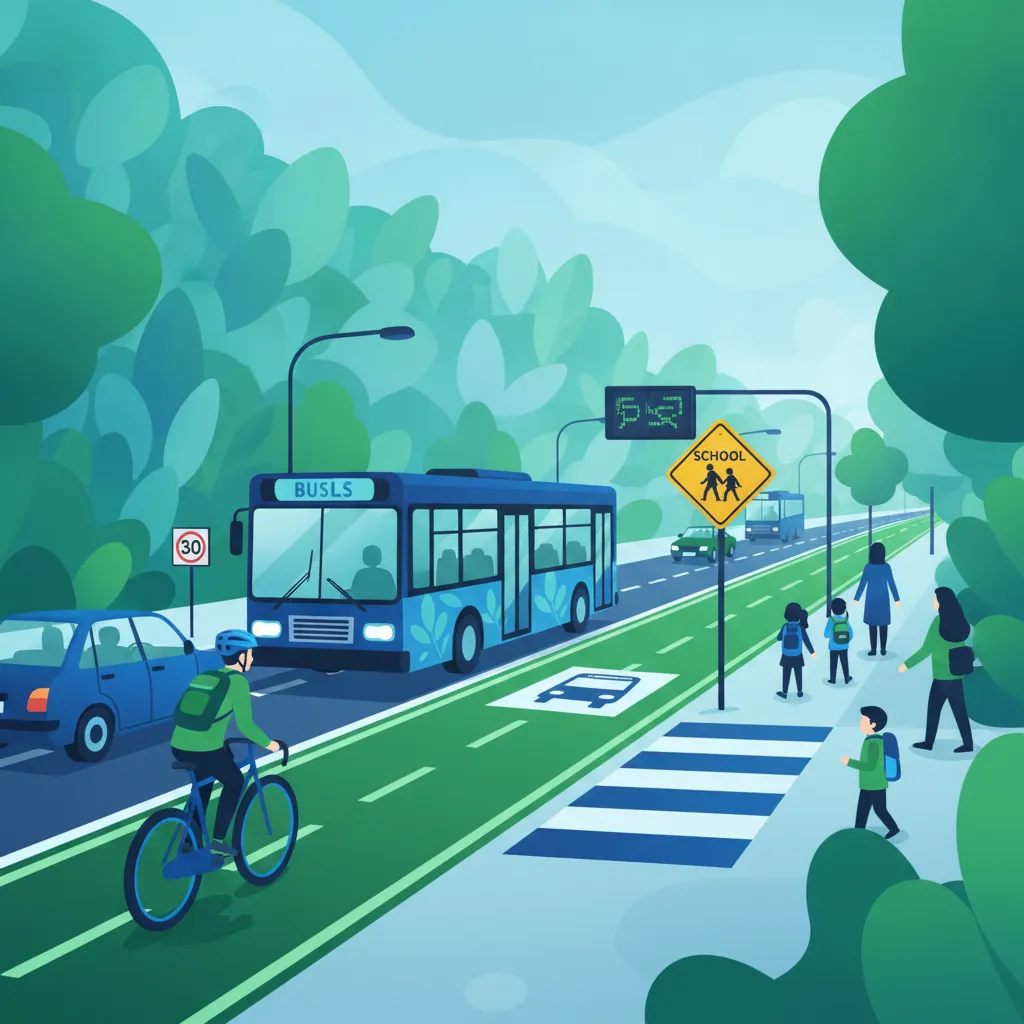
This lesson explains the regulations for special road zones common in urban areas. You will learn about speed restrictions near schools, how to read signs indicating if and when motorcycles can use bus lanes, and how to safely interact with cyclist infrastructure such as advanced stop lines. Compliance with these specific rules is crucial for legal and safe urban riding.
This lesson focuses on a driver's legal and ethical duty of care to all road users. It explains the concept of a road user hierarchy, which prioritizes the safety of vulnerable groups such as pedestrians, cyclists, and motorcyclists. You will learn the principles of defensive driving, anticipating potential hazards, and maintaining a courteous attitude on the road to ensure safety for everyone.
This lesson provides a clear guide to the legal restrictions placed on drivers with a provisional licence. It covers the mandatory display of L-plates and the specific criteria for a supervising driver, including age and experience. Furthermore, it explains the prohibition on driving on motorways and other rules designed to ensure safety during the learning process.
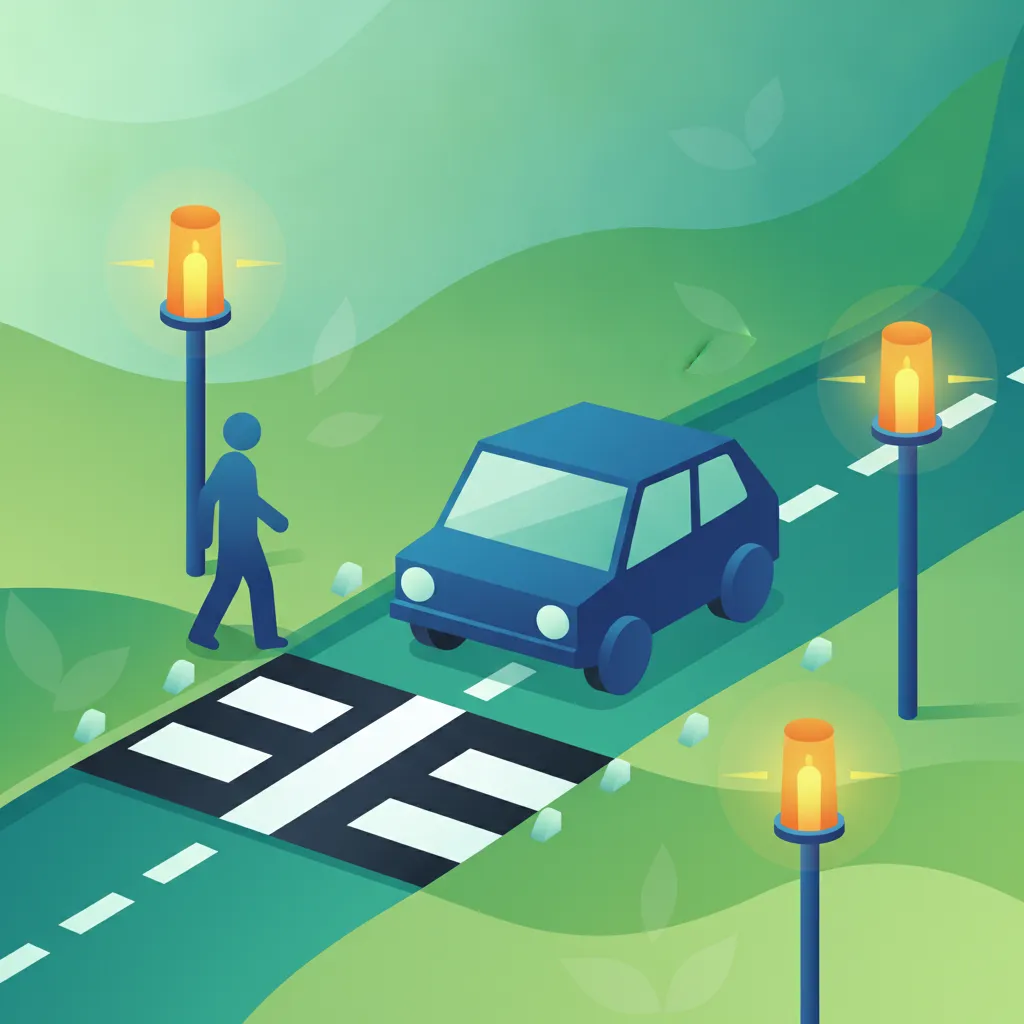
This lesson focuses on the markings and rules at designated pedestrian crossing points. It details the legal requirement to give way to pedestrians on a zebra crossing and explains the light sequences at signal-controlled crossings. You will also learn the meaning of the white zig-zag lines on the approach to all crossings.
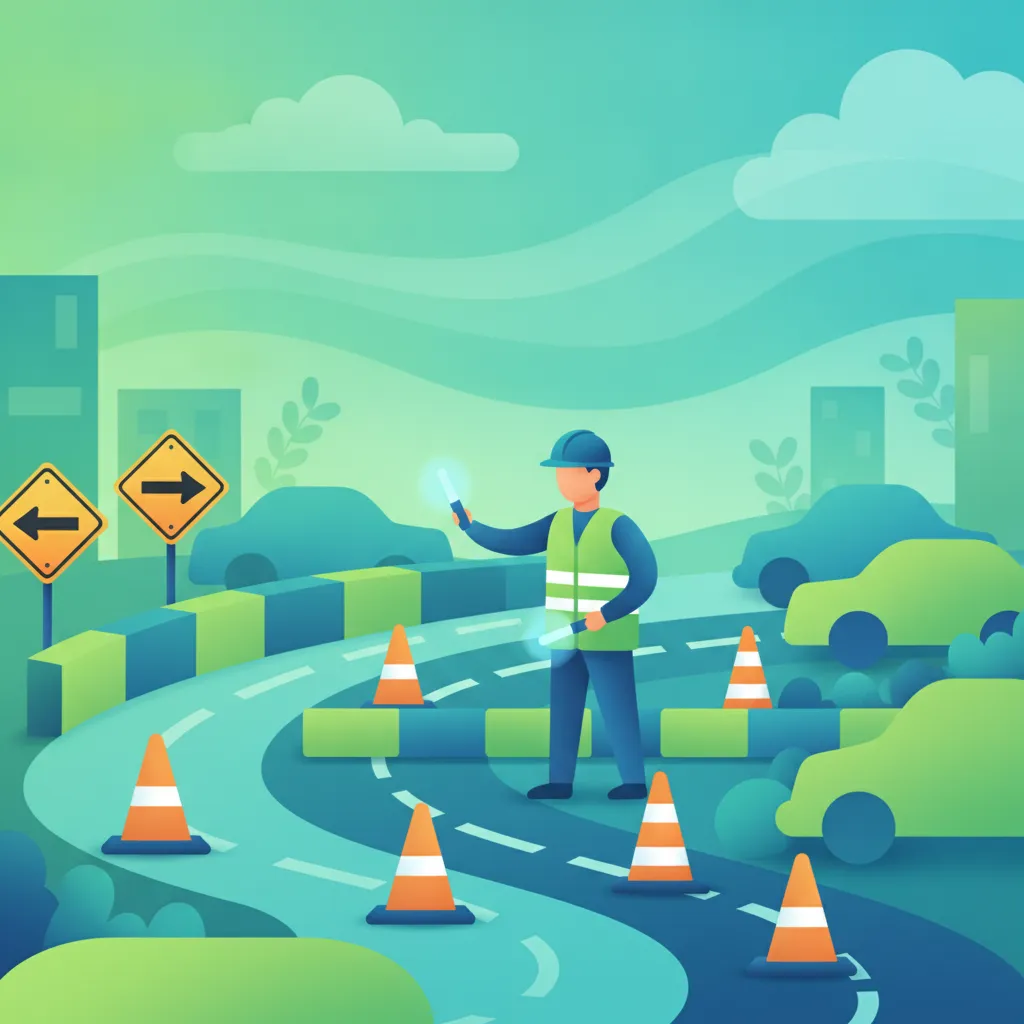
This lesson explains how to drive safely through areas where roadworks are taking place. It stresses the importance of obeying all temporary signs, especially mandatory speed limits, which are in place for your safety and the safety of road workers. You will learn about navigating narrow lanes, contraflow systems, and how to follow official diversion signs.
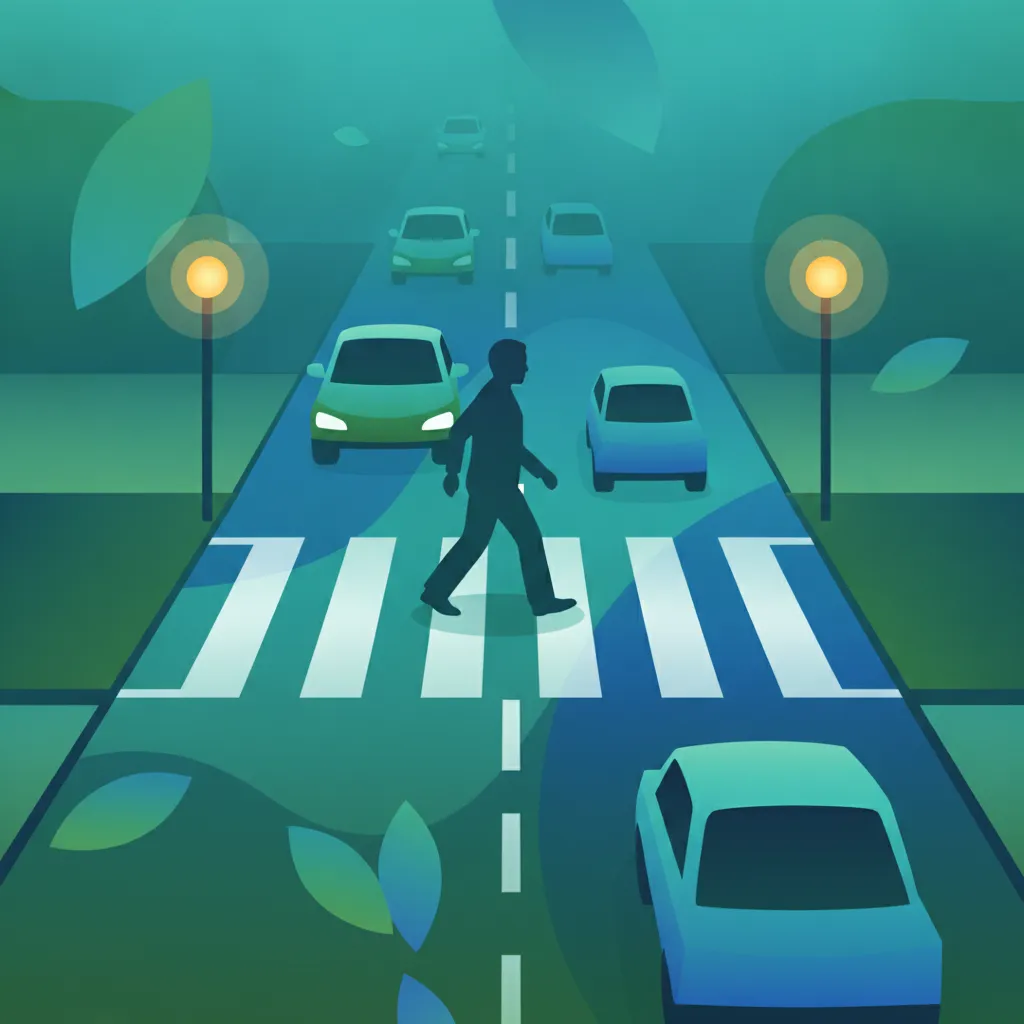
This lesson provides a detailed guide to various pedestrian crossings and their specific rules. You will learn to identify each type by its markings and signals, from the black and white stripes of a zebra crossing to the sensor-controlled lights of a puffin crossing. The focus is on knowing when and how to stop to ensure pedestrian safety.
Master the critical rules and legal obligations for encountering school crossing patrols in Great Britain. Learn exactly when and how to stop for 'Lollipop' patrols to ensure child safety near schools.
This lesson provides detailed guidance on protecting pedestrians in high-risk areas like bus stops and formal crossings. It covers the specific rules and driver obligations at zebra, pelican, toucan, and puffin crossings, as well as when approaching a school crossing patrol. The content emphasizes the importance of vigilance, anticipating pedestrian movements, especially those who may be distracted or emerge from behind the bus, and always being prepared to stop to prevent accidents.
This lesson addresses the critical importance of child safety in school transport zones and around school buses. It covers the specific regulations, such as 20 mph speed limits and stopping restrictions indicated by zigzag lines. Learners will focus on the unpredictable nature of children and the need for heightened vigilance and readiness to stop unexpectedly. The content also includes procedures for the safe transport of pupils, ensuring their security both inside and outside the vehicle.
This lesson focuses on the markings and rules at designated pedestrian crossing points. It details the legal requirement to give way to pedestrians on a zebra crossing and explains the light sequences at signal-controlled crossings. You will also learn the meaning of the white zig-zag lines on the approach to all crossings.
This lesson provides a detailed guide to various pedestrian crossings and their specific rules. You will learn to identify each type by its markings and signals, from the black and white stripes of a zebra crossing to the sensor-controlled lights of a puffin crossing. The focus is on knowing when and how to stop to ensure pedestrian safety.
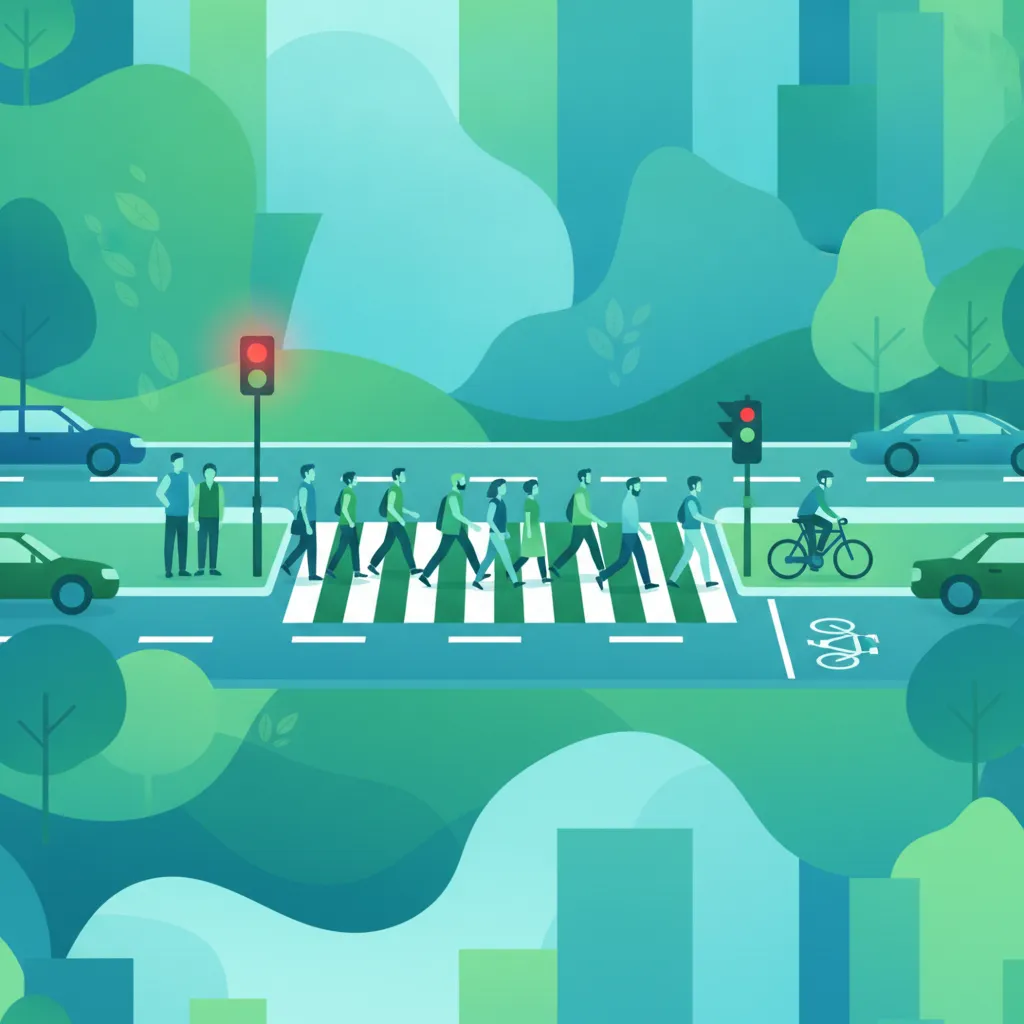
This lesson provides a detailed guide to the various types of pedestrian crossings found on British roads. You will learn the specific rules for each, including the absolute priority of pedestrians at zebra crossings and how to respond to the light signals at pelican, puffin, and toucan crossings. Understanding these rules is essential for protecting vulnerable road users and ensuring you are compliant with the Highway Code.
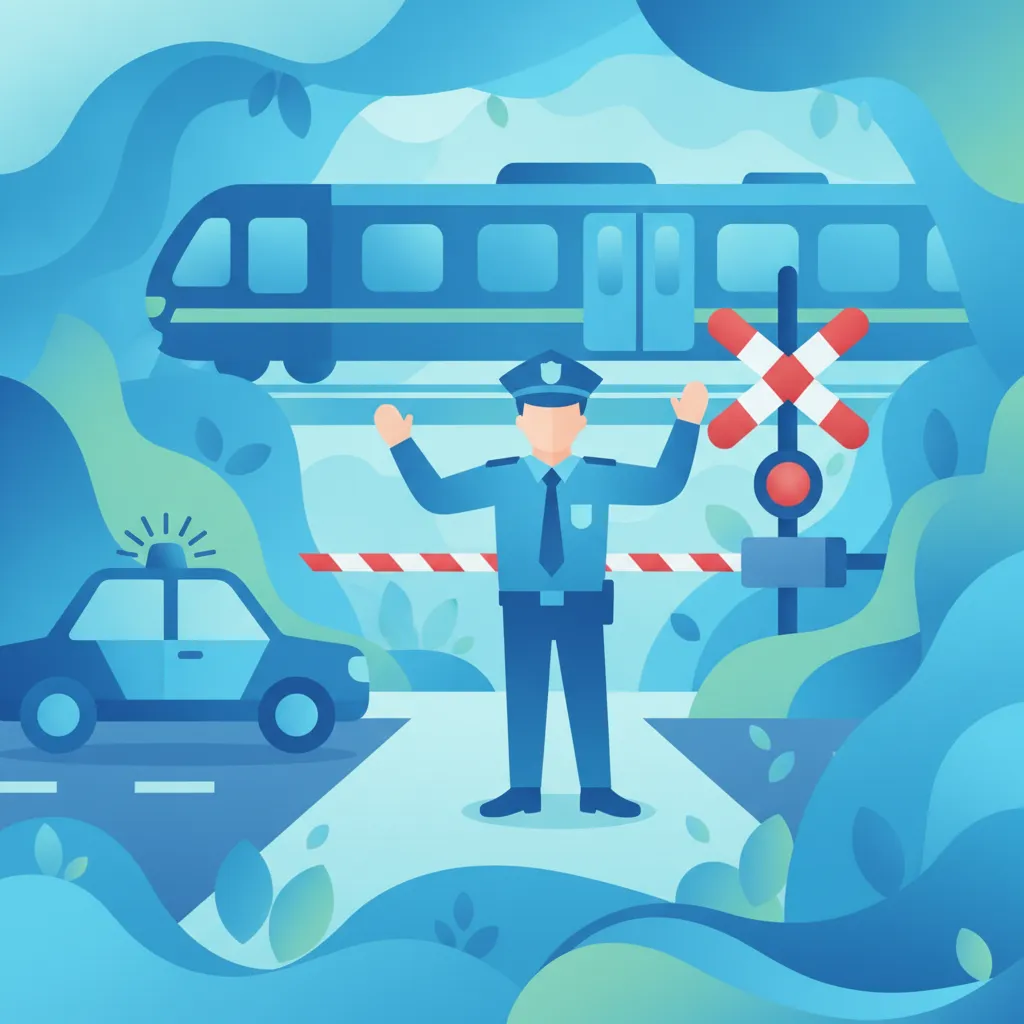
This lesson covers signals that require an immediate and specific response from drivers. You will learn the meaning of hand signals given by police officers and how to give way safely to emergency vehicles with flashing lights or sirens. It also explains the warning light system at railway level crossings, where you must stop when signalled to do so.
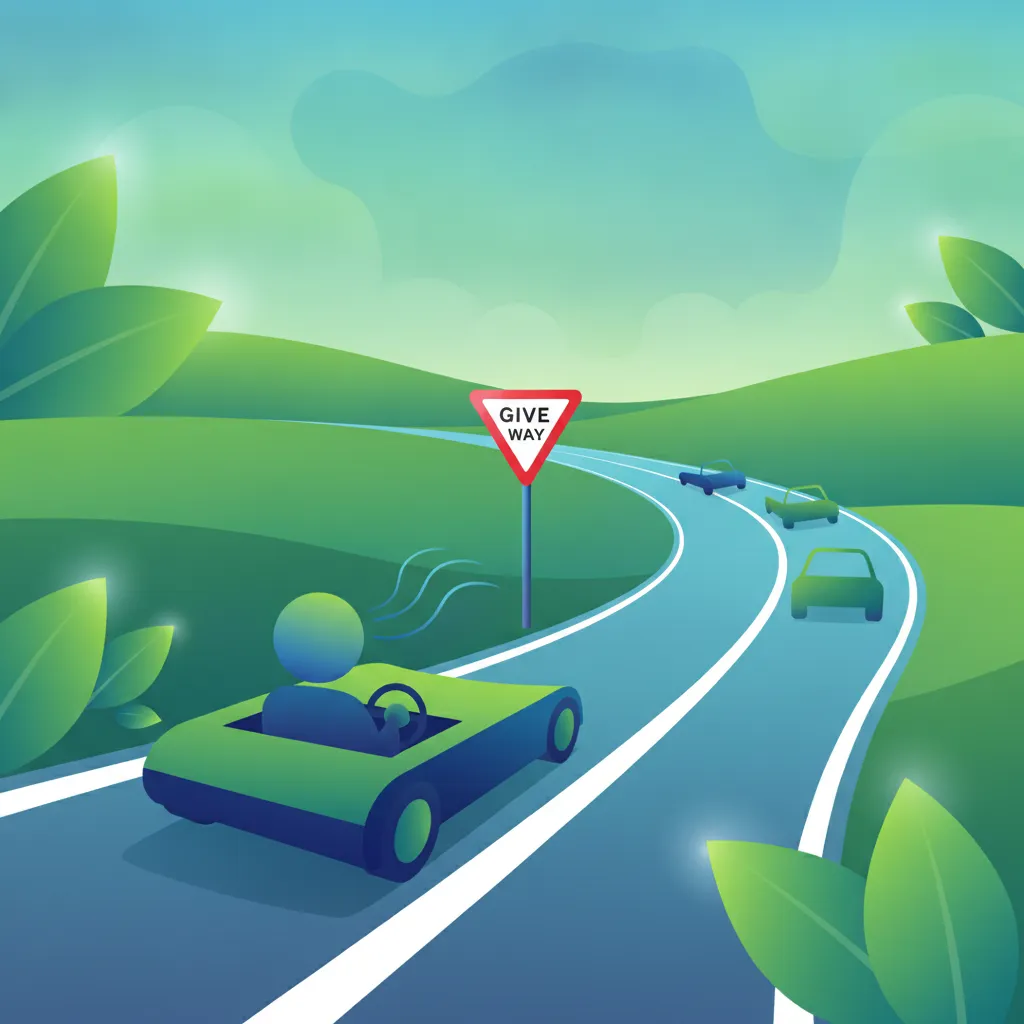
This lesson covers the explicit priority instructions given by signs and markings at junctions. It explains that at a 'Give Way' line, you must yield to traffic on the major road but can proceed if it is safe. At a 'Stop' sign, you must come to a complete halt before the line, assess the traffic, and only proceed when safe.
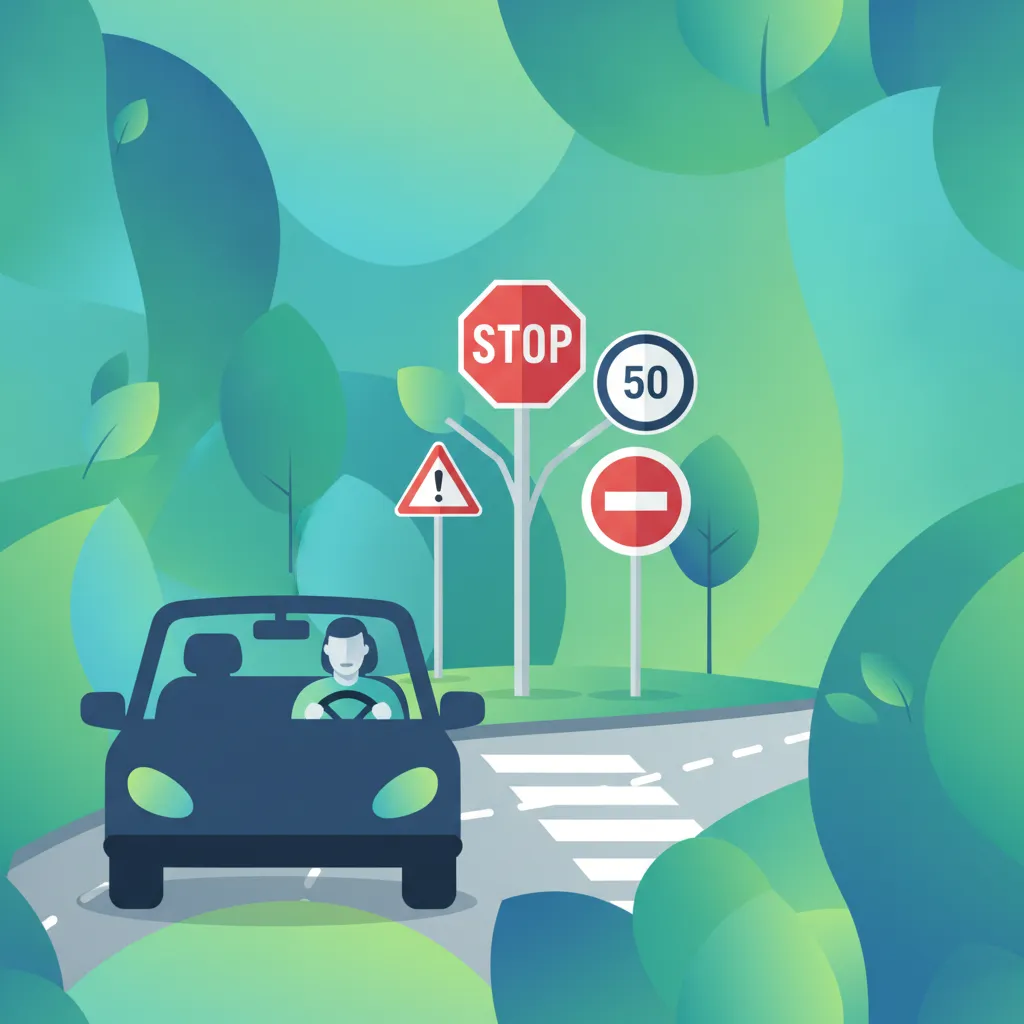
This lesson focuses on regulatory signs, which are legally enforceable and must be obeyed. It explains the difference between prohibitory signs, such as 'No Entry' or speed limits, and mandatory signs, like 'Turn Left'. Understanding the design and meaning of these signs is fundamental to safe and lawful driving in the UK.
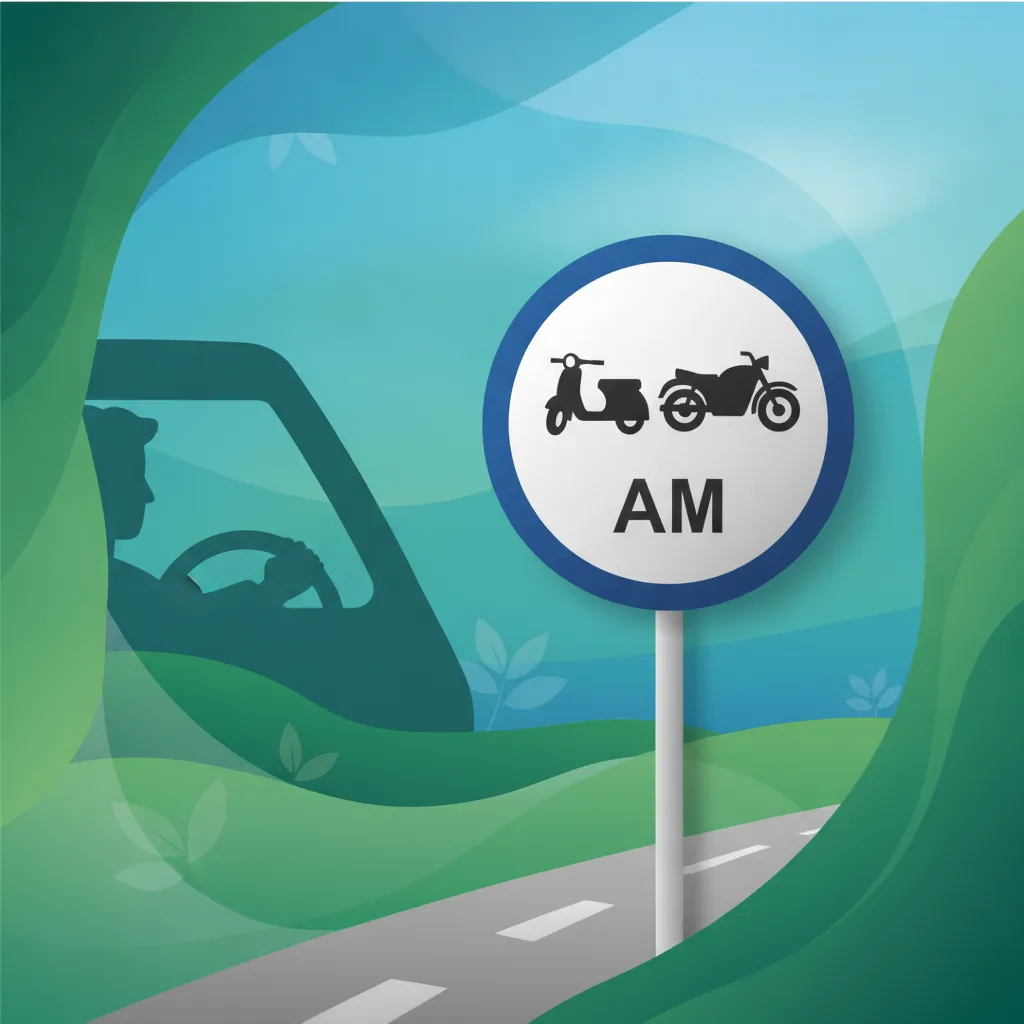
This lesson focuses on regulatory road signs, which convey legally enforceable instructions that all road users must follow. You will learn to identify and understand signs dictating speed limits, prohibited actions like 'no entry' or 'no overtaking', and mandatory directions at junctions. The content explains the distinct shapes and colours used for these signs, ensuring you can comply with their instructions correctly and avoid penalties while riding your AM vehicle.
This lesson focuses on the rules conveyed by road markings, such as solid and broken white lines that dictate overtaking rules and lane boundaries. You will learn to interpret waiting and stopping restrictions indicated by yellow and red lines, and understand markings for specific road users like bus and cycle lanes. Maintaining correct lane discipline based on these markings is a fundamental skill for safe navigation and compliance with the Highway Code.
Find clear answers to common questions learners have about Children, School Zones, and Play Areas. Learn how the lesson is structured, which driving theory objectives it supports, and how it fits into the overall learning path of units and curriculum progression in Great Britain. These explanations help you understand key concepts, lesson flow, and exam focused study goals.
You must be prepared to stop if a school crossing patrol officer steps into the road and displays a 'STOP' sign. Failing to stop for a school crossing patrol is a serious offence that can lead to penalty points and a fine.
While there is no single national speed limit for school zones, many local authorities implement 20 mph zones around schools. Always look for signage indicating temporary or permanent speed limits, and always drive at a speed that allows you to stop safely for unexpected movement.
School buses often stop frequently to drop off children who may be excited or distracted and could step into the road without looking. You should slow down, maintain a safe following distance, and be prepared to stop suddenly.
The test uses both multiple-choice questions regarding signs and rules, and hazard perception video clips. You must demonstrate that you can spot potential hazards like a ball bouncing into the road or children running near the pavement.
Dive into our comprehensive question bank to find exactly what you need for your Great Britain theory test. Use our advanced filters to pinpoint specific subjects or test your knowledge on challenging areas, ensuring you're fully prepared for success.