
This lesson establishes the professional foundation required for operating passenger vehicles, such as buses, coaches, and minibuses. You will explore the critical duty of care you owe to your passengers and other road users, ensuring you maintain the highest ethical standards throughout your career.
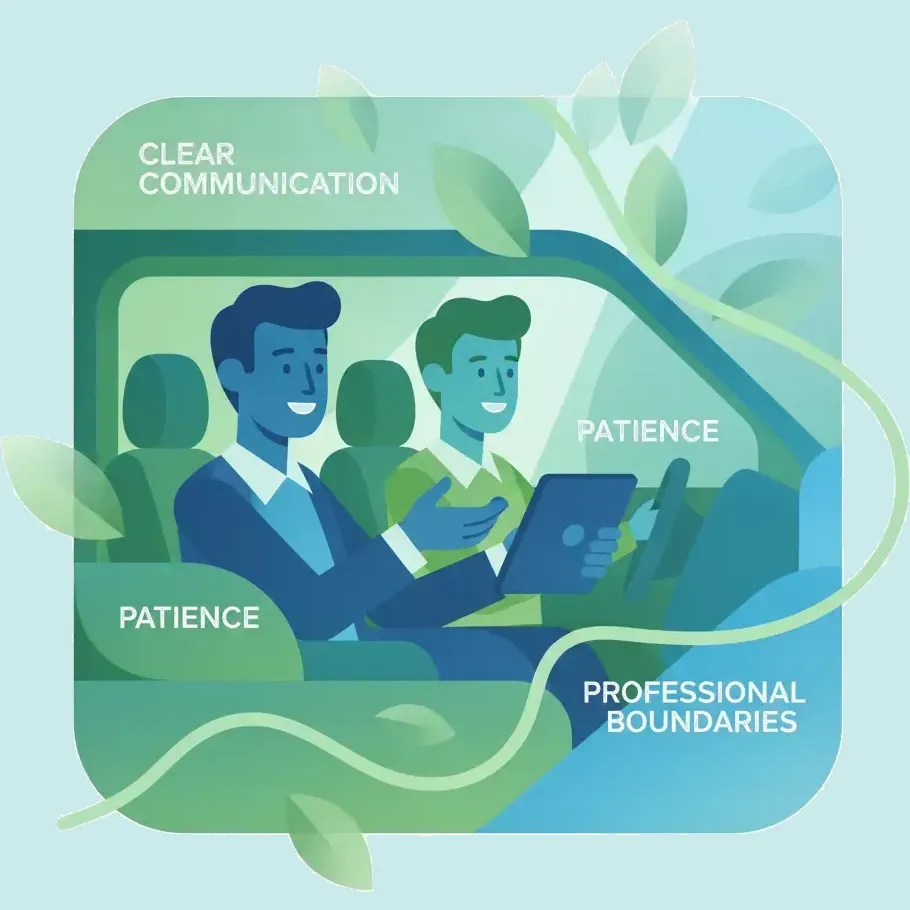
Lesson content overview
Operating a passenger vehicle in Great Britain, such as a bus, coach, or minibus, carries significant responsibilities beyond simply driving. As a professional driver, you are entrusted with the safety, comfort, and well-being of your passengers and are held to high standards of conduct by law, your employer, and the public. This lesson will explore the professional duties and ethical expectations that define responsible passenger transport, highlighting your essential role in maintaining public trust.
At the core of professional driving is the Duty of Care, a legal obligation to act reasonably to avoid causing foreseeable harm to others. This fundamental principle applies not only to your passengers but also to pedestrians, cyclists, and all other road users. It extends to the condition of your vehicle and your decision-making on the road.
A legal obligation requiring individuals to act reasonably to avoid causing foreseeable harm to others. For professional drivers, this encompasses passengers, other road users, and the public.
Your duty of care manifests in ensuring both the physical and psychological safety of everyone affected by your actions. Physical safety involves taking all reasonable steps to prevent injury or death. This includes rigorous pre-trip vehicle inspections, employing safe driving techniques, and ensuring that passengers, especially those with mobility aids, are properly secured. You must be vigilant for potential hazards and react prudently to minimise risks. Psychological safety requires maintaining a calm, courteous demeanour. You must prevent intimidation, harassment, or any behaviour that could cause distress or fear among passengers or other road users. A respectful and reassuring presence is crucial, especially in challenging situations or when interacting with vulnerable individuals.
In practice, upholding your duty of care means a constant state of awareness and proactive safety measures. Before starting your journey, you must conduct thorough pre-trip inspections to verify the vehicle's roadworthiness, including brakes, tyres, lights, and passenger safety equipment. While driving, you are expected to operate defensively, anticipate potential hazards, and adjust your driving to prevailing road and weather conditions. This also involves ensuring passengers are seated or standing safely, adhering to speed limits, and maintaining safe following distances. Should a passenger trip while boarding or alighting, your duty extends to providing immediate, appropriate assistance.
Always remember that your duty of care begins before the wheels turn. A thorough pre-trip inspection is not just a regulatory requirement; it's a fundamental part of ensuring physical safety.
Professional conduct encompasses the behavioural standards expected of you as a public transport driver, going beyond the basic legal requirements. It reflects your responsibility to your employer, your passengers, and the broader community, shaping the public perception of the entire transport sector.
The standards of behaviour expected of drivers, including punctuality, appearance, communication, and adherence to company policies, reflecting the responsibilities of a public transport professional.
Your professional image begins with your appearance and punctuality. Adhering to your employer's dress code and ensuring on-time departures are vital for building trust and reliability. A neat and tidy appearance conveys respect for your passengers and your role. Punctuality is crucial for maintaining schedules and avoiding unnecessary stress for passengers. Effective communication is another cornerstone. Interactions with passengers should always be clear, polite, and calm, even when faced with difficult situations or questions. Clearly announcing stops, informing passengers of delays, or providing assistance requires a respectful and helpful tone.
Beyond interpersonal communication, professional conduct demands strict compliance with your employer’s operational policies. This includes adhering to specified routes, schedules, and any company-specific operational protocols. These policies are designed to ensure consistent service quality, operational efficiency, and legal compliance. Any deviation without proper authorisation can lead to service disruptions, passenger inconvenience, and potential disciplinary action or licence sanctions.
Ethical standards are the moral guidelines that steer your behaviour, ensuring that you act with integrity, fairness, and respect for all individuals. These principles are not merely abstract concepts; they are codified in law and are crucial for fostering a trustworthy and equitable public transport service.
Moral principles guiding driver behaviour, including honesty, fairness, respect for passenger welfare, and non-discriminatory service.
A fundamental ethical standard is non-discrimination. The Equality Act 2010 legally mandates that you provide equal service to all passengers, irrespective of their protected characteristics such as race, religion, gender, disability, sexual orientation, or age. This means offering priority seating to elderly or disabled passengers, providing necessary assistance for boarding and alighting, and ensuring wheelchair users have access to secure spaces. Refusing service or treating any passenger unfairly based on a protected characteristic is a serious breach of both ethical standards and the law, potentially leading to legal complaints, fines, and reputational damage.
Honesty is paramount, particularly when dealing with incidents. Accurately completing incident reports, whether for an accident, a near-miss, or a passenger complaint, is a non-negotiable ethical duty. Falsifying information not only compromises accountability mechanisms but can also lead to criminal liability and the revocation of your professional licence. Your truthful account is vital for investigations, learning from mistakes, and improving safety for future services.
Respect for passenger dignity means avoiding harassment, ensuring their privacy, and providing any necessary assistance courteously and compassionately. It’s about creating an environment where every passenger feels valued and safe.
Public confidence is the collective trust that passengers and the wider community place in public transport services to be safe, reliable, and ethical. This confidence is a fragile asset, directly influenced by every interaction and every journey. As a professional driver, your actions profoundly impact this perception.
The belief by the public that passenger transport services are safe, reliable, and ethical. It is central to maintaining ridership and regulatory goodwill.
Public confidence is built on three pillars:
Every decision you make and every interaction you have contributes to or detracts from public confidence. A polite greeting, a smooth journey, a timely arrival, or a calm handling of an emergency can significantly bolster public trust. Conversely, aggressive driving, disrespectful behaviour, or visible neglect of vehicle maintenance can quickly diminish it. High levels of public confidence drive demand for services, influence regulatory scrutiny positively, and contribute to the overall success and reputation of the transport sector.
To ensure compliance with legal obligations and ethical standards, a range of accountability mechanisms are in place within the Great Britain passenger transport industry. These systems are designed to monitor driver performance, report misconduct, and enforce corrective actions, fostering continuous improvement and safeguarding public safety.
Systems and structures for monitoring, reporting, and sanctioning driver behaviour, ensuring compliance with laws and industry standards.
Regulatory inspections are regularly conducted by bodies such as the Driver and Vehicle Standards Agency (DVSA). These checks scrutinise vehicle roadworthiness, driver hours, and operational compliance, ensuring that legal and safety standards are consistently met. Drivers must be prepared to cooperate fully with DVSA officials and provide any required documentation or access for inspections. Company audits are internal performance reviews carried out by your employer. These may include observational audits of your driving, reviews of passenger feedback, or checks on adherence to company policies. These internal mechanisms help identify areas for improvement and ensure that professional standards are maintained across the fleet.
Incident reporting is a critical accountability mechanism. Any accident, near-miss, or serious incident must be documented accurately and promptly using mandatory incident report forms. This often includes preserving evidence, such as CCTV footage. The information gathered through incident reporting allows for thorough investigations, helps identify systemic issues, and facilitates learning to prevent future occurrences. Failure to report incidents or the falsification of reports can lead to serious consequences, including prosecution and licence revocation. Drivers are subject to clear disciplinary procedures, and repeated breaches of professional duties may ultimately result in the loss of their professional licence.
Professional duties and ethical conduct are underpinned by specific legislation and guidelines in Great Britain. Adhering to these rules is not merely an ethical choice but a legal imperative for all Category D, D1, D1E, or DE drivers.
Applicability: All Category D drivers while operating a passenger vehicle. Legal Status: Mandatory. Rationale: This Act is fundamental to preventing passenger injury and death by stipulating a clear duty of care. Section 6, for instance, relates to the general offence of causing death by dangerous driving and highlights the seriousness of neglecting your duty. Correct Application: Always conducting comprehensive pre-trip checks, ensuring all seat belts or restraints (including those for wheelchairs) are functional and properly used, and safely overseeing passenger boarding and alighting. Incorrect Application: Allowing vehicle doors to open prematurely while the vehicle is in motion, failing to secure luggage that could become a projectile, or driving a vehicle known to have serious defects.
Applicability: All public service vehicle drivers. Legal Status: Mandatory. Rationale: These regulations reflect the duty towards maintaining public confidence and ensuring safety through prescribed driver conduct. Regulation 87, and Schedule 1, Part I, are particularly relevant to the general conduct of drivers of public service vehicles. Correct Application: Adhering to prescribed conduct, such as refraining from smoking while on duty, maintaining a clean and presentable vehicle, and avoiding any behaviour that could intimidate passengers. Incorrect Application: Ignoring passenger complaints about harassment from other passengers, or engaging in distracting activities while driving.
Applicability: Operators and drivers providing passenger services. Legal Status: Mandatory. Rationale: Sections 29-33 of the Equality Act 2010 protect individuals with "protected characteristics" from discrimination, ensuring equitable treatment and access to services for everyone. Correct Application: Proactively offering priority seats to disabled or elderly passengers, providing necessary assistance for individuals with mobility impairments to board and alight, and treating all passengers with respect regardless of their background. Incorrect Application: Refusing service to a passenger based on their race, religion, sexual orientation, or disability; or making derogatory comments about a passenger's appearance.
Applicability: Any driver involved in an accident, near-miss, or serious incident while operating a Category D vehicle. Legal Status: Mandatory (failure may lead to prosecution). Rationale: These guidelines (updated versions, e.g., 2023) ensure that incidents are systematically reported, allowing for investigation, accountability, and learning to improve overall road safety. Correct Application: Completing an official Incident Report Form accurately and within the specified timeframe (e.g., 24 hours), preserving any relevant evidence such as CCTV footage or witness statements. Incorrect Application: Deliberately delaying the submission of an incident report, falsifying details within the report, or attempting to conceal an incident.
Flashing amber lights on a vehicle used to warn other road users of a stationary vehicle or a hazard. They are not to be used while moving, except in specific emergency situations, but this is rare in UK law.
Applicability: When a vehicle is stationary and poses a danger to other road users. Legal Status: Mandatory when required (e.g., broken down on a carriageway); prohibited while moving except in extremely limited circumstances. Regulation 42 of the Road Vehicles (Construction and Use) Regulations 1986 governs their use. Rationale: Alerts other road users to a static hazard, preventing potential collisions. Correct Application: Activating hazard lights immediately when your vehicle has broken down and is obstructing the carriageway or hard shoulder, or when you are temporarily stopped in a position that might be unexpected or dangerous. Incorrect Application: Using hazard lights while moving to indicate you are operating as a "priority" vehicle or using an "express lane" – this is illegal and highly confusing for other drivers.
Using hazard warning lights while moving, unless in specific, extreme emergency situations that are clearly defined by law, is illegal in Great Britain and can lead to confusion and accidents.
Professional drivers face significant consequences for failing to adhere to their duties and ethical standards. Understanding these common violations can help you avoid them.
The application of your professional duties and ethical conduct is not static; it must adapt to the prevailing conditions and the specific needs of different road users.
The adherence to professional duties and ethical standards creates a clear chain of positive cause-and-effect outcomes, while their violation leads to detrimental consequences.
Your consistent professionalism is the bedrock of a safe, reliable, and respected public transport service.
Here are some real-world situations illustrating how professional duties and ethical conduct are applied.
Setting: An urban bus stop during heavy rain, serving a route with many elderly residents. Rule/Decision: The driver must ensure the safe and non-discriminatory boarding of a wheelchair user, adhering to the Duty of Care and Equality Act 2010. Correct Behaviour: The driver carefully parks the bus precisely at the designated stop, activating hazard lights to warn traffic. They assist the wheelchair user, ensuring the ramp is deployed safely and that the wheelchair is secured with all restraints before moving the vehicle. They offer a brief, reassuring comment about the weather. Incorrect Behaviour: The driver stops several metres from the curb, opening the rear door directly onto the carriageway to save time, exposing the passenger to rain and traffic. They fail to double-check the wheelchair restraints, risking the passenger's safety if the bus stops suddenly or takes a sharp turn.
Setting: An evening service where a passenger alleges the driver used aggressive language earlier in the journey. Rule/Decision: The driver must handle the complaint professionally, ethically, and in accordance with company policy and the Road Vehicles (Construction and Use) Regulations 1986. Correct Behaviour: The driver listens calmly to the passenger's complaint without interruption, apologises for any distress caused, and assures them that the matter will be investigated. They record the details of the complaint, including the passenger's contact information, and inform the depot manager immediately upon completing their shift. Incorrect Behaviour: The driver dismisses the complaint, argues with the passenger, or even threatens to eject them from the bus. This breaches professional conduct, could be considered harassment, and damages public confidence significantly.
Setting: A rural minibus (Category D1) service experiencing unexpectedly high demand, with the vehicle already at its legal seating capacity. Rule/Decision: The driver must not overload the vehicle beyond its legal maximum capacity, adhering to safety regulations and the Duty of Care. Correct Behaviour: The driver politely but firmly explains to any waiting passengers that the minibus is at full capacity and cannot legally or safely take more passengers. They inform passengers of the next scheduled service or alternative transport options if known. Incorrect Behaviour: The driver, feeling pressured, allows extra standing passengers to board. This increases the vehicle's weight and raises its centre of gravity, making it unstable and potentially leading to a loss of control, especially on rural bends, and incurs legal penalties for overloading.
Setting: A coach on a motorway experiences a sudden mechanical failure and pulls onto the hard shoulder during daylight hours. Rule/Decision: The driver must activate hazard warning lights immediately to alert other road users, as per Regulation 42 of the Road Vehicles (Construction and Use) Regulations 1986. Correct Behaviour: The driver immediately activates the hazard warning lights, safely brings the vehicle to a stop on the hard shoulder, ensures all passengers are aware of the situation, and then contacts the control centre or emergency services to report the breakdown and request assistance. Incorrect Behaviour: The driver, focused solely on contacting the depot, fails to activate the hazard lights. This leaves the stationary coach without a crucial visual warning for high-speed motorway traffic, significantly increasing the risk of a rear-end collision.
This lesson has illuminated the multifaceted responsibilities of professional passenger vehicle drivers in Great Britain. Your role extends far beyond merely operating a vehicle; it encompasses a profound Duty of Care for passengers and other road users, implemented through diligent pre-trip inspections, safe driving techniques, and secure boarding procedures.
Professional Conduct dictates expected behaviour, covering punctuality, appearance, respectful communication, and strict adherence to company policies. These standards are critical for maintaining operational efficiency and a positive service image.
Ethical Standards guide your moral compass, demanding honesty in all dealings, fairness in providing service without discrimination, and unwavering respect for passenger welfare and dignity, as mandated by legislation like the Equality Act 2010.
Together, these principles build Public Confidence, which is vital for the viability and reputation of public transport services. This trust is continuously nurtured by consistent safety, reliability, and ethical behaviour.
Accountability Mechanisms, including DVSA inspections, internal company audits, and mandatory incident reporting, are in place to monitor performance, ensure compliance, and enforce corrective actions, reinforcing that drivers are subject to review for both major and minor infractions.
Crucial Regulations, such as the Road Traffic Act 1988, the Road Vehicles (Construction and Use) Regulations 1986, the Equality Act 2010, and DVSA enforcement guidelines, provide the legal framework for these duties, with specific stipulations on conduct, non-discrimination, and incident reporting. Understanding common violations—from neglecting wheelchair restraints to falsifying reports or improper use of hazard lights—and their severe consequences is paramount.
Finally, your professional duties require dynamic adaptation to Conditional Variations, whether navigating adverse weather, varying road types, vehicle loading, or interacting with vulnerable road users. Your proactive adjustments ensure safety and ethical practice in every unique situation. The interplay of these elements creates a direct cause-and-effect relationship: adherence leads to safety, trust, and regulatory compliance, while breaches result in accidents, legal penalties, and a loss of public faith. Mastery of the Essential Vocabulary associated with these concepts is vital for your professional development and success.
Professional passenger vehicle drivers in Great Britain operate under a comprehensive legal and ethical framework that extends far beyond basic driving skills. Their Duty of Care, codified in the Road Traffic Act 1988, requires constant vigilance for passenger and public safety through pre-trip inspections, defensive driving, and secure boarding procedures. Professional conduct standards cover appearance, punctuality, communication, and company policy adherence, while ethical standards require honest, fair, and non-discriminatory service under the Equality Act 2010. Accountability mechanisms including DVSA inspections, company audits, and mandatory incident reporting monitor compliance, with serious consequences for violations such as failing to secure wheelchair users, overloading vehicles, or falsifying reports. The lesson includes practical scenarios demonstrating correct and incorrect responses to common situations, helping learners apply these principles to both the DVSA theory test and real-world professional driving.
A short set of high-value points that capture the most important learning from this lesson.
Duty of Care is a legal obligation requiring professional drivers to act reasonably to prevent foreseeable harm to passengers and all other road users
Professional conduct encompasses punctuality, appearance, respectful communication, and adherence to employer policies beyond minimum legal requirements
The Equality Act 2010 mandates equal service provision regardless of protected characteristics including disability, race, gender, or age
Incident reporting requires absolute accuracy and honesty; falsification constitutes a criminal offence carrying serious penalties including licence revocation
Public confidence in bus and coach services depends on consistent safety, reliability, and ethical behaviour by drivers
Explore all units and lessons included in this driving theory course.
Road Traffic Act 1988 Section 6 establishes the mandatory duty of care for all Category D drivers operating passenger vehicles
Equality Act 2010 Sections 29-33 protect passengers from discrimination based on protected characteristics and require accessible service provision
Regulation 42 of the Road Vehicles (Construction and Use) Regulations 1986 prohibits using hazard lights while moving except in defined extreme emergencies
Thorough pre-trip inspections are a mandatory, non-negotiable part of duty of care that must occur before every journey
Incident Report Forms must be completed accurately and promptly, typically within 24 hours, with all relevant evidence preserved
Failing to properly secure wheelchair restraints before departure, which breaches duty of care and endangers passengers with mobility aids
Using hazard warning lights while the vehicle is moving to indicate priority or an express lane, which is illegal and dangerously misleading
Allowing passengers to board beyond the vehicle's legal maximum capacity, affecting stability and invalidating insurance
Refusing or providing inferior service to passengers based on protected characteristics, directly contravening the Equality Act 2010
Falsifying or delaying submission of incident reports, which constitutes a criminal offence that can result in prosecution and licence loss
Lesson content overview
A short set of high-value points that capture the most important learning from this lesson.
Duty of Care is a legal obligation requiring professional drivers to act reasonably to prevent foreseeable harm to passengers and all other road users
Professional conduct encompasses punctuality, appearance, respectful communication, and adherence to employer policies beyond minimum legal requirements
The Equality Act 2010 mandates equal service provision regardless of protected characteristics including disability, race, gender, or age
Incident reporting requires absolute accuracy and honesty; falsification constitutes a criminal offence carrying serious penalties including licence revocation
Public confidence in bus and coach services depends on consistent safety, reliability, and ethical behaviour by drivers
Explore all units and lessons included in this driving theory course.
Road Traffic Act 1988 Section 6 establishes the mandatory duty of care for all Category D drivers operating passenger vehicles
Equality Act 2010 Sections 29-33 protect passengers from discrimination based on protected characteristics and require accessible service provision
Regulation 42 of the Road Vehicles (Construction and Use) Regulations 1986 prohibits using hazard lights while moving except in defined extreme emergencies
Thorough pre-trip inspections are a mandatory, non-negotiable part of duty of care that must occur before every journey
Incident Report Forms must be completed accurately and promptly, typically within 24 hours, with all relevant evidence preserved
Failing to properly secure wheelchair restraints before departure, which breaches duty of care and endangers passengers with mobility aids
Using hazard warning lights while the vehicle is moving to indicate priority or an express lane, which is illegal and dangerously misleading
Allowing passengers to board beyond the vehicle's legal maximum capacity, affecting stability and invalidating insurance
Refusing or providing inferior service to passengers based on protected characteristics, directly contravening the Equality Act 2010
Falsifying or delaying submission of incident reports, which constitutes a criminal offence that can result in prosecution and licence loss
Explore search topics learners often look for when studying Professional Duties and Ethical Conduct. These topics reflect common questions about road rules, driving situations, safety guidance, and lesson level theory preparation for learners in Great Britain.
Browse additional driving theory lessons that cover connected traffic rules, road signs, and common driving situations related to this topic. Improve your understanding of how different rules interact across everyday traffic scenarios.
Explore the legal duty of care and ethical standards expected of professional passenger vehicle drivers in Great Britain. Learn about passenger safety obligations, maintaining public trust, and adhering to professional conduct principles as required by DVSA theory.

This lesson details your legal responsibility for passenger safety. It covers the mandatory use of seatbelts for all occupants and explains the specific laws regarding child car seats, which are based on a child's height or weight. Correctly fitted head restraints and understanding how airbags work are also key components of passenger protection.

This lesson defines the critical duty of care that professional goods vehicle drivers owe to the public, their cargo, and their workplace. It covers how professional standards and industry codes of practice contribute to accident prevention and a positive safety culture. Learners will understand that this responsibility extends beyond personal safety to include protecting vulnerable road users and maintaining the integrity of the goods being transported, which is crucial for professional trust.
This lesson focuses on a driver's legal and ethical duty of care to all road users. It explains the concept of a road user hierarchy, which prioritizes the safety of vulnerable groups such as pedestrians, cyclists, and motorcyclists. You will learn the principles of defensive driving, anticipating potential hazards, and maintaining a courteous attitude on the road to ensure safety for everyone.

This lesson provides a thorough understanding of the core safety principles required to protect passengers. It covers secure seating, safe standing zones, and the proper handling of passenger luggage to prevent hazards. Learners will also identify the location and use of emergency equipment, understand seatbelt compliance, and learn how to conduct on-board safety briefings. The focus is on risk assessment and hazard identification to maintain a secure environment for all passengers.

This lesson focuses on the legal and practical requirements for providing accessible transport for passengers with reduced mobility. It covers wheelchair access, ramp usage, and securement devices, as well as procedures for safely assisting passengers with mobility aids. The discussion highlights relevant disability legislation and the importance of proper loading and unloading protocols to protect both passengers and the driver from injury, ensuring compliance with accessibility standards in Great Britain.

This lesson focuses on the essential role of public trust in maintaining the reputation and reliability of passenger transport services. Learners will explore how passenger welfare is central to building confidence, emphasizing the impact of a strong safety culture and effective risk management on service perception. The content highlights the driver's responsibility in upholding stakeholder expectations, including community safety and the broader societal role of public transportation, ensuring a high standard of service.

Explore the critical topics of driver liability, insurance, and legal penalties in Great Britain. This lesson distinguishes between civil and criminal liability in the context of road incidents. It details the compulsory third-party insurance every driver must have and explains the penalty points system for traffic offences, including fines and potential disqualification.

This lesson explores safe boarding protocols, focusing on correct door operation, managing internal passenger movement, and providing assistance for passengers with reduced mobility. It emphasizes the importance of establishing safety zones near doorways, managing standing passengers during boarding, and using audible alarms. The lesson also covers the proper sequence for wheelchair boarding and the use of loading bays to ensure smooth passenger flow and minimize risks during the boarding process.

This lesson covers the full range of road signs encountered by passenger vehicle drivers, focusing on regulatory, warning, and informational signs. It explains the visual characteristics of sign shapes, colors, and symbols, particularly those associated with bus lane usage and priority rules. By mastering sign hierarchy and meaning, drivers can quickly interpret the sign's intent and adjust their driving behaviour accordingly, ensuring full compliance with the Highway Code and enhancing road safety.
Examine the accountability mechanisms in place for professional passenger vehicle drivers in Great Britain, including regulatory oversight and the consequences of common violations. Understand how adherence to rules impacts public confidence and driver licence status.
This lesson outlines the serious legal and professional consequences of committing traffic offences. It covers common issues such as speeding, using a mobile phone, and the strict limits on alcohol, explaining the system of fixed penalty notices and penalty points. The content makes clear how accumulating points can lead to fines, licence suspension or revocation, and the loss of a professional driving career. The importance of understanding and following company policy on incident reporting is also stressed.
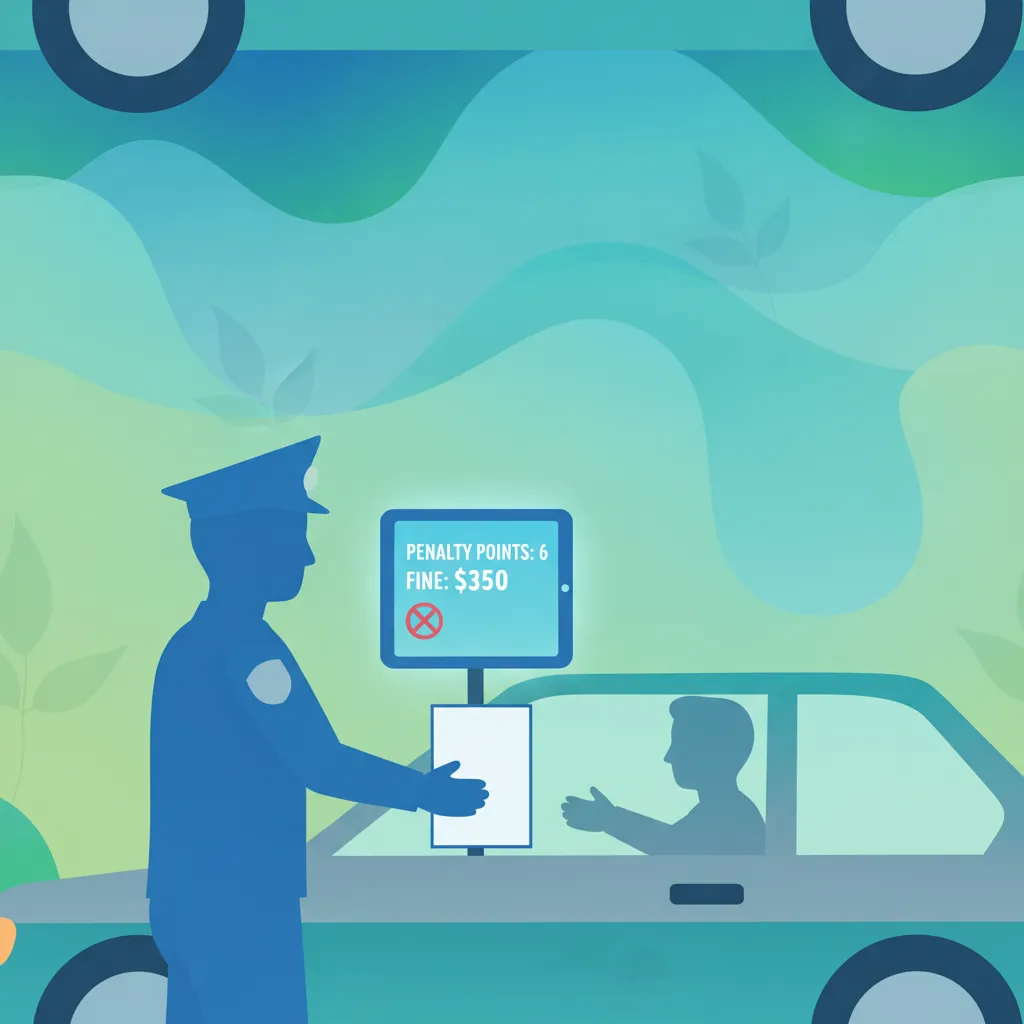
This lesson outlines the serious consequences of failing to comply with road transport law. It details the graduated system of fines and penalties that can be issued by the DVSA and police for offences ranging from drivers' hours violations to vehicle defects. The lesson also explains more severe sanctions, such as vehicle prohibition, licence suspension, and referral to the Traffic Commissioner, which can impact both the driver and their employer.

Gain a comprehensive understanding of the legal repercussions for violating goods vehicle regulations, which can range from civil penalties to criminal prosecution. This lesson details the fines, penalty points, and potential vehicle seizure enforced by authorities like the DVSA and the police. It clarifies how serious offences are handled in court and how repeated infractions can lead to escalating sanctions, impacting both your licence and professional career.
This lesson details your legal responsibility for passenger safety. It covers the mandatory use of seatbelts for all occupants and explains the specific laws regarding child car seats, which are based on a child's height or weight. Correctly fitted head restraints and understanding how airbags work are also key components of passenger protection.
Explore the critical topics of driver liability, insurance, and legal penalties in Great Britain. This lesson distinguishes between civil and criminal liability in the context of road incidents. It details the compulsory third-party insurance every driver must have and explains the penalty points system for traffic offences, including fines and potential disqualification.
This lesson provides a thorough understanding of the core safety principles required to protect passengers. It covers secure seating, safe standing zones, and the proper handling of passenger luggage to prevent hazards. Learners will also identify the location and use of emergency equipment, understand seatbelt compliance, and learn how to conduct on-board safety briefings. The focus is on risk assessment and hazard identification to maintain a secure environment for all passengers.
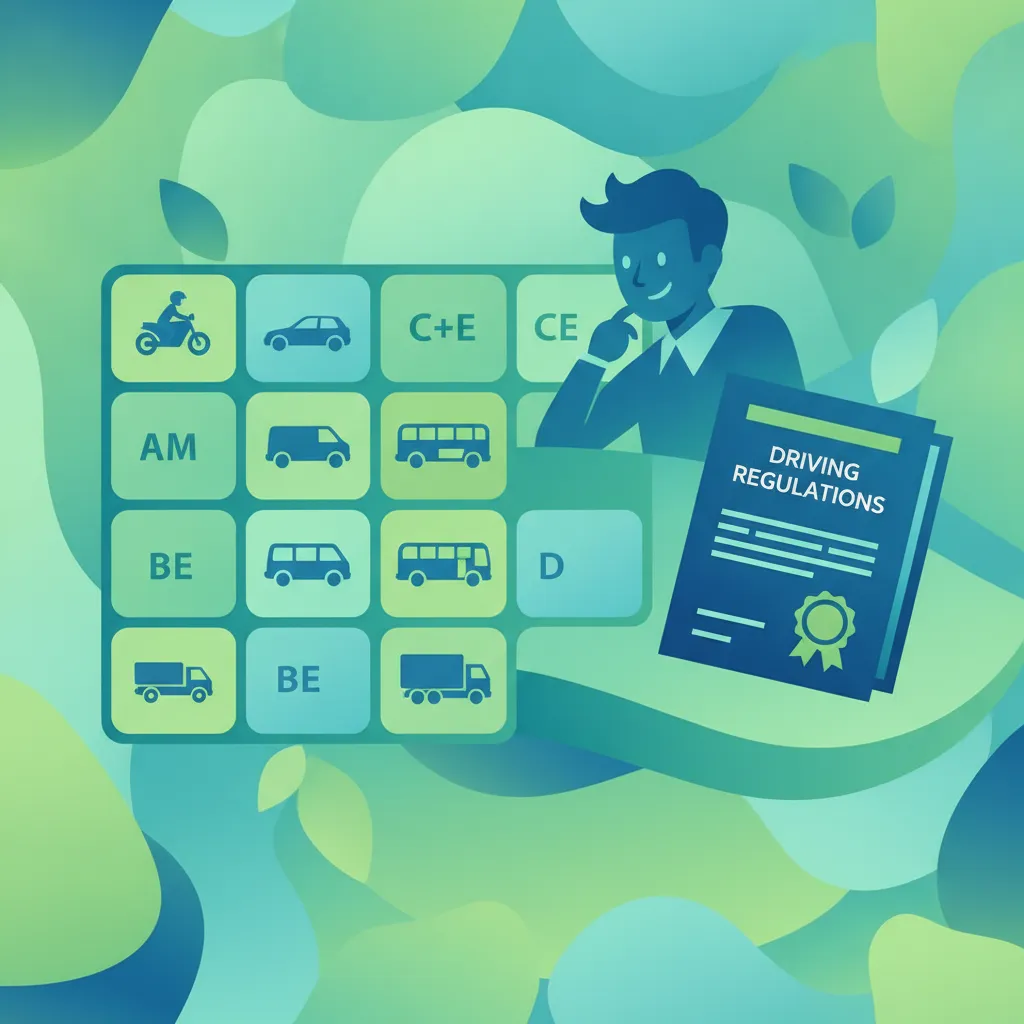
This lesson provides a comprehensive overview of the four passenger vehicle licence categories: D1, D, D1E, and DE. It details the specific legal criteria, vehicle types, and eligibility requirements for each. Learners will understand how DVSA theory test mandates intersect with DVLA licensing procedures, clarifying the privileges and limitations of each category. The content also explains the key statutory provisions from the Highway Code that govern passenger vehicle operation in Great Britain.
This lesson defines the critical duty of care that professional goods vehicle drivers owe to the public, their cargo, and their workplace. It covers how professional standards and industry codes of practice contribute to accident prevention and a positive safety culture. Learners will understand that this responsibility extends beyond personal safety to include protecting vulnerable road users and maintaining the integrity of the goods being transported, which is crucial for professional trust.

This lesson addresses the serious danger of driver fatigue, a major cause of incidents involving commercial vehicles. It details the complex EU and GB domestic rules on drivers' hours, including driving limits and required rest periods. Learners will be taught to recognize the physical and mental signs of fatigue and understand the importance of taking quality rest to maintain alertness and ensure their own safety and that of others.
This lesson focuses on the legal and practical requirements for providing accessible transport for passengers with reduced mobility. It covers wheelchair access, ramp usage, and securement devices, as well as procedures for safely assisting passengers with mobility aids. The discussion highlights relevant disability legislation and the importance of proper loading and unloading protocols to protect both passengers and the driver from injury, ensuring compliance with accessibility standards in Great Britain.
Find clear answers to common questions learners have about Professional Duties and Ethical Conduct. Learn how the lesson is structured, which driving theory objectives it supports, and how it fits into the overall learning path of units and curriculum progression in Great Britain. These explanations help you understand key concepts, lesson flow, and exam focused study goals.
Your primary duty of care is to ensure the safety, security, and well-being of all passengers on board while also minimizing risk to other road users and pedestrians. This involves operating the vehicle smoothly, maintaining a safe environment, and acting professionally at all times.
Professional driving is a position of public trust. The DVSA includes these questions to ensure that potential drivers understand the moral and legal obligations they carry when transporting vulnerable or general public passengers, which extends beyond simple traffic rules.
Your conduct directly impacts passenger comfort, public perception of your transport service, and your employability. Maintaining integrity and respect helps build long-term trust, which is a core requirement for any successful career as a coach or bus driver in Great Britain.
Yes, while the duty of care applies to all passengers, transporting children involves additional ethical requirements regarding safeguarding and professional boundaries, which you must be prepared to handle with extra diligence and care.
Dive into our comprehensive question bank to find exactly what you need for your Great Britain theory test. Use our advanced filters to pinpoint specific subjects or test your knowledge on challenging areas, ensuring you're fully prepared for success.