
This lesson explores the vital regulations governing drivers' hours and the physiological impact of fatigue on heavy goods vehicle operators. By mastering these requirements, you will ensure full compliance with DVSA standards and build the habits necessary for a safe, professional driving career.

Lesson content overview
Operating a large goods vehicle (LGV/HGV) under a Category C licence requires high levels of concentration, spatial awareness, and rapid reaction times. Because of the sheer size and weight of a rigid goods vehicle—which can weigh up to 32 tonnes—any lapse in attention can have catastrophic consequences. Driver fatigue is one of the leading contributors to heavy vehicle collisions on Great Britain's road network.
To mitigate this risk, professional drivers in England, Scotland, and Wales must strictly manage their alertness and adhere to complex statutory hours-of-service regulations. This lesson covers the physiological science of sleep, the legal driving and rest limits under both EU and GB domestic rules, tachograph operation, and the systematic approaches used by transport operators to prevent fatigue-related incidents.
Fatigue is a physiological state characterised by reduced mental alertness, slower cognitive processing, and impaired physical performance. It is primarily caused by prolonged wakefulness, monotonous driving environments, insufficient sleep, or a misalignment of the body's internal clock.
A physiological state of reduced mental alertness and physical performance caused by prolonged wakefulness, monotonous driving, insufficient sleep, or circadian misalignment. It can be acute (reversible with short-term rest) or chronic (accumulated over several days, requiring prolonged recovery).
Human alertness is governed by the circadian rhythm, an endogenous 24-hour cycle that dictates biological processes such as hormone release, body temperature, and sleepiness. Alertness does not remain constant throughout a shift; instead, it peaks and dips at predictable intervals.
Professional drivers must be particularly aware of the two primary circadian low points:
When a driver is severely fatigued, the brain will eventually attempt to force sleep, resulting in a microsleep.
A brief, involuntary episode of sleep lasting anywhere from 1 to 10 seconds. During a microsleep, the driver is completely unresponsive to environmental stimuli, even if their eyes remain open.
The physical reality of a microsleep at speed is terrifying. At a standard dual-carriageway speed limit of 90 km/h (approximately 56 mph), a Category C vehicle travels approximately 25 metres every second. A 4-second microsleep means the vehicle travels 100 metres completely uncontrolled. During this time, the vehicle can easily drift across lanes, run off the road, or collide with stationary traffic without the driver ever applying the brakes.
To protect road safety, professional driving is heavily regulated. For most Category C operations in Great Britain, drivers must comply with the EU Drivers’ Hours Regulations (Regulation EC 561/2006) as retained in UK law, though some specific operations may fall under the GB Domestic Rules.
It is the driver's personal legal responsibility to ensure they comply with the hours-of-service limits. Relying solely on your transport manager or employer for compliance scheduling is not a valid legal defence if you are stopped and found to be in breach of the law.
The regulations place strict caps on the maximum amount of time a driver can spend behind the wheel.
| Driving Limit Type | Standard Statutory Limit | Permitted Extensions / Variations | Rationale |
|---|---|---|---|
| Daily Driving Limit | 9 hours maximum per day. | Can be extended to 10 hours up to twice in a single week. | Prevents acute fatigue and cognitive decline over a single working day. |
| Weekly Driving Limit | 56 hours maximum in a single fixed week. | No extensions permitted. A fixed week begins at 00:00 on Monday and ends at 24:00 on the following Sunday. | Caps cumulative weekly physical and mental strain. |
| Fortnightly Driving Limit | 90 hours maximum across any two consecutive weeks. | No extensions permitted. This is calculated on a rolling basis (e.g., Week 1 + Week 2, then Week 2 + Week 3). | Prevents drivers from working back-to-back high-hour weeks. |
If a driver drives for 56 hours in Week 1, they are legally limited to a maximum of 34 hours of driving in Week 2, ensuring the combined fortnightly total does not exceed 90 hours.
To prevent the onset of physical and mental fatigue during a shift, drivers must take regular, structured breaks from driving.
Continuous Driving Cap: You must not drive for more than 4.5 hours without taking a qualifying break.
Full Continuous Break: The standard requirement is a single, uninterrupted break of at least 45 minutes.
The Split-Break Option: You can choose to split this 45-minute break into two periods. If you split the break, the first period must be at least 15 minutes long, and the second period must be at least 30 minutes long.
Correct Sequence: The breaks must be taken in this exact order (15 minutes first, then 30 minutes). A 30-minute break followed by a 15-minute break does not legally satisfy the split-break requirement.
During these breaks, you must not perform any other work (such as loading, unloading, or vehicle maintenance). The break must be dedicated entirely to rest and recuperation.
Rest periods are designed to allow a driver's physiological sleep cycles to complete, restoring full cognitive and physical alertness before the next shift.
A daily rest period must be taken within every 24-hour period that begins at the end of the previous daily or weekly rest period.
Drivers must take an extended rest period at the end of their working week.
To verify compliance with drivers' hours laws, all commercial vehicles over 3.5 tonnes must be fitted with a tachograph.
An electronic or analogue device installed in commercial goods vehicles that automatically records the vehicle's speed, distance, and driving time, alongside the driver's selected activity states.
Modern Category C vehicles are equipped with smart digital tachographs, which record data directly onto a personal, secure Driver Card.
Drivers must manually select the correct activity mode on the tachograph unit to ensure their working day is logged accurately. Falsifying or failing to record activities is a serious criminal offence.
If you are away from your vehicle but still performing work (e.g., attending a safety training course at your depot or working in the warehouse), this time must be manually entered into your digital tachograph card when you next insert it. Failing to account for "Other Work" performed before starting a driving shift is a common cause of hours violations.
While statutory regulations define the absolute legal boundaries, safety-conscious operators employ a Fatigue Risk Management System (FRMS). An FRMS uses a data-driven, scientific approach to monitor, assess, and mitigate fatigue risks based on actual operational hazards rather than just strict legal compliance.
[FRMS Policy & Scheduling Guidelines]
             │
             ▼
[Bio-Mathematical Fatigue Modeling]
             │
             ▼
[Driver Education & Health Screenings]
             │
             ▼
[Continuous Monitoring & Incident Analysis]
A critical component of professional driving is self-awareness. You must monitor your own physiological and cognitive state continuously. Fatigue does not occur instantly; it develops progressively.
Phase 1: Cognitive Decay: The first signs are mental. You may experience difficulty concentrating, find yourself staring blankly at the road ahead, or realize you cannot remember driving the last few miles. Your decision-making begins to slow down.
Phase 2: Physical Indicators: Next come physical symptoms. These include frequent, deep yawning, dry or rubbing eyes, heavy eyelids, and a feeling of physical restlessness in the cab.
Phase 3: Operational Failure: As fatigue becomes critical, it directly impacts your vehicle control. You may struggle to maintain a consistent speed, drift over lane markings (often corrected by sudden, jerky steering inputs), or miss crucial road signs and turn-offs.
Many drivers attempt to counteract fatigue using short-term stimulants.
Relying on caffeine, energy drinks, loud music, or driving with a cold window open are highly dangerous practices. These methods only mask the symptoms of fatigue for a very short period (usually 15 to 30 minutes) and can lead to a sudden, unpredictable crash in alertness. Sleep is the only cure for fatigue.
If you experience physical symptoms of fatigue, you must pull over at the nearest safe location (such as a motorway service area or a designated lay-by) and rest. A short power nap of 15 to 20 minutes, preceded by a cup of coffee (allowing the caffeine to absorb during your nap), is a proven emergency countermeasure, but it must be followed by proper recovery sleep at the earliest opportunity.
Fatigue management must adapt to varying operational conditions. The rate at which mental and physical exhaustion sets in depends heavily on external factors.
Poor visibility caused by heavy rain, thick fog, snow, or high winds dramatically increases the driver's cognitive load.
Operating a goods vehicle overnight requires exceptional self-discipline.
The physical behavior of your vehicle impacts driver fatigue.
The Driver and Vehicle Standards Agency (DVSA) actively enforces drivers' hours regulations through roadside checks and operator audits. Non-compliance carries severe administrative, civil, and criminal penalties.
To ensure you stay compliant and operate safely on Great Britain's roads, review the core rules, definitions, and procedures in this chapter. Safe professional driving is built on a foundation of physical readiness, legal compliance, and uncompromising attention to road safety.
This lesson covers the critical regulatory and safety framework for managing driver fatigue under GB drivers' hours regulations. Key legal limits include a maximum 9-hour daily drive (extendable to 10 hours twice weekly), a 56-hour weekly cap, and a 90-hour fortnightly rolling total. Drivers must take a qualifying 45-minute break after 4.5 hours of driving—either as a single break or split into 15 then 30 minutes. Daily rest must be at least 11 hours (or 9 hours reduced, maximum three times between weekly rests), and weekly rest must be at least 45 hours (or 24 hours reduced with compensatory rest). Tachograph mode selection must accurately reflect all activities including loading, waiting, and rest, as falsification is a criminal offence. Fatigue progresses through cognitive, physical, and operational failure phases, and only sleep can restore alertness.
A short set of high-value points that capture the most important learning from this lesson.
Daily driving is limited to 9 hours maximum, extendable to 10 hours twice per week, with a mandatory 45-minute break after no more than 4.5 hours of continuous driving.
Microsleeps lasting just 4 seconds at motorway speeds can cause a vehicle to travel approximately 100 metres completely uncontrolled, making fatigue a catastrophic safety risk.
Drivers must manually select the correct tachograph mode (driving, other work, availability, or rest) for every activity, as failing to record hours is a criminal offence.
Fatigue warning signs progress through three phases: cognitive decay, physical indicators, and operational failure; recognizing these early is critical for safety.
Fatigue Risk Management Systems (FRMS) use scientific monitoring to prevent fatigue beyond basic legal compliance, including sleep disorder screening and self-reporting protocols.
Explore all units and lessons included in this driving theory course.
The split-break option requires exactly 15 minutes first, then 30 minutes—reversing this sequence (30 then 15) does not satisfy the legal requirement.
Reduced daily rest (minimum 9 hours) is permitted only three times between any two weekly rest periods; the fourth must be a regular 11-hour rest.
Weekly rest periods must be at least 45 hours (regular) or 24 hours (reduced), with any reduction compensated en bloc before the end of the third following week.
Sleep is the only effective cure for fatigue—caffeine, energy drinks, cold air, and loud music only mask symptoms temporarily and are dangerously unreliable.
The circadian rhythm creates two primary alertness dips: the early morning window (02:00–06:00) and the post-lunch dip (13:00–16:00), requiring heightened awareness during these times.
Assuming that traffic delays or unforeseen circumstances automatically extend legal driving limits—they do not; drivers must stop at the nearest safe place when limits are reached.
Recording a split break in the wrong order (30-minute break followed by a 15-minute break) instead of the legally required 15-minute then 30-minute sequence.
Failing to insert the tachograph card and select 'Other Work' upon arriving at the depot, thereby hiding loading time and committing tachograph falsification.
Taking more than three reduced daily rest periods (9 hours) between weekly rest periods, which exceeds the regulatory allowance.
Relying on short-term stimulants like caffeine or loud music to counteract fatigue instead of stopping for proper rest, believing these methods provide genuine alertness recovery.
Lesson content overview
A short set of high-value points that capture the most important learning from this lesson.
Daily driving is limited to 9 hours maximum, extendable to 10 hours twice per week, with a mandatory 45-minute break after no more than 4.5 hours of continuous driving.
Microsleeps lasting just 4 seconds at motorway speeds can cause a vehicle to travel approximately 100 metres completely uncontrolled, making fatigue a catastrophic safety risk.
Drivers must manually select the correct tachograph mode (driving, other work, availability, or rest) for every activity, as failing to record hours is a criminal offence.
Fatigue warning signs progress through three phases: cognitive decay, physical indicators, and operational failure; recognizing these early is critical for safety.
Fatigue Risk Management Systems (FRMS) use scientific monitoring to prevent fatigue beyond basic legal compliance, including sleep disorder screening and self-reporting protocols.
Explore all units and lessons included in this driving theory course.
The split-break option requires exactly 15 minutes first, then 30 minutes—reversing this sequence (30 then 15) does not satisfy the legal requirement.
Reduced daily rest (minimum 9 hours) is permitted only three times between any two weekly rest periods; the fourth must be a regular 11-hour rest.
Weekly rest periods must be at least 45 hours (regular) or 24 hours (reduced), with any reduction compensated en bloc before the end of the third following week.
Sleep is the only effective cure for fatigue—caffeine, energy drinks, cold air, and loud music only mask symptoms temporarily and are dangerously unreliable.
The circadian rhythm creates two primary alertness dips: the early morning window (02:00–06:00) and the post-lunch dip (13:00–16:00), requiring heightened awareness during these times.
Assuming that traffic delays or unforeseen circumstances automatically extend legal driving limits—they do not; drivers must stop at the nearest safe place when limits are reached.
Recording a split break in the wrong order (30-minute break followed by a 15-minute break) instead of the legally required 15-minute then 30-minute sequence.
Failing to insert the tachograph card and select 'Other Work' upon arriving at the depot, thereby hiding loading time and committing tachograph falsification.
Taking more than three reduced daily rest periods (9 hours) between weekly rest periods, which exceeds the regulatory allowance.
Relying on short-term stimulants like caffeine or loud music to counteract fatigue instead of stopping for proper rest, believing these methods provide genuine alertness recovery.
Explore search topics learners often look for when studying Fatigue Management and Rest Hours. These topics reflect common questions about road rules, driving situations, safety guidance, and lesson level theory preparation for learners in Great Britain.
Browse additional driving theory lessons that cover connected traffic rules, road signs, and common driving situations related to this topic. Improve your understanding of how different rules interact across everyday traffic scenarios.
Understand the specific UK domestic and EU rules governing driving limits and mandatory rest for professional goods vehicle drivers. This lesson clarifies the legal framework essential for compliant operation and driver safety on Great Britain roads.

This lesson addresses the serious safety risk of driver fatigue. It explains the warning signs of tiredness and provides strategies for managing it through proper rest and lifestyle choices. The content details the legal requirements under the drivers' hours and working time directive regulations, including the correct use of the tachograph to record rest periods. Maintaining good health, diet, and sleep hygiene is emphasized as fundamental to ensuring a driver is always fit to be on the road.

This lesson covers the critical legal requirement for accurate record-keeping in the transport industry. It provides detailed instruction on the correct use of both analogue and digital tachographs to record driving time, breaks, and other work. You will also learn about other essential documents that must be carried, such as load manifests and delivery notes, and the importance of keeping these records accurate and available for inspection by enforcement authorities.

This lesson provides a clear guide to the legal restrictions placed on drivers with a provisional licence. It covers the mandatory display of L-plates and the specific criteria for a supervising driver, including age and experience. Furthermore, it explains the prohibition on driving on motorways and other rules designed to ensure safety during the learning process.

This lesson examines the unique rules and restrictions governing buses and coaches, focusing on bus lane priority, time-based restrictions, and loading zone limitations. Learners will explore the criteria for using bus-only routes and understand the legal consequences of non-compliance. The content also reviews signage indicating bus gate operation and areas where passenger vehicles are prohibited from stopping or loading outside of designated zones, ensuring lawful and efficient urban navigation.
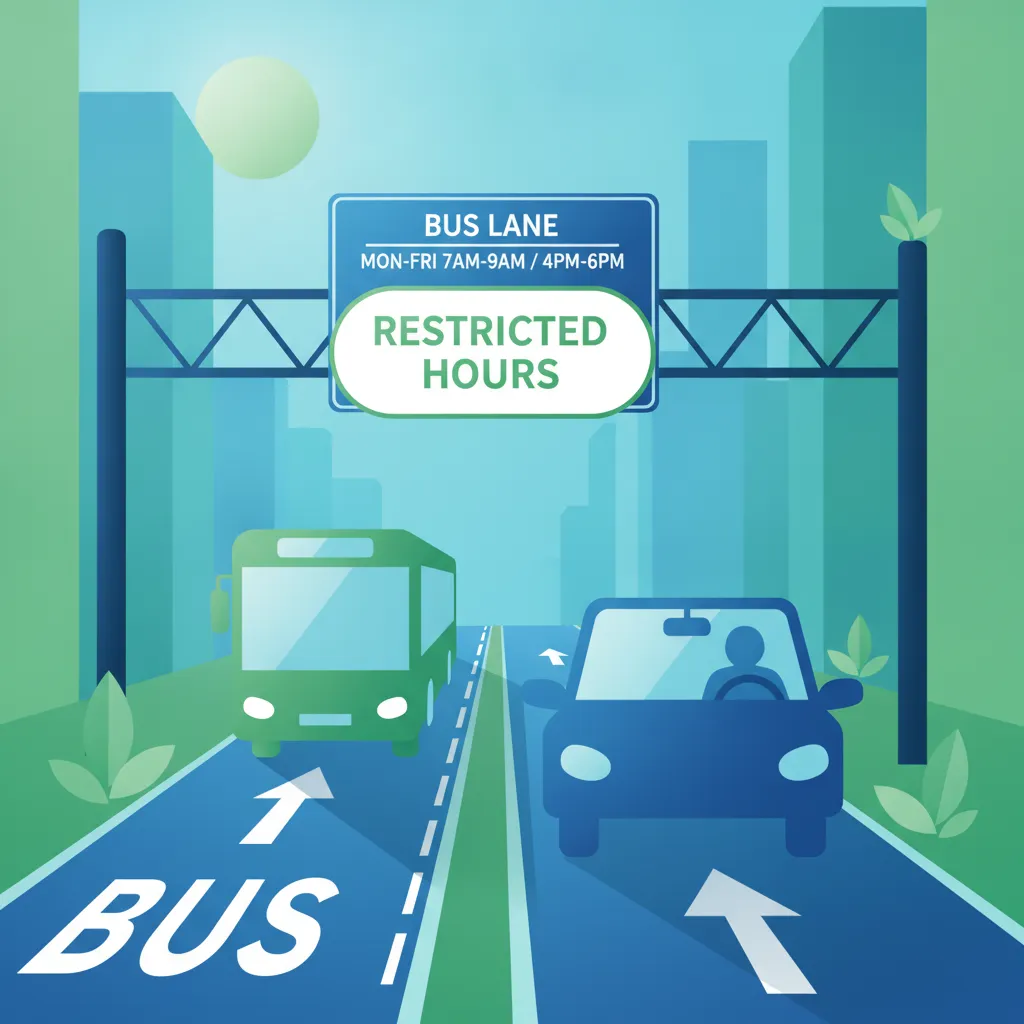
This lesson covers the importance of maintaining correct lane discipline when driving a large passenger vehicle. It details how to position your vehicle safely within a lane on various road types, including multi-lane carriageways and motorways. You will learn the specific rules governing bus lanes, including how to interpret markings, adhere to operating times, and understand the exemptions and penalties associated with their use to ensure legal and efficient driving.
Learn to identify the physical and mental signs of fatigue that can impair driving ability. This lesson focuses on strategies for maintaining alertness and understanding the critical importance of quality rest to ensure safety for goods vehicle drivers.

This lesson explains that driving while tired can be as dangerous as drink driving, significantly slowing your reactions and reducing concentration. It teaches you to recognise the signs of fatigue, such as yawning or wandering thoughts. The only real cure for tiredness is sleep, so the lesson stresses the importance of taking proper breaks—at least 15 minutes for every two hours of driving.
This lesson addresses the serious safety risk of driver fatigue. It explains the warning signs of tiredness and provides strategies for managing it through proper rest and lifestyle choices. The content details the legal requirements under the drivers' hours and working time directive regulations, including the correct use of the tachograph to record rest periods. Maintaining good health, diet, and sleep hygiene is emphasized as fundamental to ensuring a driver is always fit to be on the road.
Find clear answers to common questions learners have about Fatigue Management and Rest Hours. Learn how the lesson is structured, which driving theory objectives it supports, and how it fits into the overall learning path of units and curriculum progression in Great Britain. These explanations help you understand key concepts, lesson flow, and exam focused study goals.
EU rules are generally stricter and apply to most heavy goods vehicles involved in international or large-scale domestic transport. GB domestic rules apply to specific vehicle types and shorter, local journeys; understanding when each applies is a key part of your Category C theory exam.
Watch for physical signs like heavy eyelids, frequent yawning, or drifting out of your lane. Mentally, fatigue often presents as slower reaction times, difficulty concentrating, or forgetting recent traffic events. Always take a break before you feel these symptoms.
No, rest rules depend on the nature of your work and the distance you travel. You must be able to distinguish between requirements for long-haul operations versus local deliveries to answer exam questions correctly.
Accurate recording proves you are complying with the law. The theory test often includes scenarios about documentation errors; failing to record breaks correctly can lead to heavy penalties and is a common area where candidates lose marks.
Dive into our comprehensive question bank to find exactly what you need for your Great Britain theory test. Use our advanced filters to pinpoint specific subjects or test your knowledge on challenging areas, ensuring you're fully prepared for success.