
This lesson guides you through the complex operational requirements for long-distance coach services in Great Britain. Building on your knowledge of professional responsibilities and vehicle safety, you will learn how to effectively plan routes and manage schedules while adhering to strict DVSA drivers' hours and fatigue management regulations.

Lesson content overview
Operating a long-distance coach service requires meticulous planning and a deep understanding of safety, regulatory compliance, and passenger welfare. For Category D, D1, D1E, and DE licence holders, mastering these aspects is not merely good practice; it is critical for ensuring journey reliability, mitigating risks, and upholding legal obligations. This comprehensive lesson delves into the unique challenges and requirements of long-distance coach operations, providing a robust framework for successful and safe service delivery across Great Britain.
The bedrock of long-distance coach service planning is strict adherence to drivers' hours regulations, which are designed to prevent fatigue and enhance road safety. These rules, derived from EU Regulation (EC) No 561/2006 and retained in UK law, define maximum driving times, mandatory breaks, and minimum rest periods for professional drivers. Compliance is non-negotiable and directly impacts driver health, passenger safety, and an operator's legal standing.
Professional coach drivers must operate within strict daily and weekly driving limits. The maximum daily driving time is 9 hours, though this can be extended to 10 hours twice per week. Over any 7-day period, a driver cannot exceed 56 hours of driving. Furthermore, a driver's total driving time over any two consecutive weeks must not surpass 90 hours. These limits are cumulative and designed to prevent excessive fatigue buildup.
After a maximum of 4.5 hours of continuous driving, a driver must take a break of at least 45 minutes. This break must be continuous and dedicated solely to rest, not interrupted by other work like refuelling or ticket checks. Alternatively, this 45-minute break can be split into two parts: an initial break of at least 15 minutes, followed by a second break of at least 30 minutes, distributed over the 4.5-hour driving period. The 30-minute portion must always follow the 15-minute portion to be compliant. These breaks are crucial for driver recovery and maintaining alertness.
Beyond driving breaks, drivers are also entitled to minimum rest periods. A driver must take a minimum daily rest of 11 consecutive hours within any 24-hour period. This can be reduced to 9 hours a maximum of three times between any two weekly rest periods. Weekly rest is equally important, requiring a minimum of 45 consecutive hours. This can be reduced to 24 hours, but any reduction must be compensated by an equivalent period of rest taken en bloc before the end of the third week following the week in question. Effective planning ensures these vital rest periods are factored into the overall journey schedule.
Ignoring or misinterpreting drivers' hours regulations can lead to severe penalties, including fines for the driver and operator, licence endorsements, and potential prosecution under the Road Traffic Act 1988 for driving while fatigued.
The tachograph is an indispensable tool for long-distance coach drivers and operators, serving as the legal record of all driver activities. Accurate utilisation is paramount for demonstrating compliance with drivers' hours regulations and preventing legal issues.
Modern coaches are equipped with digital tachographs, which use chip cards (driver cards) to record speed, distance, and driver activity (driving, working, availability, rest). These devices provide immutable, verifiable evidence of a driver's duty periods. Drivers must insert their personalised driver card into the tachograph unit before commencing any duty and remove it only at the end of their working day. The data recorded on the card and in the vehicle unit must be downloaded regularly – typically weekly for driver cards and every 90 days for the vehicle unit – by the operator for analysis and archiving.
A personal chip card used in a digital tachograph to securely record all driver activities, including driving, working, availability, and rest periods, ensuring compliance with regulations.
Many compliance issues arise from common misunderstandings regarding tachograph usage. Forgetting to insert the driver card, for example, means that driving activity is not properly recorded under the driver's name, making it impossible to prove compliance. Similarly, believing that short stops for refuelling or passenger drop-offs count as mandatory breaks is incorrect; only a continuous, dedicated rest period is valid. Any attempt to tamper with tachograph data is illegal and carries severe penalties.
Effective route planning is crucial for long-distance coach services, impacting journey time, fuel efficiency, passenger comfort, and regulatory compliance. It involves more than simply finding the shortest path; it's about selecting the most efficient, safe, and compliant route.
When selecting a route, several factors must be carefully considered:
Every long-distance journey should have a primary planned route, but it is equally important to identify and understand viable alternative routes. These backups are essential for contingency planning in case of unexpected delays, road closures, or severe weather. Pre-identifying alternative routes and their associated break points can save significant time and stress during unforeseen incidents.
Integrating legally required rest periods into the journey schedule demands careful planning, including selecting appropriate locations and ensuring sufficient time buffers. The quality of breaks directly affects driver alertness and passenger experience.
For mandatory 45-minute breaks, drivers must use suitable service areas that offer adequate facilities. In the UK, motorway service areas (MSAs) are categorised:
A critical aspect of mandatory breaks is that they must be continuous. A short fuel stop, even if it lasts 15 minutes, cannot be combined with a later 30-minute stop to form a 45-minute break if other duties were performed in between. The break clock only resets after an uninterrupted 45-minute period (or the valid split combination). Therefore, drivers must park the coach safely, switch off the engine, and avoid any work-related activities during their break.
Passenger comfort and safety are paramount for long-distance coach services. Managing environmental, ergonomic, and security factors directly impacts passenger satisfaction and mitigates potential risks.
Maintaining a comfortable cabin temperature using the heating, ventilation, and air conditioning (HVAC) system is essential, regardless of external weather conditions. Seating ergonomics also play a role, with features like adjustable backrests and ample legroom contributing to passenger wellbeing on extended trips. Regular checks of the HVAC system are crucial before departure.
All luggage must be stored securely to prevent it from shifting during transit. Items placed in overhead racks or under seats must not impede emergency exits and must be stable enough not to fall during sudden braking or manoeuvres. Luggage in external compartments must also be securely stowed and evenly distributed to maintain vehicle stability. Overloading overhead racks can pose a significant safety risk, turning items into projectile hazards.
Before departure, always ensure all passengers have securely stowed their hand luggage. A quick announcement can remind them to use the overhead racks responsibly and keep aisles clear.
Clear communication enhances passenger experience and safety. This includes making regular announcements about journey progress, upcoming stops, and any unexpected delays. Crucially, a pre-journey safety briefing is essential, covering the location of emergency exits, the use of seat belts where fitted, and what to do in an emergency. This proactive approach ensures passengers are informed and can react appropriately if an incident occurs.
Welcome passengers and introduce yourself.
Remind passengers about the mandatory use of seat belts where fitted.
Point out the location of all emergency exits and how to open them.
Indicate the location of the first-aid kit and fire extinguisher.
Advise on the secure storage of hand luggage in overhead racks or under seats, ensuring aisles remain clear.
Explain how to operate the air conditioning and individual lighting.
Provide estimated journey time and planned break stops.
Proper load management is critical for the safe operation of any large vehicle, particularly long-distance coaches. Exceeding weight limits or improper load distribution can severely compromise vehicle handling, braking performance, and tyre integrity.
Every coach has a maximum permissible Gross Vehicle Weight (GVW), which is the total weight of the vehicle including its own unladen weight, passengers, and all luggage or cargo. In addition, each axle has a specific maximum load limit. These limits are displayed on the vehicle's manufacturer plate. It is a legal requirement in the UK that these limits are never exceeded.
The maximum permissible total weight of a vehicle, including its unladen weight, fuel, passengers, and any luggage or cargo. Exceeding the GVW is illegal and highly dangerous.
Overloading a coach has several dangerous consequences:
For long-distance journeys, especially with a full complement of passengers and luggage, it is essential to perform a pre-departure check to ensure the vehicle is within its GVW and axle load limits. While it's impractical to weigh every piece of luggage, operators often calculate an average passenger and luggage weight to estimate the total load. Strategically distributing luggage across compartments helps maintain a balanced centre of gravity, which is vital for vehicle stability.
Even the most meticulously planned journey can encounter unforeseen events. Robust contingency and emergency plans are vital for maintaining safety, compliance, and service continuity.
Drivers must be prepared for a range of unexpected scenarios:
Effective communication during an incident is crucial. The driver must have a clear protocol for contacting the operating company's dispatch or emergency contact. Passengers should be kept informed of the situation, reasons for delays, and any revised arrival times to manage expectations and minimise anxiety.
A significant delay can impact a driver's remaining legal driving hours. If a delay means the driver will exceed their legal driving time before reaching the next planned break or destination, an immediate recalculation is necessary. This may involve:
Weather conditions can significantly impact the safety and efficiency of long-distance coach journeys. Drivers must adapt their driving style and route choices to adverse conditions.
Wet roads drastically reduce tyre grip and increase stopping distances. In heavy rain, visibility can also be severely impaired.
Driving in fog requires extreme caution. Visibility can drop rapidly, making hazards difficult to spot.
These conditions present some of the most challenging driving scenarios for a heavy vehicle:
Successful long-distance coach service planning is a multifaceted discipline demanding continuous attention to detail, adherence to regulations, and a proactive approach to safety and passenger comfort. By integrating strict drivers' hours compliance, diligent tachograph usage, strategic route planning, and robust contingency measures, professional coach drivers can ensure the safe, efficient, and reliable operation of their services across Great Britain. This comprehensive approach not only meets legal requirements but also elevates the passenger experience and upholds the highest standards of professional driving.
This lesson covers the essential regulatory and operational requirements for long-distance coach services in Great Britain, focusing on Drivers' Hours Regulations that set maximum driving times at 9 hours daily with mandatory 45-minute breaks after 4.5 hours of driving. Proper tachograph operation using driver cards is mandatory, with specific data download intervals required by operators. Route planning must integrate break locations at suitable M1 service areas, while passenger safety protocols include pre-departure briefings covering emergency exits and seat belt requirements. Vehicle load management is critical, with strict Gross Vehicle Weight limits that directly affect braking distance, handling, and legal compliance.
A short set of high-value points that capture the most important learning from this lesson.
Professional coach drivers must not exceed 9 hours of daily driving, extendable to 10 hours twice weekly, with a strict 56-hour weekly limit and 90-hour limit over two weeks.
A mandatory 45-minute break must be taken after 4.5 hours of continuous driving, which can be split into 15 minutes followed by 30 minutes but never interrupted by other duties.
Digital tachographs require drivers to insert their personal driver card before starting any duty and to have data downloaded weekly for driver cards and every 90 days for vehicle units.
Motorway service areas are classified as M1 (full facilities suitable for mandatory breaks), M2 (limited facilities generally insufficient), and M3 (parking only, unsuitable for breaks).
Overloading a coach beyond its Gross Vehicle Weight compromises braking, handling, and tyre integrity, and carries legal penalties for both driver and operator.
Explore all units and lessons included in this driving theory course.
Rest periods must be continuous—a fuel stop or passenger drop-off cannot count towards the 45-minute mandatory break requirement.
M1 service areas are the only appropriate locations for mandatory driver breaks on motorways; M2 and M3 areas lack sufficient facilities.
In fog, use fog lights when visibility falls below 100 metres and drive at a speed allowing you to stop within your visible distance.
Driver hours regulations do not automatically extend allowable driving time due to delays—drivers must recalculate and may need unplanned breaks or relief drivers.
A pre-departure safety briefing must cover emergency exits, seat belt requirements, first-aid kit location, and fire extinguisher position.
Assuming that short stops for refuelling or passenger drops can substitute for the mandatory 45-minute break—this is incorrect and non-compliant.
Forgetting to insert the driver card into the tachograph, which means driving activity is not recorded under the driver's name and compliance cannot be proven.
Believing that severe weather delays automatically permit extended driving time—legal limits remain fixed regardless of circumstances.
Using M2 rest areas for mandatory 45-minute breaks when they lack adequate facilities, potentially failing compliance checks.
Failing to account for luggage weight distribution, which can create an unbalanced centre of gravity and compromise vehicle stability.
Lesson content overview
A short set of high-value points that capture the most important learning from this lesson.
Professional coach drivers must not exceed 9 hours of daily driving, extendable to 10 hours twice weekly, with a strict 56-hour weekly limit and 90-hour limit over two weeks.
A mandatory 45-minute break must be taken after 4.5 hours of continuous driving, which can be split into 15 minutes followed by 30 minutes but never interrupted by other duties.
Digital tachographs require drivers to insert their personal driver card before starting any duty and to have data downloaded weekly for driver cards and every 90 days for vehicle units.
Motorway service areas are classified as M1 (full facilities suitable for mandatory breaks), M2 (limited facilities generally insufficient), and M3 (parking only, unsuitable for breaks).
Overloading a coach beyond its Gross Vehicle Weight compromises braking, handling, and tyre integrity, and carries legal penalties for both driver and operator.
Explore all units and lessons included in this driving theory course.
Rest periods must be continuous—a fuel stop or passenger drop-off cannot count towards the 45-minute mandatory break requirement.
M1 service areas are the only appropriate locations for mandatory driver breaks on motorways; M2 and M3 areas lack sufficient facilities.
In fog, use fog lights when visibility falls below 100 metres and drive at a speed allowing you to stop within your visible distance.
Driver hours regulations do not automatically extend allowable driving time due to delays—drivers must recalculate and may need unplanned breaks or relief drivers.
A pre-departure safety briefing must cover emergency exits, seat belt requirements, first-aid kit location, and fire extinguisher position.
Assuming that short stops for refuelling or passenger drops can substitute for the mandatory 45-minute break—this is incorrect and non-compliant.
Forgetting to insert the driver card into the tachograph, which means driving activity is not recorded under the driver's name and compliance cannot be proven.
Believing that severe weather delays automatically permit extended driving time—legal limits remain fixed regardless of circumstances.
Using M2 rest areas for mandatory 45-minute breaks when they lack adequate facilities, potentially failing compliance checks.
Failing to account for luggage weight distribution, which can create an unbalanced centre of gravity and compromise vehicle stability.
Explore search topics learners often look for when studying Long-Distance Coach Service Planning. These topics reflect common questions about road rules, driving situations, safety guidance, and lesson level theory preparation for learners in Great Britain.
Browse additional driving theory lessons that cover connected traffic rules, road signs, and common driving situations related to this topic. Improve your understanding of how different rules interact across everyday traffic scenarios.
Understand the core legal requirements for operating long-distance coach services in Great Britain. This lesson covers DVSA rules on drivers' hours, tachograph use, and essential planning for passenger safety and journey reliability.

This lesson addresses the serious safety risk of driver fatigue. It explains the warning signs of tiredness and provides strategies for managing it through proper rest and lifestyle choices. The content details the legal requirements under the drivers' hours and working time directive regulations, including the correct use of the tachograph to record rest periods. Maintaining good health, diet, and sleep hygiene is emphasized as fundamental to ensuring a driver is always fit to be on the road.

This lesson addresses the serious danger of driver fatigue, a major cause of incidents involving commercial vehicles. It details the complex EU and GB domestic rules on drivers' hours, including driving limits and required rest periods. Learners will be taught to recognize the physical and mental signs of fatigue and understand the importance of taking quality rest to maintain alertness and ensure their own safety and that of others.

This lesson focuses on the fundamentals of route planning and wayfinding for passenger vehicle drivers. Learners will examine how to use timetables, journey maps, and GPS navigation to identify stops and maintain schedule adherence. The discussion includes best practices for handling route deviations, detours, and unexpected obstructions while keeping passengers informed. Emphasizing service reliability and accurate passenger information, this lesson equips drivers for efficient and safe route execution.

This lesson covers the critical legal requirement for accurate record-keeping in the transport industry. It provides detailed instruction on the correct use of both analogue and digital tachographs to record driving time, breaks, and other work. You will also learn about other essential documents that must be carried, such as load manifests and delivery notes, and the importance of keeping these records accurate and available for inspection by enforcement authorities.

This lesson focuses on the regulations and best practices for driving a bus or coach on motorways. It details the specific speed limits applicable to PCVs and reinforces strict lane discipline. The content covers the correct procedures for safely joining from a slip road, overtaking other vehicles, and exiting the motorway. It also explains the features of smart motorways and the correct safety procedures to follow in the event of a breakdown, including the use of the hard shoulder.

This lesson examines the unique rules and restrictions governing buses and coaches, focusing on bus lane priority, time-based restrictions, and loading zone limitations. Learners will explore the criteria for using bus-only routes and understand the legal consequences of non-compliance. The content also reviews signage indicating bus gate operation and areas where passenger vehicles are prohibited from stopping or loading outside of designated zones, ensuring lawful and efficient urban navigation.

This lesson covers the specific procedures for operating within busy bus terminals and service areas. It details the protocols for approaching and parking in allocated bays, managing the safe flow of passengers, and communicating with station staff. The content emphasizes the need for extreme caution and low-speed manoeuvring due to high pedestrian traffic. It also reviews pre-departure checks and communication protocols necessary for efficient and safe terminal operations.

This lesson details speed management techniques applicable to urban, rural, and motorway environments, focusing on compliance with legal speed limits and developing appropriate speed perception. It covers strategies for monitoring speed and adjusting for road conditions, traffic density, and overall passenger safety. The lesson also reviews enforcement mechanisms and emphasizes the importance of speed compliance for accident avoidance and regulatory adherence, a critical skill for all professional drivers.
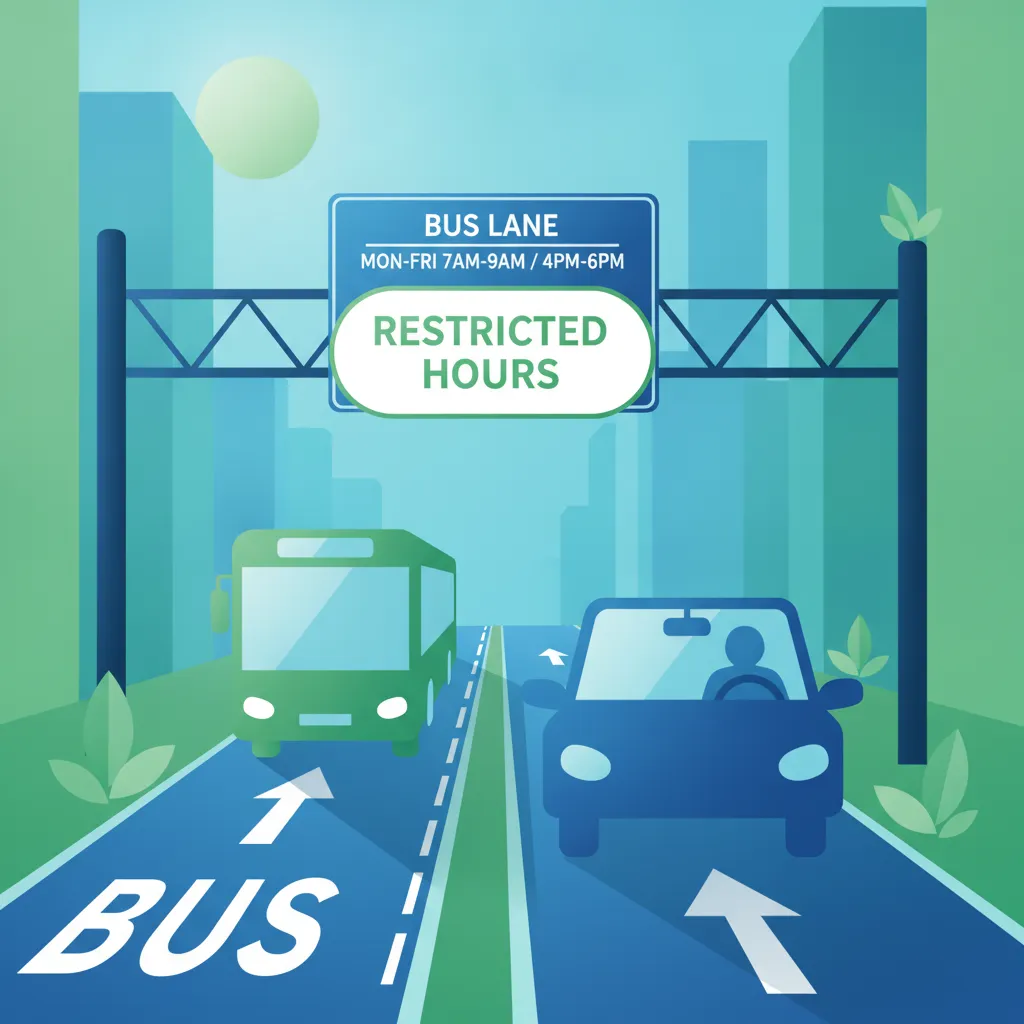
This lesson covers the importance of maintaining correct lane discipline when driving a large passenger vehicle. It details how to position your vehicle safely within a lane on various road types, including multi-lane carriageways and motorways. You will learn the specific rules governing bus lanes, including how to interpret markings, adhere to operating times, and understand the exemptions and penalties associated with their use to ensure legal and efficient driving.

In this lesson, learners will study the specific signage and markings related to bus stops and designated passenger loading zones. Topics include correct stop approach, positioning the bus for safe boarding and alighting, and the proper use of these areas. Learners will also examine the legal expectations for passenger loading zones, including restrictions on stopping outside these zones and best practices for managing passenger flow safely and efficiently during busy periods.
Learn essential strategies for ensuring passenger comfort and safety on extended coach journeys. This lesson focuses on fatigue management, secure luggage handling, and effective contingency planning for unexpected delays and incidents.
This lesson addresses the serious safety risk of driver fatigue. It explains the warning signs of tiredness and provides strategies for managing it through proper rest and lifestyle choices. The content details the legal requirements under the drivers' hours and working time directive regulations, including the correct use of the tachograph to record rest periods. Maintaining good health, diet, and sleep hygiene is emphasized as fundamental to ensuring a driver is always fit to be on the road.

This lesson provides a thorough understanding of the core safety principles required to protect passengers. It covers secure seating, safe standing zones, and the proper handling of passenger luggage to prevent hazards. Learners will also identify the location and use of emergency equipment, understand seatbelt compliance, and learn how to conduct on-board safety briefings. The focus is on risk assessment and hazard identification to maintain a secure environment for all passengers.
This lesson addresses the serious danger of driver fatigue, a major cause of incidents involving commercial vehicles. It details the complex EU and GB domestic rules on drivers' hours, including driving limits and required rest periods. Learners will be taught to recognize the physical and mental signs of fatigue and understand the importance of taking quality rest to maintain alertness and ensure their own safety and that of others.

This lesson explains that driving while tired can be as dangerous as drink driving, significantly slowing your reactions and reducing concentration. It teaches you to recognise the signs of fatigue, such as yawning or wandering thoughts. The only real cure for tiredness is sleep, so the lesson stresses the importance of taking proper breaks—at least 15 minutes for every two hours of driving.

This lesson explores safe boarding protocols, focusing on correct door operation, managing internal passenger movement, and providing assistance for passengers with reduced mobility. It emphasizes the importance of establishing safety zones near doorways, managing standing passengers during boarding, and using audible alarms. The lesson also covers the proper sequence for wheelchair boarding and the use of loading bays to ensure smooth passenger flow and minimize risks during the boarding process.

This lesson examines the professional duties and ethical standards expected of passenger vehicle drivers, highlighting the duty of care owed to passengers and other road users. It covers the importance of maintaining professional standards, adhering to ethical conduct, and fostering public confidence through responsible behaviour. The content addresses industry accountability mechanisms and outlines how drivers are expected to act with integrity and respect for passenger wellbeing.

This lesson provides a step-by-step guide to evacuating a bus or coach in an emergency. It covers locating and operating all emergency exits, including hammers for breaking glass. The focus is on providing clear, calm instructions to passengers to prevent panic and ensure an orderly evacuation. Strategies for assisting children, the elderly, and passengers with disabilities are detailed, along with the importance of guiding everyone to a safe assembly point away from the vehicle and traffic.

This lesson focuses on the legal and practical requirements for providing accessible transport for passengers with reduced mobility. It covers wheelchair access, ramp usage, and securement devices, as well as procedures for safely assisting passengers with mobility aids. The discussion highlights relevant disability legislation and the importance of proper loading and unloading protocols to protect both passengers and the driver from injury, ensuring compliance with accessibility standards in Great Britain.
This lesson focuses on the regulations and best practices for driving a bus or coach on motorways. It details the specific speed limits applicable to PCVs and reinforces strict lane discipline. The content covers the correct procedures for safely joining from a slip road, overtaking other vehicles, and exiting the motorway. It also explains the features of smart motorways and the correct safety procedures to follow in the event of a breakdown, including the use of the hard shoulder.
This lesson focuses on the fundamentals of route planning and wayfinding for passenger vehicle drivers. Learners will examine how to use timetables, journey maps, and GPS navigation to identify stops and maintain schedule adherence. The discussion includes best practices for handling route deviations, detours, and unexpected obstructions while keeping passengers informed. Emphasizing service reliability and accurate passenger information, this lesson equips drivers for efficient and safe route execution.
Find clear answers to common questions learners have about Long-Distance Coach Service Planning. Learn how the lesson is structured, which driving theory objectives it supports, and how it fits into the overall learning path of units and curriculum progression in Great Britain. These explanations help you understand key concepts, lesson flow, and exam focused study goals.
You must schedule breaks according to strict drivers' hours regulations. Planning these intervals into your route ensures you remain compliant with law, avoid potential fines, and maintain driver alertness, which is crucial for passenger safety.
The tachograph is a legal requirement used to record your driving time, breaks, and rest periods. It provides an objective record of compliance with the EU and domestic rules on drivers' hours, which is a frequent topic in the theory test.
Contingency planning aims to minimise disruption during unexpected incidents like accidents or heavy traffic. It ensures you have a pre-thought-out process to communicate with dispatch and passengers, keeping everyone safe and informed.
Long-distance service planning must consider the physical needs of passengers, including stops for access to facilities and the management of vibrations or environment settings. Balancing these needs with efficient scheduling is a key skill for professional drivers.
Dive into our comprehensive question bank to find exactly what you need for your Great Britain theory test. Use our advanced filters to pinpoint specific subjects or test your knowledge on challenging areas, ensuring you're fully prepared for success.