
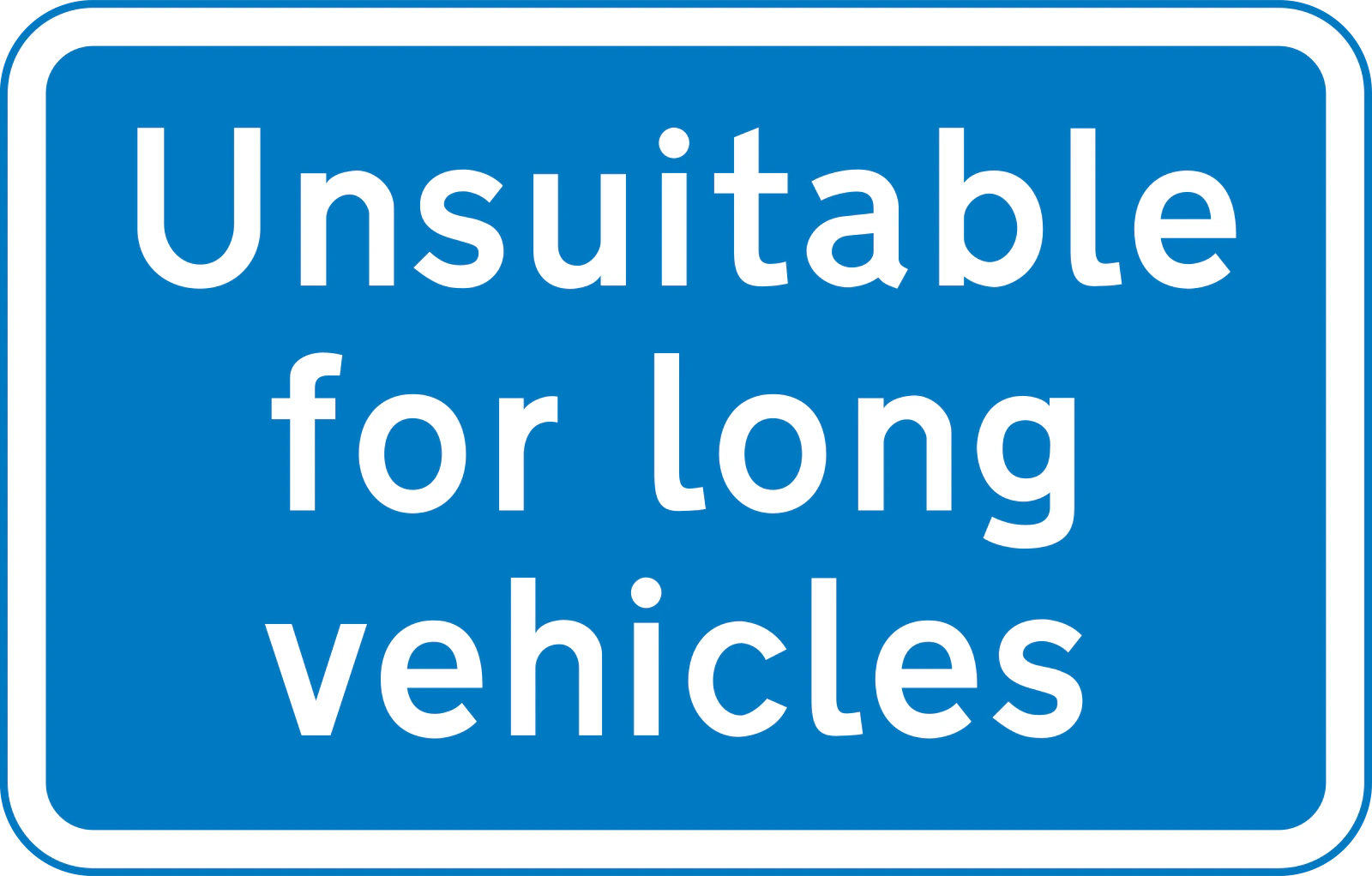
The 'Unsuitable for Long Vehicles' road sign (code 820V4) is an information sign designed to help you plan your route, particularly if you are driving a longer vehicle. It alerts you to a road layout, direction, facility, or local traffic arrangement that may be difficult or impossible for longer vehicles to navigate. Always combine the information from this sign with road markings, signals, and other regulatory signs before making any decisions about speed or position to ensure safe driving.
Master the meaning of the 'Unsuitable for Long Vehicles' road sign, crucial for your theory test revision and safe navigation. This sign interpretation helps you understand route restrictions and plan accordingly for theory exam preparation.
Information signs make the road environment easier to interpret before a driver has to act. This sign may identify one-way traffic, a lay-by, a route feature, a facility, or a local traffic arrangement. The driver should combine the information with road markings, priority rules, signals, and any regulatory signs before changing speed or position. It is listed in the catalogue as code 820V4.
"Unsuitable for long vehicles" gives official road information that helps drivers understand the layout, direction of traffic, facility, or local arrangement ahead. It should be used for planning, not for sudden reactions.
Get clear, practical answers to the most common questions about the 820V4 - Unsuitable for long vehicles road sign. Learn how the sign works, what rules it represents, and how it affects real driving situations. This FAQ strengthens your understanding and supports accurate decision making for the British driving theory exam in Great Britain.
The 820V4 sign is an information sign. Its primary purpose is to alert drivers of long vehicles to potential upcoming difficulties, such as narrow sections, sharp bends, or restricted access, allowing them to plan their route accordingly and avoid getting into trouble.
This sign is for planning. You should use the information to anticipate changes and adjust your speed and position safely, but it doesn't automatically mean you must stop or make a sudden manoeuvre. Always check other road signs, markings, and signals for specific instructions.
A common trap is assuming this sign is a strict prohibition. Learners might think they must turn back immediately, even if later signs indicate a manageable route or if their vehicle isn't technically too long for the upcoming section. Remember, it's advisory information for planning.
No, the sign specifically targets 'long vehicles'. While drivers of standard cars should still be aware of potential road layout changes ahead, this sign's primary audience is those operating longer vehicles like lorries, buses, or long trailers who need to be extra vigilant about clearance and turning space.
If you see the sign late, don't make sudden, unsafe changes to your route or speed. Continue safely if possible, looking for any follow-up signs that might provide more detail or alternatives. Prioritise safety and avoid abrupt actions that could endanger yourself or others.
A clear reference image of the 820V4 - Unsuitable for long vehicles road sign used in Great Britain.
The 820V4 - Unsuitable for long vehicles road sign may also be known by these alternative names or terms.
The 820V4 - Unsuitable for long vehicles road sign is part of the Great Britain Information Signs category, which groups together signs with similar rules and functions.
Comparing 'Unsuitable for long vehicles' with similar traffic signs sharpens your recognition and recall, reducing potential errors during your theory test revision. Effective sign recognition is crucial for safe driving and passing your Great Britain theory test.
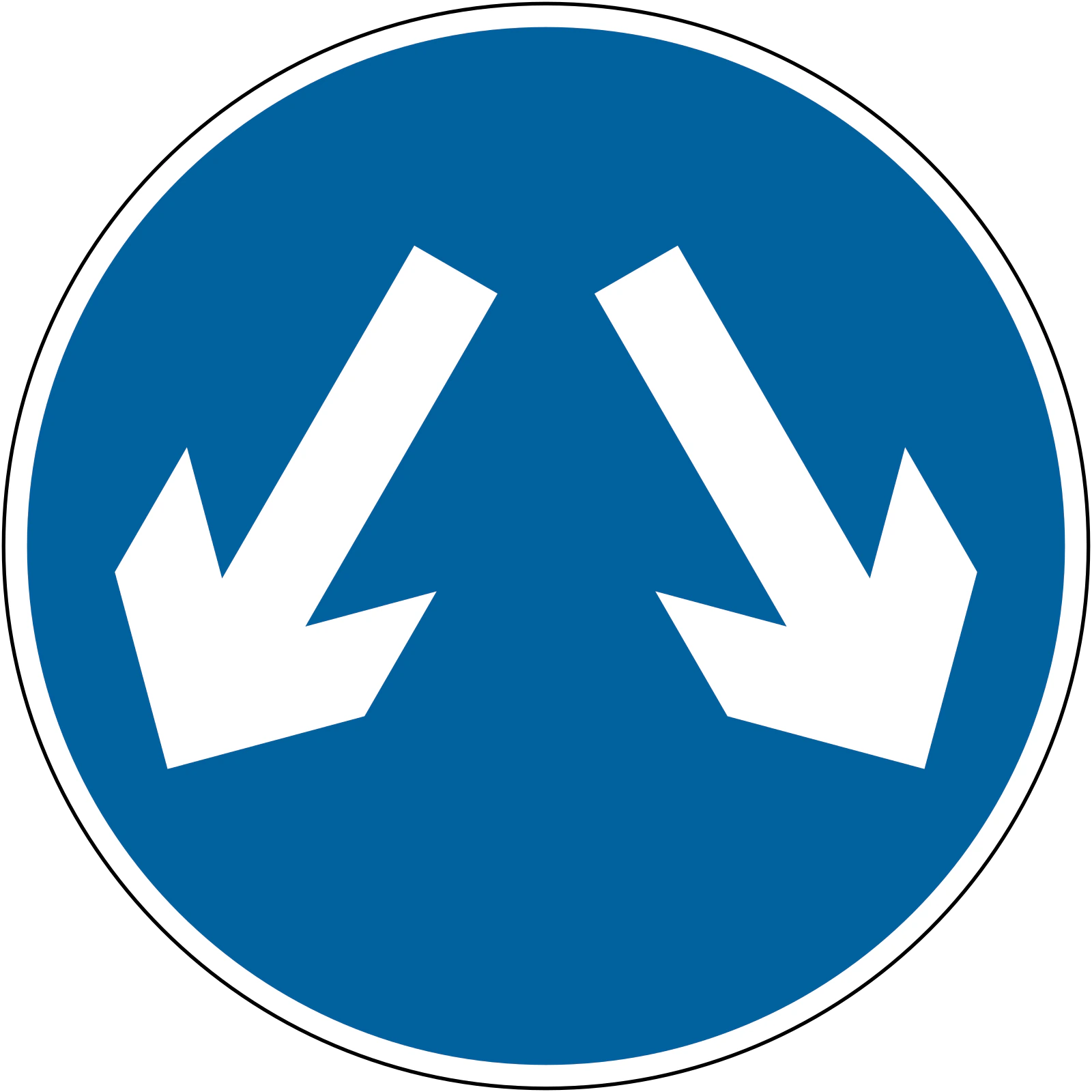
This information sign means you can pass either side to reach the same destination.
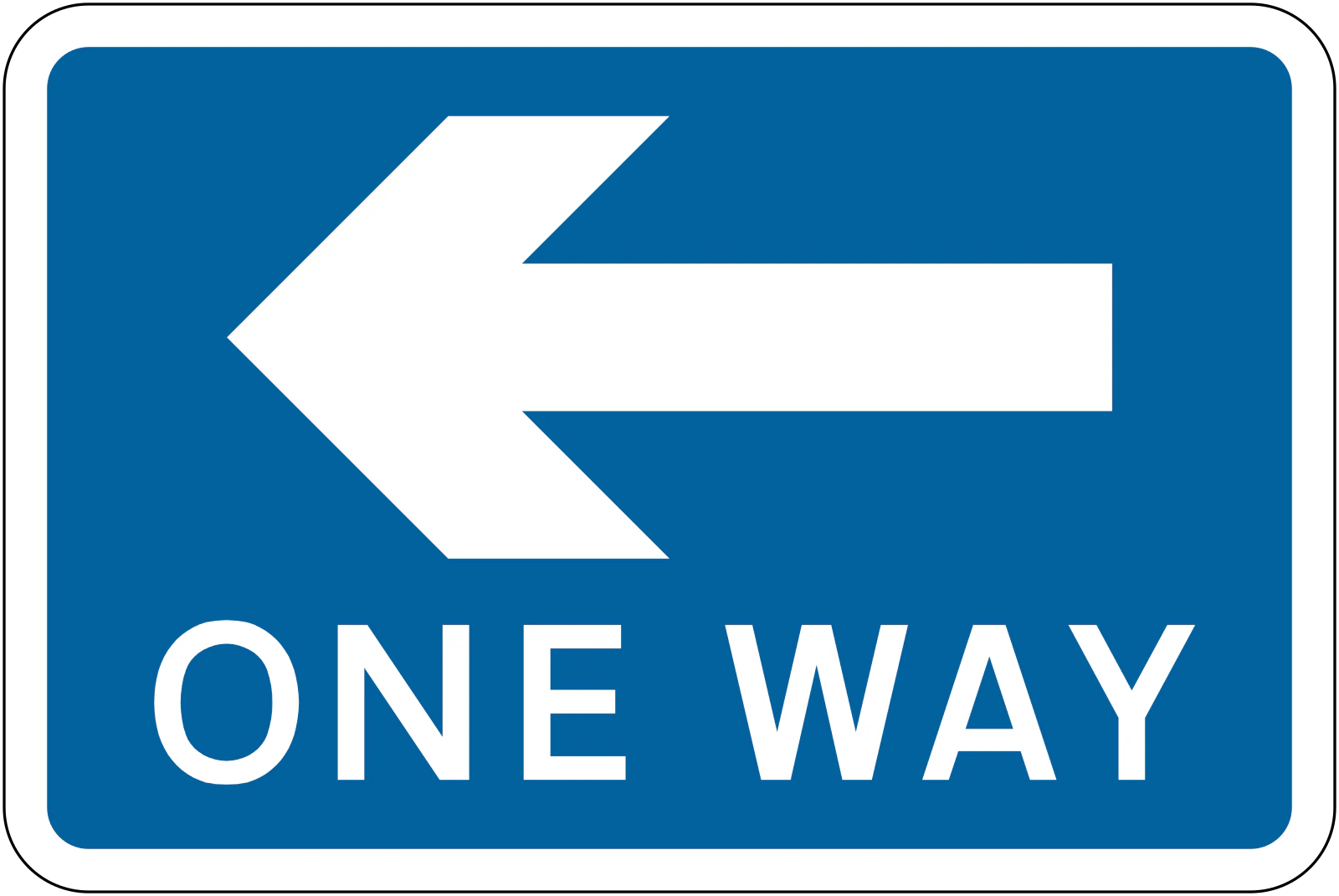
Understand the One-Way Traffic sign (810-L) to navigate safely.
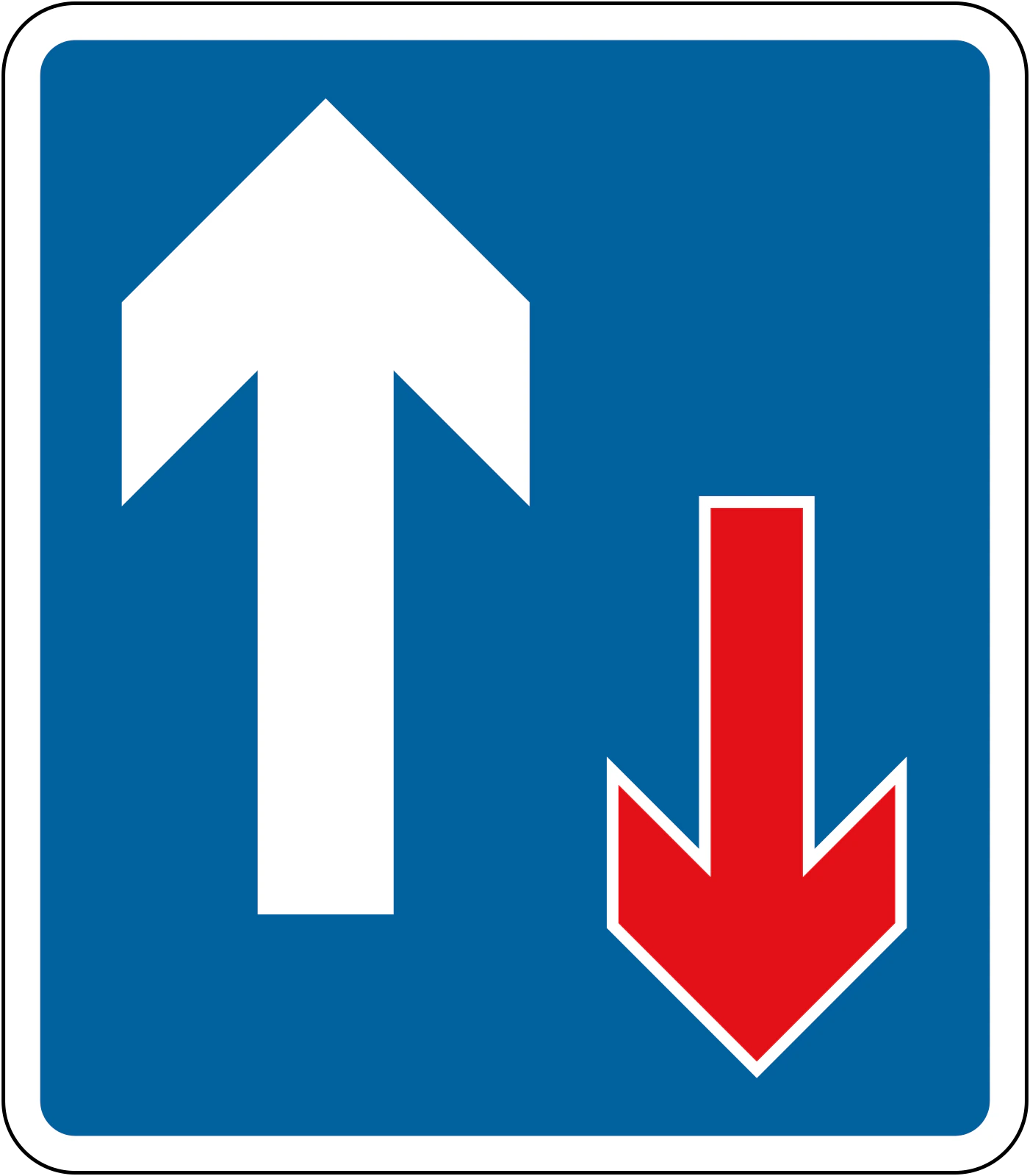
Sign 811 tells you that traffic from the opposite direction has priority.
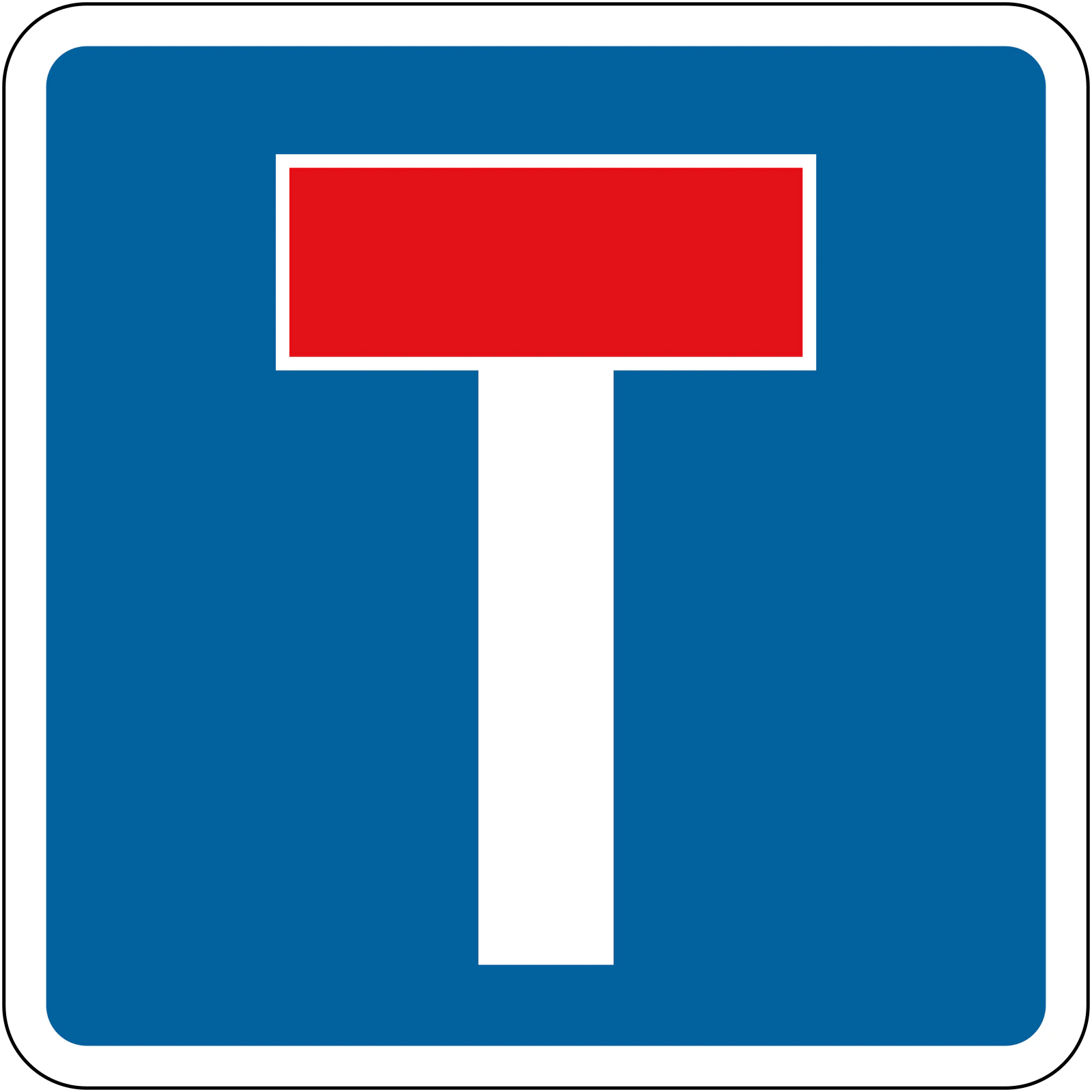
Prepare for the 'No Through Road' sign with this essential Great Britain traffic information.
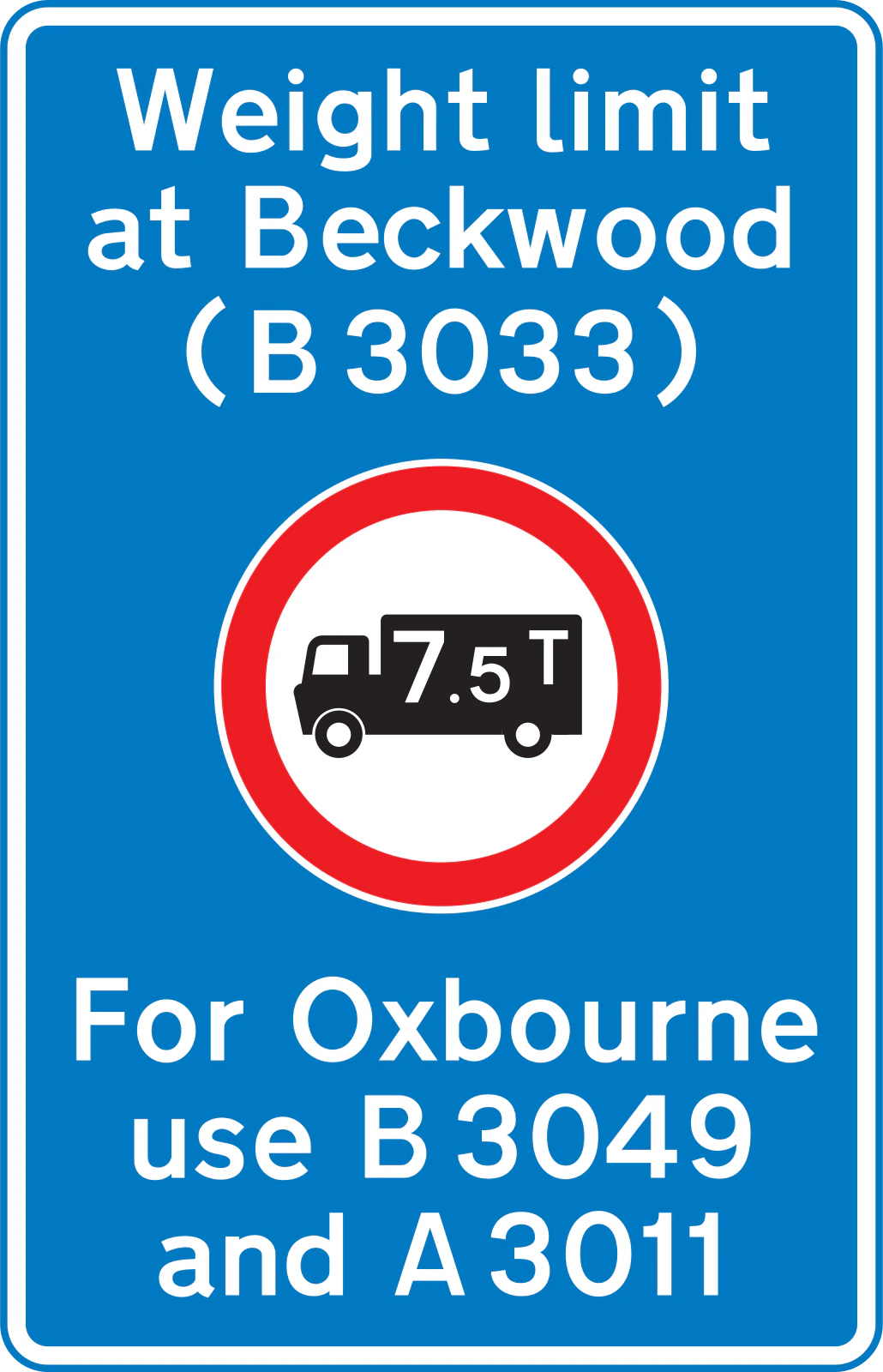
Prepare for a weight restriction and find an alternative route with this information sign.
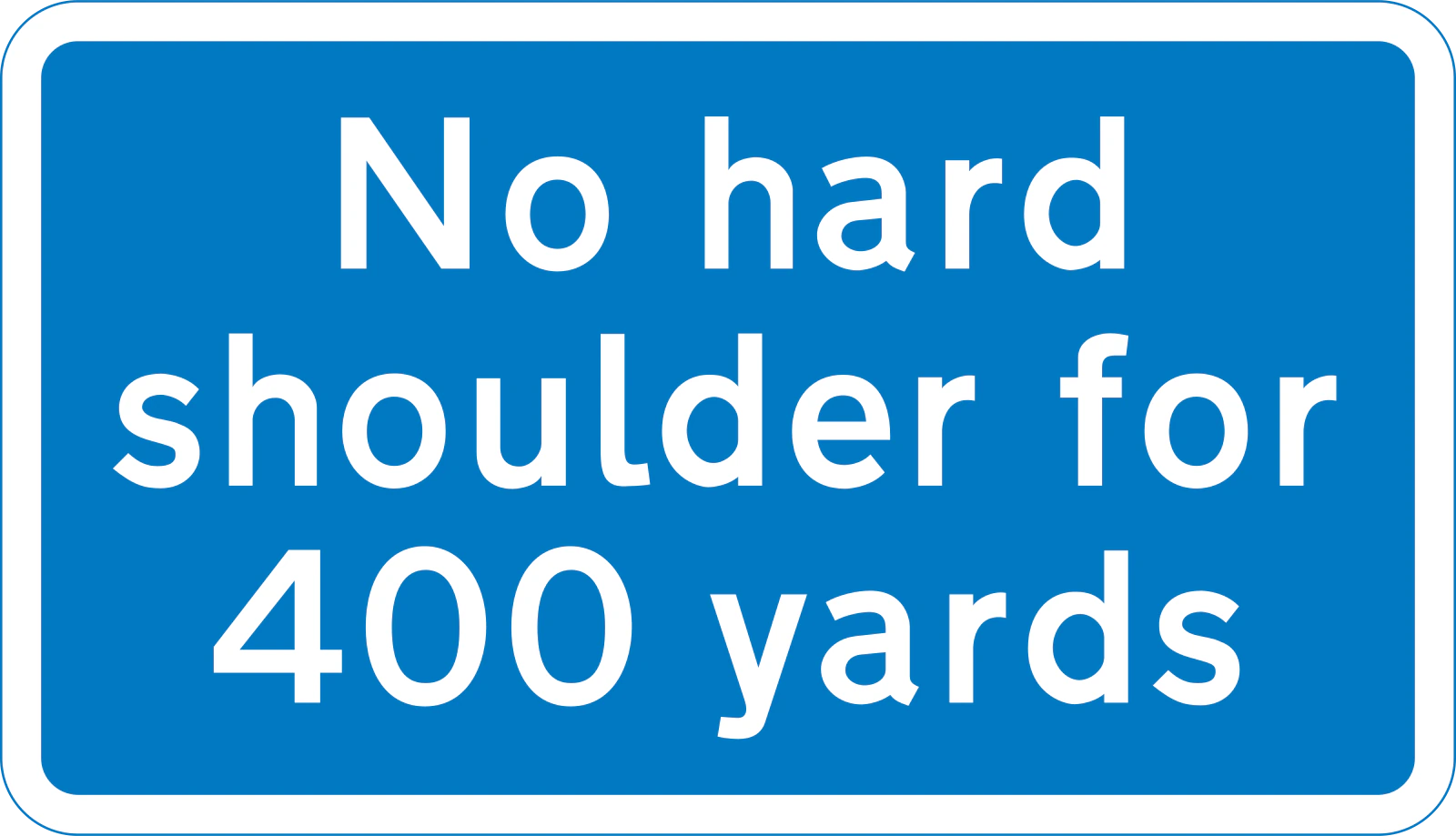
Understand the 'No Hard Shoulder for 400 yd' Road Sign
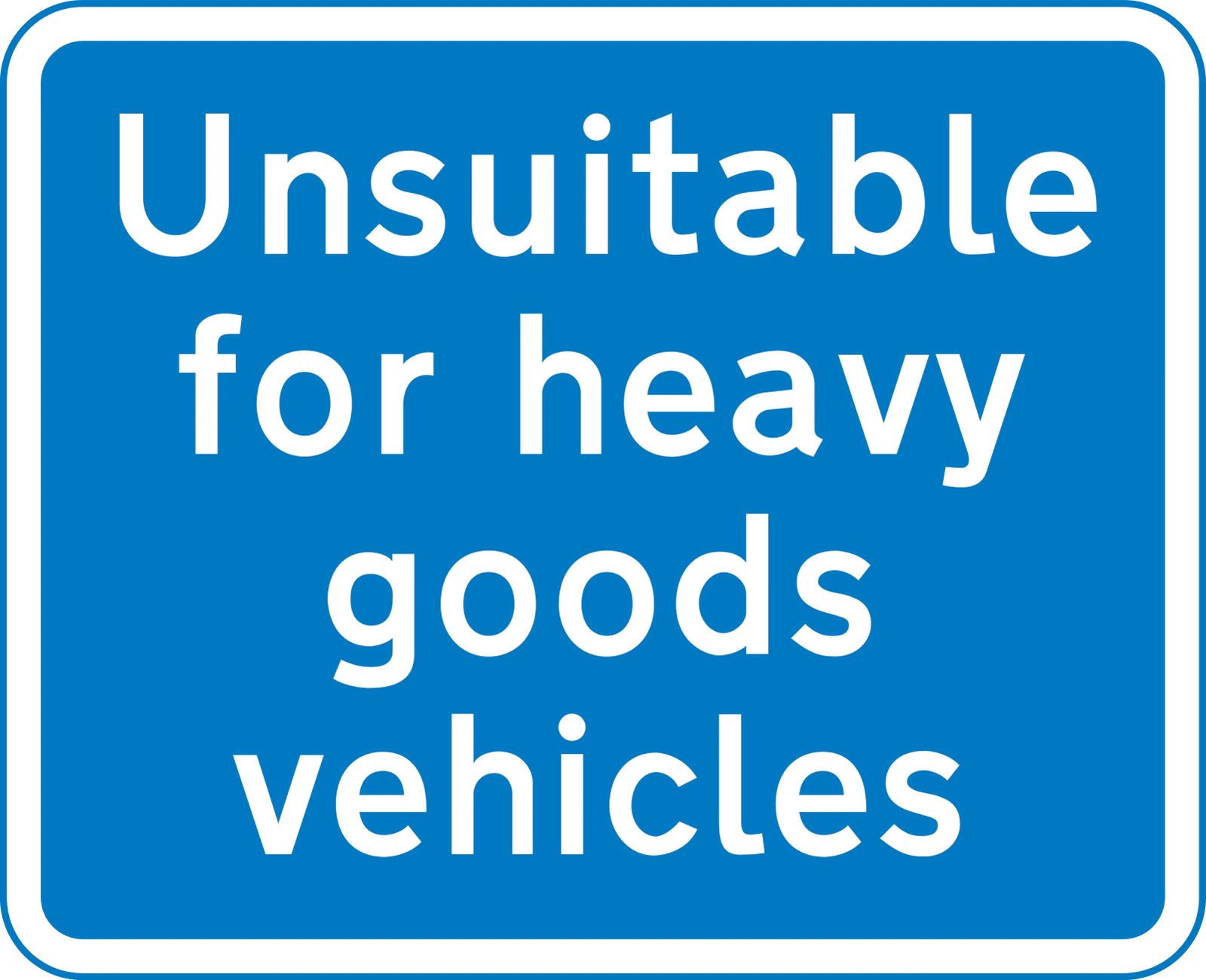
Understand the 'Unsuitable for Heavy Goods Vehicles' Information Sign
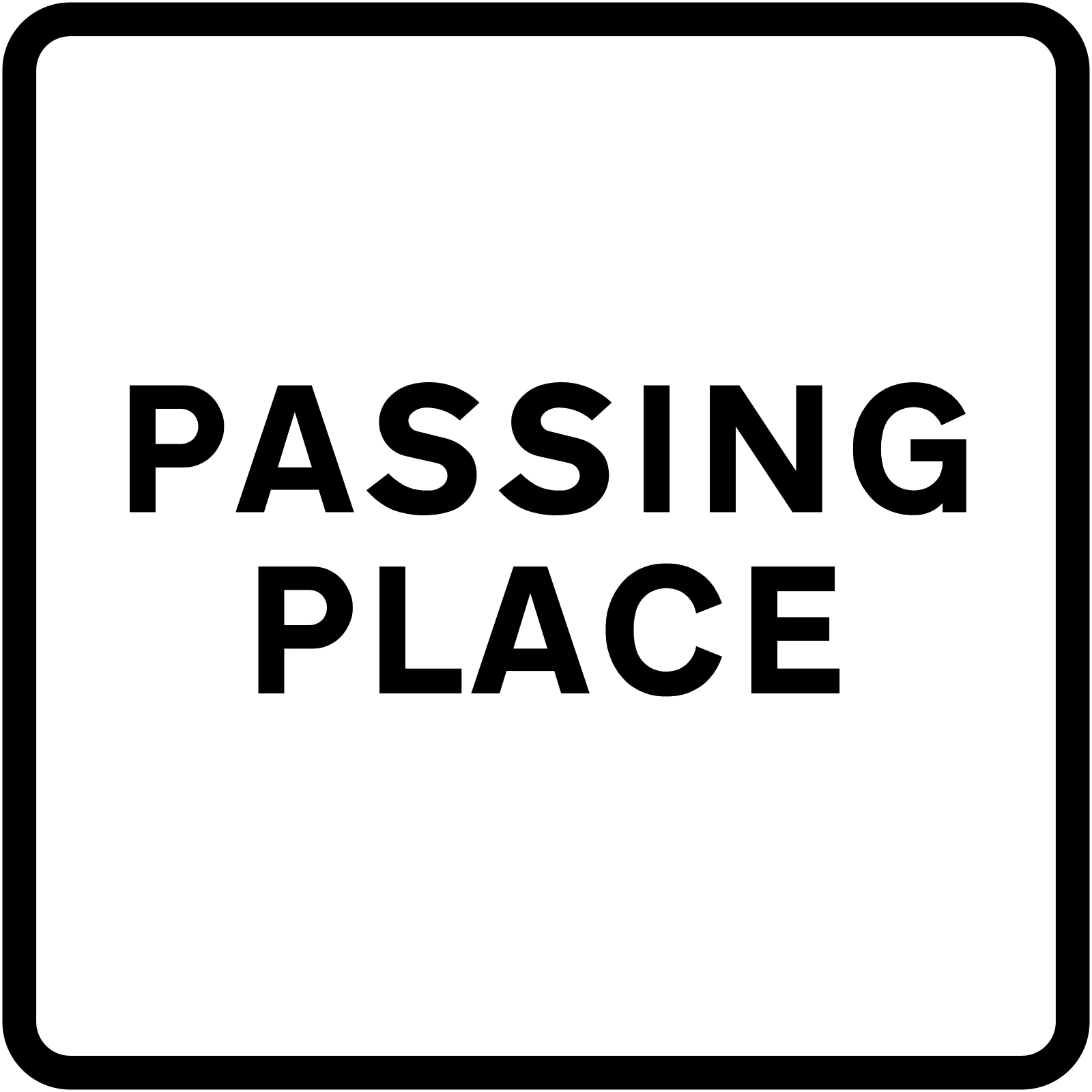
Understand the 'Passing Place on a Narrow Road' Information Sign (822)
Explore curated explanations and practical examples to strengthen your visual recognition of essential Great Britain road signs. These supplementary materials provide the context needed to navigate junctions safely and pass your official DVSA theory test.
Mastering the shapes and colours of Great Britain's road signs is a key component of passing your driving theory test. This guide breaks down the essential visual language of traffic signs, from urgent warning triangles to commanding circular signs and directional rectangular indicators, empowering you to drive more safely and confidently on UK roads.
Understand your responsibility for a safe and legal vehicle on Great Britain's roads.
When you get behind the wheel of another person's car, the law holds you strictly accountable for ensuring the vehicle is safe, taxed, and properly insured. This guide explains the checks you must perform to remain compliant with UK traffic laws and avoid common pitfalls often tested in the DVSA theory exam. Mastery of these rules ensures you are prepared to act as a responsible and legal road user.
Protect your newly earned licence: understand the New Driver Act rules.
Information signs make the road environment easier to interpret before a driver has to act. This sign may identify one-way traffic, a lay-by, a route feature, a facility, or a local traffic arrangement. The driver should combine the information with road markings, priority rules, signals, and any regulatory signs before changing speed or position. It is listed in the catalogue as code 818.4.
Information signs make the road environment easier to interpret before a driver has to act. This sign may identify one-way traffic, a lay-by, a route feature, a facility, or a local traffic arrangement. The driver should combine the information with road markings, priority rules, signals, and any regulatory signs before changing speed or position. It is listed in the catalogue as code 822.
After reviewing the full list of road signs, challenge yourself with practice questions focused specifically on sign recognition. Reinforce your learning and ensure you're fully prepared to identify and understand all traffic signs on the DVSA theory test.
Browse All GB Road Signs List