Driving on the hard shoulder is strictly prohibited under normal circumstances, and misuse can lead to significant penalties. This guide explains when you are legally permitted to enter this space, focusing on emergency protocols and the specific, narrow conditions where it may be used to assist other traffic. Mastering these rules is a critical component of safe motorway driving and your preparation for the Driver Theory Test.
Article content overview
For many learner drivers in Ireland, the hard shoulder is often misunderstood as a secondary lane for slow-moving traffic or a convenient space for bypassing queues. However, the Rules of the Road and the Road Safety Authority (RSA) are very clear: the hard shoulder is not a driving lane. Misusing this space is not only a serious motoring offence that can lead to penalty points and fines, but it also creates significant hazards for vulnerable road users. Understanding the strict legal boundaries of the hard shoulder is an essential requirement for both your Driver Theory Test and your development as a safe, responsible motorist.
On standard Irish roads, the hard shoulder is primarily reserved for pedestrians, cyclists, and occasionally horse riders. Driving along the hard shoulder is strictly prohibited. The only narrow exception provided in the Rules of the Road is for brief, non-driving purposes. If you are on a standard road and wish to allow a vehicle behind you to overtake—provided that the road is wide enough and you are not obstructing any junctions or entrances—you may pull into the hard shoulder momentarily.
It is vital to understand that this is not an invitation to continue driving in the hard shoulder. You must ensure there are no pedestrians or cyclists already occupying that space before you consider pulling in. Once the vehicle behind has safely passed, you must immediately return to the main carriageway.
Using the hard shoulder as a permanent lane to avoid heavy traffic or to bypass slow-moving vehicles is illegal. Doing so can result in penalty points and may lead to prosecution by An Garda Síochána.
Motorways in Ireland have much stricter regulations. You must never drive on the motorway hard shoulder unless you are in an emergency situation or have been explicitly directed to do so by a member of An Garda Síochána or a motorway emergency service vehicle.
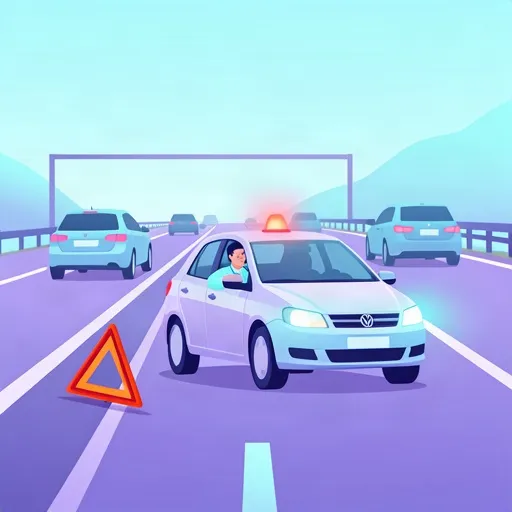
If your vehicle develops a mechanical issue or you are forced to stop due to an emergency, you must pull as far to the left of the hard shoulder as possible. Once stopped, you should turn on your hazard warning lights immediately. In the event of a breakdown, you should exit the vehicle from the left-hand side, move to a safe position behind the crash barrier, and contact emergency services or a recovery provider.
Variable messaging signs on Irish motorways are designed to inform you of hazards or changing conditions ahead. If these signs indicate that you should use the hard shoulder, or if they warn you of a lane closure, you must follow the instructions displayed immediately. These signs take precedence over your typical lane-discipline habits and are designed to manage traffic flow during incidents or roadworks.
In the Driver Theory Test, you may encounter questions regarding when it is acceptable to enter the hard shoulder. A common trap is the suggestion that it is acceptable to drive in the hard shoulder to "keep moving" during a traffic jam or to turn left at an upcoming junction. Remember that the rules are absolute: if it is not an emergency, you must remain on the main carriageway. Always look for the presence of cyclists or pedestrians in the hard shoulder, as their safety is the primary reason for these strict regulations.
The hard shoulder on Irish roads is reserved for emergencies and vulnerable road users, not as an additional driving lane. On standard roads, the only legal exception permits brief, non-driving use to allow another vehicle to overtake, provided no pedestrians or cyclists are present and you return to the carriageway immediately. Motorway hard shoulder use is strictly limited to genuine emergencies or official direction from An Garda Síochána, with a specific emergency protocol requiring hazard lights, stopping as far left as possible, exiting from the left side, and moving behind the crash barrier before contacting recovery services. Variable messaging signs on motorways override normal lane discipline when displayed.
A short set of high-value points that capture the most important ideas from this article.
The hard shoulder is not a driving lane under any normal circumstances on Irish roads
On standard roads, you may only pull into the hard shoulder briefly to allow overtaking, then immediately return to the carriageway
Motorway hard shoulder use is restricted strictly to emergencies or when directed by An Garda Síochána or emergency services
Variable messaging signs on motorways take precedence over normal lane discipline rules
Pedestrians and cyclists have priority use of the hard shoulder on non-motorway roads
Always check for pedestrians and cyclists before pulling into the hard shoulder on standard roads
On motorways, stop as far left as possible, turn on hazard lights, and exit from the left-hand side of the vehicle
After a breakdown on the motorway, move to a safe position behind the crash barrier before calling for assistance
Using the hard shoulder to bypass traffic or to turn at a junction is illegal and carries penalty points
Do not attempt to repair your vehicle or walk on the motorway carriageway during a breakdown
Believing it is acceptable to drive on the hard shoulder to keep moving during heavy traffic
Assuming the hard shoulder can be used to turn left at upcoming junctions
Forgetting to activate hazard warning lights immediately when stopping on the motorway hard shoulder
Exiting the vehicle on the wrong side when stopped on a motorway hard shoulder
Confusing the limited standard road exception with motorway hard shoulder rules
Article content overview
A short set of high-value points that capture the most important ideas from this article.
The hard shoulder is not a driving lane under any normal circumstances on Irish roads
On standard roads, you may only pull into the hard shoulder briefly to allow overtaking, then immediately return to the carriageway
Motorway hard shoulder use is restricted strictly to emergencies or when directed by An Garda Síochána or emergency services
Variable messaging signs on motorways take precedence over normal lane discipline rules
Pedestrians and cyclists have priority use of the hard shoulder on non-motorway roads
Always check for pedestrians and cyclists before pulling into the hard shoulder on standard roads
On motorways, stop as far left as possible, turn on hazard lights, and exit from the left-hand side of the vehicle
After a breakdown on the motorway, move to a safe position behind the crash barrier before calling for assistance
Using the hard shoulder to bypass traffic or to turn at a junction is illegal and carries penalty points
Do not attempt to repair your vehicle or walk on the motorway carriageway during a breakdown
Believing it is acceptable to drive on the hard shoulder to keep moving during heavy traffic
Assuming the hard shoulder can be used to turn left at upcoming junctions
Forgetting to activate hazard warning lights immediately when stopping on the motorway hard shoulder
Exiting the vehicle on the wrong side when stopped on a motorway hard shoulder
Confusing the limited standard road exception with motorway hard shoulder rules
Explore related topics, search based questions, and concepts that learners often look up when studying Hard Shoulder Driving Rules. These themes reflect real search intent and help you understand how this topic connects to wider driving theory knowledge in Ireland.
Find clear and practical answers to common questions learners often have about Hard Shoulder Driving Rules. This section helps explain difficult points, remove confusion, and reinforce the key driving theory concepts that matter for learners in Ireland.
On some standard roads, you may pull into the hard shoulder briefly to allow a vehicle behind you to overtake, provided no pedestrians or cyclists are using it and no junctions or entrances are nearby. This does not apply to motorways.
You should pull into the hard shoulder, stay clear of the vehicle, and contact An Garda Síochána or emergency services immediately. Do not attempt to reverse or perform any repairs in live traffic lanes.
Yes. It is a motoring offence to drive on the hard shoulder of a motorway except in an emergency or when directed to do so by An Garda Síochána. Doing so can result in penalty points.
After searching, continue your DTT preparation by exploring related articles, practicing questions, or reviewing specific road sign categories. Deepen your understanding of Irish road rules and ensure you're fully prepared for your Driver Theory Test.