Learning the correct use of the hard shoulder is a critical component of Irish road safety and theory exam preparation. This guide clarifies the distinction between driving lanes and the hard shoulder, helping you understand your legal obligations to prevent offences and potential penalty points.
Article content overview
Understanding the proper use of the hard shoulder is a fundamental requirement for every driver in Ireland. The hard shoulder is not a general driving lane, and its misuse is a frequent source of confusion for learner drivers preparing for the Driver Theory Test. Under the Rules of the Road provided by the Road Safety Authority (RSA), the hard shoulder is primarily designated for pedestrians and cyclists, and treating it as an auxiliary lane for motor vehicles can lead to dangerous situations, severe traffic offences, and the accumulation of penalty points on your licence.
The hard shoulder is the area of the carriageway immediately to the left of the continuous white line that marks the edge of the road. On national roads, you may occasionally see vehicles pull into the hard shoulder to allow faster-moving traffic behind them to overtake. While this is a common courtesy, it must be done with extreme caution. You should only use the hard shoulder in this manner if there are no pedestrians or cyclists present, and you must ensure there are no junctions or entrances nearby. Crucially, you must not continue driving in the hard shoulder; it is a temporary maneuver only, and you should return to the main carriageway as soon as it is safe to do so.
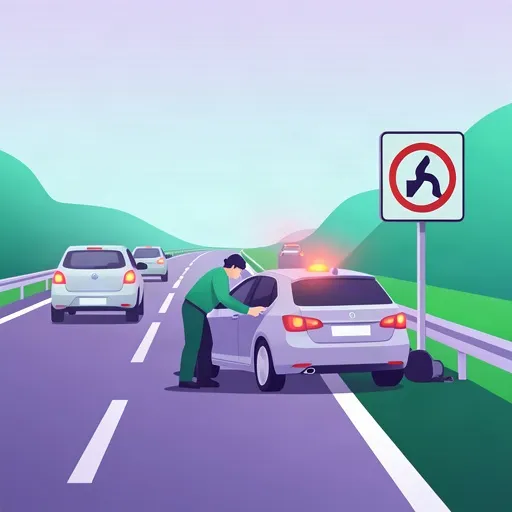
The rules for hard shoulders on motorways are significantly stricter than those on national roads. On a motorway, you must never drive on the hard shoulder, nor should you park there, unless you are faced with a genuine emergency. An emergency constitutes a mechanical breakdown, a medical necessity, or an instruction from emergency services or An Garda Síochána. If you break down on a motorway, you should try to pull over to the hard shoulder, stop as far to the left as possible, and immediately contact the authorities by dialing 999 or 112. Never attempt to turn your vehicle around or walk along the motorway to seek help.
The Irish Driver Theory Test frequently includes questions regarding road markings and the correct use of lanes. Failure to grasp the distinction between the main driving lanes and the hard shoulder is a common pitfall. Examiners look for candidates who understand that the hard shoulder is a safety zone. If you are found to be driving in the hard shoulder to bypass traffic jams or to facilitate an illegal overtaking maneuver, you are violating the core principles of road safety and the Rules of the Road. Such actions are penalized heavily to ensure the safety of vulnerable road users like cyclists and pedestrians.
| Road Type | Primary Use of Hard Shoulder | Driving Allowed? |
|---|---|---|
| National Roads | Yielding to faster traffic | Only briefly for yielding |
| Motorways | Emergency stops only | Never (unless emergency) |
To succeed in your exam, you must internalize that the hard shoulder is never a standard lane. When you are studying for your theory test, pay close attention to the sections regarding road markings, as these provide the legal framework for where a vehicle is permitted to travel. Remember that variable messaging signs on motorways may also provide information about lane closures or hazards, and these instructions always override standard driving conventions.
The hard shoulder in Ireland serves as a safety zone for vulnerable road users and emergency stops, not as an extra driving lane. Motorway hard shoulders have the strictest rules - driving there except during genuine emergencies is a serious offence that incurs penalty points. On national roads, the hard shoulder may be used briefly to allow faster traffic to overtake, but only when safe and without pedestrians or cyclists present. If you experience a breakdown on a motorway, pull onto the hard shoulder, stay in your vehicle if safe, and contact emergency services immediately. Understanding the distinction between road types and the limited circumstances for hard shoulder use is essential for both safe driving and passing the Irish Driver Theory Test.
A short set of high-value points that capture the most important ideas from this article.
The hard shoulder is never a standard driving lane and is primarily reserved for pedestrians, cyclists, and genuine emergencies
On motorways, driving on the hard shoulder is strictly prohibited unless you are experiencing a genuine emergency such as a mechanical breakdown or medical necessity
On national roads, you may briefly use the hard shoulder to yield to faster traffic, but only when no pedestrians or cyclists are present and no junctions are nearby
If you break down on a motorway, pull as far left as possible on the hard shoulder and contact emergency services by dialing 999 or 112
Driving on the hard shoulder to bypass traffic or for illegal overtaking results in penalty points and fixed charge notices
On motorways, the hard shoulder is for emergencies only - never drive there to overtake or avoid congestion
An emergency on a motorway means mechanical breakdown, medical need, or instruction from emergency services or An Garda Síochána
Never attempt to turn around or walk along a motorway if you break down
The continuous white line marks the edge of the driving lane and must not be crossed except in permitted circumstances
Variable messaging signs on motorways may override standard driving conventions and provide hazard information
Assuming the hard shoulder can be used as an auxiliary lane on motorways during heavy traffic
Confusing national road hard shoulder courtesies with motorway rules, where the restrictions are much stricter
Believing it is acceptable to walk along a motorway to seek help after breaking down
Using the hard shoulder for rest stops or non-emergency stops on motorways
Forgetting that pedestrians and cyclists have priority on the hard shoulder on national roads
Article content overview
A short set of high-value points that capture the most important ideas from this article.
The hard shoulder is never a standard driving lane and is primarily reserved for pedestrians, cyclists, and genuine emergencies
On motorways, driving on the hard shoulder is strictly prohibited unless you are experiencing a genuine emergency such as a mechanical breakdown or medical necessity
On national roads, you may briefly use the hard shoulder to yield to faster traffic, but only when no pedestrians or cyclists are present and no junctions are nearby
If you break down on a motorway, pull as far left as possible on the hard shoulder and contact emergency services by dialing 999 or 112
Driving on the hard shoulder to bypass traffic or for illegal overtaking results in penalty points and fixed charge notices
On motorways, the hard shoulder is for emergencies only - never drive there to overtake or avoid congestion
An emergency on a motorway means mechanical breakdown, medical need, or instruction from emergency services or An Garda Síochána
Never attempt to turn around or walk along a motorway if you break down
The continuous white line marks the edge of the driving lane and must not be crossed except in permitted circumstances
Variable messaging signs on motorways may override standard driving conventions and provide hazard information
Assuming the hard shoulder can be used as an auxiliary lane on motorways during heavy traffic
Confusing national road hard shoulder courtesies with motorway rules, where the restrictions are much stricter
Believing it is acceptable to walk along a motorway to seek help after breaking down
Using the hard shoulder for rest stops or non-emergency stops on motorways
Forgetting that pedestrians and cyclists have priority on the hard shoulder on national roads
Explore related topics, search based questions, and concepts that learners often look up when studying Hard Shoulder Driving Rules. These themes reflect real search intent and help you understand how this topic connects to wider driving theory knowledge in Ireland.
Find clear and practical answers to common questions learners often have about Hard Shoulder Driving Rules. This section helps explain difficult points, remove confusion, and reinforce the key driving theory concepts that matter for learners in Ireland.
On national roads, you may pull into the hard shoulder briefly to allow faster traffic to pass, provided it is clear of pedestrians and cyclists and there are no nearby junctions. You must not continue driving in the hard shoulder.
No, you must not drive on the hard shoulder of a motorway unless you are in an emergency or are directed to do so by An Garda Síochána.
Driving on the hard shoulder is a motoring offence that can result in penalty points on your licence.
You should only stop on the motorway in an emergency. Move to the hard shoulder if possible, stay in a safe place, and contact the emergency services or An Garda Síochána immediately.
After searching, continue your DTT preparation by exploring related articles, practicing questions, or reviewing specific road sign categories. Deepen your understanding of Irish road rules and ensure you're fully prepared for your Driver Theory Test.