Understanding the principles of eco-driving is essential for every learner in Ireland, as it reinforces the importance of driver control and environmental responsibility. You will learn how simple adjustments to your driving behavior, such as gear selection and anticipation, contribute to both a safer journey and a more economical driving style. This knowledge is not only beneficial for daily driving but is also a critical component of professional driving standards aligned with RSA guidance.
Article content overview
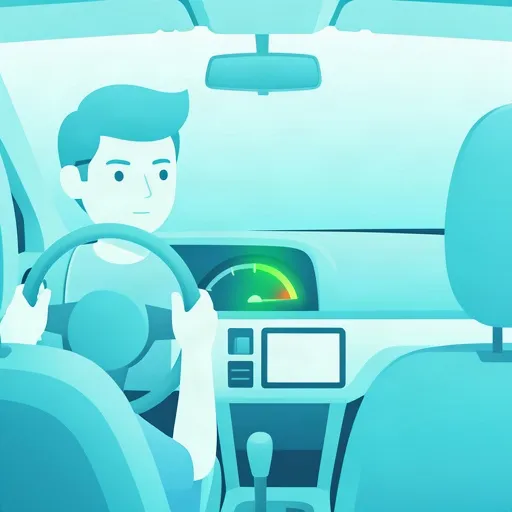
Adopting a calm, measured approach to driving is more than just a matter of courtesy; it is a fundamental pillar of safe and efficient road usage in Ireland. Eco-driving involves techniques that reduce fuel consumption, lower exhaust emissions, and significantly decrease the risk of collisions. By focusing on smooth acceleration, constant speed, and advanced anticipation, learner drivers can align their behavior with the core values promoted by the Road Safety Authority (RSA) and the Rules of the Road.
Many learners assume that saving fuel requires specialized equipment or extreme measures. In reality, fuel-efficient driving is primarily about managing the kinetic energy of your vehicle effectively. When you accelerate harshly, the engine burns excess fuel to overcome the inertia of a stationary or slow-moving vehicle. By accelerating gently and shifting into a higher gear as soon as it is safe to do so, you minimize the work the engine must perform, directly reducing your fuel costs.
Consistent gear selection is key to efficiency. Driving in the highest suitable gear for your current speed—without causing the engine to labour—significantly improves your fuel consumption figures.
Maintaining a steady speed is equally critical. Every time you accelerate, you use fuel that must be replenished. Drivers who constantly fluctuate their speed by braking and then accelerating again are not only creating a more dangerous environment for surrounding road users but are also significantly increasing their vehicle's fuel consumption compared to those who maintain a constant, steady pace.
Predictive driving is the hallmark of a safe and economical driver. Rather than reacting to the brake lights of the vehicle in front of you, you should scan the road ahead to identify potential hazards or traffic flow changes early. By observing traffic patterns, such as a traffic light turning to amber or a slow-moving vehicle ahead, you can lift your foot off the accelerator and allow the vehicle’s natural momentum to bring your speed down.
When you use the engine’s natural braking effect by lifting off the throttle, you consume virtually no fuel while still slowing down. This technique, often called "coasting in gear," is a vital skill for both the theory test and practical driving assessments. It demonstrates that you are in full control of your vehicle and aware of your surroundings, which is exactly what RSA examiners look for during a test.
The Driver Theory Test regularly features questions regarding vehicle control and environmental awareness. You may encounter scenarios asking about the most efficient way to handle stop-start traffic or how to maintain a safe distance while preserving fuel. Understanding these concepts helps you answer questions correctly and, more importantly, helps you build a strong foundation for your future driving career.
A driving style that emphasizes fuel efficiency, safety, and reduced environmental impact by minimizing harsh braking and acceleration and optimizing gear management.
It is important to remember that safety always takes precedence over fuel economy. While eco-driving promotes a calm, steady rhythm, you must never sacrifice necessary braking or defensive maneuvers in order to "save fuel." Your primary responsibility as a driver is to ensure the safety of yourself, your passengers, and other road users.
Developing good habits early in your learner permit journey makes them second nature once you are a fully licensed driver. Avoid idling your engine while parked, as this wastes fuel and creates unnecessary pollution. If you are waiting for a passenger or at a long stop, turning off the ignition is a simple, effective practice that aligns with modern environmental standards.
By mastering these techniques, you become a more disciplined, aware, and responsible driver. Remember that the goal is not just to pass the theory test, but to become a lifelong safe driver who understands the impact of their driving choices on the environment and the Irish road network.
Eco-driving is a driving approach that combines fuel efficiency with road safety by focusing on smooth acceleration, maintaining steady speeds, and using predictive techniques. Key practices include shifting to higher gears as soon as safe, using engine braking to slow down naturally, and anticipating traffic conditions well ahead. While eco-driving helps reduce fuel costs and emissions, safety must always remain the primary concern—necessary braking and defensive driving should never be compromised. These techniques are aligned with RSA standards and form part of the knowledge assessed in the Irish Driver Theory Test, making them essential for both exam preparation and lifelong safe driving.
A short set of high-value points that capture the most important ideas from this article.
Eco-driving reduces fuel consumption and emissions by managing your vehicle's kinetic energy through smooth acceleration and controlled speed.
Predictive driving—scanning ahead and anticipating traffic changes—allows you to use engine braking instead of fuel-consuming deceleration.
Maintaining a steady speed and minimizing speed fluctuations significantly reduces fuel usage compared to frequent acceleration and braking.
Always prioritise safety over fuel economy; never delay necessary braking or defensive manoeuvres to save fuel.
These techniques align with RSA standards and demonstrate the driver awareness that examiners look for during theory and practical tests.
Accelerate gently and shift to the highest suitable gear early to reduce engine workload.
Use engine braking (lifting off the throttle) to slow down rather than applying the brakes.
Look well ahead to identify hazards early and avoid last-minute reactions.
Turn off the engine when parked or waiting for extended periods to avoid unnecessary idling.
Safety always takes precedence over fuel economy—do not sacrifice necessary braking to save fuel.
Assuming fuel efficiency requires extreme measures rather than simple behaviour adjustments.
Accelerating too harshly, causing the engine to burn excess fuel to overcome inertia.
Constantly fluctuating speed by braking and re-accelerating, which wastes more fuel than maintaining a steady pace.
Reacting only to the vehicle in front braking rather than scanning ahead to anticipate changes.
Driving in too low a gear at higher speeds, causing the engine to labour and consume more fuel.
Article content overview
A short set of high-value points that capture the most important ideas from this article.
Eco-driving reduces fuel consumption and emissions by managing your vehicle's kinetic energy through smooth acceleration and controlled speed.
Predictive driving—scanning ahead and anticipating traffic changes—allows you to use engine braking instead of fuel-consuming deceleration.
Maintaining a steady speed and minimizing speed fluctuations significantly reduces fuel usage compared to frequent acceleration and braking.
Always prioritise safety over fuel economy; never delay necessary braking or defensive manoeuvres to save fuel.
These techniques align with RSA standards and demonstrate the driver awareness that examiners look for during theory and practical tests.
Accelerate gently and shift to the highest suitable gear early to reduce engine workload.
Use engine braking (lifting off the throttle) to slow down rather than applying the brakes.
Look well ahead to identify hazards early and avoid last-minute reactions.
Turn off the engine when parked or waiting for extended periods to avoid unnecessary idling.
Safety always takes precedence over fuel economy—do not sacrifice necessary braking to save fuel.
Assuming fuel efficiency requires extreme measures rather than simple behaviour adjustments.
Accelerating too harshly, causing the engine to burn excess fuel to overcome inertia.
Constantly fluctuating speed by braking and re-accelerating, which wastes more fuel than maintaining a steady pace.
Reacting only to the vehicle in front braking rather than scanning ahead to anticipate changes.
Driving in too low a gear at higher speeds, causing the engine to labour and consume more fuel.
Explore related topics, search based questions, and concepts that learners often look up when studying Eco-Driving and Fuel Efficiency. These themes reflect real search intent and help you understand how this topic connects to wider driving theory knowledge in Ireland.
Find clear and practical answers to common questions learners often have about Eco-Driving and Fuel Efficiency. This section helps explain difficult points, remove confusion, and reinforce the key driving theory concepts that matter for learners in Ireland.
Rapid acceleration requires significantly more fuel to overcome vehicle inertia. By accelerating gradually and smoothly, you allow the engine to work more efficiently, which reduces fuel consumption and lowers emissions.
Anticipating traffic flow allows you to adjust your speed early rather than braking sharply. Maintaining momentum reduces the need to accelerate back to speed, which is one of the most fuel-intensive actions a driver takes.
Yes. Eco-driving encourages a calm, observant, and predictive driving style. This leads to better hazard awareness, more controlled braking, and increased safety for you and other road users.
Using the highest appropriate gear for your speed keeps the engine at lower RPMs, which is more fuel-efficient. Shifting up as early as possible without straining the engine is a key technique in eco-driving.
After searching, continue your DTT preparation by exploring related articles, practicing questions, or reviewing specific road sign categories. Deepen your understanding of Irish road rules and ensure you're fully prepared for your Driver Theory Test.