
Understanding how to manage reduced visibility and slippery surfaces is a key component of the RSA Rules of the Road. This article provides actionable advice on maintaining proper following distances, enhancing your profile to other road users, and anticipating hazards to help you pass your theory exam and ride safely.
Article content overview
Operating a motorcycle on Irish roads requires a heightened sense of awareness compared to driving a standard passenger vehicle. Because of the unique challenges posed by our unpredictable weather patterns, variable road surfaces, and the narrow profile of motorcycles, the Road Safety Authority (RSA) emphasizes specific defensive driving techniques. Mastering these concepts is essential not only for passing your Driver Theory Test but for ensuring your long-term safety as a road user in Ireland.
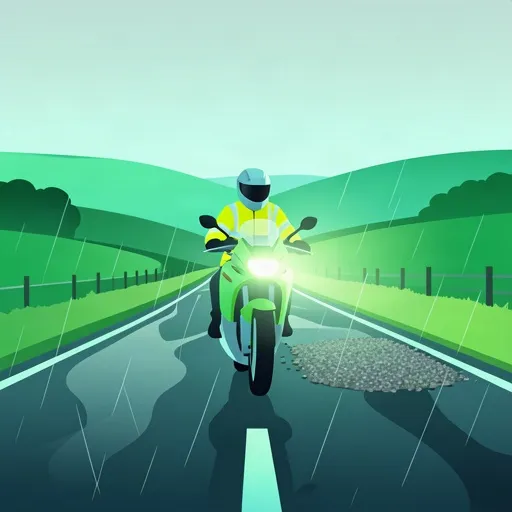
The Irish climate frequently presents motorcyclists with rain, damp road surfaces, and gusty winds. In these conditions, your ability to sense danger must be sharper. The RSA guidelines stress that experience is the primary factor in identifying hazards, but until that experience is built, you must operate strictly within your personal abilities. Always reduce your speed before approaching potential hazards like pools of water, patches of wet leaves, or loose gravel, which can cause a loss of traction.
When conditions are wet or icy, the standard stopping distances increase significantly. The "two-second rule"—a core principle of the Rules of the Road—must be extended to account for reduced friction. If the road is slippery, consider doubling or tripling your following distance to provide adequate space to brake safely without locking your wheels.
Never rely solely on your mirrors. When changing lanes, overtaking, or moving off, you must perform a shoulder check to observe your blind spots. A motorcycle’s narrow profile means other road users may easily miss you if you are positioned in a blind spot.
One of the most common causes of motorcycle accidents is that other drivers simply do not see the rider. Because cars are larger, drivers are often conditioned to look for other cars rather than the slimmer outline of a bike. To combat this, you must proactively manage your visibility on the road.
Wearing high-visibility clothing, such as a neon vest or a jacket with reflective strips, significantly improves your chance of being spotted. Furthermore, using your dipped headlights—even during daylight hours—is a recommended RSA practice to make your presence known to oncoming traffic. If your motorcycle’s indicators or brake lights are not providing enough of a warning to others, you should be prepared to use clear hand signals to indicate your intentions.
Beyond weather, road surfaces in Ireland can contain hidden dangers. Gravel, sand, and mud deposited by agricultural vehicles can turn a routine corner into a high-risk situation. As a rider, you must scan the road ahead into the far, middle, and near distance to anticipate these surface changes.
| Hazard Type | Impact on Riding | Recommended Action |
|---|---|---|
| Gravel/Sand | Reduces tire grip | Reduce speed; avoid harsh braking. |
| Wet Leaves | Extremely slippery | Increase following distance; ride smoothly. |
| Painted Markings | Can be slick when wet | Avoid heavy braking or turning on white lines. |
| Pools of Water | Risk of aquaplaning | Slow down; keep the bike upright. |
The area around your vehicle that cannot be seen directly through your mirrors. You must physically turn your head to check these areas before changing position or turning.
The Driver Theory Test regularly features questions regarding road positioning, hazard perception, and the correct reaction to adverse weather conditions. The examiners are looking for candidates who understand that safety is a proactive, rather than reactive, process. When studying, focus on the logic behind the Rules of the Road: why do we increase our distance in the rain? Why is a shoulder check more critical for a motorcyclist than a car driver?
Remember that your motorcycle tires must have a minimum tread depth of 1 mm, though it is highly recommended to replace them well before they reach this legal limit. Maintaining your machine to the highest standard is as vital as your riding technique.
This article covers essential motorcycle safety practices for Irish roads, emphasizing defensive riding techniques in poor weather and reduced visibility. Key concepts include extending the two-second rule to three or four seconds on slippery surfaces, proactively managing visibility through high-visibility gear and dipped headlights, and scanning ahead to anticipate hazards like gravel, wet leaves, and water pools. The RSA stresses that motorcycle riders must perform shoulder checks to cover blind spots, as other drivers may not notice the narrow profile of a bike. For the Driver Theory Test, understanding why these safety practices exist is as important as knowing the rules themselves.
A short set of high-value points that capture the most important ideas from this article.
Always extend your following distance beyond the two-second rule when road surfaces are wet or slippery to account for reduced friction
Use dipped headlights during daylight hours and wear high-visibility clothing to ensure other road users can see you
Scan the road ahead into far, middle, and near distance to identify surface hazards like gravel, wet leaves, and painted markings
Never rely solely on mirrors; perform shoulder checks to cover blind spots that other drivers may not see
Maintain your motorcycle to high standards, including ensuring tires exceed the minimum 1mm tread depth
The two-second rule must be doubled or tripled in wet or slippery conditions
Gravel reduces tire grip and requires reduced speed with gentle braking
Wet leaves are extremely slippery and demand increased following distance and smooth riding
Painted road markings become slick when wet and should be avoided during heavy braking or turning
Minimum legal tread depth is 1mm, but tires should be replaced well before reaching this limit
Assuming mirrors alone provide adequate awareness; shoulder checks are mandatory for motorcyclists
Failing to adjust following distance when conditions change from dry to wet
Not using dipped headlights during daylight despite clear visibility conditions
Positioning the motorcycle in another vehicle's blind spot without realizing it
Braking heavily or turning sharply on painted road markings when wet
Article content overview
A short set of high-value points that capture the most important ideas from this article.
Always extend your following distance beyond the two-second rule when road surfaces are wet or slippery to account for reduced friction
Use dipped headlights during daylight hours and wear high-visibility clothing to ensure other road users can see you
Scan the road ahead into far, middle, and near distance to identify surface hazards like gravel, wet leaves, and painted markings
Never rely solely on mirrors; perform shoulder checks to cover blind spots that other drivers may not see
Maintain your motorcycle to high standards, including ensuring tires exceed the minimum 1mm tread depth
The two-second rule must be doubled or tripled in wet or slippery conditions
Gravel reduces tire grip and requires reduced speed with gentle braking
Wet leaves are extremely slippery and demand increased following distance and smooth riding
Painted road markings become slick when wet and should be avoided during heavy braking or turning
Minimum legal tread depth is 1mm, but tires should be replaced well before reaching this limit
Assuming mirrors alone provide adequate awareness; shoulder checks are mandatory for motorcyclists
Failing to adjust following distance when conditions change from dry to wet
Not using dipped headlights during daylight despite clear visibility conditions
Positioning the motorcycle in another vehicle's blind spot without realizing it
Braking heavily or turning sharply on painted road markings when wet
Explore related topics, search based questions, and concepts that learners often look up when studying Motorcycle Safety in Poor Conditions. These themes reflect real search intent and help you understand how this topic connects to wider driving theory knowledge in Ireland.
Find clear and practical answers to common questions learners often have about Motorcycle Safety in Poor Conditions. This section helps explain difficult points, remove confusion, and reinforce the key driving theory concepts that matter for learners in Ireland.
The two-second rule is a minimum following distance in dry conditions. You should pick a stationary object, and when the vehicle in front passes it, you should count 'one thousand and one, one thousand and two' before reaching that same object. In wet or icy conditions, this gap must be increased significantly.
Using dipped headlights helps make your motorcycle more conspicuous to other road users, especially in conditions where visibility is reduced, ensuring you are seen earlier and helping to prevent accidents.
Motorcyclists should be particularly vigilant for gravel chips, sand, pools of water, and uneven road surfaces, as these can easily destabilize a bike. Always reduce speed when you encounter these hazards.
Always wear high-visibility clothing, such as a neon vest and reflective belt, use your dipped headlights, and ensure your road positioning is clear and predictable to other drivers.
After searching, continue your DTT preparation by exploring related articles, practicing questions, or reviewing specific road sign categories. Deepen your understanding of Irish road rules and ensure you're fully prepared for your Driver Theory Test.