Learning how to interact safely with pedestrians is a cornerstone of the Irish driving theory curriculum and essential for passing the hazard awareness section of your test. This guide clarifies your legal responsibilities as a motorist, emphasizing the importance of visibility and caution when encountering vulnerable road users in both urban and rural environments.
Article content overview
Mastering the art of defensive driving in Ireland requires a deep understanding of how to share the road safely with vulnerable road users. As a learner driver, you are expected to demonstrate not only your knowledge of the Rules of the Road but also your awareness of potential hazards involving those who lack the protection of a vehicle. Pedestrians, cyclists, and users of mobility aids are among the most at-risk groups, and the Road Safety Authority (RSA) emphasizes that all motorists have a primary duty of care toward them.
Visibility is a fundamental pillar of road safety in Ireland. The 'Be Safe, Be Seen' principle is not just a suggestion; it is a critical safety practice that all road users must adopt to reduce the high frequency of pedestrian-related accidents. For drivers, this means remaining hyper-vigilant for pedestrians who may be difficult to spot, particularly in rural environments or during hours of darkness and adverse weather conditions.
When driving at night or in areas with poor street lighting, you must adjust your speed and scanning patterns to account for pedestrians who may be wearing dark clothing. Always look for movement on the verges and be prepared to slow down or stop if you suspect someone is present. Remember that if a pedestrian is not easily visible, they are also less likely to perceive your vehicle’s speed and distance correctly, placing the onus on you to act as the defensive driver.
In many rural parts of Ireland, footpaths are not available, forcing pedestrians to use the side of the road. Understanding the legal requirements for pedestrians in these settings is essential for your Driver Theory Test, as it helps you anticipate their movements and prepare for potential hazards.
If you are driving on a road without a footpath, you must be aware of the following rules that dictate pedestrian behavior:
As a driver, when you see a group of pedestrians on the road ahead, you should signal early, reduce your speed, and provide as much clearance as possible when overtaking. Never assume that pedestrians will move out of your way quickly, especially if they are elderly or carrying heavy items.
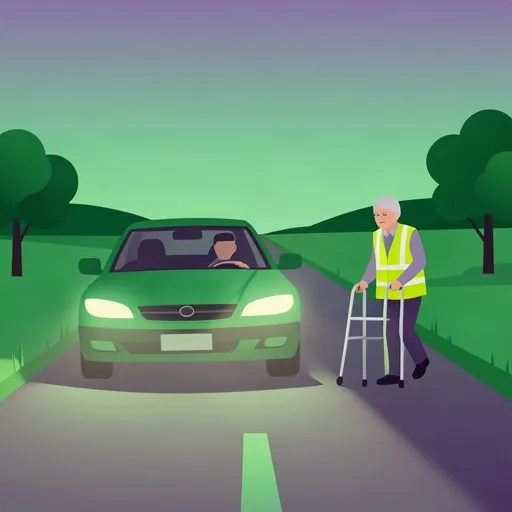
Vulnerable road users encompass a wide range of individuals, including the elderly, children, and people using mobility aids such as wheelchairs or mobility scooters. Navigating town centers or residential areas requires increased caution, as these road users may have reduced mobility or limited reaction times. When you encounter someone using a mobility aid, give them the same space and respect you would afford to any other vehicle.
If you see an elderly pedestrian crossing the road, do not honk your horn or attempt to rush them; instead, exercise patience and wait until they have reached the safety of the pavement. The Driver Theory Test often features questions on how to react to these specific groups, and the correct approach is always to prioritize their safety over your convenience.
A road user who does not have the protection of a vehicle chassis, making them significantly more susceptible to injury in the event of a collision. This includes pedestrians, cyclists, motorcyclists, and those using mobility aids.
To successfully navigate the theory exam and understand your daily responsibilities, you must be familiar with the key terms used by the RSA.
The Driver Theory Test regularly examines your grasp of pedestrian safety through situational questions. These questions often focus on 'who has priority' or 'how to react' in specific scenarios involving pedestrians at junctions or on open roads. One common trap is failing to recognize that even if you have the right of way, you must yield if a pedestrian has already begun to cross the road or if they are in a position of vulnerability.
Always look for clues in the exam questions regarding lighting, road width, and the behavior of the pedestrian. The RSA emphasizes that your primary goal is to avoid an accident, regardless of who legally 'has the right of way' in a given moment. Defensive driving is about mitigating the potential for conflict before it arises.
When answering theory test questions regarding pedestrians, always choose the option that prioritizes safety, slows down the vehicle, and offers the maximum amount of space. If in doubt, 'slowing down' or 'waiting' is almost always the correct answer.
This article covers the essential rules for drivers sharing Irish roads with pedestrians and vulnerable road users. Key learning points include the Be Safe Be Seen principle requiring extra vigilance in low visibility, specific rules for navigating roads without footpaths where pedestrians walk facing traffic on the right-hand side, and heightened duty of care toward vulnerable groups such as elderly pedestrians and mobility aid users. The content emphasizes that defensive driving means prioritizing safety over right-of-way and always choosing to slow down or wait when uncertain. For the Driver Theory Test, remember that exam questions on pedestrian safety almost always reward the safest response—slowing down or waiting rather than asserting priority.
A short set of high-value points that capture the most important ideas from this article.
The 'Be Safe, Be Seen' principle requires drivers to adjust speed and scanning patterns in low visibility to account for pedestrians who may be wearing dark clothing
On roads without footpaths, pedestrians must walk on the right-hand side facing oncoming traffic and not walk more than two abreast
Vulnerable road users including elderly pedestrians and mobility aid users require increased caution and patience from drivers
Defensive driving means prioritizing safety over right-of-way; always yield to pedestrians in vulnerable positions even if you have priority
Drivers must give mobility aid users the same space and respect as any other road user
Pedestrians on roads without footpaths walk on the right-hand side facing traffic
The Be Safe Be Seen campaign highlights that reduced visibility affects both the driver's ability to see pedestrians and the pedestrian's ability to judge vehicle speed
Elderly and mobility aid users may have reduced mobility or reaction times requiring extra patience
A pedestrian who has already begun crossing has right-of-way protection even if you technically have priority
The RSA defines vulnerable road users as those without vehicle chassis protection including pedestrians, cyclists, motorcyclists, and mobility aid users
Assuming pedestrians will quickly move out of the way when you approach, especially elderly or heavily laden pedestrians
Failing to reduce speed and scan verges carefully in rural areas or during hours of darkness
Honking the horn or rushing elderly pedestrians crossing the road instead of exercising patience
Not recognizing that even with legal right-of-way, you must yield to avoid potential accidents
Overlooking pedestrians wearing dark clothing in poorly lit areas because they are difficult to spot
Article content overview
A short set of high-value points that capture the most important ideas from this article.
The 'Be Safe, Be Seen' principle requires drivers to adjust speed and scanning patterns in low visibility to account for pedestrians who may be wearing dark clothing
On roads without footpaths, pedestrians must walk on the right-hand side facing oncoming traffic and not walk more than two abreast
Vulnerable road users including elderly pedestrians and mobility aid users require increased caution and patience from drivers
Defensive driving means prioritizing safety over right-of-way; always yield to pedestrians in vulnerable positions even if you have priority
Drivers must give mobility aid users the same space and respect as any other road user
Pedestrians on roads without footpaths walk on the right-hand side facing traffic
The Be Safe Be Seen campaign highlights that reduced visibility affects both the driver's ability to see pedestrians and the pedestrian's ability to judge vehicle speed
Elderly and mobility aid users may have reduced mobility or reaction times requiring extra patience
A pedestrian who has already begun crossing has right-of-way protection even if you technically have priority
The RSA defines vulnerable road users as those without vehicle chassis protection including pedestrians, cyclists, motorcyclists, and mobility aid users
Assuming pedestrians will quickly move out of the way when you approach, especially elderly or heavily laden pedestrians
Failing to reduce speed and scan verges carefully in rural areas or during hours of darkness
Honking the horn or rushing elderly pedestrians crossing the road instead of exercising patience
Not recognizing that even with legal right-of-way, you must yield to avoid potential accidents
Overlooking pedestrians wearing dark clothing in poorly lit areas because they are difficult to spot
Explore related topics, search based questions, and concepts that learners often look up when studying Pedestrian Safety and Road Sharing. These themes reflect real search intent and help you understand how this topic connects to wider driving theory knowledge in Ireland.
Find clear and practical answers to common questions learners often have about Pedestrian Safety and Road Sharing. This section helps explain difficult points, remove confusion, and reinforce the key driving theory concepts that matter for learners in Ireland.
According to the RSA, pedestrians must walk as near as possible to the right-hand side of the road, facing oncoming traffic, to ensure they remain visible and aware of approaching vehicles.
It is an RSA guideline encouraging road users to wear high-visibility or reflective clothing and carry a torch at night, especially in rural areas without street lighting, to ensure drivers can see them in time.
Drivers must exercise extra caution, anticipate that these road users may need more time to cross the road or navigate hazards, and always allow them sufficient space and time to move safely.
Yes, if the road is narrow or carries heavy traffic, pedestrians should walk in single file rather than two abreast to avoid obstructing traffic and to increase their own safety.
After searching, continue your DTT preparation by exploring related articles, practicing questions, or reviewing specific road sign categories. Deepen your understanding of Irish road rules and ensure you're fully prepared for your Driver Theory Test.