When you hear sirens or see flashing lights, you must know how to react calmly and safely according to the RSA Rules of the Road. This guide covers how to identify emergency situations, when to give way, and the specific actions to take at intersections or in heavy traffic to assist emergency responders without endangering yourself or others.
Article content overview
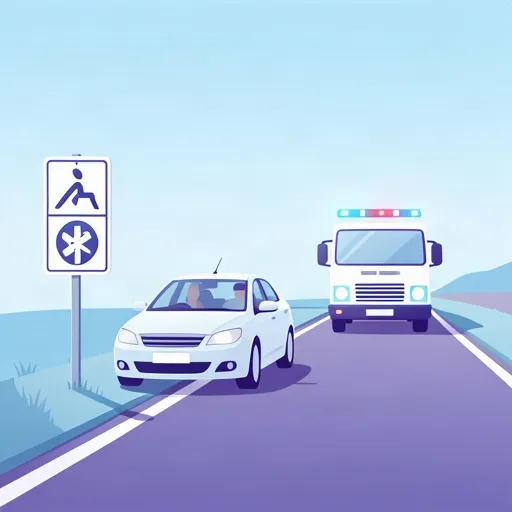
Sharing the road with emergency service vehicles is a critical skill for every driver in Ireland. Whether you are a learner permit holder or preparing for your full licence test, understanding your legal obligations when you hear sirens or see flashing lights is essential for road safety and exam success. Under the Road Safety Authority (RSA) guidelines, Garda, fire brigade, and ambulance crews are often required to move quickly to save lives, and your cooperation as a fellow road user can be the difference between a successful response and a dangerous delay.
In the course of their duties, emergency vehicles are permitted to bypass certain road traffic laws, provided they do not put other road users in danger. As a motorist, your responsibility is to remain calm, exercise caution, and give way only when it is safe to do so. You are never expected to break the law—such as running a red light or mounting a kerb—to clear a path for an emergency vehicle. Doing so could lead to a collision with pedestrians, cyclists, or other vehicles, which would counteract the very safety measures emergency responders are attempting to maintain.
Never "tailgate" an emergency service vehicle. Following an ambulance or fire tender too closely at speed is extremely dangerous and is considered poor driving practice that will be penalised during your driving test.
Effective hazard awareness starts with your environment. You should always maintain your vehicle’s audio settings at a level that allows you to hear external sirens, even in city traffic. When you are stopped at an intersection or in heavy traffic, ensure there is sufficient space between your vehicle and the one in front of you. This "cushion" provides the maneuverability required to pull over or adjust your position if an emergency vehicle needs to pass.
If you find yourself on a road with an emergency vehicle approaching, observe your surroundings carefully. They may come from behind, from a side road, or through an intersection. Clear the way as soon as it is safe to do so. Only mount the kerb if you are absolutely certain that there are no pedestrians present and that it is the only way to allow the emergency vehicle to pass without endangering others.
Emergency awareness is not limited to car drivers. If you are walking, particularly with children, ensure you are holding hands at all times and remain on the footpath until the emergency vehicle has completely passed. The RSA strongly advises that pedestrians wait for sirens and lights to fade before crossing, even at pedestrian lights or zebra crossings, as the noise and urgency can be disorienting. Wearing hi-viz clothing is a vital safety habit, helping emergency responders see you more clearly in all conditions.
The Driver Theory Test frequently includes questions on situational awareness and your response to emergency services. You may encounter scenarios asking what you should do at a junction or how to behave on a motorway when an ambulance approaches. Always focus on the principle of "safe and legal" behavior. If a question asks if you should break a red light to let an ambulance through, the correct answer is always to stay put, as the emergency driver is trained to navigate around you safely without requiring you to commit a traffic offence.
When sharing the road with emergency vehicles in Ireland, drivers must remain calm and give way safely without breaking traffic laws. The key principle is 'safe and legal' behavior—emergency drivers are trained to navigate around you, so never run red lights or mount kerbs to clear a path. Maintain a space cushion from the vehicle ahead, keep audio at a level to hear sirens, and watch mirrors frequently as emergency vehicles can approach from any direction. Pedestrians should wait until sirens and lights fade before crossing, and tailgating emergency vehicles is a serious test fault.
A short set of high-value points that capture the most important ideas from this article.
You must give way to emergency vehicles when sirens and lights are active, but only when it is safe to do so.
Never break traffic laws such as running a red light to clear a path for an emergency vehicle.
Maintain a safe space cushion between your vehicle and the one ahead to allow maneuverability for emergency vehicles.
Never tailgate emergency service vehicles; following too closely at speed is dangerous and penalised during driving tests.
Emergency drivers are trained to navigate around you safely without requiring you to commit a traffic offence.
Garda, fire brigade, and ambulance crews may bypass certain road traffic laws when responding to emergencies.
Clear the path as soon as it is safe, but only mount the kerb if no pedestrians are present and it is the only option.
Always scan mirrors frequently and identify the direction of sirens before making any maneuver.
Pedestrians should remain on footpaths and wait until sirens and lights have completely faded before crossing.
Emergency vehicles may approach from behind, side roads, or through intersections.
Running a red light or mounting the kerb unsafely in an attempt to help an ambulance pass.
Following an emergency vehicle too closely (tailgating), which reduces reaction time and is dangerous.
Panicking and making sudden erratic braking or steering when hearing sirens.
Assuming pedestrians will always clear zebra crossings when emergency vehicles are present.
Failing to maintain audio settings at a level where external sirens can be heard in heavy traffic.
Article content overview
A short set of high-value points that capture the most important ideas from this article.
You must give way to emergency vehicles when sirens and lights are active, but only when it is safe to do so.
Never break traffic laws such as running a red light to clear a path for an emergency vehicle.
Maintain a safe space cushion between your vehicle and the one ahead to allow maneuverability for emergency vehicles.
Never tailgate emergency service vehicles; following too closely at speed is dangerous and penalised during driving tests.
Emergency drivers are trained to navigate around you safely without requiring you to commit a traffic offence.
Garda, fire brigade, and ambulance crews may bypass certain road traffic laws when responding to emergencies.
Clear the path as soon as it is safe, but only mount the kerb if no pedestrians are present and it is the only option.
Always scan mirrors frequently and identify the direction of sirens before making any maneuver.
Pedestrians should remain on footpaths and wait until sirens and lights have completely faded before crossing.
Emergency vehicles may approach from behind, side roads, or through intersections.
Running a red light or mounting the kerb unsafely in an attempt to help an ambulance pass.
Following an emergency vehicle too closely (tailgating), which reduces reaction time and is dangerous.
Panicking and making sudden erratic braking or steering when hearing sirens.
Assuming pedestrians will always clear zebra crossings when emergency vehicles are present.
Failing to maintain audio settings at a level where external sirens can be heard in heavy traffic.
Explore related topics, search based questions, and concepts that learners often look up when studying Emergency Vehicle Road Rules. These themes reflect real search intent and help you understand how this topic connects to wider driving theory knowledge in Ireland.
Find clear and practical answers to common questions learners often have about Emergency Vehicle Road Rules. This section helps explain difficult points, remove confusion, and reinforce the key driving theory concepts that matter for learners in Ireland.
You should exercise caution, observe your surroundings, and give way if it is safe to do so. Clear the way as soon as you can safely manage the manoeuvre.
You should never mount the kerb unless you absolutely have to. Even then, you must be certain that there are no pedestrians in the area before doing so.
No, you must never 'tailgate' an emergency service vehicle. Always maintain a safe distance and stay aware of your surroundings.
Leaving space between your vehicle and the one in front allows you room to manoeuvre, such as pulling over to the side to let emergency vehicles pass if you become blocked.
After searching, continue your DTT preparation by exploring related articles, practicing questions, or reviewing specific road sign categories. Deepen your understanding of Irish road rules and ensure you're fully prepared for your Driver Theory Test.