Understanding how to act safely at the site of an accident is a critical component of the Irish driver curriculum. This guide explains the correct approach to identifying hazards, maintaining road safety, and knowing when to prioritize the arrival of emergency services, ensuring you are prepared for both practical road scenarios and theory test questions.
Article content overview
Encountering a road traffic accident is one of the most challenging experiences a new driver can face. In the context of your Irish Driver Theory Test, understanding your role as a road user is not just about passing the exam; it is about knowing how to act responsibly to ensure the safety of everyone involved. The Road Safety Authority (RSA) provides clear guidelines on how to behave when you are the first at the scene or are involved in an incident.
When you encounter an accident, your primary duty is to remain calm, ensure your own safety, and then consider the safety of others. You must never assume that someone else has already called for assistance. The first priority is to signal your presence to other road users to prevent secondary collisions, which often occur when traffic is moving too quickly near an incident.
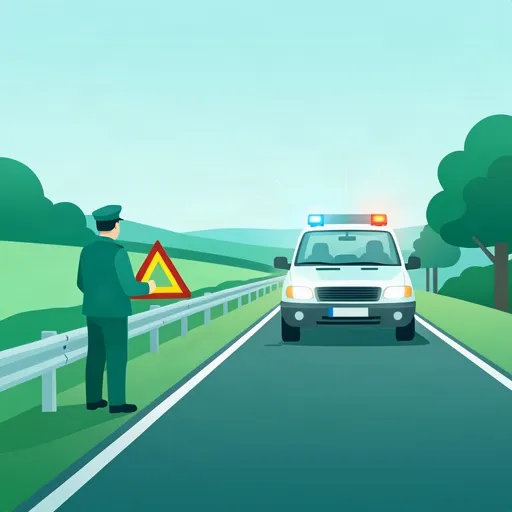
When you decide to stop, choose a safe location well clear of the accident. You should switch on your hazard warning lights immediately to alert approaching traffic. If the collision has occurred on a motorway or a high-speed road, this step is vital to avoid further incidents.
In the theory test, you may encounter questions regarding collision scene management. These questions are designed to test your judgment in high-pressure scenarios. A common trap is assuming that you should immediately rush to a vehicle to assist; however, the RSA emphasizes that the safest way to handle a collision scene is to slow down early, observe all relevant road users, and only proceed when it is lawful and safe to do so.
If you are involved in an accident, you are legally required to stop. You must be prepared to share your details, including your name, address, and vehicle insurance information, with anyone else involved who has reasonable grounds for requesting them. Failing to stop at the scene of an accident is a serious offense that carries heavy penalties.
Drivers must be familiar with signs that indicate the presence of road hazards. Recognizing these early allows you to adjust your speed and mental state, which is crucial for safe hazard perception.
When emergency services are approaching a collision scene, you must give them priority. In Ireland, this means moving over safely to allow ambulances, fire engines, or Garda vehicles to pass. Never follow an emergency vehicle closely; it is illegal and incredibly dangerous, as they may stop abruptly or move across lanes unexpectedly.
This guide covers essential collision duties for Irish learner drivers based on RSA Rules of the Road. When encountering an accident, you must stay calm, ensure your own safety first, then stop safely with hazard lights on and assess injuries without moving casualties unless in immediate danger. You are legally required to stop and share your details with anyone involved who requests them. Always call 999 or 112 if emergency services are needed, and use a warning triangle to alert approaching traffic. Understanding these procedures helps you pass the hazard perception elements of the Irish Driver Theory Test while preparing you for real road emergencies.
A short set of high-value points that capture the most important ideas from this article.
Your first priority at any collision scene is to ensure your own safety before attempting to help others
You must always stop at an accident scene and provide your name, address, and insurance details if requested
Call 999 or 112 immediately and give precise location details when emergency services are required
Use hazard warning lights and warning triangles to prevent secondary collisions at the scene
Never follow an emergency vehicle closely as they may stop or change lanes unexpectedly
The RSA (Road Safety Authority) sets the official guidelines for collision duties in Ireland
Use 999 or 112 to call emergency services and always provide your exact location
Do not move injured people unless there is an immediate threat like fire
Hazard lights (amber flashing lights) must be switched on immediately when you stop at a collision
Warning triangles should be placed at a safe distance from the scene only if it is safe to do so
Assuming someone else has already called emergency services when they have not
Rushing to assist without first assessing whether the scene is safe
Stopping too close to the collision, creating additional hazard
Following an emergency vehicle closely, which is illegal and dangerous
Failing to stop and share details when involved in an accident, which is a serious offense
Article content overview
A short set of high-value points that capture the most important ideas from this article.
Your first priority at any collision scene is to ensure your own safety before attempting to help others
You must always stop at an accident scene and provide your name, address, and insurance details if requested
Call 999 or 112 immediately and give precise location details when emergency services are required
Use hazard warning lights and warning triangles to prevent secondary collisions at the scene
Never follow an emergency vehicle closely as they may stop or change lanes unexpectedly
The RSA (Road Safety Authority) sets the official guidelines for collision duties in Ireland
Use 999 or 112 to call emergency services and always provide your exact location
Do not move injured people unless there is an immediate threat like fire
Hazard lights (amber flashing lights) must be switched on immediately when you stop at a collision
Warning triangles should be placed at a safe distance from the scene only if it is safe to do so
Assuming someone else has already called emergency services when they have not
Rushing to assist without first assessing whether the scene is safe
Stopping too close to the collision, creating additional hazard
Following an emergency vehicle closely, which is illegal and dangerous
Failing to stop and share details when involved in an accident, which is a serious offense
Explore related topics, search based questions, and concepts that learners often look up when studying Collision Duties and Emergency Procedures. These themes reflect real search intent and help you understand how this topic connects to wider driving theory knowledge in Ireland.
Find clear and practical answers to common questions learners often have about Collision Duties and Emergency Procedures. This section helps explain difficult points, remove confusion, and reinforce the key driving theory concepts that matter for learners in Ireland.
Your first priority is to ensure your own safety and the safety of others. Slow down early, observe all relevant road users, and only proceed if the manoeuvre is lawful and safe without creating additional hazards.
According to the Rules of the Road, you must prioritize road safety. Do not create new traffic hazards. Always allow emergency services to manage the scene, and only act if you can do so without endangering yourself or blocking emergency access.
The theory test focuses on your ability to recognize collision scenes as live hazards. You will be tested on your decision-making, such as slowing down in time, maintaining awareness, and observing the movements of emergency vehicles.
After searching, continue your DTT preparation by exploring related articles, practicing questions, or reviewing specific road sign categories. Deepen your understanding of Irish road rules and ensure you're fully prepared for your Driver Theory Test.