Understanding the hierarchy of right-of-way at junctions and the correct approach to roundabouts is fundamental for both passing your theory test and driving safely on Irish roads. This guide clarifies the distinction between yield and stop requirements, effective signaling protocols, and the rules governing priority at various types of intersections. Whether you are a beginner or preparing for your test, these insights will sharpen your hazard perception and decision-making skills.
Article content overview
Navigating Irish roads safely and passing your Driver Theory Test requires a deep understanding of priority, road markings, and roundabout protocols. The RSA Rules of the Road establishes a clear hierarchy for junctions and traffic flow, yet many learners lose marks on their theory exam by misinterpreting these core concepts. Whether you are dealing with a simple unmarked junction or a complex multi-lane roundabout, your ability to apply these rules correctly determines your safety and your success in obtaining a learner permit.
Priority at junctions in Ireland is dictated by a combination of road signs, markings, and the basic principles of traffic management. An unmarked junction can be a significant source of confusion for new drivers. When no signs or road markings are present, you must exercise extreme caution, treat the junction as if you must yield to traffic from the right, and slow down significantly before proceeding.
A common exam trap involves the confusion between 'Yield' and 'Stop' signs. Remember that a Stop sign requires a complete halt, meaning your wheels must cease movement entirely. A Yield sign allows for a smooth, slow approach provided there is no conflicting traffic.
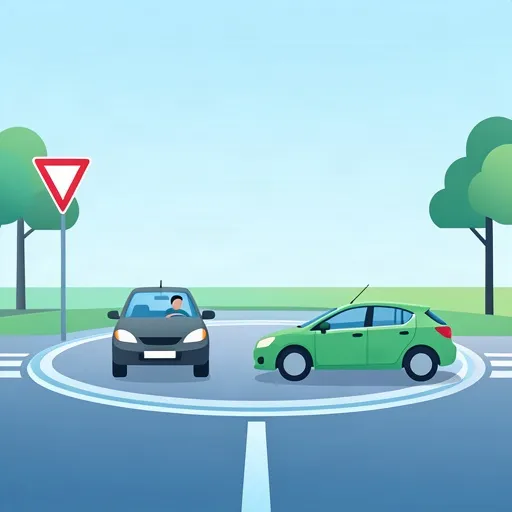
Roundabouts are designed to facilitate smooth traffic flow, but they remain a primary area where learners make mistakes. The RSA guidance on roundabouts is specific: always approach in the correct lane, observe road markings, and maintain strict signal discipline. You must signal your intention to turn left, right, or go straight ahead, ensuring that other road users are aware of your plan well in advance.
Road markings provide the silent instructions necessary to navigate safely. Yellow boxes, for instance, are designed to prevent gridlock. You must never enter a yellow box unless your exit is clear, regardless of whether you have a green light. This is a frequently tested scenario because it highlights the difference between having the 'right of way' and the legal requirement to ensure the road ahead is not obstructed.
| Sign/Marking | Core Meaning | Driver Action |
|---|---|---|
| Yield Sign | Cautionary priority | Slow down and prepare to stop |
| Stop Sign | Mandatory halt | Full stop required |
| Yellow Box | Gridlock prevention | Do not enter if exit is blocked |
| Mini-Roundabout | Tight junction flow | Yield to the right |
The most frequent error in the Driver Theory Test occurs when learners prioritize speed over safety. For example, some candidates mistakenly believe that they have an absolute right of way because they are on a primary road. In reality, the Rules of the Road always mandate that you must be prepared to stop if another road user enters your path, even if they are acting incorrectly. Your responsibility as a driver is to anticipate hazards and drive defensively at all times.
This guide covers essential priority rules for Irish roads, emphasizing that Yield signs require slowing and being prepared to stop while Stop signs demand a complete halt. Roundabout navigation requires early lane selection, proper signaling, and yielding to traffic from the right. Road markings like yellow boxes enforce gridlock prevention rules that override green light priority. Understanding these distinctions and maintaining defensive driving habits will help you avoid the most common errors in the Driver Theory Test and on Irish roads.
A short set of high-value points that capture the most important ideas from this article.
Priority at unmarked junctions requires you to yield to traffic from the right and proceed with extreme caution.
A Yield sign allows you to continue without a full stop if the way is clear, while a Stop sign legally requires your vehicle to come to a complete halt.
Always approach roundabouts in the correct lane based on road markings before you reach the junction.
You must signal before entering and exiting a roundabout to communicate your intentions to other road users.
Never enter a yellow box junction unless your exit is completely clear, regardless of traffic light status.
Yield signs require slowing down and preparing to stop; Stop signs require a full, complete halt at the stop line.
On roundabouts, always yield to traffic already on the roundabout, particularly vehicles approaching from your right.
Yellow boxes prevent gridlock and you must not enter them if your exit is blocked.
Mini-roundabouts follow the same yield-to-the-right principle as larger roundabouts.
You never have absolute right of way; you must always be prepared to stop if another road user enters your path.
Confusing Yield and Stop signs, believing a full stop is required at a Yield sign or that rolling stop is acceptable at a Stop sign.
Entering a yellow box when the exit is blocked, thinking the traffic light being green gives right of way.
Failing to signal when leaving a roundabout, which is a requirement even if you went straight through.
Not selecting the correct lane early enough before reaching a roundabout, leading to last-minute lane changes.
Assuming absolute priority on a major road and not being prepared to stop for vehicles entering from minor roads.
Article content overview
A short set of high-value points that capture the most important ideas from this article.
Priority at unmarked junctions requires you to yield to traffic from the right and proceed with extreme caution.
A Yield sign allows you to continue without a full stop if the way is clear, while a Stop sign legally requires your vehicle to come to a complete halt.
Always approach roundabouts in the correct lane based on road markings before you reach the junction.
You must signal before entering and exiting a roundabout to communicate your intentions to other road users.
Never enter a yellow box junction unless your exit is completely clear, regardless of traffic light status.
Yield signs require slowing down and preparing to stop; Stop signs require a full, complete halt at the stop line.
On roundabouts, always yield to traffic already on the roundabout, particularly vehicles approaching from your right.
Yellow boxes prevent gridlock and you must not enter them if your exit is blocked.
Mini-roundabouts follow the same yield-to-the-right principle as larger roundabouts.
You never have absolute right of way; you must always be prepared to stop if another road user enters your path.
Confusing Yield and Stop signs, believing a full stop is required at a Yield sign or that rolling stop is acceptable at a Stop sign.
Entering a yellow box when the exit is blocked, thinking the traffic light being green gives right of way.
Failing to signal when leaving a roundabout, which is a requirement even if you went straight through.
Not selecting the correct lane early enough before reaching a roundabout, leading to last-minute lane changes.
Assuming absolute priority on a major road and not being prepared to stop for vehicles entering from minor roads.
Explore related topics, search based questions, and concepts that learners often look up when studying Roundabout and Priority Rules. These themes reflect real search intent and help you understand how this topic connects to wider driving theory knowledge in Ireland.
Find clear and practical answers to common questions learners often have about Roundabout and Priority Rules. This section helps explain difficult points, remove confusion, and reinforce the key driving theory concepts that matter for learners in Ireland.
You must yield to traffic already on the roundabout, specifically traffic approaching from your right, unless road signs or markings indicate otherwise.
A 'Stop' sign requires you to come to a complete halt before moving forward, while a 'Yield' sign means you must give priority to other traffic but do not need to stop if the way is clear.
Yes, you must signal your intention to leave the roundabout by indicating left after you have passed the exit before the one you intend to take.
At an unmarked junction, you should proceed with caution and give way to traffic that has already entered the junction or is coming from the right, though the Rules of the Road emphasize that priority is not an absolute right.
After searching, continue your DTT preparation by exploring related articles, practicing questions, or reviewing specific road sign categories. Deepen your understanding of Irish road rules and ensure you're fully prepared for your Driver Theory Test.