Learners often face confusion regarding the specific rules and hazard profiles associated with different Irish road types. This guide explains how national and local roads differ in terms of legal requirements, expected traffic conditions, and the safety measures you must apply behind the wheel. By mastering these concepts, you will gain the knowledge necessary to navigate diverse Irish road environments and perform confidently during your theory exam.
Article content overview
Understanding the diverse nature of the Irish road network is a fundamental requirement for anyone preparing for the Driver Theory Test. Ireland features an expansive network of nearly 100,000 kilometres of roads, ranging from high-capacity motorways to narrow, winding rural lanes. As a learner driver, you must be able to differentiate between road types, as these classifications dictate legal speed limits, expected hazard profiles, and the rules of the road you must adhere to for your safety and the safety of others.
In Ireland, road classifications help traffic authorities manage flow and safety by defining the primary purpose of a route. National roads, often marked with an 'N' prefix (such as the N7 or N11), are designed to connect major urban centres and regions. Because these roads carry higher volumes of traffic and allow for higher travel speeds, they require a higher level of alertness and lane discipline. Local roads, on the other hand, are designed for local access and often present a vastly different set of challenges, including narrow carriageways, limited visibility at bends, and frequent interactions with agricultural machinery.
One of the most common topics in the Driver Theory Test relates to understanding speed limits. It is vital to remember that the legal speed limit is a maximum, not a target. On national roads, you may encounter higher speed limits, but the onus remains on the driver to adjust their speed based on weather conditions, traffic volume, and road surface quality. Conversely, many local roads are subject to the default rural speed limit, which may be inappropriate for the actual physical constraints of the road.
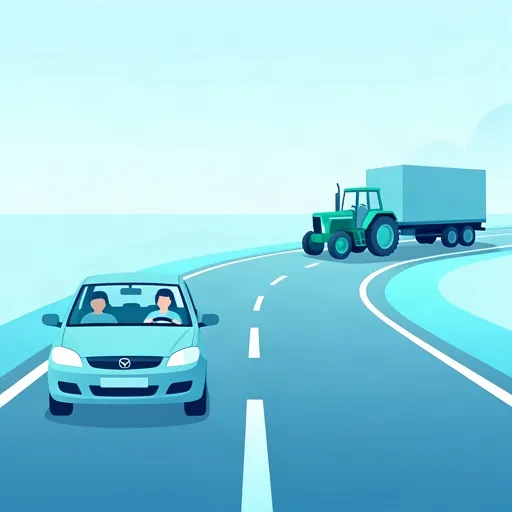
Driving on local roads requires a heightened sense of hazard perception. Unlike the predictable flow of a motorway, local roads in Ireland are frequently used by tractors, farm machinery, and occasionally stray livestock. When driving on these narrower routes, you must always anticipate that a large vehicle could be occupying the middle of the road or that a blind corner might hide a cyclist or pedestrian.
When meeting oncoming traffic on a narrow road, the general convention is for the driver with the clearest view of a passing place or a wider section of road to yield. Never assume the right of way on a single-lane track; instead, be prepared to reverse or pull into a gateway if necessary to allow a larger vehicle to pass safely.
Recognizing road signs is essential for passing your theory exam. National roads will often feature clear directional signage and advance warnings for junctions, whereas local roads may rely on more frequent warning signs for hazards like hump-back bridges or farm entrances.
Road markings provide critical information about lane discipline and overtaking. On national roads, you will frequently see broken white lines that allow for overtaking when it is safe to do so. However, on many local roads, these markings may be absent entirely, or you may encounter solid white lines in hazardous areas. Crossing or straddling a continuous white line is a serious driving fault and is strictly prohibited unless necessary to pass a stationary obstruction or a cyclist moving at a slow speed.
This guide distinguishes between national roads, which connect major centres with higher speed limits and better infrastructure, and local roads, which require greater caution due to narrower carriageways, limited visibility, and frequent agricultural traffic. Speed limits are maximums that must be adjusted for conditions, and on single-lane roads, the driver with the clearest view of a passing place should yield. Key road signs to recognise include Road Narrows and Dangerous Bend warnings, while road markings such as continuous white lines must not be crossed except in specific circumstances. The content also covers safe overtaking procedures and emphasises the importance of heightened hazard perception on rural Irish roads.
A short set of high-value points that capture the most important ideas from this article.
National roads (prefixed with 'N') connect major urban centres with higher speed limits, while local roads serve local access with narrower carriageways and more hazards.
Speed limits are maximums, not targets, and must always be adjusted based on weather, traffic, and road surface conditions.
On narrow local roads, the driver with the clearest view of a passing place should yield when meeting oncoming traffic.
Road markings differ between road types; continuous white lines must never be crossed except to pass a stationary obstruction or slow cyclist.
Local roads require heightened hazard perception due to agricultural machinery, livestock, blind summits, and limited visibility at bends.
The legal speed limit is always a maximum; conditions may require driving well below the posted limit.
On single-lane roads, never assume right of way; be prepared to reverse or pull into gateways to let larger vehicles pass.
Crossing a continuous white line is a serious driving fault unless passing a stationary obstruction or slow-moving cyclist.
National roads have better surfacing and clearer markings; local roads may lack markings entirely and require extra caution.
When meeting oncoming traffic on a narrow road, the driver with the better view of a passing place yields.
Treating the posted speed limit as an appropriate speed for the actual road conditions, particularly on narrow local roads.
Assuming the right of way on single-lane tracks instead of being prepared to give way.
Attempting to overtake without checking that the road is wide enough and visibility is sufficient for the entire manoeuvre.
Disregarding continuous white lines or treating them as optional on local roads.
Failing to anticipate agricultural machinery, cyclists, or pedestrians hidden by hedgerows on rural roads.
Article content overview
A short set of high-value points that capture the most important ideas from this article.
National roads (prefixed with 'N') connect major urban centres with higher speed limits, while local roads serve local access with narrower carriageways and more hazards.
Speed limits are maximums, not targets, and must always be adjusted based on weather, traffic, and road surface conditions.
On narrow local roads, the driver with the clearest view of a passing place should yield when meeting oncoming traffic.
Road markings differ between road types; continuous white lines must never be crossed except to pass a stationary obstruction or slow cyclist.
Local roads require heightened hazard perception due to agricultural machinery, livestock, blind summits, and limited visibility at bends.
The legal speed limit is always a maximum; conditions may require driving well below the posted limit.
On single-lane roads, never assume right of way; be prepared to reverse or pull into gateways to let larger vehicles pass.
Crossing a continuous white line is a serious driving fault unless passing a stationary obstruction or slow-moving cyclist.
National roads have better surfacing and clearer markings; local roads may lack markings entirely and require extra caution.
When meeting oncoming traffic on a narrow road, the driver with the better view of a passing place yields.
Treating the posted speed limit as an appropriate speed for the actual road conditions, particularly on narrow local roads.
Assuming the right of way on single-lane tracks instead of being prepared to give way.
Attempting to overtake without checking that the road is wide enough and visibility is sufficient for the entire manoeuvre.
Disregarding continuous white lines or treating them as optional on local roads.
Failing to anticipate agricultural machinery, cyclists, or pedestrians hidden by hedgerows on rural roads.
Explore related topics, search based questions, and concepts that learners often look up when studying National vs Local Roads Guide. These themes reflect real search intent and help you understand how this topic connects to wider driving theory knowledge in Ireland.
Find clear and practical answers to common questions learners often have about National vs Local Roads Guide. This section helps explain difficult points, remove confusion, and reinforce the key driving theory concepts that matter for learners in Ireland.
The default speed limit on national roads is generally 100 km/h, though this can be lower in specific areas. Always observe local signage for variations.
Exercise extreme caution, reduce your speed, and only overtake when it is safe to do so, ensuring you have a clear, long-distance view of the road ahead and no oncoming traffic.
No, many rural local roads are narrow and lack central white lines. You must exercise extra care when meeting oncoming traffic and be prepared to move closer to the left verge.
The core safety principle remains the same: only overtake when it is safe, legal, and necessary. National roads often offer better visibility, but the increased speed makes overtaking significantly more dangerous.
After searching, continue your DTT preparation by exploring related articles, practicing questions, or reviewing specific road sign categories. Deepen your understanding of Irish road rules and ensure you're fully prepared for your Driver Theory Test.