Learning how to navigate around lorries is a fundamental part of becoming a responsible driver and succeeding in your Irish Driver Theory Test. This guide explains the importance of blind spots, the legal requirements for mirrors on HGVs, and the golden rule of defensive driving: if you cannot see the driver, they cannot see you. Understanding these concepts will help you anticipate risks and make informed decisions on the road.
Article content overview
Navigating the roads alongside heavy goods vehicles (HGVs) is a fundamental skill for every learner driver. Whether you are preparing for your Category B passenger car test or working toward a Category C truck licence, understanding the mechanics of blind spots is non-negotiable. These large vehicles possess significant physical limitations regarding visibility, and failure to account for these can lead to hazardous situations on Irish roads, motorways, and in busy urban environments.
In the context of the Driver Theory Test, being able to identify and manage these hazards is not just about memorizing facts; it is about demonstrating a sophisticated understanding of defensive driving. The Road Safety Authority (RSA) emphasizes that sharing the road with large vehicles requires constant vigilance and an "expect the unexpected" mindset to ensure the safety of all road users.
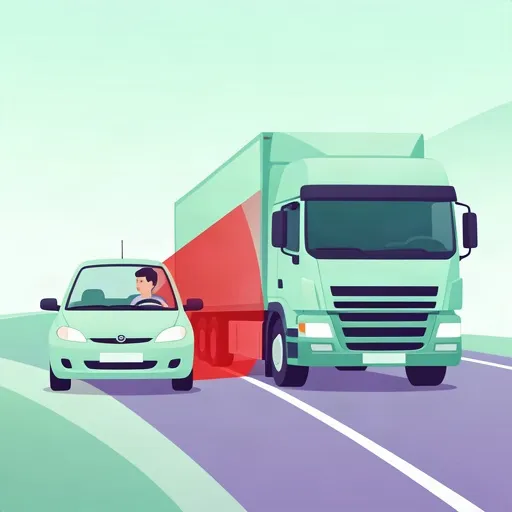
The most essential principle for any learner to grasp is the golden rule of visibility: if you cannot see the lorry driver in their wing mirror, they cannot see you. Many learners make the mistake of assuming that because a vehicle is large, its mirrors provide a panoramic view of the surroundings. In reality, the cab design, the length of the trailer, and the sheer height of the vehicle create substantial "blind" zones where cyclists, motorcyclists, and small cars can completely disappear from the driver's view.
When you are driving near a lorry, particularly at roundabouts or when the vehicle is preparing to turn, you must remain conscious of these zones. Never linger alongside a large vehicle, especially on the left-hand side, as this is a high-risk area for side-swipe incidents during left turns.
To mitigate these risks, the RSA mandates that all HGVs must be equipped with specialized mirror systems. These include wide-angle mirrors, close-proximity mirrors, and "Cyclops" mirrors designed to eliminate as many blind spots as possible. These technological aids allow drivers to monitor the space directly to the front and sides of the vehicle, which is critical when navigating busy city centres where pedestrians and cyclists are prevalent.
Even with the latest mirror technology, blind spots cannot be fully eradicated. Always assume that the driver has a limited field of vision and avoid putting yourself in a position where you are obscured by the vehicle’s bodywork.
While these mirrors are a legal requirement, they are tools, not guarantees of perfect visibility. As a road user, your responsibility is to position your vehicle safely so that you remain visible, rather than relying on the hope that a professional driver will spot you in a momentary glance at their mirror.
The Irish Driver Theory Test will frequently present scenarios that test your ability to make safe decisions rather than simply memorizing definitions. When you encounter a question regarding overtaking or passing a large vehicle, the safest answer will always prioritize observation and defensive timing.
If you are unsure whether it is safe to proceed, the correct RSA-aligned decision is always to hold back. Waiting a few seconds for a clearer view is always preferable to entering a blind spot where the driver may lose track of your presence.
A style of driving that anticipates hazards, respects the rights of other road users, and maintains a safe space cushion to react to unexpected actions by others.
A frequent mistake in the theory exam is the assumption that blind spot awareness is only a concern for professional lorry drivers. This is incorrect. The test evaluates your ability to act as a competent, aware road user who understands the limitations of all vehicle types. Treating blind spots as a live hazard rather than a technical detail will help you navigate both the exam and the road successfully.
Always remember that the truck driver has a job to do, which may involve wide turns to accommodate the length of their vehicle. If you see a lorry signalling, give them plenty of room to complete their manoeuvre. Never attempt to "squeeze through" a gap on the inside of a turning vehicle.
Understanding lorry blind spots is essential for both passing the Irish Driver Theory Test and safe road driving. The core principle is that if you cannot see the lorry driver in their wing mirror, they cannot see you, meaning you should never position yourself in these zones. HGVs must be equipped with specialized mirrors including wide-angle, close-proximity, and Cyclops mirrors, but these do not fully eliminate blind spots. Safe driving around lorries requires constant vigilance, maintaining safe distances, completing overtaking manoeuvres efficiently, and giving turning lorries plenty of room. Defensive driving around large vehicles means anticipating hazards and never assuming the driver can see you.
A short set of high-value points that capture the most important ideas from this article.
The golden rule of blind spot awareness: if you cannot see the lorry driver in their wing mirror, they cannot see you.
HGVs create substantial blind zones on all sides where cars, cyclists, and motorcyclists can completely disappear from the driver's view.
Never linger alongside a large vehicle, especially on the left-hand side, as this is a high-risk area for side-swipe incidents during left turns.
Even with advanced mirror technology, blind spots cannot be fully eliminated; always assume the driver has limited visibility.
When you see a lorry signalling to turn, give it plenty of room to complete the manoeuvre and never attempt to squeeze through the inside gap.
The left-hand side of a lorry is particularly dangerous because the driver cannot see vehicles positioned there when making left turns.
HGV mirrors are a legal requirement but are tools, not guarantees of perfect visibility.
Safe passing requires checking mirrors early, maintaining safe distance, signalling clearly, and completing the manoeuvre efficiently without lingering.
Cyclops mirrors help view the front-left blind spot, but other significant blind zones remain on all sides.
If unsure whether it is safe to proceed near a lorry, always hold back rather than entering a blind spot.
Assuming that because a vehicle is large, its mirrors provide a panoramic view of the surroundings.
Following too closely behind a lorry, which prevents the driver from seeing you in their mirrors.
Believing that blind spot awareness is only a concern for professional lorry drivers, not for other road users.
Attempting to overtake a lorry without ensuring you have a clear view of the road ahead and the vehicle itself.
Lingering alongside a large vehicle at roundabouts or when the vehicle is preparing to turn.
Article content overview
A short set of high-value points that capture the most important ideas from this article.
The golden rule of blind spot awareness: if you cannot see the lorry driver in their wing mirror, they cannot see you.
HGVs create substantial blind zones on all sides where cars, cyclists, and motorcyclists can completely disappear from the driver's view.
Never linger alongside a large vehicle, especially on the left-hand side, as this is a high-risk area for side-swipe incidents during left turns.
Even with advanced mirror technology, blind spots cannot be fully eliminated; always assume the driver has limited visibility.
When you see a lorry signalling to turn, give it plenty of room to complete the manoeuvre and never attempt to squeeze through the inside gap.
The left-hand side of a lorry is particularly dangerous because the driver cannot see vehicles positioned there when making left turns.
HGV mirrors are a legal requirement but are tools, not guarantees of perfect visibility.
Safe passing requires checking mirrors early, maintaining safe distance, signalling clearly, and completing the manoeuvre efficiently without lingering.
Cyclops mirrors help view the front-left blind spot, but other significant blind zones remain on all sides.
If unsure whether it is safe to proceed near a lorry, always hold back rather than entering a blind spot.
Assuming that because a vehicle is large, its mirrors provide a panoramic view of the surroundings.
Following too closely behind a lorry, which prevents the driver from seeing you in their mirrors.
Believing that blind spot awareness is only a concern for professional lorry drivers, not for other road users.
Attempting to overtake a lorry without ensuring you have a clear view of the road ahead and the vehicle itself.
Lingering alongside a large vehicle at roundabouts or when the vehicle is preparing to turn.
Explore related topics, search based questions, and concepts that learners often look up when studying Lorry Blind Spots Explained. These themes reflect real search intent and help you understand how this topic connects to wider driving theory knowledge in Ireland.
Find clear and practical answers to common questions learners often have about Lorry Blind Spots Explained. This section helps explain difficult points, remove confusion, and reinforce the key driving theory concepts that matter for learners in Ireland.
The most important rule is that if you cannot see the driver of the lorry in their mirrors, they cannot see you. Always maintain a safe distance and avoid lingering in their blind spots.
Understanding blind spots is essential for hazard perception and defensive driving, which are core competencies tested by the RSA to ensure learner drivers can navigate traffic safely alongside heavy vehicles.
All heavy goods vehicles in Ireland are required to be fitted with specific equipment including Cyclops, close-proximity, and wide-angle mirrors to help drivers monitor areas around the front and sides of their vehicles.
No, you should never attempt to overtake a lorry that is signaling to turn, especially at junctions, as the driver may have limited visibility of your vehicle in their blind spots.
After searching, continue your DTT preparation by exploring related articles, practicing questions, or reviewing specific road sign categories. Deepen your understanding of Irish road rules and ensure you're fully prepared for your Driver Theory Test.