Learner drivers must be prepared to respond safely when they encounter a collision or an emergency situation while driving. This article details the correct sequence of actions required under the Rules of the Road, ensuring you prioritize hazard awareness and legal compliance during your theory test and in real-world driving scenarios.
Article content overview
Encountering a road traffic collision or an emergency situation is a high-stress event that requires clear, calm, and decisive action. For learner drivers in Ireland, understanding the correct procedures is not just a requirement for passing the Driver Theory Test—it is a fundamental skill that ensures your safety and the safety of others. The Road Safety Authority (RSA) emphasizes that your primary duty is to prevent further accidents while acting in a way that is lawful and safe.
When you encounter an accident, your immediate instinct might be to rush in to help, but the RSA Rules of the Road dictate a specific hierarchy of actions. You must always prioritize your own safety and the safety of other road users. Never put yourself in danger by stepping onto a live carriageway or ignoring oncoming traffic. The safest approach is to slow down early, observe the scene carefully, and proceed only when you have assessed that the manoeuvre is lawful and does not create an additional hazard.
Common theory test trap: Many learners incorrectly choose options that suggest acting immediately without observing the surroundings. Remember, if a situation is unsafe, your legal obligation is to secure the area and contact emergency services, not to compromise your own safety.
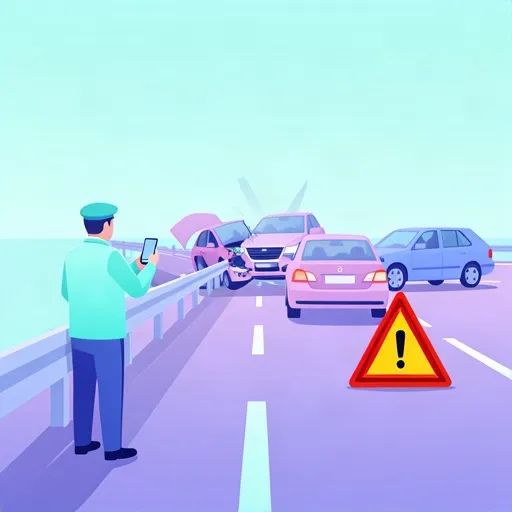
When arriving at the scene of a collision, your focus should be on hazard awareness and warning others. You should stop your vehicle in a safe location, well clear of the incident, and ensure your hazard warning lights are activated to alert approaching traffic. Once stopped, you are required to assess the scene for danger—such as fire, leaking fuel, or live electrical wires—before considering how to assist.
A frequent point of confusion in the theory test involves "First Aid limits." You may encounter questions that present a scenario where a quick, reckless response is offered as a distractor. These questions are designed to test whether you understand that road safety is a process of observation and sound judgment. Treating a collision scene as a simple memory test for first aid facts is a mistake; it is a live hazard that requires you to apply the RSA rule of "Observe, Decide, Act."
Always opt for the answer that emphasizes slowing down early, maintaining vigilance, and confirming that any action you take—or any movement you make—is permitted under traffic law.
In the context of collisions, certain signs may indicate you are approaching a high-risk area. Awareness of these signs is vital for hazard perception.
Mastering these procedures requires more than just reading the manual; it requires practicing how to think through a hazard. By using structured learning materials that align with the official RSA guidelines, you can build the confidence needed to handle high-pressure situations safely. Whether you are dealing with a breakdown or an emergency scene, the goal is always to remain a predictable, cautious, and compliant road user.
Article content overview
Explore related topics, search based questions, and concepts that learners often look up when studying Handling Accidents and Emergencies. These themes reflect real search intent and help you understand how this topic connects to wider driving theory knowledge in Ireland.
Find clear and practical answers to common questions learners often have about Handling Accidents and Emergencies. This section helps explain difficult points, remove confusion, and reinforce the key driving theory concepts that matter for learners in Ireland.
You should slow down early, observe all road users, and only proceed or stop if the maneuver is lawful and safe, ensuring you do not become a hazard yourself.
While you should always prioritize safety and call for emergency services, your primary duty is to keep yourself and others safe. You are not expected to be a medical expert, but you must follow official RSA guidance regarding hazard warning and reporting.
Avoid assuming you should always stop immediately or act solely based on memory. Always treat the scene as a live hazard, prioritize observation, and verify that any action you take is compliant with the Rules of the Road.
After searching, continue your DTT preparation by exploring related articles, practicing questions, or reviewing specific road sign categories. Deepen your understanding of Irish road rules and ensure you're fully prepared for your Driver Theory Test.