
This lesson focuses on the critical skill of identifying and anticipating the movements of vulnerable road users while operating large passenger vehicles. It builds on your foundation of Irish traffic laws to ensure you can safely navigate environments where children, elderly pedestrians, and cyclists are present. Developing these observation techniques is vital for both passing your Category D theory test and maintaining professional safety standards.
Lesson content overview
Operating a heavy passenger vehicle—such as a bus or coach under a Category D or D1 licence—comes with a profound safety responsibility. Because of their sheer size, weight, and compromised blind spots, passenger-carrying vehicles present a significantly higher risk to those outside the vehicle than to those inside.
To pass the Irish Driver Theory Test and operate safely on Irish roads, professional drivers must master the art of recognizing and anticipating the actions of Vulnerable Road Users (VRUs). This category includes young children, elderly pedestrians, cyclists, and visually or mobility-impaired individuals.
In Irish road safety guidelines and the Road Traffic Acts, a Vulnerable Road User is defined as any road user who has a significantly higher risk of injury or death in a collision. Unlike occupants of modern passenger cars protected by crumple zones and airbags, VRUs have no protective shell.
For a professional Category D driver, understanding VRUs is not just a theoretical exercise; it is a fundamental part of your professional duty of care. When navigating urban centres, narrow rural towns, or school routes, your primary hazard perception focus must be directed outward, scanning for individuals whose physical or cognitive traits make them less predictable or more fragile.
Under the Road Safety Authority (RSA) guidelines, professional bus and coach drivers are held to the highest standard of road safety. The law recognises that the driver of the larger, heavier vehicle bears the primary responsibility to avoid conflict with lighter, more vulnerable users.
To safely share the road with VRUs, a Category D driver must shift from reactive driving to proactive defensive driving. This shift relies on five core operational principles.
As a professional driver, your eyes must never remain fixed on a single point. You should employ a systematic scanning pattern:
Anticipation means predicting what might happen before it occurs. For instance, if you see a municipal bus stopped ahead, do not just see a vehicle; anticipate that passengers may alight and attempt to cross the road from behind or in front of that bus, completely hidden from your direct line of sight.
A heavy vehicle cannot stop on a dime. In areas where VRUs are present—such as shopping streets, residential estates, or near schools—you must proactively reduce your speed. Travelling at 30 km/h instead of 50 km/h drastically increases your reaction time and reduces your overall stopping distance.
When following other vehicles, maintain a minimum gap of at least 4 seconds in dry conditions, and double it to 8 seconds in wet or icy weather. This generous gap ensures that if the vehicle ahead brakes suddenly for a pedestrian, you can bring your coach to a controlled, smooth stop without risking passenger falls inside your vehicle or endangering those outside.
Large passenger vehicles have extensive blind spots, particularly directly in front of the high windscreen, down the left-hand side (passenger boarding side), and immediately behind the vehicle. Before moving off from a bus stop or turning at an intersection, you must perform a comprehensive "six-point check" using all your mirrors, and physically lean forward in your seat to peer around the thick "A-pillars" (the structural supports on either side of the windscreen) which can easily hide a child or cyclist.
Young children (typically classified as those under 12 years of age) represent one of the greatest hazard-perception challenges for bus drivers.
When operating near schools, parks, or residential areas, keep these rules in mind:
As the population ages, professional drivers will increasingly interact with elderly pedestrians on Irish roads. This demographic requires a high level of patience and defensive driving capability.
When you observe an elderly pedestrian waiting to cross, or already crossing the road:
Visually impaired pedestrians rely on auditory, tactile, and other sensory cues to navigate. They cannot see your heavy vehicle or interpret your eye contact, making it critical that you recognize their presence and grant them complete priority.
To comply with Irish Road Traffic Regulations and pass your Category D theory test, you must commit the following legally mandated rules to memory:
Scan and Identify: As you approach any crossing (Zebra, Pelican, or Puffin), scan both sides of the footpath for pedestrians approaching the crossing area.
Manage Speed: Reduce your speed progressively. Do not approach at full speed and brake hard at the last second; this alarms pedestrians and can cause passengers inside your bus to fall.
Check Mirrors: Monitor your rear and side mirrors to ensure any following vehicles are aware that you are slowing down.
Stop and Hold: Stop smoothly behind the solid white stop line. Do not encroach onto the yellow box or the crossing area itself.
Verify Safety Before Proceeding: Once the crossing is completely clear, check all front and side blind spots before releasing the handbrake and moving off.
The physical relationship between a heavy passenger vehicle and its environment directly impacts your ability to protect vulnerable road users.
A coach or bus has a massive kinetic energy footprint. Your total stopping distance is comprised of two parts:
Your defensive driving margin must adapt to external conditions:
| Environmental Factor | Impact on VRUs | Driver Action Required |
|---|---|---|
| Rain & Wet Roads | Pedestrians may run to find shelter; umbrellas block their peripheral vision. Braking distance doubles. | Reduce speed by at least 10–20% below the limit; increase following distance to 8 seconds. |
| Low Sun / Glare | Drivers can be temporarily blinded; VRUs struggle to see approaching headlights. | Clean windscreen inside and out; wear polarized sunglasses; use sun visors proactively. |
| Night & Poor Lighting | Pedestrians in dark clothing are virtually invisible until they are within your headlight beam. | Keep headlights clean; use dipped beams in built-up areas; scan dark spots at junctions. |
| Urban Bus Stops | Pedestrians frequently step into the road to peer around stopped buses or run to catch a service. | Scan beneath and through the windows of parked buses for pedestrian feet or shadows. |
Even experienced drivers can fall into dangerous habits. Understanding these common errors can help you avoid critical safety failures on the road and during your driving test.
Protecting vulnerable road users requires a combination of continuous visual scanning, a deep understanding of human physical limitations, and absolute compliance with Irish road safety laws. By maintaining a slow, controlled speed in high-risk zones, scanning thoroughly for children, elderly pedestrians, and visually impaired individuals, and managing your vehicle's extensive blind spots, you will ensure a safe environment for everyone sharing the road.
To build on your understanding of vulnerable road users and prepare for your Irish Driver Theory Test, explore these related concepts and practice materials.
This lesson teaches Category D drivers to recognise and anticipate Vulnerable Road Users including children, elderly pedestrians, cyclists, and visually impaired individuals. Key skills include continuous systematic visual scanning, proactive speed management, and rigorous blind spot checks including A-pillar sweeps. The content covers specific legal obligations such as stopping for school wardens, yielding to white cane users, and maintaining proper following distances. Understanding heavy vehicle physics—particularly the 21-metre thinking distance at 50 km/h—reinforces why defensive driving and early hazard identification are essential for both passing the Irish Driver Theory Test and maintaining professional safety standards.
A short set of high-value points that capture the most important learning from this lesson.
Vulnerable Road Users (VRUs) include children, elderly pedestrians, cyclists, and visually impaired individuals who lack the protective features of motor vehicles
Professional Category D drivers bear primary legal responsibility to avoid conflicts with VRUs under RSA guidelines
Systematic visual scanning should cover 15-20 seconds ahead, side-to-side footpaths and parked cars, and mirror sweeps every 5-8 seconds
A fully loaded heavy vehicle at 50 km/h travels approximately 21 metres in thinking distance alone before brakes engage
Specific visual indicators like white canes, guide dogs, and school warden stop signs signal legally protected crossing intentions
Explore all units and lessons included in this driving theory course.
Maintain minimum 4-second following distance in dry conditions, doubling to 8 seconds in wet or icy weather
Never overtake a vehicle that has stopped or is slowing at a pedestrian crossing; zig-zag lines approaching crossings are strict no-parking zones
Stop at least 3-5 metres back from crossings when yielding to visually impaired pedestrians to preserve their quiet navigation buffer
School wardens have legal authority to require stops; failure to comply carries fines and penalty points on professional licences
Reduce speed in VRU zones progressively rather than braking hard at the last moment to prevent passenger falls and pedestrian alarm
Assuming pedestrians crossing illegally forfeit their right to safety; the driver must still take every action to avoid collision regardless of priority rules
Believing children at school bus stops will remain on the footpath; always expect sudden erratic movements toward the road
Using the horn to urge slow pedestrians to move faster, which can cause panic, falls, or defensive movements directly into your path
Neglecting to check the close-proximity kerbside mirror and physically lean forward to peer around A-pillars before turning at junctions
Approaching crossings at full speed with hard late braking instead of progressive speed reduction, alarming pedestrians and risking passenger injury inside the bus
Lesson content overview
A short set of high-value points that capture the most important learning from this lesson.
Vulnerable Road Users (VRUs) include children, elderly pedestrians, cyclists, and visually impaired individuals who lack the protective features of motor vehicles
Professional Category D drivers bear primary legal responsibility to avoid conflicts with VRUs under RSA guidelines
Systematic visual scanning should cover 15-20 seconds ahead, side-to-side footpaths and parked cars, and mirror sweeps every 5-8 seconds
A fully loaded heavy vehicle at 50 km/h travels approximately 21 metres in thinking distance alone before brakes engage
Specific visual indicators like white canes, guide dogs, and school warden stop signs signal legally protected crossing intentions
Explore all units and lessons included in this driving theory course.
Maintain minimum 4-second following distance in dry conditions, doubling to 8 seconds in wet or icy weather
Never overtake a vehicle that has stopped or is slowing at a pedestrian crossing; zig-zag lines approaching crossings are strict no-parking zones
Stop at least 3-5 metres back from crossings when yielding to visually impaired pedestrians to preserve their quiet navigation buffer
School wardens have legal authority to require stops; failure to comply carries fines and penalty points on professional licences
Reduce speed in VRU zones progressively rather than braking hard at the last moment to prevent passenger falls and pedestrian alarm
Assuming pedestrians crossing illegally forfeit their right to safety; the driver must still take every action to avoid collision regardless of priority rules
Believing children at school bus stops will remain on the footpath; always expect sudden erratic movements toward the road
Using the horn to urge slow pedestrians to move faster, which can cause panic, falls, or defensive movements directly into your path
Neglecting to check the close-proximity kerbside mirror and physically lean forward to peer around A-pillars before turning at junctions
Approaching crossings at full speed with hard late braking instead of progressive speed reduction, alarming pedestrians and risking passenger injury inside the bus
Explore search topics learners often look for when studying Recognising and Anticipating Vulnerable Road Users. These topics reflect common questions about road rules, driving situations, safety guidance, and lesson level theory preparation for learners in Ireland.
Browse additional driving theory lessons that cover connected traffic rules, road signs, and common driving situations related to this topic. Improve your understanding of how different rules interact across everyday traffic scenarios.
Learn how professional drivers navigate complex urban environments. This guide explains road safety protocols for bus stops, school zones, and high-density pedestrian areas while highlighting the legal responsibilities of Category D licence holders when sharing narrow streetscapes with various road users under the Irish Rules of the Road.
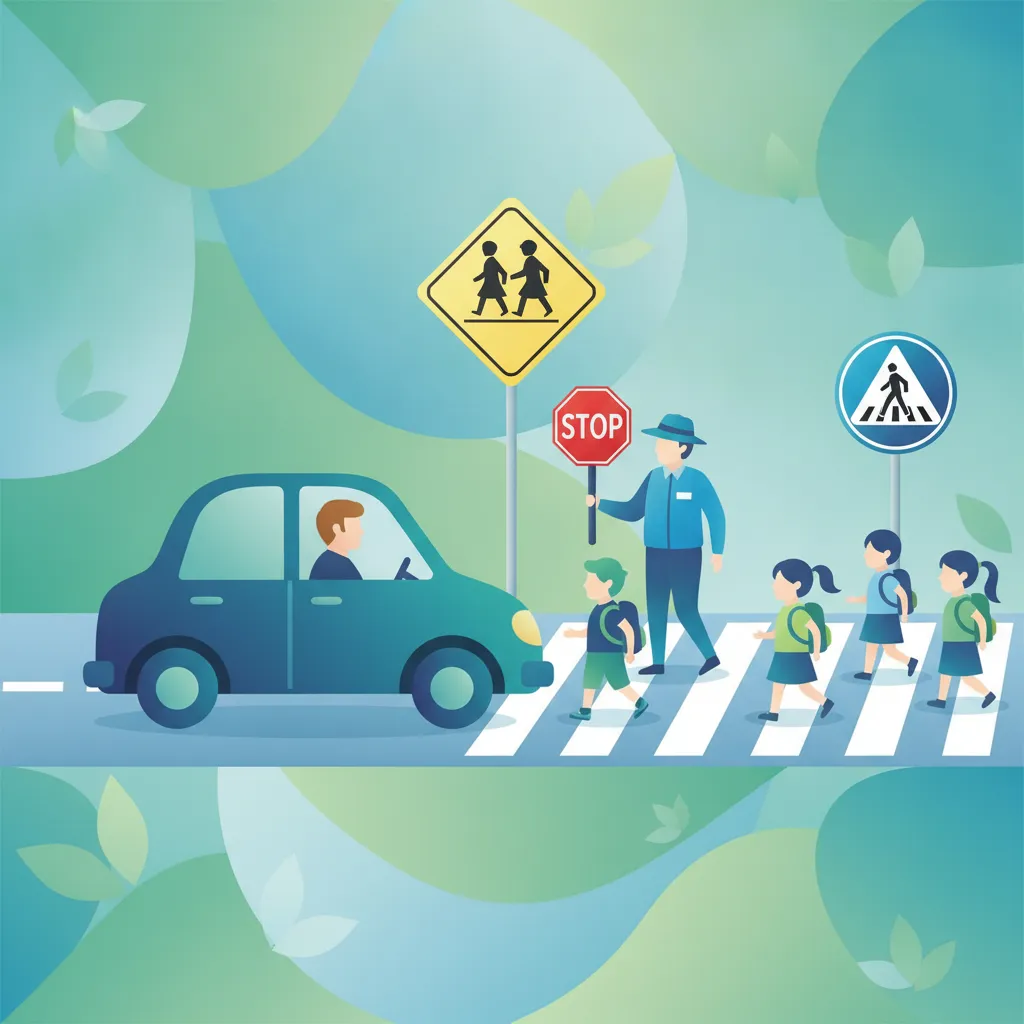
School zones and pedestrian crossings require high driver alertness and strict compliance with local speed limits in Ireland. This lesson details the legal rules of zebra and pelican crossings, explaining driver requirements when amber warning beacons are flashing. Drivers will study safety procedures for dropping off or picking up children, preventing common blind-spot accidents near schools.
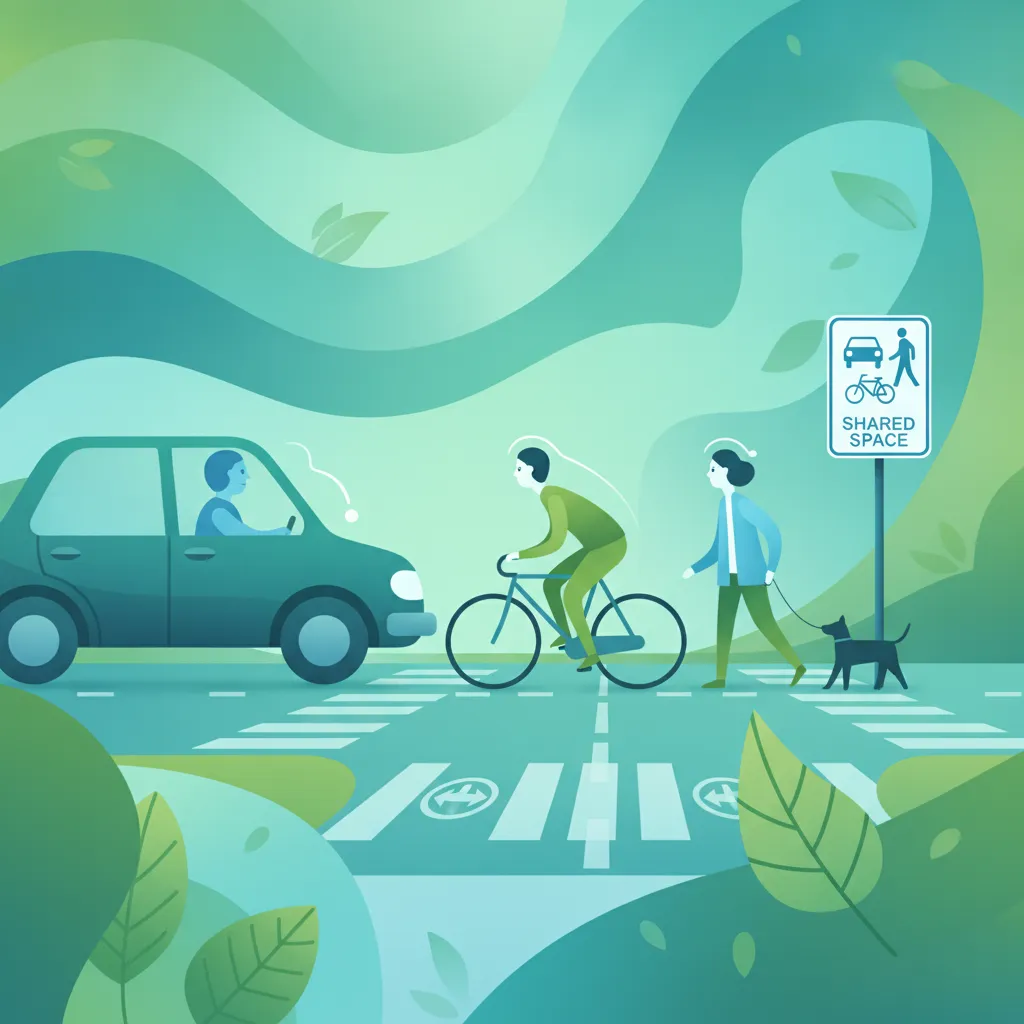
Shared public spaces rely heavily on road user cooperation, low speeds, and active visual communication rather than traditional traffic signals. This lesson teaches drivers how to navigate these open zones safely, yielding priority to pedestrians and integrated cyclists. Drivers will study how traffic calming designs alter vehicle trajectories, allowing safe, stress-free transit through modern city centers.
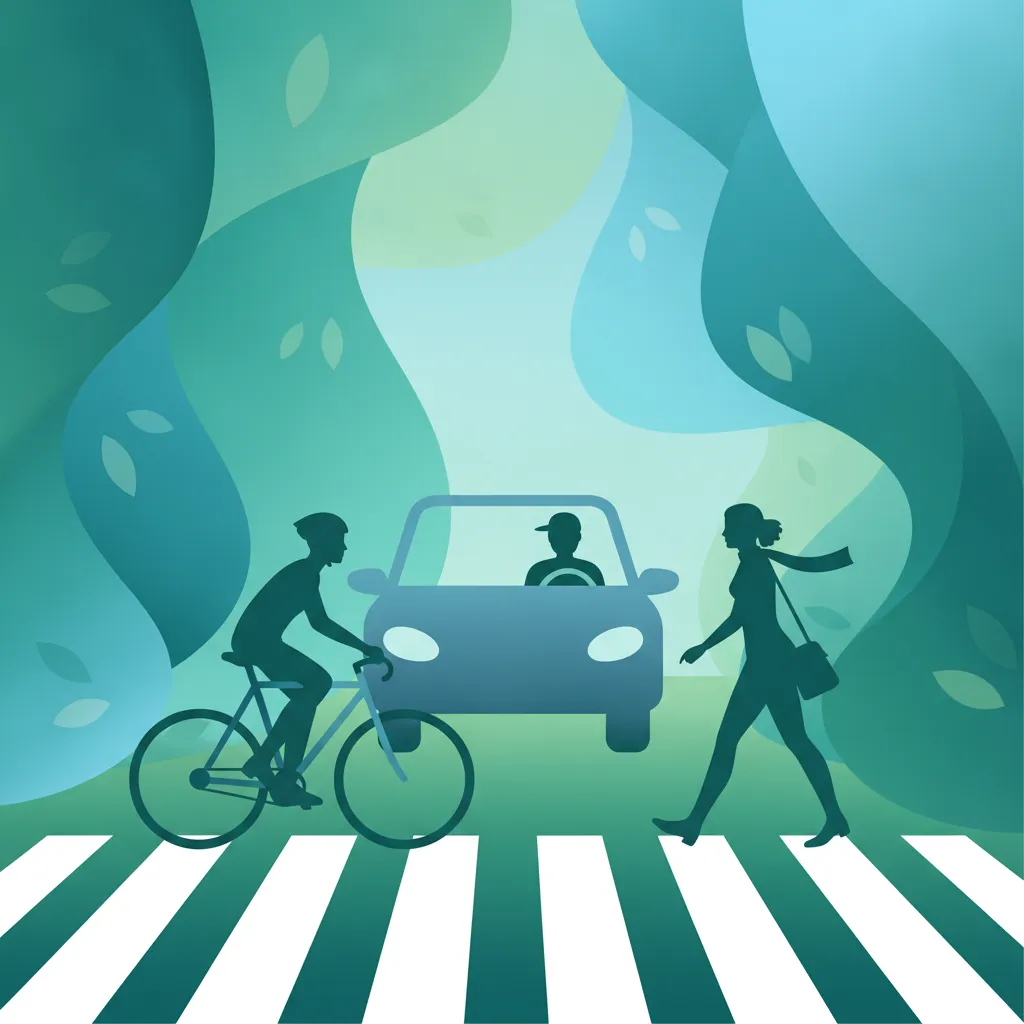
This lesson covers the rules governing zebra, pelican, and toucan pedestrian crossings, focusing on driver obligations and rider safety. It details how to interact safely with cyclists, personal mobility devices, and pedestrians in busy urban sectors. Motorcyclists will learn to scan pavement edges, yield right-of-way, and maintain safe overtaking distances when passing slower road users.
Bus stops often intersect with designated bicycle lanes and busy walking pathways, creating high-risk conflict areas for drivers. This lesson trains drivers to check blind spots for oncoming cyclists before pulling into or exiting public stop bays. It emphasizes yielding right-of-way to passengers crossing the road, preventing collision risks in active urban transport hubs.
Driving large vehicles through dense city traffic requires outstanding lane discipline, spatial awareness, and consistent patience. This lesson teaches drivers how to utilize public bus corridors, manage tight yellow box intersections, and handle narrow city streets. It focuses on predicting traffic pattern shifts to maintain service timetables while minimizing fuel waste and driver stress.
Pedestrians are the most common vulnerable road users, and drivers must maintain constant vigilance to protect them. This lesson covers pedestrian priority, especially when you are turning into side roads or navigating busy urban centres. You will learn why you must yield to pedestrians already crossing, how to scan blind spots for hidden walkers, and the safety dangers of blocking footpaths or pedestrian zones with your car.
Children often struggle to judge heavy vehicle speeds accurately, while elderly pedestrians may possess limited mobility or hearing impairments. This lesson addresses these unique risks, explaining how to adjust driving patterns in residential neighborhoods and near shopping districts. Drivers will learn to maintain a high safety margin, ensuring they can yield quickly to vulnerable road users.
This lesson focuses on managing the interactions between commercial goods vehicles and non-motorized or lightweight commuters. It outlines defensive driving techniques to utilize when overtaking cyclists, navigating pedestrian crossings, or negotiating shared junctions in Irish cities. Drivers will examine common cyclist behaviors at roundabouts and understand how to maintain massive safety margins to protect lives.
This lesson details how to approach zebra, pelican, and other pedestrian crossings safely, ensuring complete priority is given to walkers. It also covers the safe guidelines for overtaking cyclists and sharing lanes in busy urban centers without causing danger. Respecting these interactions is critical for maintaining overall safety and compliance with Irish road law.
This lesson analyzes traffic flow characteristics in dense municipal areas and teaches safe riding methods for congested gridlock situations. It covers the maintenance of adequate safety cushions, scanning for opening car doors, and monitoring pedestrians stepping from between parked cars. Riders will learn to manage frequent stopping, constant clutch wear, and the stress of urban commuting.
Understand the core principles of defensive driving for buses and coaches. This lesson focuses on systematic visual scanning, mirror management, and maintaining safe following distances to mitigate the risks posed by vehicle blind spots and sudden environmental changes according to official Road Safety Authority guidelines for professional drivers.
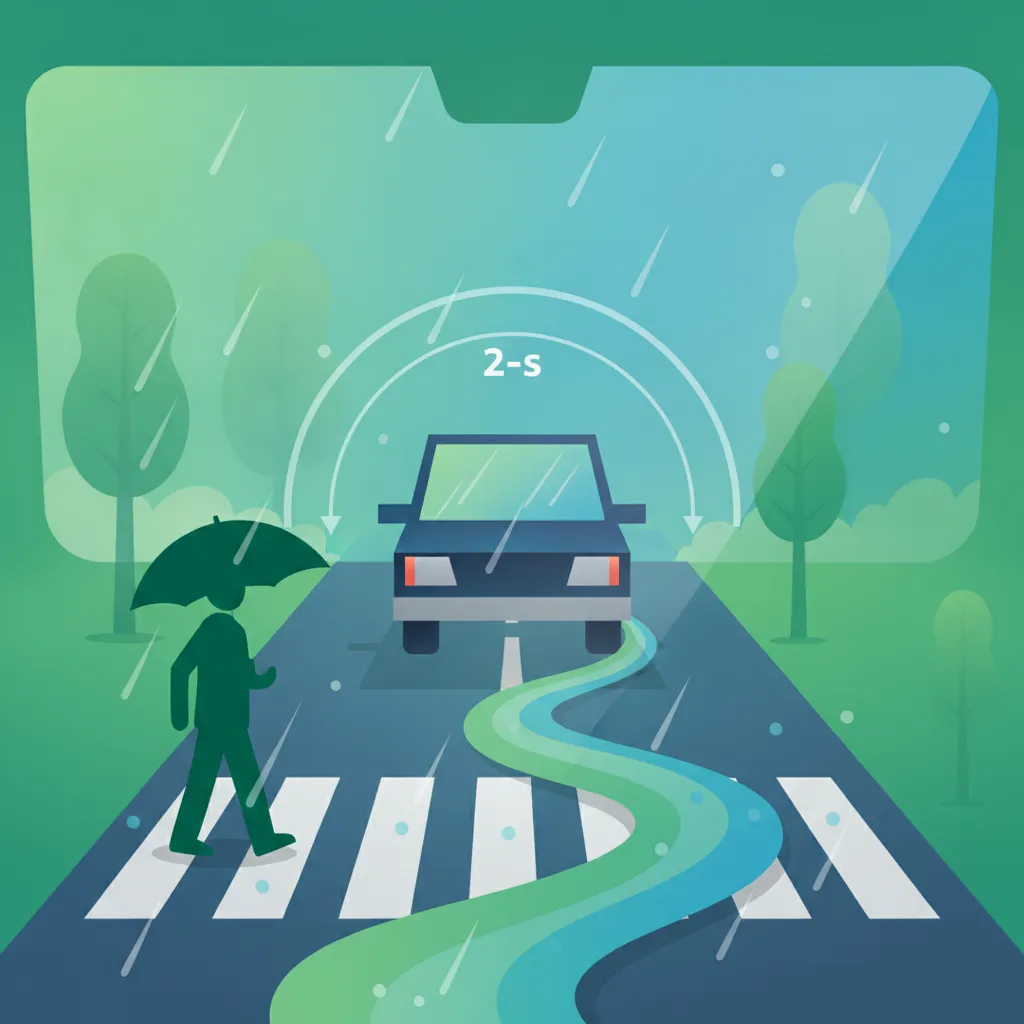
Maintaining an extensive buffer zone ahead of a large passenger vehicle is critical to ensuring enough space for emergency maneuvers. This lesson teaches the time-gap method, detailing how following distances must double on wet roads or increase with full passenger loads. It builds hazard anticipation skills, teaching drivers to read distant traffic cues and react early to hazards.
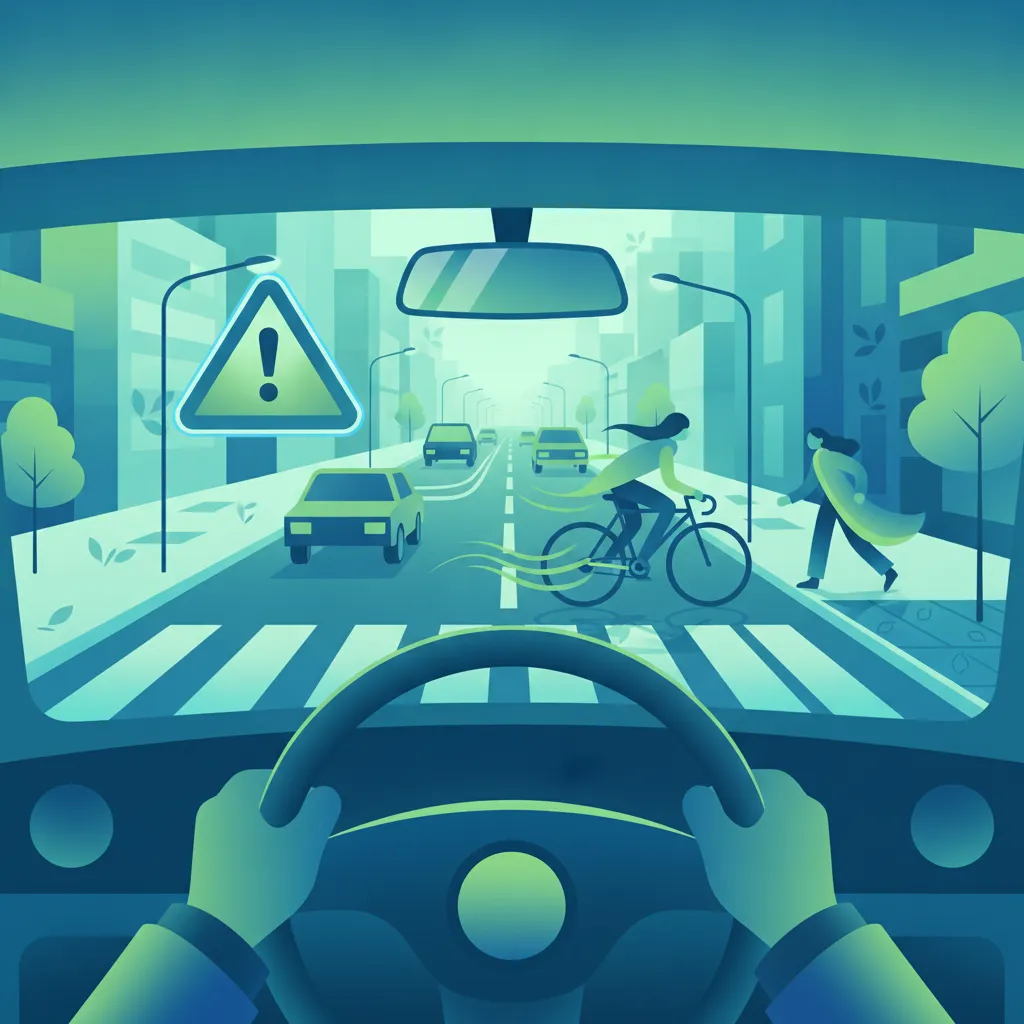
Proactive hazard perception involves constantly scanning the road ahead to identify potential dangers before they turn into actual emergencies. This lesson covers active scanning techniques, helping you look far ahead, check mirrors regularly, and identify subtle risk clues such as exhaust smoke from parked cars or children playing near kerbs. Anticipating these developments gives you the time to adjust speed and position safely.
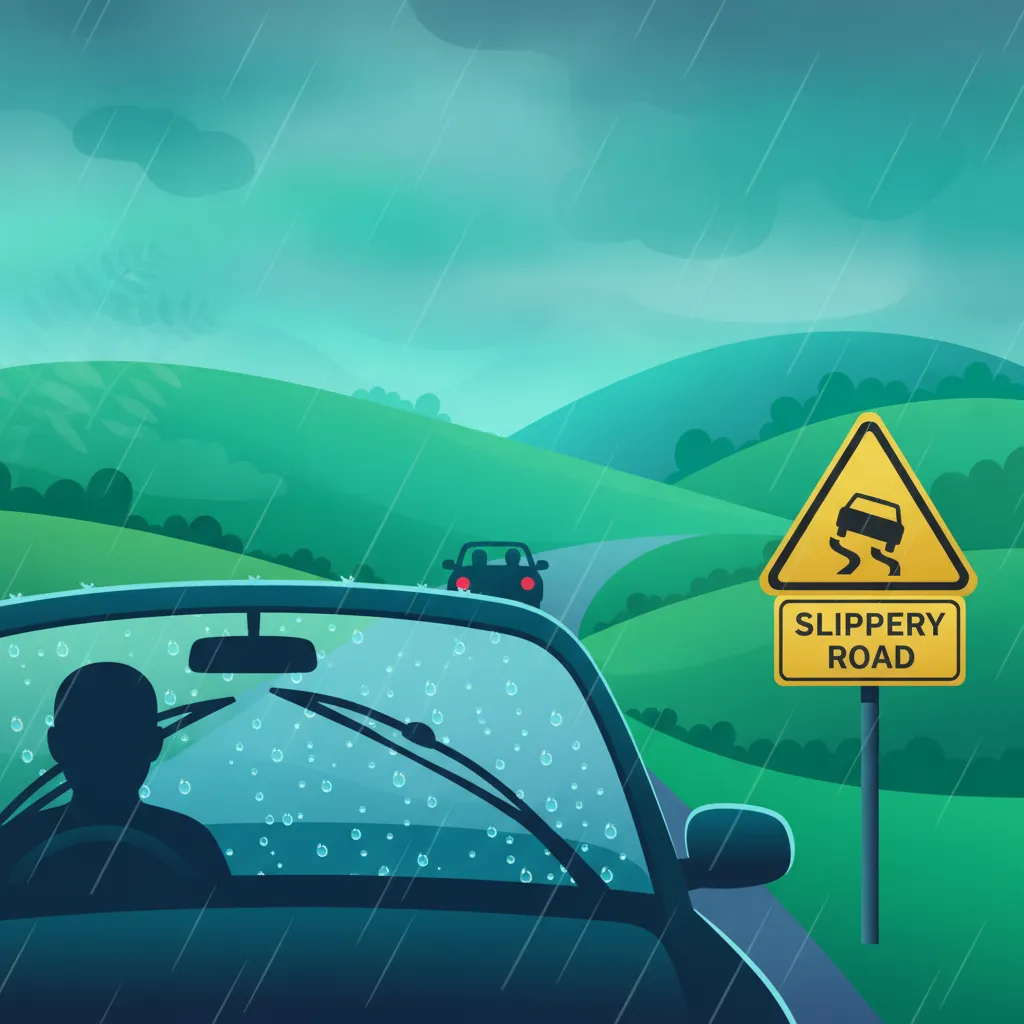
Wet roads, heavy winter fog, and strong lateral winds present major safety challenges for high-sided passenger vehicles in Ireland. This lesson explains how to prevent aquaplaning, double following distances on wet surfaces, and use fog lights correctly to maintain visibility. Drivers will learn handling adjustments to counteract sudden wind gusts when crossing exposed bridges or motorways.

Irish rural routes are often narrow, lacking central markings, and bordered by tall hedges that restrict forward visibility on sharp bends. This lesson teaches drivers how to negotiate blind curves, anticipate slow-moving agricultural machinery, and respond to wandering farm animals. Drivers will learn to regulate vehicle speed proactively, maintaining a safe stopping margin in rural areas.
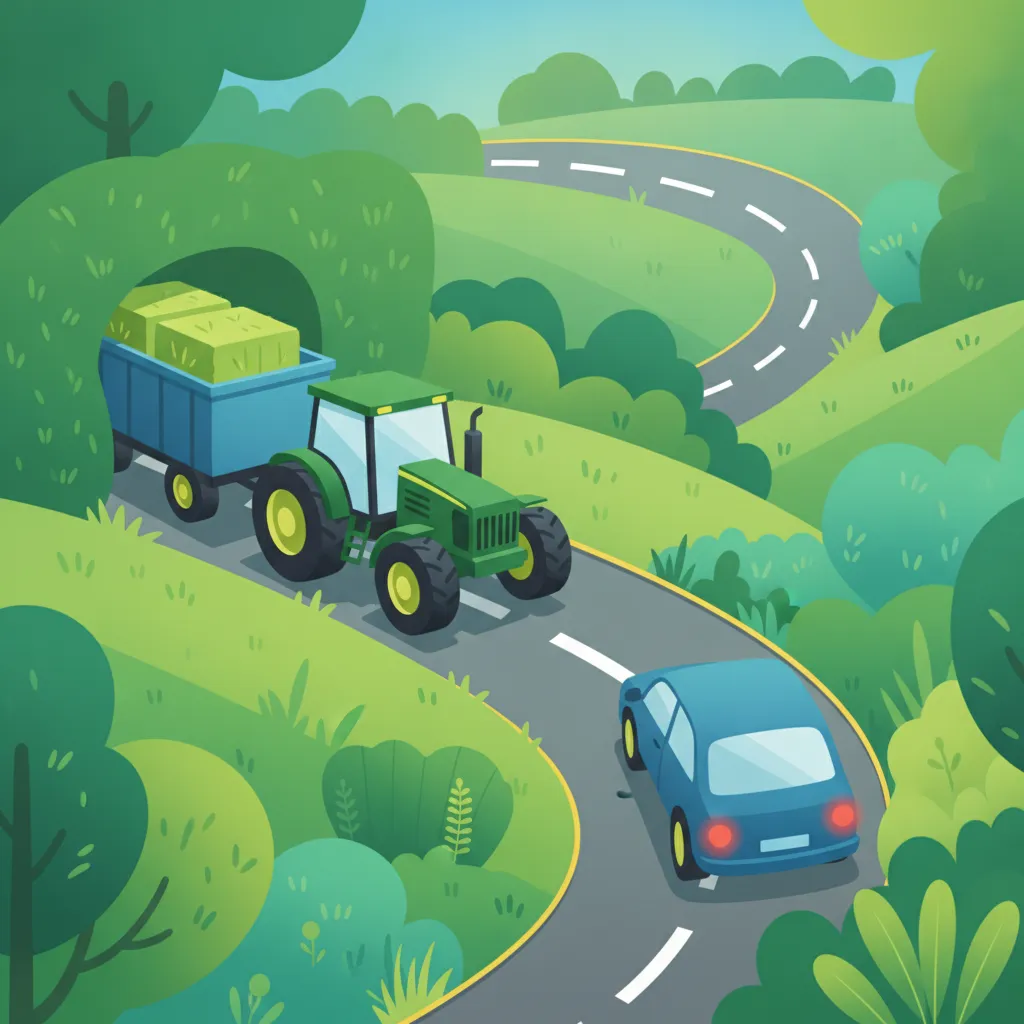
Irish rural roads are often narrow, winding, and bordered by high hedges, presenting unique hazards compared to urban streets. This lesson focuses on scanning for hidden hazards such as slow-moving farm machinery, mud on the road surface, and loose livestock. You will learn how to adjust your speed before entering blind bends, sound your horn at blind crests, and safely share the road with local agricultural traffic.

This lesson explores the safe operation of heavy transport vehicles during severe meteorological hazards typical of the Irish climate. It teaches techniques for adjusting speed and doubling following distances to prevent loss of steering traction and control on waterlogged or icy roadways. Drivers will understand how to manage lateral aerodynamic forces from crosswinds on high-sided goods vehicles.
Children often struggle to judge heavy vehicle speeds accurately, while elderly pedestrians may possess limited mobility or hearing impairments. This lesson addresses these unique risks, explaining how to adjust driving patterns in residential neighborhoods and near shopping districts. Drivers will learn to maintain a high safety margin, ensuring they can yield quickly to vulnerable road users.
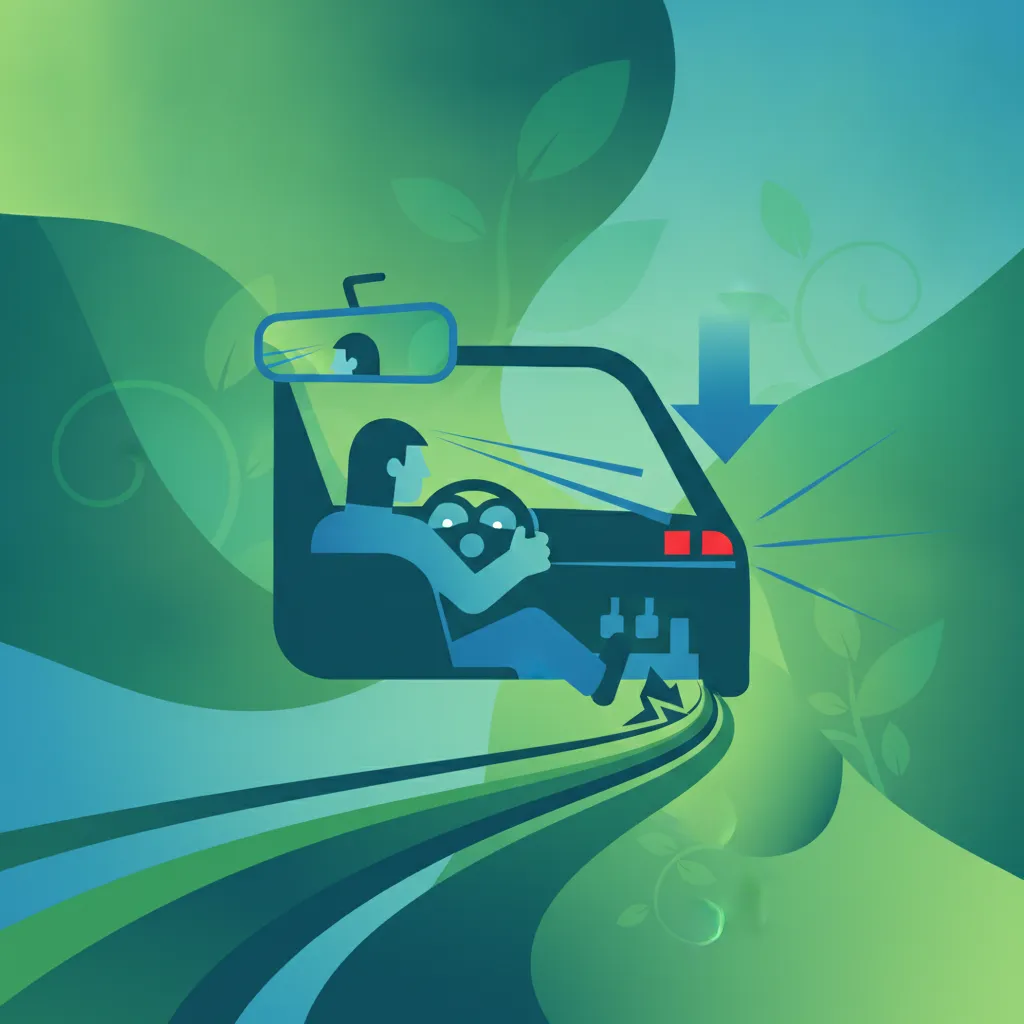
Defensive driving prepares you to react safely when facing unexpected mechanical failures or immediate road hazards. This lesson explains how to execute an emergency stop using Anti-lock Braking Systems (ABS) and how to recover from front and rear-wheel skids on slippery roads. You will learn the importance of remaining calm, avoiding panic-steering, and applying controlled evasive actions to prevent collisions.
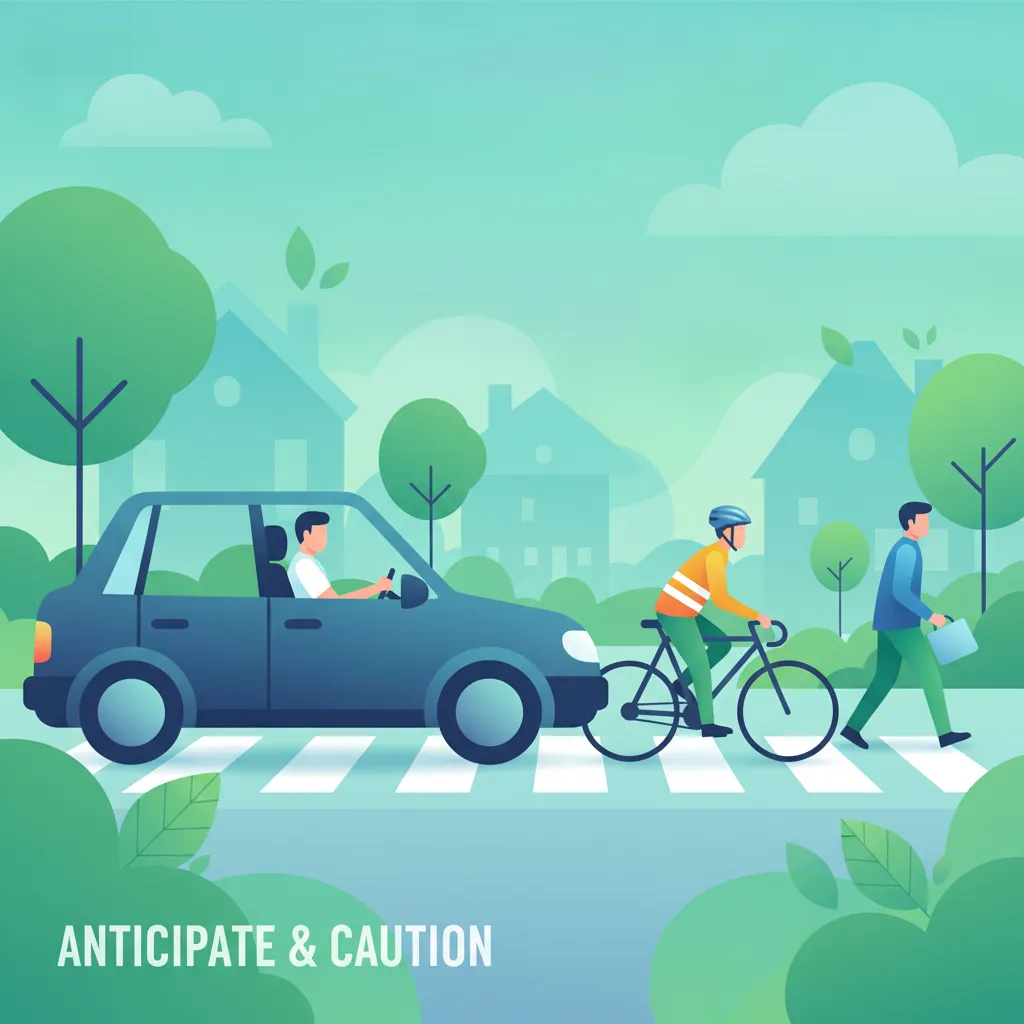
Safeguarding vulnerable road users requires more than simple obedience to traffic signs; it demands a defensive driving mindset. This lesson summarizes safe practices, including scanning far ahead in urban areas, keeping massive safety margins in wet weather, and executing thorough blind spot checks before reversing. By anticipating the unpredictable movements of others, you can prevent accidents and support a safe road culture.
This lesson explains the extensive blind spots of heavy goods vehicles, buses, and other large trucks on Irish roads. It teaches Category AM riders how to maintain safe following distances and position themselves where truck drivers can see them. Proper space cushion management is emphasized to protect riders from the wind turbulence of passing trucks.
Find clear answers to common questions learners have about Recognising and Anticipating Vulnerable Road Users. Learn how the lesson is structured, which driving theory objectives it supports, and how it fits into the overall learning path of units and curriculum progression in Ireland. These explanations help you understand key concepts, lesson flow, and exam focused study goals.
Large passenger vehicles have significant blind spots around the front and sides that can easily conceal cyclists or children. Drivers must use a systematic 'search-scan' pattern, frequently checking mirrors and ensuring physical head movements to compensate for these restricted view angles.
Drivers must approach with extreme caution, reducing speed well in advance and being prepared to stop. In Ireland, school zones often feature specific signage and traffic calming measures that require heightened vigilance for children who may step out suddenly from between parked cars.
The exam tests your ability to identify and respond to hazards. This lesson provides the cognitive framework to pass questions regarding hazard anticipation, blind spot management, and the legal duty of care you owe to vulnerable road users under the Rules of the Road.
Yes. When pulling into or leaving a stop, always check your blind spot for cyclists who may attempt to pass on the left. Never cut across a cycle lane without ensuring it is clear and signaling your intentions early to other road users.
Use the practice question search tool to pinpoint specific topics, road signs, or rules you need to master for your official Driver Theory Test. Refine your study strategy and ensure comprehensive preparation for all aspects of the Irish driving exam. Start your focused revision now and build confidence for your learner permit test.