
This lesson focuses on the critical safety procedures for operating Category D vehicles within high-traffic terminals and transport hubs. You will learn to coordinate passenger flow and navigate tight spaces, preparing you for both the official Irish Driver Theory Test and real-world commercial driving.

Lesson content overview
Bus terminals, transport interchanges, and depots are the most dynamic and hazard-dense environments that a professional Category D or D1 passenger vehicle driver will navigate. These hubs act as convergence points for massive multi-axle coaches, regional buses, terminal staff, and high volumes of pedestrians—many of whom may be distracted, carrying heavy luggage, or unfamiliar with the layout.
Operating safely in these tight spaces requires a shift in driving psychology. Out on the open road, speed and lane discipline dominate; within a terminal, success is measured by extreme low-speed precision, heightened situational awareness, strict adherence to reversing protocols, and active passenger management. This lesson covers the essential rules, safety standards, and practical strategies required to manage terminal operations safely and efficiently under the Irish Rules of the Road and Road Safety Authority (RSA) guidelines.
A transport hub is a highly constrained spatial environment. The physical layout of platforms, bays, pillars, and canopy overhangs leaves very little margin for error. When you pilot a vehicle that can exceed 12 metres in length and weigh over 18 tonnes, even minor misjudgments can lead to severe structural damage or catastrophic pedestrian accidents.
To operate safely, you must understand the primary hazards associated with terminals:
Speed management within a terminal is your primary line of defense. Because reaction times must be instantaneous when a pedestrian unexpectedly steps in front of your vehicle, speed limits in these areas are set exceptionally low.
The standard legal speed limit within most Irish bus and coach terminals is 20 km/h, though specific private depots or busy public hubs may mandate an even lower limit of 10 km/h or 5 km/h in active pedestrian zones.
At 20 km/h, your vehicle travels approximately 5.5 metres per second. When you factor in the standard human perception-reaction time of 1.5 seconds, your vehicle will travel over 8 metres before your foot even touches the brake pedal. In a crowded terminal bay, 8 metres can be the difference between a safe stop and a fatal collision.
The "Safe Speed" Fallacy: Never assume that driving exactly at the posted 20 km/h limit is automatically safe. If visibility is poor, the terminal is highly congested, or the ground is wet, your safe operating speed may be walking pace (5 km/h). Always adapt your speed to the immediate environmental conditions.
Reversing a bus or coach is one of the most hazardous maneuvers a professional driver can perform. Large passenger vehicles possess extensive blind spots directly behind the rear panel, extending along both sides of the vehicle's body. In terminal bays where diagonal (herringbone) or parallel parking is required, reversing is often unavoidable.
To execute a safe reverse within a terminal, you must follow a structured safety sequence:
Conduct a Pre-Manoeuvre Assessment: Before boarding, walk around the rear of your vehicle to check for low-hanging obstacles, structural pillars, and pedestrians.
Activate Safety Warning Systems: Ensure your automatic reversing alarm (bleeper) is fully operational. Switch on your hazard warning lights to signal your intent to surrounding traffic and pedestrians.
Utilize All Visual Aids: Adjust your mirrors to view both the ground level and the upper corners of the vehicle. Turn on the rear-view camera monitor if your vehicle is equipped with one.
Engage a Spotter/Shunter: If your rear view is obstructed, or if you are maneuvering in a highly congested area, you must use a qualified terminal staff member (spotter) to guide you.
Perform the Maneuver at Walking Pace: Back up slowly, keeping your foot covering the brake pedal (creeping), ready to make an immediate stop if you lose sight of your spotter or observe any hazard.
A spotter is there to assist, but you, the driver, retain full legal responsibility for the safe operation of the vehicle.
Efficient passenger flow is the lifeblood of a well-run terminal. Uncontrolled passenger movement leads to boarding delays, stress, and severe safety hazards. As a professional driver, you must actively manage how passengers interact with your vehicle before they even step on board.
Your first task is to position the vehicle perfectly within the designated bay. Parking too far from the platform curb creates a dangerous gap that passengers—particularly the elderly, children, or those with mobility impairments—must cross.
When operating regional or high-capacity services, chaotic queues can form quickly.
Preventing Slip, Trip, and Fall Hazards: Wet weather dramatically increases terminal accidents. Monitor the step area of your vehicle, use non-slip entrance mats, and verbally caution boarding passengers if the platform or vehicle steps are wet.
Punctuality is crucial in public transport, but safety must never be sacrificed for the timetable. Coordinated departures ensure that buses leave their bays in a synchronized manner, preventing bottlenecks at terminal exits and reducing the risk of collisions between vehicles maneuvering simultaneously.
Before pulling away from a platform, you must perform several vital checks:
When pulling out of a tight terminal bay, you must account for tail-swing. As you steer a long-wheelbase coach sharply to exit a bay, the rear overhang of the vehicle swings in the opposite direction.
The lateral outward movement of the rear portion of a long vehicle (behind the rear axle) when the front of the vehicle is steered sharply in the opposite direction.
If you turn the steering wheel too early or too sharply when leaving a bay, your tail-swing can strike the terminal wall, a structural pillar, or the vehicle parked in the adjacent bay. Always pull forward straight out of the bay as far as possible before initiating your turn.
A professional driver must adapt their terminal driving style to varying external factors.
Rain and freezing temperatures create significant hazards inside terminals.
Operating during early mornings or late nights requires extra visual vigilance.
During concerts, sports matches, or holiday travel peaks, passenger volume can exceed terminal capacity.
Why do we emphasize these strict operational rules? The physics of large passenger vehicles demand it.
Consider the difference in mass and braking capabilities. A fully laden double-deck coach weighing 19,000 kg has vastly different momentum than a passenger car. If a driver reacts late at 20 km/h, the kinetic energy that must be dissipated is massive. By strictly adhering to low speed limits, utilizing mechanical and human spotters during reverses, and managing passenger queues, we actively mitigate the physical limitations of these heavy vehicles.
Furthermore, human psychology plays a role. Passengers inside a terminal are often stressed, hurried, or distracted by mobile phones and travel updates. They operate under the assumption that professional drivers will see them and stop. As a professional, you must practice defensive anticipation—always assuming that a pedestrian does not see you and is about to step directly into your path.
Transport terminals are high-density environments where professional drivers must balance punctuality with pedestrian safety. The core rules are strict speed limits (maximum 20 km/h), mandatory reversing protocols using spotters and warning systems, and careful passenger queue management behind platform barriers. Before departure, drivers must perform comprehensive checks, account for tail-swing when exiting bays, and wait for official clearance from terminal staff. Defensive driving assumes pedestrians do not see the vehicle and may step into its path at any moment.
A short set of high-value points that capture the most important learning from this lesson.
Terminal speed limits are typically 20 km/h but must be reduced further based on congestion, visibility, and surface conditions.
Reversing requires a structured safety sequence including pre-maneuver walkaround, activated reversing alarm, adjusted mirrors, and use of a qualified spotter whenever rear view is obstructed.
Passenger safety depends on correct bay positioning, kneeling suspension use to reduce step height, and keeping passengers behind platform barriers during vehicle maneuvering.
Before departure, verify all doors and compartments are closed, confirm passengers are seated or holding handrails, and obtain clearance from terminal staff.
Tail-swing during bay exits can strike infrastructure or adjacent vehicles if turns are initiated too early or too sharply.
Explore all units and lessons included in this driving theory course.
A spotter must remain visible in your mirrors at all times; losing sight of them requires an immediate stop.
Tail-swing is the lateral outward movement of a vehicle's rear when the front is steered sharply in the opposite direction.
Driving exactly at the posted 20 km/h limit is not automatically safe if conditions are poor; walking pace may be appropriate.
All luggage bay doors, engine panels, and passenger doors must be physically locked before departure clearance.
Wet terminal bays with oil residue create extremely slick surfaces that significantly increase braking distances.
Losing sight of the spotter during a reverse maneuver and continuing to back up without stopping.
Turning the steering wheel too early when exiting a bay, allowing the tail-swing to strike adjacent infrastructure.
Rushing a departure after a delay by accelerating quickly out of the bay rather than following standard departure checks.
Failing to activate kneeling suspension, creating a dangerous gap between the vehicle step and the platform curb for elderly or mobility-impaired passengers.
Assuming pedestrian visibility is adequate in low-light conditions without adjusting driving speed or using dipped headlights.
Lesson content overview
A short set of high-value points that capture the most important learning from this lesson.
Terminal speed limits are typically 20 km/h but must be reduced further based on congestion, visibility, and surface conditions.
Reversing requires a structured safety sequence including pre-maneuver walkaround, activated reversing alarm, adjusted mirrors, and use of a qualified spotter whenever rear view is obstructed.
Passenger safety depends on correct bay positioning, kneeling suspension use to reduce step height, and keeping passengers behind platform barriers during vehicle maneuvering.
Before departure, verify all doors and compartments are closed, confirm passengers are seated or holding handrails, and obtain clearance from terminal staff.
Tail-swing during bay exits can strike infrastructure or adjacent vehicles if turns are initiated too early or too sharply.
Explore all units and lessons included in this driving theory course.
A spotter must remain visible in your mirrors at all times; losing sight of them requires an immediate stop.
Tail-swing is the lateral outward movement of a vehicle's rear when the front is steered sharply in the opposite direction.
Driving exactly at the posted 20 km/h limit is not automatically safe if conditions are poor; walking pace may be appropriate.
All luggage bay doors, engine panels, and passenger doors must be physically locked before departure clearance.
Wet terminal bays with oil residue create extremely slick surfaces that significantly increase braking distances.
Losing sight of the spotter during a reverse maneuver and continuing to back up without stopping.
Turning the steering wheel too early when exiting a bay, allowing the tail-swing to strike adjacent infrastructure.
Rushing a departure after a delay by accelerating quickly out of the bay rather than following standard departure checks.
Failing to activate kneeling suspension, creating a dangerous gap between the vehicle step and the platform curb for elderly or mobility-impaired passengers.
Assuming pedestrian visibility is adequate in low-light conditions without adjusting driving speed or using dipped headlights.
Explore search topics learners often look for when studying Managing Terminal Operations and Passenger Flow. These topics reflect common questions about road rules, driving situations, safety guidance, and lesson level theory preparation for learners in Ireland.
Browse additional driving theory lessons that cover connected traffic rules, road signs, and common driving situations related to this topic. Improve your understanding of how different rules interact across everyday traffic scenarios.
Learn the professional techniques required to navigate long-wheelbase coaches through tight urban streets and restricted spaces. This guide covers essential concepts like tail-swing, mirror discipline, and precise steering control to help you safely manage a large vehicle in challenging road environments.

Driving a coach through narrow urban streets or historic Irish town centers demands precise spatial judgment and low speed control. This lesson covers turning radii, rear tail-swing physics, and managing overhangs when navigating around tight, permanent obstacles. Drivers will learn to assess clearance gaps accurately, reducing damage risks to the vehicle exterior and public infrastructure.
Driving large vehicles through dense city traffic requires outstanding lane discipline, spatial awareness, and consistent patience. This lesson teaches drivers how to utilize public bus corridors, manage tight yellow box intersections, and handle narrow city streets. It focuses on predicting traffic pattern shifts to maintain service timetables while minimizing fuel waste and driver stress.
This lesson addresses the unique environmental and logistical challenges faced during delivery stops in commercial town and city centers. It covers the legal frameworks governing municipal loading zones, double-parking hazards, and temporary pedestrian-only street restrictions. Drivers will acquire practical skills for managing traffic build-up, utilizing visual spotters, and securing the vehicle while unloading cargo.

This lesson addresses the mechanical dynamics of turning long-wheelbase and articulated commercial vehicles at intersections, junctions, and roundabouts. It covers the necessity of deep cornering lines, early mirror checks, and correct signaling to warn vulnerable road users of wide turn maneuvers. Drivers will learn how to minimize rear cut-in and ensure the entire vehicle clears urban obstacles safely.

The length of a commercial passenger vehicle creates a wide rear-wheel track offset, requiring drivers to swing wide during tight turns. This lesson teaches cornering mechanics, mirror adjustment guidelines, and how to check blind spots for cyclists on the inside lane. Drivers will master intersection control, preventing collisions with stationary street furniture or curbs.
Merging a long, heavy passenger vehicle onto high-speed motorways requires matching the traffic speed within the limited length of slip lanes. This lesson covers signal timing, safe lane-merging gaps, and maintaining control during overtaking maneuvers on national routes. Drivers will learn to prioritize passenger comfort and vehicle stability, preventing sudden weight shifts during lane entries.
Large passenger vehicles must maintain consistent lane positioning to prevent side-swipe incidents and sustain smooth urban traffic patterns. This lesson covers standard lane selection rules, safe overtaking procedures, and how to use designated public transit corridors correctly. Drivers will learn the importance of checking mirrors continuously and planning lane changes well in advance.
This lesson provides a comprehensive guide to reversing large vehicles and backing trailer setups safely into loading docks and industrial bays. It analyzes the mechanical physics of trailer articulation, steering inputs, and how to utilize modern backup cameras, mirrors, and assistants. Drivers will examine critical safety protocols, including visual checks and slow-speed controls, to avoid collisions with fixed objects.
This lesson analyzes traffic flow characteristics in dense municipal areas and teaches safe riding methods for congested gridlock situations. It covers the maintenance of adequate safety cushions, scanning for opening car doors, and monitoring pedestrians stepping from between parked cars. Riders will learn to manage frequent stopping, constant clutch wear, and the stress of urban commuting.

Sudden or jerky vehicle movements can cause immediate discomfort or direct physical injuries to onboard passengers, particularly standing occupants. This lesson teaches progressive throttle control, gradual gear shifts, and smooth steering inputs that stabilize the heavy vehicle body. Drivers will master the technique of progressive braking to ensure comfortable, safe slowing actions at junctions.
Understand the RSA guidelines for identifying and anticipating the movements of pedestrians, cyclists, and motorcyclists near bus stops and schools. This lesson explains how to reduce conflict in shared spaces and manage visibility hazards when operating large passenger vehicles in high-density areas.

This lesson covers the rules governing zebra, pelican, and toucan pedestrian crossings, focusing on driver obligations and rider safety. It details how to interact safely with cyclists, personal mobility devices, and pedestrians in busy urban sectors. Motorcyclists will learn to scan pavement edges, yield right-of-way, and maintain safe overtaking distances when passing slower road users.
This lesson focuses on managing the interactions between commercial goods vehicles and non-motorized or lightweight commuters. It outlines defensive driving techniques to utilize when overtaking cyclists, navigating pedestrian crossings, or negotiating shared junctions in Irish cities. Drivers will examine common cyclist behaviors at roundabouts and understand how to maintain massive safety margins to protect lives.
This lesson details how to approach zebra, pelican, and other pedestrian crossings safely, ensuring complete priority is given to walkers. It also covers the safe guidelines for overtaking cyclists and sharing lanes in busy urban centers without causing danger. Respecting these interactions is critical for maintaining overall safety and compliance with Irish road law.
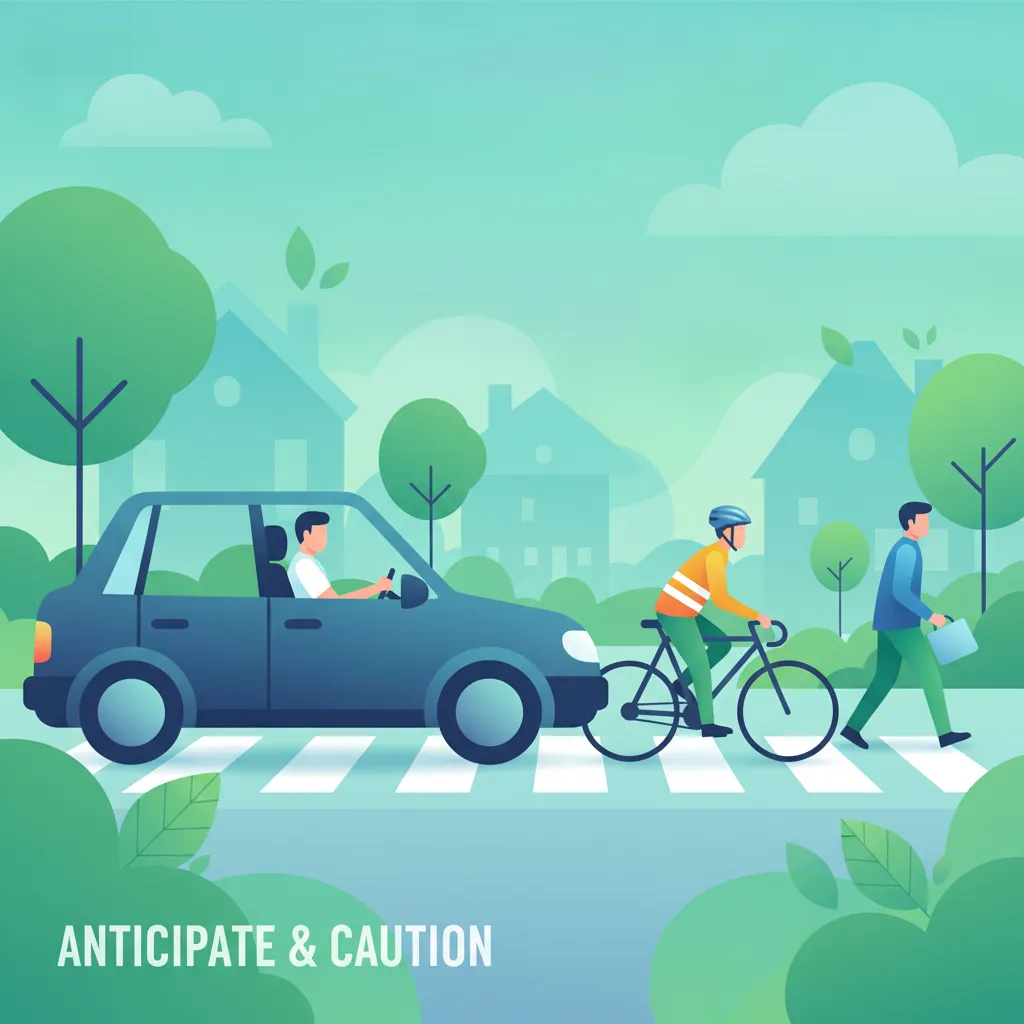
Safeguarding vulnerable road users requires more than simple obedience to traffic signs; it demands a defensive driving mindset. This lesson summarizes safe practices, including scanning far ahead in urban areas, keeping massive safety margins in wet weather, and executing thorough blind spot checks before reversing. By anticipating the unpredictable movements of others, you can prevent accidents and support a safe road culture.

Bus stops often intersect with designated bicycle lanes and busy walking pathways, creating high-risk conflict areas for drivers. This lesson trains drivers to check blind spots for oncoming cyclists before pulling into or exiting public stop bays. It emphasizes yielding right-of-way to passengers crossing the road, preventing collision risks in active urban transport hubs.
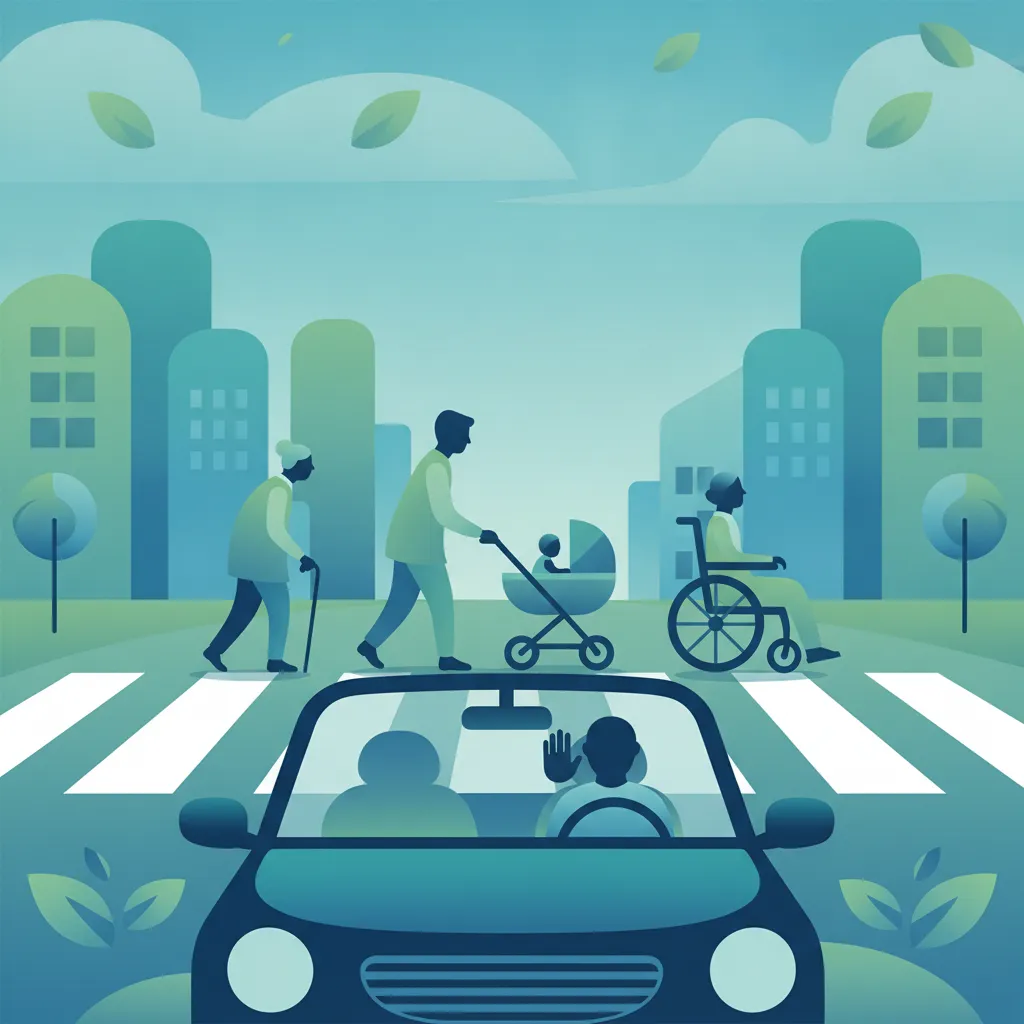
Children, the elderly, and disabled individuals often require extra time and understanding when navigating road networks. This lesson outlines special safety hazards, such as children unexpectedly running into school zones, or senior citizens needing longer times to cross wide junctions. You will learn how to recognise visually impaired pedestrians by their white canes or guide dogs, and the absolute requirement to drive slowly and patiently.
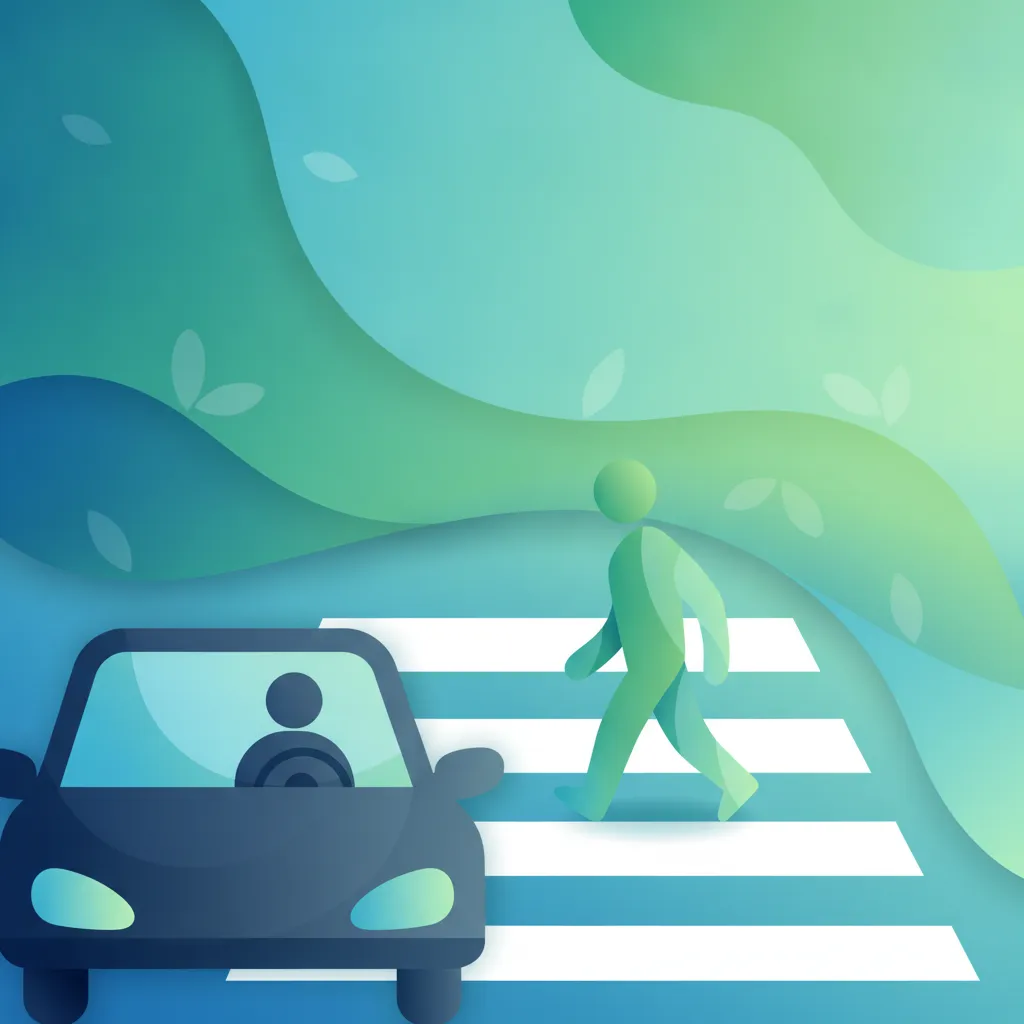
Pedestrians are the most common vulnerable road users, and drivers must maintain constant vigilance to protect them. This lesson covers pedestrian priority, especially when you are turning into side roads or navigating busy urban centres. You will learn why you must yield to pedestrians already crossing, how to scan blind spots for hidden walkers, and the safety dangers of blocking footpaths or pedestrian zones with your car.
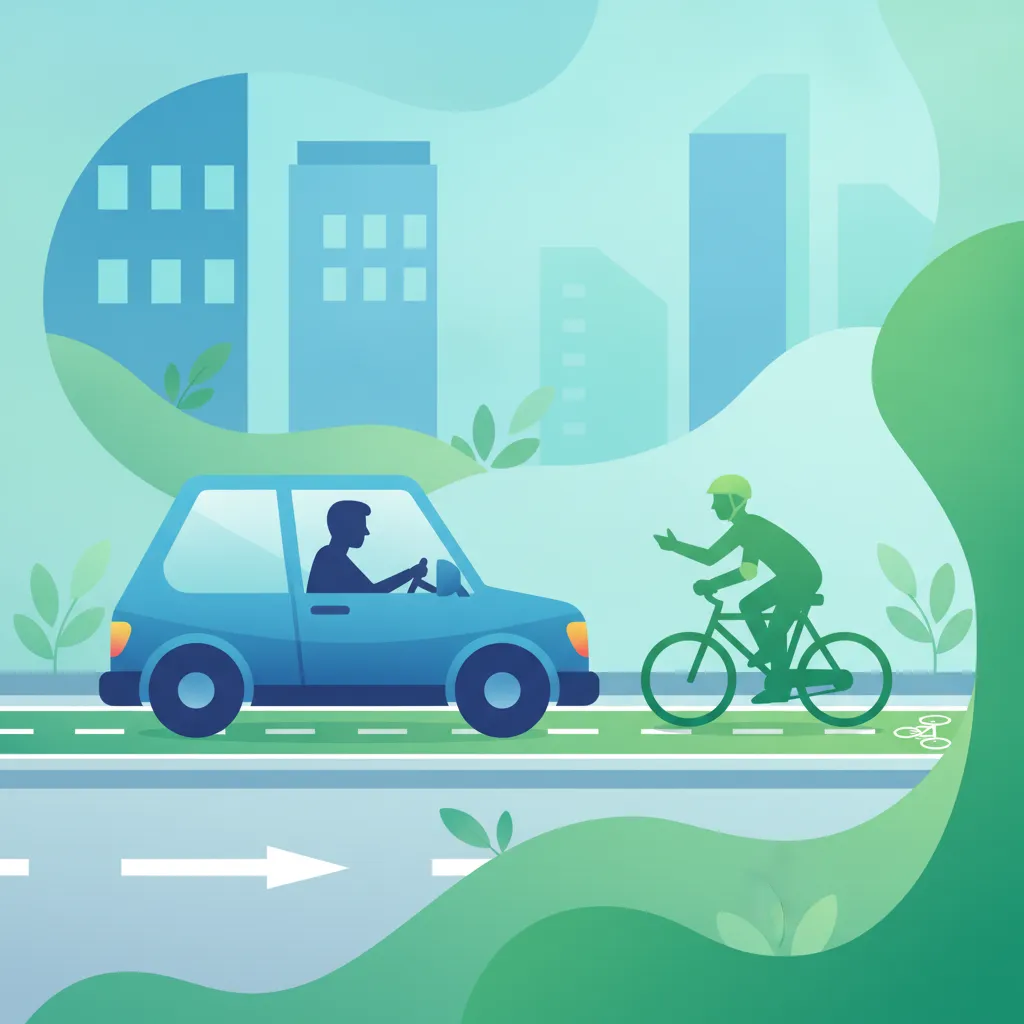
Cyclists share public roads under unique safety constraints, requiring drivers to keep wide clearances and anticipate sudden steering changes. This lesson covers the minimum safe passing distance of 1 to 1.5 metres, rules for driving near cycle tracks, and the danger of the 'dooring' hazard when parking. You will also learn to check your left-side blind spot before turning, preventing dangerous side-swipe collisions.
This lesson analyzes traffic flow characteristics in dense municipal areas and teaches safe riding methods for congested gridlock situations. It covers the maintenance of adequate safety cushions, scanning for opening car doors, and monitoring pedestrians stepping from between parked cars. Riders will learn to manage frequent stopping, constant clutch wear, and the stress of urban commuting.

Motorcycles and bicycles are often hidden from view in the large blind spots of passenger buses and coaches during turns. This lesson covers safe lateral clearances when overtaking cyclists, recognizing advanced stop lines, and sharing narrow lanes. Drivers will understand how to signal clearly, giving riders enough room to navigate safely near busy public transit corridors.
Find clear answers to common questions learners have about Managing Terminal Operations and Passenger Flow. Learn how the lesson is structured, which driving theory objectives it supports, and how it fits into the overall learning path of units and curriculum progression in Ireland. These explanations help you understand key concepts, lesson flow, and exam focused study goals.
Always use a spotter when reversing if one is available. If you must reverse without assistance, ensure you have checked all blind spots thoroughly, use your mirrors, and move at a crawl speed, ensuring the path is entirely clear of pedestrians.
Encourage orderly boarding by clear communication and by aligning your vehicle precisely with the designated boarding point. Managing the flow relies on consistent door procedures and ensuring passengers are ready to board before the vehicle comes to a complete halt.
No, terminal areas often have significantly lower speed limits due to high pedestrian volume and restricted space. Always look for regulatory signs specific to the depot or station, as these override general road speed limits.
Prioritise safety by stopping immediately. As a professional driver, you are responsible for anticipating the unpredictable movements of pedestrians in high-traffic hubs; never assume they see your vehicle or have heard your approach.
Use the practice question search tool to pinpoint specific topics, road signs, or rules you need to master for your official Driver Theory Test. Refine your study strategy and ensure comprehensive preparation for all aspects of the Irish driving exam. Start your focused revision now and build confidence for your learner permit test.