
To succeed in the Portuguese theory exam, it is vital to distinguish between administrative traffic violations and criminal acts. This article breaks down the criteria for contraordenações and the severe consequences associated with criminal road behavior, helping you categorize incidents correctly and understand your responsibilities as a driver.
Article content overview
In the context of the Portuguese Highway Code (Código da Estrada), mastering the legal classification of driving offenses is a fundamental requirement for every learner driver. When you study for the IMT theory exam, you will encounter numerous questions that require you to distinguish between simple administrative violations and serious criminal conduct. Recognizing the legal weight of specific behaviors—such as speeding, driving under the influence, or ignoring traffic signs—is not just about passing an exam; it is a vital part of developing safe and responsible driving habits on Portuguese roads.
The Portuguese legal system organizes traffic offenses into a hierarchy based on their impact on road safety and the social risk they pose. This structure is essential for determining the type of punishment, which can range from minor monetary fines to the loss of your driving license or even imprisonment.
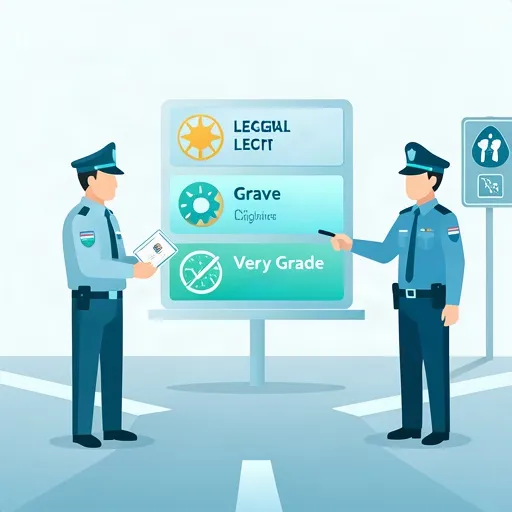
The most common infractions are classified as contraordenações. These administrative violations are categorized into three levels of increasing severity: light (leves), grave (graves), and very grave (muito graves). While light offenses typically involve only a monetary fine, grave and very grave infractions carry accessory sanctions, which often include the temporary inhibition of driving, the loss of points from your license, and, in some cases, the mandatory attendance of road safety training.
A regulatory administrative offense that violates the rules of the Highway Code or related transport legislation. It is processed by the National Authority for Road Safety (ANSR) and is punishable by a fine and, depending on the severity, accessory sanctions such as driving bans.
While most traffic rule violations are handled administratively, certain behaviors are so dangerous that they transcend the contraordenação category and are legally classified as crimes under the Portuguese Penal Code. These criminal offenses involve a much higher degree of recklessness or disregard for human life and safety.
Driving a vehicle under the influence of alcohol with a blood alcohol concentration (TAS) of 1.2 g/l or higher, driving while legally disqualified, or being involved in a hit-and-run accident are classic examples of criminal conduct. Unlike administrative fines, criminal offenses may result in a permanent criminal record, significant fines based on your daily income, and prison sentences. Understanding this distinction is a frequent topic in IMT exam questions, where you may be asked to identify whether a specific scenario constitutes a crime or a grave administrative offense.
| Offense Category | Primary Penalty | Potential Accessory Sanction |
|---|---|---|
| Light Infraction | Monetary Fine | None |
| Grave Infraction | Fine | License suspension, point deduction |
| Very Grave Infraction | Fine | Long-term license suspension, point deduction |
| Criminal Offense | Fine / Prison | License revocation, criminal record |
The theory exam often tests your ability to apply these classifications to real-world situations. For example, a learner must know that the severity of an act like speeding is determined by the location (within or outside of a locality) and the extent to which the legal limit was exceeded. A moderate speeding violation might be grave, but as the speed increases, it quickly escalates to muito grave.
Furthermore, the system of "points" on your driving license is directly tied to this classification. Every time you commit a grave or very grave offense, points are deducted from your balance. If you reach zero points, your license is cassated, requiring you to undergo the entire licensing process from the beginning.
Remember that driving while legally inhibited (under a suspension) is not merely a traffic fine; it is a crime that can lead to severe legal repercussions, including imprisonment and a much longer period of disqualification.
To avoid these penalties, you must remain vigilant regarding your behavior on the road. Whether it involves stop signs, pedestrian crossings, or priority rules at roundabouts, the law is designed to create a predictable and safe environment. When you encounter a police checkpoint, being able to identify the implications of your driving choices demonstrates the maturity and technical knowledge required of a licensed driver in Portugal.
The Portuguese Highway Code classifies traffic offenses into administrative violations (contraordenações) with three severity levels and criminal offenses with the harshest penalties. Administrative fines range from simple monetary penalties for light infractions to license suspension and point deduction for grave and muito grave offenses. Criminal offenses require a higher degree of recklessness and can result in imprisonment, permanent criminal records, and license revocation. The points system ties directly to offense severity—when points reach zero, the license is cassated and the driver must begin licensing again. Understanding whether an offense is administrative or criminal is a frequent exam topic, and context (location, degree of violation, endangerment) determines classification.
A short set of high-value points that capture the most important ideas from this article.
Traffic offenses in Portugal are split into administrative violations (contraordenações) and criminal offenses under the Penal Code
Contraordenações are categorized into three severity levels: light (leves), grave (graves), and very grave (muito graves)
Criminal road behavior requires a high degree of recklessness or disregard for safety, such as TAS 1.2 g/l+, driving while disqualified, or hit-and-run incidents
Grave and very grave infractions carry accessory sanctions including license suspension, point deduction, and mandatory safety training
Point exhaustion (cassação) means losing your license entirely and having to restart the licensing process from scratch
The three administrative levels are: leve, grave, and muito grave—each with escalating penalties
A TAS of 1.2 g/l or higher transforms a traffic offense into a criminal act
Criminal offenses can result in a permanent criminal record, income-based fines, and prison sentences
The points system only applies to grave and muito grave contraordenações—not light infractions
Driving while under suspension is itself a crime, not just a traffic fine
Confusing light infractions with grave ones—the points system only applies to grave and muito grave offenses
Assuming all driving offenses are administrative fines—certain behaviors like high BAC or disqualification are criminal
Forgetting that the context (inside/outside locality, extent of excess) affects whether speeding is grave or muito grave
Not realizing that license cassação is triggered by point exhaustion and requires restarting the entire licensing process
Overlooking that driving while legally inhibited is a crime with imprisonment consequences, not just an additional fine
Article content overview
A short set of high-value points that capture the most important ideas from this article.
Traffic offenses in Portugal are split into administrative violations (contraordenações) and criminal offenses under the Penal Code
Contraordenações are categorized into three severity levels: light (leves), grave (graves), and very grave (muito graves)
Criminal road behavior requires a high degree of recklessness or disregard for safety, such as TAS 1.2 g/l+, driving while disqualified, or hit-and-run incidents
Grave and very grave infractions carry accessory sanctions including license suspension, point deduction, and mandatory safety training
Point exhaustion (cassação) means losing your license entirely and having to restart the licensing process from scratch
The three administrative levels are: leve, grave, and muito grave—each with escalating penalties
A TAS of 1.2 g/l or higher transforms a traffic offense into a criminal act
Criminal offenses can result in a permanent criminal record, income-based fines, and prison sentences
The points system only applies to grave and muito grave contraordenações—not light infractions
Driving while under suspension is itself a crime, not just a traffic fine
Confusing light infractions with grave ones—the points system only applies to grave and muito grave offenses
Assuming all driving offenses are administrative fines—certain behaviors like high BAC or disqualification are criminal
Forgetting that the context (inside/outside locality, extent of excess) affects whether speeding is grave or muito grave
Not realizing that license cassação is triggered by point exhaustion and requires restarting the entire licensing process
Overlooking that driving while legally inhibited is a crime with imprisonment consequences, not just an additional fine
Explore related topics, search based questions, and concepts that learners often look up when studying Portugal Traffic Penalty Guide. These themes reflect real search intent and help you understand how this topic connects to wider driving theory knowledge in Portugal.
Find clear and practical answers to common questions learners often have about Portugal Traffic Penalty Guide. This section helps explain difficult points, remove confusion, and reinforce the key driving theory concepts that matter for learners in Portugal.
An administrative offense (contraordenação) involves a violation of the Highway Code punished by fines and administrative sanctions. A criminal offense involves more dangerous or illicit acts that fall under criminal law, potentially leading to prison sentences and a criminal record.
They are classified into three levels of severity: light (leves), grave (graves), and very grave (muito graves), based on the risk created and the specific rules violated.
Very grave offenses typically result in significant fines, a mandatory license point deduction, and an accessory sanction such as a temporary inhibition from driving.
Yes, repeated offenses or specific very grave violations can lead to the loss of points, which may eventually result in the revocation or cancellation of your driving license.
If you haven't found what you're looking for, use our powerful article search to explore related topics, refine your understanding of Portuguese road rules, or discover new insights for your IMT driving exam preparation. Continue building your knowledge effectively.