
Encountering slow-moving agricultural vehicles, such as tractors, on rural roads is a common scenario in Türkiye. This article provides essential knowledge on how to safely approach, overtake, and interact with these vehicles, including understanding 'kırsal yol' conditions and specific rules for 'traktör' encounters. Mastering these skills is key for passing your Turkish driving theory exam and ensuring road safety.
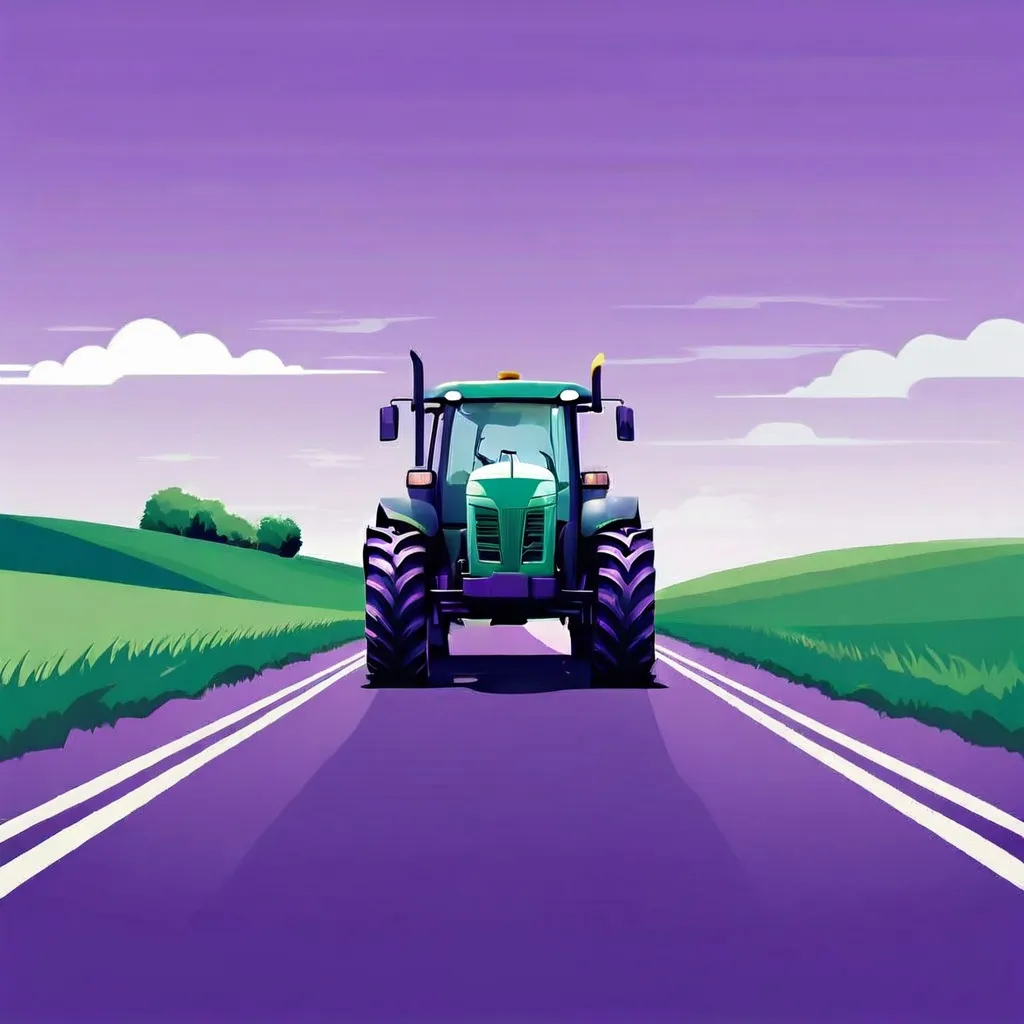
Article content overview
Driving on the diverse roads of Türkiye, particularly the kırsal yol (rural roads), often presents unique challenges that differ significantly from urban environments. Among these, encountering slow-moving agricultural vehicles, most notably tractors (traktör), is a common occurrence. Understanding how to safely approach, interact with, and overtake these vehicles is not just a matter of courtesy but a critical aspect of road safety and a vital component of the Turkish driving theory exam, the ehliyet sınavı. This article delves into the specific considerations for driving around agricultural vehicles, ensuring you are well-prepared for the practicalities of rural driving and the theoretical knowledge required for your ehliyet.
Agricultural vehicles, particularly tractors, are fundamental to Türkiye's extensive agricultural sector. Their presence on public roads, especially in rural areas, is unavoidable. These vehicles are typically characterized by their slow speed, wide turning radius, and often, the presence of attached equipment that can further restrict visibility or extend beyond their physical dimensions. Unlike passenger cars or faster-moving commercial vehicles, tractors operate at significantly lower speeds, often below 25-30 km/h, making them a considerable impediment to traffic flow for faster vehicles. Awareness of these characteristics is the first step toward safe interaction, a concept frequently tested in the MTSK e-sınav.
The F and G vehicle categories in Türkiye's driving license system are specifically designed to cover agricultural tractors and construction machinery, respectively. While drivers of these specialized vehicles have their own set of responsibilities, the onus of ensuring safety when encountering them often falls on the drivers of faster, more conventional vehicles. Drivers must anticipate their presence and be prepared to adjust their driving style accordingly, demonstrating hazard awareness crucial for passing the ehliyet sınavı.
Remember that agricultural vehicles often utilize rural roads as the primary means of transport between fields or farms. It is essential to anticipate their presence, especially during planting and harvesting seasons, and to maintain a patient and defensive driving approach at all times.
When approaching an agricultural vehicle on a kırsal yol, the primary rule is patience and caution. Instead of becoming frustrated, drivers should recognize that these vehicles are operating within their designed parameters and often have no alternative route. Aggressive driving, such as tailgating or attempting to rush the tractor, can create dangerous situations. The search results emphasize that the correct response is to "be patient and wait for a safe opportunity to pass." This means maintaining a safe following distance, allowing the tractor ample space, and refraining from any actions that might startle the driver or create a feeling of being pressured.
The wide nature of tractors and their potential to swerve slightly to navigate uneven road surfaces or avoid obstacles means that drivers should maintain a considerable distance. This buffer zone provides essential reaction time should the tractor brake suddenly or make an unexpected maneuver. Furthermore, visibility can be severely limited on rural roads due to the terrain, narrowness, or presence of farm entrances and exits, exacerbating the risks associated with impatient driving.
Overtaking an agricultural vehicle on a kırsal yol requires careful assessment of the road ahead and surrounding conditions. It is generally advisable to overtake only when there is a clear, unobstructed view of the road for a considerable distance, and when you are certain that there are no oncoming vehicles. The general principle of overtaking, which involves ensuring that you have sufficient space and time to complete the maneuver safely, is amplified when dealing with slower, larger vehicles.
The safe passing distance when overtaking a slow-moving vehicle like a tractor on a rural road in Turkey involves ensuring that your vehicle can safely accelerate past the slower vehicle, complete the maneuver, and return to your lane without impeding oncoming traffic or forcing the overtaken vehicle to take evasive action. This distance is significantly greater than when overtaking a faster vehicle due to the slower speed and potentially wider profile of the agricultural vehicle.
One must consider the tractor's turning radius and potential to move towards the center of the road to make wider turns or avoid road edges. Therefore, drivers should not attempt to overtake on bends or blind corners. The common error highlighted in the provided materials is attempting to overtake without adequate vision or space. The correct approach involves slowing down behind the tractor, observing the road ahead for a safe overtaking opportunity, and only proceeding when confident that the maneuver can be completed without risk.
Rural roads, or kırsal yol, are home to a variety of specific hazards, particularly when agricultural activity is prevalent. The presence of mud, gravel, or debris being tracked onto the road from fields can significantly reduce tire grip and increase stopping distances. Drivers should be particularly vigilant for these conditions, as they can be present even on dry days. Reduced visibility is another major concern, stemming from the winding nature of many rural roads, dense vegetation, or even dust kicked up by agricultural machinery.
Night driving on rural roads adds another layer of complexity. Reduced lighting, coupled with the limited effectiveness of headlights in illuminating far distances on winding roads, makes it even more challenging to spot slow-moving vehicles or hazards like animals that might stray onto the road. In such conditions, it is imperative to reduce speed significantly and increase the distance between your vehicle and any vehicle ahead.
The Turkish driving theory exam, including the MTSK e-sınav, places considerable emphasis on hazard perception and safe driving practices in various conditions. Questions related to rural road driving and interactions with agricultural vehicles are designed to assess a candidate's understanding of these specific risks. Learners are expected to know the appropriate responses when encountering slow-moving vehicles, the importance of maintaining safe distances, and the rules governing overtaking.
A common trap in the driving theory exam involves questions about overtaking on rural roads. Always prioritize safety over speed. If there is any doubt about whether it is safe to overtake a tractor or other slow-moving agricultural vehicle, the correct answer will always involve waiting for a clear and safe opportunity. Do not be tempted by options that suggest risky maneuvers.
The curriculum covers topics such as understanding the physics of vehicle handling on different surfaces, recognizing road signs that indicate potential hazards or speed restrictions, and applying principles of defensive driving. For categories like F (agricultural vehicles) and G (construction vehicles), specialized knowledge might be tested, but the core principles of safe interaction with these vehicles apply to all drivers. Understanding concepts like kırsal yol driving conditions and traktör safety protocols is essential for a passing grade.
By internalizing these principles of safe rural road navigation, especially concerning agricultural vehicles, you will not only significantly improve your safety on Turkish roads but also build a strong foundation for successfully passing your ehliyet sınavı. Remember that diligent study of traffic rules, hazard awareness, and practical application of safe driving techniques are the keys to becoming a responsible and competent driver in Türkiye.
This article addresses the critical skill of navigating Turkish rural roads (kırsal yol) where agricultural vehicles like tractors are common. It emphasizes patience and defensive driving when encountering slow-moving vehicles, with specific guidance on maintaining safe following and passing distances. Key hazards covered include reduced visibility on winding roads, debris from fields, and the extended dimensions of tractors with attached equipment. The content directly supports ehliyet sınavı preparation by highlighting exam-relevant concepts including F and G vehicle categories, specific road signs, and the principle that safety always takes priority over speed when overtaking agricultural vehicles.
A short set of high-value points that capture the most important ideas from this article.
Agricultural tractors operate at significantly lower speeds (25-30 km/h) and are integral to rural transport in Türkiye
Maintain a patient, defensive driving approach and avoid tailgating or pressuring slow-moving vehicles
Only overtake agricultural vehicles when there is clear visibility, sufficient distance, and no oncoming traffic
Rural roads present specific hazards including mud, gravel, debris from fields, and winding terrain with limited visibility
Understanding F and G vehicle categories is essential for safe interaction with agricultural and construction vehicles on Turkish roads
Tractors have wide turning radii and may swing toward the road center when making turns, requiring extra passing space
Never attempt to overtake on bends, blind corners, or when visibility is limited
Maintain a greater following distance than usual due to limited tractor visibility and potential sudden maneuvers
Agricultural vehicle encounters increase significantly during planting and harvesting seasons
Speed Limit 50 (B19) is a common restriction on rural roads; No Overtaking (C5) signs are frequently encountered
Tailgating or displaying aggressive behavior toward slow-moving agricultural vehicles
Attempting to overtake without first assessing road conditions and ensuring adequate space
Failing to reduce speed in low-visibility conditions such as night driving on winding rural roads
Not anticipating that tractors may swerve slightly to avoid road edges or obstacles
Assuming overtaking is safe simply because the vehicle ahead appears to be moving slowly
Article content overview
A short set of high-value points that capture the most important ideas from this article.
Agricultural tractors operate at significantly lower speeds (25-30 km/h) and are integral to rural transport in Türkiye
Maintain a patient, defensive driving approach and avoid tailgating or pressuring slow-moving vehicles
Only overtake agricultural vehicles when there is clear visibility, sufficient distance, and no oncoming traffic
Rural roads present specific hazards including mud, gravel, debris from fields, and winding terrain with limited visibility
Understanding F and G vehicle categories is essential for safe interaction with agricultural and construction vehicles on Turkish roads
Tractors have wide turning radii and may swing toward the road center when making turns, requiring extra passing space
Never attempt to overtake on bends, blind corners, or when visibility is limited
Maintain a greater following distance than usual due to limited tractor visibility and potential sudden maneuvers
Agricultural vehicle encounters increase significantly during planting and harvesting seasons
Speed Limit 50 (B19) is a common restriction on rural roads; No Overtaking (C5) signs are frequently encountered
Tailgating or displaying aggressive behavior toward slow-moving agricultural vehicles
Attempting to overtake without first assessing road conditions and ensuring adequate space
Failing to reduce speed in low-visibility conditions such as night driving on winding rural roads
Not anticipating that tractors may swerve slightly to avoid road edges or obstacles
Assuming overtaking is safe simply because the vehicle ahead appears to be moving slowly
Explore related topics, search based questions, and concepts that learners often look up when studying Agricultural Vehicles on Turkish Rural Roads. These themes reflect real search intent and help you understand how this topic connects to wider driving theory knowledge in Turkey.
Find clear and practical answers to common questions learners often have about Agricultural Vehicles on Turkish Rural Roads. This section helps explain difficult points, remove confusion, and reinforce the key driving theory concepts that matter for learners in Turkey.
The main challenges include their slow speed, wide turning radius, potential for unpredictable movements, and reduced visibility on narrow or winding 'kırsal yols'.
Drivers must exercise patience, maintain a safe distance, avoid overtaking on blind corners or crests, and only overtake when it is safe and legal, ensuring sufficient visibility and space.
Understanding these specific rural driving conditions and rules is crucial for demonstrating hazard awareness and knowledge of traffic conventions, which are tested in the 'ehliyet sınavı' (driving license exam).
Yes, F category vehicles (like tractors) and G category vehicles (like work machines) have specific regulations, and drivers must be aware of their operational characteristics and potential road hazards they pose.
You should remain patient, maintain a safe distance, and wait for a clear opportunity to pass safely. Do not honk aggressively or attempt risky maneuvers.
After finding the specific Turkish driving theory articles you need, dive deeper into related topics or challenge your knowledge with practice questions. Enhance your understanding of trafik işaretleri, road rules, and vehicle safety to ensure you are fully prepared for the official ehliyet sınavı.