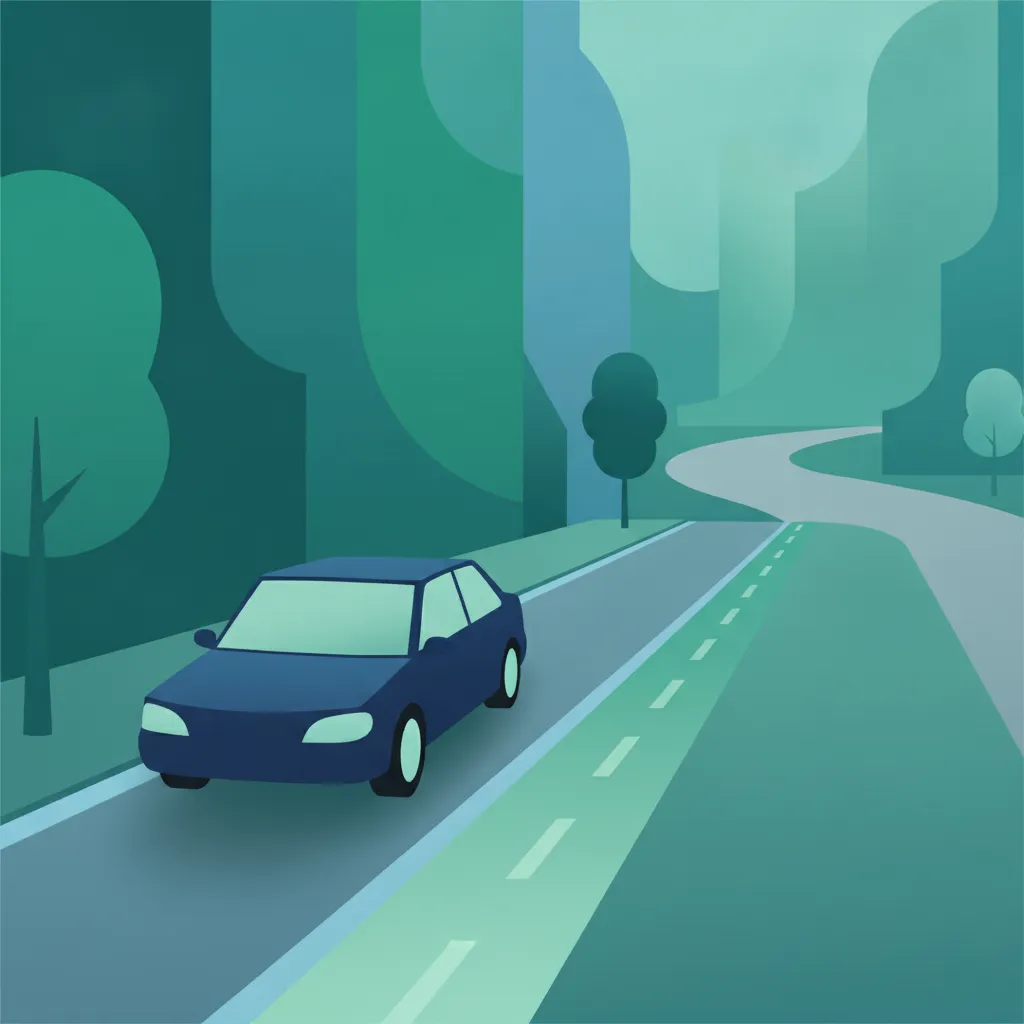
Safe parking is more than just stopping your car; it's about positioning your vehicle in a way that doesn't create dangers or inconvenience for anyone else on the road or pavement. This section outlines the principles of selecting safe parking spots, observing your environment, and ensuring your vehicle contributes to, rather than detracts from, overall road safety in Turkish traffic conditions.
Theory topic content overview
Read the full theory topic guide for Parking Safety with structured, easy-to-scan content built for learners in Turkey. This detailed section explains the exact rule, meaning, traffic context, comparison points, and exam logic behind this Turkish driving theory topic so you can study faster, understand the concept more clearly, and avoid common interpretation mistakes on the theory test.
Safe parking is more than simply bringing your vehicle to a stop and switching off the engine. It is a fundamental driving practice that involves intentionally positioning your vehicle in a way that prevents hazards for yourself and all other road users, including pedestrians, cyclists, and other drivers. In essence, it's about ensuring your stationary vehicle contributes to, rather than detracts from, overall road safety and smooth traffic flow.
For Turkish driving theory (ehliyet sınavı) and practical driving in Türkiye, understanding safe parking principles means:
The urban and rural landscapes of Türkiye often present unique challenges for parking. Busy streets, narrow roads, high pedestrian traffic, and varied infrastructure mean that improper parking can quickly escalate into dangerous situations.
Mastering safe parking involves a series of observations and decisions, not just the physical act of maneuvering the vehicle.
The first step is identifying a spot that is both legal and safe.
Constant awareness is key, especially in dynamic Turkish urban environments.
Once you've chosen your spot, precise positioning is vital.
Your responsibility doesn't end when the engine is off.
A critical concept for the Turkish driving license theory is that legal parking does not always equate to safe parking. While you must always abide by ehliyet park kuralları, some situations, though not explicitly forbidden, can still be dangerous.
Learners often underestimate the chain reaction a single poorly parked vehicle can cause.
You are looking for a spot on a bustling street alongside a weekly market. You find a space that seems legally available, but it's very close to a bend where many pedestrians are crossing.
You need to quickly stop near a school during peak hours. You see a small gap directly in front of the school gate.
You need to park on a narrow residential street where two cars can barely pass each other.
Many learner drivers and even some experienced drivers make these errors:
For the Turkish Driving License Theory and for responsible driving in Türkiye, view parking not as the end of your journey, but as an ongoing contribution to road safety. Before and during every parking decision, ask yourself:
"Will my parked vehicle cause any inconvenience or potential danger to anyone else?"
If the answer is yes, reconsider your spot. By consistently applying these safe parking practices, you not only pass your ehliyet sınavı but also become a safer, more considerate driver, actively preventing hazards for all road users in Türkiye's diverse traffic environments.
Safe parking in Turkish traffic requires choosing a legal spot that also prevents hazards for pedestrians, cyclists, and other drivers. The content explains that legal parking and safe parking are not always the same - drivers must assess whether their vehicle will obstruct views at intersections, block pedestrian crossings, or impede emergency access, even when not explicitly forbidden. Key principles include checking traffic signs, positioning close to the curb, using proper securing methods on slopes, and continuing to observe surroundings after parking. Common mistakes include the 'it's only for a minute' mindset, ignoring vulnerable road users, and assuming empty space equals safe space. For the ehliyet sınavı, focus on scenarios where you must identify whether a parked vehicle creates danger regardless of its legality.
A short set of high-value points that capture the most important ideas from this theory explanation.
Safe parking means positioning your vehicle to actively prevent hazards for all road users, not just stopping the engine
Always read traffic signs and road markings before choosing a parking spot to ensure compliance with Turkish regulations
Legal parking does not always equal safe parking - you must use judgment beyond what the law explicitly permits
Position your vehicle as close to the curb as safely possible (typically within 50 cm) to maximize road space for moving traffic
Your responsibility continues after parking: check mirrors and blind spots before opening any doors to protect cyclists and pedestrians
Yellow curb markings and blue parking signs indicate specific regulations; always check for trafik işaretleri (traffic signs) before parking
On slopes, leave the vehicle in gear (first uphill, reverse downhill) and turn wheels toward the curb when facing uphill
Engage the handbrake firmly every time you park, regardless of the surface or duration
Never park within stopping distance of intersections, pedestrian crossings (yaya geçidi), school crossings (okul geçidi), or bus stops
Never block access to fire hydrants, hospital entrances, or emergency vehicle routes, even briefly
Assuming short-term parking in an unsafe spot is acceptable because you plan to move quickly
Focusing only on other vehicles while ignoring pedestrians and cyclists who are more vulnerable
Parking too far from the curb, which narrows the road and forces other drivers to swerve
Not checking blind spots before opening doors, risking 'dooring' accidents with cyclists
Believing that if no 'No Parking' sign is visible, the spot is automatically safe to use
Start with a short, direct summary of Parking Safety before reading the full explanation below.
Safe parking involves choosing a location that ensures your vehicle does not obstruct traffic flow, endanger pedestrians or cyclists, or reduce visibility for other drivers. It requires careful observation of the surroundings before and during the parking maneuver, proper vehicle positioning, and awareness of potential hazards for all road users, adhering to Turkish traffic regulations.
Review the most important terms, rule signals, and traffic concepts linked to Parking Safety.
Explore related theory topic pages connected to Parking Safety and continue with the next useful rule explanation.
See the common search queries learners use when trying to understand Parking Safety in Turkey.

Dive deeper into specific Turkish driving theory topics like traffic signs, first aid, or vehicle mechanics. Each section offers clear explanations to enhance your understanding of official traffic legislation and prepare you effectively for every aspect of your upcoming ehliyet exam in Türkiye.
Explore Turkish Driving Theory TopicsTheory topic content overview
A short set of high-value points that capture the most important ideas from this theory explanation.
Safe parking means positioning your vehicle to actively prevent hazards for all road users, not just stopping the engine
Always read traffic signs and road markings before choosing a parking spot to ensure compliance with Turkish regulations
Legal parking does not always equal safe parking - you must use judgment beyond what the law explicitly permits
Position your vehicle as close to the curb as safely possible (typically within 50 cm) to maximize road space for moving traffic
Your responsibility continues after parking: check mirrors and blind spots before opening any doors to protect cyclists and pedestrians
Yellow curb markings and blue parking signs indicate specific regulations; always check for trafik işaretleri (traffic signs) before parking
On slopes, leave the vehicle in gear (first uphill, reverse downhill) and turn wheels toward the curb when facing uphill
Engage the handbrake firmly every time you park, regardless of the surface or duration
Never park within stopping distance of intersections, pedestrian crossings (yaya geçidi), school crossings (okul geçidi), or bus stops
Never block access to fire hydrants, hospital entrances, or emergency vehicle routes, even briefly
Assuming short-term parking in an unsafe spot is acceptable because you plan to move quickly
Focusing only on other vehicles while ignoring pedestrians and cyclists who are more vulnerable
Parking too far from the curb, which narrows the road and forces other drivers to swerve
Not checking blind spots before opening doors, risking 'dooring' accidents with cyclists
Believing that if no 'No Parking' sign is visible, the spot is automatically safe to use
Start with a short, direct summary of Parking Safety before reading the full explanation below.
Safe parking involves choosing a location that ensures your vehicle does not obstruct traffic flow, endanger pedestrians or cyclists, or reduce visibility for other drivers. It requires careful observation of the surroundings before and during the parking maneuver, proper vehicle positioning, and awareness of potential hazards for all road users, adhering to Turkish traffic regulations.
Review the most important terms, rule signals, and traffic concepts linked to Parking Safety.
Explore related theory topic pages connected to Parking Safety and continue with the next useful rule explanation.
See the common search queries learners use when trying to understand Parking Safety in Turkey.
Dive deeper into specific Turkish driving theory topics like traffic signs, first aid, or vehicle mechanics. Each section offers clear explanations to enhance your understanding of official traffic legislation and prepare you effectively for every aspect of your upcoming ehliyet exam in Türkiye.
Explore Turkish Driving Theory TopicsUse this exam-focused revision tip to understand how Parking Safety is likely to appear in theory questions for learners in Turkey. This section helps you identify the most testable part of the rule, avoid common traps, and remember the concept more effectively during Turkish driving theory exam preparation.
Pay close attention to exam questions that present scenarios of parked vehicles. Always consider whether the parked vehicle obstructs traffic signs, blocks views at intersections, or forces pedestrians or cyclists into a dangerous situation. Think about the 'domino effect' of poor parking on other road users.
Read direct answers to the most common learner questions about Parking Safety in Turkey. This FAQ focuses on rule confusion, practical meaning, comparison with similar concepts, and the exact uncertainties that appear most often in Turkish driving theory revision and exam preparation.
Safe parking involves positioning your vehicle so it doesn't obstruct traffic, block visibility, or endanger pedestrians and cyclists. It means choosing legal and appropriate spots, checking your surroundings, and ensuring your car is securely stopped.
In Türkiye, avoid parking too close to intersections, pedestrian crossings, bus stops, fire hydrants, or driveways. Also, do not park where your vehicle would obstruct traffic signs, block emergency vehicle access, or force pedestrians into the roadway.
Improper parking can create hazards by reducing visibility for drivers, blocking lanes and forcing traffic to swerve, obstructing pedestrian pathways, or causing cyclists to maneuver into traffic lanes, increasing the risk of accidents.
Always check your mirrors and blind spots carefully for approaching vehicles, cyclists, or pedestrians before opening your door. This is particularly important on busy streets in Türkiye to prevent collisions and injuries.
The Turkish driving theory exam (ehliyet sınavı) frequently includes questions about identifying safe versus unsafe parking scenarios, understanding rules related to parking restrictions, and recognizing hazards caused by improper vehicle placement.
Yes, when parking on a slope, you should turn your wheels towards the curb if facing downhill, or away from the curb if facing uphill. Always engage the handbrake firmly to prevent the vehicle from rolling.
Signaling your intention to park early allows other drivers to anticipate your actions and adjust their speed and position, preventing sudden braking or confusion, especially in congested Turkish urban areas.
Use our comprehensive practice search to find exactly the Turkish driving theory questions you need to master. Whether reviewing specific road signs, traffic rules, or first aid scenarios, select your perfect practice set and boost your confidence for the official ehliyet sınavı.