
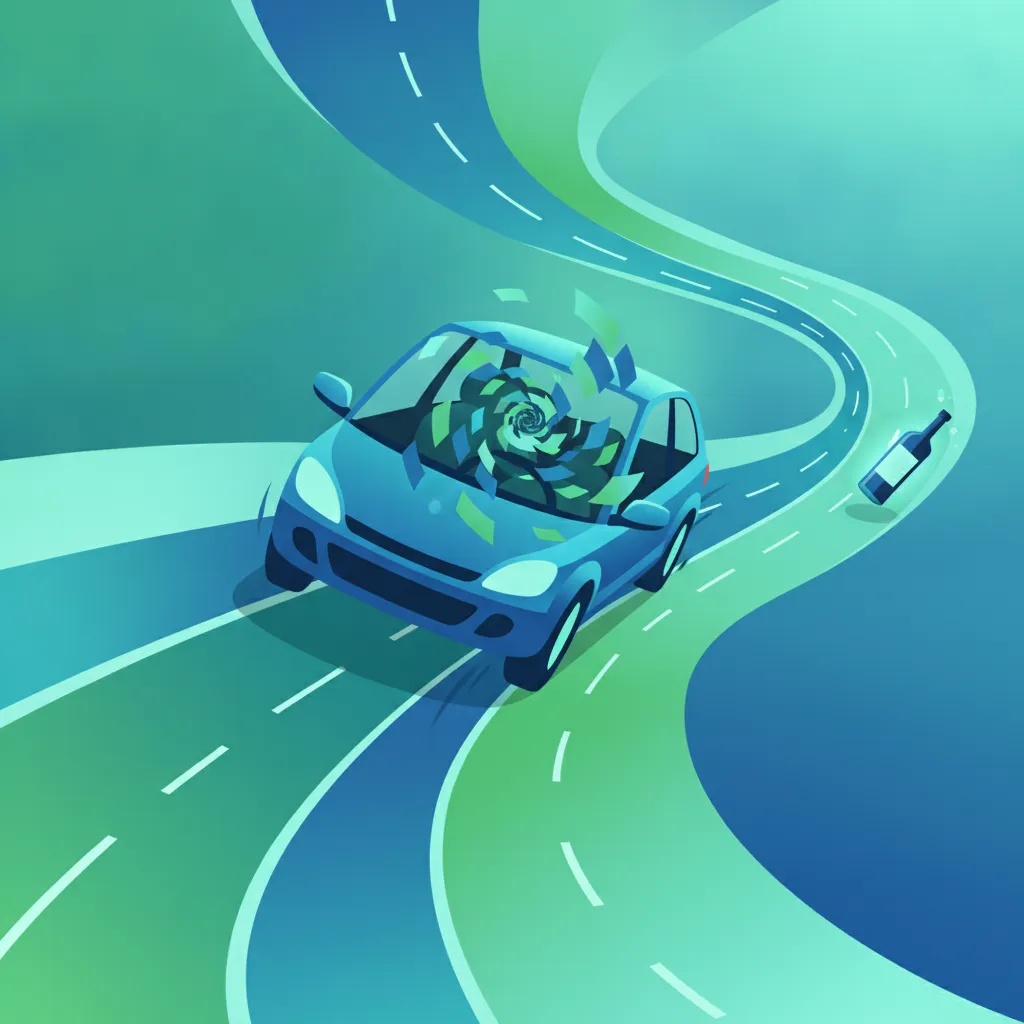
Alcohol consumption has profound effects on the human body, directly impairing the crucial skills needed for safe driving. Even small amounts can compromise your judgment, coordination, reaction time, and ability to concentrate. This section explains these impairments, highlighting why combining alcohol with driving is extremely risky and illegal.
Theory topic content overview
Read the full theory topic guide for Alcohol Effects on Driving with structured, easy-to-scan content built for learners in Turkey. This detailed section explains the exact rule, meaning, traffic context, comparison points, and exam logic behind this Turkish driving theory topic so you can study faster, understand the concept more clearly, and avoid common interpretation mistakes on the theory test.
Alcohol consumption profoundly impacts the human body, acting as a powerful central nervous system depressant. For drivers, this means a significant reduction in the critical cognitive and physical abilities required for safe vehicle operation. In the context of driving in Türkiye, understanding alcohol and driving impairment is not just about adhering to strict laws, but about grasping the fundamental safety principles that prevent catastrophic accidents.
Driving after consuming alcohol doesn't just make you "a bit slower"; it fundamentally alters your brain's ability to process information, make sound judgments, coordinate movements, and accurately perceive your surroundings. Even small amounts can lead to dangerous impairment.
Driving under the influence (DUI) of alcohol is consistently identified as one of the leading causes of fatal and serious road accidents globally, and Türkiye is no exception. For anyone preparing for their ehliyet sınavı (driving license exam) in Turkey, this topic is paramount for several reasons:
trafik güvenliği (traffic safety) in Türkiye.Türk Trafik Kanunu) imposes very strict regulations and severe penalties for drunk driving in Turkey, including heavy fines, license suspension, and even imprisonment, reflecting the zero-tolerance approach to this dangerous behavior.ehliyet sınavı frequently tests a learner's understanding of how alcohol specifically impairs driving abilities, often presenting scenarios that require knowledge of its physiological effects.Alcohol does not affect just one aspect of driving; it creates a cascade of impairments that individually and collectively diminish a driver's competence. These effects begin almost immediately after consumption and intensify with increased intake:
Alcohol directly delays the brain's ability to process information and respond to unexpected events. This means:
Refleks (Reflexes): Crucial for split-second decisions in dynamic traffic conditions in Turkey.One of the most dangerous effects is alcohol's impact on a driver's decision-making and perception of risk:
Operating a vehicle requires precise control over steering, braking, and acceleration. Alcohol impairs these vital motor skills:
trafik.Clear vision and accurate perception of the road environment are fundamental to safe driving:
Driving demands sustained focus and the ability to multitask. Alcohol makes this challenging:
Several factors can amplify the degree of impairment experienced by a driver:
Turkish traffic laws, like those in many countries, set specific legal limits for blood alcohol content (BAC). However, it is crucial for ehliyet learners in Turkey to understand that:
This distinction is vital. Simply staying under the legal limit does not guarantee you are fit to drive, and it certainly doesn't absolve you of the responsibility to drive safely.
Consider these common traffic situations where alcohol impairment can have severe consequences:
otoyol).kavşak (intersection) collision.Learners and even experienced drivers often make dangerous assumptions about alcohol and driving:
In Turkey, the prevention of driving under the influence is a cornerstone of trafik güvenliği policies. The ehliyet sınavı questions reflect this commitment by testing a candidate's thorough understanding of alcohol's physiological effects and the reasons behind strict prohibitions. The message is clear: the safety of all road users is paramount, and any compromise to a driver's abilities due to alcohol is unacceptable. Türk Trafik Kanunu emphasizes the severe cezalar (penalties) not just to punish, but to deter drivers from this high-risk behavior.
The most critical takeaway for every driver in Türkiye is simple: if you plan to drink any alcohol, do not drive. Conversely, if you plan to drive, do not consume any alcohol. There is no safe amount, no quick fix, and no acceptable excuse for driving under the influence. Prioritize your safety and the safety of others by making the responsible choice to always drive sober. This commitment is a fundamental requirement for anyone holding or seeking an ehliyet in Turkey.
Alcohol impairs driving by acting as a central nervous system depressant that slows reaction time, distorts judgment, reduces coordination, compromises vision, and decreases concentration—all critical skills for safe vehicle operation. Turkish traffic law (Türk Trafik Kanunu) imposes severe penalties for drunk driving and emphasizes that no amount of alcohol is safe before driving, as legal limits are prosecution thresholds rather than safety guidelines. The ehliyet sınavı frequently tests knowledge of these specific physiological impairments rather than general awareness. The fundamental principle for all drivers in Turkey is straightforward: if you drink, don't drive; if you drive, don't drink—only time can reduce blood alcohol concentration.
A short set of high-value points that capture the most important ideas from this theory explanation.
Alcohol is a central nervous system depressant that simultaneously impairs multiple driving-critical abilities including reaction time, judgment, coordination, vision, and concentration
Even small amounts of alcohol can significantly increase accident risk by delaying hazard recognition and slowing physical responses to emergencies
Alcohol distorts risk perception, often causing overconfidence and underestimation of danger rather than simply making drivers feel tired
The only way to reduce blood alcohol concentration is time; coffee, cold showers, and food do not sober you up
Turkish traffic law takes a zero-tolerance approach: any alcohol impairs driving ability regardless of whether it exceeds legal limits
Reaction time slows immediately after alcohol consumption, affecting the ability to brake, swerve, or respond to traffic signals
Judgment impairment includes overconfidence, underestimating speeds and distances, and increased risk-taking behavior
Coordination loss makes it difficult to maintain lane position, steer smoothly, or execute precise maneuvers like parking
Factors that amplify impairment include lower body weight, empty stomach, fatigue, illness, and certain medications
Legal BAC limits are prosecution thresholds, not safe consumption guidelines—the safest approach is zero alcohol when driving
Believing that 'just one drink' won't cause meaningful impairment, especially for novice drivers with less experience
Relying on myths like coffee, cold showers, or eating food to quickly reverse alcohol's effects before driving
Assuming that being below the legal BAC limit means you are fit to drive safely
Failing to plan alternative transportation in advance when alcohol consumption is anticipated
Ignoring personal warning signs of impairment such as dizziness, drowsiness, or difficulty concentrating as minor issues
Start with a short, direct summary of Alcohol Effects on Driving before reading the full explanation below.
Alcohol significantly impairs a driver's ability to safely operate a vehicle by slowing down the central nervous system. This leads to reduced reaction time, poor judgment, decreased coordination, and impaired perception, all of which dramatically increase the risk of road accidents. Turkish traffic laws impose severe penalties for driving under the influence to protect road safety.
Review the most important terms, rule signals, and traffic concepts linked to Alcohol Effects on Driving.
Explore related theory topic pages connected to Alcohol Effects on Driving and continue with the next useful rule explanation.
See the common search queries learners use when trying to understand Alcohol Effects on Driving in Turkey.

Dive deeper into specific Turkish driving theory topics like traffic signs, first aid, or vehicle mechanics. Each section offers clear explanations to enhance your understanding of official traffic legislation and prepare you effectively for every aspect of your upcoming ehliyet exam in Türkiye.
Explore Turkish Driving Theory TopicsTheory topic content overview
A short set of high-value points that capture the most important ideas from this theory explanation.
Alcohol is a central nervous system depressant that simultaneously impairs multiple driving-critical abilities including reaction time, judgment, coordination, vision, and concentration
Even small amounts of alcohol can significantly increase accident risk by delaying hazard recognition and slowing physical responses to emergencies
Alcohol distorts risk perception, often causing overconfidence and underestimation of danger rather than simply making drivers feel tired
The only way to reduce blood alcohol concentration is time; coffee, cold showers, and food do not sober you up
Turkish traffic law takes a zero-tolerance approach: any alcohol impairs driving ability regardless of whether it exceeds legal limits
Reaction time slows immediately after alcohol consumption, affecting the ability to brake, swerve, or respond to traffic signals
Judgment impairment includes overconfidence, underestimating speeds and distances, and increased risk-taking behavior
Coordination loss makes it difficult to maintain lane position, steer smoothly, or execute precise maneuvers like parking
Factors that amplify impairment include lower body weight, empty stomach, fatigue, illness, and certain medications
Legal BAC limits are prosecution thresholds, not safe consumption guidelines—the safest approach is zero alcohol when driving
Believing that 'just one drink' won't cause meaningful impairment, especially for novice drivers with less experience
Relying on myths like coffee, cold showers, or eating food to quickly reverse alcohol's effects before driving
Assuming that being below the legal BAC limit means you are fit to drive safely
Failing to plan alternative transportation in advance when alcohol consumption is anticipated
Ignoring personal warning signs of impairment such as dizziness, drowsiness, or difficulty concentrating as minor issues
Start with a short, direct summary of Alcohol Effects on Driving before reading the full explanation below.
Alcohol significantly impairs a driver's ability to safely operate a vehicle by slowing down the central nervous system. This leads to reduced reaction time, poor judgment, decreased coordination, and impaired perception, all of which dramatically increase the risk of road accidents. Turkish traffic laws impose severe penalties for driving under the influence to protect road safety.
Review the most important terms, rule signals, and traffic concepts linked to Alcohol Effects on Driving.
Explore related theory topic pages connected to Alcohol Effects on Driving and continue with the next useful rule explanation.
See the common search queries learners use when trying to understand Alcohol Effects on Driving in Turkey.
Dive deeper into specific Turkish driving theory topics like traffic signs, first aid, or vehicle mechanics. Each section offers clear explanations to enhance your understanding of official traffic legislation and prepare you effectively for every aspect of your upcoming ehliyet exam in Türkiye.
Explore Turkish Driving Theory TopicsUse this exam-focused revision tip to understand how Alcohol Effects on Driving is likely to appear in theory questions for learners in Turkey. This section helps you identify the most testable part of the rule, avoid common traps, and remember the concept more effectively during Turkish driving theory exam preparation.
For your ehliyet sınavı, focus on understanding the *specific* ways alcohol impairs driving – not just that it's bad, but *how*. Remember it slows reaction time, distorts judgment, and reduces coordination. Questions often target these precise effects, so avoid vague answers.
Read direct answers to the most common learner questions about Alcohol Effects on Driving in Turkey. This FAQ focuses on rule confusion, practical meaning, comparison with similar concepts, and the exact uncertainties that appear most often in Turkish driving theory revision and exam preparation.
Alcohol slows down the central nervous system, delaying the brain's ability to process information. This directly translates to a slower reaction time, making it harder to respond quickly to sudden hazards like braking cars or pedestrians.
Alcohol significantly impairs judgment, coordination, reaction time, perception, and concentration. These impairments make it difficult to maintain lane position, control steering, assess distances, and make safe decisions.
Alcohol reduces inhibitions and distorts risk perception. Drivers under the influence may overestimate their abilities, underestimate dangers, and make impulsive or aggressive decisions that increase crash risk.
No. While there may be legal limits, even small amounts of alcohol can impair driving ability. For absolute safety and compliance with Turkish law, it is best to have zero alcohol before driving.
Alcohol can reduce peripheral vision, depth perception, and the ability to track moving objects. This makes it harder to monitor traffic, see road signs, and react to events outside the immediate field of view.
Turkish driving theory exams strongly emphasize the dangers of alcohol and driving, testing knowledge on its specific impairing effects and the importance of never driving under the influence. It's a key topic for road safety.
Beyond immediate accidents, drunk driving can lead to severe legal penalties including heavy fines, license suspension, imprisonment, and a criminal record, significantly impacting one's life and future.
No, alcohol's effects can vary based on factors like body weight, gender, metabolism, and how much food has been consumed. However, it will impair everyone to some degree, making driving unsafe.
Always arrange for a designated sober driver, use public transportation, call a taxi or ride-sharing service, or plan to stay overnight. Never risk driving after consuming alcohol.
Use our comprehensive practice search to find exactly the Turkish driving theory questions you need to master. Whether reviewing specific road signs, traffic rules, or first aid scenarios, select your perfect practice set and boost your confidence for the official ehliyet sınavı.