
Pedestrian priority defines specific situations where drivers are legally required to yield to people on foot. This section clarifies when and where pedestrians have the right-of-way in Turkish traffic, including designated crossings and various intersection scenarios. Paying close attention to these rules ensures driver compliance, minimizes risks to pedestrians, and is essential for safe driving practices and success in your ehliyet sınavı.
Theory topic content overview
Read the full theory topic guide for Pedestrian Priority with structured, easy-to-scan content built for learners in Turkey. This detailed section explains the exact rule, meaning, traffic context, comparison points, and exam logic behind this Turkish driving theory topic so you can study faster, understand the concept more clearly, and avoid common interpretation mistakes on the theory test.
Understanding pedestrian priority is fundamental for safe driving in Türkiye and a critical component of the ehliyet sınavı (Turkish driving theory exam). Pedestrian priority dictates specific situations where drivers are legally required to yield the right-of-way to people on foot, prioritizing their safety as vulnerable road users.
Pedestrian priority refers to the legal obligation of drivers to allow pedestrians to cross the road safely, often by slowing down, stopping, or waiting. In Türkiye, this principle is deeply embedded in traffic laws to protect pedestrians and reduce the risk of accidents. It's not about pedestrians always having the right to cross whenever they wish, but about drivers understanding and respecting established rules at designated points and in specific traffic scenarios.
The core idea is that drivers operate powerful vehicles capable of causing serious harm. Therefore, they bear a greater responsibility to anticipate and react to pedestrian movements, especially where pedestrians are expected or legally permitted to cross.
Misunderstanding or neglecting pedestrian priority is a leading cause of traffic accidents involving pedestrians, often resulting in severe injuries or fatalities. For drivers in Türkiye, recognizing and correctly applying these rules is vital for several reasons:
ehliyet.MTSK e-sınav) frequently tests knowledge of pedestrian priority rules through scenario-based questions. Correctly answering these questions is essential for passing your ehliyet exam.Pedestrians have priority in several distinct situations under Turkish traffic law. Drivers must learn to identify these scenarios and respond appropriately.
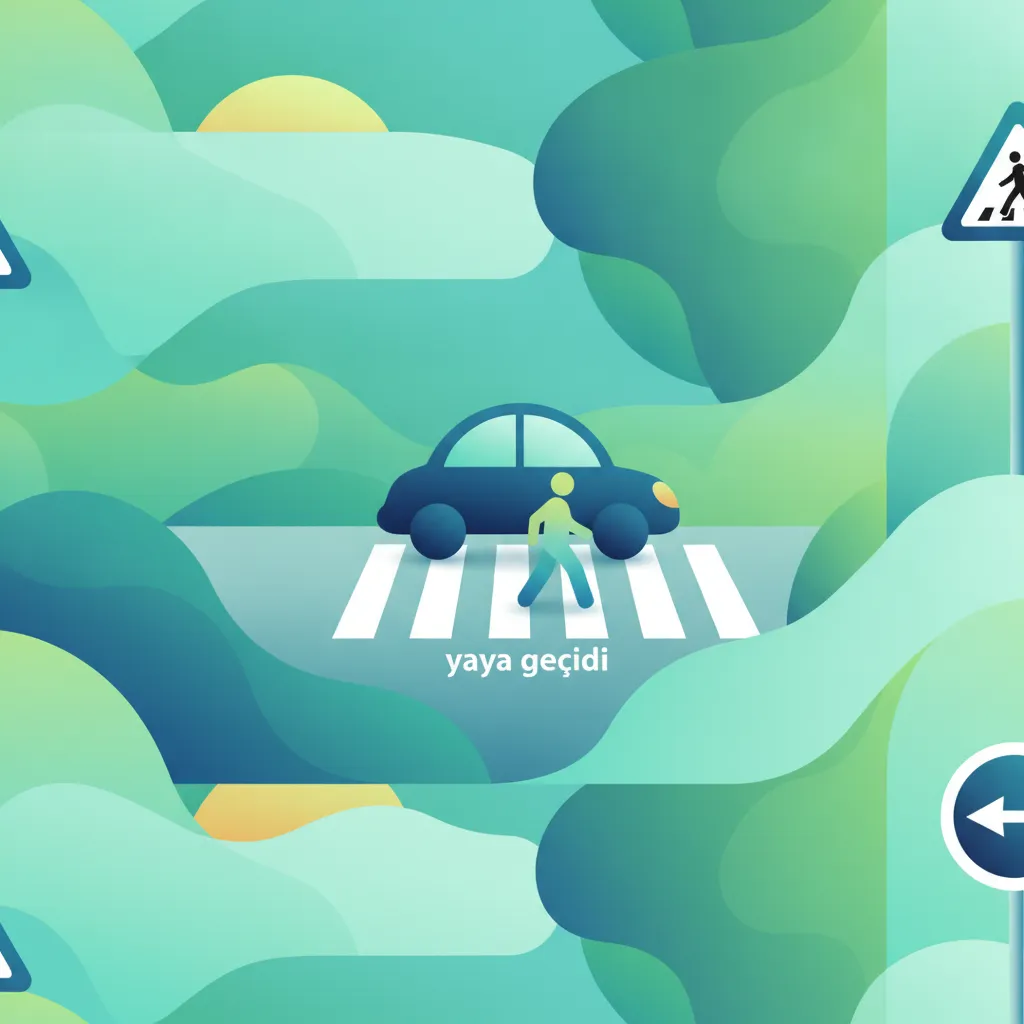
Yaya Geçidi)The most common and clearest instance of pedestrian priority is at a yaya geçidi, typically marked by white "zebra" stripes on the road.
yaya geçidi and be prepared to stop. If a pedestrian is on the crossing, or clearly intending to cross (e.g., waiting at the curb and looking to cross), drivers must stop and allow them to pass safely.yaya geçidi, vehicles in adjacent lanes traveling in the same direction must also stop. Never overtake a vehicle that has stopped at a pedestrian crossing.At some major intersections in Türkiye, pedestrian crossings are controlled by traffic lights.
This is a critical area for ehliyet sınavı candidates. In Türkiye, when a vehicle is turning at an intersection (left or right) and a pedestrian is crossing or intending to cross the road you are entering, the pedestrian generally has priority.
yaya geçidi is explicitly marked, if you are turning and a pedestrian is already crossing the road you are turning into, or clearly about to step onto it, you must yield. This applies even if there is no specific pedestrian crossing line.While not formal priority, drivers exiting a driveway or private road onto a public road must always yield to pedestrians (and cyclists) on the sidewalk or path they are crossing.
Yaya Geçidi) vs. Sidewalk: Pedestrians have priority at designated crossings and when legally crossing the road. They do not have automatic priority to step onto the road from a sidewalk at any random point. However, drivers always have a general duty of care to avoid pedestrians wherever they are.yaya geçidi or when turning, you must stop if a pedestrian is present. Yielding generally means slowing down and being prepared to stop. For pedestrians, it often means a full stop is required.Yaya Geçidi in an Urban Area: You are driving in Istanbul and see a yaya geçidi ahead. A person is standing on the curb, looking left and right, clearly preparing to cross. You must slow down and stop before the crossing line, allowing them to cross safely.yaya geçidi stripes are visible in that specific turning path.yaya geçidi, the high presence of children means you must significantly reduce your speed, be highly vigilant, and be prepared to stop for unexpected pedestrian movements. While not strict priority, driver caution is paramount.Yaya Geçidi: Never overtake a vehicle that has stopped at a pedestrian crossing, as it is likely stopped to allow pedestrians to cross, and your view of them will be obstructed.Always adopt a defensive driving mindset regarding pedestrians. In Türkiye, vulnerable road users like pedestrians are given significant legal protection. As a driver, your responsibility is to:
Pedestrian priority in Turkish traffic establishes specific legal obligations for drivers to protect vulnerable road users. The most critical rule is at yaya geçidi crossings, where drivers must stop for any pedestrian on or clearly intending to cross. Equally important for the ehliyet sınavı is understanding that turning vehicles must yield to pedestrians crossing the road being entered, regardless of marking presence. Drivers must also respect pedestrian signals at controlled intersections and never overtake vehicles stopped at crossings. A defensive driving mindset—anticipating, observing, and yielding—forms the practical foundation for both exam success and road safety in Türkiye.
A short set of high-value points that capture the most important ideas from this theory explanation.
Pedestrians have priority at designated yaya geçidi crossings and drivers must stop when pedestrians are on or clearly intending to cross
Turning vehicles must yield to pedestrians crossing the road being entered, even without explicit crossing markings
A driver's green light does not override pedestrian priority, especially when turning at intersections
Vehicles in adjacent lanes must also stop when a vehicle has stopped at a pedestrian crossing to allow someone to cross
Drivers exiting driveways or private roads must yield to pedestrians on sidewalks or paths they are crossing
Yaya geçidi rules require a full stop when pedestrians are present or intending to cross, not just slowing down
Pedestrian green signals mean pedestrians have priority even if vehicles also have green
Never overtake a vehicle stopped at a pedestrian crossing as it is likely yielding for pedestrians you cannot yet see
Pedestrians do not have automatic priority to cross from sidewalks at random points, only at designated crossings or when legally crossing
Driver duty of care exists toward pedestrians wherever they are on the road, not only at marked crossings
Assuming pedestrians will always wait for vehicles to pass, particularly at unmarked crossing points
Failing to check blind spots for pedestrians when turning, as they may be hidden from view
Believing a green traffic light for vehicles grants unconditional priority over all pedestrians
Overtaking another vehicle that has stopped at a yaya geçidi, obstructing the view of crossing pedestrians
Underestimating that turning vehicles almost always must yield to pedestrians crossing the turn path without explicit markings
Start with a short, direct summary of Pedestrian Priority before reading the full explanation below.
In Türkiye, pedestrian priority means drivers must stop or slow down to allow pedestrians to cross the road safely, especially at marked pedestrian crossings (yaya geçidi) and when turning at intersections. These rules prioritize vulnerable road users to prevent serious accidents. Always be prepared to yield to pedestrians who are crossing or clearly intending to cross, as failing to do so is a common cause of traffic incidents and exam errors.
Review the most important terms, rule signals, and traffic concepts linked to Pedestrian Priority.
Explore related theory topic pages connected to Pedestrian Priority and continue with the next useful rule explanation.
See the common search queries learners use when trying to understand Pedestrian Priority in Turkey.

Dive deeper into specific Turkish driving theory topics like traffic signs, first aid, or vehicle mechanics. Each section offers clear explanations to enhance your understanding of official traffic legislation and prepare you effectively for every aspect of your upcoming ehliyet exam in Türkiye.
Explore Turkish Driving Theory TopicsTheory topic content overview
A short set of high-value points that capture the most important ideas from this theory explanation.
Pedestrians have priority at designated yaya geçidi crossings and drivers must stop when pedestrians are on or clearly intending to cross
Turning vehicles must yield to pedestrians crossing the road being entered, even without explicit crossing markings
A driver's green light does not override pedestrian priority, especially when turning at intersections
Vehicles in adjacent lanes must also stop when a vehicle has stopped at a pedestrian crossing to allow someone to cross
Drivers exiting driveways or private roads must yield to pedestrians on sidewalks or paths they are crossing
Yaya geçidi rules require a full stop when pedestrians are present or intending to cross, not just slowing down
Pedestrian green signals mean pedestrians have priority even if vehicles also have green
Never overtake a vehicle stopped at a pedestrian crossing as it is likely yielding for pedestrians you cannot yet see
Pedestrians do not have automatic priority to cross from sidewalks at random points, only at designated crossings or when legally crossing
Driver duty of care exists toward pedestrians wherever they are on the road, not only at marked crossings
Assuming pedestrians will always wait for vehicles to pass, particularly at unmarked crossing points
Failing to check blind spots for pedestrians when turning, as they may be hidden from view
Believing a green traffic light for vehicles grants unconditional priority over all pedestrians
Overtaking another vehicle that has stopped at a yaya geçidi, obstructing the view of crossing pedestrians
Underestimating that turning vehicles almost always must yield to pedestrians crossing the turn path without explicit markings
Start with a short, direct summary of Pedestrian Priority before reading the full explanation below.
In Türkiye, pedestrian priority means drivers must stop or slow down to allow pedestrians to cross the road safely, especially at marked pedestrian crossings (yaya geçidi) and when turning at intersections. These rules prioritize vulnerable road users to prevent serious accidents. Always be prepared to yield to pedestrians who are crossing or clearly intending to cross, as failing to do so is a common cause of traffic incidents and exam errors.
Review the most important terms, rule signals, and traffic concepts linked to Pedestrian Priority.
Explore related theory topic pages connected to Pedestrian Priority and continue with the next useful rule explanation.
See the common search queries learners use when trying to understand Pedestrian Priority in Turkey.
Dive deeper into specific Turkish driving theory topics like traffic signs, first aid, or vehicle mechanics. Each section offers clear explanations to enhance your understanding of official traffic legislation and prepare you effectively for every aspect of your upcoming ehliyet exam in Türkiye.
Explore Turkish Driving Theory TopicsUse this exam-focused revision tip to understand how Pedestrian Priority is likely to appear in theory questions for learners in Turkey. This section helps you identify the most testable part of the rule, avoid common traps, and remember the concept more effectively during Turkish driving theory exam preparation.
A common mistake in the ehliyet sınavı is underestimating pedestrian priority when turning. Remember that a turning vehicle must almost always yield to pedestrians already crossing the road you are entering, even if there isn't a specific pedestrian crossing marked right there. Always check your surroundings thoroughly and anticipate pedestrian movements.
Read direct answers to the most common learner questions about Pedestrian Priority in Turkey. This FAQ focuses on rule confusion, practical meaning, comparison with similar concepts, and the exact uncertainties that appear most often in Turkish driving theory revision and exam preparation.
A "yaya geçidi" is a marked pedestrian crossing, often with white stripes (zebra crossing). In Türkiye, drivers must always yield to pedestrians who are on or about to step onto a yaya geçidi.
Not always. Pedestrians typically have priority at intersections when crossing the road a vehicle is turning into, or if specific traffic signals or markings indicate so. Drivers must still exercise caution.
Drivers in Türkiye are responsible for observing pedestrian priority rules, slowing down, being prepared to stop, and ensuring the safety of all pedestrians, especially vulnerable ones, at all times.
Failing to yield to a pedestrian at a designated crossing is a traffic violation in Türkiye, carrying penalties and potentially leading to serious accidents. It is also a common fault in driving theory tests.
Yes, drivers should be extra cautious in school zones, residential areas, and busy urban centers in Türkiye, where pedestrian activity is high, even if no formal priority rules apply at every point.
At a marked crossing (yaya geçidi), pedestrians have clear priority over all approaching vehicles. For turning vehicles, pedestrians crossing the road you are turning into generally have priority, even if no specific crossing is marked.
Use our comprehensive practice search to find exactly the Turkish driving theory questions you need to master. Whether reviewing specific road signs, traffic rules, or first aid scenarios, select your perfect practice set and boost your confidence for the official ehliyet sınavı.