
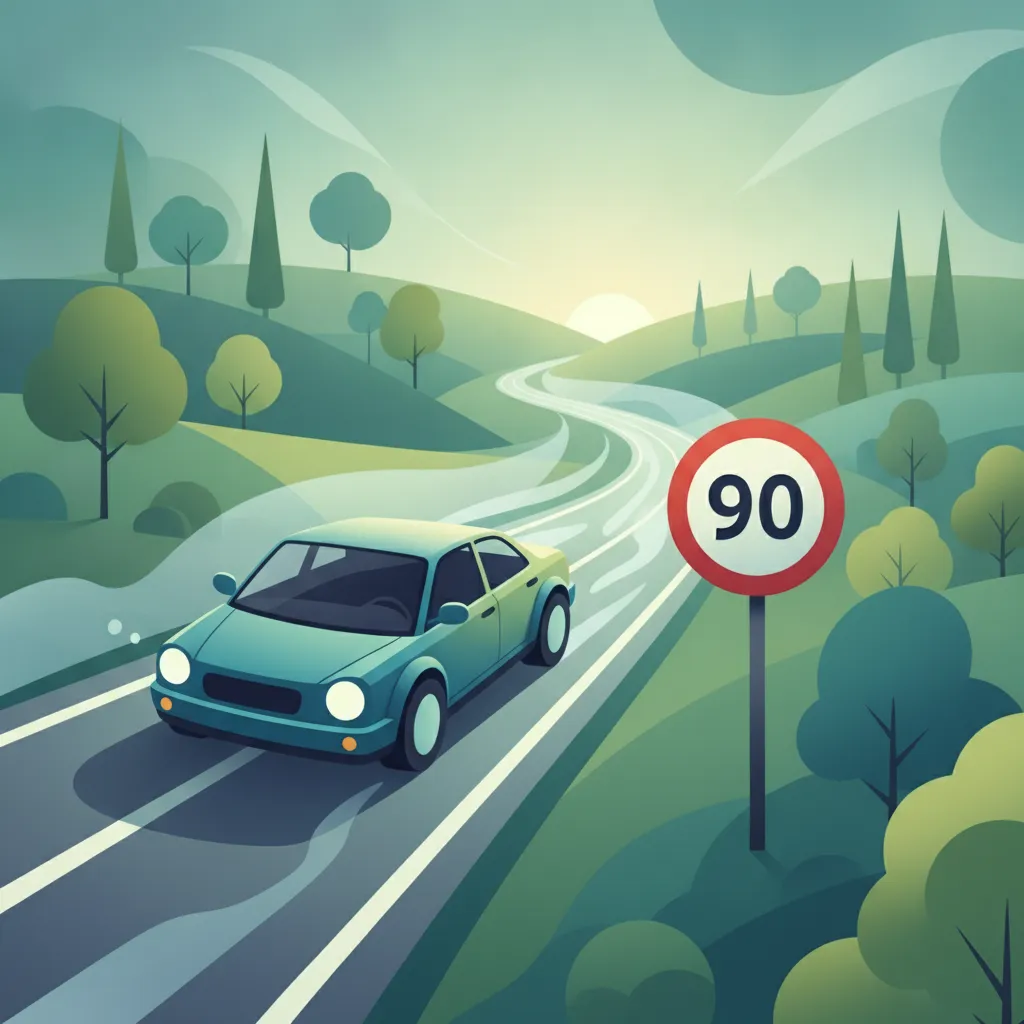
Speed limits are legally enforced maximum speeds set for different road environments across Türkiye, designed to ensure safety and manage traffic flow. While these limits indicate the fastest you are allowed to drive, they do not always represent the safest or most appropriate speed. Drivers must constantly evaluate road conditions, traffic density, and weather, and adjust their speed accordingly to prevent accidents and maintain control.
Theory topic content overview
Read the full theory topic guide for Speed Limits with structured, easy-to-scan content built for learners in Turkey. This detailed section explains the exact rule, meaning, traffic context, comparison points, and exam logic behind this Turkish driving theory topic so you can study faster, understand the concept more clearly, and avoid common interpretation mistakes on the theory test.
Speed limits are fundamental traffic regulations in Türkiye, establishing the maximum legal speed at which vehicles are permitted to travel on specific roads or within designated areas. These limits are not arbitrary; they are meticulously set by authorities to enhance road safety, manage traffic flow, and reduce the severity of accidents across the country. For every driver preparing for the ehliyet sınavı and navigating Turkish roads, a deep understanding of these limits—and the principles behind them—is absolutely essential.
One of the most vital concepts in Turkish driving theory regarding speed is the difference between the maximum legal speed limit and the appropriate safe speed for current conditions. While speed limit signs indicate the fastest you are legally allowed to drive, this figure is rarely a recommendation for all circumstances.
Failing to distinguish between these two can lead to dangerous situations and is a common pitfall for ehliyet sınavı candidates. Always prioritize the safe speed over the legal maximum.
Speed limits play a critical role in road safety and traffic management throughout Türkiye:
Even when driving below the posted maximum, a responsible driver in Türkiye must constantly adjust their speed based on a variety of dynamic factors. These include:
görüş mesafesi).Turkish law defines different speed limits for various road types, typically indicated by trafik işaretleri (traffic signs). While specific numbers can vary for certain vehicle types or specially designated zones, the general principles are:
Always look for hız limit levhaları (speed limit signs) and comply with any variable message signs (VMS) that might display temporary limits due to congestion or roadworks.
Speed has a dramatic, non-linear effect on both stopping distance and the time available to react. This is a critical concept for the ehliyet sınavı:
Understanding the physics of kinetik enerji (kinetic energy) and its relation to speed explains why even a small increase in speed can have a large impact on safety.
Learners and even experienced drivers in Türkiye often make several mistakes when it comes to speed:
hız limit levhası (speed limit sign) when entering a new zone, such as moving from a motorway into an urban area.Always remember that speed limits are there to protect everyone on the road. For your ehliyet sınavı and for safe driving in Türkiye, internalize this principle: the speed limit is the maximum legal ceiling, but your actual driving speed must always be dictated by the prevailing road, traffic, and weather conditions. Drive at a speed that allows you to remain in full control of your vehicle, anticipate hazards, and stop safely within the distance you can see clearly ahead. This proactive approach to hız kontrolü (speed control) is the cornerstone of responsible driving.
Speed limits in Türkiye represent the maximum legal speed permitted on specific roads, but drivers must always adjust their actual speed based on current conditions such as weather, road surface, visibility, and traffic density. The physics of stopping distance means that higher speeds dramatically increase both reaction and braking distances, requiring more space to stop safely. Turkish authorities set these limits considering accident prevention, collision severity reduction, and protection of vulnerable road users. A key distinction for the ehliyet sınavı is understanding that the speed limit is not a recommendation—it is the legal maximum, and safe driving requires going slower when conditions demand it. Responsible drivers prioritize being able to stop within their visible stopping distance over maintaining the posted maximum speed.
A short set of high-value points that capture the most important ideas from this theory explanation.
Speed limit signs show the absolute maximum legal speed, not a recommended speed for all conditions
Safe driving speed is always dictated by current road, weather, and traffic conditions, which may require going below the posted limit
Doubling your speed roughly quadruples your braking distance due to kinetic energy principles
Speed limits protect all road users including pedestrians, cyclists, and other vulnerable participants
Drivers must stop safely within their visible distance (görüş mesafesi) at all times
The speed limit is a legal ceiling; the appropriate safe speed is often lower, especially in adverse conditions
Wet, icy, or poor road surfaces drastically reduce tyre grip and require significant speed reduction
Fog, heavy rain, and snow reduce visibility and your speed must allow stopping within what you can see ahead
Reaction distance plus braking distance equals total stopping distance, which increases non-linearly with speed
Speed limit signs (hız limit levhaları) change when entering different zones such as urban areas or motorways
Treating the posted speed limit as a target speed rather than a maximum ceiling, regardless of conditions
Failing to reduce speed when encountering rain, fog, heavy traffic, or sharp bends
Not noticing speed limit sign changes when transitioning between road types or zones
Underestimating how dramatically speed affects stopping distance, especially in poor conditions
Following too closely behind other vehicles at high speed, leaving insufficient reaction space
Start with a short, direct summary of Speed Limits before reading the full explanation below.
Speed limits are the maximum legal speeds for specific roads or areas in Türkiye, put in place to enhance safety and traffic efficiency. Drivers must always adhere to these limits, but also understand that the posted limit is not a recommendation for all conditions. It is your responsibility to reduce speed further when faced with poor weather, heavy traffic, or road hazards, ensuring you can stop safely and react to unforeseen events.
Review the most important terms, rule signals, and traffic concepts linked to Speed Limits.
Explore related theory topic pages connected to Speed Limits and continue with the next useful rule explanation.
See the common search queries learners use when trying to understand Speed Limits in Turkey.

Dive deeper into specific Turkish driving theory topics like traffic signs, first aid, or vehicle mechanics. Each section offers clear explanations to enhance your understanding of official traffic legislation and prepare you effectively for every aspect of your upcoming ehliyet exam in Türkiye.
Explore Turkish Driving Theory TopicsTheory topic content overview
A short set of high-value points that capture the most important ideas from this theory explanation.
Speed limit signs show the absolute maximum legal speed, not a recommended speed for all conditions
Safe driving speed is always dictated by current road, weather, and traffic conditions, which may require going below the posted limit
Doubling your speed roughly quadruples your braking distance due to kinetic energy principles
Speed limits protect all road users including pedestrians, cyclists, and other vulnerable participants
Drivers must stop safely within their visible distance (görüş mesafesi) at all times
The speed limit is a legal ceiling; the appropriate safe speed is often lower, especially in adverse conditions
Wet, icy, or poor road surfaces drastically reduce tyre grip and require significant speed reduction
Fog, heavy rain, and snow reduce visibility and your speed must allow stopping within what you can see ahead
Reaction distance plus braking distance equals total stopping distance, which increases non-linearly with speed
Speed limit signs (hız limit levhaları) change when entering different zones such as urban areas or motorways
Treating the posted speed limit as a target speed rather than a maximum ceiling, regardless of conditions
Failing to reduce speed when encountering rain, fog, heavy traffic, or sharp bends
Not noticing speed limit sign changes when transitioning between road types or zones
Underestimating how dramatically speed affects stopping distance, especially in poor conditions
Following too closely behind other vehicles at high speed, leaving insufficient reaction space
Start with a short, direct summary of Speed Limits before reading the full explanation below.
Speed limits are the maximum legal speeds for specific roads or areas in Türkiye, put in place to enhance safety and traffic efficiency. Drivers must always adhere to these limits, but also understand that the posted limit is not a recommendation for all conditions. It is your responsibility to reduce speed further when faced with poor weather, heavy traffic, or road hazards, ensuring you can stop safely and react to unforeseen events.
Review the most important terms, rule signals, and traffic concepts linked to Speed Limits.
Explore related theory topic pages connected to Speed Limits and continue with the next useful rule explanation.
See the common search queries learners use when trying to understand Speed Limits in Turkey.
Dive deeper into specific Turkish driving theory topics like traffic signs, first aid, or vehicle mechanics. Each section offers clear explanations to enhance your understanding of official traffic legislation and prepare you effectively for every aspect of your upcoming ehliyet exam in Türkiye.
Explore Turkish Driving Theory TopicsUse this exam-focused revision tip to understand how Speed Limits is likely to appear in theory questions for learners in Turkey. This section helps you identify the most testable part of the rule, avoid common traps, and remember the concept more effectively during Turkish driving theory exam preparation.
A common mistake in the ehliyet sınavı is confusing the maximum legal speed with the appropriate safe speed. Remember: the speed limit is the absolute maximum, but you must always drive at a speed that is safe for the current conditions. Prioritize safety over the posted limit, especially in adverse situations.
Read direct answers to the most common learner questions about Speed Limits in Turkey. This FAQ focuses on rule confusion, practical meaning, comparison with similar concepts, and the exact uncertainties that appear most often in Turkish driving theory revision and exam preparation.
Speed limits in Turkish driving theory define the maximum legal speed a vehicle is allowed to travel on a specific road or within an area. These are critical for road safety and are frequently tested in the ehliyet sınavı.
Speed limits exist primarily for road safety, to reduce the risk and severity of accidents. They also help maintain predictable traffic flow and protect vulnerable road users like pedestrians and cyclists.
Yes, speed limits in Türkiye vary significantly depending on the type of road (e.g., residential, urban roads, intercity highways, motorways) and the vehicle type. It's crucial to pay attention to road signs for the specific limits.
No, the posted speed limit is the *maximum* legal speed, not always the *recommended* safe speed. Drivers must always adjust their speed below the limit if conditions like weather, visibility, traffic, or road surface make faster driving unsafe.
Increased driving speed significantly increases both reaction distance and braking distance, leading to a much longer overall stopping distance. This reduces the time available to react to hazards, making higher speeds more dangerous.
You should reduce your speed for poor visibility (fog, heavy rain, snow), slippery road surfaces (ice, wet roads), heavy traffic, approaching junctions, pedestrians, cyclists, children, or when driving a vehicle with a heavier load.
Yes, in Türkiye, different vehicle types (e.g., cars, motorcycles, buses, trucks, vehicles with trailers) often have varying speed limits, especially on intercity roads and motorways. Always know the limits applicable to your vehicle.
Use our comprehensive practice search to find exactly the Turkish driving theory questions you need to master. Whether reviewing specific road signs, traffic rules, or first aid scenarios, select your perfect practice set and boost your confidence for the official ehliyet sınavı.