
Understanding when and how to use your vehicle's lights is a fundamental aspect of safe driving in Türkiye. This page clarifies the rules for headlights, fog lights, and other illumination systems, explaining their purpose in various visibility conditions such as night, rain, or fog, and their importance for your ehliyet sınavı.
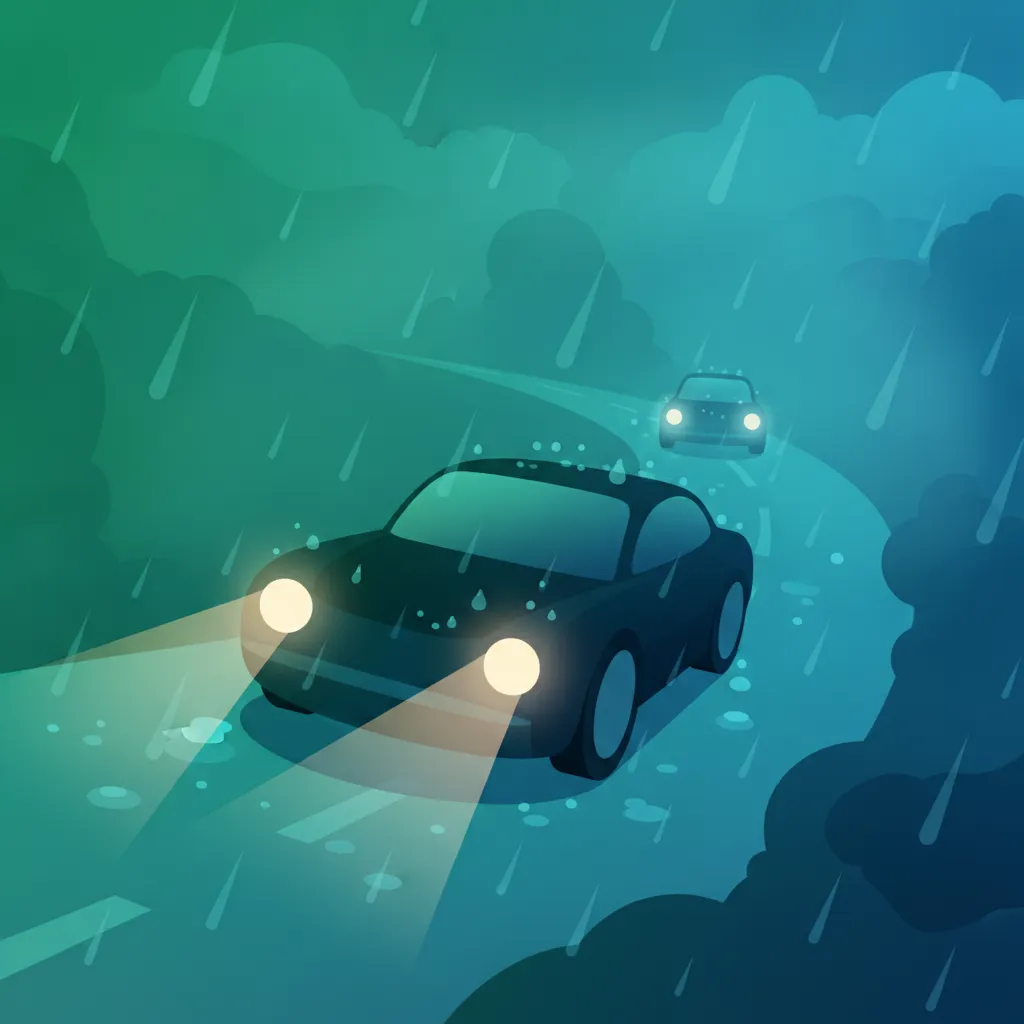
Theory topic content overview
Read the full theory topic guide for Headlight Rules Türkiye with structured, easy-to-scan content built for learners in Turkey. This detailed section explains the exact rule, meaning, traffic context, comparison points, and exam logic behind this Turkish driving theory topic so you can study faster, understand the concept more clearly, and avoid common interpretation mistakes on the theory test.
Vehicle lighting, especially the correct use of headlights, is fundamental to safe driving in Türkiye. It serves two crucial purposes: allowing you to see the road ahead and ensuring your vehicle is seen by other road users. Mastering these rules is not only vital for accident prevention but also a key requirement for your ehliyet sınavı.
This topic explains the different types of lights, when they must be used according to Turkish traffic regulations, and how to adapt your lighting to various visibility conditions, from clear nights to heavy fog.
The importance of using your vehicle's lights correctly cannot be overstated, particularly in Türkiye's diverse driving environments:
Modern vehicles are equipped with various lights, each designed for a specific purpose. Knowing when and how to use them is critical for safe driving in Türkiye.
These are your primary forward illumination lights.
Understanding the general rules is one thing; applying them to real-world Turkish driving scenarios is another.
Learners and even experienced drivers often make mistakes regarding vehicle lighting. Be aware of these common pitfalls:
The core principle behind all vehicle lighting rules in Türkiye is "See and Be Seen." Your proactive decision-making about which lights to use directly impacts your safety and the safety of everyone else on the road.
Always ask yourself:
If the answer to either question is "no," or "not optimally," then adjust your lighting. When in doubt, it's always safer to switch on your low beam headlights. This responsible approach is what the ehliyet sınavı expects and what safe driving in Türkiye demands.
Turkish vehicle lighting rules require low beam headlights whenever natural light is insufficient or visibility is reduced, including at night, in tunnels, and during poor weather. High beams are strictly for unlit rural roads and must be dipped for oncoming traffic or when following other vehicles. Fog lights are reserved for severely reduced visibility only and must never be used in clear conditions. Daytime running lights are not substitutes for low beams in poor visibility because they do not illuminate the road or activate rear lights. The core principle is See and Be Seen, meaning drivers must ensure both their ability to see hazards ahead and their visibility to other road users at all times, as mandated by Turkish traffic law for ehliyet sınavı success and road safety.
A short set of high-value points that capture the most important ideas from this theory explanation.
Low beam headlights are mandatory at night, in tunnels, during reduced visibility from rain/fog/snow, and at dusk/dawn even in urban areas
High beam headlights are reserved for unlit rural roads only and must be immediately dipped when approaching oncoming traffic or following another vehicle
Fog lights must only be activated when visibility drops below 50-100 meters due to severe fog, heavy rain, or heavy snow
Daytime running lights do not illuminate the road adequately and often leave your vehicle invisible from behind - switch to low beams when conditions worsen
The fundamental principle is See and Be Seen: if either your ability to see or others' ability to see you is compromised, adjust your lighting accordingly
Low beams illuminate approximately 25-45 meters; high beams extend visibility to 100+ meters but create dangerous glare for other drivers
Rear fog lights are significantly brighter than standard tail lights and are designed specifically to make your vehicle visible in extreme conditions only
Parking lights (Park Lambaları) are exclusively for parked vehicles at night on unlit roads, never for driving
DRLs do not activate rear lights, making the vehicle invisible from behind in poor visibility conditions
Turkish traffic law requires lights whenever natural light is insufficient to clearly see or be seen - err on the side of caution and switch on earlier
Forgetting to dip high beams when oncoming vehicles approach, which dazzles other drivers and causes serious accident risk
Activating rear fog lights in light rain, mist, or clear weather - this creates dangerous glare for drivers behind you
Assuming daytime running lights are sufficient in tunnels, heavy rain, or at night - DRLs do not replace low beam headlights
Not cleaning headlights, tail lights, or turn signals regularly, which significantly reduces their effectiveness especially after muddy or snowy conditions
Relying completely on automatic light systems without manually overriding when sudden fog or heavy rain reduces visibility faster than the system detects
Start with a short, direct summary of Headlight Rules Türkiye before reading the full explanation below.
In Türkiye, drivers must use appropriate vehicle lights, especially headlights, whenever natural light is insufficient or visibility is reduced due to weather like rain, fog, or snow. This includes driving at night, in tunnels, or during heavy precipitation. Proper lighting ensures you can see the road and that your vehicle is clearly visible to other road users, which is vital for preventing accidents and passing your driving theory exam.
Review the most important terms, rule signals, and traffic concepts linked to Headlight Rules Türkiye.
Explore related theory topic pages connected to Headlight Rules Türkiye and continue with the next useful rule explanation.
See the common search queries learners use when trying to understand Headlight Rules Türkiye in Turkey.

Dive deeper into specific Turkish driving theory topics like traffic signs, first aid, or vehicle mechanics. Each section offers clear explanations to enhance your understanding of official traffic legislation and prepare you effectively for every aspect of your upcoming ehliyet exam in Türkiye.
Explore Turkish Driving Theory TopicsTheory topic content overview
A short set of high-value points that capture the most important ideas from this theory explanation.
Low beam headlights are mandatory at night, in tunnels, during reduced visibility from rain/fog/snow, and at dusk/dawn even in urban areas
High beam headlights are reserved for unlit rural roads only and must be immediately dipped when approaching oncoming traffic or following another vehicle
Fog lights must only be activated when visibility drops below 50-100 meters due to severe fog, heavy rain, or heavy snow
Daytime running lights do not illuminate the road adequately and often leave your vehicle invisible from behind - switch to low beams when conditions worsen
The fundamental principle is See and Be Seen: if either your ability to see or others' ability to see you is compromised, adjust your lighting accordingly
Low beams illuminate approximately 25-45 meters; high beams extend visibility to 100+ meters but create dangerous glare for other drivers
Rear fog lights are significantly brighter than standard tail lights and are designed specifically to make your vehicle visible in extreme conditions only
Parking lights (Park Lambaları) are exclusively for parked vehicles at night on unlit roads, never for driving
DRLs do not activate rear lights, making the vehicle invisible from behind in poor visibility conditions
Turkish traffic law requires lights whenever natural light is insufficient to clearly see or be seen - err on the side of caution and switch on earlier
Forgetting to dip high beams when oncoming vehicles approach, which dazzles other drivers and causes serious accident risk
Activating rear fog lights in light rain, mist, or clear weather - this creates dangerous glare for drivers behind you
Assuming daytime running lights are sufficient in tunnels, heavy rain, or at night - DRLs do not replace low beam headlights
Not cleaning headlights, tail lights, or turn signals regularly, which significantly reduces their effectiveness especially after muddy or snowy conditions
Relying completely on automatic light systems without manually overriding when sudden fog or heavy rain reduces visibility faster than the system detects
Start with a short, direct summary of Headlight Rules Türkiye before reading the full explanation below.
In Türkiye, drivers must use appropriate vehicle lights, especially headlights, whenever natural light is insufficient or visibility is reduced due to weather like rain, fog, or snow. This includes driving at night, in tunnels, or during heavy precipitation. Proper lighting ensures you can see the road and that your vehicle is clearly visible to other road users, which is vital for preventing accidents and passing your driving theory exam.
Review the most important terms, rule signals, and traffic concepts linked to Headlight Rules Türkiye.
Explore related theory topic pages connected to Headlight Rules Türkiye and continue with the next useful rule explanation.
See the common search queries learners use when trying to understand Headlight Rules Türkiye in Turkey.
Dive deeper into specific Turkish driving theory topics like traffic signs, first aid, or vehicle mechanics. Each section offers clear explanations to enhance your understanding of official traffic legislation and prepare you effectively for every aspect of your upcoming ehliyet exam in Türkiye.
Explore Turkish Driving Theory TopicsUse this exam-focused revision tip to understand how Headlight Rules Türkiye is likely to appear in theory questions for learners in Turkey. This section helps you identify the most testable part of the rule, avoid common traps, and remember the concept more effectively during Turkish driving theory exam preparation.
Many ehliyet sınavı questions on headlights focus on *when* to use which light. Remember that high beams are for empty, unlit roads, and fog lights are for *severely* reduced visibility, especially the rear ones. Always prioritize not dazzling other drivers while ensuring you are visible according to Turkish traffic regulations.
Read direct answers to the most common learner questions about Headlight Rules Türkiye in Turkey. This FAQ focuses on rule confusion, practical meaning, comparison with similar concepts, and the exact uncertainties that appear most often in Turkish driving theory revision and exam preparation.
You must use your headlights from dusk till dawn, in tunnels, and whenever visibility is significantly reduced due to rain, fog, snow, or other atmospheric conditions, ensuring you can see and be seen effectively by other road users.
Low beam provides sufficient illumination without dazzling oncoming drivers or those ahead. High beam offers stronger, longer-range light for unlit roads with no other traffic, but must be switched off when other vehicles are present to avoid blinding them.
While not strictly mandatory in all foggy conditions, it is highly recommended to use front fog lights when visibility is severely reduced. Rear fog lights should only be used when visibility is less than 50 meters and switched off immediately once conditions improve to avoid dazzling following drivers.
No, daytime running lights are designed to make your vehicle more visible during daylight hours. They do not provide sufficient illumination for the driver at night or in poor visibility conditions, where full headlights are required by Turkish traffic law.
Poor visibility significantly increases the risk of accidents as it reduces your reaction time by making it harder to spot hazards, road signs, and other vehicles. Correct lighting helps counteract this by improving detection distances and making your vehicle more noticeable.
If your headlights fail, try to pull over safely as soon as possible. Use hazard warning lights to make your vehicle visible. Do not continue driving without proper lighting, especially at night or in poor visibility, as it is extremely dangerous and illegal.
Use our comprehensive practice search to find exactly the Turkish driving theory questions you need to master. Whether reviewing specific road signs, traffic rules, or first aid scenarios, select your perfect practice set and boost your confidence for the official ehliyet sınavı.