Learn how essential road markings, including directional arrows, the stop line ('dur çizgisi'), and the give way line ('yol verme'), govern priority and lane discipline at Turkish junctions. This knowledge is vital for your ehliyet theory exam and for safe driving practices on Turkish roads.
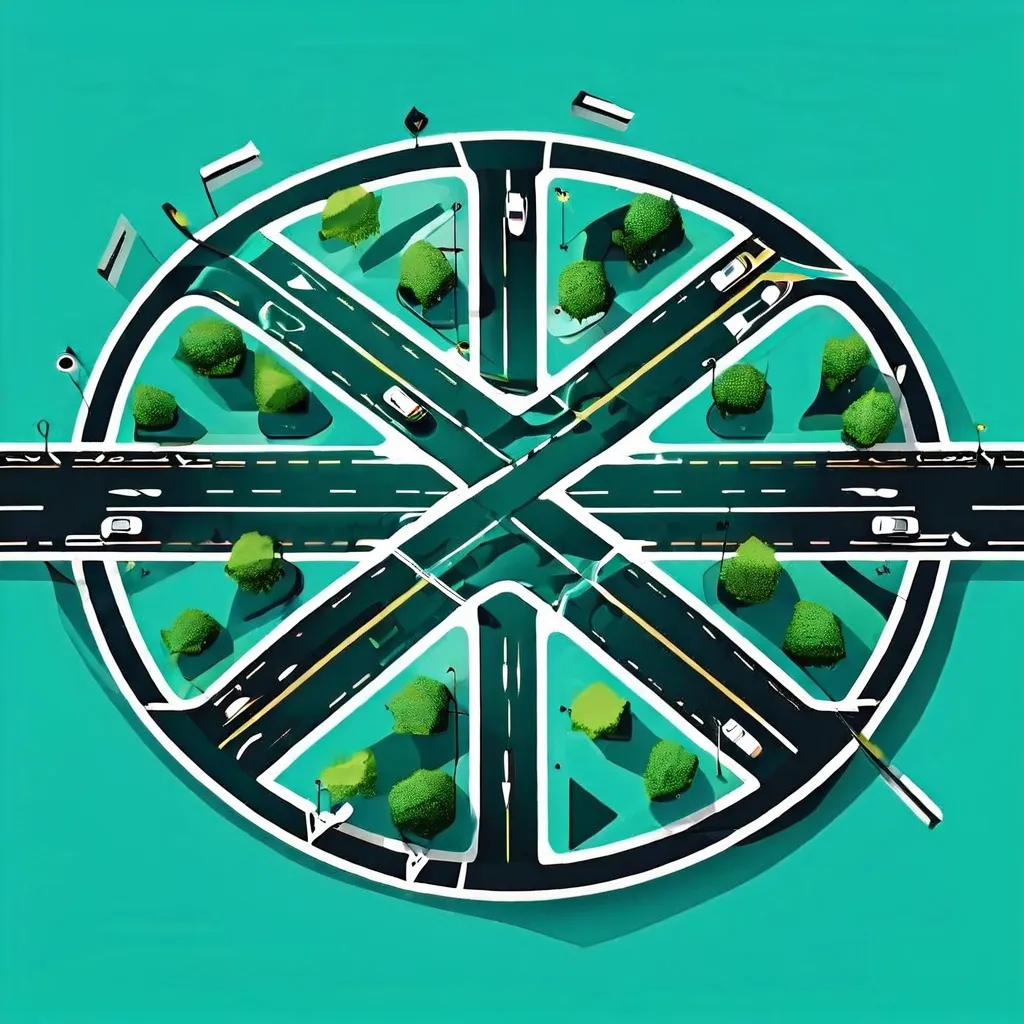
Article content overview
Navigating the complex network of Turkish roads, especially at intersections and junctions, requires a keen understanding of both traffic rules and the visual cues provided by road markings. For anyone preparing for the Turkish driving license theory test, often referred to as the ehliyet sınavı, grasping these concepts is paramount. This article delves into how road markings at Turkish junctions dictate priority and lane discipline, offering clarity on common symbols like directional arrows, the essential 'dur çizgisi' (stop line), and the crucial 'yol verme' (give way) line. Mastering these elements is not only vital for passing your MTSK e-sınav but is fundamental to ensuring safety and compliance with Turkish traffic legislation.
Road markings serve as silent traffic controllers, providing essential guidance to drivers, motorcyclists, and other road users. At junctions, their importance is amplified, as they clarify who has the right of way, dictate which lane to use for specific maneuvers, and alert drivers to potential hazards. In Türkiye, these markings are standardized according to national regulations, ensuring a consistent understanding across the country. Failing to observe or correctly interpret these markings can lead to dangerous situations, traffic violations, and unfortunate accidents, making them a key focus area for the driving theory education and the ehliyet theory exam.
Understanding these markings is not just about memorizing shapes; it's about comprehending the underlying logic of traffic flow and safety principles. The Turkish traffic and environment rules place significant emphasis on these visual aids, as they often supplement or clarify the meaning of traffic signs and signals. Drivers must develop the ability to quickly process this information, especially in busy urban environments or on high-speed roadways, to make safe and timely decisions.
Lane markings are fundamental to maintaining order and preventing chaos on the roads, particularly as you approach and traverse junctions. These lines on the road surface are not arbitrary; they define the boundaries of traffic lanes and provide instructions for movement. Properly adhering to lane discipline ensures that traffic flows smoothly and predictably, reducing the risk of collisions.
Continuous white lines, known as 'kesintisiz çizgi' in Turkish, typically separate lanes of traffic moving in the same direction and generally indicate that lane changes are prohibited. Crossing a continuous white line is a traffic violation and can be particularly dangerous at junctions where other vehicles may not expect a sudden lane departure. Conversely, broken white lines, or 'kesikli çizgi', permit lane changes when it is safe to do so. As you approach an intersection, the nature of the lane markings will guide your positioning for straight-ahead movements, turns, or lane changes, all of which are assessed in practical driving tests.
At junctions, directional arrows painted on the road surface are indispensable. These arrows clearly indicate permissible movements from each lane. You might see arrows pointing straight ahead, indicating a lane for continuing on your current road, or arrows showing turns – either left or right. Often, a lane will have multiple arrows, permitting a combination of movements, such as going straight or turning right. It is crucial to position your vehicle in the correct lane before reaching the intersection, based on the arrows displayed. Incorrect lane usage for a maneuver is a common point of error tested in the theory exams, as it can lead to dangerous conflicts with other traffic.
Some lanes may also be designated for specific traffic, such as bus lanes, marked with the word 'OTOBÜS'. Entering these lanes when not permitted is a violation. The presence of these arrows and markings helps to organize traffic flow efficiently, ensuring that drivers intending to turn left do not impede traffic going straight, and vice versa.
Two of the most critical road markings encountered at Turkish junctions are the 'dur çizgisi' (stop line) and the 'yol verme' (give way) line. These markings are directly linked to priority rules and dictate when a driver must stop or yield to other traffic. Their correct interpretation is vital for safe passage through intersections and is a frequent topic in the ehliyet theory test.
The 'dur çizgisi' is a solid white line marked across the roadway, often accompanied by the word 'DUR' painted on the road surface. When you encounter a 'dur çizgisi', it signifies that you must bring your vehicle to a complete stop before this line. This complete cessation of movement is mandatory, regardless of whether other traffic is present. After stopping, you must then check for any traffic that has priority and proceed only when it is safe to do so. This rule is particularly important at junctions with limited visibility or where traffic from a main road requires absolute clearance.
Failure to stop at a 'dur çizgisi' is a serious traffic offense and a common trap in driving theory exams. The exam questions often test your understanding of the absolute requirement to stop, even if the intersection appears clear.
In contrast to the mandatory stop, the 'yol verme' line, typically a dashed white line across the road, indicates that you must yield the right of way to other traffic. The term 'yol verme' translates directly to "give way." When you encounter this marking, you do not necessarily need to stop if the intersection is clear. However, you must slow down, be prepared to stop, and allow any vehicles that have priority to pass before you proceed. This is especially relevant at junctions with a main road and a secondary road, where traffic on the main road typically has priority.
The distinction between stopping at a 'dur çizgisi' and yielding at a 'yol verme' line is critical. Misinterpreting one for the other can lead to dangerous situations where you might pull out in front of priority traffic or come to an unnecessary halt, potentially causing disruption or rear-end collisions. The theory exam frequently presents scenarios that require you to identify which marking is present and apply the corresponding rule.
While road markings and signs are crucial, many junctions in Türkiye, especially smaller ones or those within residential areas, might be uncontrolled or only partially controlled. Understanding inherent priority rules is therefore essential.
A core principle in Turkish traffic law is that vehicles on a main road ('ana yol') have priority over vehicles on a secondary or less important road ('tali yol'). This is often indicated by signs, such as the 'B1' (Priority Road) sign for those on the main road and the 'B3' (Give Way) sign for those entering from the secondary road. At unmarked junctions, or where markings are unclear, the general rule is that traffic from the right has priority. This "rule of the right" is a fundamental concept in many countries and is a key part of Turkish driving education.
Roundabouts, or 'dönel kavşak', have specific priority rules that often cause confusion. In Türkiye, the general rule is that vehicles already circulating within the roundabout have priority over vehicles entering it. This means that when you are approaching a roundabout, you must yield to traffic already inside. You will typically encounter a 'B3' (Give Way) sign and a dashed white line at the entrance to the roundabout, reinforcing this rule. It is imperative to check your mirrors and blind spots before entering and to signal your intentions clearly, both when entering and when exiting the roundabout.
The ehliyet theory exam, particularly the MTSK e-sınav, is designed to test your understanding of these rules in various contexts. Examiners look for precise application of knowledge, not just general awareness.
One common trap involves unmarked junctions where the "rule of the right" applies. Questions may present a scenario with multiple vehicles approaching simultaneously from different directions, and you will be asked to identify the first vehicle to proceed. Another frequent scenario involves situations where a 'dur çizgisi' is present alongside a priority road. Learners sometimes incorrectly assume they can proceed without stopping if the main road appears clear, forgetting the absolute requirement to stop first.
Always remember that a 'dur çizgisi' demands a complete halt. Even if the road appears empty, you must stop before the line and then assess traffic.
Another area of testing is the correct lane usage for turns. You will encounter questions that describe a junction with specific lane markings and ask which lane is appropriate for a particular maneuver. Forgetting to use the correct lane for turning, or attempting to turn from a lane that does not permit it, is a common error. Understanding the implications of continuous versus broken lane lines is also tested, particularly in relation to lane changes near junctions.
Do not rely solely on other drivers to yield. Always be prepared to stop and ensure it is safe to proceed, especially at junctions where priority might be ambiguous.
To successfully navigate your studies and the ehliyet theory test, familiarizing yourself with key Turkish traffic terms is highly beneficial. These terms are frequently used in official documents and exam questions.
Mastering Turkish junction road markings, priority rules, and lane discipline is a cornerstone of safe driving and a critical component of your ehliyet theory exam preparation. By diligently studying these elements, understanding the meaning behind each marking, and practicing how they apply in real-world scenarios, you will significantly enhance your confidence and competence on the road.
Remember that consistent revision and practice are key. Familiarize yourself with the official curriculum and question formats to ensure you are well-prepared for your Turkish driving license theory test. Safe driving and good luck with your studies!
This article covers the essential road markings that govern priority and lane discipline at Turkish junctions, including stop lines (dur çizgisi), give way lines (yol verme), directional arrows, and lane separation lines. It clarifies the critical distinction between mandatory stopping at a dur çizgisi versus yielding at a yol verme line, explains priority hierarchies between main and secondary roads, and outlines specific rules for uncontrolled junctions and roundabouts. Understanding these markings and their corresponding rules is fundamental for safe driving in Türkiye and for answering related questions in the ehliyet theory examination.
A short set of high-value points that capture the most important ideas from this article.
The 'dur çizgisi' (stop line) requires a complete halt before the line, regardless of traffic conditions
The 'yol verme' (give way) line requires slowing and yielding but does not mandate stopping if the way is clear
Vehicles on the main road (ana yol) have priority over vehicles on secondary roads (tali yol)
Directional arrows at junctions must be followed by positioning in the correct lane before reaching the intersection
Vehicles already circulating within a roundabout have priority over those attempting to enter
A solid white line (kesintisiz çizgi) prohibits lane changes; a broken white line (kesikli çizgi) permits them when safe
At unmarked junctions, the 'rule of the right' applies where traffic from the right has priority
Lane choice for turns must be decided before reaching the intersection, based on displayed arrows
Always stop completely at a dur çizgisi even if the road appears empty before proceeding
At roundabouts (dönel kavşak), yield to circulating traffic and signal when entering and exiting
Confusing the dur çizgisi with the yol verme line and either failing to stop when required or stopping unnecessarily
Attempting to turn from a lane that does not permit that maneuver based on the displayed arrows
Failing to stop at a dur çizgisi because the intersection seems clear, missing the absolute stop requirement
Making lane changes near junctions where continuous lines (kesintisiz çizgi) prohibit such maneuvers
Assuming priority at a roundabout without checking for circulating traffic first
Article content overview
A short set of high-value points that capture the most important ideas from this article.
The 'dur çizgisi' (stop line) requires a complete halt before the line, regardless of traffic conditions
The 'yol verme' (give way) line requires slowing and yielding but does not mandate stopping if the way is clear
Vehicles on the main road (ana yol) have priority over vehicles on secondary roads (tali yol)
Directional arrows at junctions must be followed by positioning in the correct lane before reaching the intersection
Vehicles already circulating within a roundabout have priority over those attempting to enter
A solid white line (kesintisiz çizgi) prohibits lane changes; a broken white line (kesikli çizgi) permits them when safe
At unmarked junctions, the 'rule of the right' applies where traffic from the right has priority
Lane choice for turns must be decided before reaching the intersection, based on displayed arrows
Always stop completely at a dur çizgisi even if the road appears empty before proceeding
At roundabouts (dönel kavşak), yield to circulating traffic and signal when entering and exiting
Confusing the dur çizgisi with the yol verme line and either failing to stop when required or stopping unnecessarily
Attempting to turn from a lane that does not permit that maneuver based on the displayed arrows
Failing to stop at a dur çizgisi because the intersection seems clear, missing the absolute stop requirement
Making lane changes near junctions where continuous lines (kesintisiz çizgi) prohibit such maneuvers
Assuming priority at a roundabout without checking for circulating traffic first
Explore related topics, search based questions, and concepts that learners often look up when studying Turkish Junction Markings and Priority. These themes reflect real search intent and help you understand how this topic connects to wider driving theory knowledge in Turkey.
Find clear and practical answers to common questions learners often have about Turkish Junction Markings and Priority. This section helps explain difficult points, remove confusion, and reinforce the key driving theory concepts that matter for learners in Turkey.
The 'dur çizgisi' (stop line) in Turkey indicates the precise point before which a vehicle must stop if required by a traffic sign, signal, or rule, such as a 'stop' sign or when yielding to traffic that has priority.
A 'yol verme' (give way) marking, typically a dashed line or a triangular sign, signifies that you must yield to vehicles on the intersecting road that have priority. You must wait for a safe gap in traffic before proceeding.
Yes, directional arrows painted on the road surface clearly indicate which lanes are designated for specific movements, such as going straight, turning left, or turning right. You must position your vehicle in the correct lane according to these arrows before the junction.
In the absence of specific markings, you must adhere to general Turkish traffic rules for priority, typically giving way to vehicles on your right at uncontrolled intersections, unless other signs or signals dictate otherwise. Always assess the situation for potential hazards.
After finding the specific Turkish driving theory articles you need, dive deeper into related topics or challenge your knowledge with practice questions. Enhance your understanding of trafik işaretleri, road rules, and vehicle safety to ensure you are fully prepared for the official ehliyet sınavı.