
Reaction distance is the distance your vehicle travels from the moment you detect a hazard until you physically begin to apply the brakes. It's a crucial part of your total stopping distance and is directly influenced by your speed, alertness, and various environmental factors. Understanding this concept is fundamental for safe driving and excelling in your Turkish driving theory exam.
Theory topic content overview
Read the full theory topic guide for Understand Reaction Distance with structured, easy-to-scan content built for learners in Turkey. This detailed section explains the exact rule, meaning, traffic context, comparison points, and exam logic behind this Turkish driving theory topic so you can study faster, understand the concept more clearly, and avoid common interpretation mistakes on the theory test.
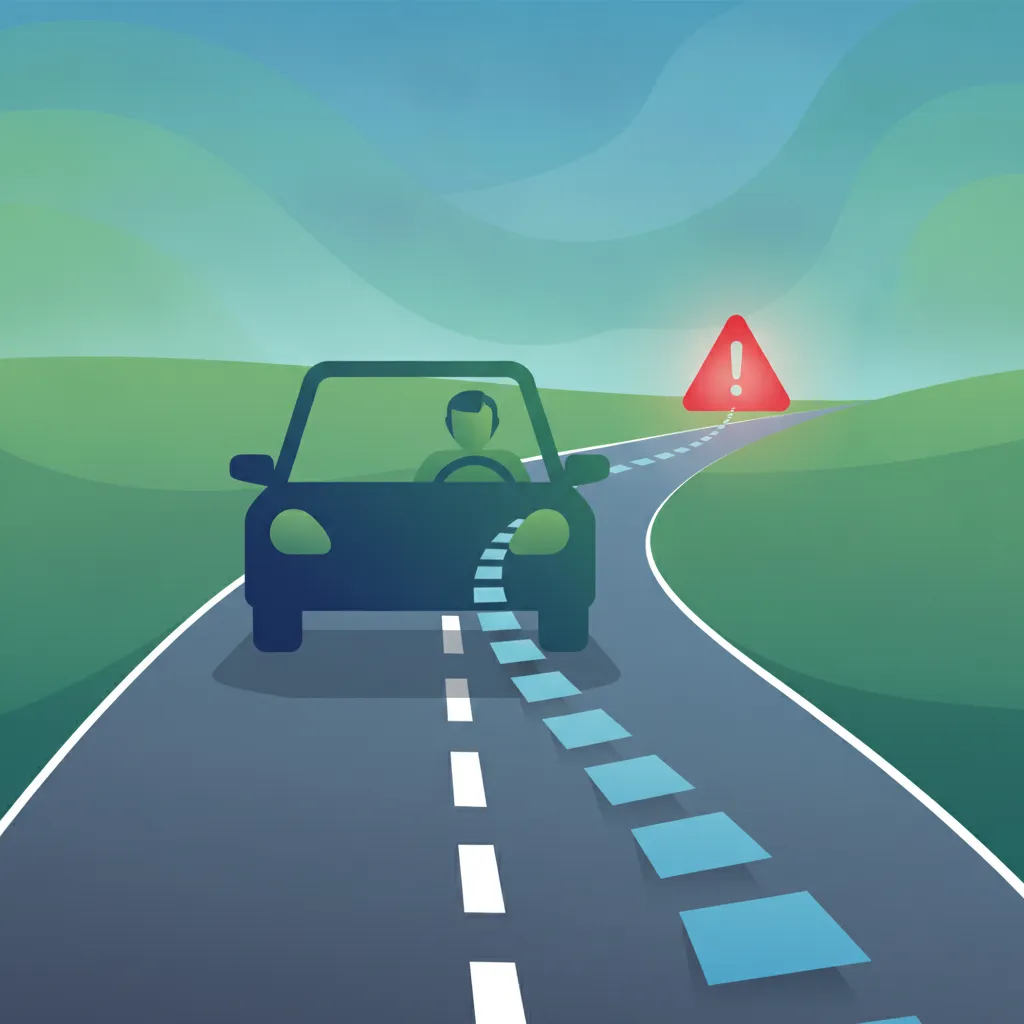
Reaction distance is a fundamental concept in driving theory, representing the distance your vehicle travels from the moment you perceive a hazard until you physically begin to apply the brakes. It's the "thinking and moving" phase before any actual braking force is exerted on the wheels.
This crucial period involves a sequence of events:
Even for an alert driver, this entire process typically takes about one second. During this second, your vehicle continues to travel at its current speed, covering a significant distance. This distance is your reaction distance.
Understanding reaction distance is not just an academic exercise; it's a cornerstone of safe driving and a frequently tested topic in the Turkish ehliyet sınavı (driving license exam).
The relationship between speed and reaction distance is direct and impactful: the faster you are travelling, the further your vehicle will go during your reaction time.
Since reaction time is generally considered to be around one second, you can roughly estimate your reaction distance by dividing your speed in km/h by 10 and then multiplying by 3. For example:
This simple calculation reveals the compounding effect of speed. Doubling your speed roughly doubles your reaction distance, significantly impacting your ability to avoid an unexpected hazard on Turkish roads.
While one second is a typical estimate, many factors can lengthen your reaction time, thus extending your reaction distance and increasing risk.
A common point of confusion for ehliyet candidates is distinguishing reaction distance from braking distance. Understanding this difference is crucial for mastering stopping distance concepts.
Total Stopping Distance is the sum of these two components:
Total Stopping Distance = Reaction Distance + Braking Distance
The ehliyet sınavı frequently tests this distinction, often presenting scenarios where knowing both components is essential for a correct answer.
Consider these common situations on Turkish roads where reaction distance plays a critical role:
Many learners preparing for their Turkish driving license exam make these mistakes regarding reaction distance:
To excel in your ehliyet sınavı and become a safe driver on Turkish roads, internalize these key principles about reaction distance:
Understanding reaction distance is not just about passing an exam; it's about forming habits that prioritize safety and make you a more responsible and effective driver in Türkiye.
Reaction distance measures how far your vehicle travels from the moment you first notice a hazard until you physically begin braking — a 'thinking and moving' phase that typically takes one second even for alert drivers. Since this distance increases proportionally with speed, an alert driver at 90 km/h will travel approximately 27 meters before brakes engage, making speed management and hazard anticipation critical safety skills. Multiple factors including fatigue, distraction, alcohol, poor visibility, and stress can significantly extend reaction time beyond the one-second baseline, further increasing risk. This concept is distinct from braking distance, which begins only when brakes are applied, and together they form total stopping distance — a topic frequently tested in the MTSK e-sınav. To stay safe and pass your ehliyet exam, you must internalize the one-second rule, understand the speed-distance relationship, and recognize how personal and environmental factors can impair your reaction time.
A short set of high-value points that capture the most important ideas from this theory explanation.
Reaction distance is the distance your vehicle travels during the entire perception-to-braking process, typically lasting about one second
This distance grows directly with speed — at 50 km/h you travel ~15 meters, at 90 km/h ~27 meters, and at 120 km/h ~36 meters in that one second
Factors like fatigue, distraction, alcohol, poor visibility, and stress all increase reaction time beyond the typical one-second baseline
Reaction distance and braking distance are two separate components of total stopping distance — reaction is the thinking phase, braking is the physical stopping phase
Mastering this concept is essential for both safe driving habits and passing the ehliyet sınavı
The basic one-second reaction time is your baseline — at any speed, expect to travel at least that distance before brakes engage
Quick mental formula: reaction distance (meters) ≈ speed (km/h) ÷ 10 × 3
Total stopping distance = reaction distance + braking distance — these are separate and often tested separately
Fatigue, mobile phone use, and alcohol dramatically extend reaction time, making hazards harder to avoid
Poor visibility conditions require larger safety margins because hazard perception takes longer
Believing the car stops immediately when you see a hazard, ignoring the critical reaction phase that happens before braking
Confusing reaction distance with braking distance and using the terms interchangeably on exam questions
Underestimating how far a vehicle travels in just one second, especially failing to appreciate the dramatic increase at motorway speeds
Neglecting to connect distraction, fatigue, or alcohol to longer reaction distances when analyzing exam scenarios
Not adjusting driving behavior for conditions like fog or night driving, where earlier hazard perception is needed to compensate for slower reaction times
Start with a short, direct summary of Understand Reaction Distance before reading the full explanation below.
Reaction distance is the distance a vehicle covers while the driver perceives a hazard, decides to react, and moves their foot to the brake pedal, before any actual braking occurs. Even a quick reaction typically takes about one second, during which the vehicle continues moving at its current speed. This distance increases directly with speed and is a vital part of your overall stopping distance.
Review the most important terms, rule signals, and traffic concepts linked to Understand Reaction Distance.
Explore related theory topic pages connected to Understand Reaction Distance and continue with the next useful rule explanation.
See the common search queries learners use when trying to understand Understand Reaction Distance in Turkey.

Dive deeper into specific Turkish driving theory topics like traffic signs, first aid, or vehicle mechanics. Each section offers clear explanations to enhance your understanding of official traffic legislation and prepare you effectively for every aspect of your upcoming ehliyet exam in Türkiye.
Explore Turkish Driving Theory TopicsTheory topic content overview
A short set of high-value points that capture the most important ideas from this theory explanation.
Reaction distance is the distance your vehicle travels during the entire perception-to-braking process, typically lasting about one second
This distance grows directly with speed — at 50 km/h you travel ~15 meters, at 90 km/h ~27 meters, and at 120 km/h ~36 meters in that one second
Factors like fatigue, distraction, alcohol, poor visibility, and stress all increase reaction time beyond the typical one-second baseline
Reaction distance and braking distance are two separate components of total stopping distance — reaction is the thinking phase, braking is the physical stopping phase
Mastering this concept is essential for both safe driving habits and passing the ehliyet sınavı
The basic one-second reaction time is your baseline — at any speed, expect to travel at least that distance before brakes engage
Quick mental formula: reaction distance (meters) ≈ speed (km/h) ÷ 10 × 3
Total stopping distance = reaction distance + braking distance — these are separate and often tested separately
Fatigue, mobile phone use, and alcohol dramatically extend reaction time, making hazards harder to avoid
Poor visibility conditions require larger safety margins because hazard perception takes longer
Believing the car stops immediately when you see a hazard, ignoring the critical reaction phase that happens before braking
Confusing reaction distance with braking distance and using the terms interchangeably on exam questions
Underestimating how far a vehicle travels in just one second, especially failing to appreciate the dramatic increase at motorway speeds
Neglecting to connect distraction, fatigue, or alcohol to longer reaction distances when analyzing exam scenarios
Not adjusting driving behavior for conditions like fog or night driving, where earlier hazard perception is needed to compensate for slower reaction times
Start with a short, direct summary of Understand Reaction Distance before reading the full explanation below.
Reaction distance is the distance a vehicle covers while the driver perceives a hazard, decides to react, and moves their foot to the brake pedal, before any actual braking occurs. Even a quick reaction typically takes about one second, during which the vehicle continues moving at its current speed. This distance increases directly with speed and is a vital part of your overall stopping distance.
Review the most important terms, rule signals, and traffic concepts linked to Understand Reaction Distance.
Explore related theory topic pages connected to Understand Reaction Distance and continue with the next useful rule explanation.
See the common search queries learners use when trying to understand Understand Reaction Distance in Turkey.
Dive deeper into specific Turkish driving theory topics like traffic signs, first aid, or vehicle mechanics. Each section offers clear explanations to enhance your understanding of official traffic legislation and prepare you effectively for every aspect of your upcoming ehliyet exam in Türkiye.
Explore Turkish Driving Theory TopicsUse this exam-focused revision tip to understand how Understand Reaction Distance is likely to appear in theory questions for learners in Turkey. This section helps you identify the most testable part of the rule, avoid common traps, and remember the concept more effectively during Turkish driving theory exam preparation.
Remember that reaction distance is the 'thinking and moving' phase before the brakes even engage. Exams often try to trick you by combining it with braking distance. Always account for your reaction time, especially at higher speeds, as this distance grows significantly and impacts your safety margin in the ehliyet sınavı scenarios.
Read direct answers to the most common learner questions about Understand Reaction Distance in Turkey. This FAQ focuses on rule confusion, practical meaning, comparison with similar concepts, and the exact uncertainties that appear most often in Turkish driving theory revision and exam preparation.
Reaction distance is the distance your vehicle travels during the time it takes for you to see a hazard, process it, decide to brake, and move your foot to the brake pedal.
Reaction distance increases directly with speed. If you double your speed, your reaction distance also doubles, because the vehicle covers more ground in the same amount of reaction time.
Factors like fatigue, distraction (e.g., mobile phone use), alcohol or drugs, stress, and poor visibility can all significantly increase a driver's reaction time and thus the reaction distance.
Reaction distance is the distance traveled *before* braking begins, during the driver's reaction time. Braking distance is the distance traveled *after* the brakes are applied until the vehicle comes to a complete stop.
For an attentive driver, a typical reaction time to an unexpected hazard is around one second. However, this can vary widely based on individual factors and road conditions.
The Turkish driving theory exam (ehliyet sınavı) frequently includes questions on hazard perception, reaction time, and how different factors influence stopping distances. A solid understanding of reaction distance is crucial for success.
While experience can improve hazard recognition and decision-making, even experienced drivers have a fundamental physiological reaction time. Alertness and avoiding distractions are more critical than just experience.
Use our comprehensive practice search to find exactly the Turkish driving theory questions you need to master. Whether reviewing specific road signs, traffic rules, or first aid scenarios, select your perfect practice set and boost your confidence for the official ehliyet sınavı.