
Prepare for your Turkish driving license theory test by mastering complex right-of-way scenarios. This article breaks down the most frequently tested priority rules within the MTSK e-sınav format, helping you navigate confusing intersections and junctions with confidence. Understanding these critical rules is vital for both exam success and safe driving practices in Türkiye.
Article content overview
Successfully passing the Turkish driving theory exam, known as the MTSK e-sınav, requires a deep understanding of traffic rules, and paramount among these are the right-of-way rules. These regulations dictate who has the privilege to proceed first in various traffic situations, ensuring order and preventing accidents. Misinterpreting or misunderstanding these priority scenarios can lead to dangerous situations and incorrect answers on the exam. This article delves into the most crucial right-of-way situations that frequently appear in the MTSK e-sınav, providing clear explanations to help you navigate intersections, junctions, and other complex road environments with confidence. Mastering these key scenarios is not just about passing the test; it's about becoming a safe and responsible driver in Türkiye.
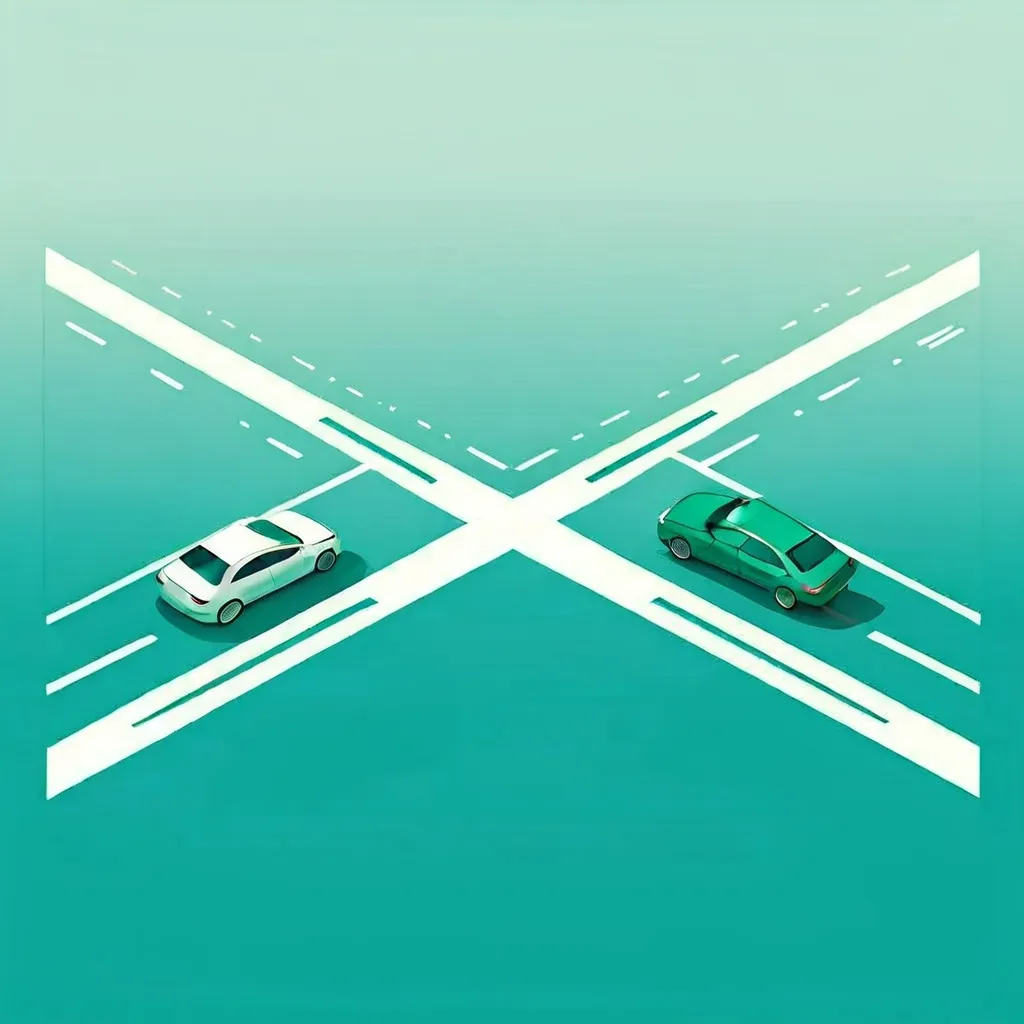
Unmarked intersections, where no traffic signs or signals dictate priority, are a fundamental concept tested in the Turkish driving theory exam. In these situations, the general rule of thumb is often referred to as the "rule of the right." This means that the vehicle approaching the intersection from the right generally has the right-of-way. However, this rule has several important nuances and exceptions that learners must understand to avoid confusion. It's crucial to remember that this is a baseline rule, and other factors, such as vehicle type and specific road layouts, can influence priority.
When approaching an unmarked intersection, the primary consideration is to be aware of any approaching traffic. If you and another vehicle arrive at the intersection simultaneously, and the other vehicle is to your right, you must yield to them. This requires constant observation and a proactive approach to assessing potential conflicts. Furthermore, even if you have the right-of-way, you must still proceed with caution, ensuring that other drivers yield to you and that your passage is safe. The MTSK e-sınav often presents scenarios where understanding this basic principle is key to selecting the correct answer regarding who should proceed first.
While unmarked intersections operate on general rules, the vast majority of priority decisions on Turkish roads are governed by specific traffic signs. These signs provide clear instructions to drivers, indicating who has priority and when yielding is necessary. Understanding the meaning of these signs is non-negotiable for both exam success and safe driving. The Turkish traffic code features a comprehensive array of signs, and the e-sınav heavily relies on candidates' ability to interpret them correctly.
The "Priority Road" sign (B1) is one of the most common and critical signs related to right-of-way. When you see this sign, it signifies that you have the right-of-way on the road you are currently traveling. All other traffic entering your path from side roads must yield to you. Conversely, the "Give Way" sign (often depicted as an inverted triangle, or its specific Turkish designation), requires you to yield to traffic on the road you are entering, or to traffic already on that road. These signs are meticulously tested, and scenarios involving them often form the basis of complex priority questions in the MTSK e-sınav.
Another crucial sign is the "End of Priority Road" sign. After encountering this, the priority you previously held is revoked, and you must revert to the general rules of the road, which often means yielding to traffic from the right or obeying any new signs encountered. The e-sınav may present a sequence of signs, and understanding when priority is granted and when it is rescinded is vital.
In Türkiye, as in most countries, specific vehicles are granted priority to ensure their critical missions can be carried out without delay. This includes emergency vehicles like ambulances, fire trucks, and police cars, as well as sometimes public buses under specific circumstances, though the latter is more nuanced. The MTSK e-sınav often includes questions about how to behave when encountering these vehicles to ensure their unimpeded passage.
When you hear the siren of an emergency vehicle or see its flashing lights, you are legally obligated to yield. The safest and most effective way to do this is to pull over to the side of the road, as far to the right as possible, and stop until the vehicle has passed. This action should be taken without braking suddenly and without endangering yourself or other road users. Failing to yield to an emergency vehicle can have severe consequences, both legally and in terms of safety, and is a frequent topic in the theory test.
When an emergency vehicle approaches with its lights and sirens activated, immediately assess your surroundings. Look for a safe place to pull over to the right side of the road and come to a complete stop. Avoid making sudden movements that could cause an accident.
While emergency vehicles have a clear right-of-way, the priority for public transport, particularly buses, can be more context-dependent and is often related to them merging back into traffic after stopping at a designated bus stop. The theory test might assess your understanding of when it is appropriate to allow a bus to rejoin the flow of traffic.
Roundabouts, or traffic circles, are increasingly common in Türkiye and present their own set of right-of-way challenges. The fundamental rule for roundabouts is that vehicles already inside the roundabout have priority over those intending to enter. This means that as you approach a roundabout, you must yield to any traffic circulating within it, regardless of whether they are approaching from your left or right within the roundabout.
When you intend to enter a roundabout, you must wait for a safe gap in the circulating traffic. This requires careful observation of the speed and proximity of vehicles already in the circle. Once you have entered, you must signal your intention to exit at the appropriate point. The MTSK e-sınav will often test your understanding of this principle, asking about the correct procedure for entering and navigating roundabouts safely, ensuring that you always yield to those already circulating.
T-junctions and cul-de-sacs, where one road ends and meets another, also involve specific priority considerations. In many cases, these will be governed by signs. However, if they are unmarked, the general rule of the right might still apply, but with an added layer of complexity. The vehicle on the road that continues through the intersection generally has priority over the vehicle on the road that ends.
For example, if you are on a road that terminates at a T-junction, and you are turning left or right to join the continuing road, you must yield to any traffic already on that continuing road, especially if that traffic is approaching from your right. Conversely, if you are on the continuing road and there is a vehicle emerging from the terminating road, and it is to your left, you generally have priority. The key is to assess the relative importance or continuity of the roads and always be prepared to yield if there is any doubt.
Never assume you have priority at any junction, even if you believe you do. Always make a final visual check to ensure other drivers are yielding before proceeding.
The e-sınav often uses scenarios that combine unmarked intersections with the concept of continuing roads versus terminating roads to test your comprehensive understanding of priority rules. Being able to differentiate between these situations and apply the correct logic is crucial.
Beyond the strict legal rules, safe driving in Türkiye also relies on good traffic etiquette and robust hazard awareness. The theory exam places significant emphasis on these aspects, as they contribute to a smoother and safer traffic flow for everyone. Understanding the intent of other drivers and anticipating potential hazards is as important as knowing who has the right-of-way.
For instance, when you are about to enter a roundabout or merge into traffic, you should always indicate your intentions clearly using your turn signals. This courtesy allows other drivers to anticipate your actions and adjust their own accordingly. Similarly, when another driver courteously allows you to proceed, even if they technically had the right-of-way, acknowledging their action with a wave or a nod can foster a more cooperative driving environment.
Hazard awareness is about looking ahead and anticipating potential problems. This includes being aware of pedestrians, cyclists, animals, or vehicles that might suddenly enter your path. In the context of right-of-way, this means recognizing that even if you have priority, another driver might not see you or may make an unexpected maneuver. Therefore, maintaining a safe speed and being prepared to react is paramount. The MTSK e-sınav frequently incorporates questions that assess your ability to identify hazards and apply safe driving practices, especially in relation to priority situations where a conflict might arise.
The Turkish driving theory test, the MTSK e-sınav, is designed to assess your practical understanding of traffic laws. Regarding right-of-way, certain scenarios appear more frequently than others, often in slightly varied forms. Understanding these common test questions can significantly boost your confidence and accuracy.
One common theme is the unmarked intersection where vehicles arrive simultaneously, forcing the candidate to decide who yields based on the "rule of the right." Another frequent scenario involves understanding the hierarchy of priority, where signs indicating a priority road override the general rule, and the "End of priority road" sign reverts to it. Questions about emergency vehicle priority are also standard, focusing on the correct procedure for yielding.
Roundabout scenarios are also prominent, testing the principle that traffic inside the roundabout has priority over entering traffic. Finally, situations involving specific vehicle types, like trams (which have a unique set of priority rules in some areas) or buses merging, can also appear, requiring a nuanced understanding of the law. Paying close attention to the wording of these questions and the visual aids provided (if any) is essential for correctly identifying the applicable rules.
Mastering these key right-of-way scenarios is a critical step towards achieving your Turkish driving license. By understanding the fundamental rules, the impact of traffic signs, and the specific protocols for various road situations, you can confidently tackle the priority questions in the MTSK e-sınav and, more importantly, drive safely and responsibly on the roads of Türkiye.
This article covers essential right-of-way scenarios for the Turkish driving theory exam, focusing on unmarked intersections where the 'rule of the right' applies, the hierarchy established by traffic signs (especially Priority Road B1 and End of Priority Road B2), and special protocols for emergency vehicles. Roundabout navigation requires yielding to circulating traffic, while T-junctions depend on whether roads are continuing or terminating. The content also emphasizes traffic etiquette and hazard awareness as complements to legal priority rules, all aligned with MTSK e-sınav testing patterns.
A short set of high-value points that capture the most important ideas from this article.
At unmarked intersections with no signs or signals, the vehicle approaching from your right has priority (rule of the right)
The Priority Road sign (B1) overrides general rules—vehicles on intersecting roads must yield to you
When the End of Priority Road sign appears, priority reverts to general rules, typically yielding to traffic from the right
Vehicles already inside a roundabout always have priority over those intending to enter
Emergency vehicles with active sirens and lights require immediate yielding by pulling safely to the right and stopping
The 'rule of the right' applies only at unmarked intersections when no signs or signals are present
Priority Road status is granted by signs and ends when you see the End of Priority Road sign
Roundabout priority always favors circulating traffic over entering traffic, regardless of approach direction
At T-junctions, the vehicle on the continuing road has priority over vehicles on terminating roads
Turkish terms: Anayol (main road), Tali Yol (minor road), Geçiş Hakkı (right-of-way), Kavşak (intersection)
Assuming the rule of the right applies at marked intersections when traffic signs override this general rule
Forgetting that priority ends at the End of Priority Road sign and reverting to baseline rules
Entering a roundabout without yielding because other vehicles are approaching from the left within the circle
Failing to yield to emergency vehicles or making sudden braking maneuvers instead of pulling over safely
Assuming priority at a T-junction without checking whether the other road is a continuing or terminating road
Article content overview
A short set of high-value points that capture the most important ideas from this article.
At unmarked intersections with no signs or signals, the vehicle approaching from your right has priority (rule of the right)
The Priority Road sign (B1) overrides general rules—vehicles on intersecting roads must yield to you
When the End of Priority Road sign appears, priority reverts to general rules, typically yielding to traffic from the right
Vehicles already inside a roundabout always have priority over those intending to enter
Emergency vehicles with active sirens and lights require immediate yielding by pulling safely to the right and stopping
The 'rule of the right' applies only at unmarked intersections when no signs or signals are present
Priority Road status is granted by signs and ends when you see the End of Priority Road sign
Roundabout priority always favors circulating traffic over entering traffic, regardless of approach direction
At T-junctions, the vehicle on the continuing road has priority over vehicles on terminating roads
Turkish terms: Anayol (main road), Tali Yol (minor road), Geçiş Hakkı (right-of-way), Kavşak (intersection)
Assuming the rule of the right applies at marked intersections when traffic signs override this general rule
Forgetting that priority ends at the End of Priority Road sign and reverting to baseline rules
Entering a roundabout without yielding because other vehicles are approaching from the left within the circle
Failing to yield to emergency vehicles or making sudden braking maneuvers instead of pulling over safely
Assuming priority at a T-junction without checking whether the other road is a continuing or terminating road
Explore related topics, search based questions, and concepts that learners often look up when studying Turkish Right-of-Way Exam Scenarios. These themes reflect real search intent and help you understand how this topic connects to wider driving theory knowledge in Turkey.
Find clear and practical answers to common questions learners often have about Turkish Right-of-Way Exam Scenarios. This section helps explain difficult points, remove confusion, and reinforce the key driving theory concepts that matter for learners in Turkey.
Commonly confusing situations include unmarked intersections, roundabouts, situations involving emergency vehicles, and where multiple vehicles arrive at an intersection simultaneously. The MTSK e-sınav often tests these nuanced scenarios.
Yes, Turkish traffic law, as reflected in the MTSK e-sınav, dictates clear priority rules for intersections, including the general rule that vehicles on the main road have priority, and specific rules for junctions with or without signs.
The MTSK e-sınav typically presents these questions using scenarios depicted in text or implied situations, asking candidates to identify which vehicle has the right-of-way or should proceed first.
In unmarked intersections in Turkey, the general principle is that vehicles coming from the right typically have priority. However, other rules, such as those for main roads, must also be considered.
By thoroughly understanding these priority rules and practicing them in the context of the e-sınav question format, you will be better equipped to answer correctly, avoid penalties, and demonstrate competency required for passing the Turkish driving theory exam.
After finding the specific Turkish driving theory articles you need, dive deeper into related topics or challenge your knowledge with practice questions. Enhance your understanding of trafik işaretleri, road rules, and vehicle safety to ensure you are fully prepared for the official ehliyet sınavı.